46 0 0 Fertilizer: What Urea Is, Rates, and How to Use It
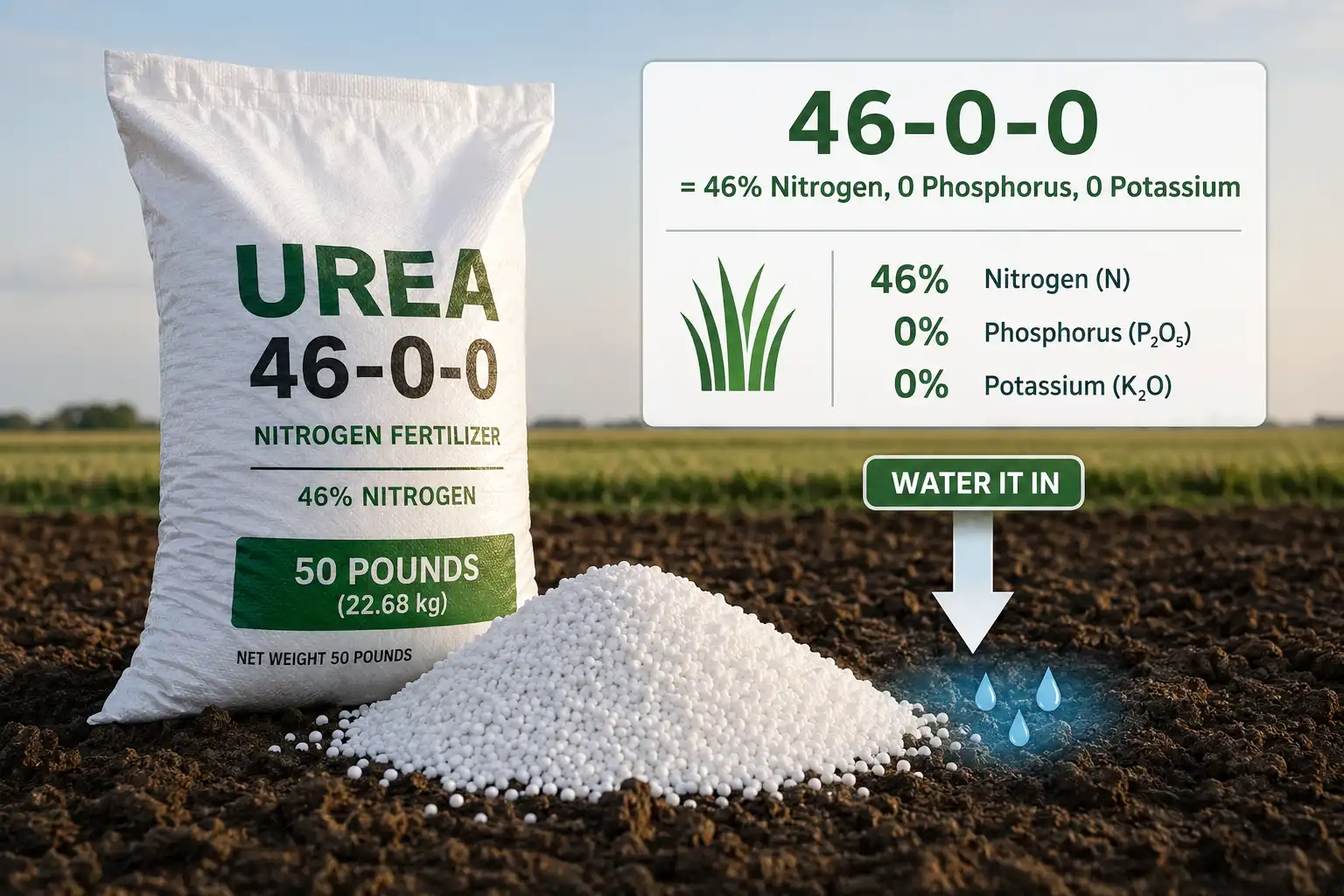
46 0 0 fertilizer is straight urea, the most concentrated dry nitrogen source for feeding corn, wheat, pasture, and lawns. It greens up plants fast and costs the least per pound of nitrogen. But leave it on top in the heat and you lose nitrogen to the air.
46 0 0 fertilizer is pure urea, 46% nitrogen with no phosphorus or potassium. Use it to push green growth on corn, wheat, pasture, and lawns. Broadcast it, then water it in within a day or two.
What Is 46 0 0 Fertilizer?
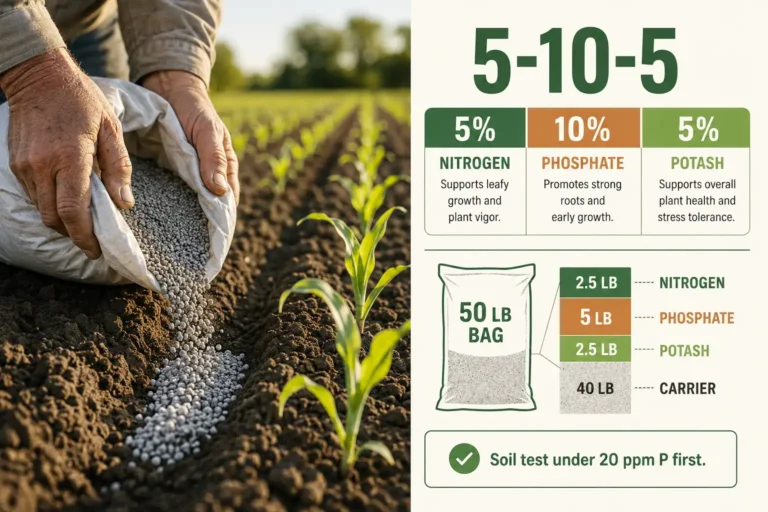
46 0 0 fertilizer is urea, a dry nitrogen source that carries 46% nitrogen by weight. The three numbers are the N-P-K grade: 46 nitrogen, 0 phosphorus, 0 potassium. So the bag holds nothing but nitrogen.
Makers turn ammonia and carbon dioxide into urea, then shape it into granules or small round prills. It packs more nitrogen than any other dry fertilizer. So it also gives you the lowest cost per pound of nitrogen. That is why urea moves in huge volumes across the Corn Belt and Great Plains.
New to the three-number grade? This breakdown of how NPK numbers work explains what each digit means.
Also know: What is 13-13-13 Fertilizer
What Is 46-0-0 Fertilizer Used For?
46-0-0 fertilizer feeds plants nitrogen and nothing else. Nitrogen drives leaf growth, deep green color, and protein inside the plant. Reach for urea when a crop or lawn needs a nitrogen push. It fits best when a soil test already shows enough phosphorus and potassium.
Common jobs for urea 46-0-0 include:
- Corn: sidedress nitrogen once the crop is up
- Wheat: topdress in early spring at green-up
- Pasture and grass hay: feed after a cutting to regrow forage
- Cool-season lawns: fast green-up in spring and fall
- Food plots, gardens, and straw bale beds: a targeted nitrogen boost
Straight urea is the wrong call when your soil runs low on phosphorus or potassium. In that spot, a balanced mix like a well-rounded 10-10-10 blend beats nitrogen alone.
How Does Urea Nitrogen Work in the Soil?
Urea does not feed the plant the second it lands. First, a soil enzyme called urease turns urea into ammonium. Then rain or irrigation moves that nitrogen down into the root zone, where roots take it up.
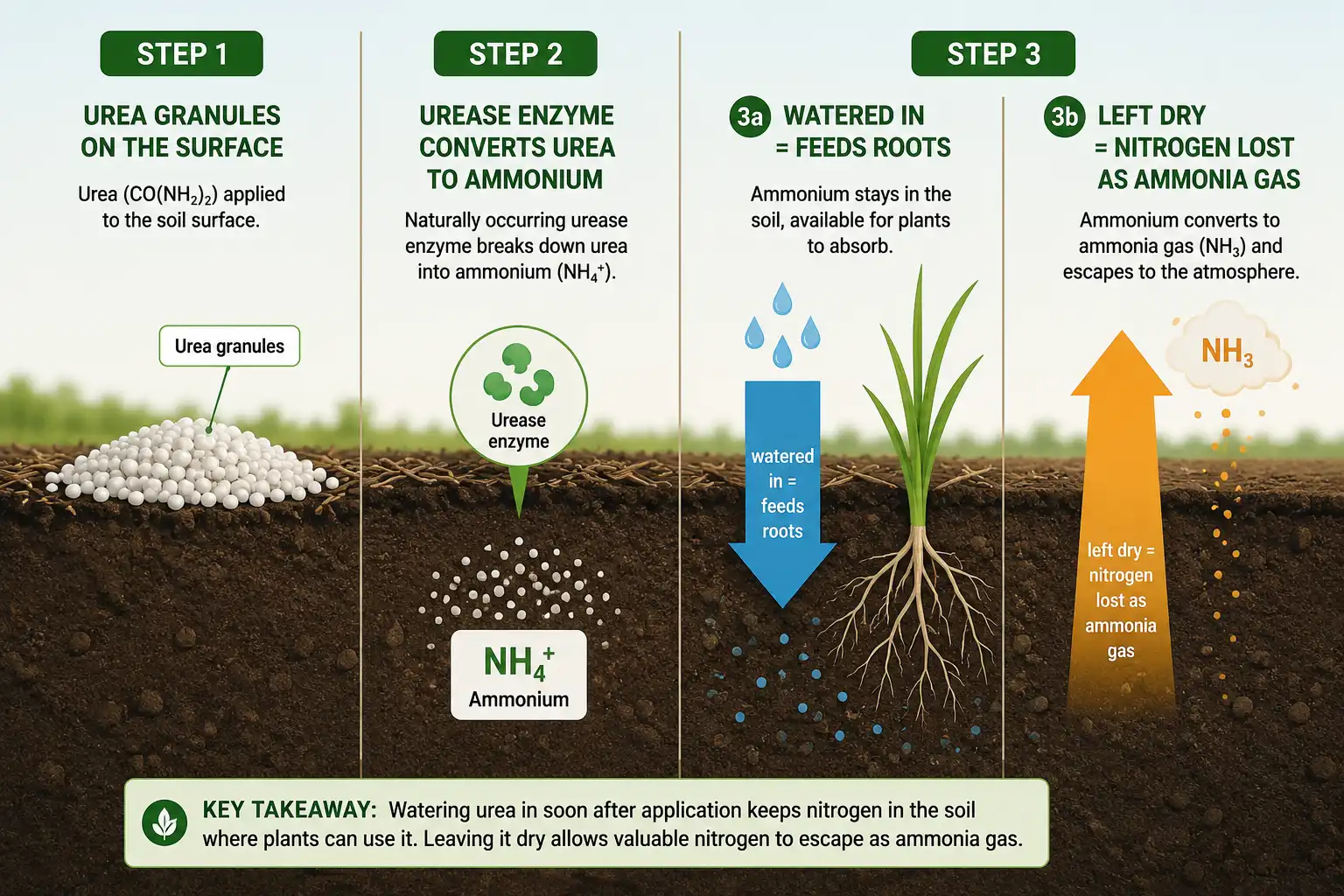
Here is the catch that trips up a lot of growers. If urea sits on warm, moist ground with no rain, some nitrogen escapes into the air as ammonia gas. On bare, warm soil, surface urea can lose around 30% of its nitrogen in a week or two. Those losses hit hardest in the first few days.
So the fix is simple. Get urea into the soil fast, and you keep the nitrogen. You have three ways to do that.
- Water it in with about 0.25 to 0.5 inch of irrigation within two to three days.
- Time it before rain so the shower carries it down for you.
- Work it in with light tillage where that fits your system.
When you cannot water it in soon, reach for a treated urea that carries a urease inhibitor. The common one is NBPT, sold under names like Agrotain. It slows the breakdown and cuts ammonia loss by roughly half or more. High soil pH, heavy crop residue, and summer heat all raise the loss too. So no-till ground and hot spells call for extra care. K-State Research and Extension and other land-grant services back this same guidance.
How Do You Use 46-0-0 Fertilizer?
Use 46-0-0 fertilizer by spreading it evenly, then watering it in fast. You can apply it dry with a spreader or dissolve it and spray it as a liquid. Either way, never let it bake on the surface in the heat.
Dry application
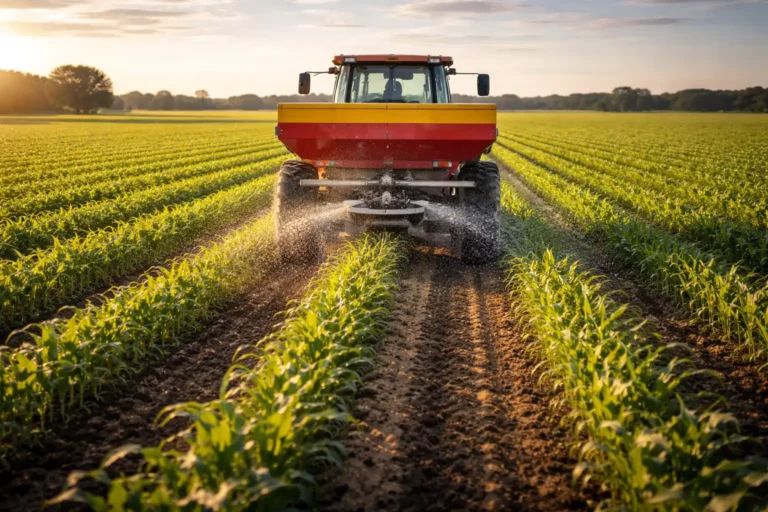
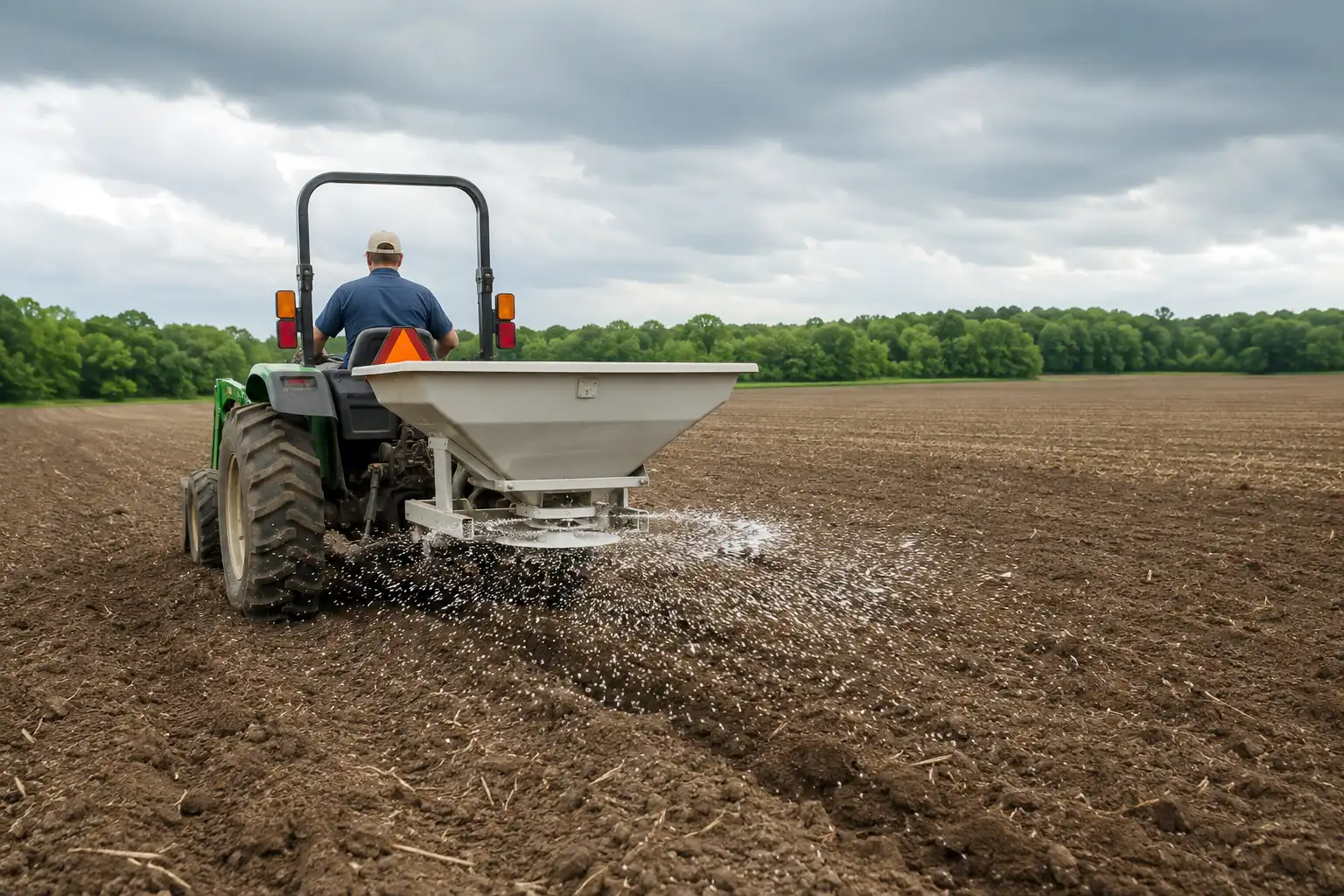
Spread urea dry for most field and lawn work. For field acres run a tow-behind broadcast spreader and overlap every pass so leave no streaks. Calibrate it first, since light urea granules throw differently than a heavy blend. Then make a steady pass and water it in.
Liquid application
Dissolve urea in water when you want a liquid feed. It goes into solution fast, and for a big batch, stirring it with a paddle mixer on a drill works well. Keep foliar sprays dilute, though. Urea can carry biuret, a byproduct that scorches leaves at high rates, so a light soil drench beats a heavy leaf spray.
Timing and split feeding
Split your nitrogen instead of dumping it all at once. On corn, some goes down early, then the rest gets side-dressed by the time the crop hits knee-high, around V6 to V8. On wheat, topdressing happens at spring green-up. Skip frozen or waterlogged ground, since you will only lose nitrogen or watch it run off.
Keep urea off the seed
Never drop urea in the seed furrow. Free ammonia from urea can kill germinating seedlings, and corn is especially touchy. So keep any in-furrow nitrogen very low, then band the rest to the side of the row.
How Much 46-0-0 Fertilizer Per Acre?
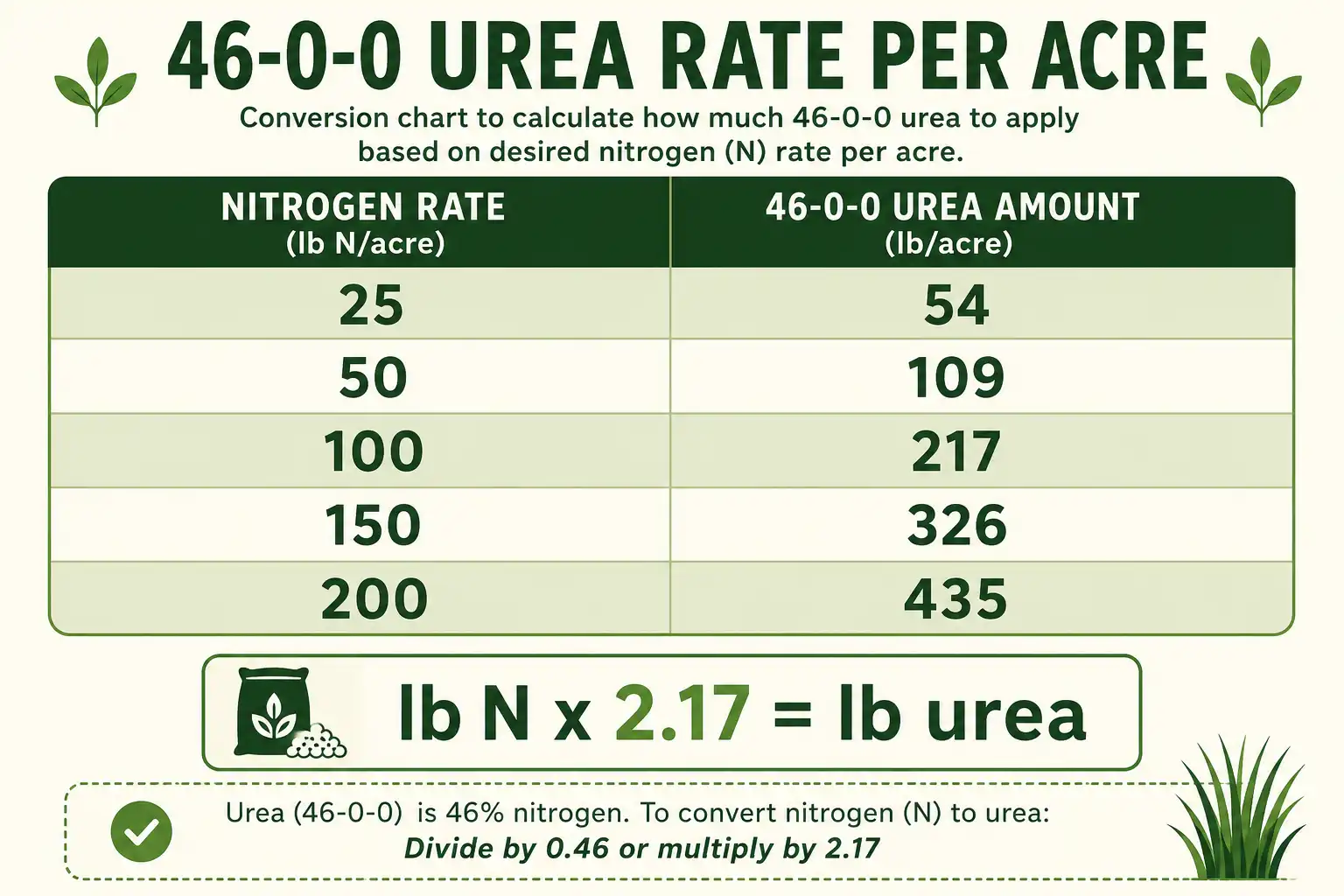
The rate depends on how much actual nitrogen your crop needs. Take that number and divide by 0.46. Urea is 46% nitrogen, so every pound of nitrogen takes about 2.17 pounds of urea. Multiply your nitrogen target by 2.17 to get pounds of urea per acre.
| Nitrogen you want (lb N/acre) | 46-0-0 urea to apply (lb/acre) |
|---|---|
| 25 | 54 |
| 50 | 109 |
| 75 | 163 |
| 100 | 217 |
| 150 | 326 |
| 200 | 435 |
Now, how do you set your nitrogen rate? Start with a soil test, since testing your soil first shows your nitrogen credits. Residue, manure, and a past legume all leave nitrogen behind. That way you neither overpay nor overload the field.
Corn is the big nitrogen user, and its rate is a decision of its own. The old rule of thumb is about 1 pound of nitrogen per bushel of yield goal. But most Corn Belt states now set rates with the MRTN method through extension calculators. The full picture is laid out in this guide on the nitrogen a corn crop needs. For wheat, 30 to 60 pounds of nitrogen per acre at green-up is a common topdress. For grass pasture and hay, plan on 40 to 60 pounds per acre per cutting.
How Do You Apply Urea to a Lawn?
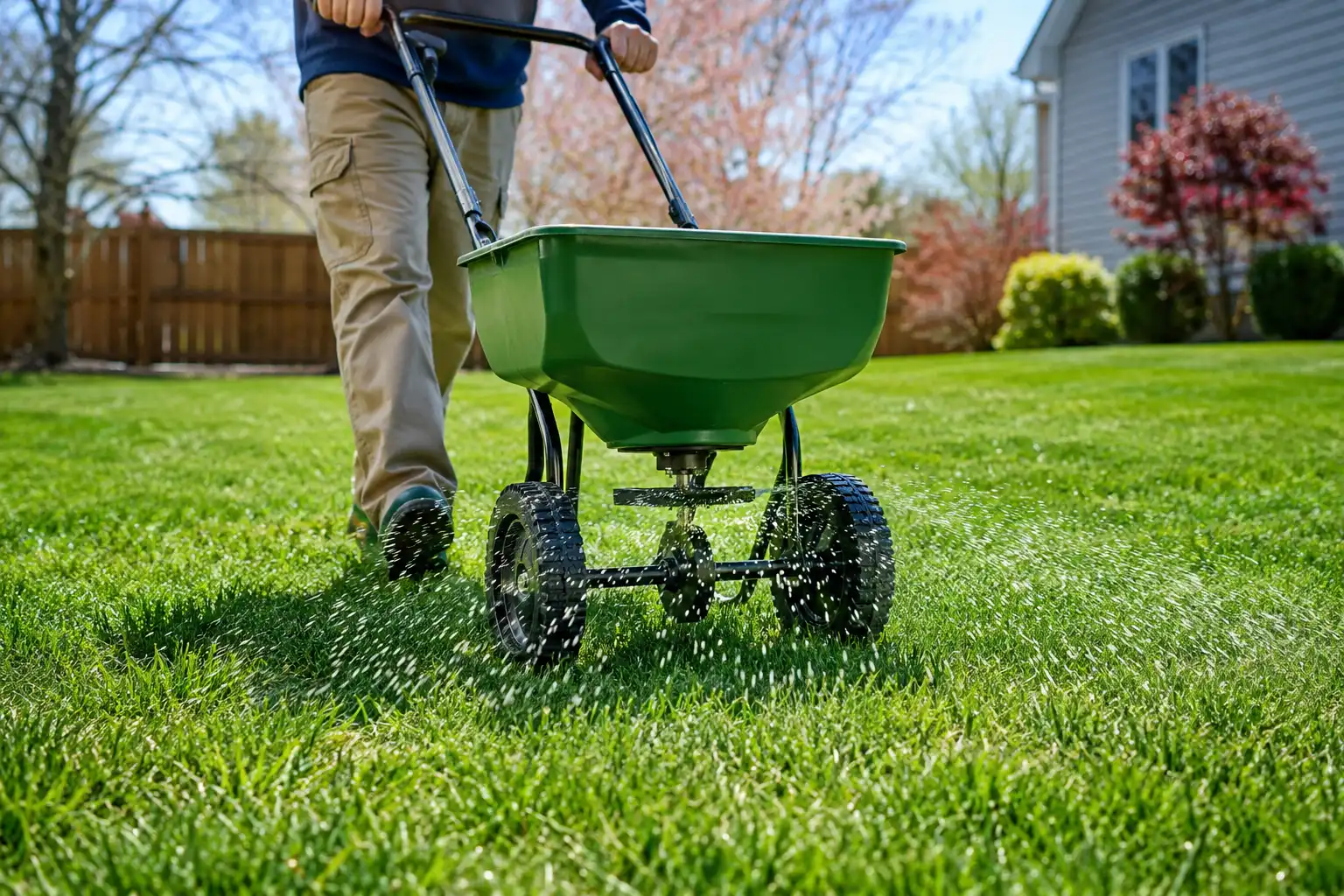
For a lawn, apply urea at about 1 pound of nitrogen per 1,000 square feet. That works out to roughly 2.17 pounds of 46-0-0 per 1,000 square feet. So one standard 50 lb bag of urea covers close to 23,000 square feet at that rate.
A drop spreader lays the most even band on turf, and this drop spreader picks cover settings and calibration. Right after you spread, water in about 0.25 inch so the nitrogen sinks in and does not gas off.
Cool-season grasses like Kentucky bluegrass and tall fescue jump on lawn urea fast. So feed them in spring and fall, not during peak summer heat. Sweep any stray granules off driveways and sidewalks too, since urea stains concrete and can wash into storm drains. Above all, do not over-apply. Piled or doubled granules scorch the grass, so break heavy feedings into lighter passes.
How Fast Does 46 0 0 Work?
You usually see a darker green within 3 to 10 days after you water urea in. Warm soil speeds that up, while cool spring soil slows it down. The full feeding then runs over the next few weeks as roots pull the nitrogen up.
One warning here. If no rain comes and you do not water it in, the green-up stalls and you lose nitrogen to the air. So moisture is the switch that turns urea into real results.
Will 46 0 0 Burn Plants or Grass?
Yes, 46-0-0 fertilizer can burn plants and grass if you apply too much or let it clump. It scorches two ways. Heavy or piled urea acts like a salt and pulls water back out of roots and leaves. It also releases ammonia as it breaks down, which burns tender growth up close.
Watch for yellow streaks that turn brown, plus scorched leaf tips. Those usually trace back to a spreader dump, a doubled pass, or granules landing on wet leaves. So calibrate, keep the spreader moving, and never feed wet foliage.
How Does 46-0-0 Compare to Other Nitrogen Fertilizers?
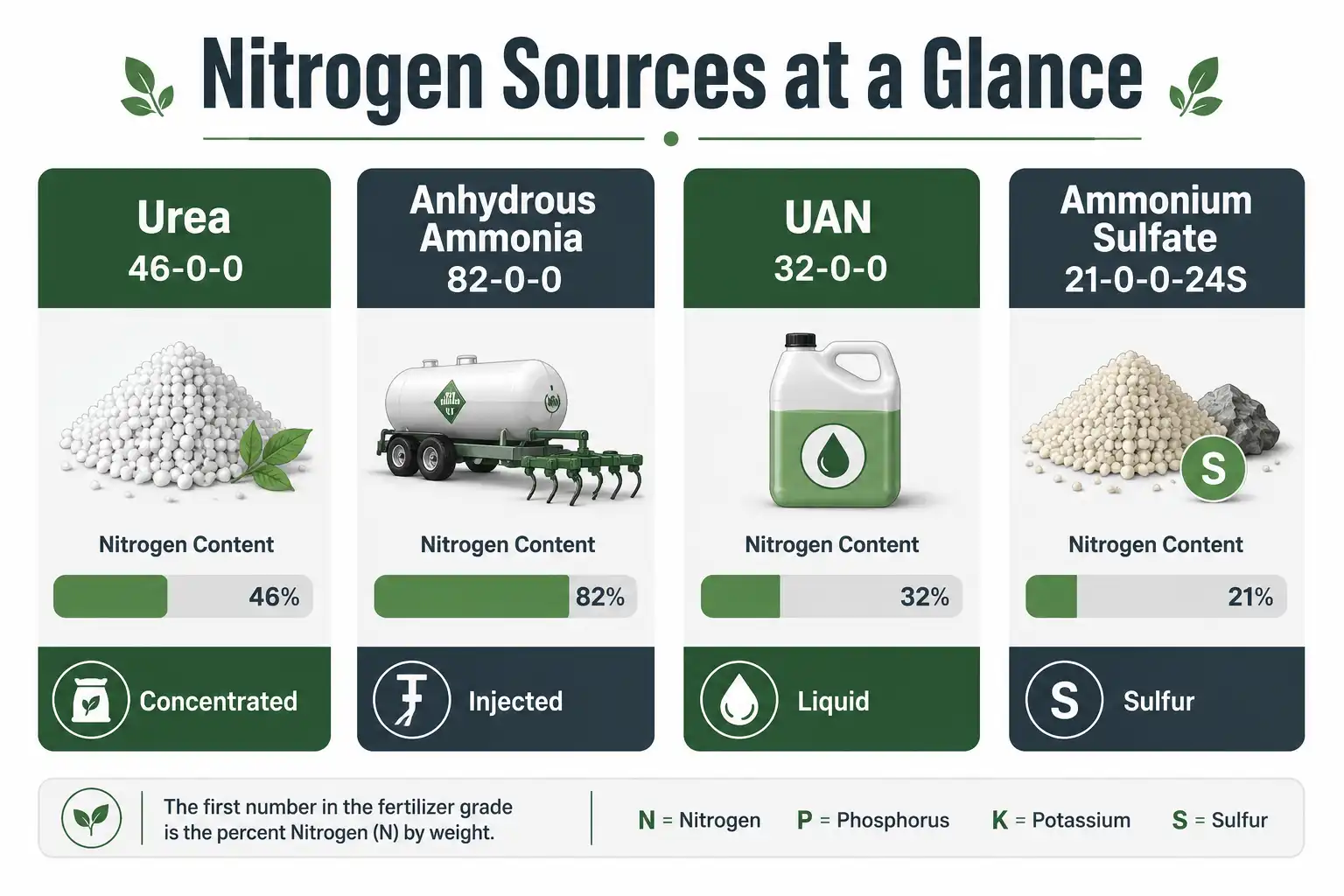
46-0-0 packs the most nitrogen per pound of any common dry fertilizer. So it is the cheapest way to buy dry nitrogen. Still, each other source has its place, depending on your gear and your soil.
| Fertilizer | Grade | Notes |
|---|---|---|
| Urea | 46-0-0 | Highest dry N, low cost, needs watering in |
| Anhydrous ammonia | 82-0-0 | Highest N of all, injected, needs special equipment |
| UAN solution | 28-0-0 or 32-0-0 | Liquid, easy to apply, lower analysis |
| Ammonium sulfate | 21-0-0-24S | Adds sulfur, low volatilization, more acidifying |
| Ammonium nitrate | 34-0-0 | Low volatilization, but limited availability |
Keep one more thing in mind. Urea slowly acidifies the soil over time, like most nitrogen fertilizers. So a routine soil test tells you when a field is ready for lime.
5 Best 46-0-0 Fertilizer Products
For a big lawn you want looking sharp, the Lawn Synergy Lesco 46-0-0 spreads fine and sprays clean. For the best value on field and garden acres, grab the CountryMax Urea 46-0-0 in the 50 lb bag. And for small jobs, food plots, and liquid mixing, Duda Energy Prilled Urea is the easiest to handle.
1. Lawn Synergy Lesco Sprayable 46-0-0 (SGN 200, 50 lb)
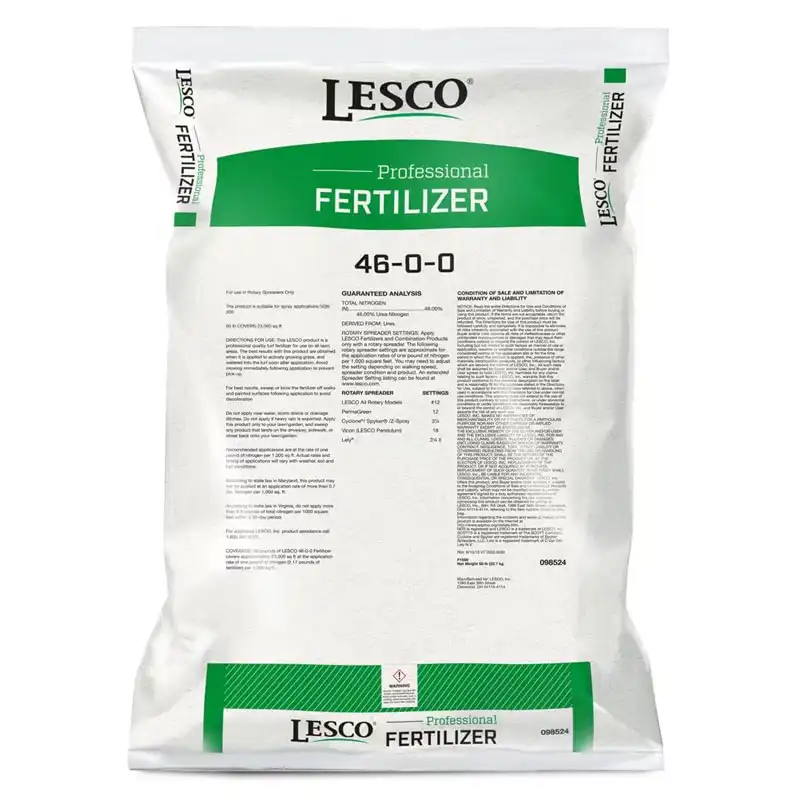
This is the pro turf pick. The fine SGN 200 granules meter evenly through a spreader and dissolve clean for spraying, which is why landscapers lean on it. One 50 lb bag covers about 23,000 square feet, and the Lesco setting is #12. Owners like the quick, uniform green-up. Just know it is non-returnable and will scorch turf if you over-apply.
- Pros: fine even granules; dry or liquid; wide coverage; pro-grade consistency
- Con: non-returnable, and owners say it burns if over-applied
- Best for: large, high-visibility lawns
2. CountryMax Urea Fertilizer 46-0-0 50LB Bag
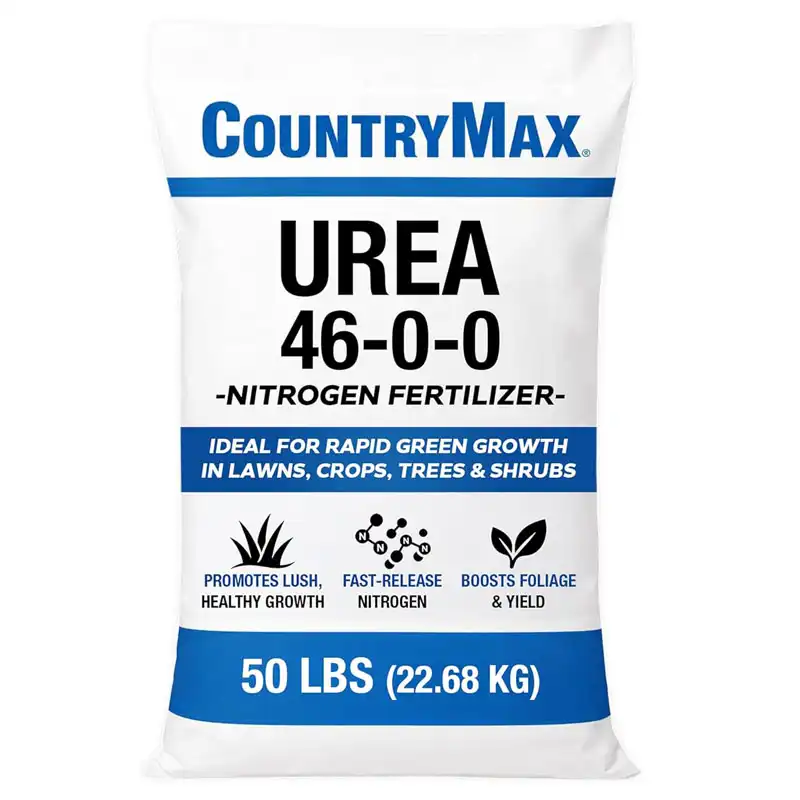
Value workhorse. The uniform granules flow through broadcast and drop spreaders without bridging, so coverage stays even across lawns, gardens, and crop ground. Owners call it a dependable, economical bag for the acreage. Remember it is nitrogen only, with no phosphorus or potassium, so pair it with a P and K source when your soil test asks for it.
- Pros: uniform granules; strong big-bag value; broadcast or drop; versatile
- Con: nitrogen only, no phosphorus or potassium
- Best for: farmers and big lawns on a budget
3. Duda Energy Prilled Urea 46.0% Minimum Nitrogen
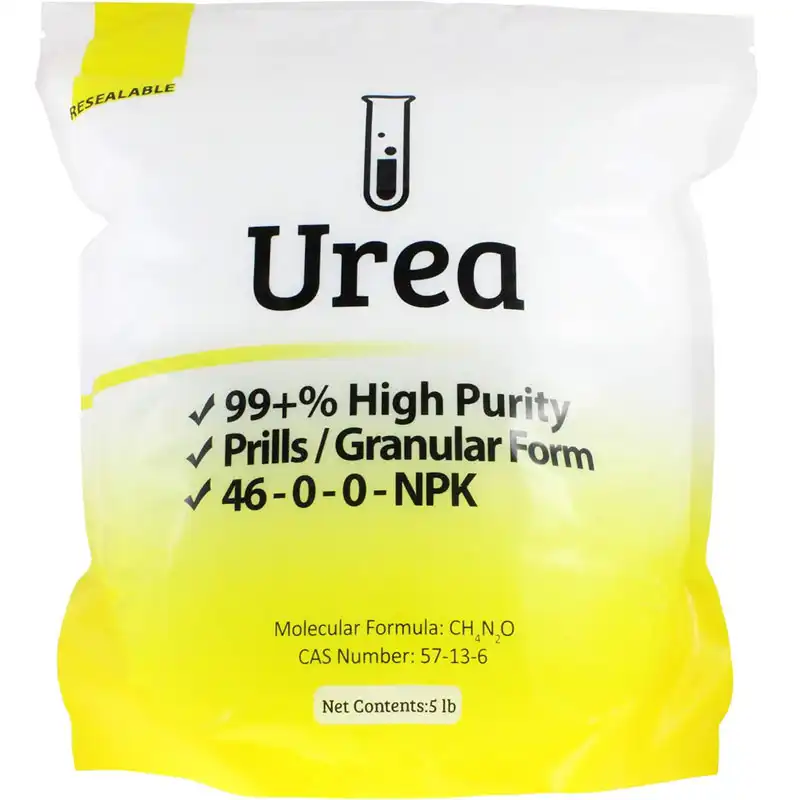
The purity and mixing pick. At 98.5% or better, the round prills broadcast cleanly and dissolve fast, making this a strong choice for liquid feeding and food plots. It comes in sizes from 1 to 45 pounds, so you buy exactly what a job needs. A 25 lb bag treats roughly 11,500 square feet. Owners rate the quality and value highly.
- Pros: high purity; dissolves fast; many size options; clean prills
- Con: small bags cost more per pound
- Best for: gardens, food plots, and liquid mixing
4. Supply Solutions Urea 46-0-0 Nitrogen Fertilizer
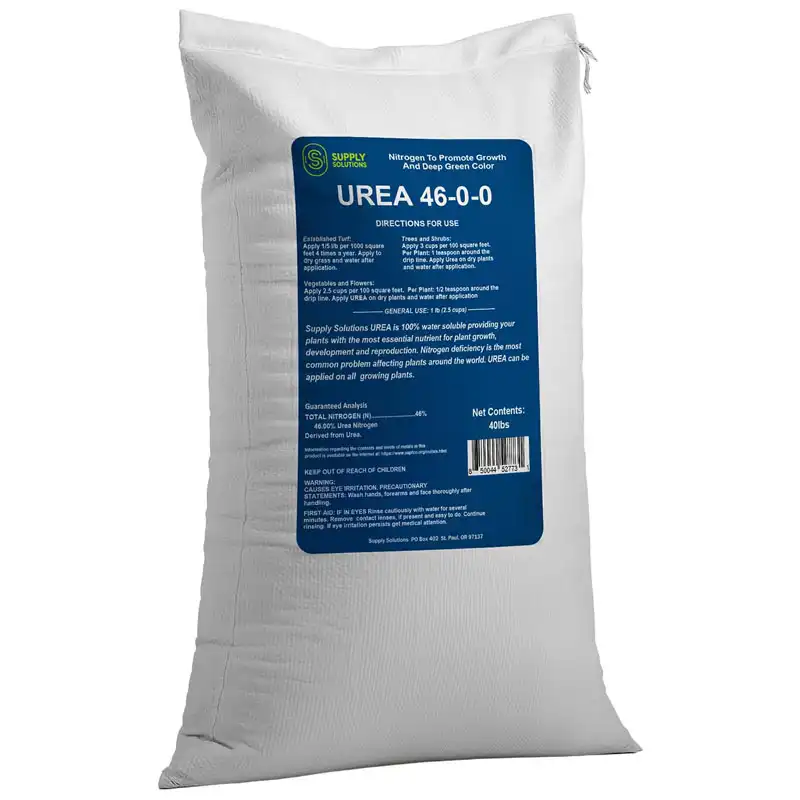
The garden-scale option. It ships in 5 to 40 pound resealable packs, so gardeners and small-plot growers skip the heavy farm bag. Owners report good results on sweet corn and vegetables, though value reviews run mixed. Apply it on the light side and water it in well, because concentrated urea burns fast if you rush a heavy first pass.
- Pros: resealable pack; small sizes; garden-friendly; solid on vegetables
- Con: mixed reviews on value
- Best for: home gardens and small plots
5. Easy Peasy Urea Fertilizer 46-0-0
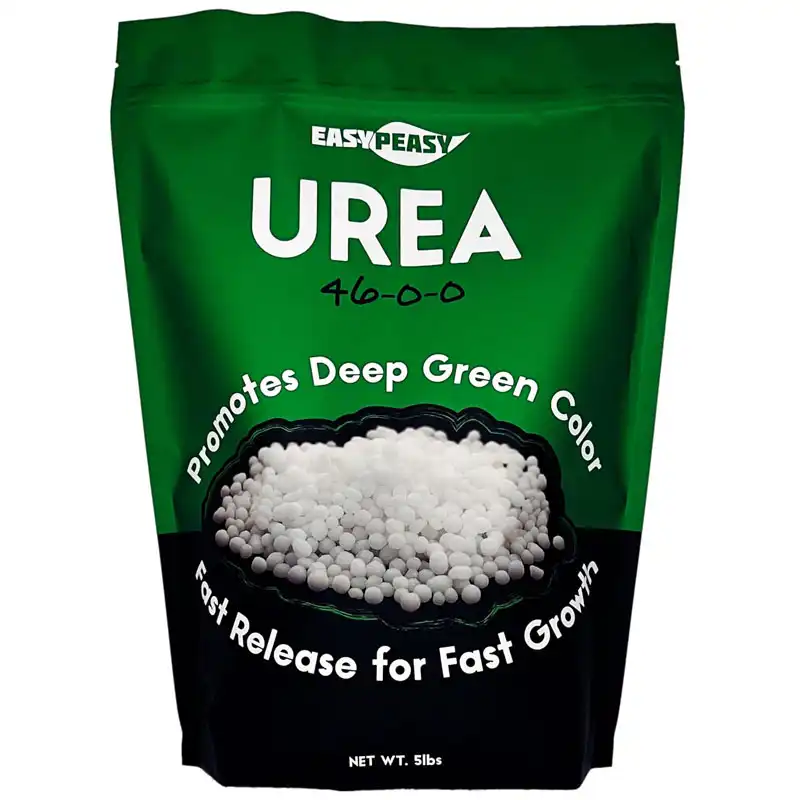
The quick touch-up bag. Sized at 10 and 20 pounds, it suits lawns, home gardens, food plots, and straw bale beds. Owners see fast color, with some reporting several inches of new growth in a month. A few also note leaf burn from heavy use, so start light and water it in. A little goes a long way with this one.
- Pros: small bags; fast green-up; simple to apply; garden and plot use
- Con: owners report burn if over-applied
- Best for: small lawns and fast garden feeding
FAQs on 46 0 0 Blend
How do you store a bag of urea?
Is 46-0-0 fertilizer organic?
Can you mix urea with other fertilizers?
Does urea fertilizer go bad?
Bottom Lines
Straight urea is the cheapest nitrogen available, and it earns its keep when the volatilization risk is respected. Test the soil first. Match the urea rate to the nitrogen the crop actually needs. Water it in within a day or two. It stays off the seed, and on the lawn, splitting feedings prevents scorching the grass. Do that, and 46-0-0 gives you fast, dependable green-up on almost anything you grow.