Best Battery Operated Backpack Sprayer: 8 Picks and PSI Guide
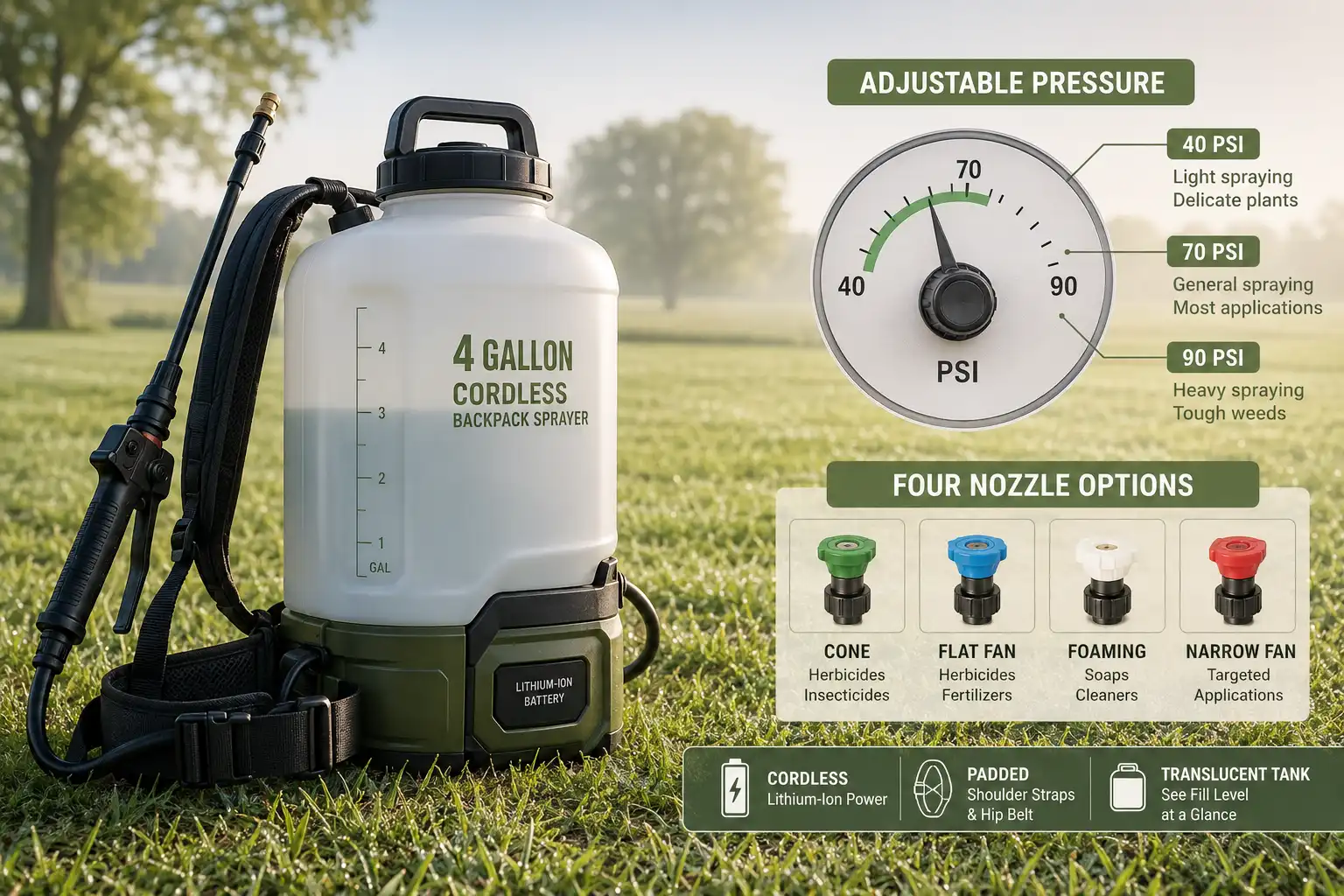
Hand pumping drops pressure as your arm tires, which streaks coverage and wastes mix. A pump driven pack holds output steady instead. So the best battery operated backpack sprayer suits any property spraying herbicide, pesticide, or fertilizer on a schedule.
A cordless backpack sprayer is an electric backpack sprayer that uses a small pump, so you spray without hand pumping. Many models act like a battery powered garden sprayer running on a lithium-ion battery. The pump holds pressure steady for homeowners, gardeners, small farms, landscapers, and pest control pros.
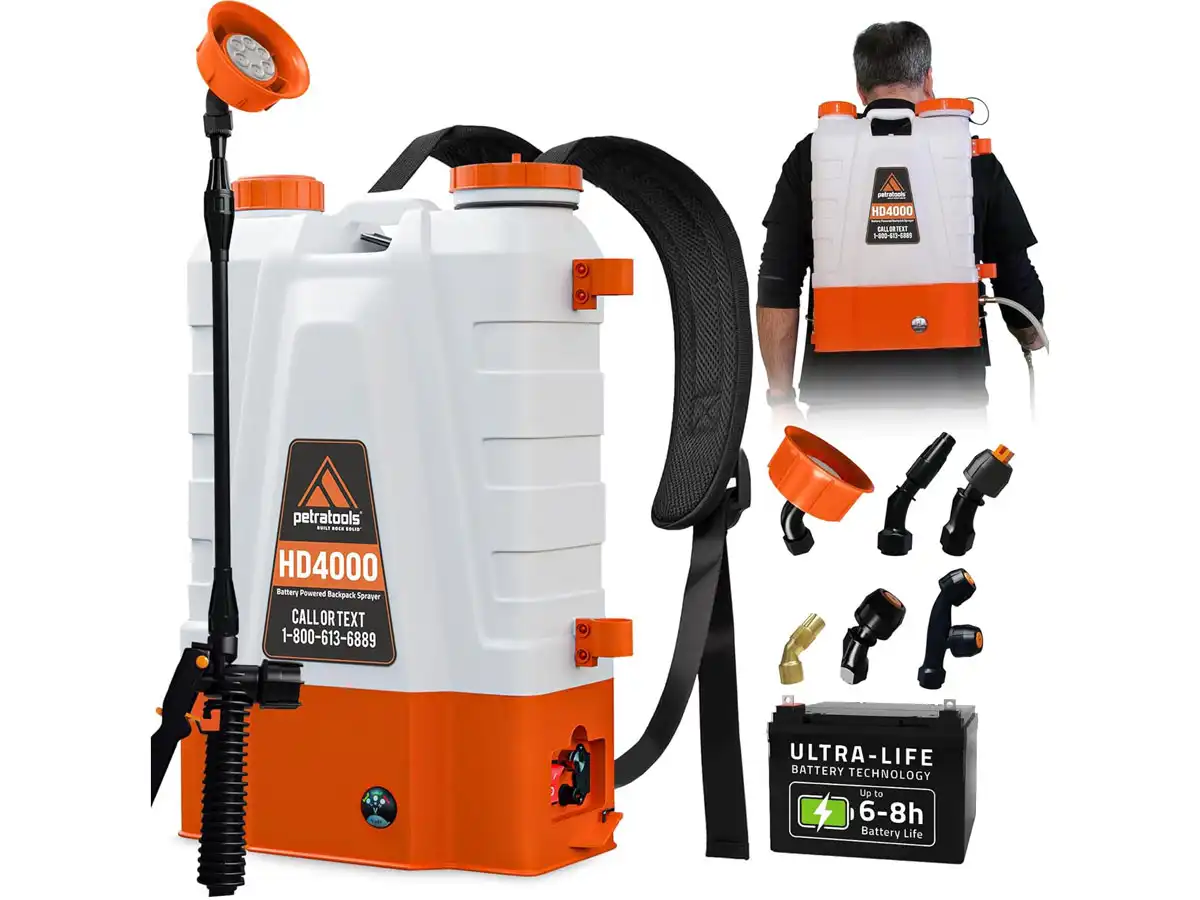
The top pick overall is the PetraTools HD4000, which pairs a 40 to 90 PSI dial with all day runtime. The EGO Power+ 4 Gallon leads on pressure at 350 PSI. The VAXMAY 4 Gallon suits tight budgets.
The 8 Best Battery Operated Backpack Sprayers at a Glance (Quick Comparison)
| Preview |
#1
Best Value
|
#2
Best Overall
|
#3
|
#4
|
#5
|
#6
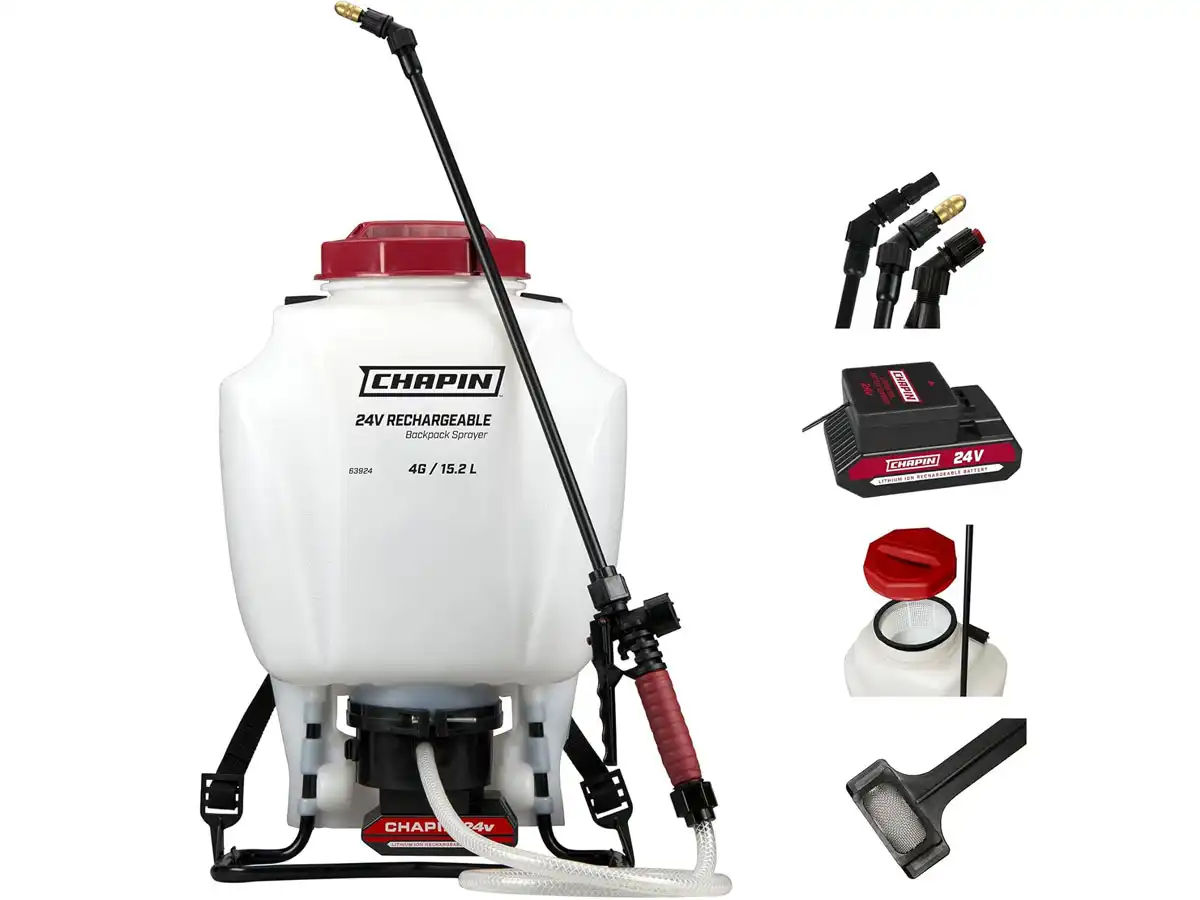
|
#7
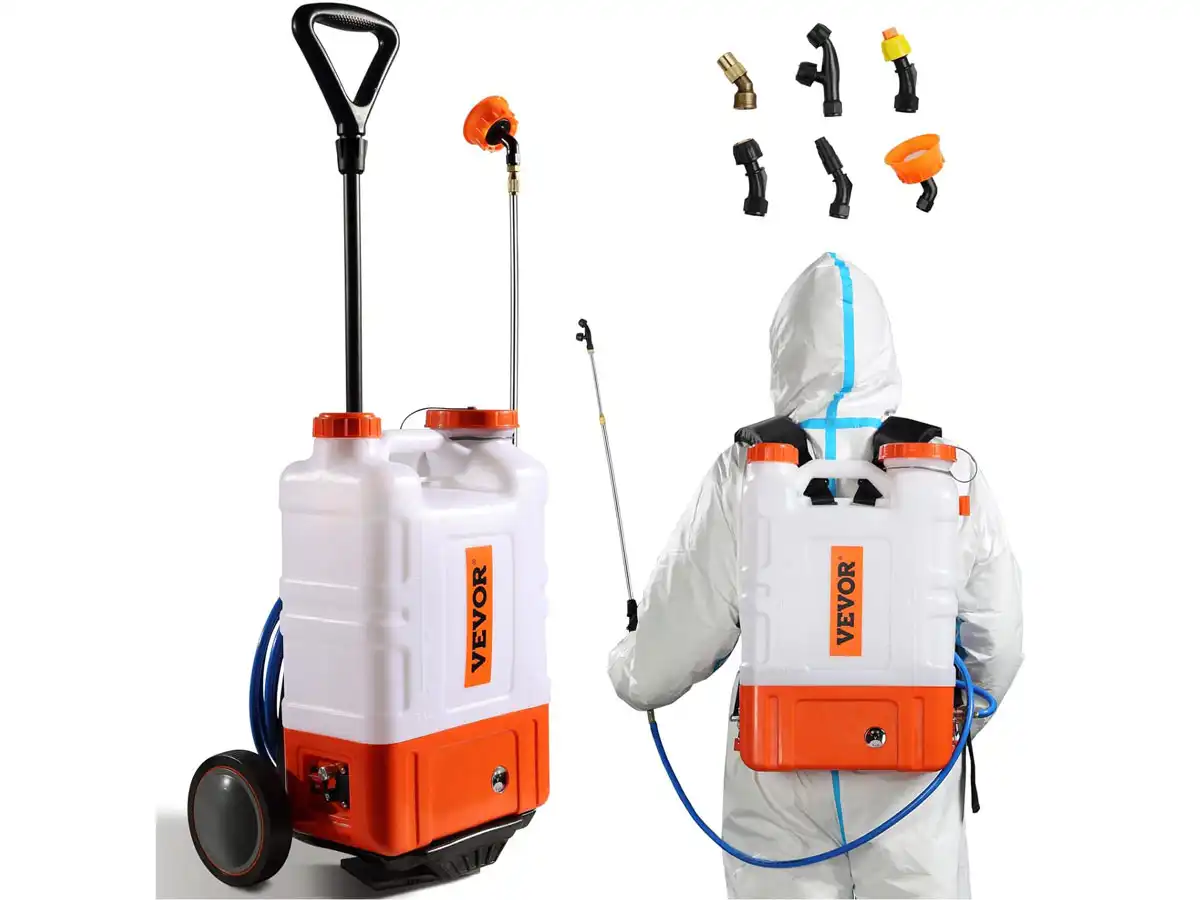
|
#8
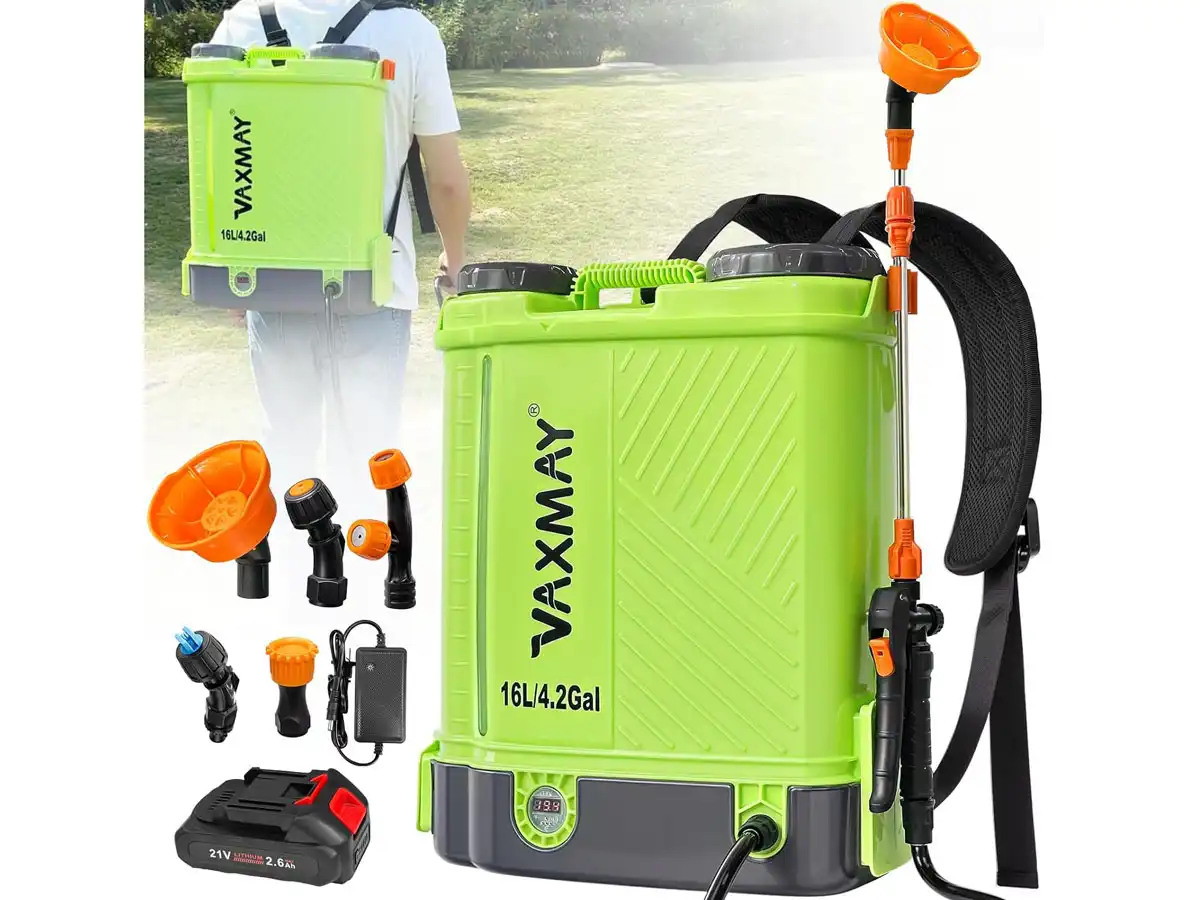
|
| Title | EGO Power+ BSP3500 | PetraTools HD4000 | DEWALT DXSP190681 | FlowZone Zephyr | MY4SONS M4 | Chapin 24V | VEVOR 4 Gallon | VAXMAY 4 Gallon |
| Price |
$329.00 – 09.01.2026 See Latest Price |
$189.99 – 09.01.2026 See Latest Price |
$287.23 – 08.27.2026 See Latest Price |
$269.99 – 08.27.2026 See Latest Price |
$279.00 – 08.27.2026 See Latest Price |
$150.59 – 08.27.2026 See Latest Price |
$116.90 – 08.27.2026 See Latest Price |
$77.59 – 08.27.2026 See Latest Price |
| Overall Score | ||||||||
| Suits | Shrubs, small trees, fence lines | Long sessions on turf and gardens | All day wear, mixed chemicals | Beds, greenhouses, spot work | Large lawn sections | Gritty water, weekly yard work | Long lanes and fence rows | Small yards, tight budgets |
| Tank | 4 gal | 4 gal | 4 gal | 4 gal | 4 gal | 4 gal | 4 gal | 4 gal |
| Rated pressure | Up to 350 PSI | 40 to 90 PSI | Rated by flow, 0.1 to 0.6 GPM | Up to 40 PSI | 80 PSI per spec sheet | Up to 45 PSI | 0 to 94 PSI | Up to 100 PSI |
| Battery | 56V, sold separately | 12V 8Ah included | 20V 2.0Ah included | 18V included | DEWALT 20V, sold separately | 24V included | 12V 7.2Ah lead acid | 21V 2.6Ah |
| Dry weight | 16.7 lb | 16.5 lb | 17.3 lb | 14.0 lb | 10.0 lb | 11.0 lb | 20.7 lb | 9.0 lb |
Figures come from manufacturer listings and published spec sheets. Ratings describe maximum output, so plan for lower real numbers at full pressure.
In Depth Reviews of Each Battery Operated Backpack Sprayer
1. PetraTools HD4000 4 Gallon Battery Powered Backpack Sprayer
PetraTools HD4000 is a 4-gallon battery powered backpack sprayer built for long runs in gardens, lawns, and small fields. This backpack sprayer is an American family-owned brand founded in 2019, with US-based support. This one fits large yards, gardens, and small farms. The 40 to 90 PSI dial and six nozzles cover turf herbicide, fence lines, and spot pests. A wide-mouth lid and screen filter speed up filling. An onboard battery meter also shows remaining charge, so you can plan the last row. The 34.5-inch extendable wand reaches under foliage without kneeling.
PROS
- Runtime leads this list for big spray days
- Pressure dial fits turf, beds, and fence lines
- Wide-mouth lid and screen filter speed filling
- Battery meter shows remaining charge
CONS
- Extra fittings add more O-rings to inspect
Specs:
- 4 gal tank; adjustable 40 to 70 PSI band inside a 40 to 90 PSI dial
- 12V 8Ah battery; 6 to 8 hours; 200+ gal per charge at light-duty settings
- 6 nozzles; 34.5 in extendable wand; 4 ft hose
- Onboard battery meter; padded straps and waist support
Rinse it after each tank, and wear gloves and eye protection when mixing or spraying. Owner reports consistently note full day runtime on turf work. A few mention weeping at hose fittings until those fittings snug down. Pick it if you need all-day runtime in a 4-gallon pack.
Best for: acreage-style lawn care and farm chores where all-day battery life matters most.
2. EGO Power+ 4 Gallon Cordless Backpack Sprayer
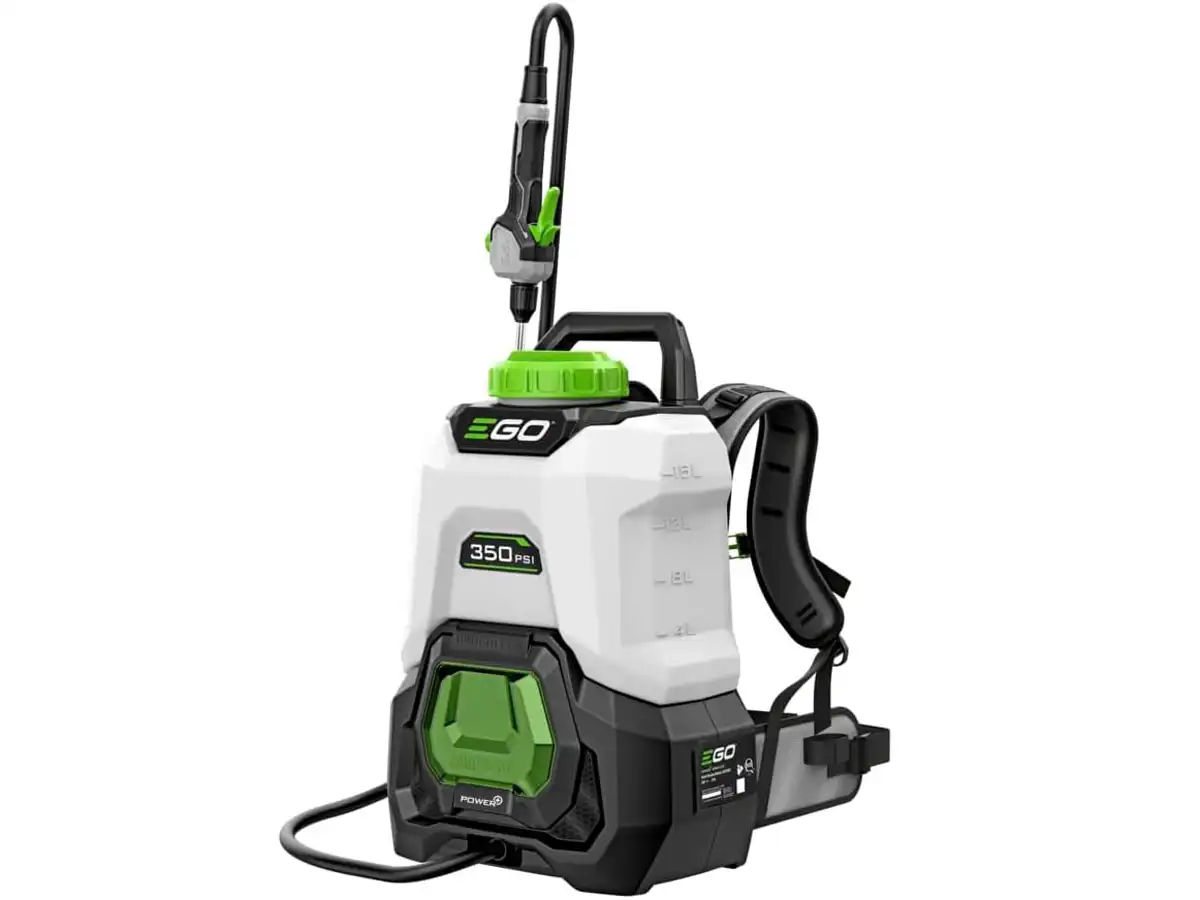
EGO Power+ 4 Gallon is a high-output cordless backpack sprayer that runs on the EGO 56V ARC Lithium battery platform. This pick fits crews who already use EGO batteries for lawn work. It also fits professionals and large-property owners handling shrubs, small trees, and long fence lines. The brushless motor lists up to 350 PSI and 0.6 GPM, and the wand dial adjusts output while you walk. EGO documentation puts reach at 19.7 feet vertical and 21 feet horizontal. Four nozzles (cone, fan, foaming, shower) cover turf bands and foliar sprays. The premium back pad and waist support steady long routes.
PROS
- Wand dial controls pressure and flow without stopping
- 350 PSI reaches height for shrubs and trees
- Premium back pad and waist straps steady the load
- Five-year tool warranty on the sprayer
CONS
- Battery and charger sold separately
Specs:
- 4 gal translucent tank; 16.7 lb tool weight
- Brushless motor; up to 350 PSI; up to 0.6 GPM
- Reach 19.7 ft vertical; 21 ft horizontal
- 4 nozzles; IPX4 build; 5-year tool warranty
Lower the PSI near gardens, and wear gloves and eye protection during mixing. Owner reports consistently note steady output at height, plus quick dial changes moving from turf to shrubs. Pick it if you already run EGO 56V batteries and you need maximum reach.
Best for: pro spraying and tall-target work when maximum PSI beats bundle value.
3. Chapin International 4-Gallon 24V Extended Spray Battery Backpack Sprayer
Chapin International’s 24V model is a 4-gallon rechargeable backpack sprayer designed and produced in the USA with US-based support. It fits small to medium yards and gardens, since it runs up to 45 PSI. That band suits turf and bed work. The 6-inch opening and 3-stage filtration help reduce clogs when your water or mix carries grit. Chapin has built sprayers since 1884, and parts availability reflects that history. An 11-pound empty weight also keeps the loaded pack manageable for most users.
PROS
- Three stage filtration system
- Wide 6 inch fill opening
- Light 11 pound dry weight
- Designed and supported domestically
CONS
- Poly wand wears faster in brush
- Roughly 2 hour runtime per charge
Specs:
- 4 gal poly tank; 6 in opening with filter basket
- Up to 2 hours; listed up to 58 gal per charge
- 45 PSI max; 3-stage filtration; 2-year warranty
- 24V battery and charger included
Use it for weekly maintenance, and keep the filters clean. Wear gloves and goggles. Owner reports consistently note easy filling and few clogs, though several want longer runtime on bigger properties. Pick it for lawns and garden beds when filtration matters more than high PSI.
Best for: routine yard and garden work where easy fill and filtration matter more than high PSI.
4. MY4SONS M4 Cordless 4-Gallon Battery Powered Backpack Sprayer
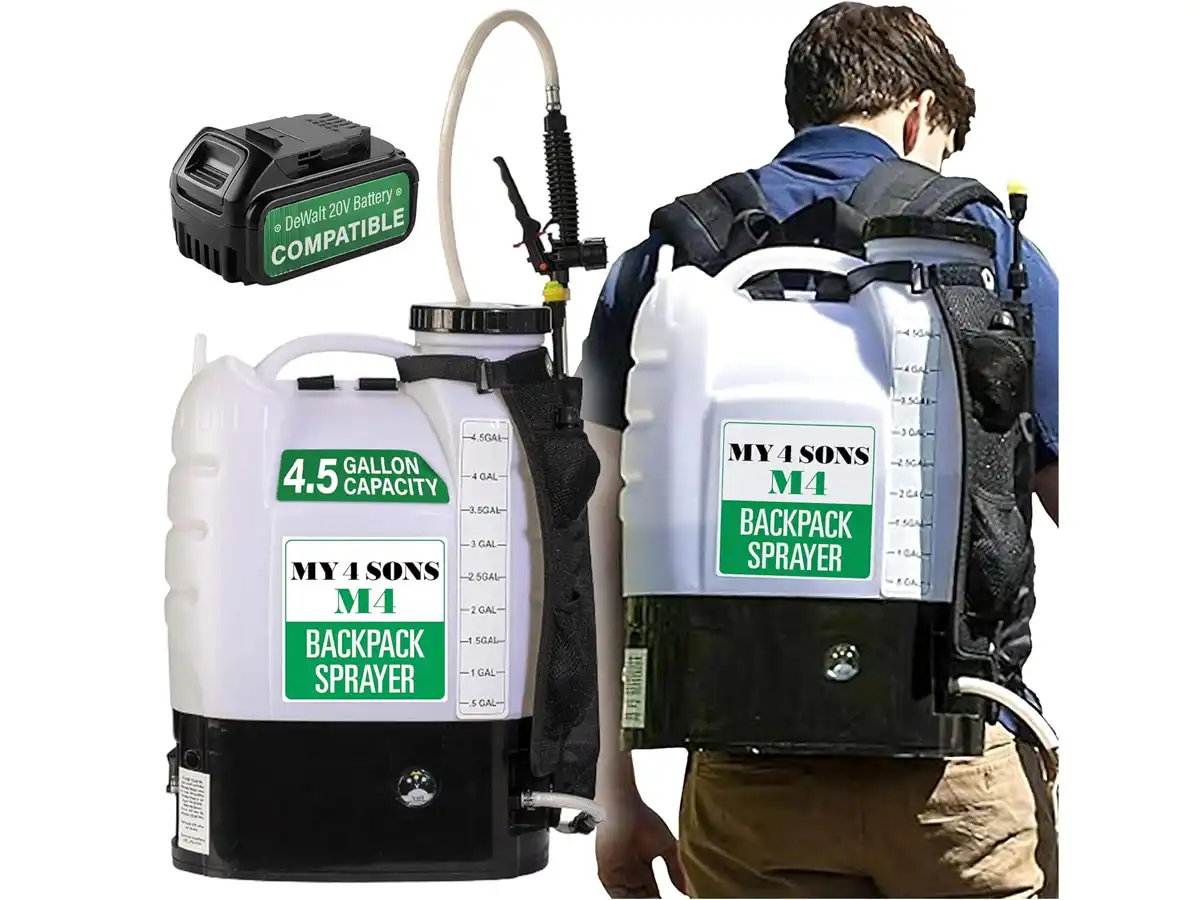
MY4SONS M4 is a 4-gallon 20V battery backpack sprayer that accepts DeWalt 20V packs. It fits large yards and small farms because the pump claims up to 100 PSI and up to 1.0 GPM. The wide-mouth tank uses a screen filter and neoprene lid seal to limit mess. A reinforced hose and stainless steel wand handle rough work, and the padded straps include a wand pocket. At about 10 pounds empty, it is the lightest full-size unit in this group.
PROS
- DeWalt-battery compatibility reduces platform clutter
- Higher pressure claim targets faster coverage on turf
- Neoprene lid seal helps prevent slosh leaks
- Lightest full-size pack in this lineup
CONS
- Battery and charger sold separately
Specs:
- 4 gal translucent tank; wide mouth plus screen filter
- Listed 80 PSI on the spec sheet; pump text claims 100 PSI
- Up to 1.0 GPM flow; accepts DeWalt 20V packs
- Stainless wand; reinforced hose; padded straps; wand pocket
Test with water first, and wear gloves and goggles when mixing. Owner reports consistently note fast coverage on open turf, plus real convenience from sharing one battery platform. Pick it for DeWalt compatibility and faster coverage.
Best for: DeWalt tool owners who want one battery system and a sprayer set up for large lawn coverage.
5. VAXMAY 4 Gallon Battery Powered Backpack Sprayer
VAXMAY’s 4-gallon unit is a light lithium ion backpack sprayer for budget buyers. It still gives pressure control for weeds and feed. It fits small to medium yards and gardens because it lists 100 PSI, five nozzles, and a 39.3-inch telescopic wand. A digital voltage display and low-voltage cutoff help protect the pack, and the waist support eases carry. At roughly 9 pounds empty, it is the lightest pack here. Battery notes are mixed across listings. So confirm whether your unit takes Makita 18V packs or ships with the 21V pack.
PROS
- Digital voltage display helps plan the last row
- Discharge protection shuts off at low voltage
- Waist support reduces shoulder bite
- Telescopic wand extends to 39.3 inches
CONS
- Battery platform listed inconsistently
- Short hose limits orchard reach
Specs:
- 4 gal tank; about 4.06 kg (9.0 lb) empty weight
- Up to 100 PSI with adjustable knob; 5 nozzles
- Telescopic wand to 39.3 in; 1-year warranty
- 21V 2.6Ah pack with low-voltage cutoff
Test with water first, and wear gloves and goggles. Owner reports consistently note easy carry and a useful charge readout. A few flag pressure fade late in a tank. Pick it if price is the driver and you confirm the battery setup before ordering.
Best for: tight budgets that still need 100 PSI power and a lighter carry.
6. VEVOR 4 Gallon Battery Powered Backpack Sprayer with Cart
VEVOR’s cart combo is a 4 gallon battery backpack sprayer that you wear or roll. That flexibility helps on long fence lines and gravel lanes. The cart option earns its keep when the tank stays full for hours. It fits yards and small farms that need long hose reach and adjustable pressure up to 94 PSI. The 7.2Ah lead-acid battery lists 3 to 4 hours. The kit also includes 6 nozzles and 2 wands for pattern control. A metal wand adjusts from 21 to 39 inches, while the plastic wand suits corrosive mixes.
PROS
- Cart reduces back fatigue on long passes
- Long hose reaches rows without dragging the tank
- Plastic wand fits bleach-type solutions
- Lockable trigger supports continuous spraying
CONS
- Lead-acid pack adds weight over lithium-ion
Specs:
- 4 gal tank; 7.2Ah lead-acid battery; 3 to 4 hours runtime
- 0 to 94 PSI adjustment; up to 3.6 L/min flow
- Cart plus straps; 157.5 in hose; 6 nozzles; 2 wands
- Metal wand 21 to 39 in; plastic wand for corrosive liquids
Roll it on lanes, then wear it when the ground gets rough. Wear gloves and eye protection, and keep bleach setups separate from herbicides. Owner reports consistently note the cart saves the back on long passes. Carry weight still feels high once the wheels come off. Pick it if you want cart flexibility and long-hose reach on a budget.
Best for: budget-minded growers who want roll-or-wear flexibility for bigger spray days.
7. DEWALT 20V MAX 4-Gallon Lithium-Ion Cordless Backpack Sprayer
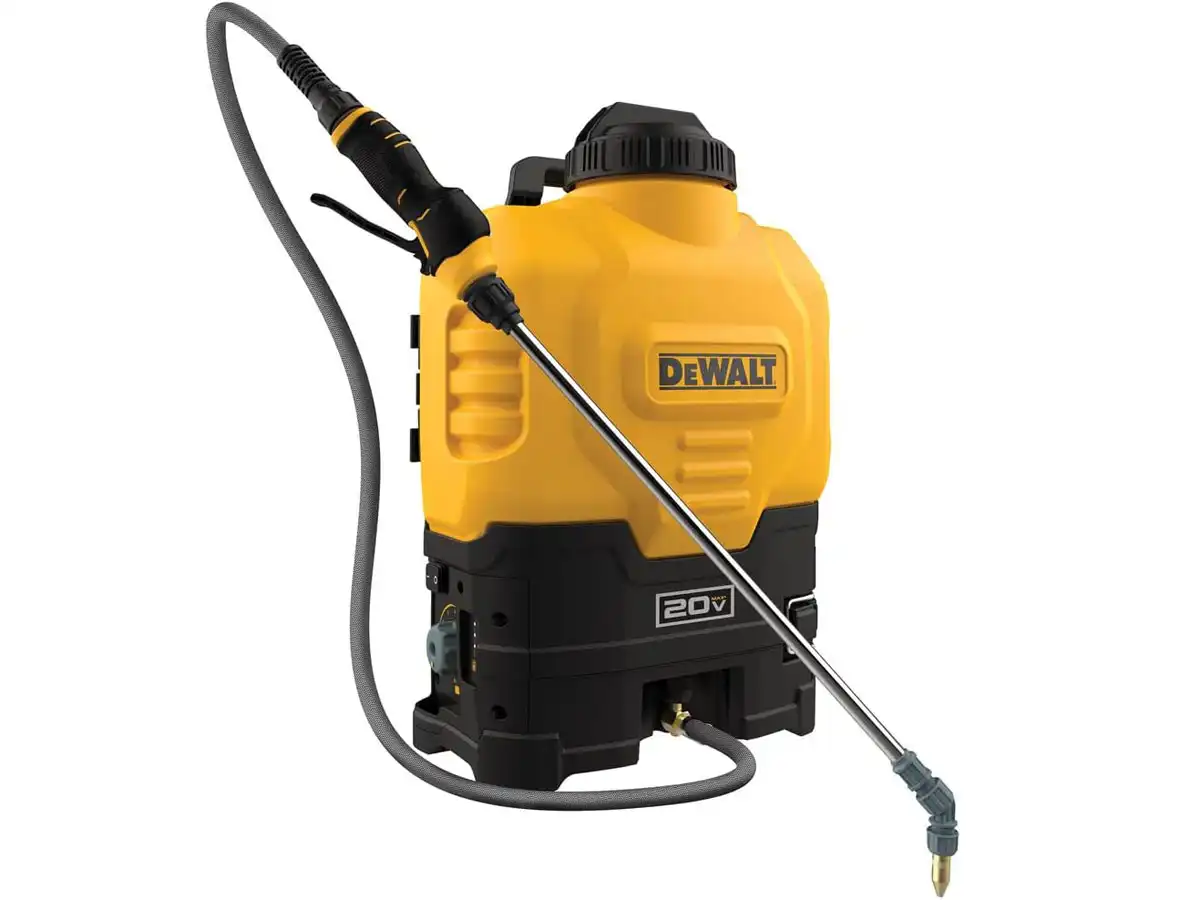
DEWALT’s 4-gallon unit is an electric backpack sprayer built by Fountainhead Group. It handles weed control, pest jobs, and sanitizing runs without hand pumping. The carry system stands out for long wear. It fits homeowners and small farms that rotate between herbicide, pesticide, and sanitizing work. Variflo adjusts flow from 0.1 to 0.6 GPM, triple filtration cuts clogging, and Viton seals resist chemical wear. DEWALT rates this model by flow rather than by peak pressure. So treat it as a steady-banding tool, not a long-reach one. The padded shoulder straps and hip belt keep the load steady on longer routes.
PROS
- Padded straps and hip belt spread weight off shoulders
- Lock-on shutoff reduces hand fatigue
- Viton seals resist chemical wear better than basic rubber
- Battery and charger included in the kit
CONS
- Hose length limits reach versus 5 ft systems
Specs:
- 4 gal tank; 20V battery and charger included
- Variflo flow control, 0.1 to 0.6 GPM; triple filtration to cut clogging
- Stainless wand; nylon-reinforced 50 in hose; Viton seals
- 3-year warranty; model DXSP190681
Rinse the nozzle after each tank, and store the battery indoors. Wear gloves and eye protection when mixing. Owner reports consistently note comfort across multi-hour sessions, plus fewer clogs than budget units on well water. Pick it for comfort and chemical-ready seals on regular yard and farm rounds.
Best for: growers who wear a pack for hours and want comfort plus durable seals.
8. FlowZone Zephyr QuickSwap Compatible Battery Powered Backpack Sprayer
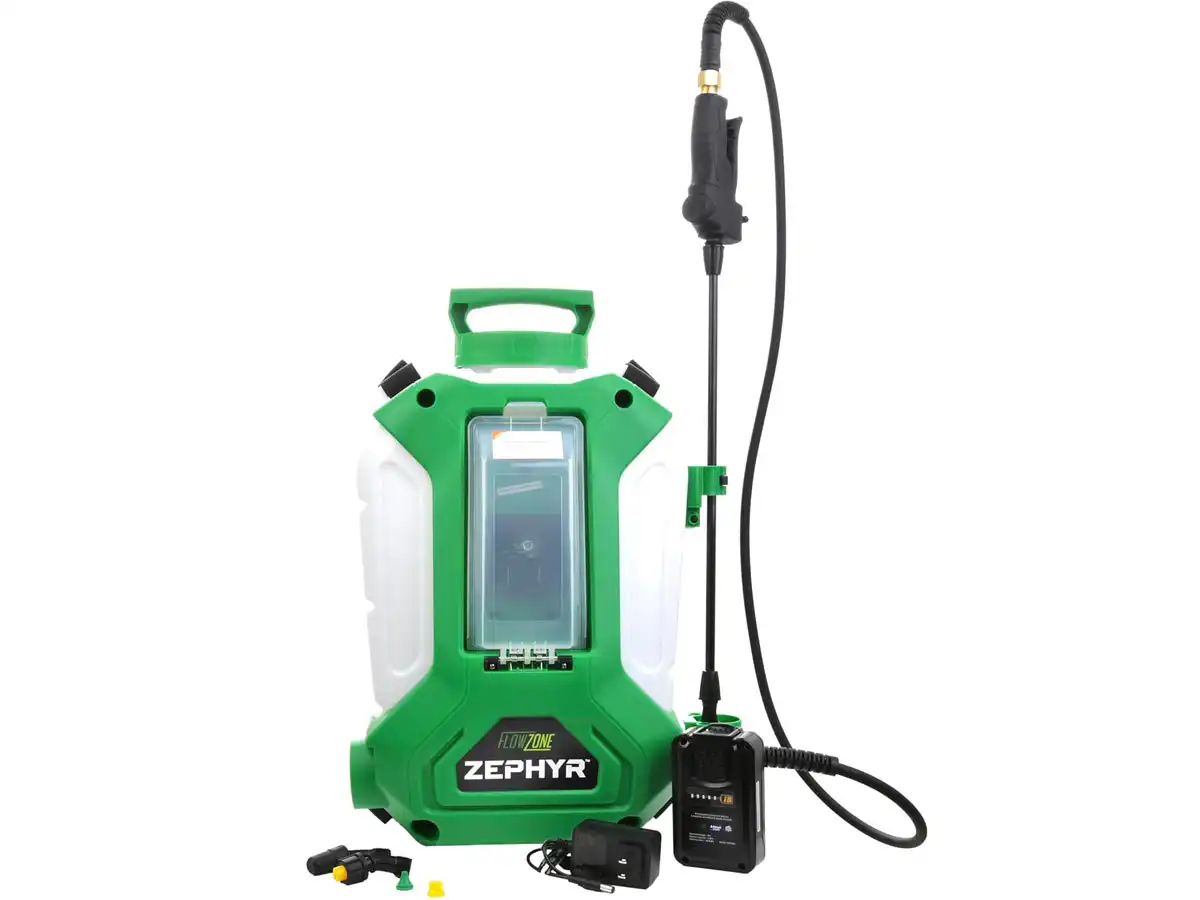
FlowZone Zephyr is a 4-gallon battery backpack sprayer tuned for low-flow accuracy, not high pressure. It fits gardens, greenhouses, and spot treatments on small farms. The 40 PSI ceiling and 0.20 GPM minimum flow give controlled application. TeeJet-style tips, a 5-foot hose, and the included 18V battery support up to 2 hours of spraying. QuickSwap compatibility lets you move between packs instead of waiting on a charger. At 14 pounds empty, it also carries well on slopes.
PROS
- TeeJet-style tips produce clean fan patterns
- Low minimum flow (0.20 GPM) reduces chemical waste
- Lighter pack weight helps on slopes
- QuickSwap battery changes avoid charger waits
CONS
- Slow for broad-acre spraying
- Limited reach on tall targets
Specs:
- 4 gal tank; 14 lb empty weight
- 18V battery and charger included; up to 2 hours; listed 24 gal output
- 40 PSI max; TeeJet-style nozzles; QuickSwap compatible
- 5 ft hose for bed and bench work
Use it for bed edges where drift control matters. Wear gloves and eye protection, and avoid spraying in wind. Owner reports consistently note tight pattern control near sensitive plants, though several want a larger battery option. Pick it for precision work when control matters more than speed.
Best for: careful applicators who want precision and lighter carry for daily touch-ups.
How to Choose the Best Battery Operated Backpack Sprayer: Buying Guide
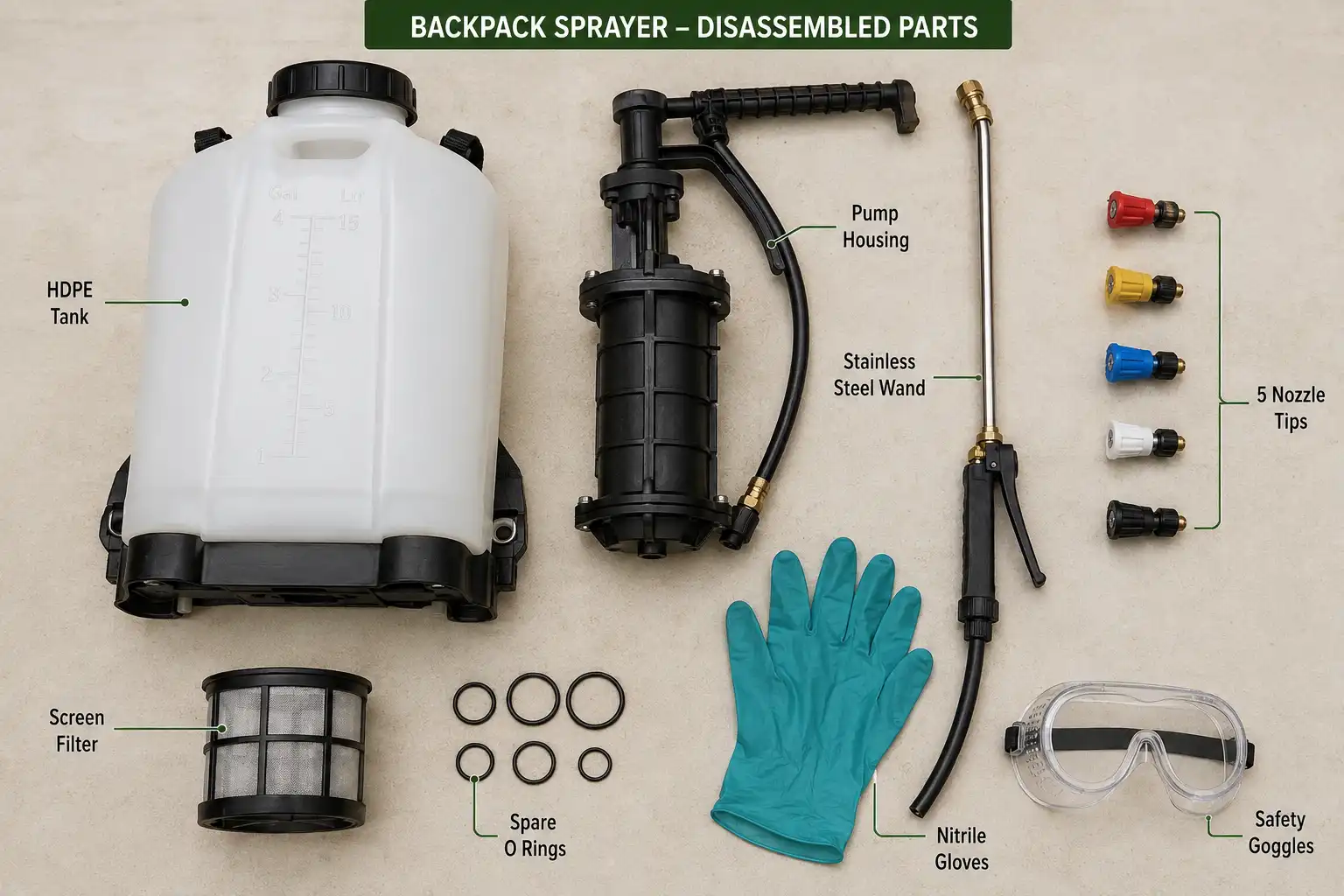
Start with the use case, then match features to that job. A backpack unit delivers good coverage when the tank size, pump, and nozzle fit your mix and target. Get those three wrong and no amount of pressure fixes the pass.
Tank Capacity: How Many Gallons Do You Need?
Most people land on a 4-gallon tank because it balances carry weight with fewer stops. A 4 gallon backpack sprayer also fits most mixing jobs for lawns and gardens.
Think about backpack sprayer tank size as a balance between tank capacity and how often you accept a refill. The numbers below keep that tradeoff simple.
- 2 to 3 gallons works for small yards under 0.5 acre, spot spraying, and light garden work.
- 4 gallons suits most homeowners and many landscapers.
- 4 to 5 gallons fits larger properties and crews who spray for hours. A 5 gallon battery backpack sprayer reduces refills but adds weight.
- Over 5 gallons often feels top-heavy on foot. A cart or ATV setup fits better at that point.
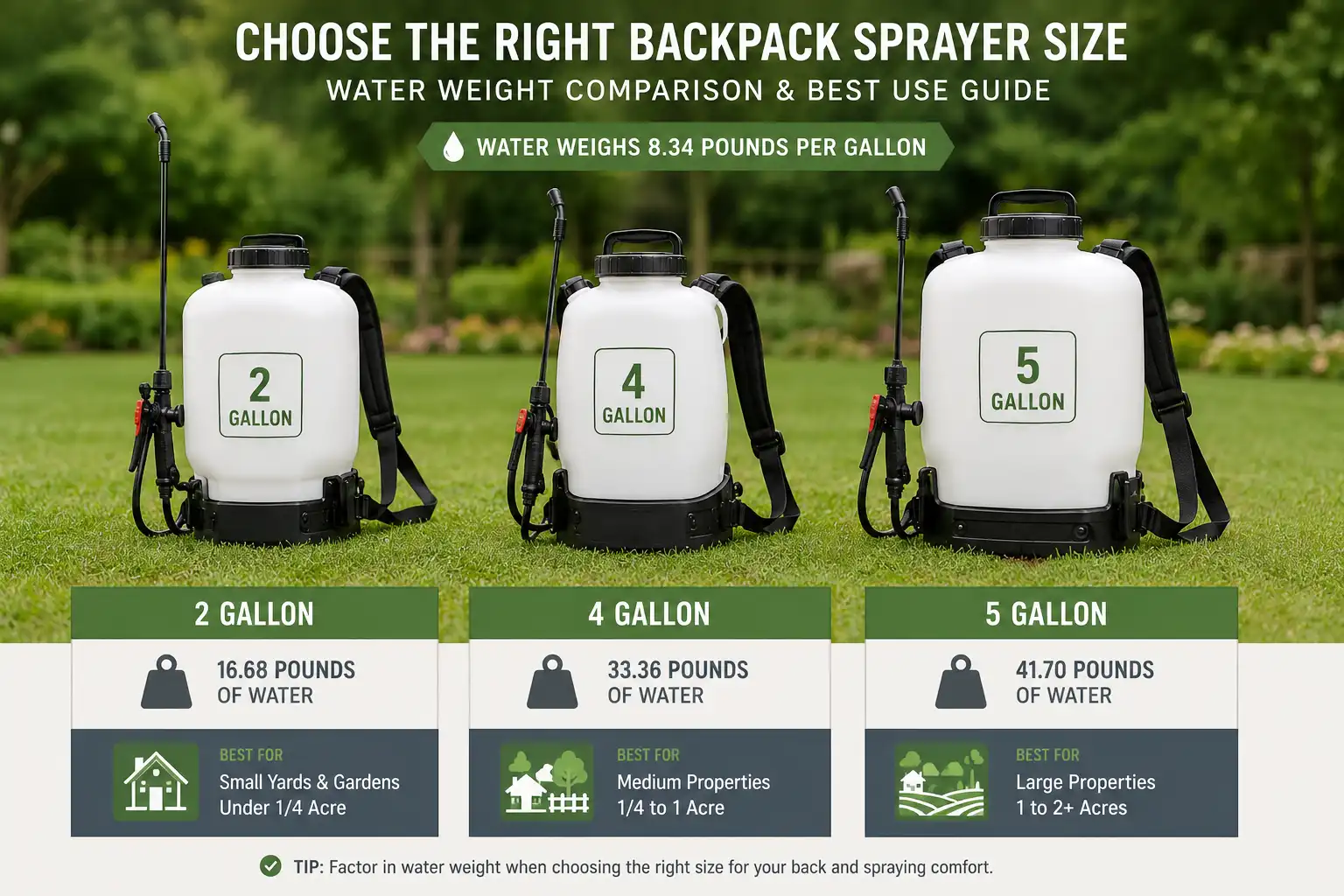
Weight matters more than marketing. Each gallon of water weighs about 8.34 pounds. Four gallons adds about 33 pounds before you count the sprayer itself. Many packs weigh 15 to 20 pounds empty. So a full tank often rides in the 35 to 50 pound range.
If you shop for a 4 gallon battery backpack sprayer, look at strap quality first. Comfort decides how steady your pass stays on the last row. Past roughly 5 gallons, compare ATV sprayer setups before you commit to walking every acre.
Battery Life and Type: Lithium-Ion vs. Lead-Acid
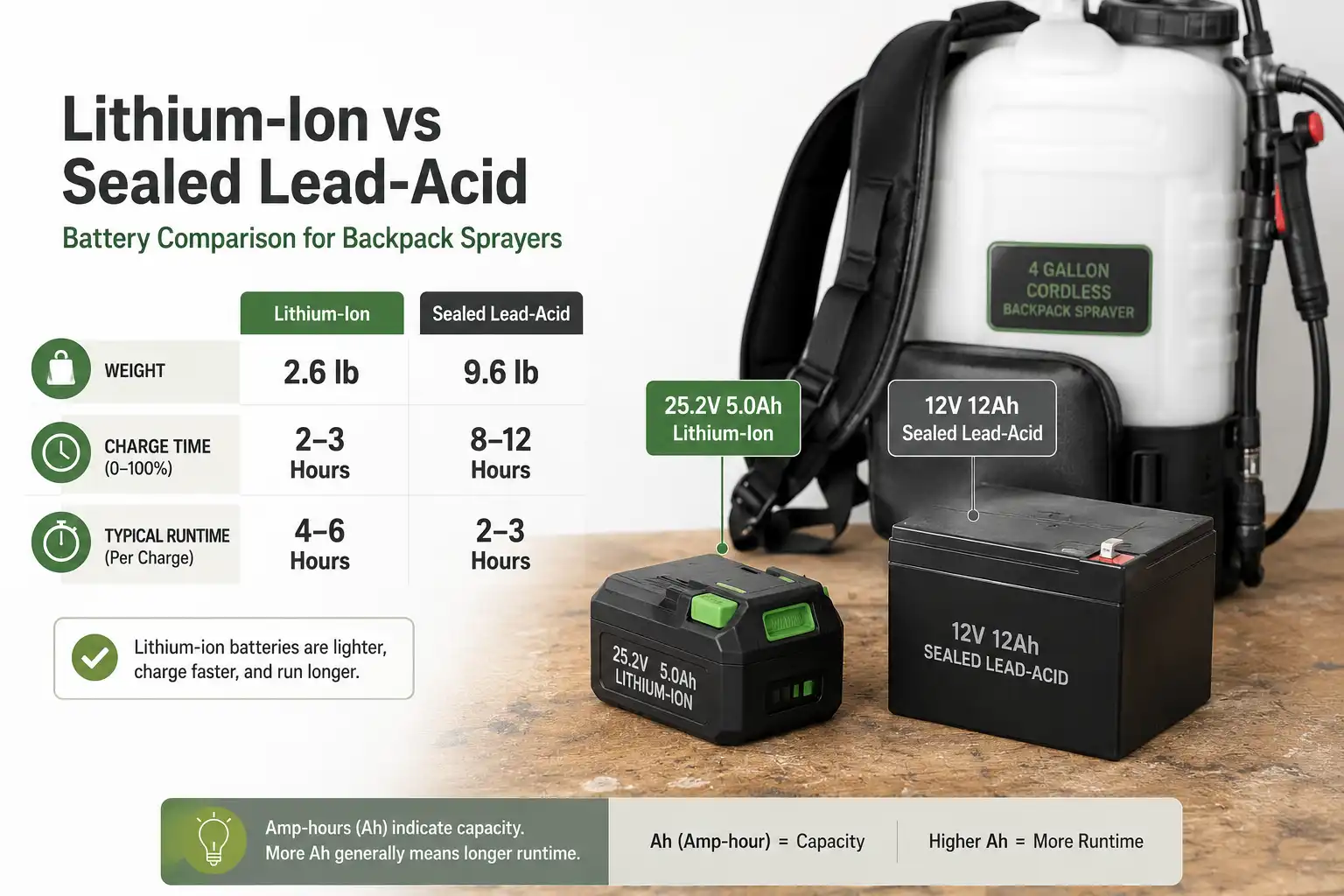
Battery chemistry decides weight, runtime, and how the unit feels over a season. Most buyers choose between lithium-ion packs and sealed lead-acid packs.
A lithium ion backpack sprayer usually runs on an 18V to 40V system. The pack weighs less, charges faster, and holds capacity longer across seasons. A 20V battery backpack sprayer also fits homeowners who already own that battery platform.
Lead-acid packs weigh more, but some models trade that weight for long runtime. An 8 hour battery sprayer often uses a higher amp-hour battery, such as an 8Ah pack. That pack runs all day at moderate pressure. PetraTools lists totals around 200 gallons per charge for the HD4000 under light-duty settings.
Here is a simple way to size power:
- Check stated battery life in hours and gallons, then assume lower totals at higher PSI.
- Look for a removable battery so you carry a spare instead of waiting on the charger.
- Watch the charge cycle rating. A pack that holds up for hundreds of cycles saves money over time.
- Use voltage as a quick power hint. Higher voltage often supports higher PSI and steadier output.
- Compare amp-hours before voltage when runtime matters most. A 12V 8Ah pack often outlasts a 20V 2Ah pack.
A rechargeable backpack sprayer works best when you treat the battery like a tool battery. Charge it after the job, then store it out of heat.
Pressure (PSI): Why Consistent Pressure Matters
PSI means pounds per square inch. It measures how hard the pump pushes liquid through the hose and nozzle.
A battery sprayer wins because it acts like a consistent pressure sprayer. The pump holds your set output instead of rising and falling as your arm tires. That consistency improves coverage and reduces streaks, especially when you apply herbicide across a lawn.
Most jobs fit into two pressure bands:
- 40 to 70 PSI fits lawns, gardens, and most fertilizer and insecticide work.
- 90 to 115 PSI fits taller shrubs, small trees, and longer spray distance needs.
Higher PSI is not automatically better, because pressure also changes droplet size. The American Society of Agricultural and Biological Engineers classifies spray quality under standard S572.3. Categories run from extremely fine through ultra coarse, and NDSU Extension uses them for nozzle selection. University of Nebraska-Lincoln Extension notes that lower pressures reduce the share of fine droplets. Fine droplets stay airborne longest, so they drift farthest. Read the label first, since many labels name a target droplet category.
Look for easy pressure settings with a quick dial, so adjustments take seconds. That control matters when you switch from turf to shrubs.
Pump design influences pressure ceilings. A piston pump often reaches higher PSI than a diaphragm pump. Solo technical documentation puts most diaphragm units near 60 PSI and most piston units near 90 PSI. Check the spec sheet for the number you need.
If you spray tall targets often, shop for a high psi backpack sprayer. Look for a solid wand and a stable strap system. High pressure feels heavier when the straps slip.
Pump Type: Piston vs. Diaphragm
The right pump type depends on what you spray.
A piston pump sprayer often reaches about 90 PSI and produces a fine mist. That mist fits low-viscosity liquids like many herbicides and pesticides. Piston pumps dislike grit, because particles score the cylinder wall and cost you compression. Avoid wettable powders that do not dissolve well.
A diaphragm pump backpack sprayer often tops out around 60 PSI, but it handles suspended mixes better. Its enclosed design passes particles without wearing a cylinder. So it tolerates wettable powder, dispersible granules, and other abrasive solutions that chew up piston seals. ECHO product documentation makes the same split, and adds that bleach solutions wear diaphragm components faster than piston assemblies.
Here is a simple match:
- Spray clear liquids for weeds and insects: piston or diaphragm works, then decide by PSI needs.
- Spray powders or gritty mixes: choose diaphragm for pump protection.
- Spray thick mixes: check manufacturer guidance and strain your mix to protect valves.
- Run bleach or sanitizing solutions regularly: dedicate one sprayer to that job alone.
Nozzle Types: Getting the Right Spray Pattern
Nozzles decide droplet size and placement. A sprayer with multiple tips covers more jobs without fighting drift or streaks.
Common backpack sprayer nozzle types include:
- Adjustable cone, which an adjustable spray nozzle shifts from stream to mist
- Flat fan for wide coverage on turf
- Narrow fan for banding along rows or fence lines
- Foaming tips for clinging contact products
- A 90-degree flexible tip for under-leaf work and tight spots
Match the spray pattern to the target. A flat fan lays an even band when you walk a steady pace. A cone nozzle fits shrubs and foliage when you want wrap.
For professional-grade atomization, many applicators use TeeJet-style nozzles. They help you tune droplet size for drift control and label direction. Keep spare tips on hand. A worn orifice widens the pattern quietly, which pushes your output per acre up without warning.
Ergonomics and Comfort: Straps, Hip Belts, and Padding
Comfort controls accuracy. When a pack rides wrong, your nozzle hand wobbles and your swath narrows.
Start with comfortable backpack sprayer straps. Look for wide, thick straps and a strap system that spreads weight across your hips. That is the heart of an ergonomic backpack sprayer.
A good fit includes:
- A padded shoulder strap that does not dig into your neck
- A real hip belt that carries weight, not a thin web strap
- A padded strap system with a sternum strap to stop bounce
- Back padding that supports lumbar support without trapping heat
Sun exposure breaks straps down over time. Store the sprayer out of UV light, then inspect stitching at the start of the season.
Build Quality, Materials, and Warranty
Build quality decides how long the sprayer holds pressure without leaks. It also decides how well it stands up to chemical use.
A durable backpack sprayer usually starts with an HDPE tank. An HDPE sprayer tank delivers solid corrosion resistance for many lawn and garden chemicals. A translucent tank helps you monitor fill level and avoid running the pump dry.
Pay attention to the wand and fittings. A stainless steel wand lasts longer than soft plastic when you drag it through brush. Quality seals also protect build quality by preventing seep leaks at the hose and trigger. Viton seals resist harsh chemistry better than basic rubber, which matters if you rotate products.
Warranty matters because pumps and batteries wear. A short warranty often runs one year on budget units. Some premium lines offer coverage up to five years on certain models. Read the details, then register the sprayer right away. Longer coverage often signals more confidence in the pump and battery.
For any battery powered backpack sprayer, check parts availability. A sprayer that uses standard seals and common nozzles stays in service longer.
Battery Operated vs. Manual vs. Gas Backpack Sprayer: Which Is Right for You?
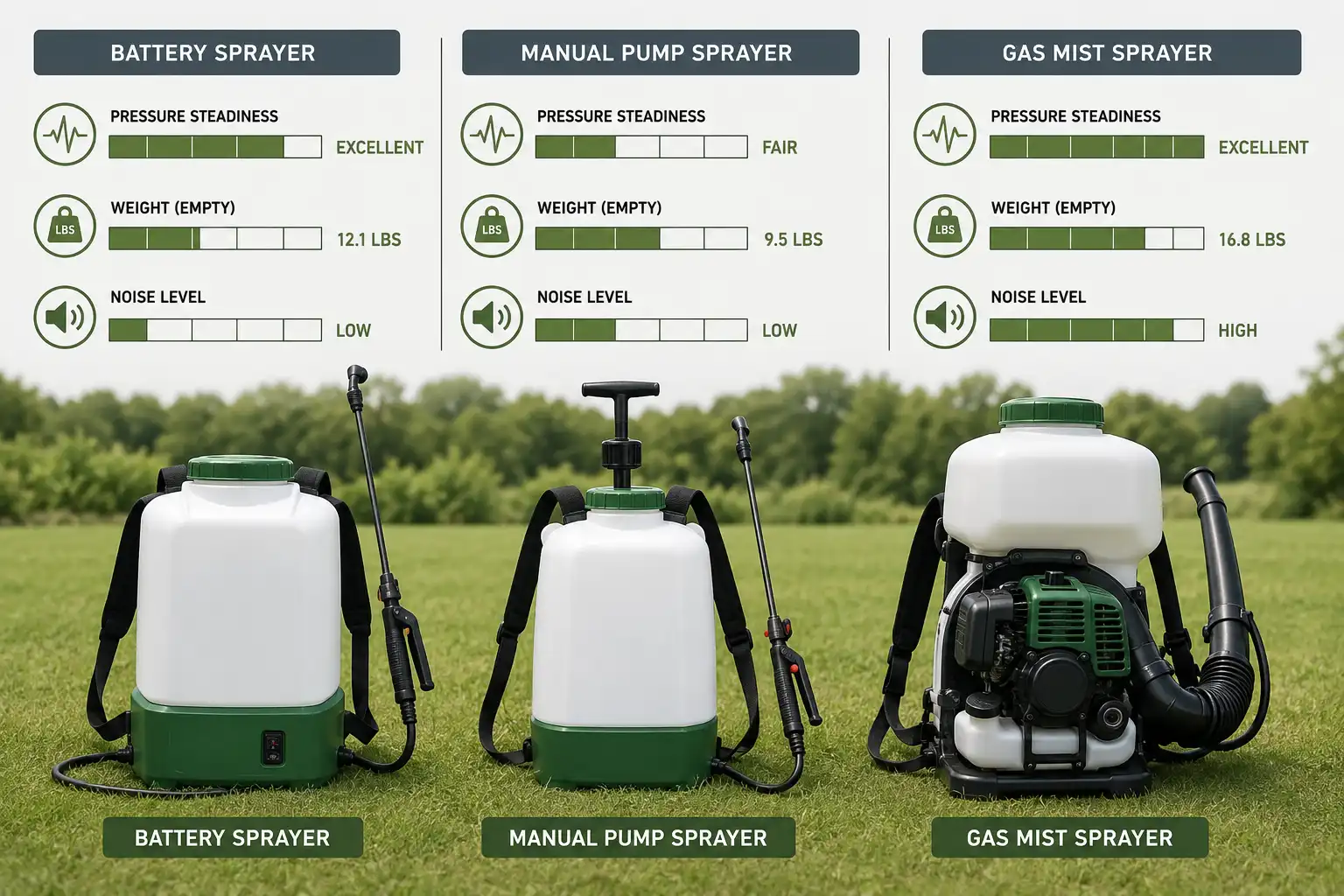
This comparison comes down to area size, job frequency, and how much carry weight you accept. Noise and cleanup effort also belong in the decision.
Here is the fast breakdown:
- Battery: Best for medium to large areas. It offers strong ease of use, consistent pressure, low noise level, and no arm fatigue. It also avoids fuel handling and most fuel cost pain. This is why a battery-powered backpack unit fits most homeowners and landscapers now.
- Manual: Best for small yards and spot work. It costs less and needs no charging. Pressure changes as you pump, so passes vary more.
- Gas: Best for large acreage and commercial use. It delivers high flow and long runtime, but it carries more weight, makes more noise, and adds fuel and maintenance chores.
Manual units still earn a spot for quick touch-ups. Several manual pump sprayer picks also cost a fraction of a battery model. If weeds drive your spraying schedule, this guide on weed control strategies helps you plan the job. For pests, start with integrated pest management basics and spray as one tool in a bigger plan.
If you feel stuck between options, choose battery first. A modern battery vs manual backpack sprayer decision favors battery, unless the yard is small or the budget is tight. A cordless vs gas sprayer decision usually favors battery unless acreage is large and you spray for hours each day.
How to Use a Battery Operated Backpack Sprayer Correctly
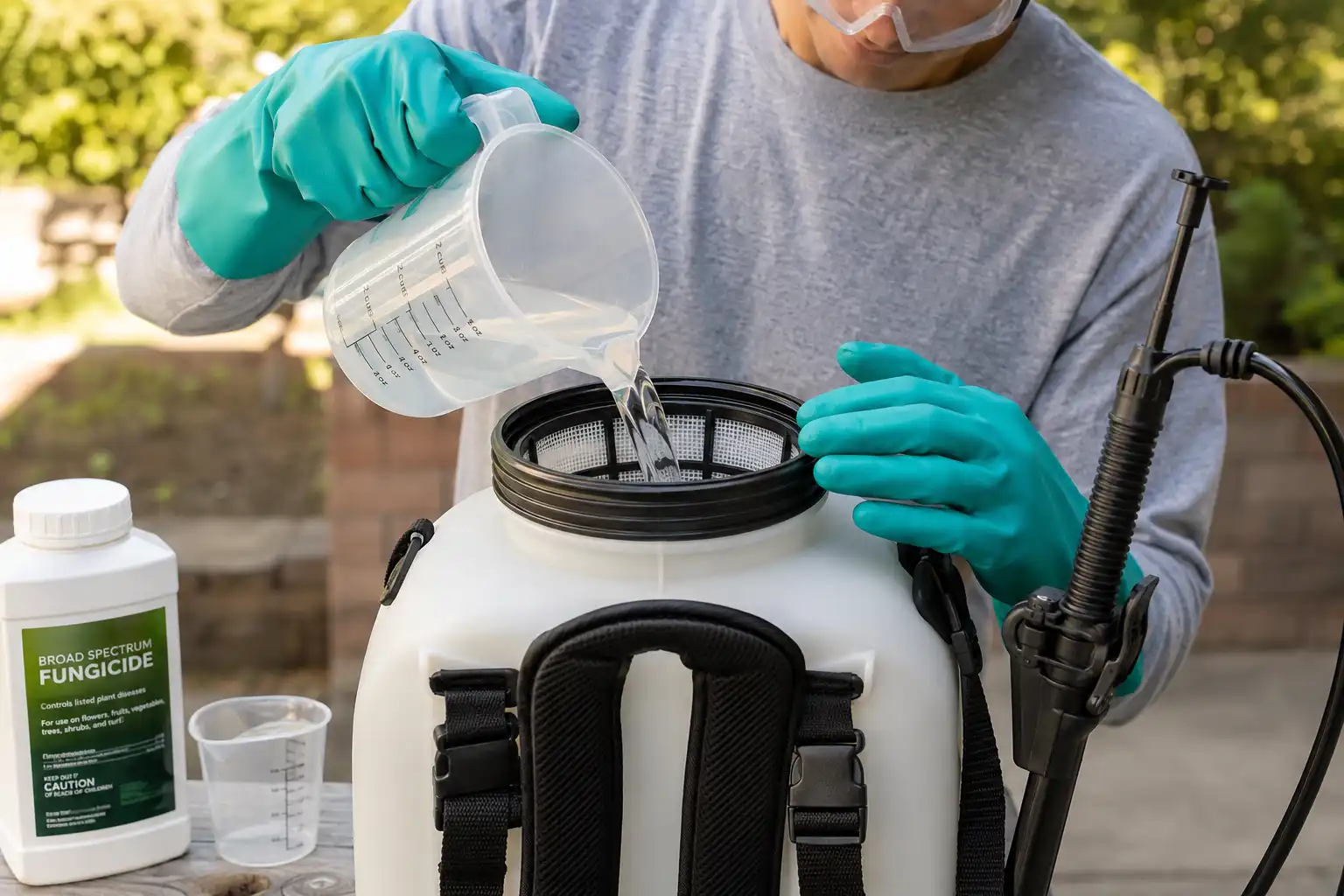
Safe use starts before you pull the trigger. A backpack sprayer applies chemicals fast, so small mistakes spread fast too. Montana State University Extension reports that studies attribute more than 97 percent of pesticide exposure to skin contact. So gloves and long sleeves matter more than most applicators assume.
Here is how to use a backpack sprayer in a way that protects you and the target area.
- Read the owner’s manual and the chemical label before you mix.
- Wear PPE each time. Start with gloves, goggles, long sleeves, and closed shoes.
- Mix solution per label direction. Fill through a wide-mouth opening and use a strainer if the product recommends it.
- Attach the nozzle that matches your target and set your pressure. Spray plain water on a driveway first to confirm droplet size and pattern.
- Power on and spray in even passes. Keep your nozzle height and walking pace consistent. That steady spray technique produces even coverage.
- Use the trigger lock for longer runs to reduce hand fatigue, then release it for edges and spot work.
- Carry the unit by the top handle when you move it. Avoid lifting by the wand or hose.
Label requirements come before general advice on every one of those steps.
How to Calibrate Your Sprayer Before the First Mix
Calibration tells you how much mix you actually apply per acre. Without that number, a label rate means nothing. Alabama Cooperative Extension System teaches the 1/128 acre method. The math is simple: 1 gallon holds 128 fluid ounces, and an acre holds 43,560 square feet. Divide the acre by 128 and you get 340 square feet.
- Mark a plot of 340 square feet, roughly 18.5 feet by 18.5 feet.
- Fill the tank with clean water only, then set your working pressure.
- Spray the plot at your normal pace and overlap, and time it in seconds.
- Spray into a measuring container for that same number of seconds.
- Count the ounces collected. That number equals your output in gallons per acre.
Suppose you collect 25 ounces. That means 25 gallons per acre. So a full 4-gallon tank covers about 0.16 acre, roughly 7,000 square feet. Recalibrate after any change to walking speed, pressure, or nozzle. A change to any one of the three shifts output per acre.
For herbicide application, watch wind and temperature. Drift travels farther than most people expect. For help with spray timing, this guide on when pesticide use fits the plan lays out the decision points.
A few backpack sprayer tips that prevent damage:
- Use only water-based lawn and garden mixes approved for sprayers.
- Avoid acids, caustics, and flammable liquids unless the manufacturer lists compatibility.
- Keep kids and pets out of the area until the label re-entry time passes. That restricted-entry interval appears under agricultural use requirements, per the EPA Worker Protection Standard.
How to Clean and Maintain Your Battery Operated Backpack Sprayer for Longevity
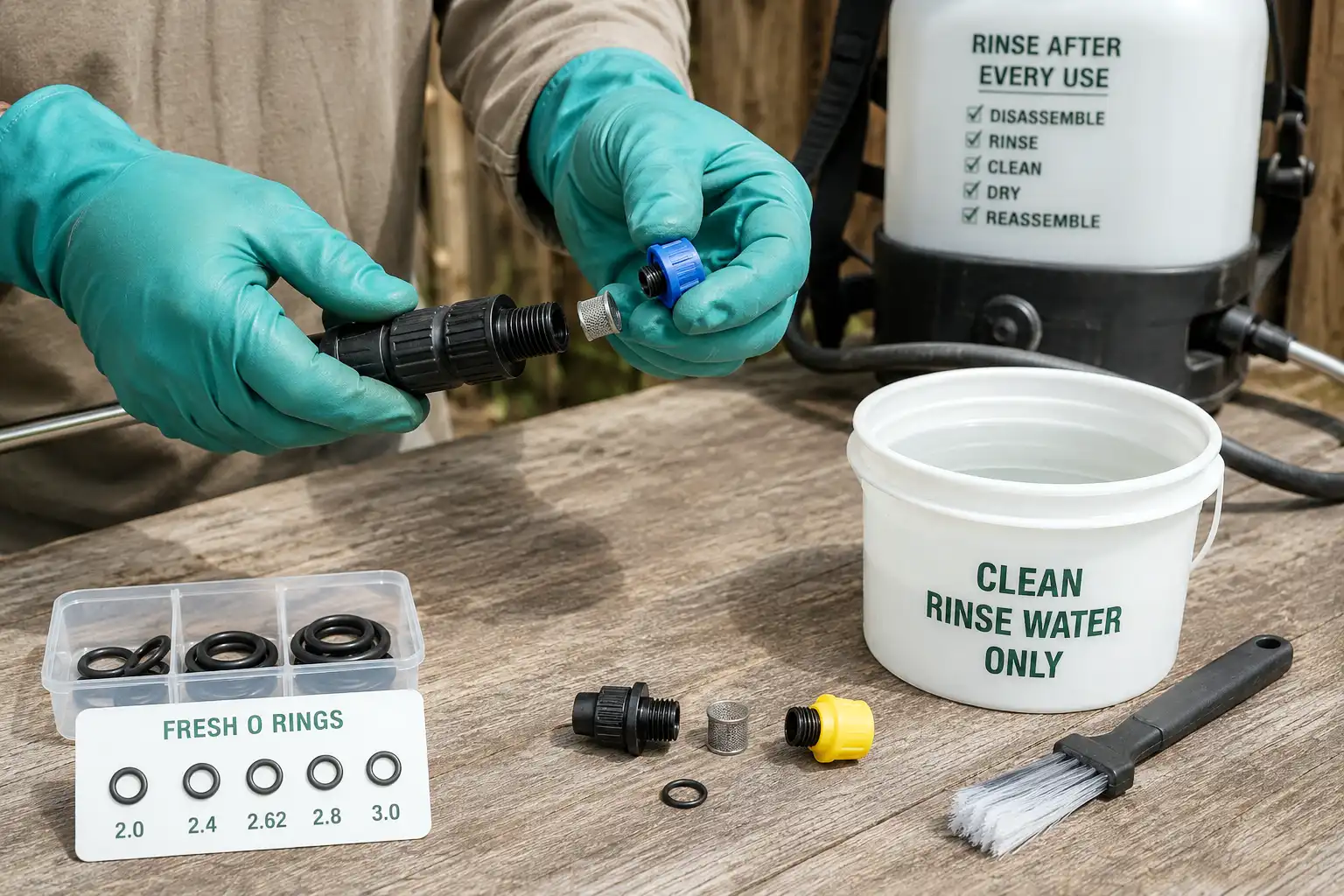
Cleaning keeps the pump and seals alive. It also prevents cross-contamination when you switch from herbicide to insecticide or fertilizer.
Here is how to clean a backpack sprayer after each job.
- Empty the tank safely per label direction, and never dump rinsate on bare ground.
- Do a full tank rinse with clean water, then spray that rinse water through the hose and nozzle.
- Remove the nozzle and screens, then clean them separately. A clogged nozzle creates a bad pattern and a tired pump.
- For deeper cleaning between different chemicals, flush the system twice more with clean water. Triple rinse whenever the label calls for it.
- Inspect seals, filters, and O-rings. Replace worn parts before they leak.
- Store the sprayer where it stays above freezing. Ice splits hoses and cracks tanks.
- Follow the maker’s guidance for battery storage. Store the pack charged, not dead, and keep it out of heat.
- Register the sprayer as soon as you buy it. Registration speeds warranty claims.
Leftover chemical residue ruins your next mix and shortens pump life. University of Kentucky pesticide safety guidance calls sloppy cleanup one of the main causes of equipment failure. Residue also carries real agronomic risk. University of Nebraska-Lincoln Extension reports that a single drop of dicamba left in a system can injure sensitive plants. So a dedicated tank for growth regulator herbicides remains the safest habit.
Quick troubleshooting for common problems:
| Symptom | Likely cause | Fix |
|---|---|---|
| Low pressure | Clogged filter or nozzle | Clean the screen, then the nozzle |
| Pulsing spray | Air leak at seals or hose connections | Snug fittings, replace O-rings |
| Drips at the trigger | Worn trigger valve seat | Replace O-rings, inspect the seat |
| Pattern widens over time | Worn nozzle orifice | Fit a new tip, then recalibrate |
| Short runtime | Aging pack or high pressure setting | Test a fresh pack, lower the dial |
These backpack sprayer maintenance tips take minutes and save parts.
FAQs about Battery Operated Backpack Sprayer
How long does a battery backpack sprayer run on one charge?
Can I spray pesticides and herbicides from the same battery backpack sprayer?
What PSI do I need in a battery backpack sprayer?
Is a battery backpack sprayer better than a manual pump sprayer?
What voltage should I look for in a battery operated backpack sprayer?
Does a diaphragm pump handle wettable powders better than a piston pump?
Choosing the Right Battery Operated Backpack Sprayer for Your Property
The right pick depends on yard size and spray frequency. It also depends on how long you wear the pack in one session. A 4-gallon tank, a comfortable strap system, and a battery that matches your schedule make the biggest difference.
If you want a starting point, PetraTools HD4000 fits the “most users” slot on runtime. EGO Power+ 4 Gallon fits pros who want higher output and pro nozzle options. VEVOR 4 Gallon fits budget shoppers who want cart flexibility on long passes.
Use the buying guide above to make your buying decision based on tank size, battery type, PSI, and strap comfort. That approach produces a better long-term recommendation than chasing the lowest price. Match the tool to the job. Then the battery operated backpack sprayer becomes a reliable cordless backpack sprayer for steady lawn care. That holds whether you run it as an electric garden sprayer or for spot treatment. Pick your model, calibrate it with clean water, then run a test pass before the first mix.