18 24 12 Fertilizer: What It Is, When to Use It, and Top Picks
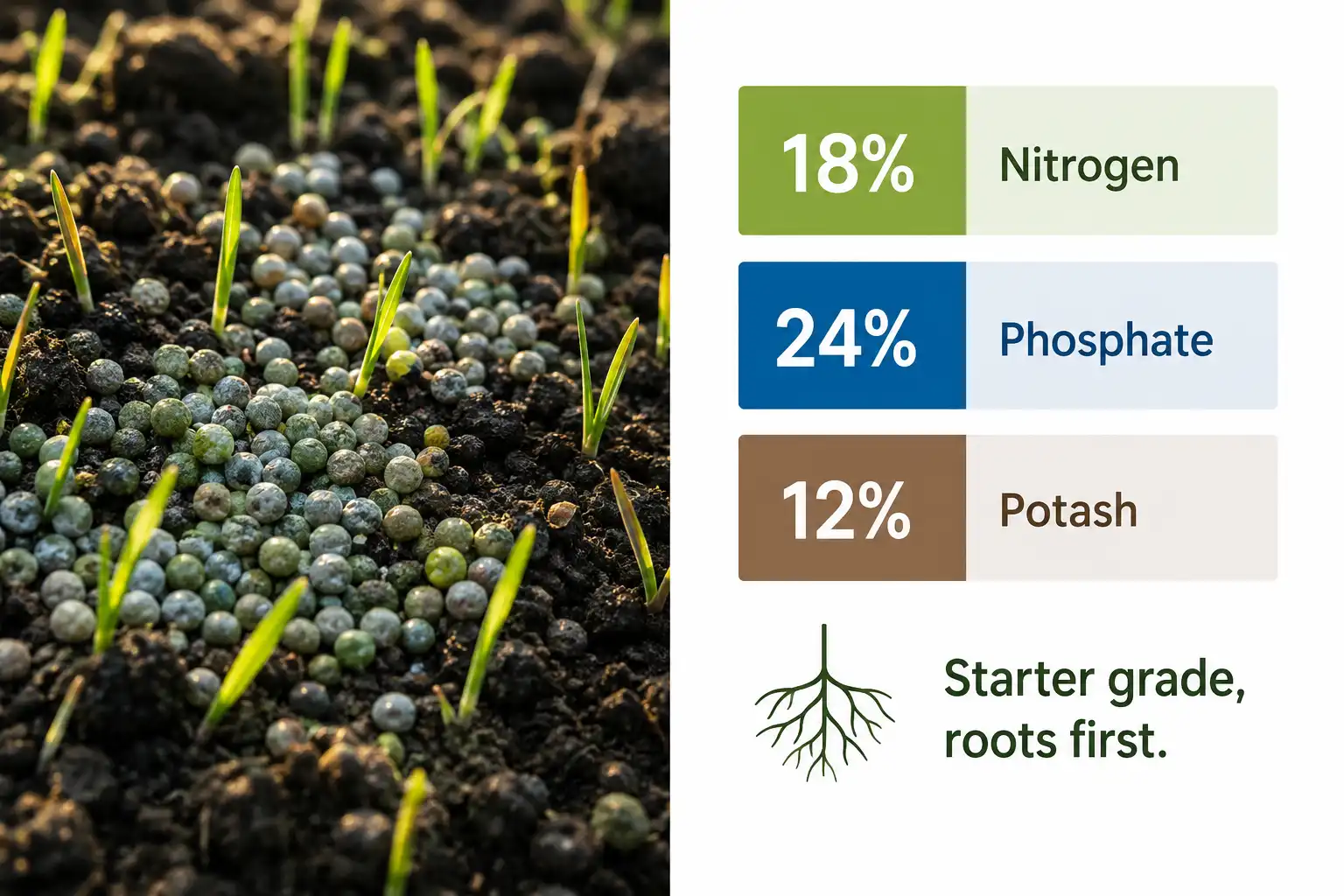
Bare soil and new seed need phosphorus down in the root zone, not sitting on top. That is what 18 24 12 fertilizer delivers. The grade carries heavy phosphate, moderate nitrogen, and enough potash to matter.
18 24 12 fertilizer is a granular starter blend: 18% nitrogen, 24% phosphate, 12% potash. Apply it at seeding, sodding, or overseeding to push roots fast.
What Is 18 24 12 Fertilizer?
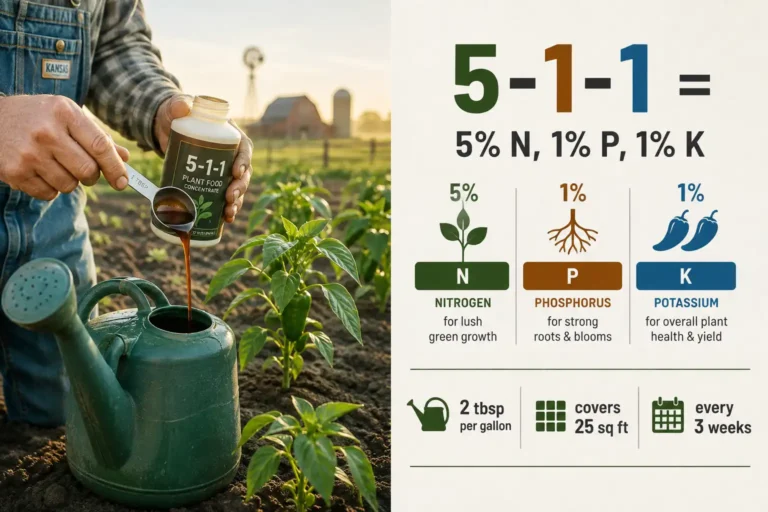
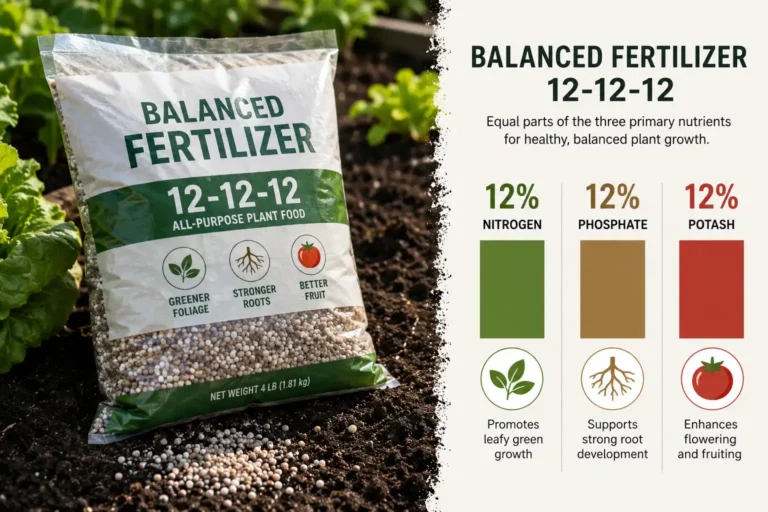
18-24-12 is a high-phosphate starter fertilizer sold mainly for new turf, sod, and overseeding jobs. The three numbers are the guaranteed analysis. They run in that same order on every bag sold in the United States. So you get 18% total nitrogen, 24% available phosphate, and 12% soluble potash by weight.
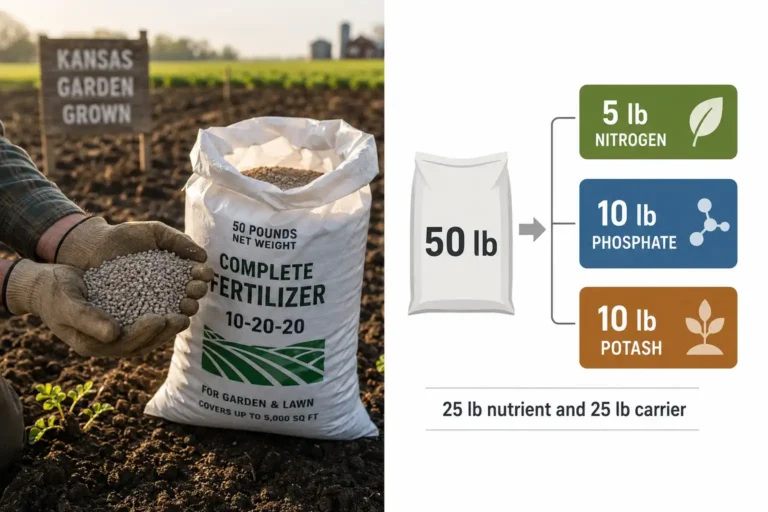
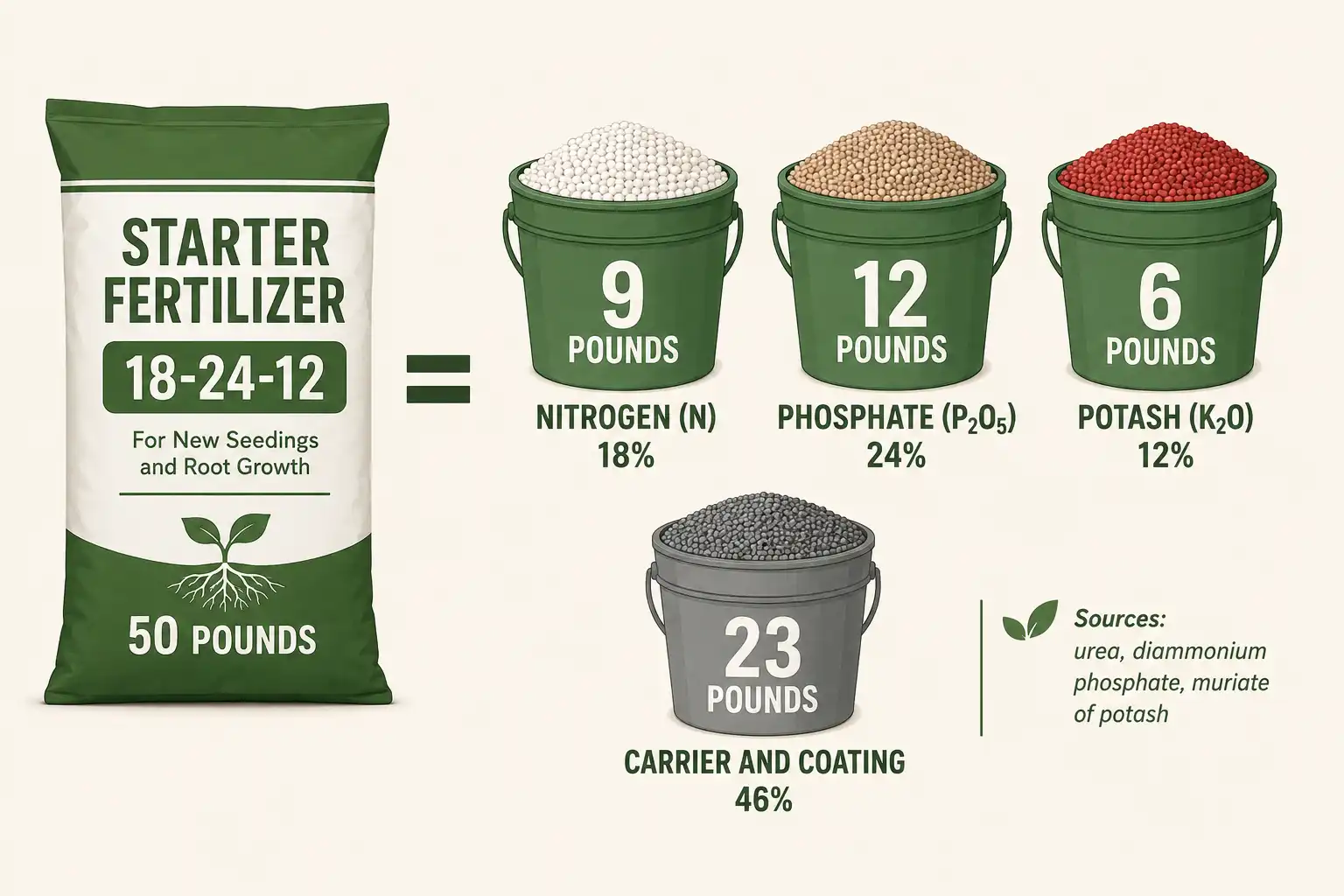
Add those up and you land at 54% nutrient. The other 46% is carrier and coating material. That filler is not waste, because it spreads the nutrient evenly and keeps granules from bridging in the hopper.
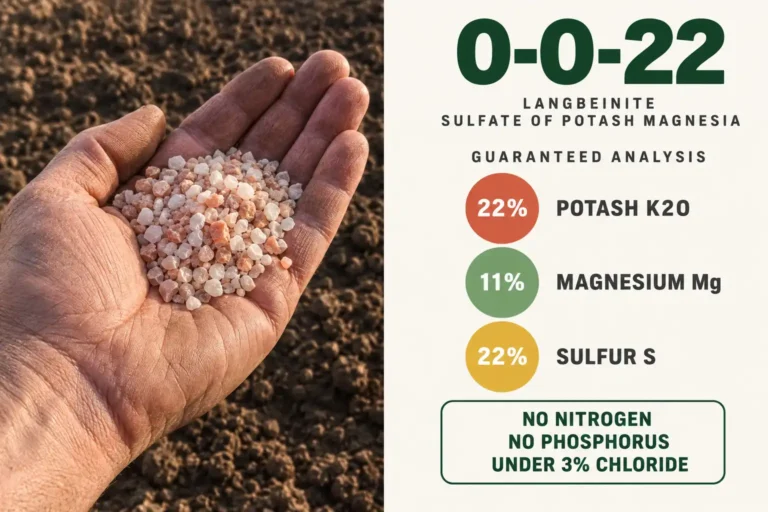
Two details trip people up. First, the middle number reports phosphate (P2O5), not elemental phosphorus. Multiply by 0.44 if you want actual P. Second, the last number reports potash (K2O), so multiply by 0.83 for actual K. Every state fertilizer label uses the oxide form. That is exactly how NPK numbers work across every grade on the shelf.
Read next: 0 0 60 Fertilizer Guide
How Much Nutrient Is Actually in the Bag?
A 50 pound bag of 18-24-12 holds 9 pounds of nitrogen, 12 pounds of phosphate, and 6 pounds of potash. Multiply bag weight by each percentage and you get the pounds of nutrient you paid for.
| Bag size | Nitrogen | Phosphate (P2O5) | Potash (K2O) |
|---|---|---|---|
| 50 lb | 9.0 lb | 12.0 lb | 6.0 lb |
| 16 lb | 2.9 lb | 3.8 lb | 1.9 lb |
| 15 lb | 2.7 lb | 3.6 lb | 1.8 lb |
What Is 18-24-12 Fertilizer Used For?
18-24-12 is used to establish new stands: seeded lawns, fresh sod, overseeded thin turf, and bare spot repair. The heavy middle number is the whole point. Phosphorus barely moves in soil, so it has to sit where young roots can reach it.
That immobility drives the whole design. Broadcast nitrogen washes down to the roots on its own. Phosphate does not. It binds to soil particles within an inch or two of where it lands. So a seedling with a half-inch root system only gets phosphorus that you placed in that half inch.
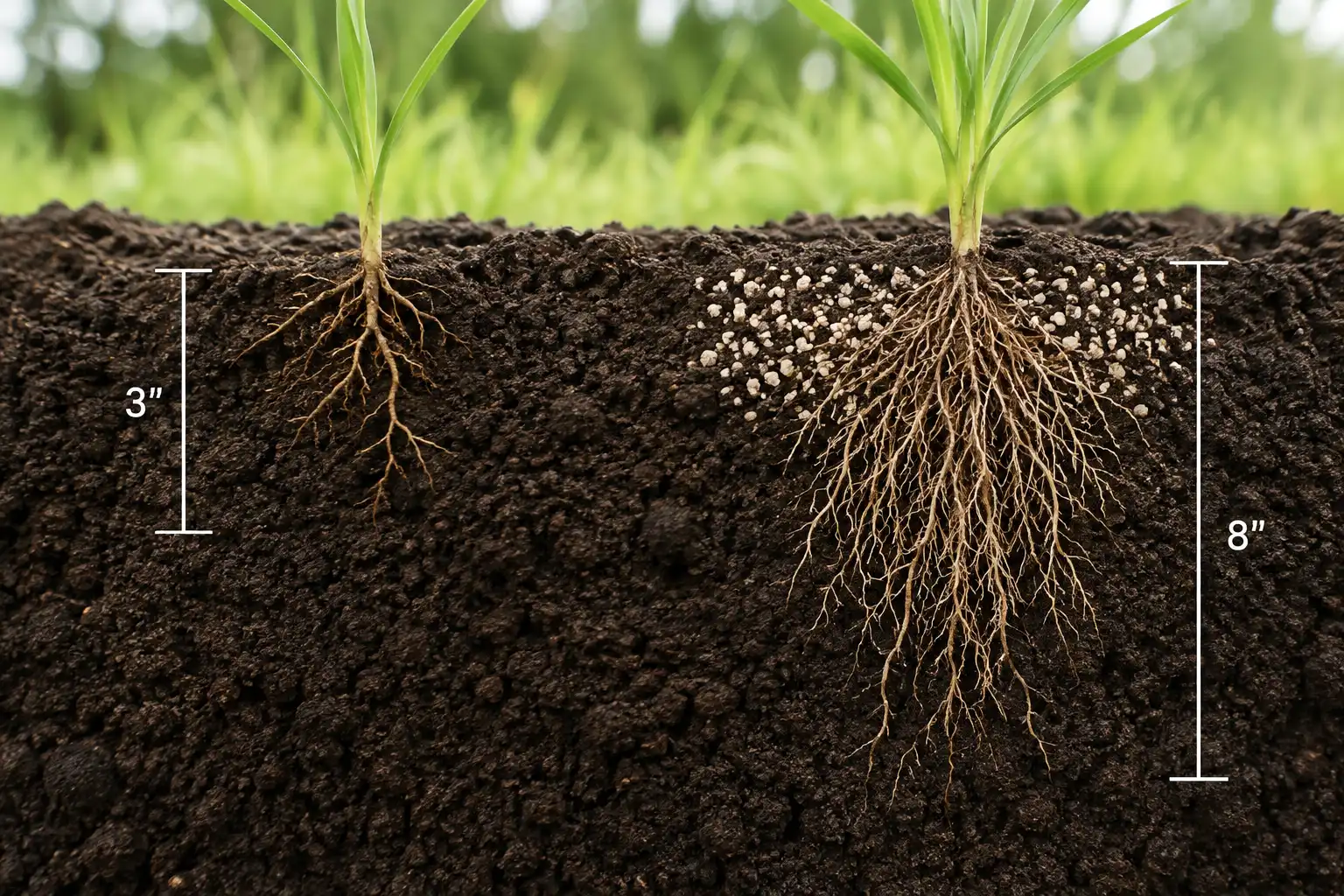
University of Maryland Extension is blunt about the cost of missing it. Low soil phosphorus at seeding gives you poor seedling vigor, slow establishment, and a thin stand with weak roots. Thin stands then invite weeds and erosion. Fixing that later costs far more than a bag of starter.
Here is where 18-24-12 does real work:
- New seedings on bare ground. Worked into the seedbed before seed goes down.
- Sod installation. Spread on the bare soil right before the rolls go down, because harvest severed most of the roots.
- Overseeding thin turf. Feeds new seedlings and the existing stand at the same time.
- Bare spot and washout repair. Small areas, spot treated.
- Cool-season fall renovation. The single best window in the Great Plains.
The grade also fits garden beds and transplants on low-phosphorus ground. More on that below.
When to Use 18 24 12 Fertilizer
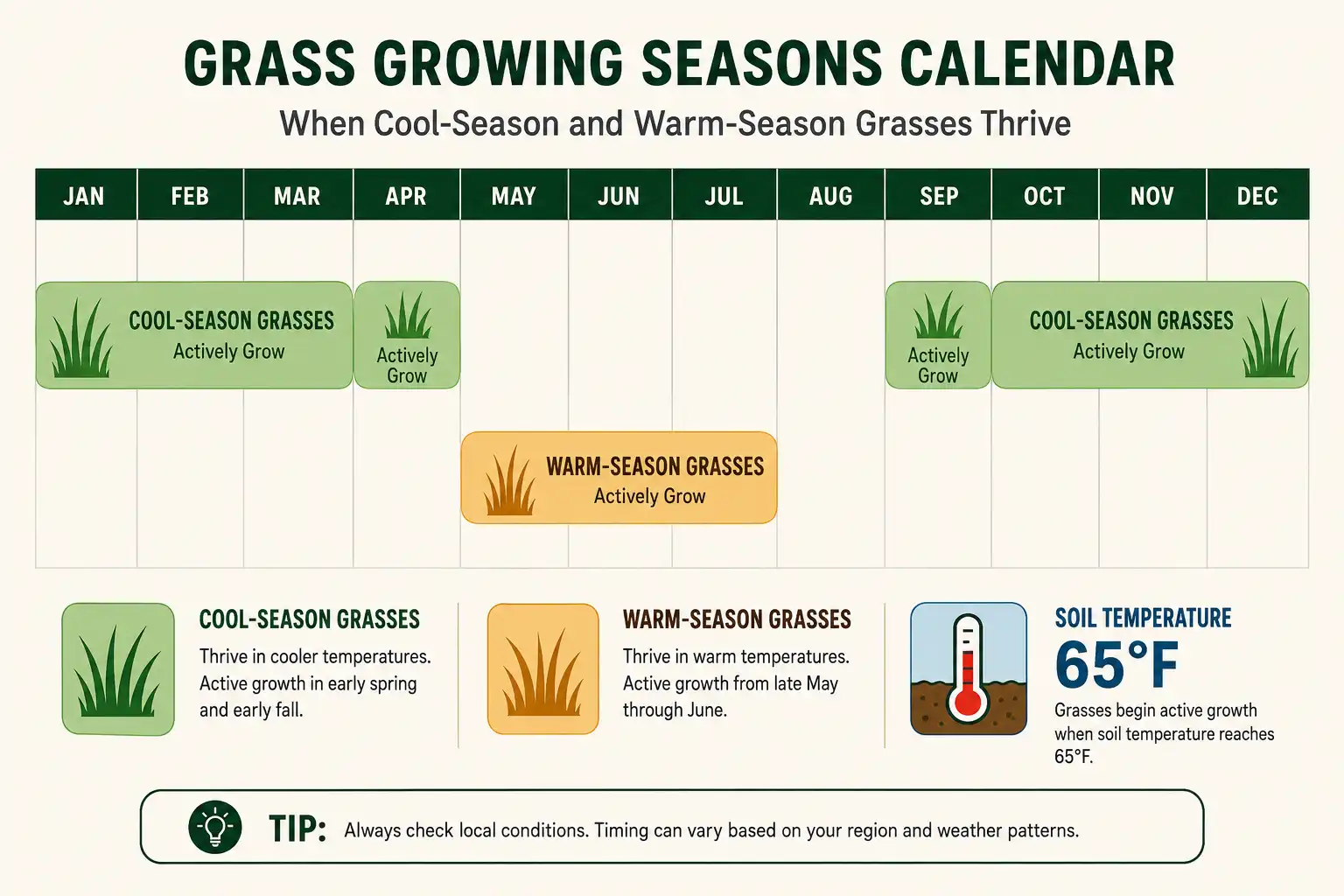
Apply 18 24 12 fertilizer at planting time, not on a calendar date. The trigger is seed or sod going into the ground. That is the only window when seedling roots need concentrated phosphate right beside them.
For cool-season grasses like tall fescue and Kentucky bluegrass, K-State Research and Extension points to early to mid September. Usable conditions run to about October 15 in the Kansas City area. Soil is still warm then, nights cool off, and fall rain usually shows up. That combination gives fast germination. In zone 6a, the first ten days of September and rarely miss.
For warm-season grasses like bermudagrass and zoysiagrass, wait until late spring. Those grasses need soil temperatures near 65°F and rising before seed or sprigs do anything useful.
| Job | Best window | Notes |
|---|---|---|
| Cool-season seeding | Early to mid September | Oct 15 outside limit in most of Kansas |
| Cool-season spring seeding | Early April | Second best; crabgrass pressure is heavy |
| Sod, cool-season | Spring or early fall | Apply to bare soil before laying |
| Warm-season seed or sprigs | Late May to June | Soil at 65°F and climbing |
| Bare spot repair | Any active growth period | Spot treat only |
Skip these windows entirely. Do not spread starter on frozen or snow-covered ground. Do not spread it in midsummer heat on cool-season turf. You will push top growth the plant cannot support. Also stay 15 feet back from a pond, creek, or wetland edge. Several states now require that setback by law.
How Much 18-24-12 to Apply per 1,000 Square Feet
Spread 4 pounds of 18-24-12 per 1,000 square feet for a new seeding. That rate delivers about 0.72 pounds of nitrogen and 0.96 pounds of phosphate. Potash lands near 0.48 pounds per 1,000 square feet. All three land inside standard extension ranges.
The math is simple. Divide the nutrient you want by the decimal percentage on the bag. Penn State Extension teaches it this way, and it works for any grade.
- Want 1 lb phosphate per 1,000 sq ft from a 24% product?
- 1.0 ÷ 0.24 = 4.2 pounds of product per 1,000 sq ft.
Now the guardrails, because starter fertilizer burns young turf faster than anything else in the shed.
- Nitrogen ceiling. Penn State puts starter nitrogen at 0.5 to 1 pound per 1,000 square feet. Above 1.5 pounds you risk burning seedlings and losing the stand.
- Phosphate ceiling. A single application should stay near 0.5 to 2 pounds of phosphate per 1,000 square feet, and never above 5 pounds.
- Overseeding. Cut the rate to about half of a bare-ground seeding, matching the reduced seed rate. K-State drops tall fescue from 6 to 8 pounds of seed per 1,000 square feet down to 3 to 4 pounds for overseeding.
A 50 pound bag at 4 pounds per 1,000 square feet covers roughly 12,500 square feet. That is why bag labels cluster around 12,000 to 12,500 square feet. Smaller 15 and 16 pound bags run lighter rates near 3 pounds per 1,000 square feet. Those cover about 5,000 square feet.
Set your spreader, then check it. Weigh out the product for a measured strip, spread it, and see whether the hopper empties where it should. Bag settings are a starting point, not a calibration. A fertilizer spreader you have actually calibrated beats a fancy one you have not.
Can I Use 18-24-12 Starter Fertilizer on Established Grass?
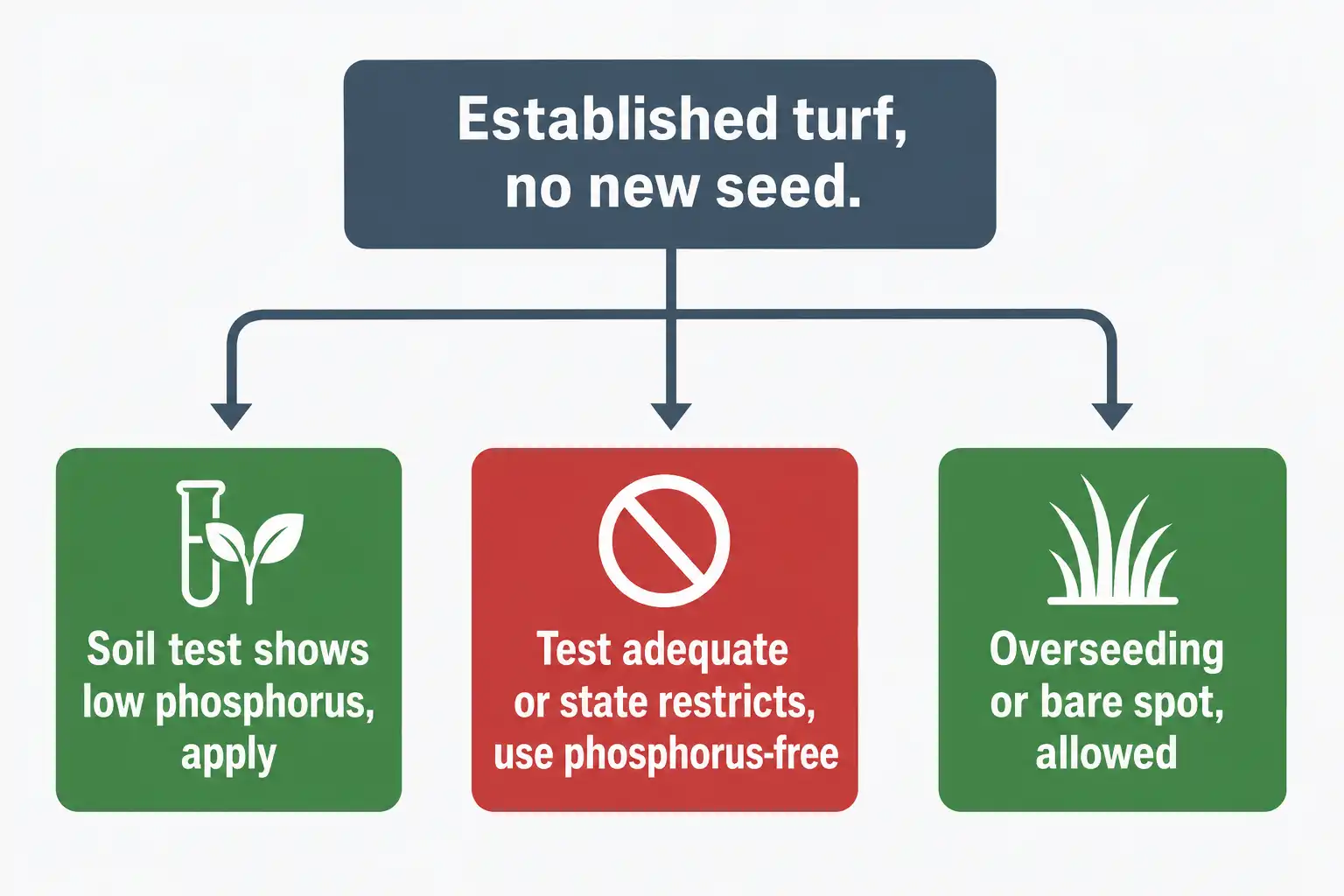
Usually no, and in many states it is illegal. Established turf has low phosphorus demand. Its dense fibrous roots pull phosphate efficiently, and returning clippings recycles most of what the stand needs. So a starter grade on a mature lawn dumps phosphate the grass will not use.
Runoff is the reason states stepped in. Surface phosphate washes into ditches and lakes, where it feeds algae blooms. Roughly a dozen states now restrict phosphorus on lawns. That list includes Minnesota, Michigan, New York, Connecticut, Washington, and Pennsylvania. Wisconsin, Illinois, Maryland, Maine, New Jersey, Vermont, New Hampshire, Virginia, and Florida run similar programs. City ordinances often layer on top.
Nearly all of them carve out the same two exemptions. Either a soil test shows low phosphorus, or new turf is going in by seed or sod. Gardens, pasture, and farm ground generally sit outside these turf laws. Kansas has no statewide ban, yet you can still pull a sample before spreading phosphate on established ground.
So when can you legitimately use it on existing turf? Three cases:
- Overseeding. New seed is going in, which every one of those laws treats as establishment.
- Bare spot repair. Same reasoning, limited to the patch.
- A documented deficiency. A current soil test showing low phosphorus in the root zone.
That third case is worth the small cost. Send a sample to your land-grant lab, or run a soil test kit at home first. Phosphorus levels move slowly, so a result stays useful for two or three seasons.
How to Apply 18-24-12 Starter Fertilizer Step by Step
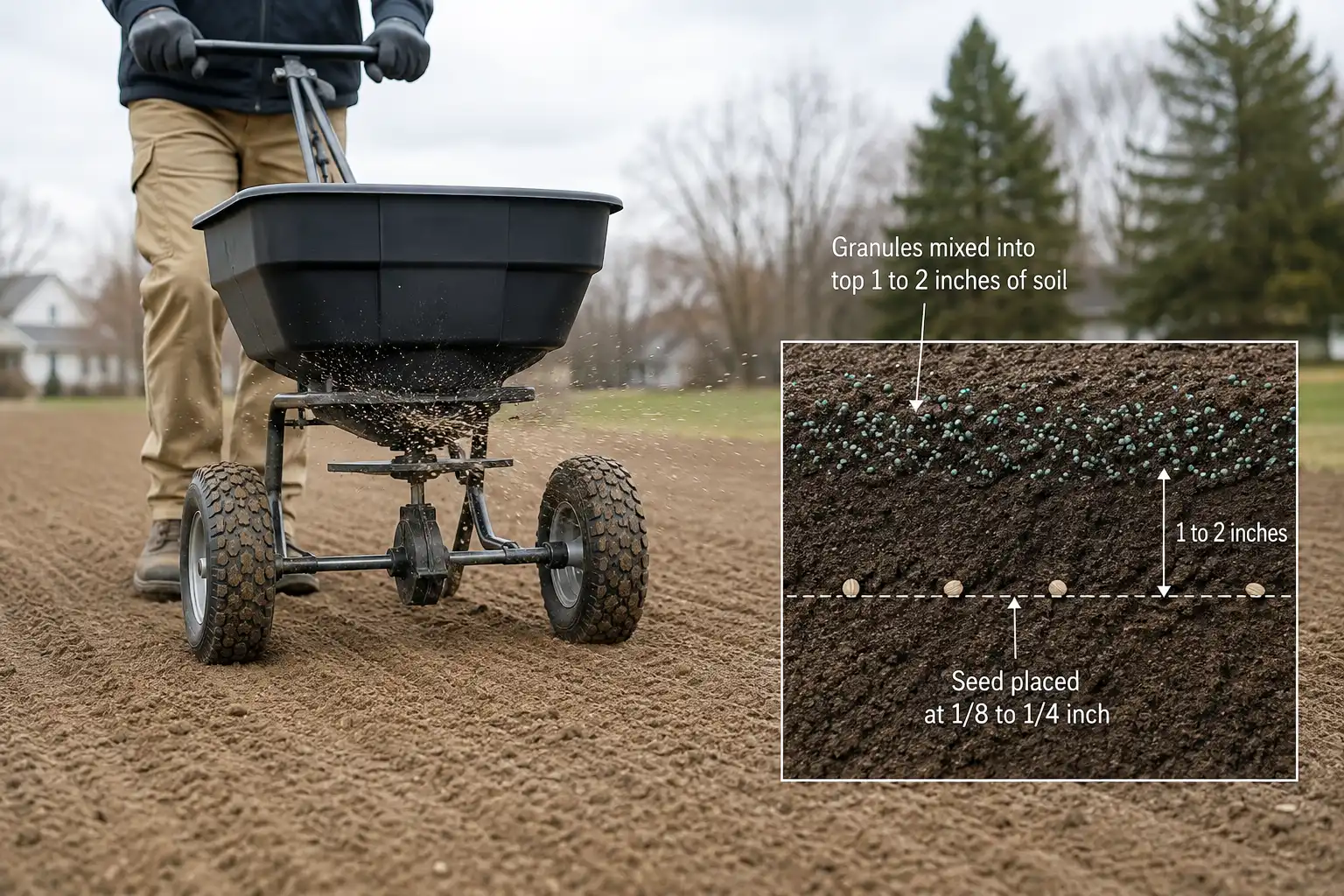
Work the granules into the top 1 to 2 inches of the seedbed before seed goes down. Surface-dropped phosphate sits above the root zone and does very little for germinating seed.
- Pull a soil sample first. Two to three weeks ahead if you can, since lab turnaround runs a few days to two weeks.
- Prep the seedbed. Rake or till bare ground. For overseeding, verticut to slice grooves and get seed-to-soil contact.
- Calibrate the spreader. Set it for roughly 4 pounds of product per 1,000 square feet on bare ground, or half that for overseeding.
- Spread the starter. Walk in one direction, then cross at 90 degrees at half rate for even coverage.
- Rake it in. Work granules into the top 1 to 2 inches. Skip this only on established turf you are overseeding.
- Seed. Tall fescue at 6 to 8 pounds per 1,000 square feet on bare ground, 3 to 4 for overseeding.
- Rake lightly again. Seed wants 1/8 to 1/4 inch of soil over it, no more.
- Water immediately. Nutrients stay locked in the granule until moisture releases them.
- Keep the top inch damp. Light, frequent watering until germination, then taper toward deeper, less frequent soaking.
- Follow up with nitrogen. Four to six weeks after germination, apply about 1 pound of quick-release nitrogen per 1,000 square feet.
Two housekeeping rules matter more than people think. Sweep granules off driveways and sidewalks immediately, since hard surfaces route fertilizer straight to a storm drain. Also stay back from water edges. On small lots, a drop spreader is the better choice over a broadcast unit. It puts product exactly where it’s applied and nowhere else.
4 Best 18-24-12 Fertilizer Bags Worth Buying
Four bags of 18-24-12 hold up for real work. Lesco with the Nitrogen Optimizing System wins on value. The Andersons suits large jobs, AgChimp suits small lawns needing color, and CountryMax Fas-Start handles patch repair. Cost per 1,000 square feet separates them more than the analysis does.
| Product | Bag | Coverage | Label rate | Cost per 1,000 sq ft | Nitrogen technology |
|---|---|---|---|---|---|
| Lesco 18-24-12 NOS | 50 lb | 12,000 sq ft | 4.2 lb | about $7.92 | DCD stabilized |
| The Andersons 18-24-12 | 50 lb | 12,500 sq ft | 4.0 lb | about $10.34 | Urea plus ammoniacal |
| AgChimp 18-24-12 | 16 lb | 5,000 sq ft | 3.2 lb | about $8.30 | Polymer-coated, plus iron |
| CountryMax Fas-Start | 15 lb | 5,000 sq ft | 3.0 lb | about $9.00 | Straight granular |
Pricing shifts constantly on phosphate products, so treat those figures as a snapshot and check current cost before you buy.
1. Lesco 18-24-12 with Nitrogen Optimizing System
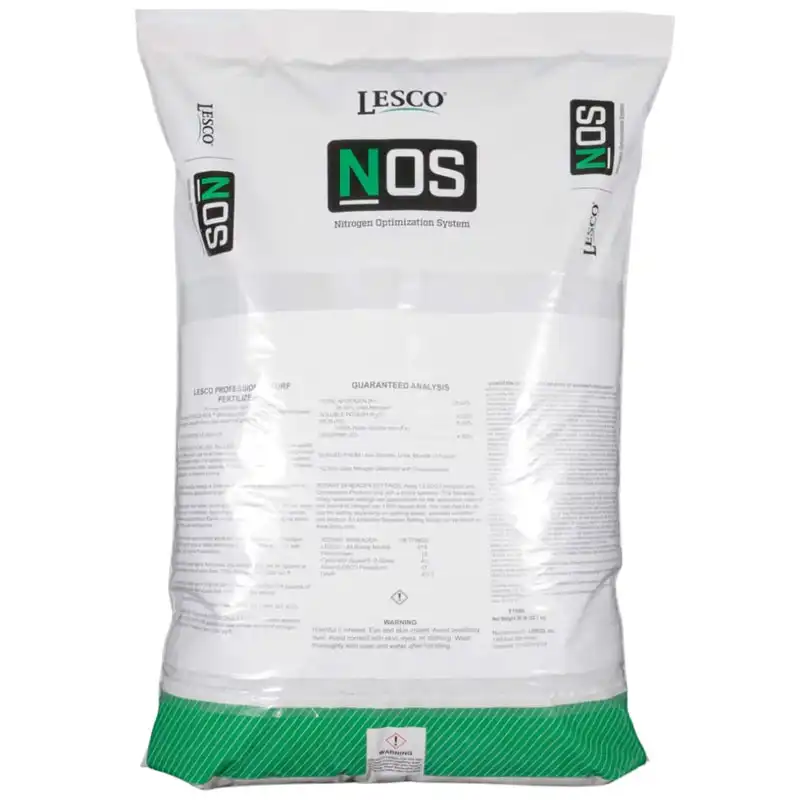
This is the LESCO Starter Fertilizer 18-24-12, a consistent pick in this category. The Nitrogen Optimizing System uses DCD, a nitrification inhibitor. It slows ammonium converting to nitrate, so less nitrogen leaches away. The label rate of 4.2 pounds per 1,000 square feet hits the textbook starter target exactly. Spread quality is clean with almost no clumping. One catch: the bag ships non-returnable, so measure first.
Specs:
- 18-24-12 granular, 50 lb bag
- Covers 12,000 sq ft
- DCD-infused stabilized nitrogen
- Rate: 4.2 lb per 1,000 sq ft
2. The Andersons 18-24-12 Starter Turf Fertilizer
The Andersons builds this for professional turf crews. You get 8.61% urea nitrogen for quick response plus 9.39% ammoniacal nitrogen that releases more slowly. That ammoniacal fraction rides along with the phosphate source. Coverage runs 12,500 square feet per bag at the medium rate, the widest here. It also corrects phosphorus deficiency on established turf, given a soil test. Price per 1,000 square feet is the highest here.
Specs:
- 18-24-12 granular, 50 lb bag
- Covers 12,500 sq ft
- 8.61% urea, 9.39% ammoniacal nitrogen
- Rate: about 4 lb per 1,000 sq ft
3. AgChimp 18-24-12 Professional Turf Starter
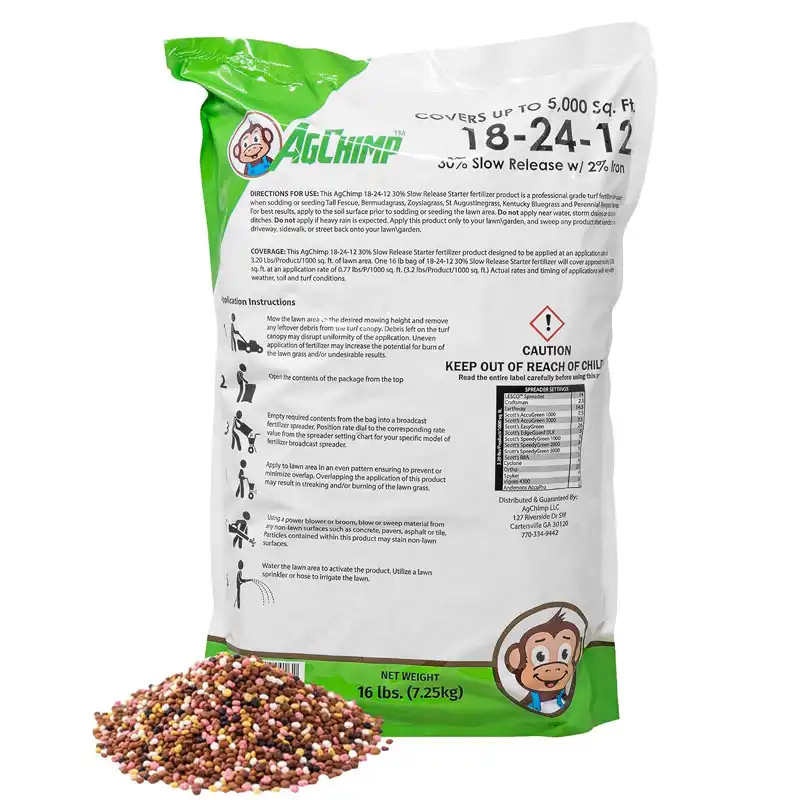
AgChimp packs the most technology into the smallest bag. Polymer-coated nitrogen meters out feeding gradually, which prevents the top-growth surge that weakens a young crown. Iron EDTA pushes chlorophyll production, so color comes on faster than the analysis suggests. The nutrient sources are listed plainly: urea, coated urea, polymer-coated sulfur, diammonium phosphate, potassium sulfate, and iron. A 16 pound bag handles 5,000 square feet, which suits one suburban lot.
Specs:
- 18-24-12 granular, 16 lb bag
- Covers 5,000 sq ft
- Polymer-coated nitrogen plus iron EDTA
- Potassium sulfate as the potash source
4. CountryMax Fas-Start Seed Starter
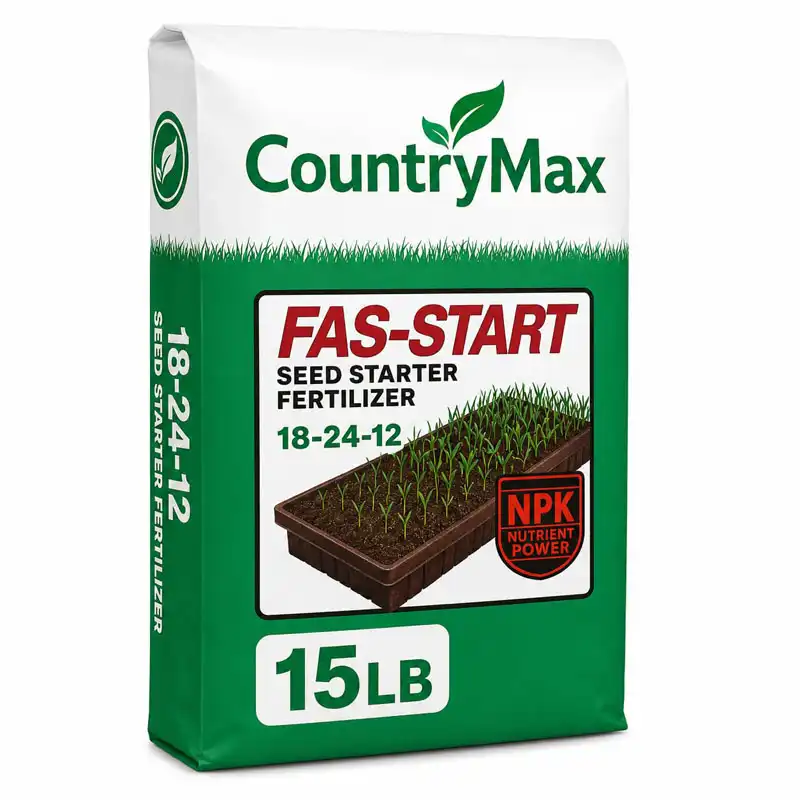
Fas-Start is the no-frills option, and sometimes that is the right call. No coatings, no inhibitors, no iron. It is a straight 18-24-12 blend at a light 3 pounds per 1,000 square feet. For a washout by the driveway or a dog-worn strip, paying for stabilized nitrogen makes little sense. The 15 pound bag spreads fine through a hand-crank unit. Apply when soil is already moist, then water in.
Specs:
- 18-24-12 granular, 15 lb bag
- Covers 5,000 sq ft
- No coating or inhibitor technology
- Rate: about 3 lb per 1,000 sq ft
How to Pick the Right Bag
Most 18 24 12 starter fertilizer bags come in two sizes. Match bag size to your area first, then compare nitrogen technology. Buy 50 pounds for a 4,000 square foot lot and you store an open bag all summer. Kansas humidity cakes granules solid.
Run through this before you buy:
- Square footage. Measure it. Under 6,000 square feet, buy a 15 or 16 pound bag. Above 10,000, go to 50 pounds.
- Cost per 1,000 square feet. Divide price by coverage. Bag price alone hides real value.
- Nitrogen type. Stabilized or coated nitrogen pays off on sandy soil and in wet falls. On heavy clay with moderate rain, straight granular does fine.
- Iron. Only matters if you want color fast. It does nothing for root development.
- Herbicide content. Read the label. Never use a weed-and-feed product at seeding, since preemergent herbicide kills germinating grass along with crabgrass.
- Return policy. Some starter fertilizer ships non-returnable.
18-24-12 vs Other Starter Grades
18-24-12 sits between a balanced all-purpose grade and a straight phosphate product. Each has a place, and the right pick depends on what your soil test already shows.
| Grade | Best use | Trade-off |
|---|---|---|
| 18-24-12 | New turf seeding and sod | Costs more than balanced grades |
| 13-13-13 | Seeding where soil test is adequate | Less phosphate per pound |
| 10-20-10 | Classic high-phosphorus starter | Lower nitrogen for fall push |
| 18-46-0 (DAP) | Field acres, bulk phosphate | No potash, and ammonia risk near seed |
| 24-25-4 | Retail starter blends | Very low potash |
K-State recommends a balanced grade such as 13-13-13 or a high-phosphorus product like 10-20-10 for fall lawn seeding. 18-24-12 fills the same role. It just brings more phosphate and stronger potash than either. Potash matters more than most people credit. It builds stress tolerance ahead of the first hot, dry stretch a new stand faces.
Say a soil test shows garden phosphorus already adequate. Then a balanced 10-10-10 blend costs less and does the same job. Save the starter grade for genuinely low-phosphorus ground.
Using 18-24-12 on Gardens and Field Crops
The grade works on vegetable beds and transplants, provided the bag carries no herbicide. Spread 3 to 4 pounds per 1,000 square feet and work it into the top 2 inches before planting. Tomatoes, peppers, brassicas, and onion sets all respond to banded phosphate in cool spring soil. Cold roots take up phosphorus poorly.
Field acres are a different question, and the answer is economics. At 4 pounds per 1,000 square feet, an acre needs about 175 pounds of product. Bagged 18-24-12 runs $1.90 to $3.00 per pound, so you are looking at $330 to $525 per acre. Bulk diammonium phosphate at 18-46-0 averaged around $883 per ton in USDA Agricultural Marketing Service reporting this July. That works out near $0.44 per pound. Per unit of phosphate, the bagged turf product costs roughly eight times as much.
So for row-crop acres, buy bulk DAP or MAP and blend potash separately. Reserve bagged 18-24-12 for lawns, gardens, and small plots where convenience is worth the premium.
One safety point if you do use it on row crops. Every one of these products contains urea. K-State Research and Extension advises against in-furrow placement of urea-containing fertilizer at any rate. Urea converts to ammonia, and ammonia is toxic to germinating seedlings. Keep total nitrogen plus potash under 6 to 8 pounds per acre in direct seed contact on 30-inch rows. Better yet, put it in a 2×2 band beside and below the seed, or surface dribble it. Both leave soil between fertilizer and seed.
Mistakes That Waste a Bag of Starter
- Leaving it on the surface at seeding. Phosphate barely moves. Unincorporated granules feed almost nothing.
- Doubling the rate to speed things up. Above 1.5 pounds of nitrogen per 1,000 square feet you burn seedlings.
- Skipping the soil test. Phosphate is the most expensive nutrient in 2026, and you may already have plenty.
- Using it as a routine lawn feed. Established turf needs nitrogen, not phosphate, and many states prohibit the application.
- Not watering it in. Granules stay inert until moisture dissolves them.
- Pairing it with crabgrass preventer. Preemergent herbicide stops grass seed from germinating too.
- Storing an open bag through summer. Humidity cakes granules solid. Seal it in a tote with the top folded and taped.
FAQs on 18 24 12 Fertilizer
Do you apply 18-24-12 before or after seeding?
Will 18-24-12 burn new grass seed?
How long does 18-24-12 take to work?
Is 18-24-12 good for Bermuda grass?
Can I use 18-24-12 in a vegetable garden?
Does 18-24-12 need to be watered in?
How to Handle Starter Fertilizer
Pull soil samples in July and buy one 50 pound bag of 18-24-12 in late August. It goes down the first week of September, ahead of tall fescue seed. It goes in with a calibrated drop spreader, gets raked into the top inch, and gets watered the same afternoon. Four to six weeks later the new stand gets straight nitrogen, no phosphate. That is the whole program. Starter fertilizer is a one-shot tool for establishment, not a routine feed. Treat it that way. You keep money in your pocket and phosphate out of the creek.