When Are Grapes Ready to Harvest? Signs, Brix, and Timing
When are grapes ready to harvest? The answer is in the fruit, not the calendar. Pick too early and the flavor stays flat and sour. Wait for the right moment and every cluster turns sweet and full of color.
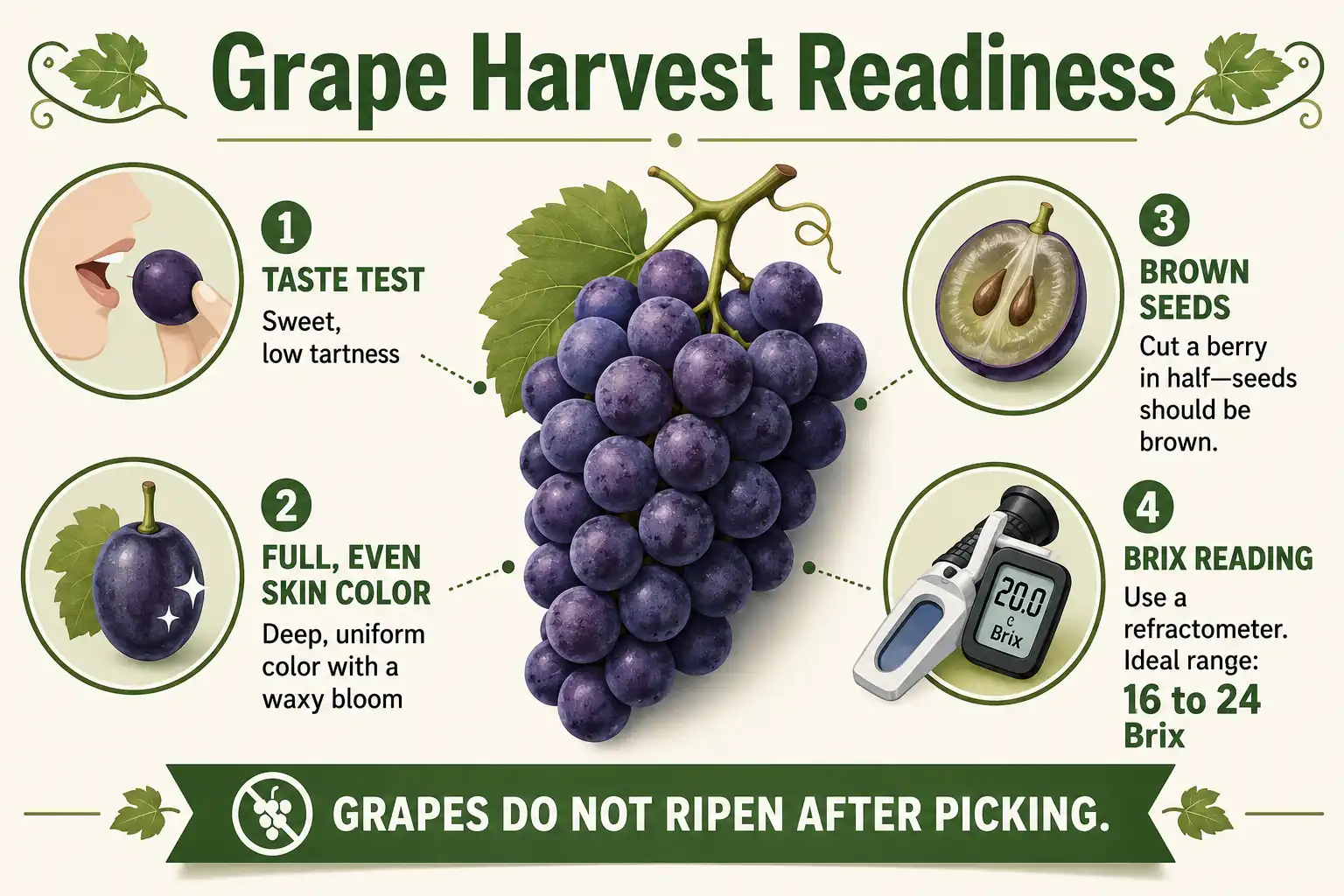
Grapes are ready to harvest when they reach full color, taste sweet, and show brown, hardened seeds. Most ripen from late summer through fall. Grapes never ripen after picking, so taste a few berries before you cut any cluster.
How Can You Tell When Grapes Are Ready to Harvest?
You tell grapes are ready by taste first, then by color, seed color, and feel. Taste is the most reliable test for a home grower.
Pull a few berries from different spots on the cluster and from a few different vines. Ripe grapes taste sweet with only a little tartness left. Underripe grapes stay sharp and sour.
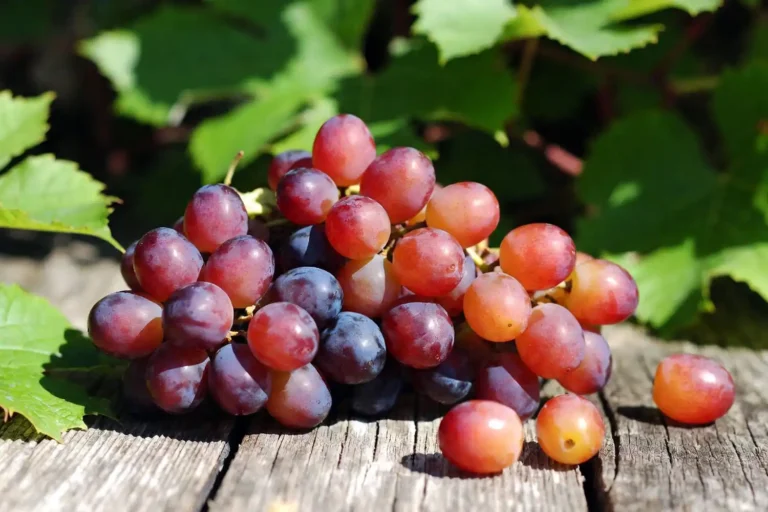
Color helps, but it fools people. Berries color up weeks before they finish ripening, so deep color alone does not mean ripe. Look for full, even color across the whole cluster. Red varieties turn deep red. Purple types go nearly black. Green grapes shift from hard green to a softer yellow-green.
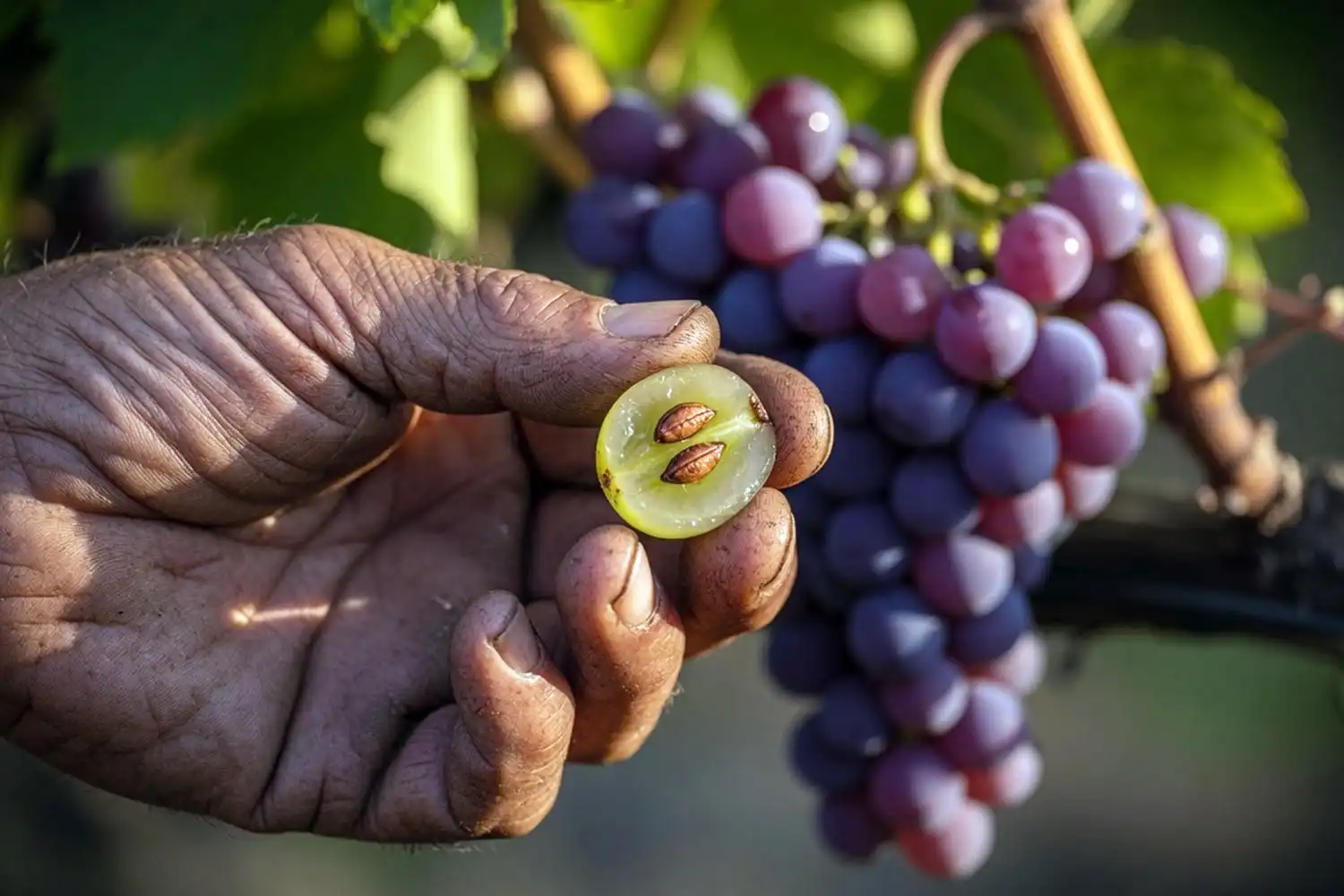
The waxy bloom on the skin (that dusty whitish coating) should be well developed too. Then cut a berry open and check the seeds. Green seeds mean wait. Brown, hard seeds mean the fruit is close.
Finally, feel the berries. Ripe grapes soften slightly and feel plump. On Concord and other American types, a ripe berry slips right out of its skin when you squeeze it. Always sample from the inside of the cluster, because those berries ripen last.
Learn more: Spray Copper Fungicide on Grapes
What Brix Level Means Grapes Are Ripe?
Brix measures the sugar in the juice, and the right target depends on how you plan to use the grapes. One degree Brix equals about one gram of sugar per 100 grams of juice.
A handheld refractometer reads Brix right in the field. You squeeze a few drops of juice onto the prism, hold it to the light, and read the number. These run a little over $150, so most home growers skip the tool and rely on taste. Still, a refractometer removes the guesswork if you grow a lot of fruit.
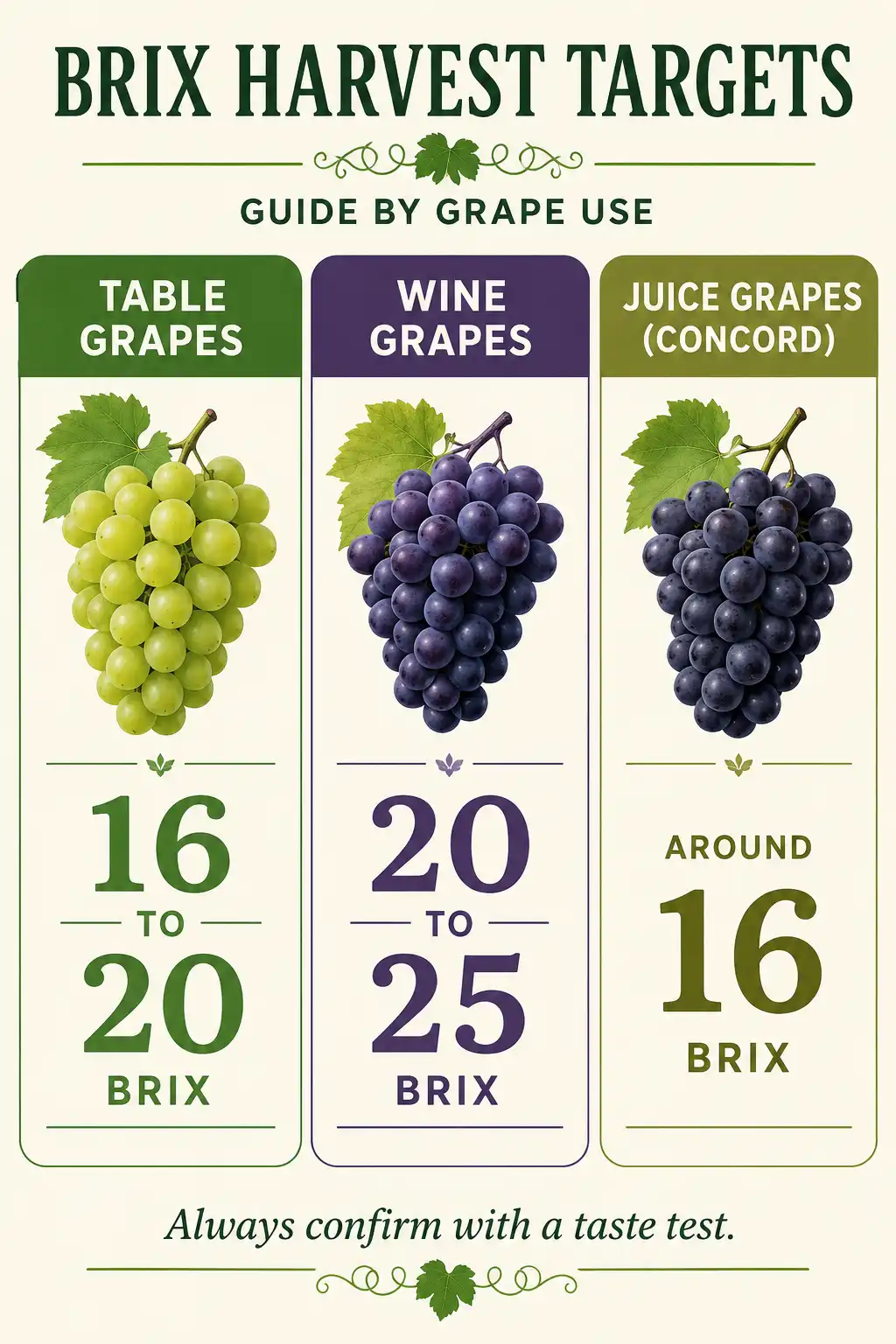
Here are the common targets. Table grapes usually hit their sweet spot at 16 to 20 Brix. Wine grapes hang longer for higher sugar, often 20 to 25 Brix. Juice and jelly grapes like Concord ripen around 16 Brix.
As sugar climbs, acid drops, and that balance is what your tongue reads as ripe. Because Brix alone does not capture flavor, pair the number with a taste and a seed check. Start sampling around 15 Brix, or roughly once a week after veraison.
Do Grapes Keep Ripening After You Pick Them?
No. Grapes are non-climacteric, which means they stop ripening the moment you cut the cluster from the vine. This is the single most important rule of grape harvest.
Unlike bananas, peaches, or tomatoes, grapes hold their sugar and flavor right where they were at picking. You cannot fix an early harvest on the kitchen counter. So leave the fruit on the vine until it is genuinely ready, then pick.
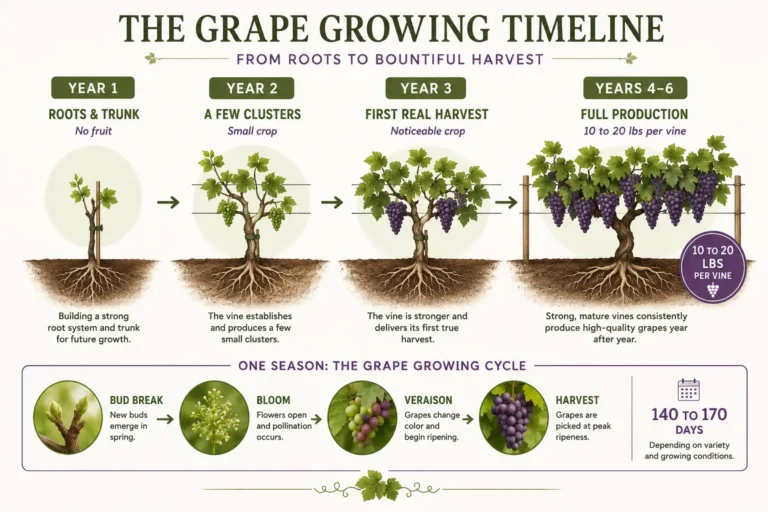
This rule shapes everything else. It is also why patience pays off, especially since young vines take a few seasons to crop at all. How long it takes for grapes to grow into a producing vine depends on the variety and your training.
When Is Grape Harvest Season?
In most of the country, grapes ripen from late summer through early fall, roughly August into October. Exact timing depends on the variety and your climate.
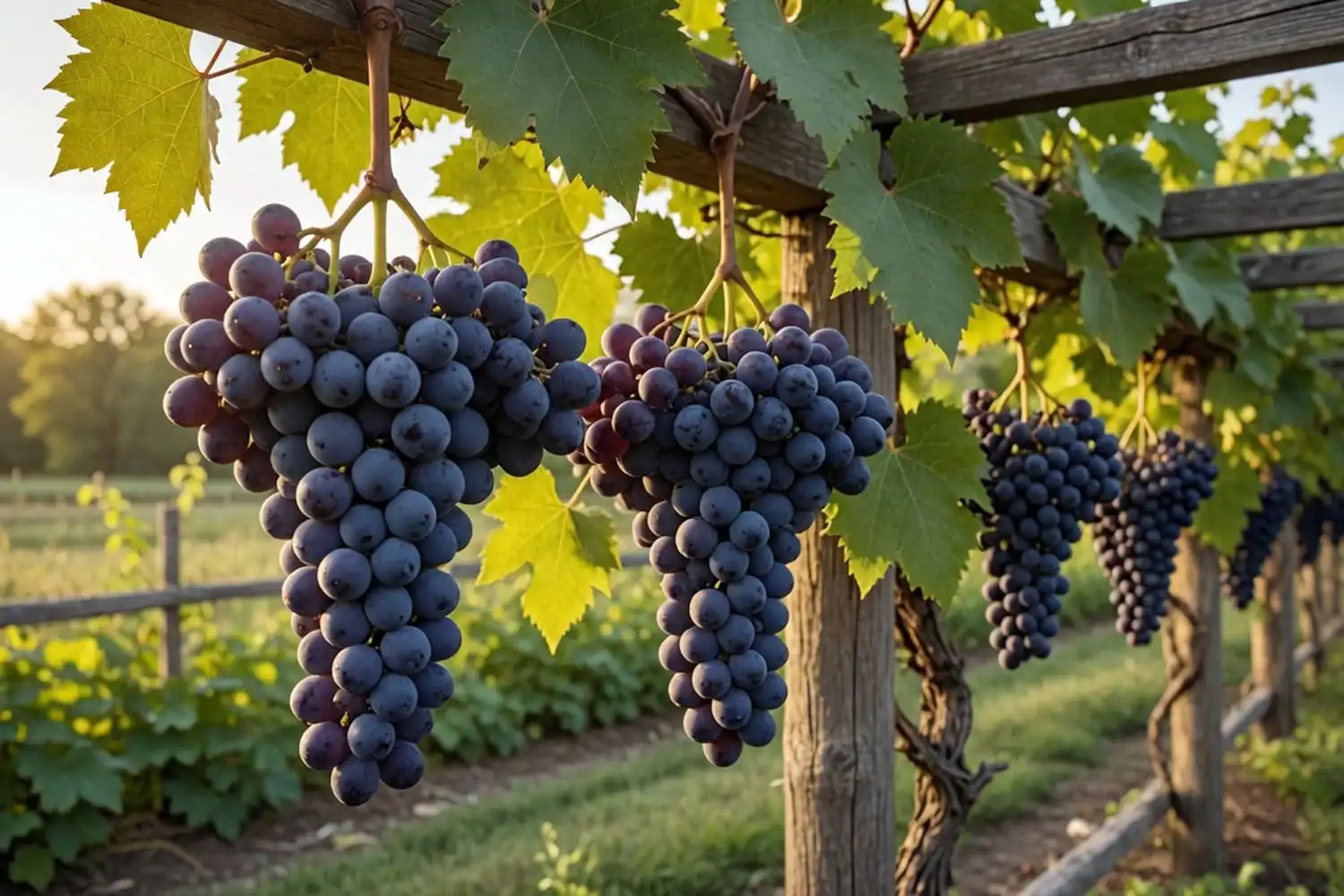
Early cultivars can be ready in early September. Late types like Concord may hang into mid-October in cooler regions. The vine’s own cycle sets the clock. Veraison, when berries change color and start to soften, is the starting point. From veraison to harvest usually runs several weeks. Concord in the Lake Erie region averages about 30 to 40 days from veraison to picking.
Grapes also need average temperatures above 50°F to keep maturing. Once fall cools below that, ripening basically stalls. Getting the planting window right years earlier matters too. Review the best time to plant grapes before you set new vines.
In Kansas, USDA hardiness zone 6a, earlier varieties come off in late August. The later ones ripen through September. As harvest nears, watch the long-range forecast for the first frost.
Does Harvest Timing Change by Grape Type?
Yes. Table grapes, wine grapes, and juice grapes each have their own ripeness target, so know which kind you grow.
Pick table grapes such as Thompson Seedless and Flame Seedless for fresh eating at 16 to 20 Brix. They should be firm but not rock hard. Wine grapes, both Vitis vinifera and cold-hardy hybrids, hang for higher sugar at 20 to 25 Brix. Growers also track juice pH and titratable acidity. Juice and jelly types like Concord and Niagara come off around 16 Brix. They show deep color and that full foxy flavor.
How Does Weather Affect When to Pick Grapes?
Weather can move your harvest date by days, so watch the forecast as the fruit nears ripeness.
Rain on mature fruit causes splitting, cracking, and rot. When a long wet stretch is coming and the grapes are close, pick before the rain hits. A light early frost can actually sweeten juice grapes. A hard freeze damages the fruit, so know your variety’s tolerance. Heat speeds ripening, while cool, cloudy weather slows it down.
Birds are not a ripeness signal. They start hitting clusters weeks before full flavor, so an early bird raid does not mean your grapes are ready. Keeping birds off your grapes with netting protects the crop while you wait for true ripeness.
Wet seasons also raise disease pressure in tight clusters. A steady spray schedule, including correct copper fungicide timing, keeps fruit clean enough to ripen all the way.
How Do You Harvest Grapes the Right Way?
Harvest grapes by cutting whole clusters with shears in the morning, then handle them gently. Follow these steps.
- Pick in the morning after the dew dries. Cooler fruit keeps longer.
- Use clean pruning shears or grape snips. Cut the cluster at the stem rather than pulling or twisting, which tears berries and bruises the vine.
- Hold each cluster by the stem, not the berries, to protect the waxy bloom.
- Set clusters gently into shallow containers. Do not stack them deep, since the weight crushes the lower fruit.
- Sort out any rotted or shriveled berries as you pick.
- Wait to wash the grapes until you are ready to eat or process them. Store them in a ventilated bag in the fridge, where fresh grapes hold for about one to two weeks.
Proper watering in the final weeks also affects fruit quality, so check how much water grapes need as harvest approaches.
What If You Wait Too Long to Harvest?
Leaving grapes on the vine past ripe trades a little extra sugar for real losses. The downside grows fast once fruit peaks.
Overripe berries soften, shrivel, and drop off the cluster, a problem growers call shatter. Storage life falls right along with it. Rot and mold then spread quickly through tight, mature clusters, especially after a rain. Birds, bees, and wasps also move in once the sugar is high.
Wine growers sometimes push sugar higher on purpose for a richer style. For fresh eating and juice, though, picking at peak beats hanging too long.
Last Notes
Taste comes first every time. Pull berries from a few clusters and taste them first. If they taste sweet with only a hint of tartness, check the color and seeds. Brown seeds and a slight softening confirm it. A refractometer gives a number when needed, but taste usually settles it.
Remember the big rule: grapes stop ripening the moment you pick them. So wait for true ripeness. Keep an eye on the forecast and the birds, and cut clusters in the cool of the morning. Get that timing right, and your grapes reward you with the best flavor they will ever have.