What Are Cotton Candy Grapes? Flavor, Facts, and Season
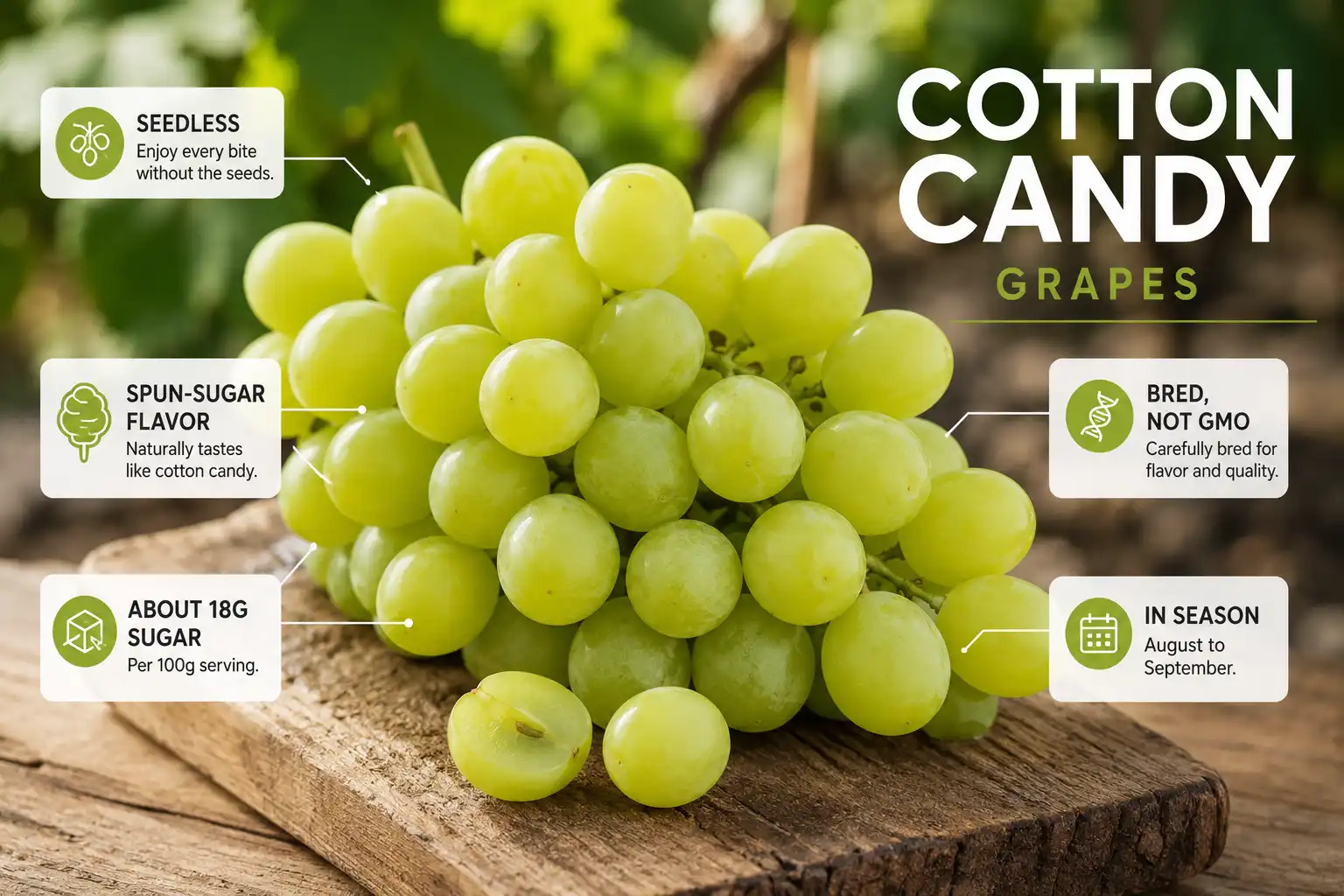
Cotton Candy grapes look like plain green grapes but taste like spun sugar. That first bite throws people off every time. So what are cotton candy grapes, and how does a real fruit end up tasting like a fair treat?
Cotton Candy grapes are a seedless green table grape bred to taste like spun sugar. Horticulturist David Cain created them at International Fruit Genetics through conventional cross-breeding, not genetic engineering. They are real fruit, just naturally sweeter than regular grapes.
What Are Cotton Candy Grapes?
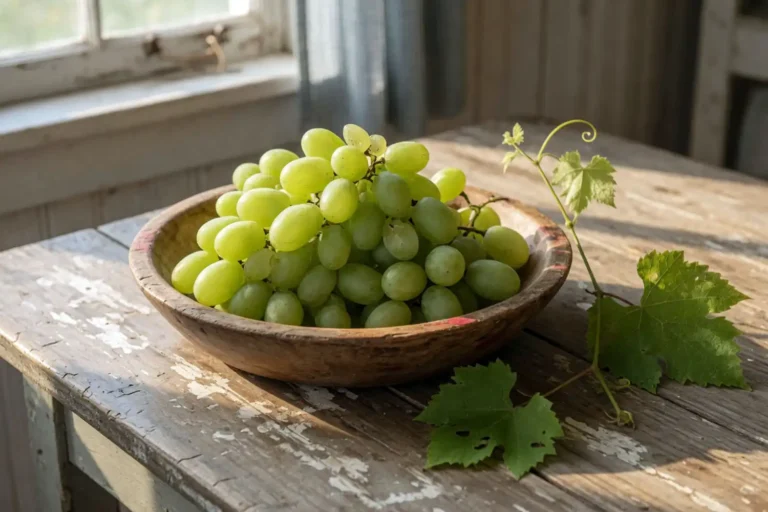
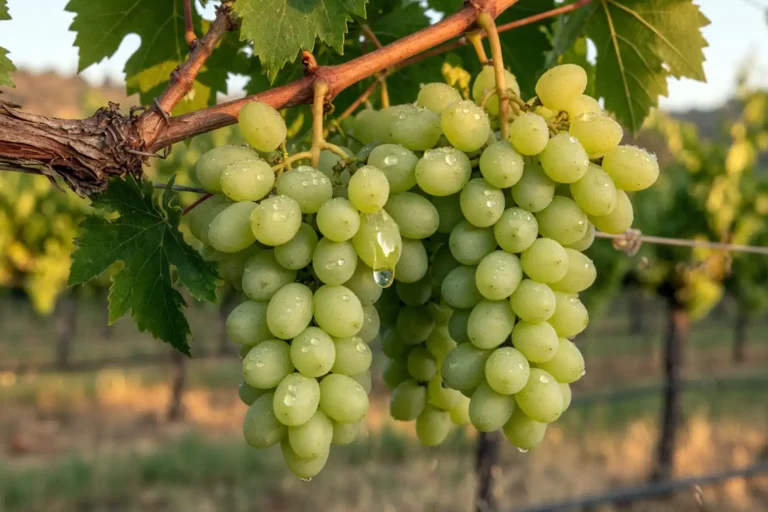
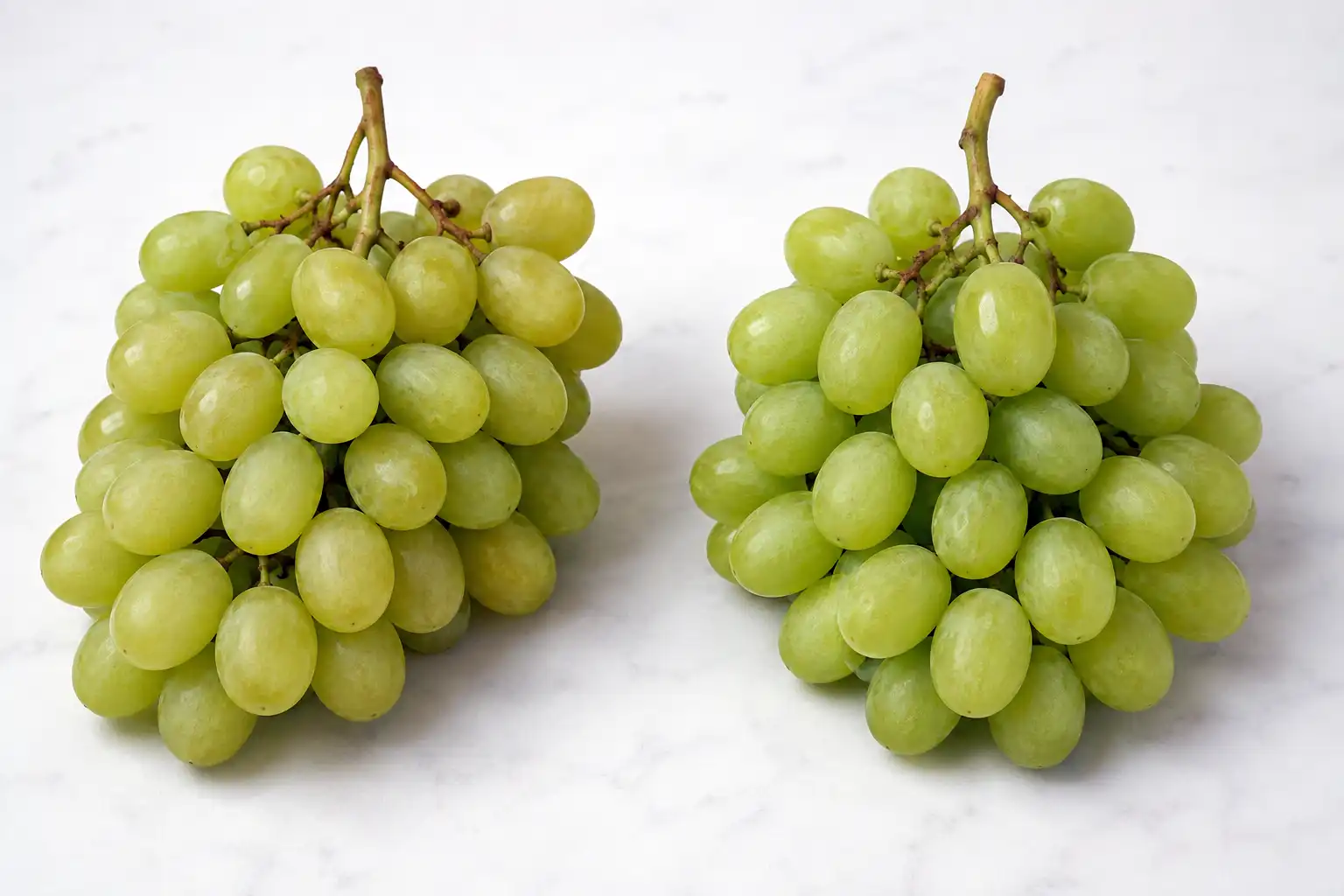
Cotton Candy grapes are a seedless green table grape with a flavor that mimics spun sugar. The patented cultivar name is IFG Seven, and it sells under the trademark “Cotton Candy.” The berries look almost like standard green grapes. They are large and oval, with a color that runs from green to light golden yellow. The taste is where they split off. Instead of a tart snap, you get low acid and a sweet, vanilla note.
Here are the core facts at a glance:
| Detail | Cotton Candy grape |
|---|---|
| Cultivar name | IFG Seven (trademark “Cotton Candy”) |
| Type | Seedless green table grape, interspecific hybrid |
| Bred by | David Cain, International Fruit Genetics (Bakersfield, CA) |
| First sold | 2011, by grower Grapery |
| Color | Green to light golden yellow |
| Flavor | Spun sugar with a light vanilla note, very low acid |
| Sugar | About 18 g per 100 g, roughly 12% above a standard green grape |
| US season | Mid-August to late September |
| GMO? | No, made by conventional cross-breeding |
Also know: What Exactly Are Table Grapes
What Do Cotton Candy Grapes Taste Like?
They taste like cotton candy, with a soft vanilla note and almost no tartness. Breeding puts that sweetness into the fruit, not any syrup or coating. Regular grapes pair sugar with a sharp, acidic bite. This variety drops most of that acid, so the sugar and vanilla step forward. Many people also catch a faint caramel or toffee edge. The texture still stays crisp, like any good table grape.
Put next to a normal green grape, the difference is easy to sort out:
| Trait | Cotton Candy grape | Regular green grape |
|---|---|---|
| Flavor | Spun sugar, vanilla, toffee hint | Clean, mild, grapey |
| Acidity | Very low | Noticeable tang |
| Sugar level | Higher (about 12% more) | Standard |
| Seeds | Seedless | Usually seedless |
| Look | Green to golden, large and oval | Green, round to oval |
Who Created Cotton Candy Grapes, and How?
Horticulturist Dr. David Cain and his team created Cotton Candy grapes at International Fruit Genetics (IFG) in Bakersfield, California. Cain is a former USDA researcher, so he knew grape genetics well. He made the first cross in 2003. The grape is an interspecific hybrid, which means it blends two grape species. Cain crossed the green Princess variety, a Vitis vinifera table grape, with a Concord-type selection from the University of Arkansas. That Concord side, a Vitis labrusca type, carries the vanilla, cotton-candy aroma. The Princess side brings firm texture and the seedless trait.
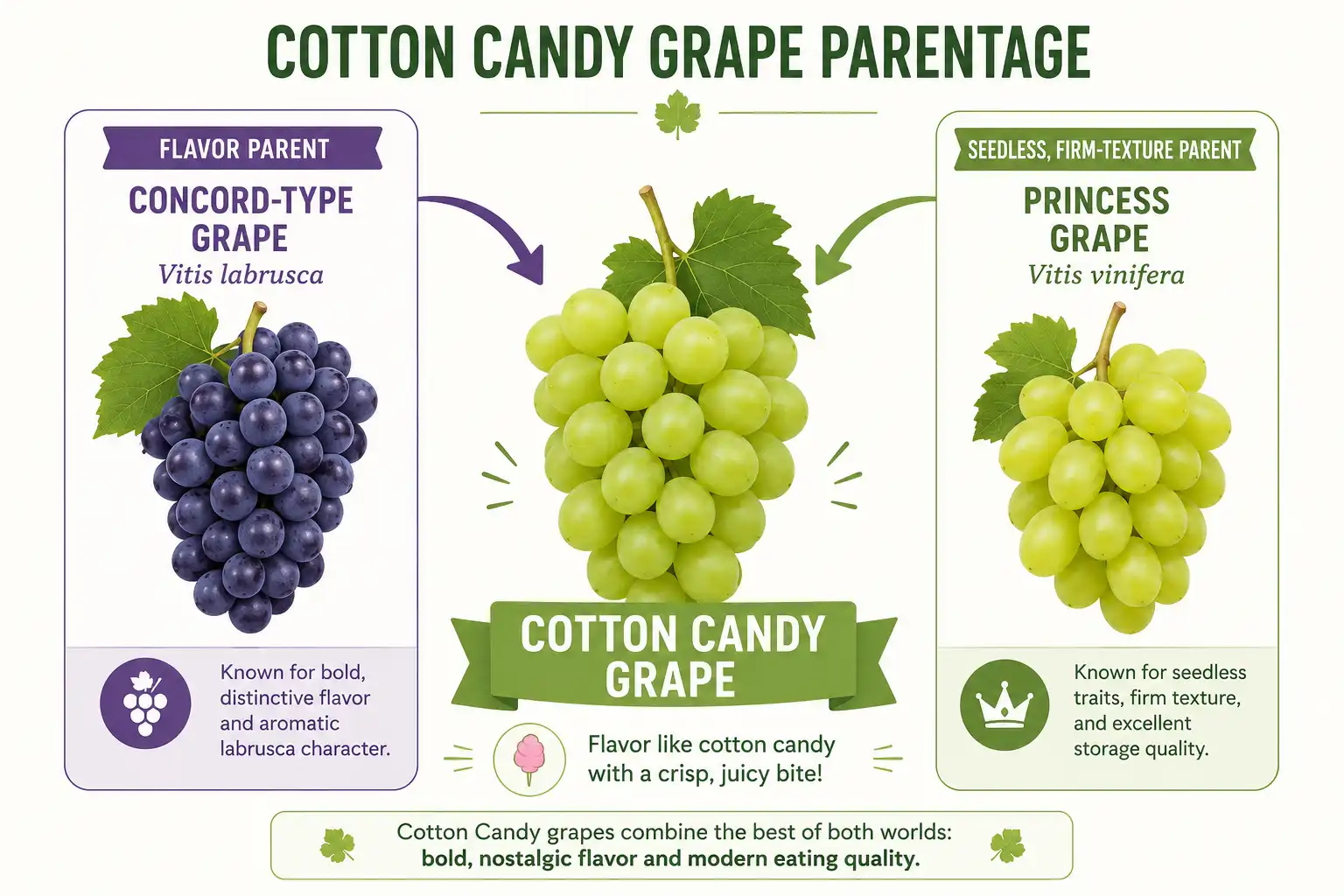
The tricky part came next. A wide cross like this rarely forms a healthy seed. So the team used embryo rescue, nursing the tiny embryos in lab culture until they grew into plants. That step saves a natural cross, but it does not change the plant’s DNA. IFG patented the vine as IFG Seven, and Grapery began selling the fruit in 2011. For the full breeding steps, our guide covers how growers first made this flavor from a rescued cross.
Are Cotton Candy Grapes GMO or Natural?
Cotton Candy grapes are natural, not genetically modified. Breeders made them with old-fashioned hand pollination, the same basic method growers have used for centuries. No lab inserted foreign genes. The embryo rescue step only nurses a weak seedling, so it changes nothing in the grape’s genetics. That is why the fruit counts as non-GMO. The full case for whether this variety is natural and free of engineering is laid out in its own article.
Do Cotton Candy Grapes Have Seeds?
No, Cotton Candy grapes are seedless. The Princess parent passes down the seedless trait, so the bunches carry no hard seeds. You might feel a tiny soft trace in a few berries, but nothing you notice while eating. That seedless quality is a big reason the variety sells so well. Go deeper into why the bunches stay seedless on the vine in a separate post.
How Much Sugar Is in Cotton Candy Grapes?
Cotton Candy grapes hold about 18 grams of sugar per 100 grams, roughly 12% more than a standard green grape. They read near 18 on the Brix scale, which growers use to measure sugar in fruit. That higher number is why they taste so sweet. Still, the sugar is natural grape sugar, not added syrup. The calorie count sits close to regular grapes, just with a sweeter punch. So a normal handful works fine as a snack. our guide covers the health side, including whether the sugar makes them unhealthy in any real way, in its own guide.
When Are Cotton Candy Grapes in Season?
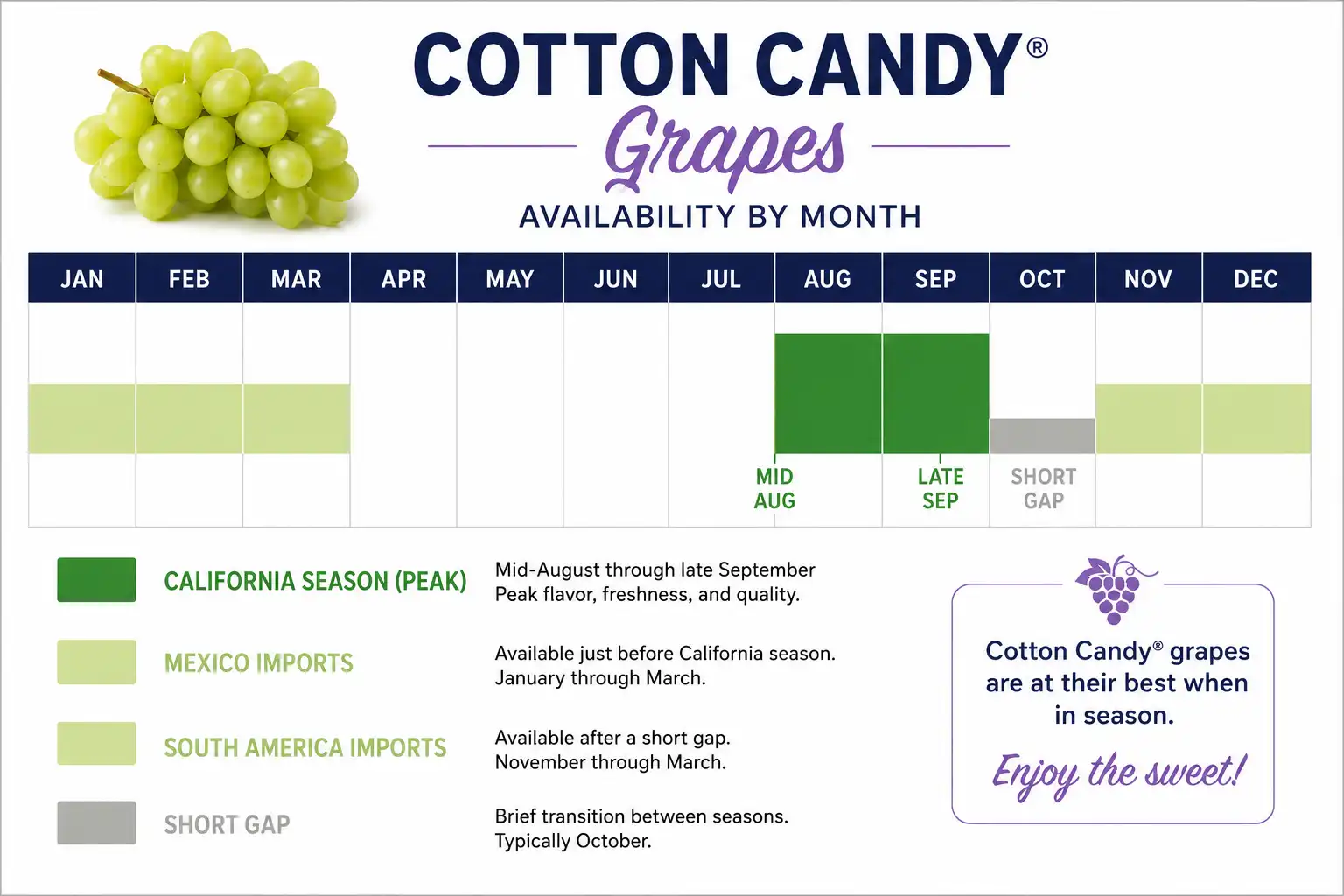
Cotton Candy grapes hit US stores from mid-August through late September, with peak supply in early September. California sets that main window. Weather nudges the exact dates a little each year. Imports then stretch the calendar. A Mexican crop often lands just before California. After that, South American fruit from Peru, Chile, and Brazil shows up from about November into March.
Here is the rough availability by source:
- California (main US crop): mid-August to late September, peak early September
- Mexico: a short run just before the California season
- South America (Peru, Chile, Brazil): about November through March
- Gap: shelves usually go empty for a few weeks between runs
Where Are Cotton Candy Grapes Grown?
Cotton Candy grapes grow mainly in California’s Central Valley, near Bakersfield. Grapery holds the exclusive US license to grow and sell them. Outside the US, licensed growers raise the variety in Spain, Mexico, Brazil, Chile, Peru, and a few other countries. IFG has licensed the grape into more than a dozen countries. That short season, one US grower, and patent control all keep supply tight. So the grapes cost more and vanish fast once they appear.
How Do You Pick the Best Cotton Candy Grapes?
Pick bunches with plump, firmly attached berries and fresh green stems. Color is your best clue for sweetness. Use these checks at the store:
- Look for a golden tint: green berries with a light yellow or golden blush are riper and sweeter
- Check the stems: they should be green and flexible, never dry or brown
- Squeeze gently: berries should feel firm, not soft or wrinkled
- Skip shedding bunches: loose berries falling off the stem signal old fruit
- Taste first if you can: the true cotton candy flavor tells you right away
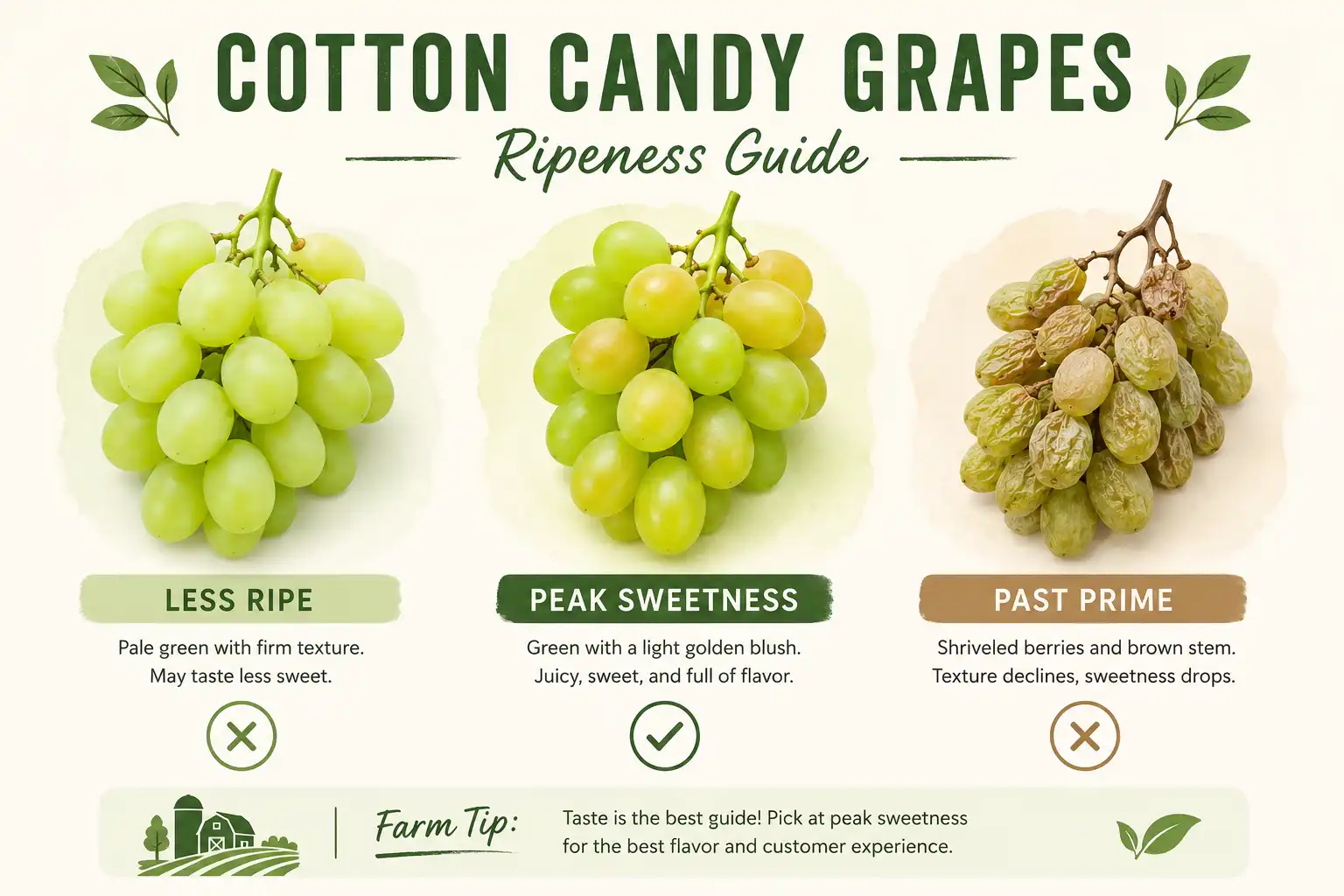
One key point: grapes do not sweeten after harvest. Like most grapes, they do not ripen once picked, so buy them ripe or skip them.
How Do You Store Cotton Candy Grapes?
Store them unwashed in the fridge, right in their vented bag or clamshell. That keeps them crisp for about a week, sometimes a bit longer. Follow these simple steps:
- Keep the grapes in their original vented container, unwashed
- Set them in the crisper drawer of your refrigerator
- Wash only the portion you plan to eat, right before eating
- Keep them away from strong-smelling foods, since grapes pick up odors
- Freeze extra grapes on a tray for a sweet, ice-pop style snack
Washing early traps moisture and speeds up mold, so hold off until serving time.
Last Words
Cotton Candy grapes are a real, seedless green grape bred for a spun-sugar flavor. They are not a gimmick, and they are not a modified crop. David Cain built that taste through patient cross-breeding, and Grapery brings the fruit to stores each late summer. So if you spot a bag from August into September, grab it and look for that golden tint. That short season is the only real catch.