Best Refractometer for Grapes Harvest: Brix Targets + Top 7 Picks
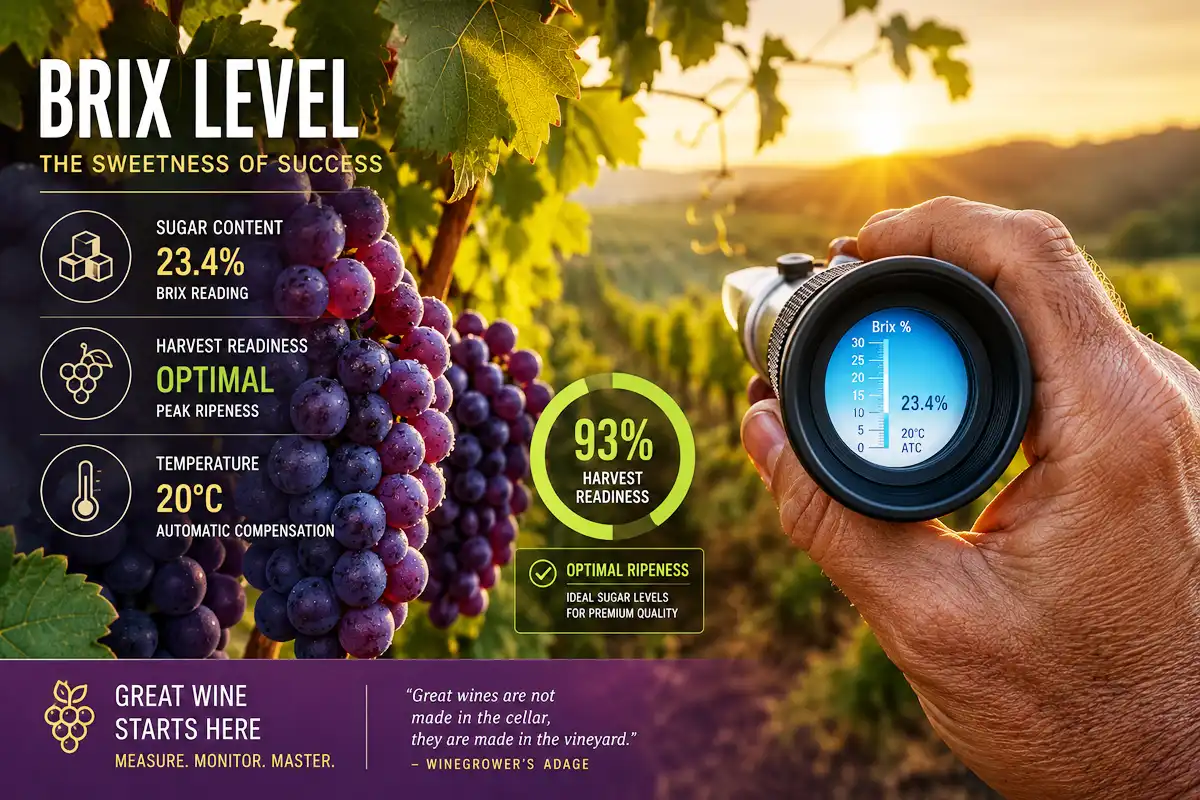
A refractometer for grapes harvest replaces guesswork with a number. Squeeze a little juice, read the sugar content in seconds, and you know how ripe the fruit is. Pick table grapes at 16 to 20 Brix and wine grapes at 19 to 26, then taste to confirm.
The best refractometer for grapes harvest is the Milwaukee MA871, a digital reading 0 to 85% Brix in 1.5 seconds with ATC. The Atago PAL-1 is the most field-tough, IP65-rated and pocket-sized. For value, the LAFMATE 3-in-1 covers 0 to 95% Brix and logs 100 readings.
Quick Comparison: Top 7 Refractometers for Grape Harvest at a Glance
Here’s how the seven compare on the things that matter at harvest. Skim it to find your fit, then read the detail on each below.
| Refractometer | Type | Brix range | Accuracy | ATC | Extra scale | Price |
|---|---|---|---|---|---|---|
| Atago PAL-1 | Digital | 0 to 53% | ±0.2% Brix | Yes, 10 to 100°C | None (Brix only) | $329 |
| Milwaukee MA871 | Digital | 0 to 85% | ±0.2% Brix | Yes, 10 to 40°C | None (Brix only) | $185 |
| LAFMATE 3-in-1 | Digital | 0 to 95% | ±0.2%, 0.05% res | Yes, 5 to 40°C | Refractive index; logs 100 | $71 |
| Ade RHW-25/Brix-40ATC | Analog | 0 to 40% | ±0.2% Brix | Yes | Potential alcohol, 0 to 25% | $35 |
| Aichose 0-40% Brix | Analog | 0 to 40% | ±0.2% Brix | Yes, 0 to 30°C | Potential alcohol, 0 to 25% | $18 |
| Tiaoyeer Brix | Analog | 0 to 32% | ±0.2% Brix | Yes, 10 to 30°C | Specific gravity, 1.000 to 1.130 | $15 |
| LAXCO 0 to 32% Handheld | Analog | 0 to 32% | ±0.2% Brix | Yes | None (Brix only) | $140 |
What a Refractometer Tells You at Grape Harvest
It measures the dissolved sugar content in grape juice. A grape refractometer shines light through a drop of juice and reads how far that light bends, the refractive index. More sugar makes the juice denser, so the light bends more and the degrees Brix reading climbs. A higher number on the Brix scale means riper fruit and better ripeness at picking.
What Brix Should Grapes Be at Harvest?
A refractometer reading at grape harvest should land between 16 and 26 Brix, depending on use. Table grapes run 16 to 20. Wine grapes go higher: sparkling around 17 to 18, whites 20 to 24, reds 22 to 26. Brix is not the only signal, so also check taste, seed color, titratable acidity, and pH.
Brix Targets for Table Grapes
Table grapes taste best for fresh eating around 16 to 20 Brix. They get picked lower than wine grapes. The OIV treats 16 Brix as the point where table grapes count as ripe. Grapes are non-climacteric. They stop gaining sugar the moment you cut the cluster. That is why grapes will not ripen off the vine like a peach does. Pick them sweet, because the number you read is the number you keep.
Brix Targets for Wine Grapes by Style
Wine grapes run higher, roughly 19 to 25 Brix or more. Sparkling sits low at 17 to 18 for bright acidity, whites land at 20 to 24, and reds climb to 22 to 26. Sugar starts building at veraison and peaks in the final weeks, the tail end of how long grapes take to grow. Variety and region shift these targets, so treat them as a starting window.
Converting Brix to Potential Alcohol
Multiply Brix by about 0.55 to 0.6 to estimate finished alcohol. A simple rule is Brix times 0.6 equals potential alcohol, with the real factor running 0.55 to 0.65. So 24 Brix works out to roughly 14.4 percent alcohol. Riper fruit and varieties like Zinfandel push the conversion toward the high end.
Analog vs Digital Refractometer for Grapes
For most growers, a digital grape refractometer is easier and more consistent. An analog refractometer is cheaper and runs without batteries.
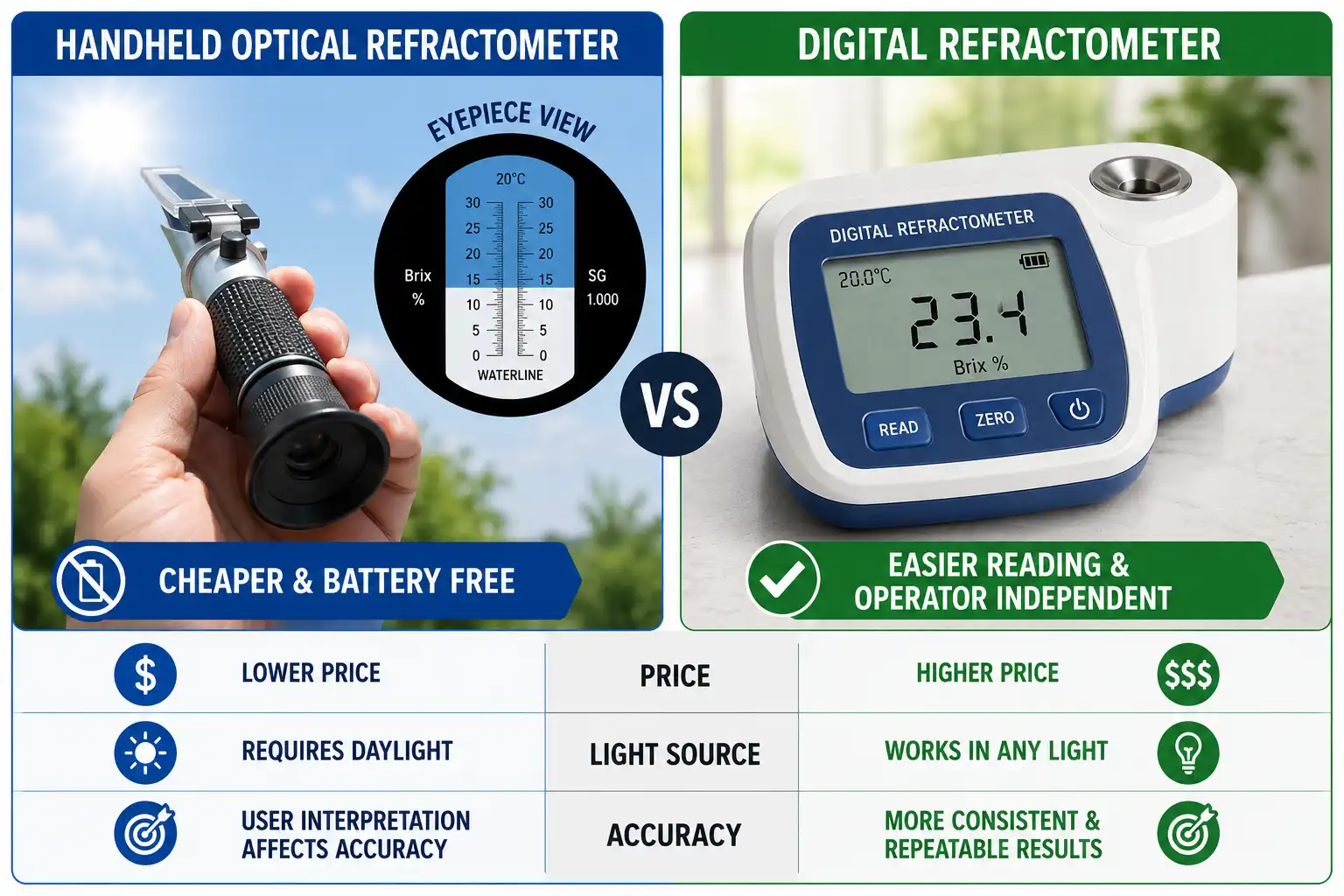
A traditional optical model is compact and simple. You hold it to the light and read a scale through the eyepiece, with almost no training needed. The downside is eye strain and reading drift in dim light or after a long day. Two people can read the same sample a little differently.
A digital model uses an LED and an optical sensor. It prints a number on a screen, so the reading is the same no matter who holds it. That removes operator guesswork at harvest.
On price, the analog unit stays cheap while digital costs more. On readability, digital wins. Both need ATC for field use, covered below. For a busy harvest with several varieties, the digital readout saves time. That is the heart of the analog vs digital refractometer call: a few dollars saved against a faster, error-free read.
What to Look For When Buying a Refractometer for Grapes Harvest
The best refractometer for grapes comes down to a few features, not price alone. You want the right Brix range, automatic temperature compensation, easy calibration, field durability, and a clear readout. Here is what each one buys you.
Brix Range (Get 0 to 40%, Not Just 0 to 32%)
Get a 0 to 40 percent Brix scale, not just 0 to 32. Ripe wine grapes push past 24 to 28, and dessert or late-harvest fruit can read 30 °Bx. A 0 to 40 percent scale gives headroom a 0 to 32 percent unit cannot. The wider scale reads full sugar content on your sweetest fruit. For table grapes alone, 0 to 32 percent works.
Automatic Temperature Compensation (ATC)
ATC is essential for field work. Without it, your refractometer is accurate only at one temperature, so you apply correction tables by hand. Non-ATC units are calibrated for 68°F. ATC reads accurately across roughly 50 to 86°F ambient temperature, covering most harvest mornings and afternoons.
Accuracy and Resolution
Look for plus or minus 0.2 percent Brix accuracy with 0.1 resolution. Quality digital units like the Milwaukee MA871 hit plus or minus 0.2 percent Brix. Budget analog units may only reach plus or minus 0.5, which is enough to shift a harvest call by a day or two.
Digital or Analog Readout
A digital readout removes eye-reading error and works in dim light. An analog scale is cheaper and battery-free. New users almost always find the digital vs analog refractometer decision easy, since digital is simpler to read and removes operator dependence. If several people sample your vines, digital keeps everyone on the same number.
Potential Alcohol or Dual Scale (Wine Grapes)
A Brix plus potential alcohol dual scale is handy for winemakers, but read it honestly. The alcohol scale is a ballpark of finished ABV, not a finished-wine number, and it skews once the must starts to ferment. Trust the Brix reading and convert it yourself with Brix times 0.55.
Build Quality and Weather Resistance
Vineyard work is dusty and wet, so build matters. Look for a metal or aluminum body, a splash-proof or IP-65 rated design, and an easy-clean sealed prism. Premium field units carry an IP-65 rating and can be rinsed under running water. Good durability means the tool survives a full season in your pocket and the truck.
Easy Calibration
The best units zero with plain distilled water, no special fluid. Digital models calibrate with one button using distilled water or deionized water. Re-zero before every session, even with ATC, because calibration drift is real. A quick zero takes seconds and protects every reading after it.
The Best Refractometers for Grape Harvest: Reviews
it helps to use a digital refractometer with ATC the same way the grain moisture tester at the combine: the number takes the guesswork out. Here are seven it helps to point a grower toward, sorted by where each one fits. A solid analog still does the job, but digital removes the eye-reading.
1. Atago PAL-1 – Best Premium and Field-Tough Digital
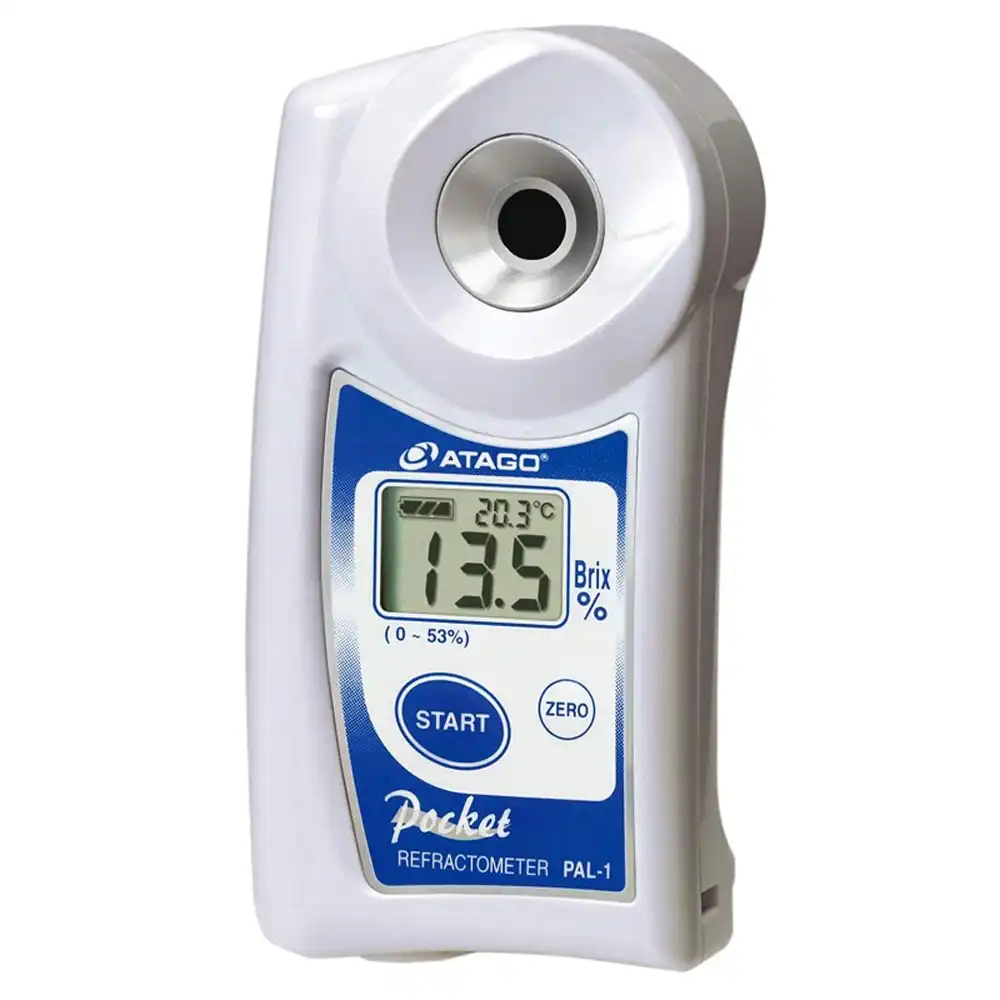
Atago is a Japanese instrument maker, and the PAL-1 is the pocket digital plenty of growers trust for years. It reads Brix from 0 to 53%, covering table fruit through late-harvest wine grapes. Best for anyone who wants a rugged, accurate tool that outlasts cheaper units.
PROS
- Reads in 3 seconds
- Tough IP65 body
- Users report 10-plus years
- Pocket-sized, just 100g
CONS
- Premium price tag
Specs that matter for grapes
- Brix range: 0 to 53%
- Accuracy: plus or minus 0.2% Brix
- ATC plus ELI stray-light warning
- Washes under running water
2. Milwaukee MA871 – Best Overall Digital
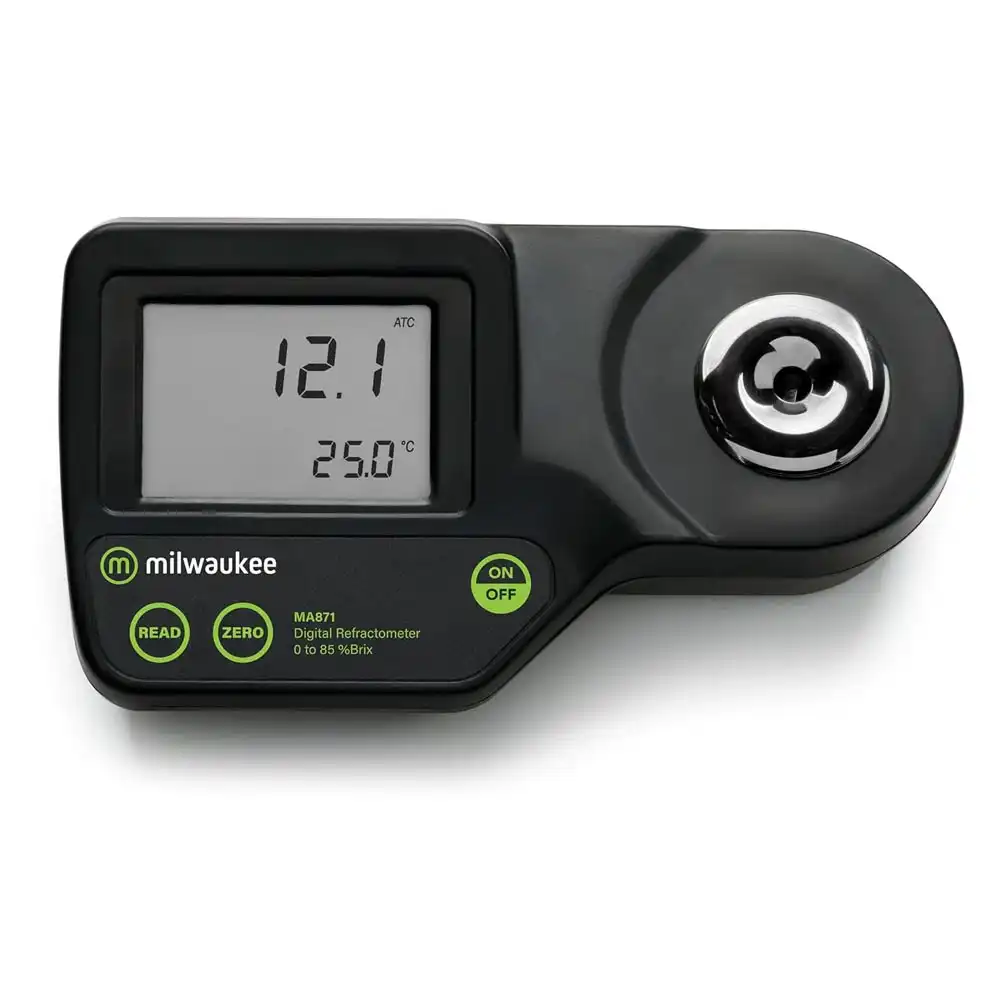
Milwaukee Instruments makes lab-grade meters, and the MA871 is the one first. It reads Brix from 0 to 85% at plus or minus 0.2% accuracy, plenty for any grape. Two drops, 1.5 seconds, done. Best all-around digital for harvest calls you can stand behind.
PROS
- Reads in 1.5 seconds
- Needs just 2 drops
- Stainless steel sample well
- One-button water calibration
CONS
- Heavier than pocket units
Specs that matter for grapes
- Brix range: 0 to 85%
- Accuracy: plus or minus 0.2% Brix
- ATC to ICUMSA standard
- IP65 body, glass prism
3. LAFMATE 3-in-1 Digital Refractometer – Best Digital Value for Wine Grapes
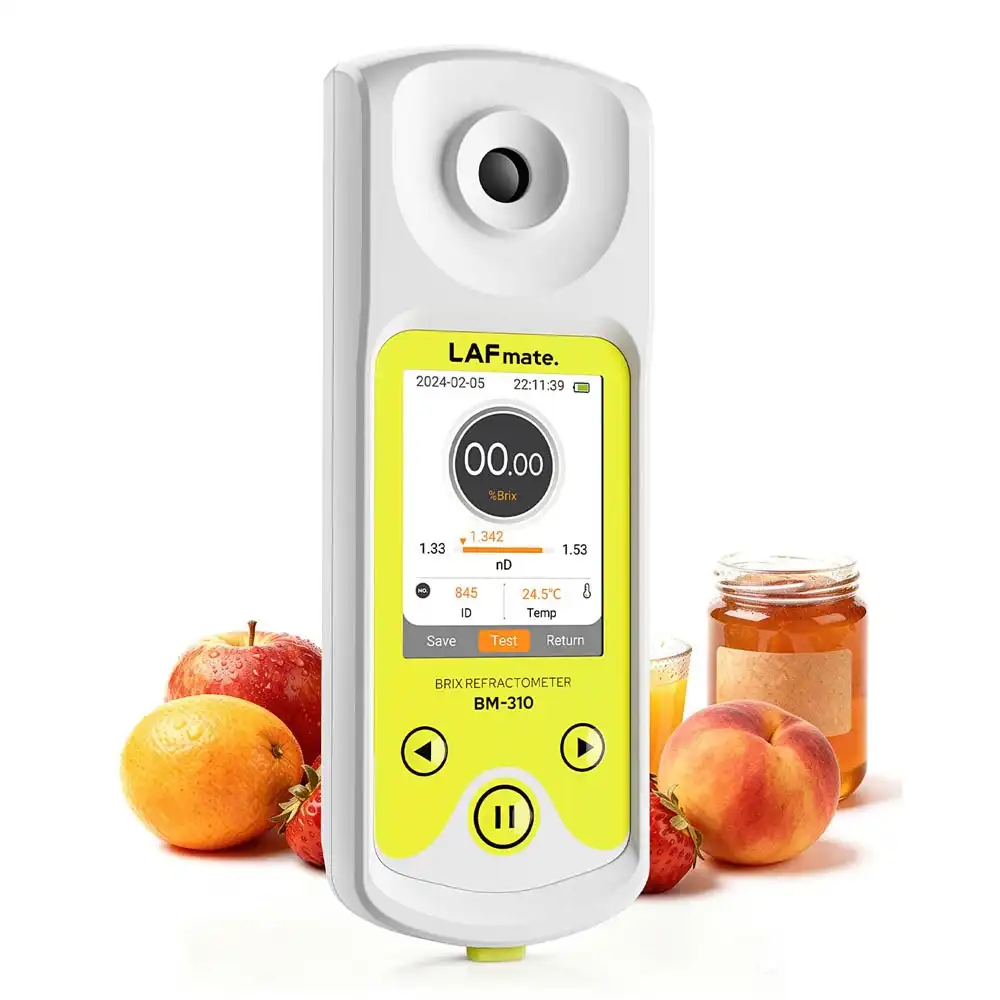
LAFMATE’s BM-310 is a newer digital, out in late 2025, that punches above its price. It reads Brix from 0 to 95% plus refractive index, and stores up to 100 readings, so you can track ripeness block by block. Best digital value for wine-grape growers.
PROS
- Stores 100 readings
- TFT backlit screen
- Rechargeable, 12-hour battery
- Type-C fast charging
CONS
- Bulkier
Specs that matter for grapes
- Brix range: 0 to 95%
- Accuracy: plus or minus 0.2%, 0.05% resolution
- ATC across 5 to 40°C
- IP65 waterproof body
4. Ade Advanced Optics RHW-25/Brix-40ATC – Best Analog Value for Wine Grapes
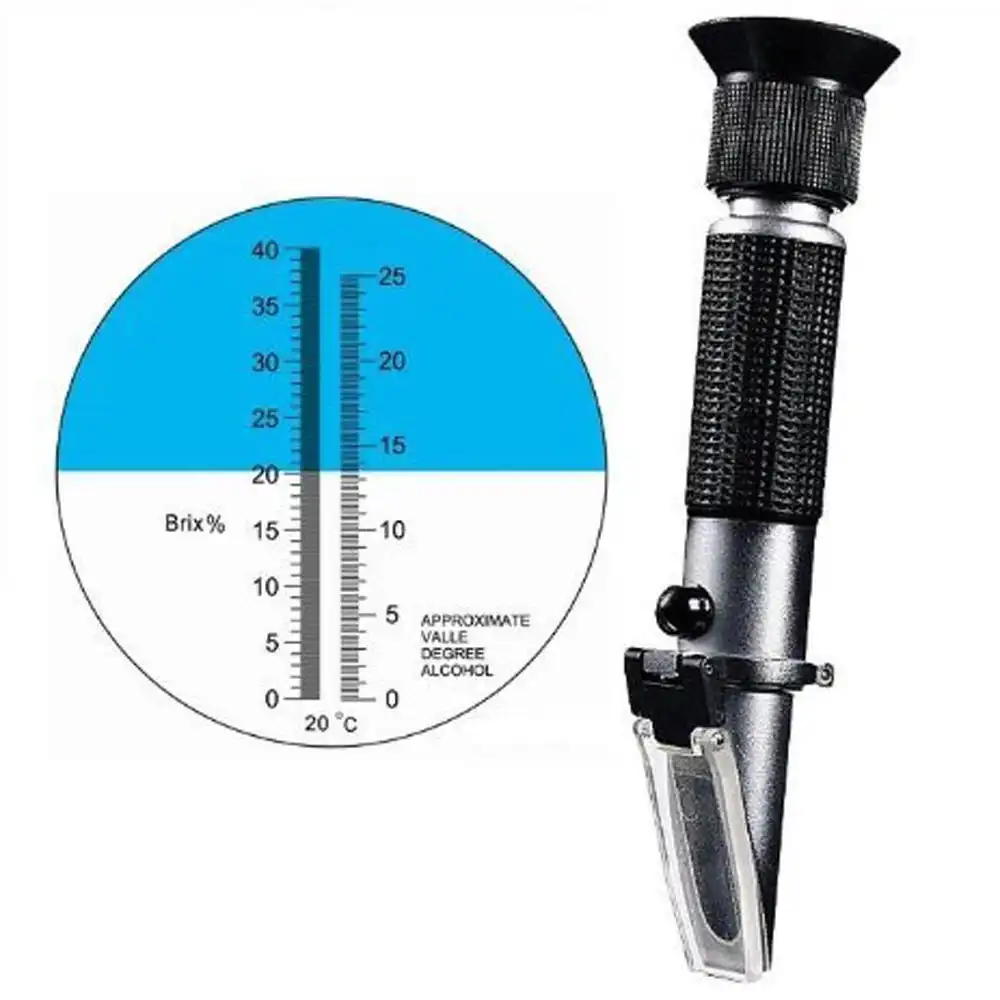
Ade Advanced Optics built this analog unit for winemakers. It carries a 0 to 40% Brix scale plus a 0 to 25% potential alcohol scale, so you read sugar and a ballpark ABV in one look. Best analog value if you would rather skip batteries.
PROS
- Dual Brix and alcohol scales
- Aluminum body, no batteries
- Plus or minus 0.2% Brix accuracy
- Wide 0 to 40% range
CONS
- Alcohol scale is approximate
Specs that matter for grapes
- Brix range: 0 to 40%
- Potential alcohol: 0 to 25%
- ATC for field readings
- Pipette and screwdriver included
5. Aichose 0-40% Brix Refractometer – Best Budget Analog
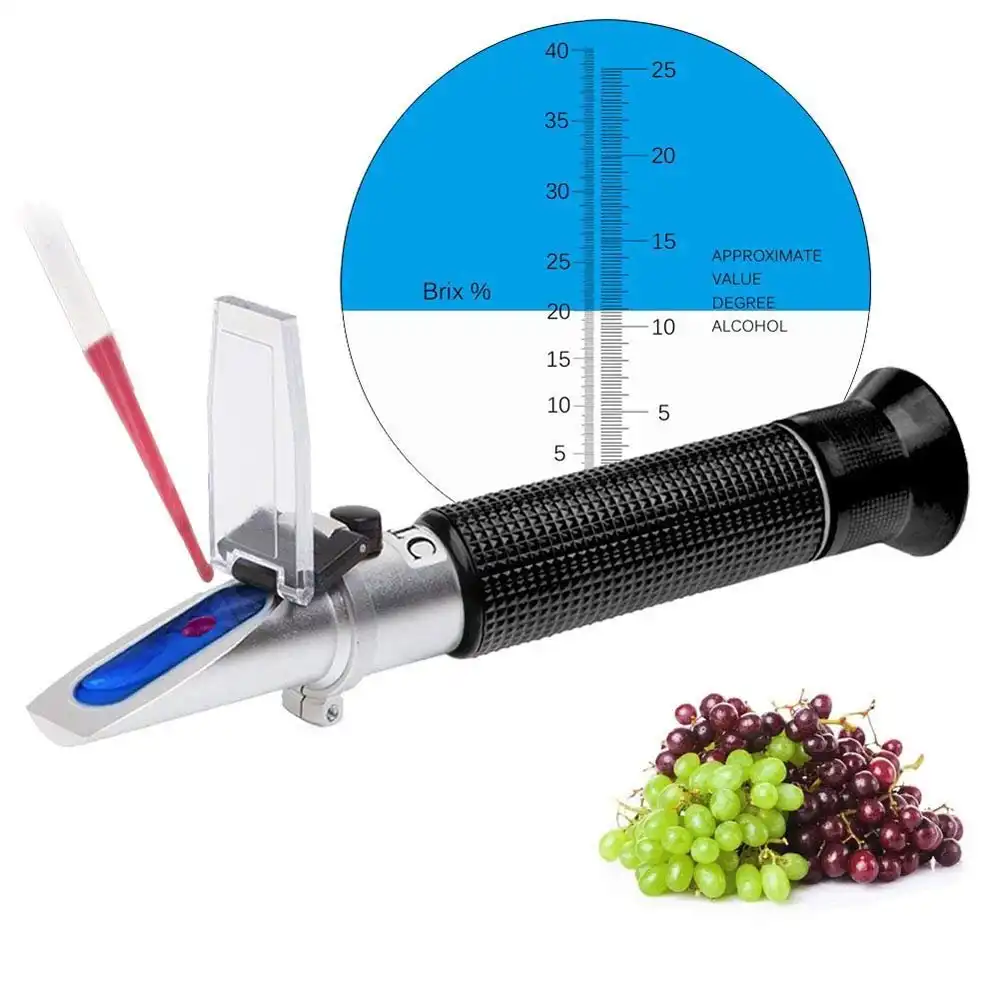
Aichose makes an affordable analog refractometer for grape and wine work. It runs a 0 to 40% Brix scale and a 0 to 25% alcohol scale, so it handles wine grapes at the cheap end. Best budget analog that still reads close to pricier units.
PROS
- Easy on the wallet
- No batteries needed
- Dual Brix and alcohol scales
- Food-safe metal body
- Where it comes up short
CONS
- Manual eye-reading
Specs that matter for grapes
- Brix range: 0 to 40%
- Alcohol scale: 0 to 25% vol
- ATC across 0 to 30°C
- Case and dropper included
6. Tiaoyeer Brix Refractometer with ATC – Best Budget Pick for Tracking Fermentation
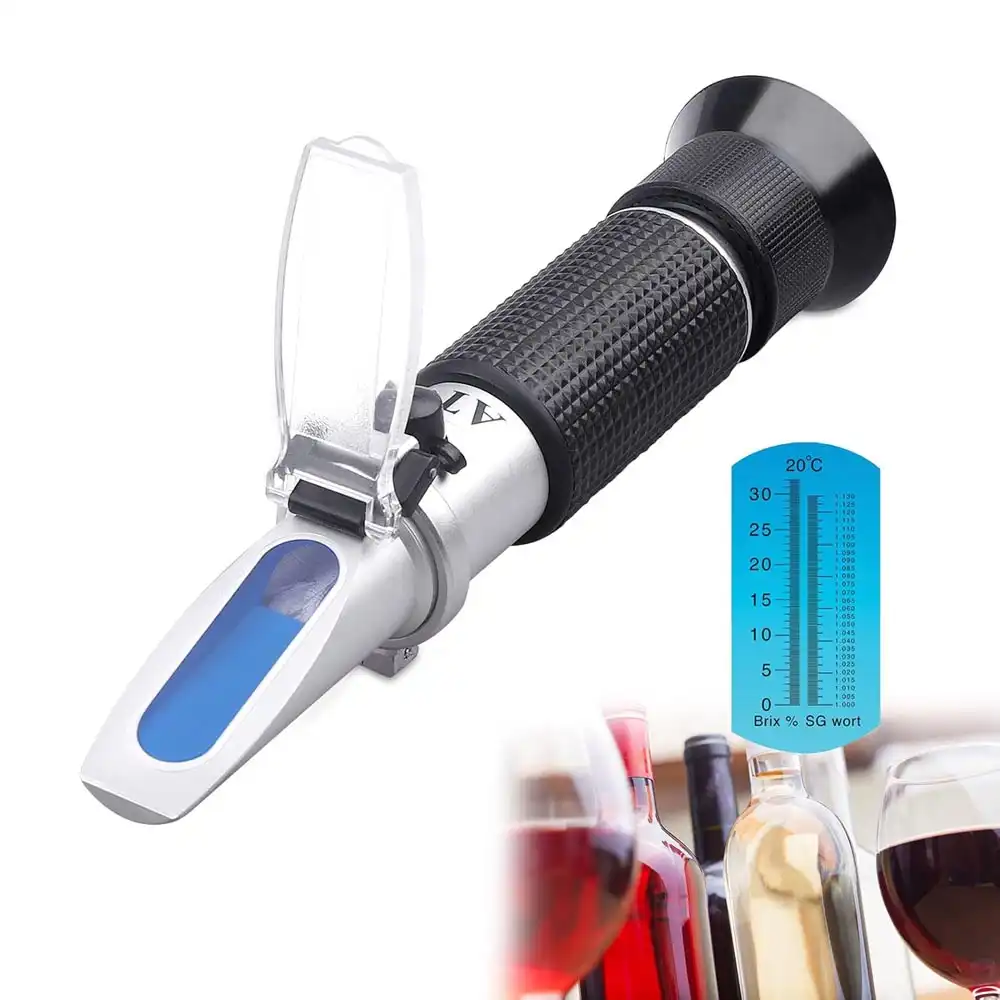
Tiaoyeer’s refractometer is a budget analog unit with a winemaker’s twist. Alongside a 0 to 32% Brix scale, it carries a specific gravity scale, 1.000 to 1.130, so you can follow the ferment after the crush. Best budget choice if you want to track fermentation too.
PROS
- Brix plus specific gravity
- Light at 3.5 oz
- No batteries to die
- Cheap, solid aluminum
CONS
- Range tops at 32%
Specs that matter for grapes
- Brix range: 0 to 32%
- Specific gravity: 1.000 to 1.130
- Accuracy: plus or minus 0.2% Brix
- ATC across 10 to 30°C
7. LAXCO 0 to 32% Brix Handheld Analog Refractometer – Best Pick for Table Grapes
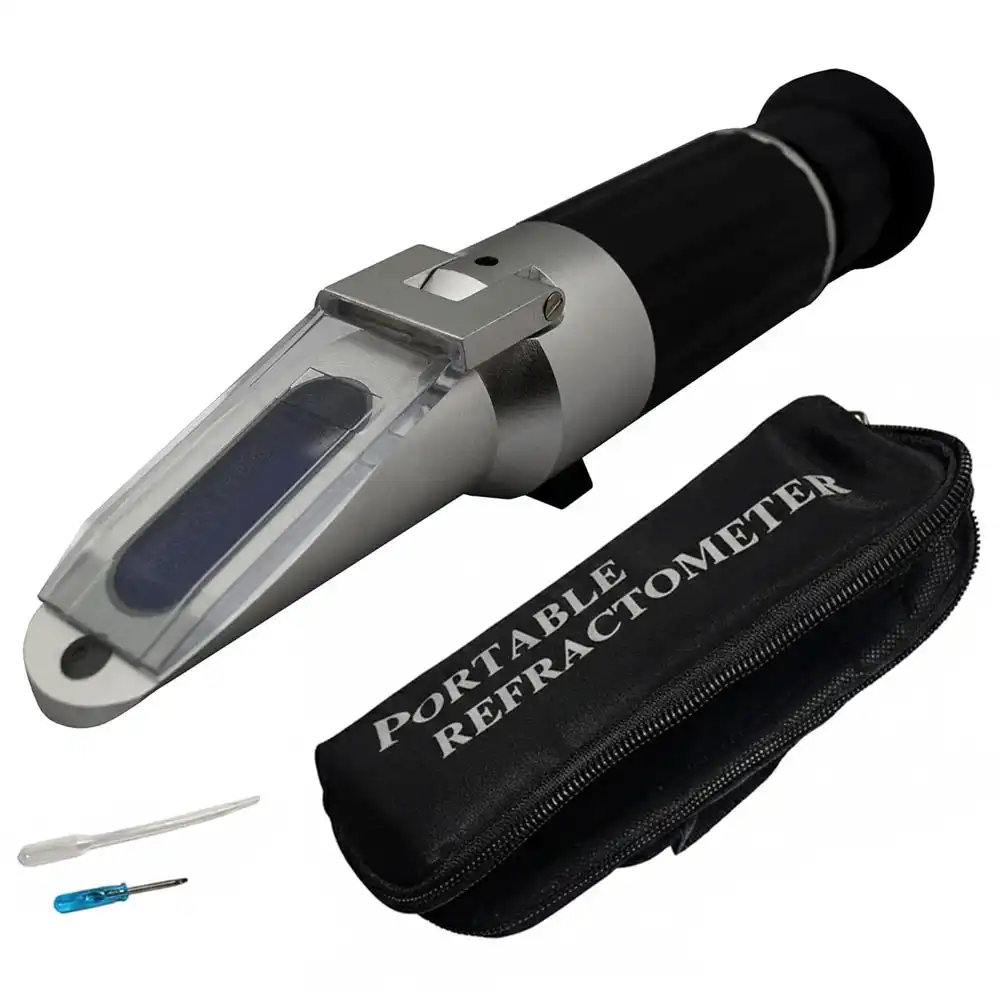
This all-metal analog refractometer, made by LAXCO, keeps it simple. Its 0 to 32% Brix scale fits table grapes well, since they pick sweet around 16 to 20 Brix. Best pick for table-grape growers who want a rugged, no-fuss tool.
PROS
- All-metal rugged build
- No batteries, ever
- Featherweight, 0.64 oz
- One-year warranty
CONS
- Price is high better than digital refractometer
Specs that matter for grapes
- Brix range: 0 to 32%
- ATC for field accuracy
- All-metal protective housing
- Natural-light optical system
Alternative pick: XRCLIF Wine Refractometer. Want more than the LAXCO’s table-grape range? This analog reads 0 to 40% Brix plus a 0 to 25% alcohol scale, with ATC and a rugged aluminum body. It suits table and wine grapes.
How to Use a Refractometer on Grapes
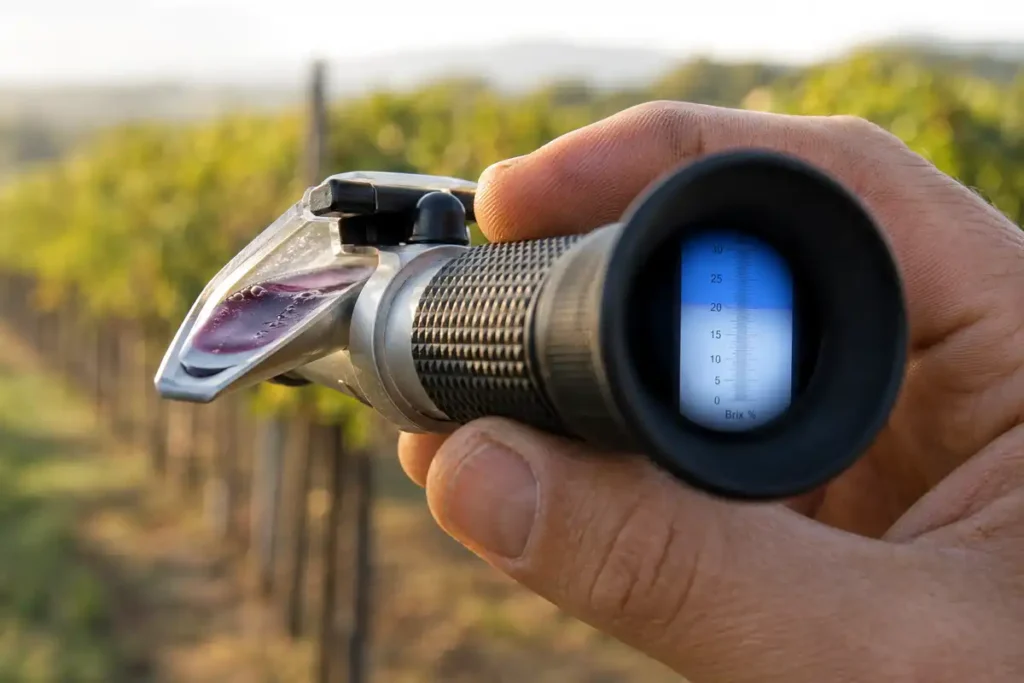
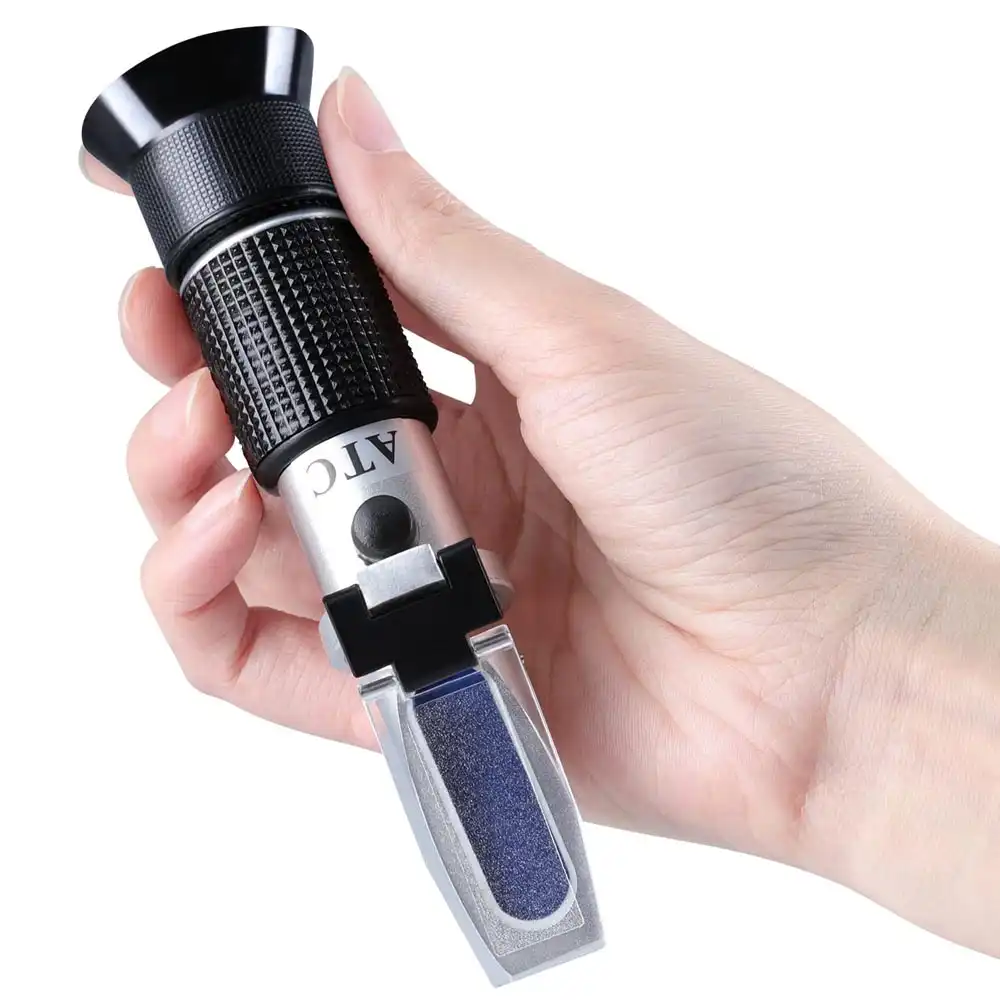
Using a refractometer at grape harvest is quick. Squeeze a few berries and put two drops of juice on the prism. Close the cover, hold it to bright light, and read where the line crosses the scale. Here is the full routine.
- Pick 8 to 10 berries from different parts of the cluster and from different vines.
- Crush them in a small bag or with clean fingers to get clear juice.
- Place two drops on the clean prism. Do not overfill it.
- Close the daylight plate gently. Do not press hard, since that squeezes out the sample.
- Hold the refractometer toward a bright sky or a lamp.
- Look through the eyepiece, or read the screen on a digital unit.
- While reading the scale, note where the light and dark boundary crosses, to the nearest 0.1 Brix.
- Wipe and rinse the prism with distilled water, then dry it soft.
This whole check takes under a minute once you have the rhythm.
How to Sample a Whole Vineyard or Vine
Take berries from several clusters in different spots, then average the readings. Sugar content varies a lot across a vineyard, between clusters, and even among grapes in one bunch. Sun-exposed berries read higher than shaded ones.
Easing off late-season irrigation concentrates the juice, so how much water your vines get each week shapes the number too. Pull from 8 to 10 vines, mix the juice, and read once. As harvest nears, test twice a week to catch the peak.
How to Calibrate Your Refractometer
To calibrate a grape refractometer, zero it with distilled water before every session. Place two or three drops of room-temperature distilled water on the prism. Close the cover with no air bubbles. Wait about 30 seconds so the sample and prism reach the same temperature.
The shadow line should sit exactly on 0.0 Brix, the zero point. If it does not, turn the calibration screw until it lines up, or press the calibrate button on a digital unit. ATC corrects for temperature during a reading, but it does not replace this zeroing step. Drift happens, so a daily zero keeps every harvest reading honest.
Refractometer vs Hydrometer for Grapes
Use the refractometer at harvest, then switch to a hydrometer once fermentation starts. The refractometer vs hydrometer choice is really about timing, not which tool is better.
A refractometer needs only a drop or two of juice. It is fast, fits in a pocket, and reads sugar right in the vineyard. That makes it the tool for picking decisions and for checking the must before you crush.
A hydrometer needs a tall sample cylinder and far more juice. It floats in the liquid and reads specific gravity, which tracks sugar as it drops through fermentation. Once yeast turns sugar into alcohol, a refractometer reading goes off, because alcohol bends light differently. You either apply a correction formula or, simpler, switch to the hydrometer.
Read Brix with the refractometer at harvest, then follow the ferment with a hydrometer. Two tools, two jobs, one clean process.
Common Mistakes and Care Tips
A few errors trip up new growers. Skipping calibration. Ignoring temperature on a non-ATC unit. Reading a dirty or scratched prism. Sampling one berry instead of many, the classic sampling error. Using the tool mid-fermentation without correction.
For care, wipe the prism after each reading, rinse with distilled water, and dry it soft. Store it dry and away from heat. Good prism care and steady temperature compensation keep readings true for years.
FAQs about Refractometer for Grapes Harvest
What Brix should grapes be at harvest?
What is the best refractometer for grapes or wine grapes?
Analog or digital refractometer, which is better for a vineyard?
How do you use a refractometer on grapes?
Do I need to calibrate my refractometer, and how often?
Does a grape refractometer need temperature compensation (ATC)?
Can I use a refractometer during fermentation?
How do you convert Brix to alcohol?
How to Call Harvest Timing on Grapevines
Here is how it’s typically called. Pick a digital ATC model, zero it every morning, and sample berries from across the block before reading. The refractometer number is one input, not the whole story. Tasting, checking seed color, and weighing the other signs grapes are ready to pick all matter before cutting a single cluster.
Thanks for reading our article. Good luck and enjoy reading. Any questions please contact with us.