How Much Water Do Grapes Need Each Week? (2026 Guide)
Grapes are forgiving about water, but they are not carefree. Their deep roots shrug off short dry spells. Still, too little water shrinks your crop, and too much causes worse trouble. So how much water do grapes need?
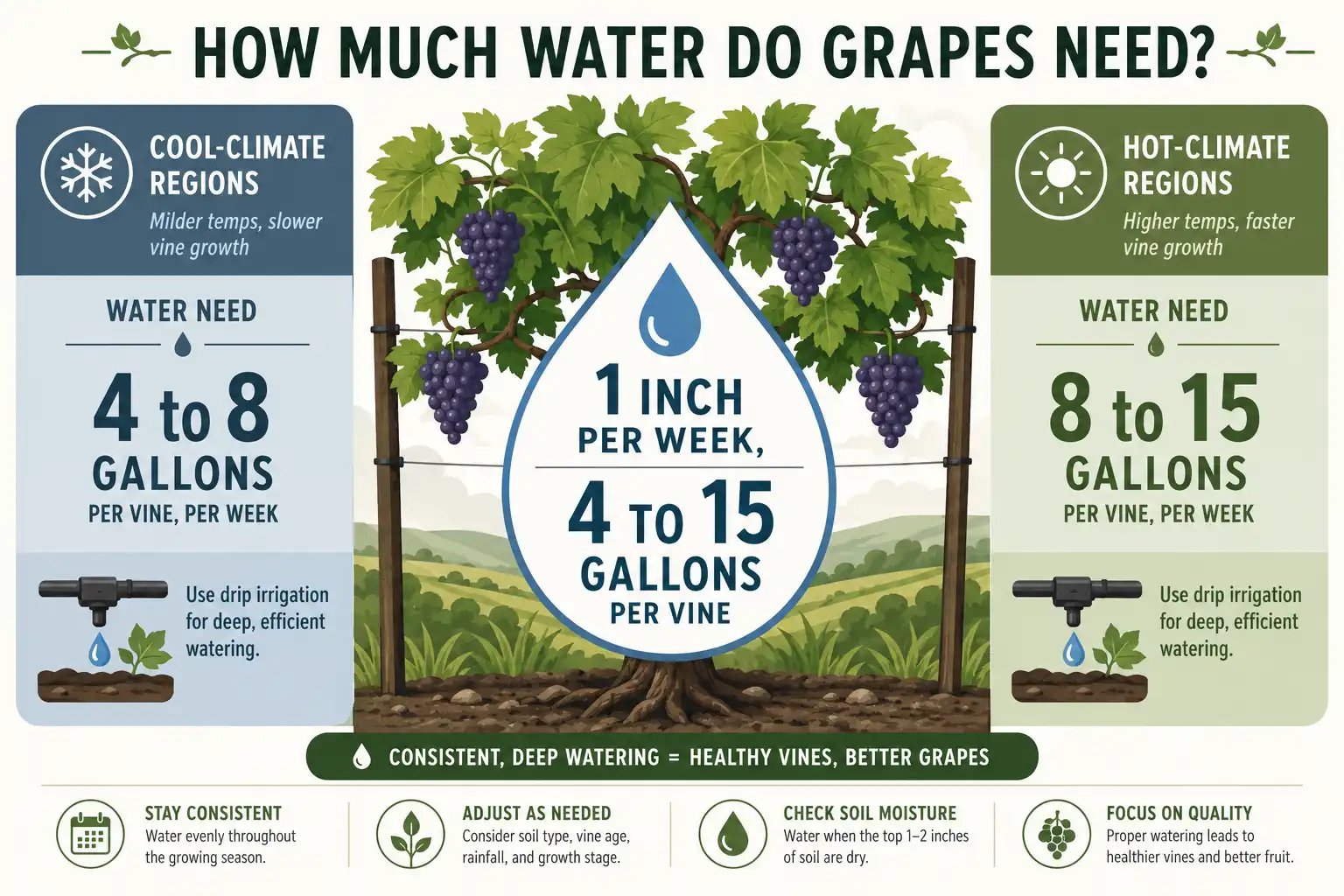
How much water do grapes need? Plan on about 1 inch per week, or 4 to 15 gallons per vine, based on climate and soil. Water deeply with drip, skip winter watering, and ease off near harvest.
How Much Water Do Grapes Need Each Week?
Grapes need about 1 inch of water per week through the growing season. That comes out to roughly 4 to 15 gallons per vine. Your number lands inside that range based on heat, soil, and rainfall.
Climate drives most of the gap. Cool, wet regions like the Upper Midwest and Northeast need the least. Hot, dry zones like the inland West need the most. Your USDA hardiness zone hints at season length, but heat and rainfall set the weekly figure.
|
Climate |
Weekly water per mature vine |
|---|---|
|
Cool and humid (Upper Midwest, Northeast) |
4 to 5 gallons |
|
Moderate climate |
6 to 8 gallons |
|
Hot and dry (inland West, Great Plains summers) |
8 to 15 gallons |
Weather shifts the number within one season too. Early on, when days stay cool, a vine may use only 10 gallons a week. By midsummer, in hot wind, a vigorous vine can want 30 to 40 gallons a week.
In Kansas, summers run hot and rain comes in spurts. Treat 1 inch a week as a target. Add or hold back based on what the sky gives me.
Learn more: How to Grow Grapes in a Pot
How Do Grape Water Needs Change Through the Season?
Grape water needs are lowest in winter, rise through spring, and peak around veraison before easing toward harvest. Matching your watering to each stage gives you stronger fruit.
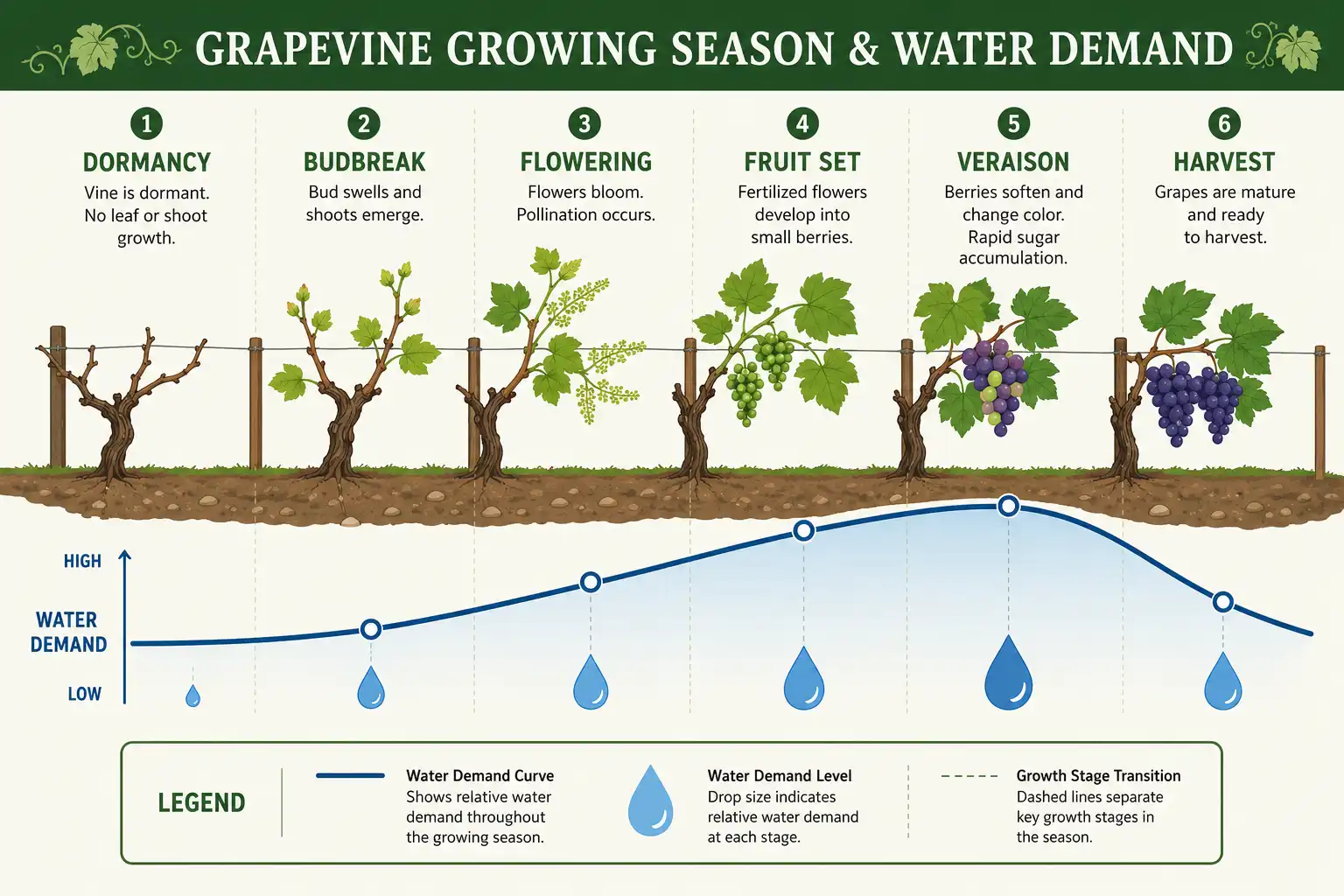
Here is how the season breaks down on typical vines.
- Dormancy (winter): No irrigation needed. The vine is resting and the leaves have dropped. Natural moisture covers it.
- Budbreak to flowering (spring): Moderate need. Shoots and roots grow fast, so steady soil moisture supports that push. Dry soil now slows everything after it.
- Flowering and fruit set: Keep the soil evenly moist. Water stress during bloom drops flowers and leaves loose, uneven clusters. Don’t hold back here.
- Fruit set to veraison (summer): Water use climbs to its peak. The canopy is full, days are hot, and berries are sizing up.
- Veraison to harvest (ripening): Ease back, but never cut vines off. A mild, controlled dry-down can concentrate flavor in wine grapes. Growers call that regulated deficit irrigation, and they start it only after fruit set. It takes a trained eye, so most home growers should hold steady moisture instead.
- After harvest: Water enough to keep vines healthy into fall. Going into winter on dry soil raises the risk of cold damage to the roots.
How Often Should You Water Grapevines?
Water grapes deeply and less often, not a little every day. In good soil and moderate weather, every 7 to 14 days is usually enough for established vines. In very hot inland areas, you may water two or three times a week.
Deep watering beats frequent watering. Each session should soak the full root zone, not just the top inch. Wet the soil in about a 3-foot circle around each vine. Deep roots make a vine tougher when it turns dry.
Soil type sets your rhythm. Sandy soil drains fast, so it needs smaller amounts more often. Clay holds moisture, so you water less often and let it dry between sessions. A drip kit on a timer keeps that rhythm steady, which helps most when summer heat spikes.
Do Young Grapevines Need More Water Than Established Vines?
Yes. Newly planted grapevines need more frequent water than mature vines because their roots are small and shallow. A young vine cannot reach deep soil moisture yet. So it dries out and stresses fast.
For the first year or two, keep the soil around new vines consistently moist. Water often enough that the root zone never bakes dry. Pale, wilting leaves or scorched edges signal trouble. Drought-stressed first-year vines often fail to survive winter.
Mature vines flip the rule. Once roots run deep, usually by year three, vines pull moisture from a wide soil volume. At that point they need far less help. Your job becomes steady support, not constant watering.
What’s the Best Way to Water Grapevines?
Drip irrigation is the best way to water grapes. It puts water right at the root zone, wastes almost nothing, and keeps the leaves and fruit dry. Dry foliage matters, because wet leaves invite powdery mildew, downy mildew, and bunch rot.
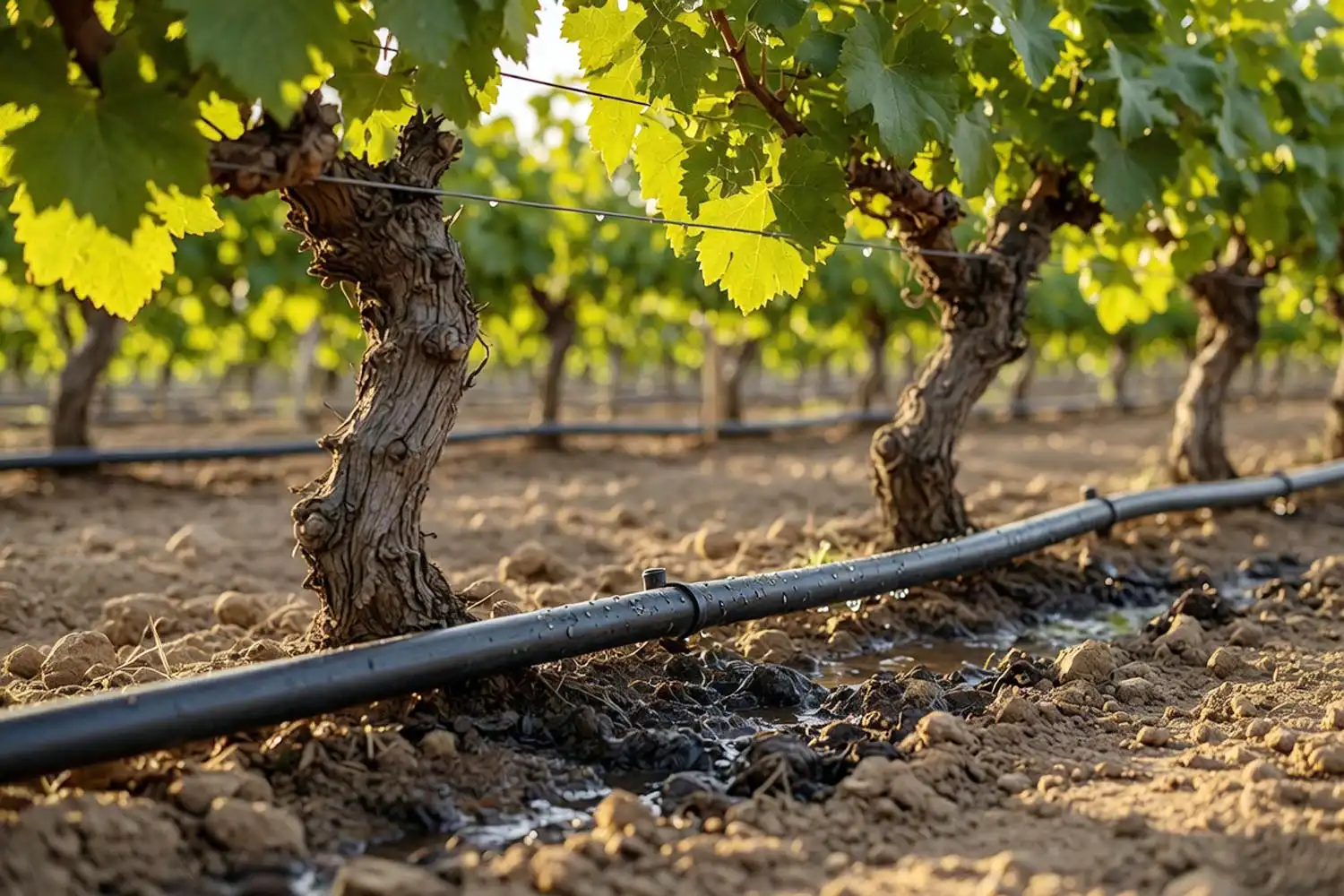
Overhead sprinklers do the opposite. They soak the canopy, raise humidity, and spread fungal disease. If you are weighing your setup, the difference between drip and sprinkler systems comes down to disease pressure and water savings. Drip wins on both for grapes.
Soaker hoses also work well for a backyard row. Loop one along the base so it wets a steady strip of soil. A layer of mulch over the root zone then holds that moisture in, blocks weeds, and keeps roots cooler through a heat wave.
Can You Overwater Grapes?
Yes, and grapes suffer more from too much water than from too little. Soggy soil drives root rot, fungal disease, and a flood of leafy growth that costs you fruit.
Watch for the common overwatering signs. Yellowing leaves, brown leaf tips, and soil that never dries out all point to excess water. Heavy water before veraison pushes wild shoot growth, shades the fruit, and delays ripening. The berries taste thin and watery.
Good drainage protects you. Plant grapes where water moves through the soil, not where it pools. When in doubt, wait a day before watering. A vine bounces back from a little thirst far easier than from drowned roots.
What Are the Signs a Grapevine Needs Water?
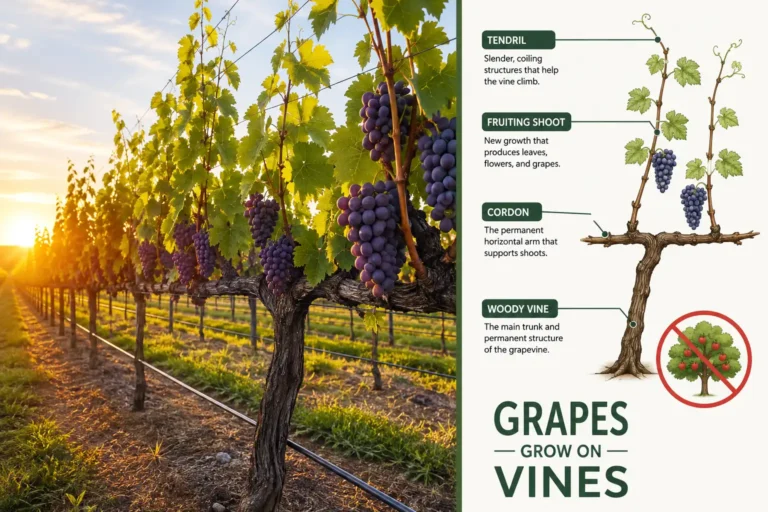
A thirsty grapevine shows it in the leaves and shoots first. Wilting leaves, drooping tendrils, and brown, scorched leaf margins all signal drought stress.
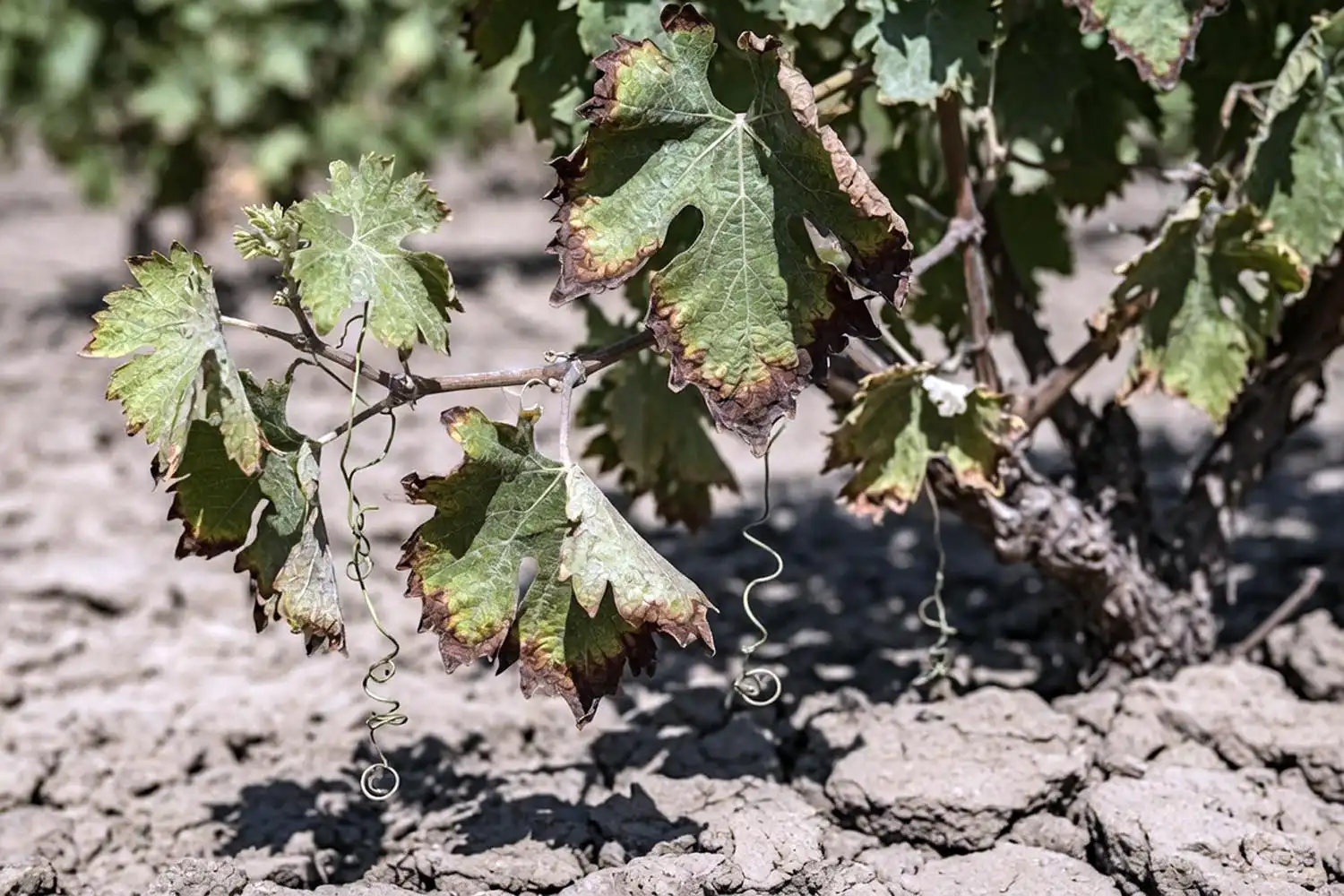
Other signs build over time. Shoot growth slows, and the soft green shoot tips turn a dull grayish-green. Under hard stress, vines drop flowers or young fruit. Clusters then fill in unevenly, and berries end up small and shriveled.
Drought also costs you next year. Stressed vines set weaker fruiting buds, and those buds handle winter cold poorly. So a dry late summer can quietly cut into next season’s crop.
How Do You Check If Grapes Need Watering?
Check the soil, not the calendar. Dig down 6 to 9 inches near the vine. If the soil feels cool and moist at that depth, hold off. If it feels dry and crumbly, it is time to water.
A few cheap tools make this easier. A soil moisture meter reads moisture at root depth in seconds, which beats guessing. A rain gauge shows how much natural water your vines already caught, so you do not double up after a storm.
For larger plantings, it helps to calculate water needs for any crop using local evapotranspiration data. That math turns weather into a watering number. It keeps you from over- or under-applying across a whole block.
Final Words
Watering grapes well comes down to restraint and timing. Give young vines steady moisture. Keep established vines on roughly an inch a week. And it helps to use drip so the leaves stay dry. Water the most from fruit set through veraison, then ease back as fruit ripens. Check your soil, watch your vines, and let them run a little lean rather than soaked. Healthy grapes want a drink, not a flood.