When to Spray Copper Fungicide on Grapes: A Season Timing Guide
Copper fungicide protects grapevines from downy mildew and other wet-weather diseases. But it only works on time. Knowing when to spray copper fungicide on grapes decides whether you get clean fruit or rot.
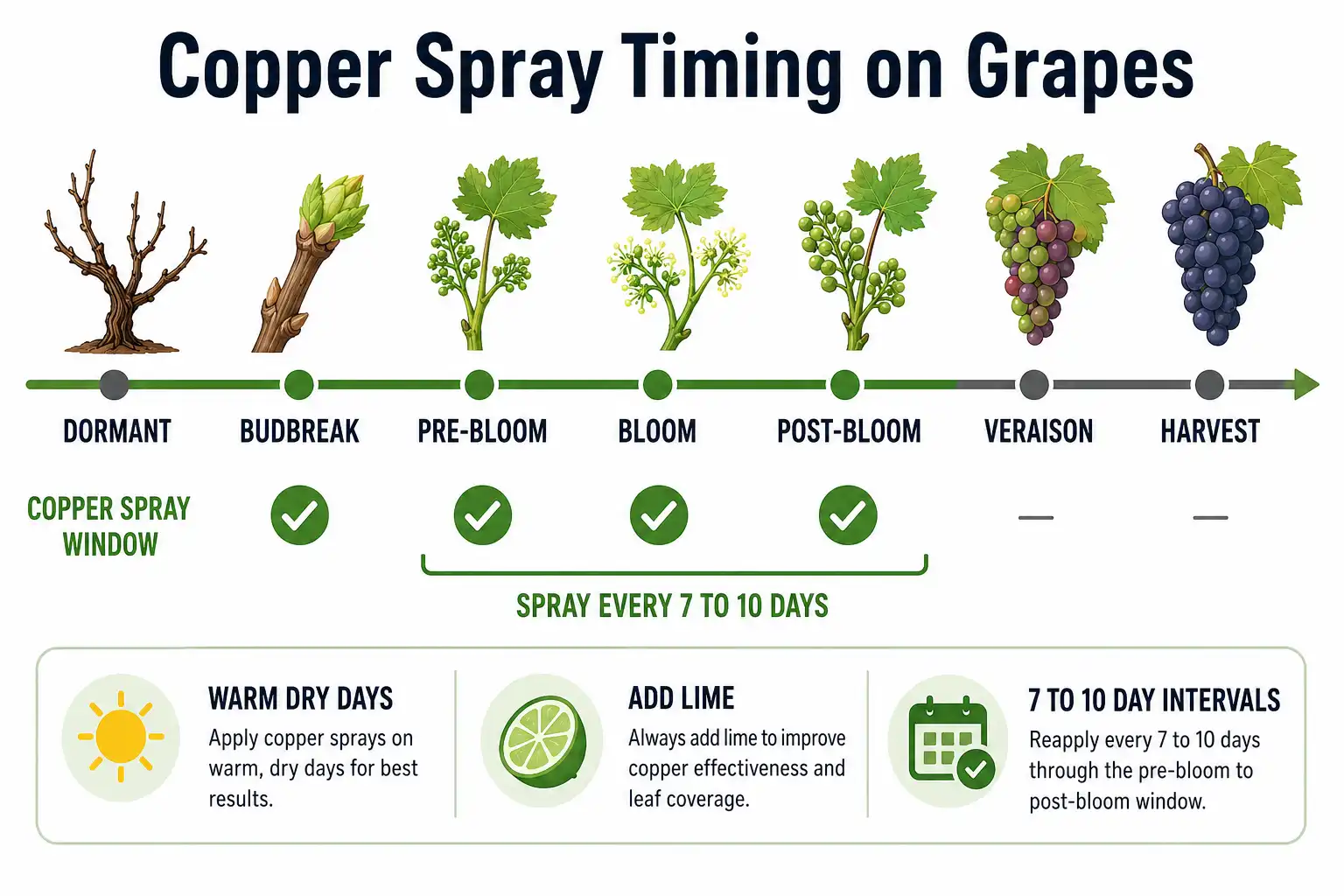
When to spray copper fungicide on grapes depends on the weather. Start at budbreak, then cover the pre-bloom to post-bloom window. Spray on warm dry days, every 7 to 10 days.
When Should You Spray Copper Fungicide on Grapes?
Spray copper fungicide on grapes early in the growing season. Then keep protection going through the pre-bloom and post-bloom stretch. Copper is a protectant. It sits on the leaf surface and stops spores before they get into the tissue. It does not cure an infection already inside the plant. So the spray has to land before the disease shows up, not after. The same principle guides timing pesticide applications on any crop: get ahead of the problem.
Wet weather drives the call. When rain sits in the forecast and temperatures hold in the 60s, get copper on the vines. Timing can be adjusted throughout the growing season based on crop development and application needs.
Dormant and Budbreak Sprays
The classic dormant spray for grapes is liquid lime sulfur, applied before buds swell. It knocks back anthracnose, Phomopsis, and powdery mildew spores carried over on the wood. Copper steps in a little later.
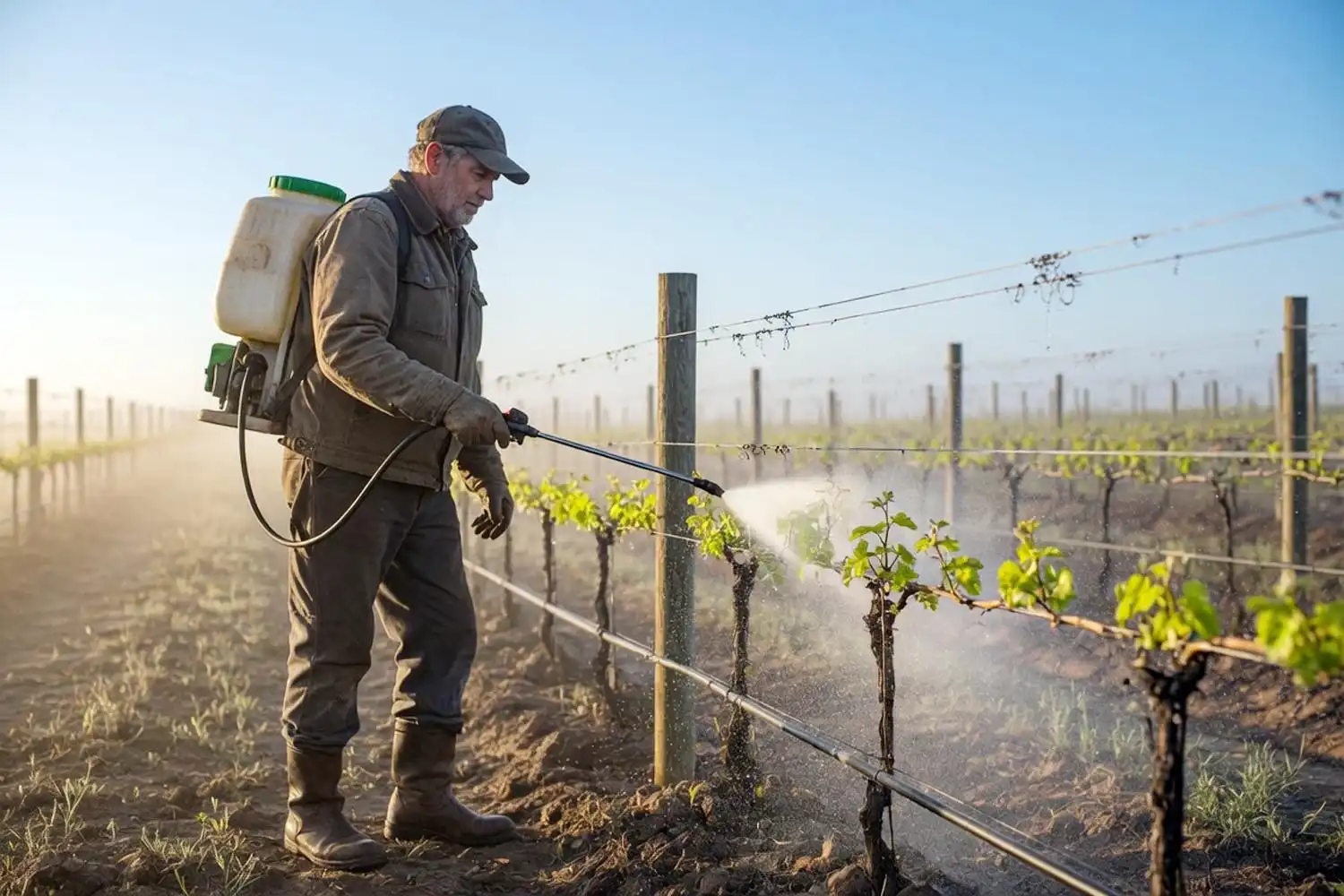
Start copper at budbreak if you have a downy mildew history or a wet spring. Get the first protectant on when shoots reach 1 to 2 inches. Young, expanding tissue is the most susceptible, so early coverage matters most on vines breaking dormancy. On young, non-bearing vines, fixed copper is a primary tool for downy and powdery mildew. It carries that first year or two of growth. If you’re still planting grapes or just set vines in the ground, protect that tender first-year growth too.
The Pre-Bloom to Post-Bloom Window
This window is the most important spray period of the year. It runs from about two weeks before bloom to three or four weeks after bloom. During this stretch the flowers and newly set berries sit wide open to infection. Miss it, and you fight disease the rest of the season.
Keep copper or your chosen protectant on the vines at 7 to 10 day intervals through this period. Tighten the interval to 5 to 7 days during long rainy spells. Berries stay highly susceptible to downy and powdery mildew right after bloom. So coverage through fruit set protects the crop you harvest.
Late-Season and Post-Harvest Copper
Late in the season, copper becomes less necessary on conventional programs. By then you have softer chemistries with strong downy mildew activity. Organic growers lean on copper longer because their options run thin.
Copper does carry one late-season strength. It has no resistance risk, so you can use it without burning through a mode of action. Its label also allows a zero-day pre-harvest interval. Still, copper sprayed within about a month of picking can affect wine quality. Wine grape growers watch that timing closely. A late or post-harvest spray also protects leaves from early defoliation. That keeps the vine storing carbohydrates for winter hardiness.
Learn more: Protect Grapes from Birds
How Often Should You Reapply Copper on Grapes?
Reapply copper every 7 to 10 days during active disease pressure, and sooner after heavy rain. Copper is a contact material. Rain washes it off, and new shoot growth pushes out unprotected tissue between sprays. Both reasons send you back into the vineyard on a schedule.
Shorten the interval to 5 to 7 days when disease climbs fast or rain keeps coming. Stretch it toward 10 to 14 days on slow-growing, dry stretches late in the season. Match the interval to how fast your vines grow and how wet the weather runs.
Build copper into a season-long plan rather than spraying in a panic. An integrated pest management approach ties spray timing to scouting, weather, and growth stage, which cuts wasted trips. Rotating copper with other materials also spreads out the workload and protects the products that can develop resistance.
What Diseases Does Copper Control on Grapes?
Copper controls downy mildew best, gives moderate help on powdery mildew, covers Phomopsis, and offers some protection against anthracnose. It does a poor job on black rot. That last point trips up a lot of growers, so plan around it.
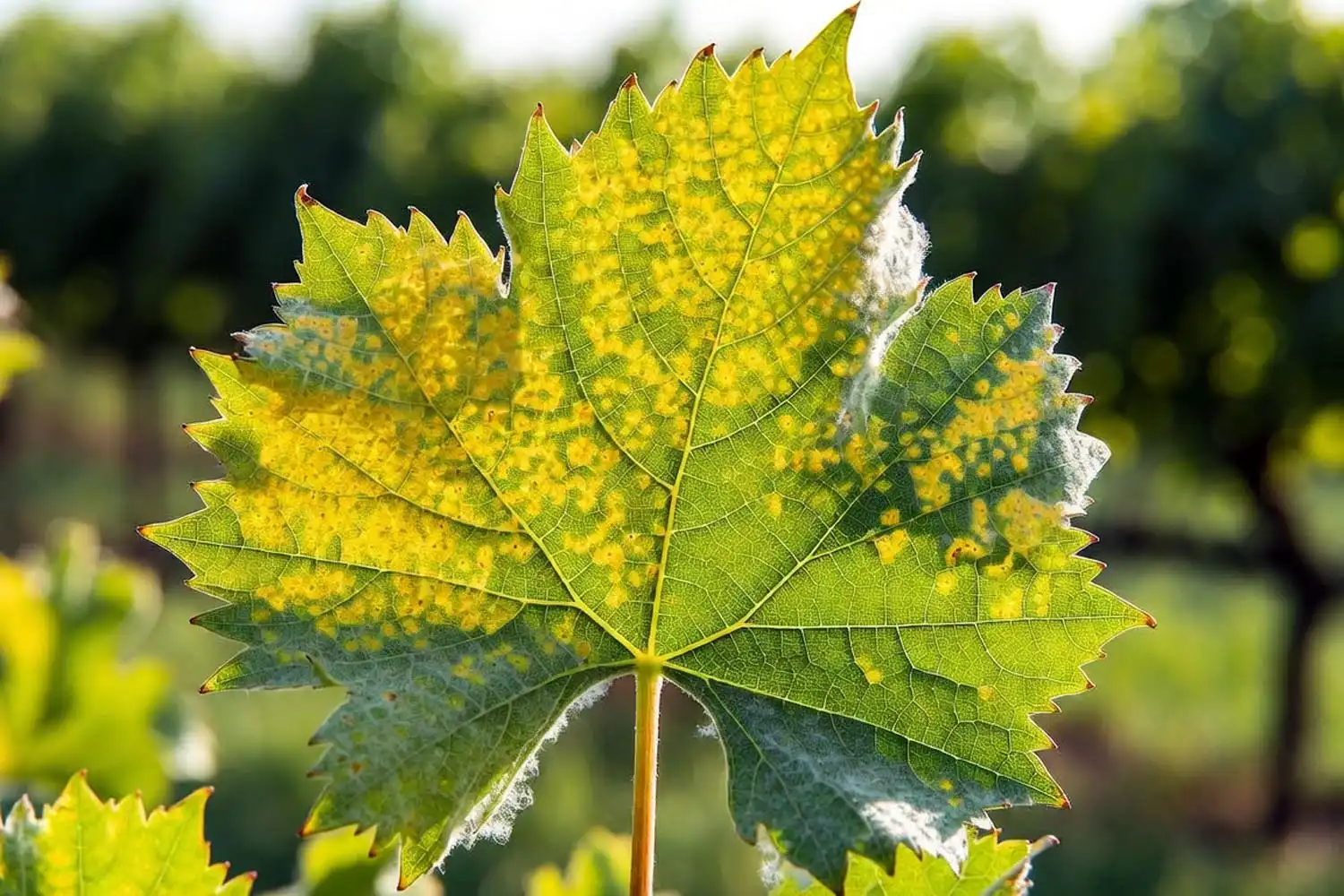
Downy mildew is copper’s main target. The pathogen, Plasmopara viticola, thrives in warm, wet weather. It shows up as yellow oil spots on the upper leaf with white fuzz underneath. Copper has stopped this disease since the original Bordeaux mixture went on French vines in the 1880s.
For black rot, copper falls short. If black rot has hit your vineyard before, add a DMI fungicide like myclobutanil. Time it around bloom, when clusters are most vulnerable. Pairing copper with the right partner covers the full grape disease complex instead of leaving a hole. These same weather rules apply to many crop diseases beyond grapes. Wet leaves and warm temperatures move spores no matter the crop.
When Should You Avoid Spraying Copper on Grapes?
Avoid spraying copper in slow-drying weather, on copper-sensitive varieties, or with acidic spray water. All three raise the risk of phytotoxicity, which shows up as leaf burn, russeted fruit, and distorted growth.
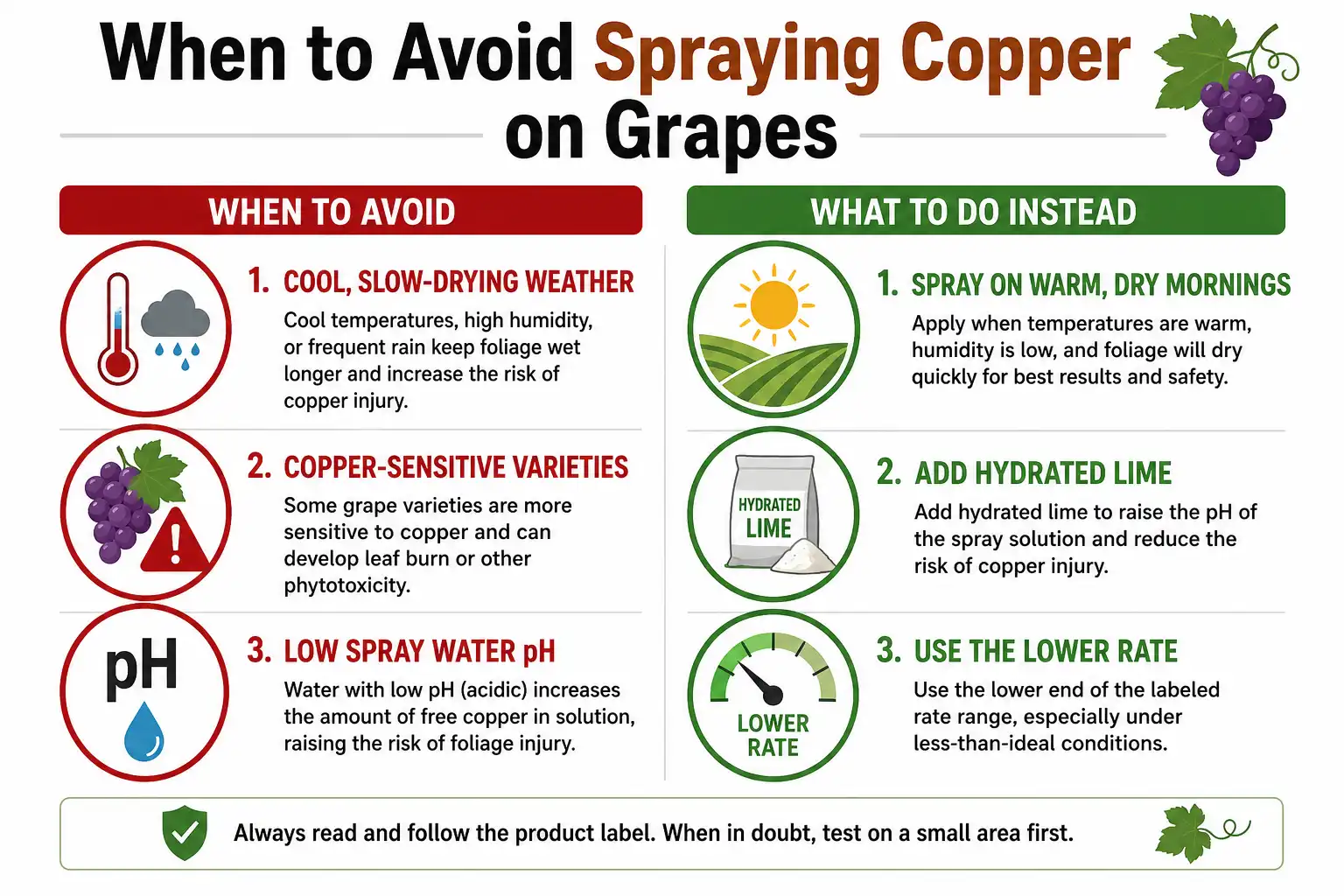
Slow drying is the biggest trigger. Cool, humid, or overcast weather keeps copper wet on the leaf. Wet copper releases more ions into the tissue. So spray on warm mornings when foliage dries fast.
Variety matters too. Some cultivars burn easily. Aurore, Chancellor, Merlot, and Rougeon all show high sensitivity. Native American types and many interspecific hybrids run a higher risk as well. Test copper on a few vines first, then use the lower labeled rate on anything you’re unsure about.
Watch your spray water and your tank partners:
- Low water pH, below about 6.5 to 7, increases injury. Add hydrated lime to soften copper’s bite, the same idea behind Bordeaux mixture.
- Do not mix copper with sulfur, or apply it within 14 days of a sulfur spray.
- Copper is not compatible with phosphorous acid products.
Near harvest, hold off on wine grapes within roughly a month of picking. The label allows a zero-day interval, but late copper residue can interfere with fermentation. Table grape and juice growers have more room here.
How to Time Copper in an Organic Grape Program
Organic growers time copper the same way, but lean on it harder because the toolbox is smaller. Copper is one of the few OMRI-listed materials with real downy mildew activity. So it anchors most organic spray programs.
A workable organic schedule pairs copper with sulfur and rotates in biofungicides. One Pennsylvania trial used copper hydroxide plus lime in five sprays. That meant two pre-bloom and three post-bloom, at 10-day intervals. That covers the critical fruit-protection window without overloading the vineyard.
Pick the right form. Fixed coppers burn less than raw copper sulfate. Copper hydroxide sells as Kocide or Champ. Copper octanoate is the copper soap in products like Cueva. Both fixed forms release fewer ions, so they go easier on the leaf.
Watch your total copper use across the year. Copper is a heavy metal, and repeated sprays build up in the soil over time. Spraying only when weather and growth stage call for it keeps that buildup down. Pairing copper with natural pest control and good canopy management lets you spray less overall. An open canopy dries faster, which lowers disease pressure on its own. Thinning shoots and keeping airflow up help more than people expect. Watching your grapevines’ water needs matters too, so overhead watering doesn’t leave leaves wet for hours.
Final Thoughts
Copper goes on at budbreak if spring runs wet. Then it runs through the pre-bloom and post-bloom window on a 7 to 10 day clock. Applications should be made on warm mornings when conditions allow foliage to dry quickly. Lime can be added when irrigation or spray water tests acidic. Keep the rate low on sensitive vines. Copper handles downy mildew, but pair it with something for black rot. Time it right, spray on dry days, and you protect the crop without burning the vine.