How to Grow Cotton Candy Grapes (and Sweet Seedless Picks)
Plenty of folks taste those sweet green grapes and want to plant their own. So here is the straight answer on how to grow cotton candy grapes. You will learn why the real ones stay off-limits, and which sweet seedless vines come closest at home.
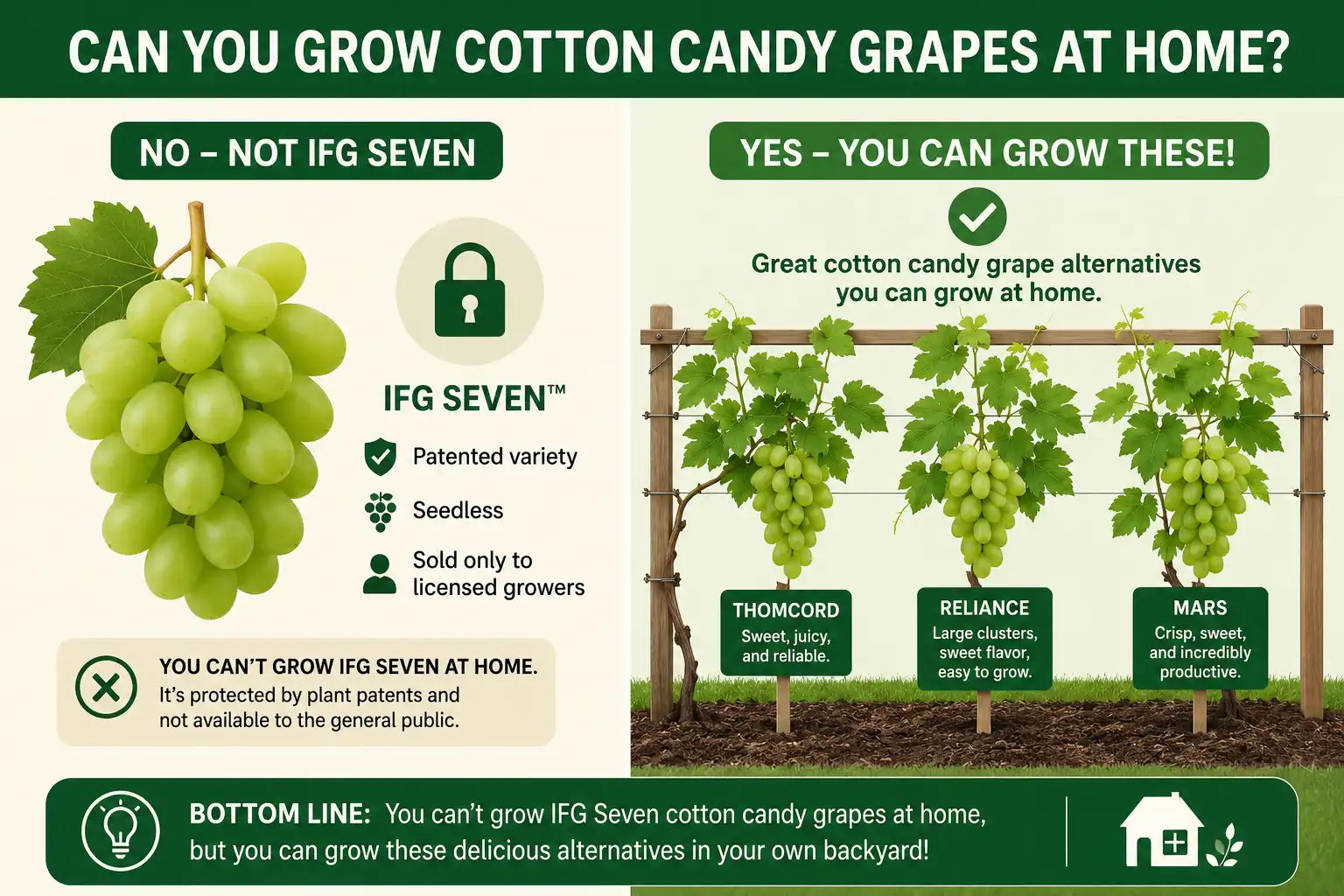
You cannot grow true Cotton Candy grapes at home. The variety, IFG Seven, holds a patent and grows seedless fruit, so vines go only to licensed growers. Instead, plant a sweet seedless grape like Thomcord with standard methods.
Can You Grow Cotton Candy Grapes at Home?
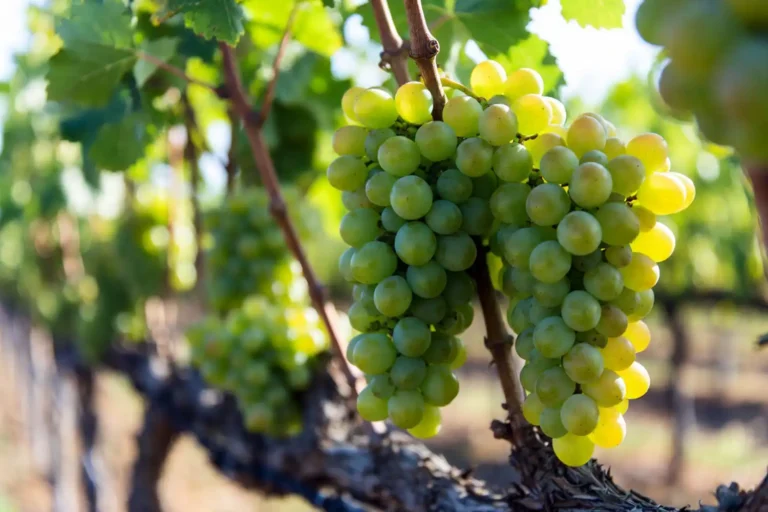
No, you cannot grow true Cotton Candy grapes at home. The name is a trademark for one patented grape variety called IFG Seven. A breeder named David Cain developed it at International Fruit Genetics in Bakersfield, California. The company holds U.S. Plant Patent PP23,399, granted in 2013. That patent runs until about 2031. So only licensed commercial growers, like California’s Grapery, can plant the vines and sell the fruit. You will not find these vines at a nursery, no matter what some listings claim. If you want the full story, here is the lab breeding behind cotton candy grapes.
Read next: Do Grapes Ripen Off the Vine? What Happens After You Pick
Why Store-Bought Cotton Candy Grapes Won’t Grow
A grape from the store will not grow into a Cotton Candy vine. These grapes are seedless, so there is no viable seed to plant. The bunches also arrive on their flower stalks, not on wood that can root. Packers even scrape the buds off the stems before shipping. On top of all that, the patent makes home propagation illegal until it expires. You can read more about why cotton candy grapes have no seeds and what that means for planting.
What Gives These Grapes Their Candy Flavor
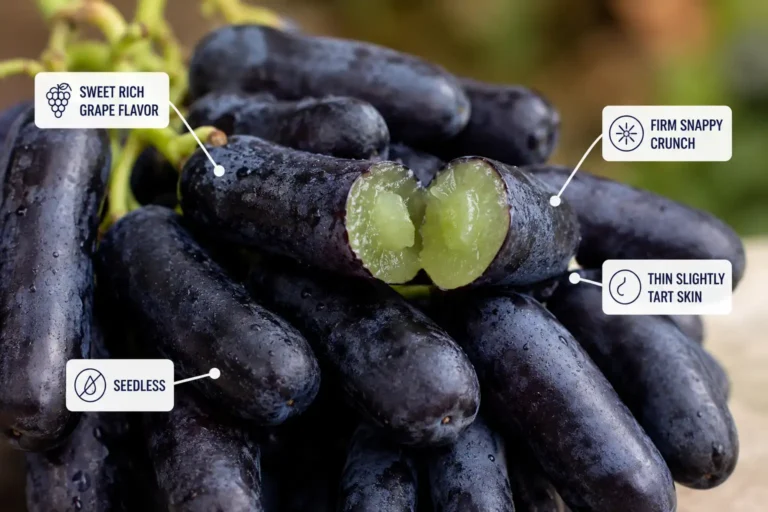
The candy flavor comes from wild American grape genetics, not from sugar alone. Cotton Candy grapes measure about 19 to 20 on the Brix scale. Most table grapes sit near 17 to 18. So they run a little sweeter, but the real trick is the aroma. The variety traces back to an aromatic grape selection from the University of Arkansas, crossed with a green grape called Princess. That wild parent carries a hint of Vitis riparia, a native American species. That same aromatic background shows up in old favorites like Concord. These grapes are not genetically modified, by the way. This matters for you, because aromatic American hybrid grapes are exactly the ones you can plant at home.
The Best Sweet Seedless Grapes to Grow Instead
For a candy-like grape you can actually plant, start with Thomcord. Plant breeders at the USDA created it as a seedless cross of Thompson Seedless and Concord. So it brings that deep, aromatic Concord flavor without the seeds. It also handles heat well and grows in USDA hardiness zones 5 through 9. In Kansas zone 6a, it ripens in August.
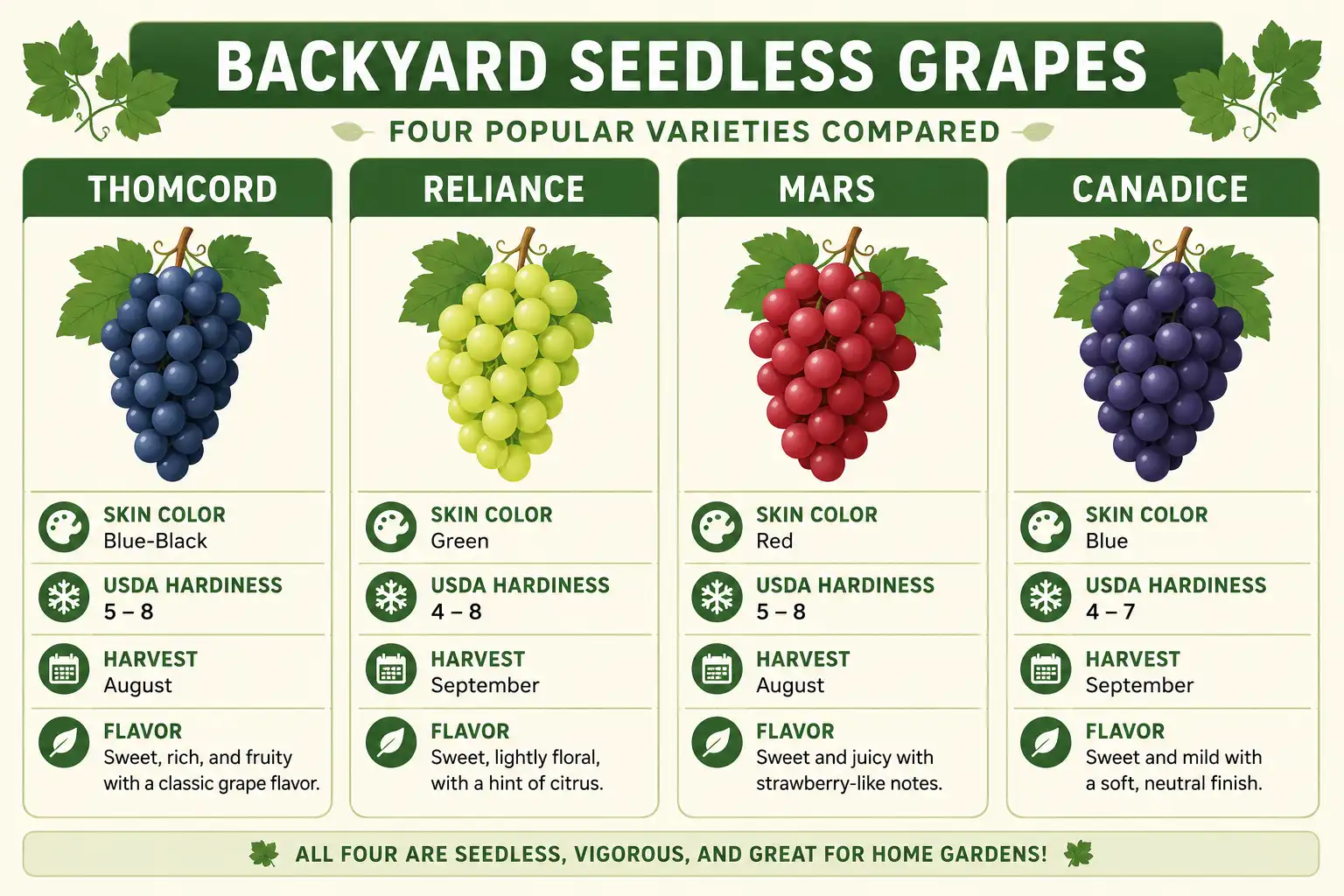
A few other picks round out the short list. Reliance is a pink seedless grape with a melt-in-your-mouth texture. It is one of the hardiest table grapes around, so it shrugs off cold Kansas winters. Mars is a blue seedless grape with Concord-style flavor, and it resists disease well in the humid summers. Canadice is a red seedless grape, sweet with a light spice, and it sets heavy clusters from mid-August into September. If you want a wine-like note, Jupiter gives you a muscat flavor in a large red-blue berry. All of these are self-pollinating, so a single vine will set fruit on its own.
How to Grow Sweet Grapes at Home, Step by Step
The method below works for Thomcord and every other backyard grape. So once you pick a variety, the growing is the same.
Pick a Sunny, Well-Drained Spot
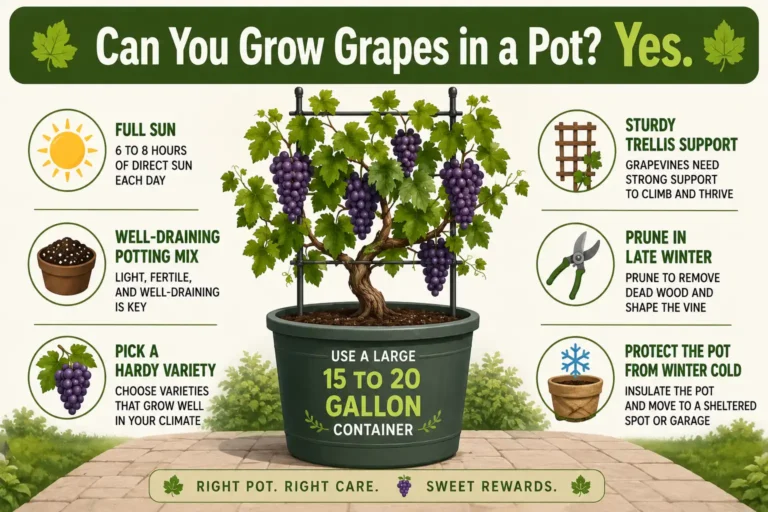
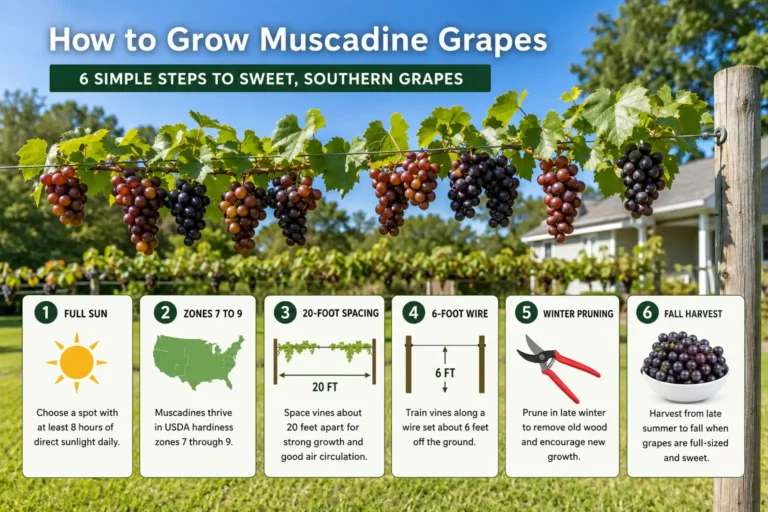
Grapes need full sun and good drainage above all else. Give them at least eight hours of direct sun each day. The fruit needs that heat to ripen and sweeten. Choose a loam or sandy loam if you can, and skip low spots where water sits. A soil pH of 5.5 to 6.5 suits grapes best. So test your soil before planting and adjust it if the numbers are off.
When and How to Plant
Set out bare-root vines in early spring, as soon as the soil can be worked. First, soak the roots in water for two to three hours. Then dig a hole wide enough to spread the roots out fully. Set the vine at the same depth it grew at the nursery. Most American hybrid grapes come on their own roots, so there is no graft union to fuss over. Firm the soil, then water it in well. Space your vines six to eight feet apart, with about eight to ten feet between rows. Right after planting, cut the top back to one healthy cane with two or three buds. Timing matters here, so check the best time to set out grapevines for your region.
Build a Trellis That Lasts
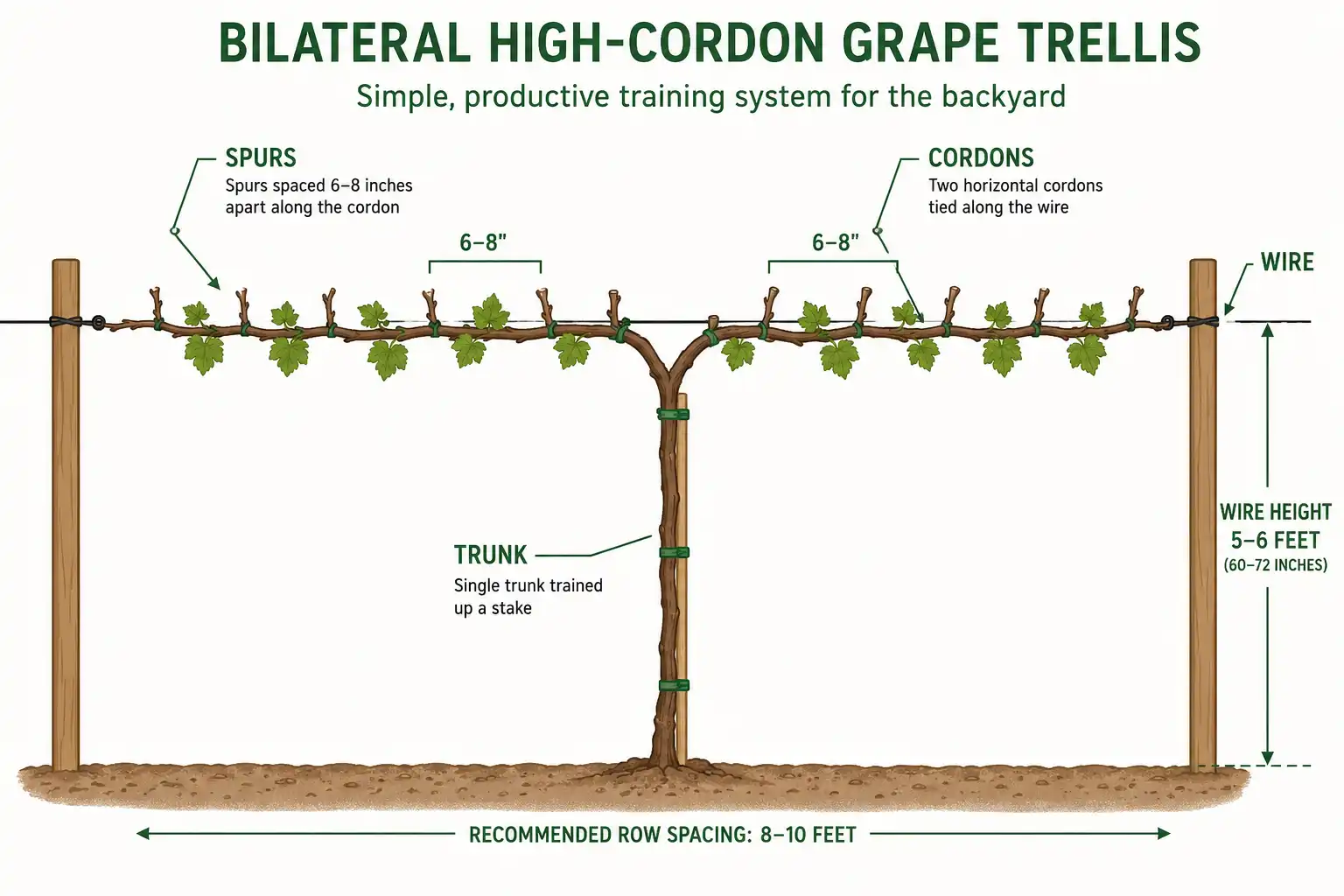
Grapes get heavy, so they need a sturdy trellis by their second year. A simple high-cordon system works well for backyard vines. Set a single wire about five to six feet off the ground on stout posts. Galvanized wire in a 9 to 11 gauge holds up best. Train one trunk straight up to the wire. Then train two arms, called cordons, along the wire in each direction. Build it solid, because a good grape planting can crop for thirty to forty years.
Water and Feed Lightly
Young vines need steady moisture, but mature vines want restraint. Give new plantings about an inch of water a week, and a bit more during a dry Kansas spell. Then ease off late in the season so the fruit can sweeten. Go easy on fertilizer too. Too much nitrogen drives leafy growth, hurts winter survival, and waters down the flavor. In the first year, most vines need no fertilizer at all. For a closer look at how much water grapevines need, it is broken down by growth stage here.
Prune Hard Every Winter
Heavy pruning is the real secret to good grapes. Prune while the vine is dormant, usually February or March here. Remove about 80 to 90 percent of last year’s wood. It feels drastic, but grapes fruit on one-year-old wood, not old branches. So that fresh wood is exactly what you want to keep. Leave roughly 40 to 60 buds on a table-grape vine. Light pruning only gives you a pile of small, poor fruit.
Manage Pests, Disease, and Birds
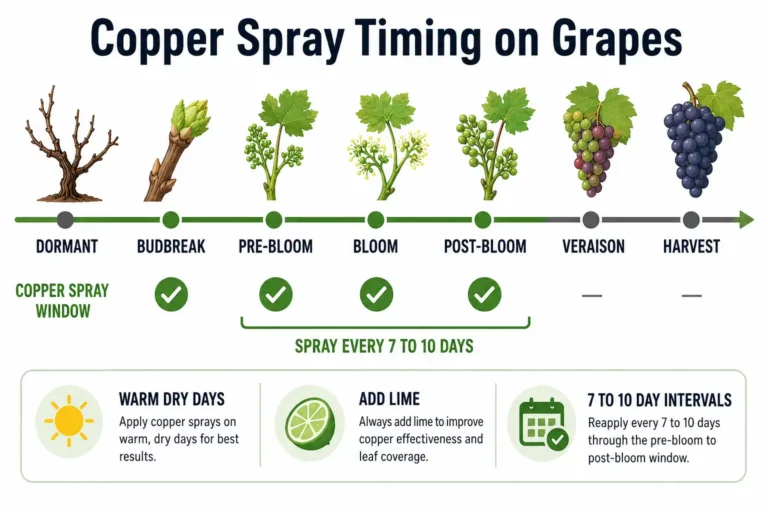
Good airflow prevents most grape problems before they start. Powdery mildew, black rot, and downy mildew are the usual disease threats. So prune for an open canopy and keep the weeds down under the vines. A copper or sulfur spray on a set schedule helps in wet years. Japanese beetles and grape berry moth can show up too. Birds, though, are the biggest harvest thief of all. Once the fruit colors up, keeping birds off ripening clusters usually means draping netting over the vines.
Know When to Pick
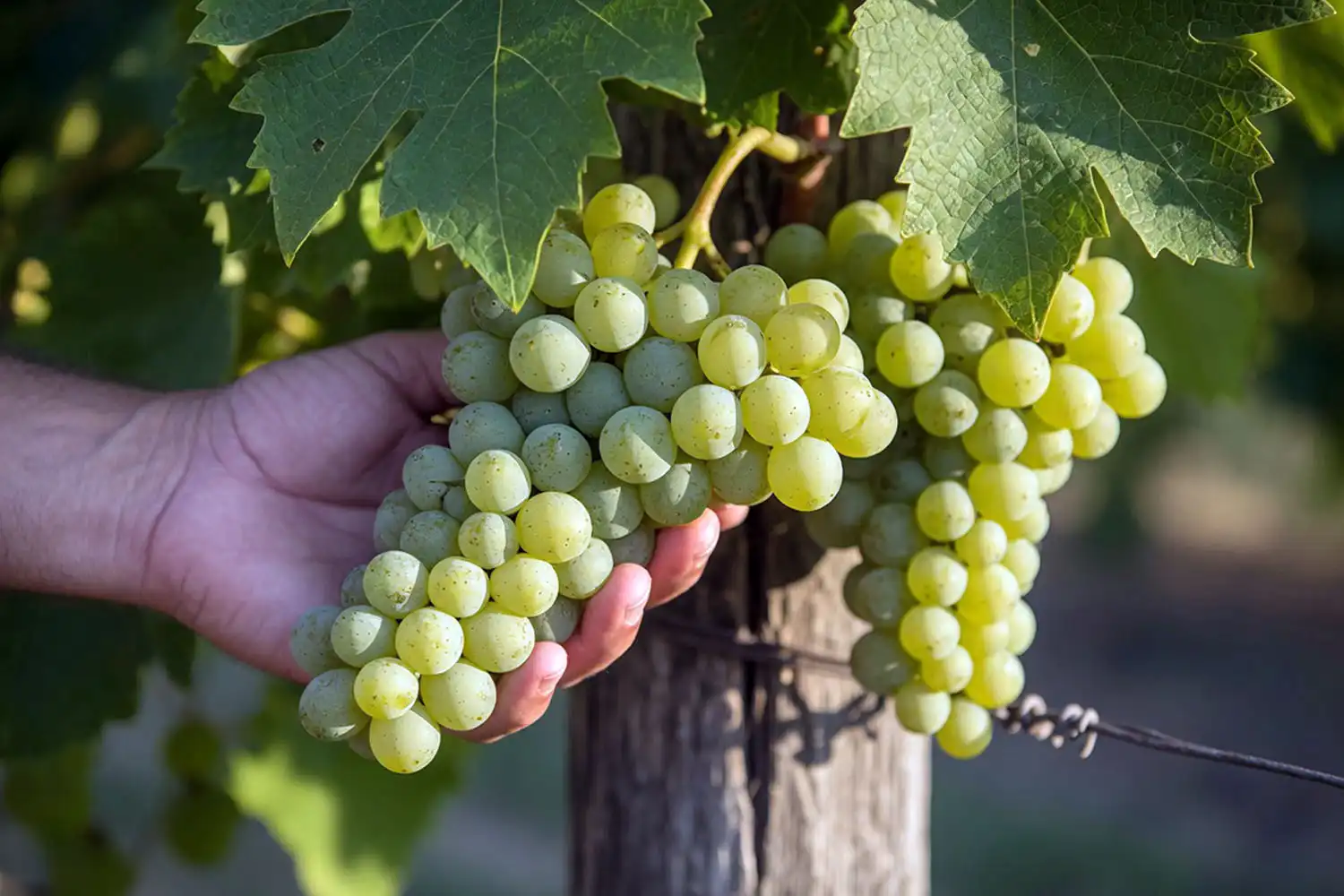
Taste is the only reliable ripeness test you have. Grapes do not ripen any further once you pick them. So wait until the clusters reach full color and taste sweet. For most of these seedless types, that lands in late August or September. Clip whole clusters with pruners instead of tugging them off the vine. For more cues, here is how grapes are judged when grapes are ready to pick.
What to Plant in the Place
You can’t grow the trademarked Cotton Candy grape, and that comes down to the patent. But you can still grow a sweet, aromatic, seedless grape that gets you close. If this were your first vine, to start with Thomcord for flavor and Reliance for toughness. Give them full sun, a solid trellis, and a hard pruning every winter. In about three seasons, you’ll be picking your own candy-sweet grapes.