How Long Does It Take Grapes to Grow (Planting to Harvest 2026)
Plant a grapevine and you want to know one thing fast: when do you get grapes? How long does it take grapes to grow depends on whether you mean the first real harvest or ripening within a season.
How long grapes take to grow depends on the goal. Most vines give a first real harvest about three years after planting, and full production by year four to six. Ripening within a season runs 140 to 170 days.
How Long Does It Take Grapes to Grow?
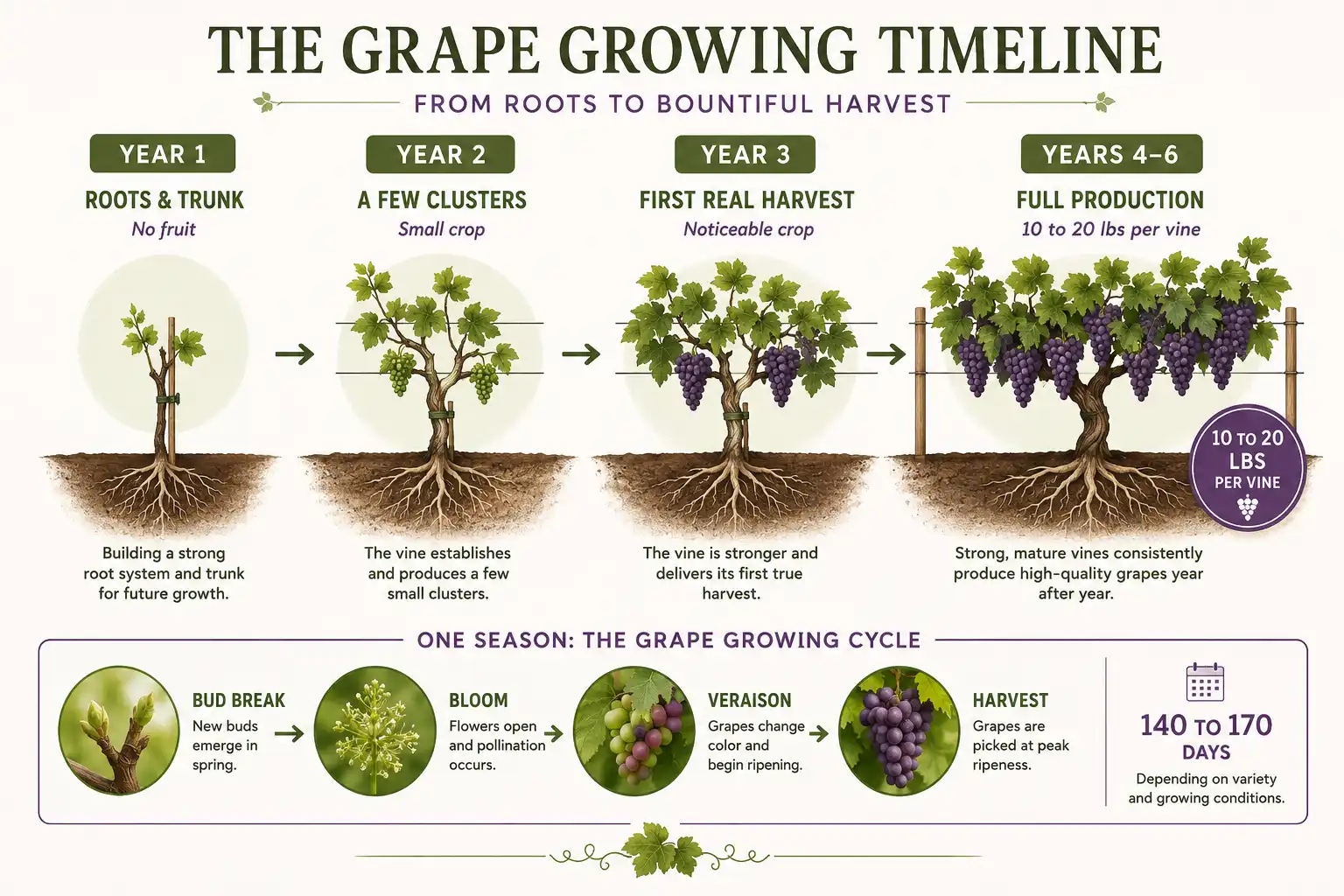
Grapes take about three years to grow into a first real harvest after you plant a vine. The first two seasons go into roots, a trunk, and fruiting wood. You may see a few clusters in year two, but real production usually lands in year four to six. Within a single season, grapes ripen 140 to 170 days after bud break, set by variety and heat.
|
Season after planting |
What the vine does |
Harvest |
|---|---|---|
|
Year 1 |
Builds roots and one or two trunks |
None |
|
Year 2 |
Forms cordons; a few small clusters |
Light, usually removed |
|
Year 3 |
Fruits on last year’s canes |
First real crop, smaller size |
|
Years 4 to 6 |
Reaches full size and yield |
Full production, 10 to 20 lbs per vine |
That timeline holds for vines you buy from a nursery, whether bare-root or potted. From seed, the clock runs longer and the results get unpredictable. More on that below.
How Long Until a Grapevine Produces Fruit After Planting?
A grapevine produces its first worthwhile fruit about three years after planting. The wait is not wasted time. Those early seasons build the root system, trunk, and permanent arms that carry every future crop. Push the vine into fruit too soon and you weaken it for years. Here is what each season looks like.
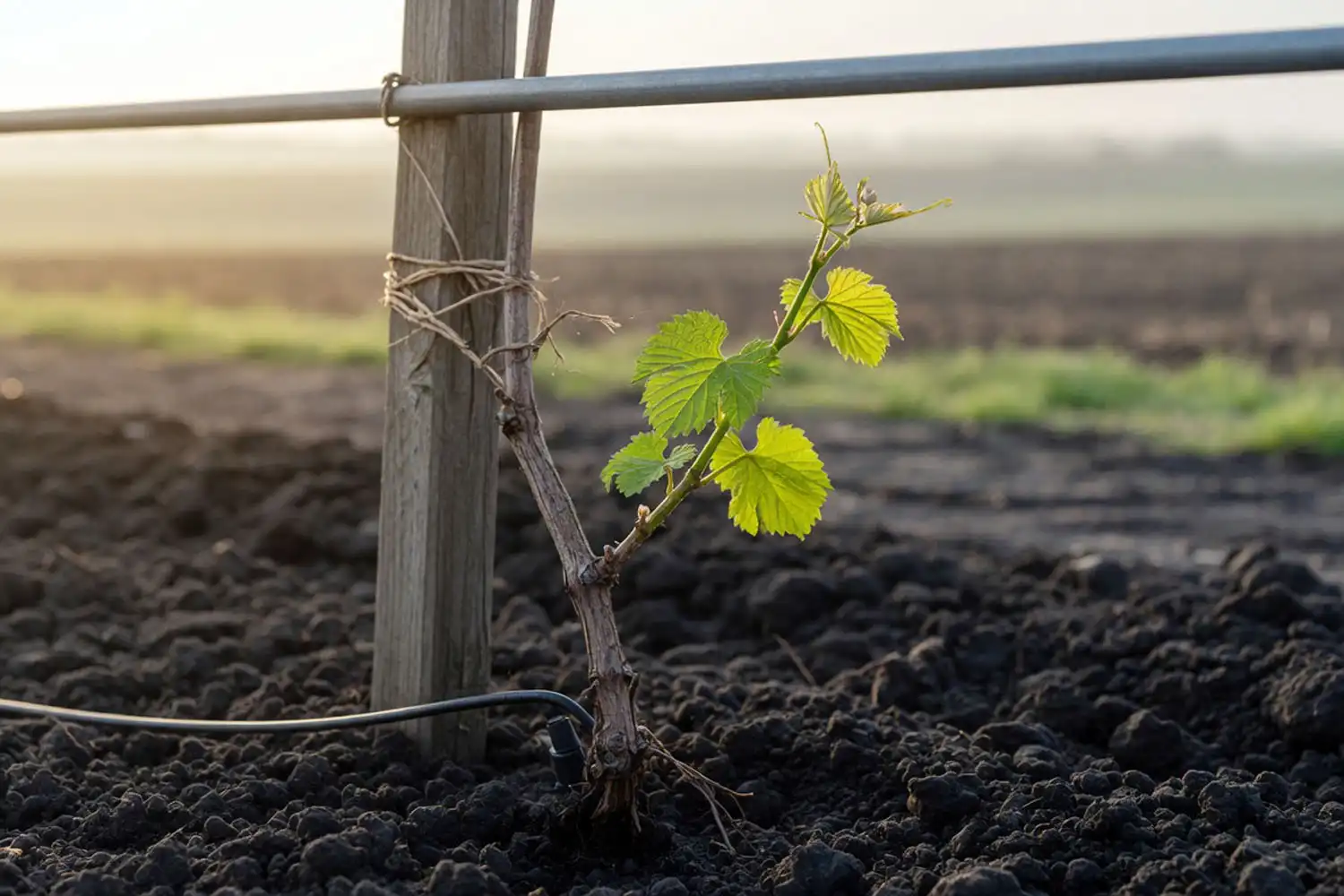
Year One: Roots and a Trunk
Year one is all about establishment, not grapes. Plant your vine in early spring, once the soil can be worked. Pick a spot with full sun and good drainage. Pinch off any flower clusters so the plant feeds roots instead of fruit. Next, train the strongest shoot up a stake toward your trellis wire. Water steadily, since young roots sit shallow. Improving your soil naturally before you plant pays off all the way through. A layer of mulch around the base holds moisture and keeps weeds down.
Year Two: Cordons and a Few Clusters
Year two builds structure, with maybe a taste of fruit. The vine grows harder now and starts forming cordons, the permanent arms along your wire. A few small clusters may appear. Most growers strip them so the vine keeps building wood. Keep training and keep the trunk straight. This is still a framework year, not a harvest year.
Year Three: Your First Real Harvest
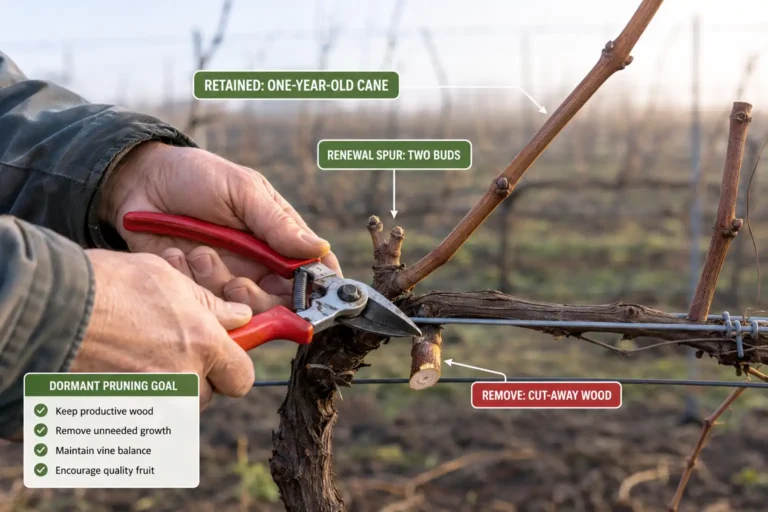
Year three brings your first real crop, if you pruned right each winter. Grapes form on one-year-old canes, meaning last season’s growth. That is exactly why dormant pruning matters so much. The crop runs smaller than a mature vine, but it is real fruit you can pick and use.
Years Four to Six: Full Production
Full production arrives between year four and year six. Yield then climbs each season as the vine matures. A healthy backyard vine in Kansas gives 10 to 20 pounds of grapes once it settles in. Stay on your pruning schedule and that yield holds for decades.
How Long Do Grapes Take to Grow in a Single Season?
In a single season, grapes take about 140 to 170 days to grow from bud break to harvest. The exact window depends on variety and climate. The season moves through clear stages, and each one runs at its own pace.
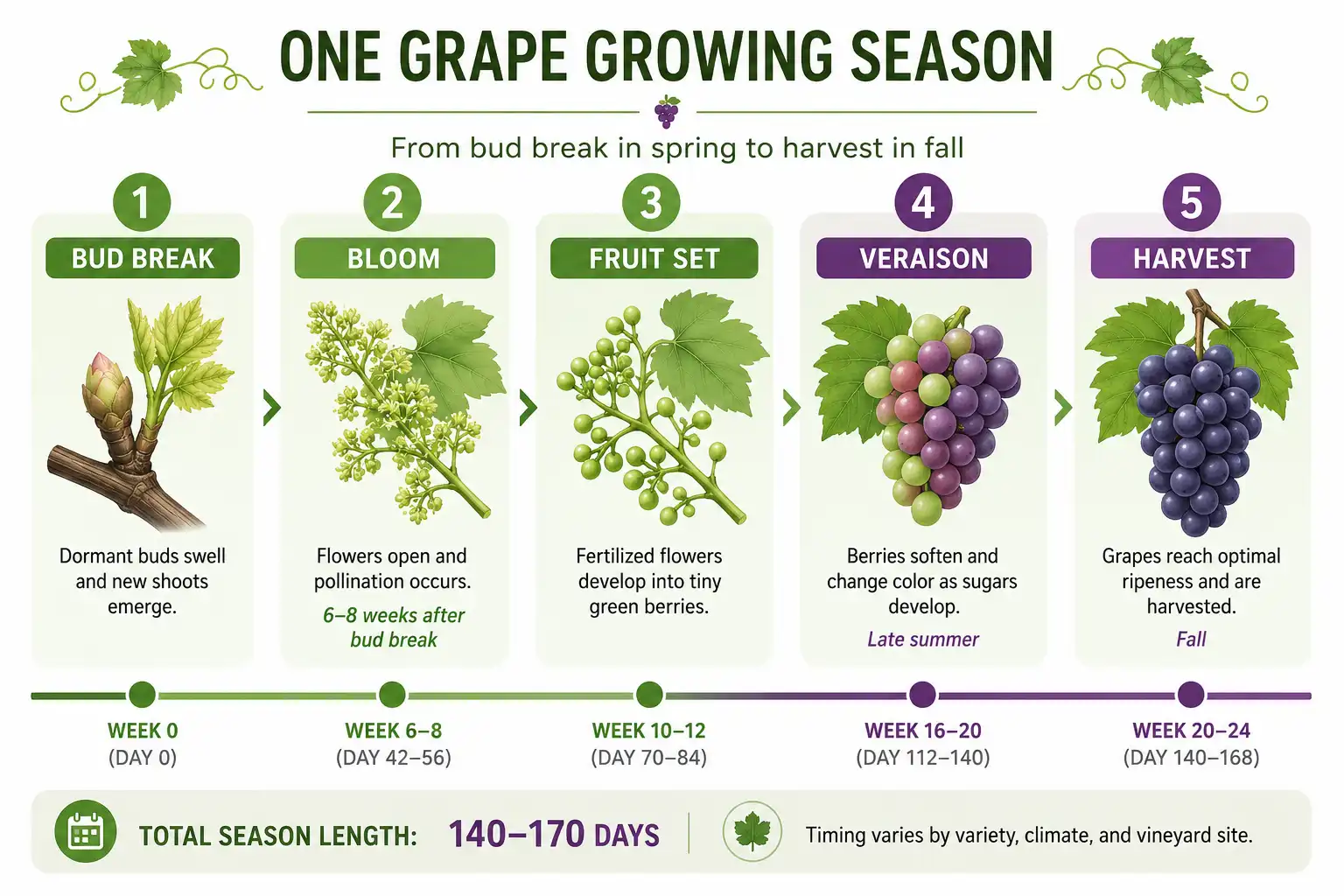
Bud break comes first, in spring, when green shoots push from the buds. In Kansas that is usually April. Growth starts slow, then shoots can stretch an inch or more a day. Bloom follows about six to eight weeks after bud break. Tiny flowers open, pollinate, and set into small green berries. The berries then size up through summer.
Veraison comes next, the turn toward ripeness. Veraison is when berries soften and change color, red types going purple and green ones turning translucent. Sugar starts building fast. From veraison to harvest runs roughly six to eight weeks, again by variety. Steady moisture matters most here, so drip and sprinkler systems earn their keep during ripening by sizing the fruit without splitting it.
Harvest lands anywhere from late summer to mid-fall. Early varieties ripen in late August to mid-September. Mid-season types finish late September into October. Late types hang on until mid or late October.
What Affects How Fast Grapes Grow?
Several things speed up or slow down how fast grapes grow. Get these right and you shorten the wait while improving the fruit.
Variety is the biggest factor. Early, mid, and late types ripen weeks apart. Cold-hardy hybrids bred for the north tend to ripen earlier than tender vinifera. Autumn Crisp grapes are a good example of a later table grape that needs a long, warm season to finish.
Also, vine age at planting matters. A standard bare-root vine is one to two years old. A larger potted vine can fruit a touch sooner, since it starts with more trunk and root. Bare-root costs less and catches up fast.
Heat drives the pace. Growers track growing degree days, base 50 degrees Fahrenheit, from April through October. More heat units mean faster ripening. Full sun, seven to eight hours or more, feeds the whole process through photosynthesis.
Pruning every dormant season is not optional. Skip it and the vine overbears, which delays ripening and drains the plant. Cut back about 90 percent of the prior year’s canes each winter.
Soil and water round it out. Grapes want well-drained ground and moderate fertility. Too much water or nitrogen pushes leafy growth over fruit. Keep an NPK plan light and let a soil test guide it.
How Long Does It Take to Grow Grapes From Seed?
Growing grapes from seed takes far longer, and the outcome is unpredictable. A seedling can take two to three years just to flower, and the fruit rarely matches the parent vine. You could wait years for grapes you do not even like. That is why almost nobody grows grapes from seed for eating. Plant a nursery vine or root a cutting instead. From a rooted cutting, you are back on the same three-year track as a bare-root vine.
How Long Do Grapevines Keep Producing?
A healthy grapevine keeps producing for decades. Yield stays strong for around 30 years, then slowly tapers, though vines can live 50 to 100 years with good care. So the three-year wait buys you a lifetime of harvests. That long payback is the whole reason the establishment phase is worth doing right.
How Long Grapes Take to Grow in Kansas and Zone 6
In Kansas and similar Zone 6 areas, grapes follow the same three-year timeline, but variety choice decides whether they finish in time. Topeka sits in USDA hardiness zone 6a. The season is long and sunny, which grapes like, yet hard winters and late frosts call for tough, earlier-ripening vines.
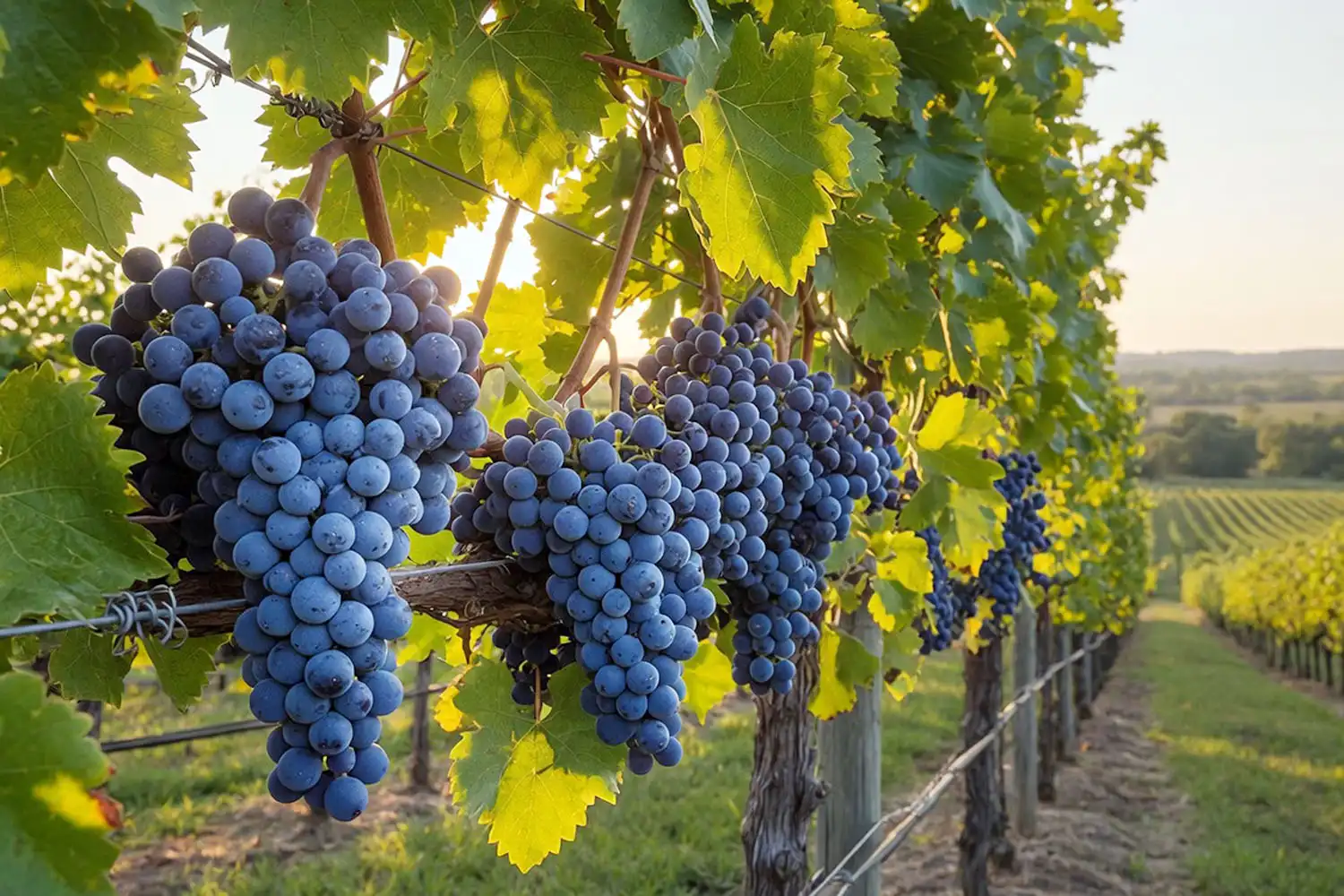
It helps to use cold-hardy, proven types here. Concord, Catawba, Mars, and Reliance work well for table and juice. Hybrids like Marquette, St. Croix, Vignoles, Seyval, and Vidal handle the cold and still finish their season. K-State Research and Extension backs these for the region. Prune in late February or early March, before bud break.
Pests can stretch the timeline if you ignore them. Black rot is the big fungal threat on Kansas vines, and Japanese beetles will strip leaves in summer. A plan that mixes natural pest control with a steady spray schedule keeps both in check. Stay ahead of them and your vines ripen on time.
What This Looks Like in Practice
Plan for three years and treat the first two as setup. Plant a cold-hardy vine in full sun, prune every winter, and guard it against black rot and beetles. You will spot a few grapes in year two and a real harvest in year three. After that, one well-kept vine can feed a family for 30 years and then some. The wait is short next to the payoff.