When Is the Best Time to Plant Grapes? A Farmer’s Guide
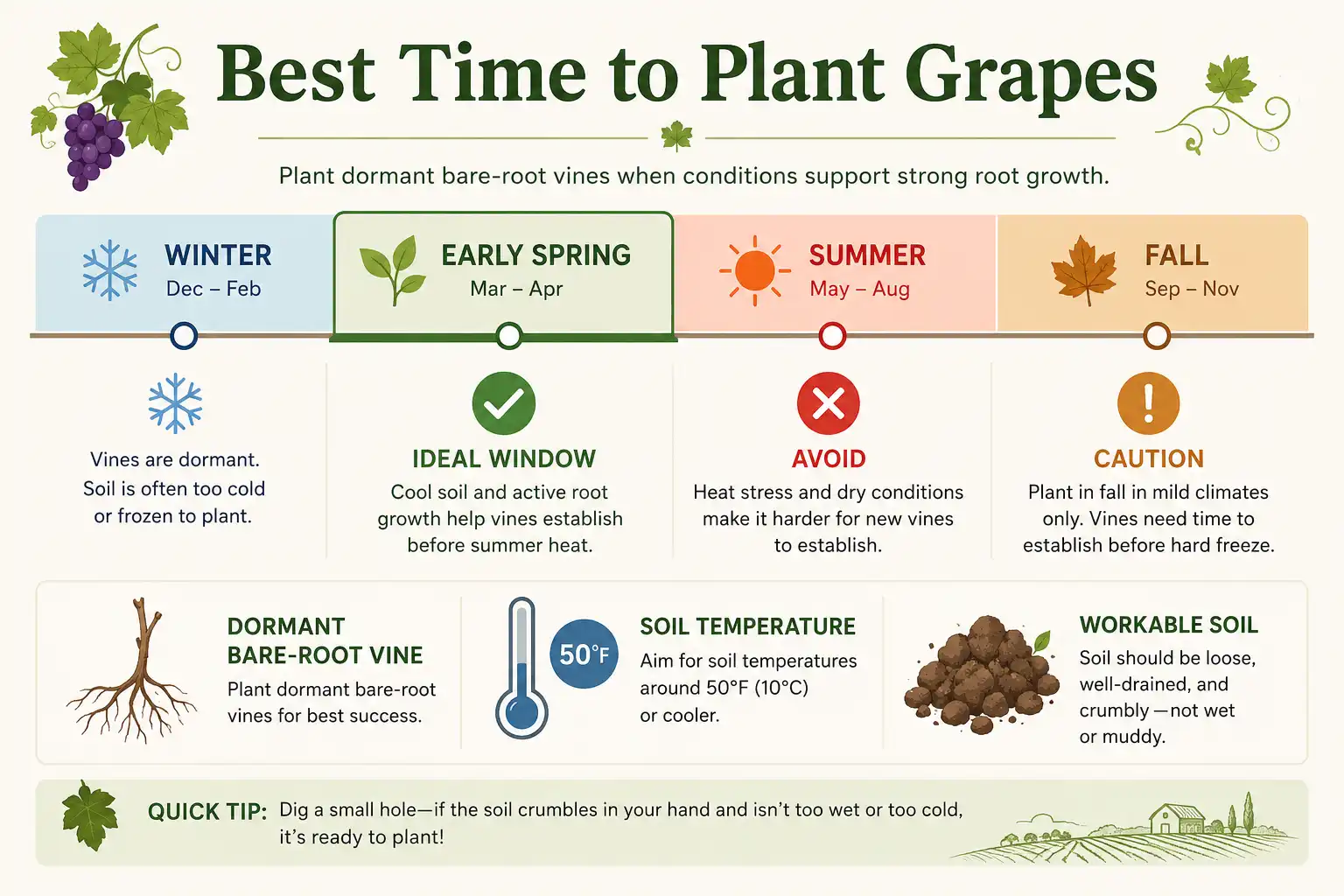
Grapevines stay in one spot for 20 to 30 years, so timing the planting right matters. The best time to plant grapes is early spring, while the vines are still dormant. Good timing decides how fast roots settle and how strong the vine grows.
The best time to plant grapes is early spring, after your last hard freeze, once the soil is workable and not soggy. Bare-root vines go in while dormant, before bud break. In mild-winter regions, fall planting suits potted vines.
When Is the Best Time to Plant Grapes?
Early spring is the best time to plant grapes across most of the country. You want the vines in the ground while they sit dormant. Plant after the worst hard freezes pass but before the buds swell. In Kansas, that window usually runs from late March into mid-April.
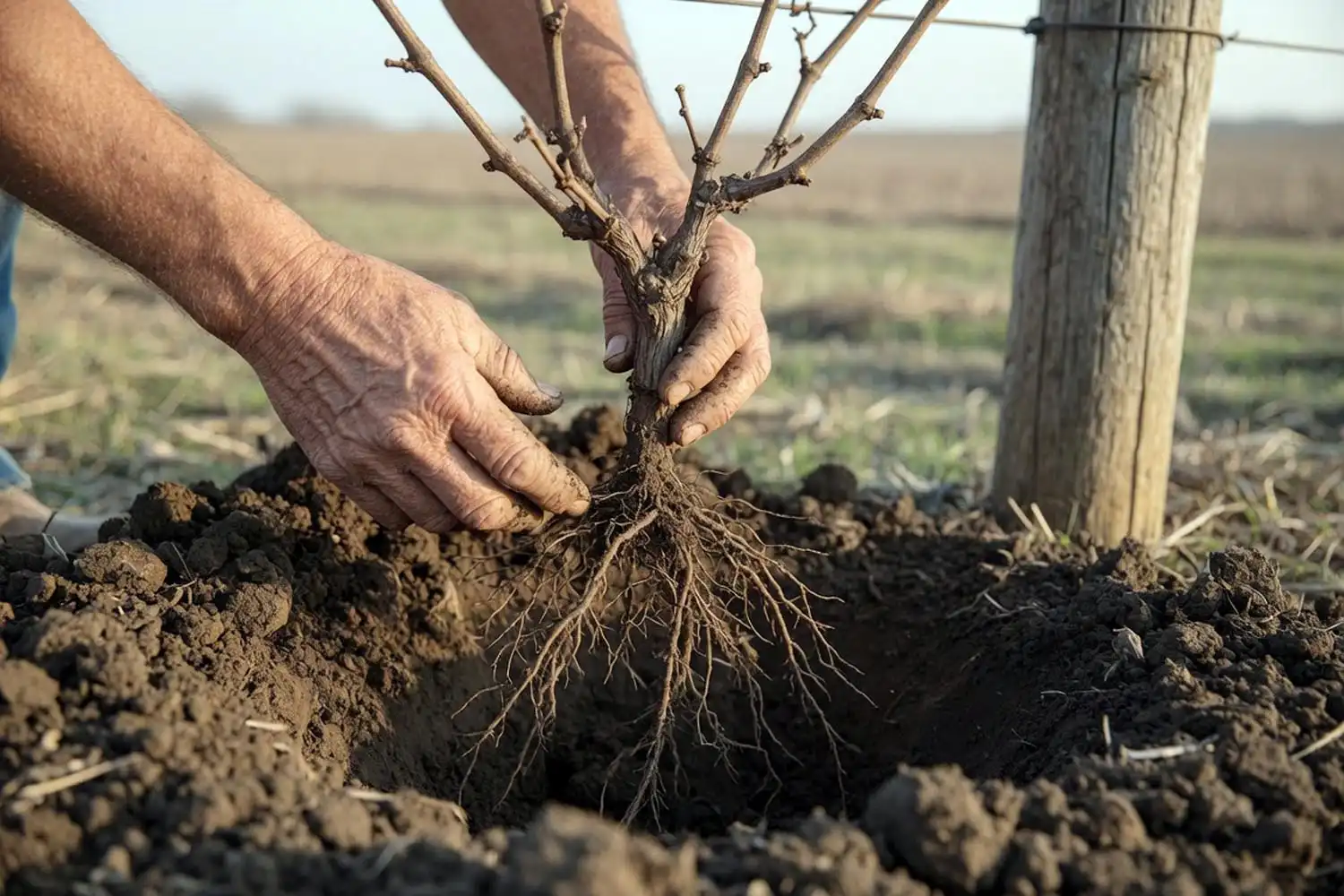
Dormant vines handle transplanting with almost no shock. The roots wake up first and start spreading before the leaves demand water. That head start builds a stronger plant by the first summer.
Learn more: How Long Does It Take Grapes to Grow (Planting to Harvest 2026)
Should You Plant Grapes in Spring or Fall?
Plant grapes in spring if you live anywhere with cold winters, including the Great Plains. Spring gives the roots a full growing season to settle in before freezing weather returns.
Fall planting only makes sense in mild-winter regions with sharp drainage, like parts of the South and West. In cold ground, fall-planted roots can heave out as the soil freezes and thaws. Two young vines were lost that way the first year, so spring planting is now the recommended timing.
When to Plant Grapes by Region and Hardiness Zone
Your USDA hardiness zone sets the planting window more than the calendar does. Colder zones plant later, and warmer zones plant earlier or even in fall.
In zones 3 to 5, like the Upper Midwest, wait until the soil thaws, usually April into May. In zones 6 and 7, which cover Kansas and much of the Midwest, late March through April works well. Across zones 8 and 9 in the South and Southwest, plant in late winter, often February to early March. Warm zone 10 growers can set dormant vines from fall through winter.
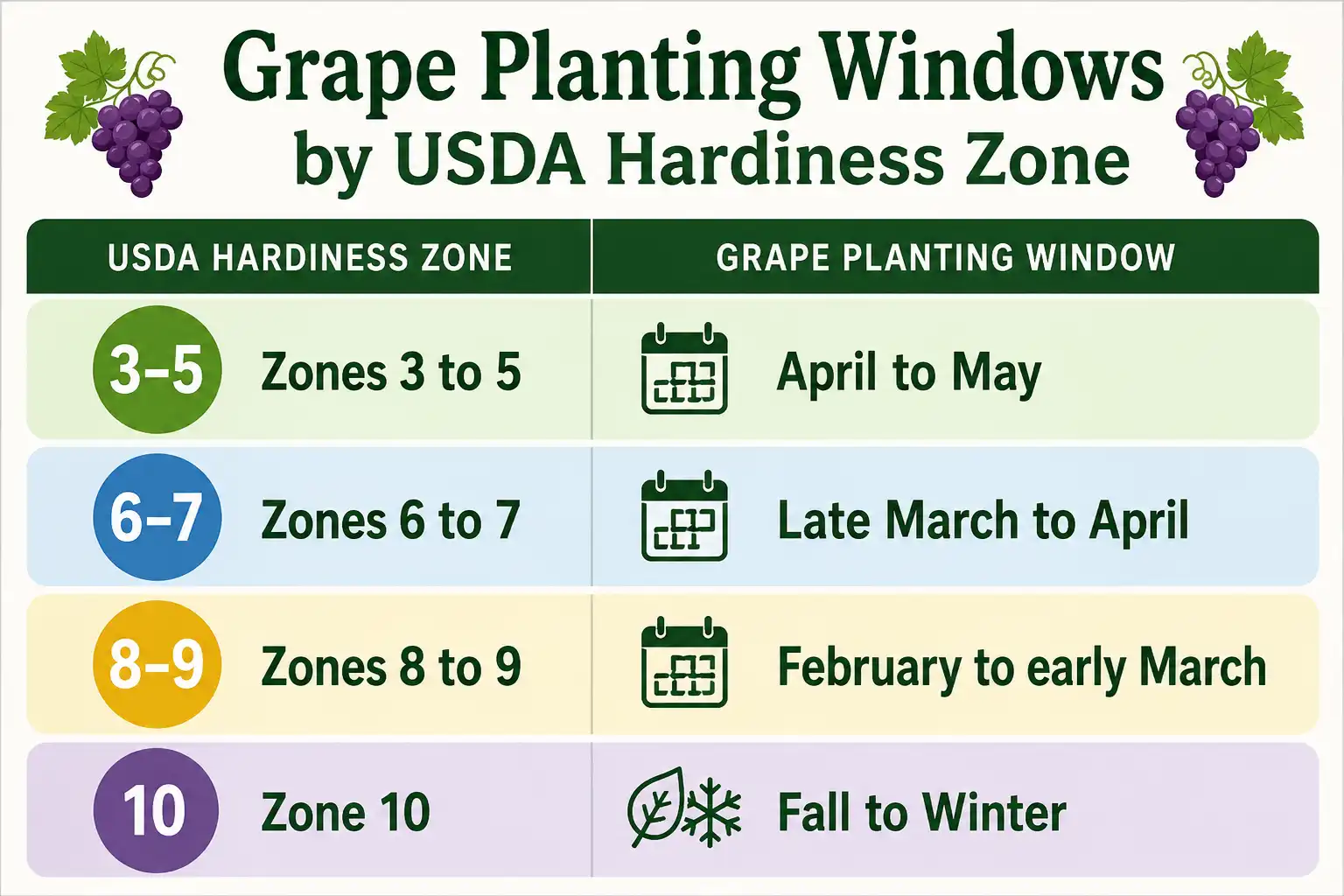
A regional planting calendar helps you line grapes up with your local frost dates. Match the variety to your zone, too. Cold-hardy hybrids like Marquette and Edelweiss shrug off hard Kansas winters. Warm-climate table grapes, such as Autumn Crisp grapes, want milder ground.
Does Bare-Root or Potted Change the Timing?
Yes, the vine type shifts your window. Bare-root vines must go in while dormant, so spring is your only safe bet in cold country. Potted, container-grown vines already carry active roots, which lets you plant from spring into early summer.
Most growers buy bare-root because they cost far less than potted vines. Order them in summer or early fall for spring delivery, then plant the day they arrive. Stored roots dry out fast and may never recover. If your site is not ready, heel the vines into a shallow trench of moist soil. Keep them in the shade until you can plant.
How Soil and Weather Decide Your Planting Day
The calendar gives you a window, but the soil picks the exact day. Wait until the ground turns workable, not frozen and not waterlogged. Squeeze a handful. If it crumbles you are good, but if it oozes mud, wait a few more days.
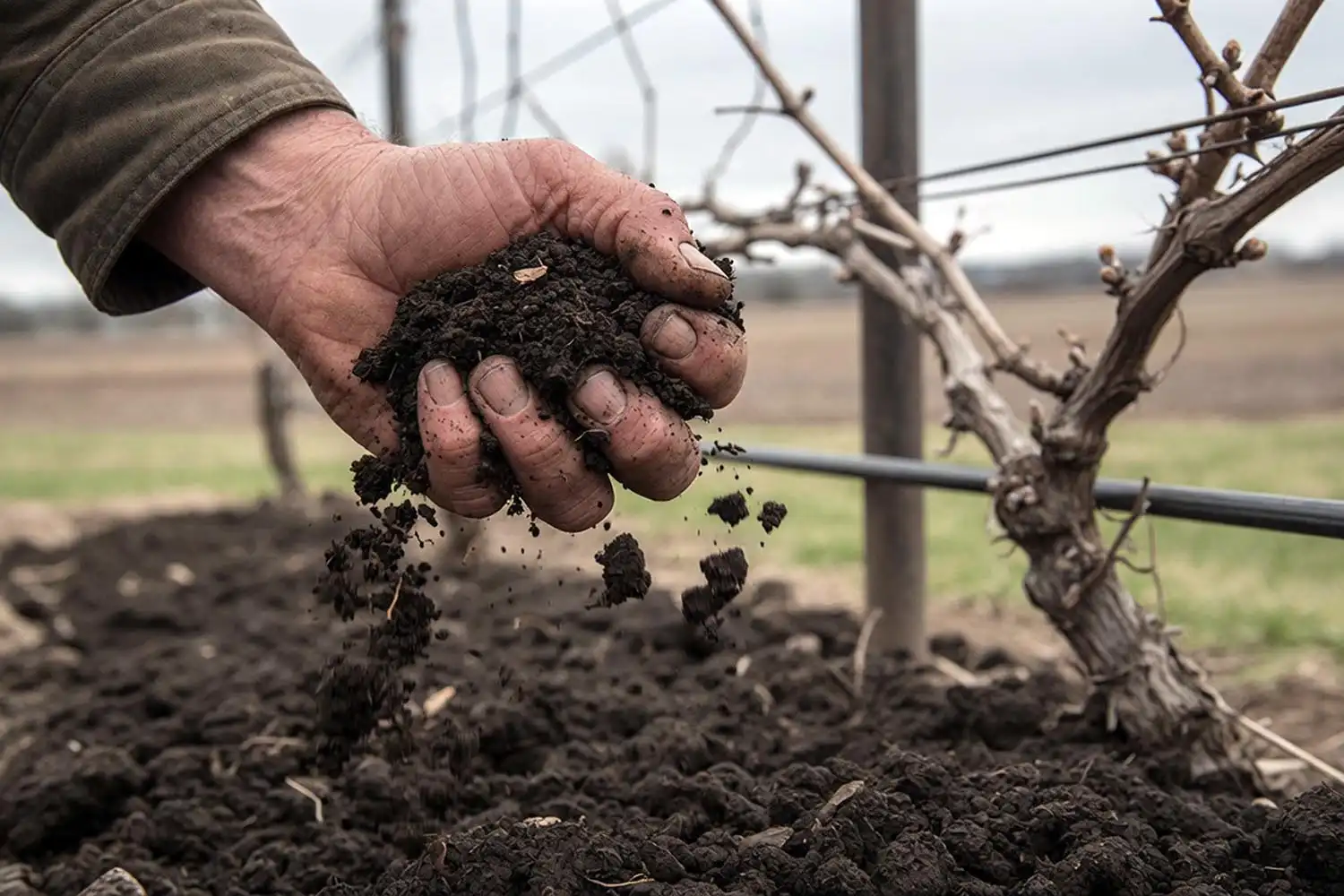
Soil around 50°F tells you roots will start growing soon after planting. A quick soil test before planting shows your pH, which grapes like between 6.0 and 7.0. If your spring turns dry, set up drip irrigation or pre-water the holes so the roots meet damp soil.
Get These Done Before Planting Day
Set your site up the season before, not the morning you plant. Grapes live for decades, so the prep pays off for years.
Pick a full-sun spot with good air drainage, since frost pockets nip tender buds. Build the trellis before the vines go in, so you never disturb the roots later. Work compost into the row and correct the pH based on your soil test. Order quality, number-one rooted vines early, because the best stock sells out by midwinter.
What to Do Right After You Plant
Water each vine in deeply the day you plant, even with rain in the forecast. Deep watering settles the soil around the roots and clears air pockets.
Add a layer of mulch around the base to hold moisture and block weeds. Keep it a few inches off the trunk so it does not trap rot. Skip fertilizer at planting, and wait until the vine shows new growth.
What Are the Most Common Grape Planting Timing Mistakes?
The biggest timing mistake is planting in summer heat, which stresses young vines and kills a lot of them. A few more trip growers up every season.
Planting bare-root vines after bud break leaves the roots unable to keep up with the new leaves. Holding bare-root vines for weeks before planting dries them out. Setting vines into cold, soggy soil rots the roots before they start. Fall planting in a cold zone invites winter heaving. Skipping the trellis and site prep forces you to disturb the vine later.
Final Words
In Kansas, dormant vines are typically ordered in early fall. Planting is done the first week of April, once the ground crumbles by hand. K-State Research and Extension pegs the last hard freeze around mid-April. Dormant vines settle in just ahead of bud break.
Spring planting, sharp drainage, and a trellis already standing give vines the best possible start. Get the timing right, and you set up 20-plus years of fruit from one good planting day.