How to Prune Zucchini Plants: Which Leaves to Cut and When
Zucchini leaves grow fast and soon crowd the bed, trapping humidity around the stem. Learning how to prune zucchini plants pays off in better airflow and less powdery mildew. The right cuts also expose fruit for harvest without stripping the leaves the plant needs.
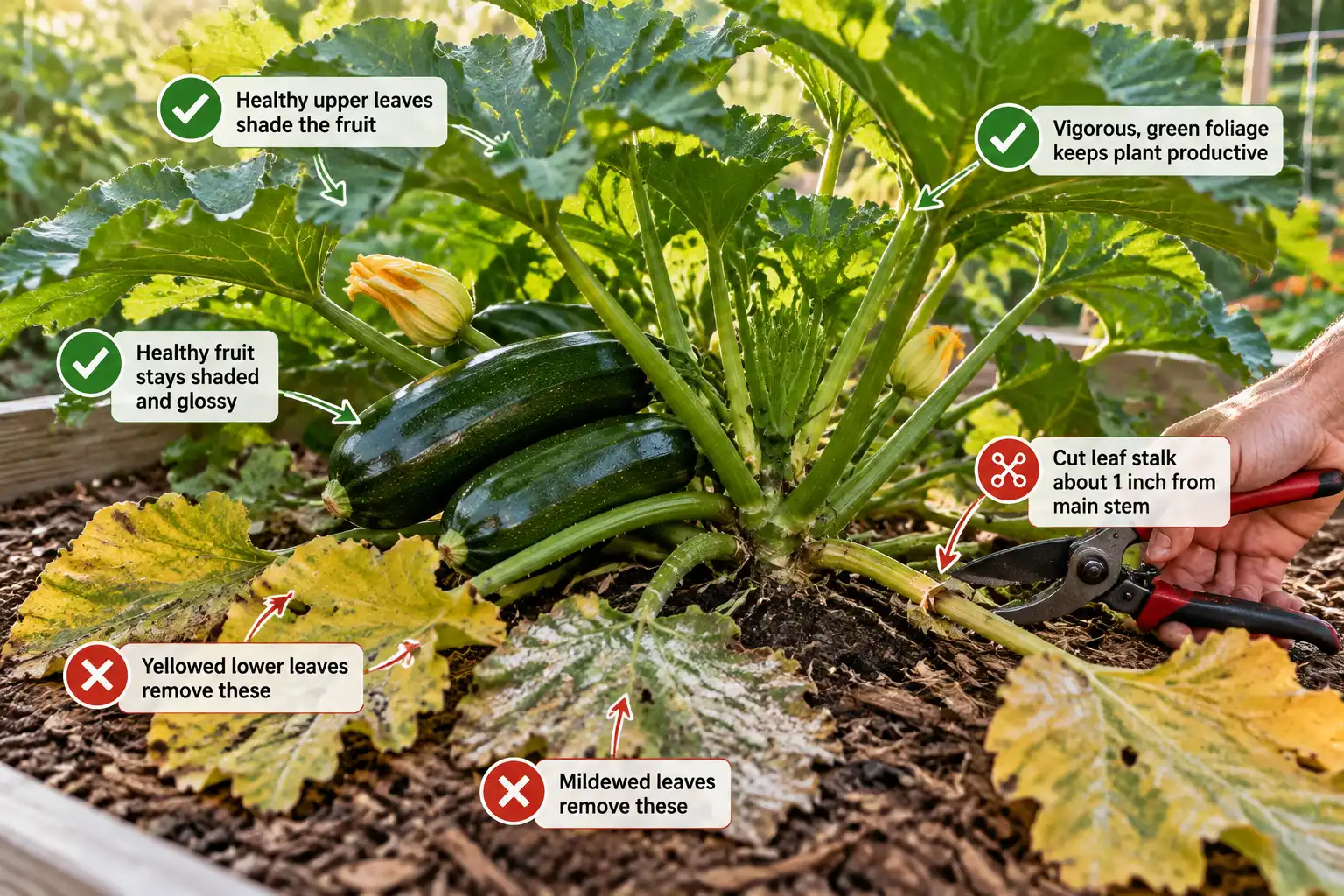
Prune zucchini plants by cutting off old, yellow, or diseased leaves near the main stem. Start once flowering begins, check weekly, and keep the upper leaves. Those leaves feed the plant and shade fruit from sunscald.
Should You Prune Zucchini Plants?
Yes, but only lightly. Zucchini does not need heavy pruning to set fruit. Still, removing a few old or diseased leaves improves airflow and makes harvest easier.
Bush zucchini (Cucurbita pepo) grows from a single central crown. Leaves, flowers, and fruit all emerge from nodes along one short main stem. As a result, the plant rarely branches, and there are no suckers to pinch. That sets it apart from tomato pruning, where shoot removal shapes the whole plant.
Zucchini pruning serves three practical goals:
- Airflow. An open base dries faster, and powdery mildew favors a humid canopy.
- Sanitation. Oregon State University Extension advises pruning off mildew-infected plant parts as soon as they appear.
- Access. With fewer low leaves, oversized fruit has fewer places to hide, and pest checks go faster.
Prune or Leave It: Quick Decision Guide
| Situation | Prune? | What to Do |
|---|---|---|
| Seedling or young plant before flowering | No | Let leaves build the canopy |
| Lower leaves lying on wet soil or mulch | Yes | Cut them at the stalk |
| White powdery spots on a leaf | Yes | Remove it at first sign and bag it |
| Old leaf more than half yellow | Yes | Remove it |
| Leaves shading young fruit | No | Keep them to prevent sunscald |
| Whole plant yellowing and wilting | Diagnose first | Check the stem base for borer holes |
Learn more: Growing Zucchini Vertically on a Stake or Trellis
When to Prune Zucchini Plants
Start pruning once the plant flowers and its lower leaves begin to crowd or touch the soil. Before that point, every leaf builds the canopy that carries the crop.
After that, powdery mildew sets the pace. According to University of Minnesota Extension, symptoms usually appear in mid to late summer in Minnesota, and plants already bearing fruit show them first. The disease attacks older leaves first and favors humid weather between 68 and 81°F. For that reason, the lowest leaves are always the first to go.
For timing, follow three habits:
- Check weekly. UMN Extension suggests examining five mature leaves per planting each week during mildew season.
- Prune on a dry morning. Cuts dry and close before evening.
- Switch tactics late in the season. Once a plant is heavily infected, Oregon State University Extension recommends removing the whole plant instead of trimming it.
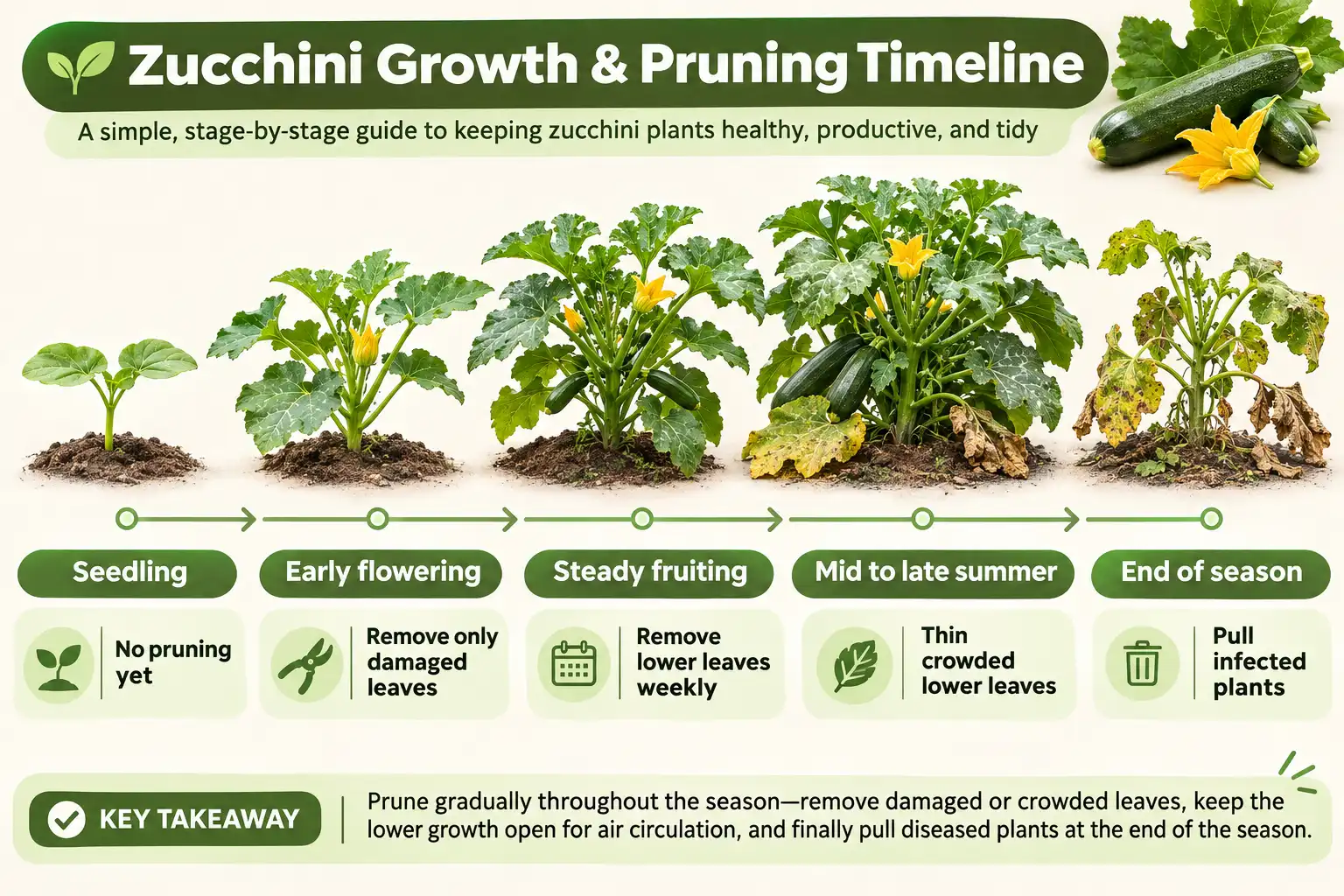
Zucchini Pruning by Growth Stage
| Growth Stage | Pruning Action |
|---|---|
| Seedling to first flowers | None, except broken or diseased leaves |
| Early flowering | Remove leaves touching the soil |
| Steady fruiting | Weekly cleanup of old, yellow, or damaged lower leaves |
| Mid to late summer | Remove mildewed leaves at first sign; keep fruit shaded |
| End of season | Pull heavily infected plants and clear all debris |
Can You Cut Off Zucchini Leaves?
Yes, cutting off a few zucchini leaves does not harm a healthy plant. Zucchini adds new leaves at its growing tip all summer, so light pruning leaves little gap. The key is choosing the right leaves.
Each large leaf feeds the flowers and fruit at nearby nodes. Remove too many, and fruit set slows. Upper leaves also shade developing fruit from direct sun. In fact, University of Minnesota Extension notes that heavy leaf loss from mildew lowers fruit quality, partly through increased sunscald. As a general pruning guideline, keep at least two-thirds of the leaf area on the plant at any time.
Leaves to Remove
- Leaves lying on soil or mulch
- Leaves with white powdery patches
- Leaves that are more than half yellow or brown
- Torn, hail-damaged, or chewed leaves
- Leaves carrying squash bug egg clusters
Leaves to Keep
- Young leaves near the growing tip
- Leaves directly above or beside developing fruit
- Healthy, deep green leaves in the upper canopy
How to Prune Zucchini Plants Step by Step
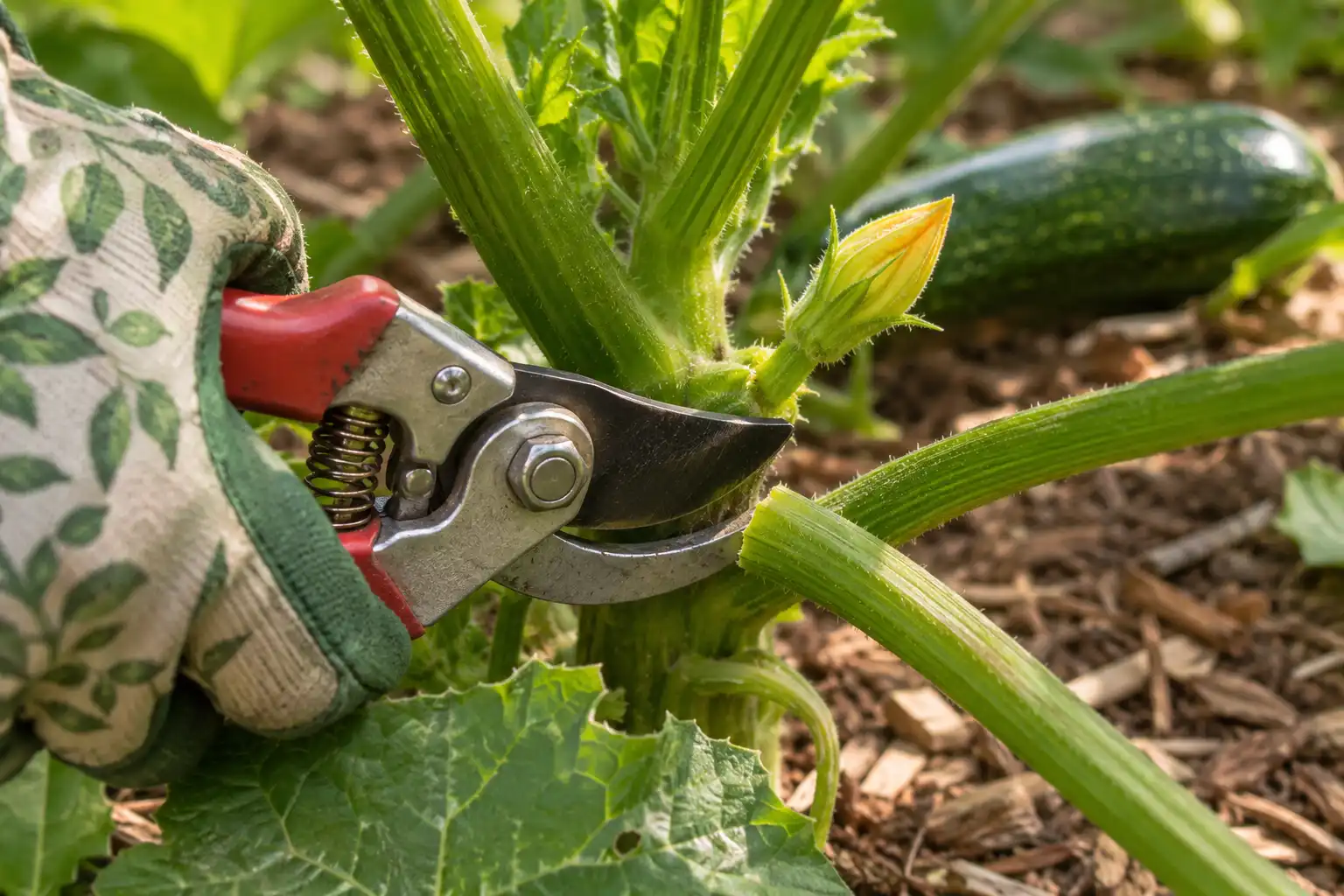
Pruning zucchini leaves takes only a few minutes per plant. First, gather sharp bypass pruners, 70% isopropyl alcohol, gloves, and a trash bag. Zucchini stems and leaf stalks carry stiff, prickly hairs, so long sleeves help too.
- Start at the base. Lift the canopy and work from the oldest, lowest leaves upward.
- Trace the leaf stalk. Follow the hollow stalk (petiole) back to where it joins the main stem.
- Cut about 1 inch out. Leave a short stub so the blade stays clear of the main stem and the flower bud at that node.
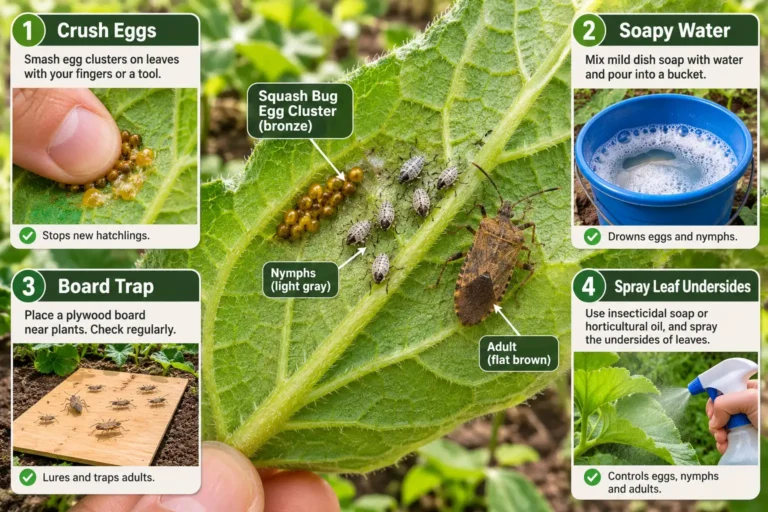
- Check the underside. Look for bronze to brick red egg clusters before you discard the leaf.
- Disinfect the blades. Wipe pruners with alcohol between plants, especially after cutting diseased leaves.
- Bag the debris. Bag or bury mildewed leaves instead of leaving them in the bed.
Squash bug eggs sit in groups of 15 to 40 on leaf undersides, according to the UC ANR Statewide IPM Program. The program advises destroying egg masses as soon as you spot them. Likewise, Oregon State University Extension recommends cleaning tools after cutting infected plants and keeping diseased leaves out of the home compost pile.
Repeat the process weekly. Each round, cut only the leaves that match the removal list above.
Should You Remove Yellow Leaves From Zucchini?
Yes, remove zucchini leaves that are mostly yellow, but identify the cause first. Yellowing is a symptom. Cutting the leaf tidies the plant, yet the underlying problem stays.
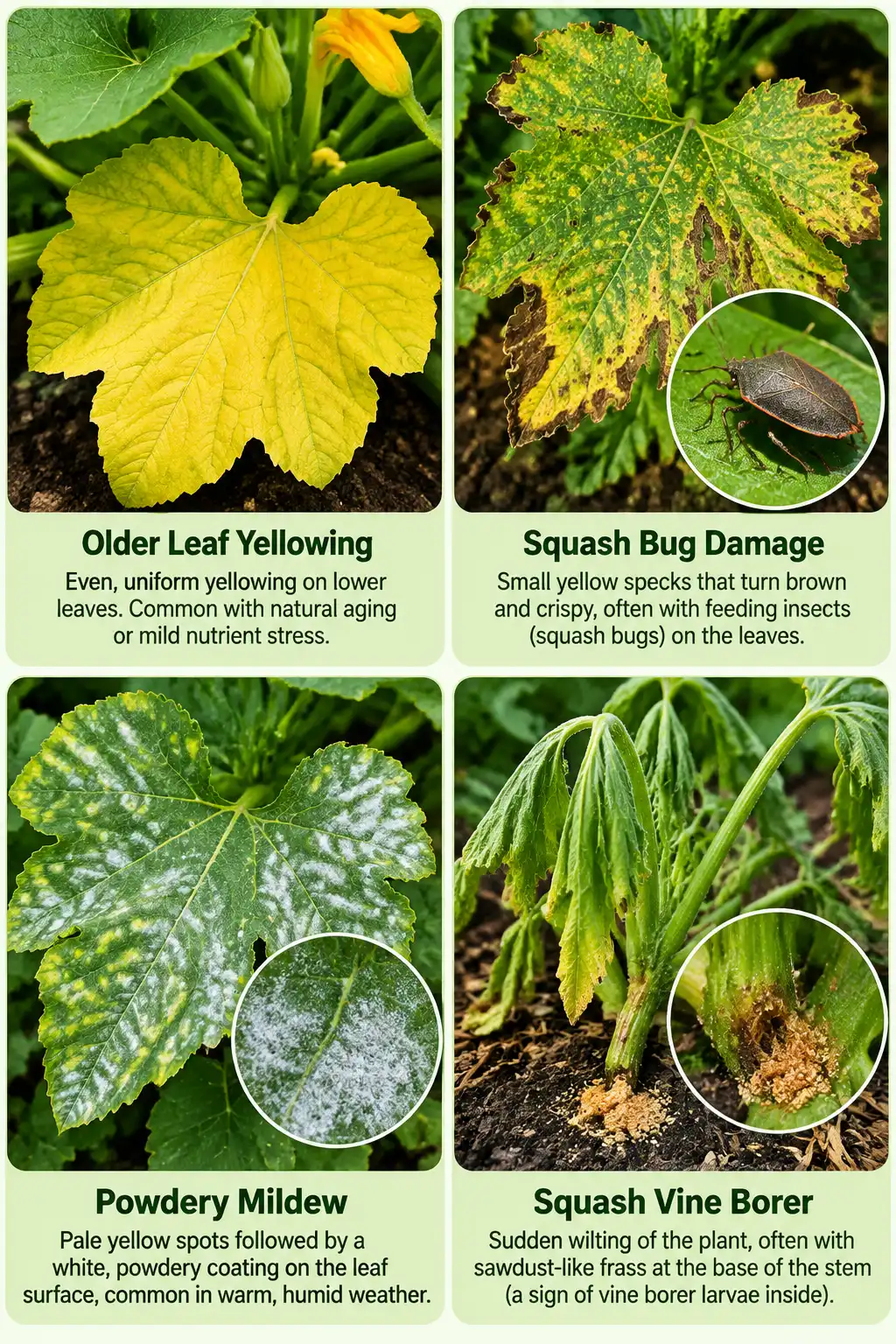
Old leaves at the base yellow naturally as the plant ages, so remove those freely. Other patterns, however, point to pests, disease, or nutrition:
| Yellowing Pattern | Likely Cause | What to Do |
|---|---|---|
| Oldest lower leaves turn evenly pale | Natural aging or low nitrogen | Remove spent leaves; fertilize based on a soil test |
| Pale yellow spots that turn white and powdery | Powdery mildew | Remove infected leaves at first sign |
| Small yellow specks that turn brown | Squash bug feeding | Destroy egg clusters and handpick bugs |
| Yellowing with wilting and frass at the stem base | Squash vine borer | Inspect the stem; leaf removal does not help |
University of Minnesota Extension describes the first sign of powdery mildew as pale yellow leaf spots. Meanwhile, Kansas State University Research and Extension identifies squash bug (Anasa tristis) damage as small yellow specks that later turn brown. For squash vine borer (Melittia cucurbitae), UMN Extension points to yellowing, wilting leaves and holes near the stem base packed with green to orange excrement.
A weekly leaf check fits neatly into a basic integrated pest management routine, so problems surface before they spread.
Pruning Zucchini to Control Powdery Mildew
Pruning slows powdery mildew, but it does not cure it. Oregon State University Extension notes that pruning back plants and spacing them farther apart improves air circulation and reduces mildew.
The fungus behind most cucurbit cases, Podosphaera xanthii, cuts yields directly. University of Minnesota Extension reports that infected plants produce fewer and smaller fruit. The disease also favors densely planted vines, weedy beds, shade, and over-fertilized plants.
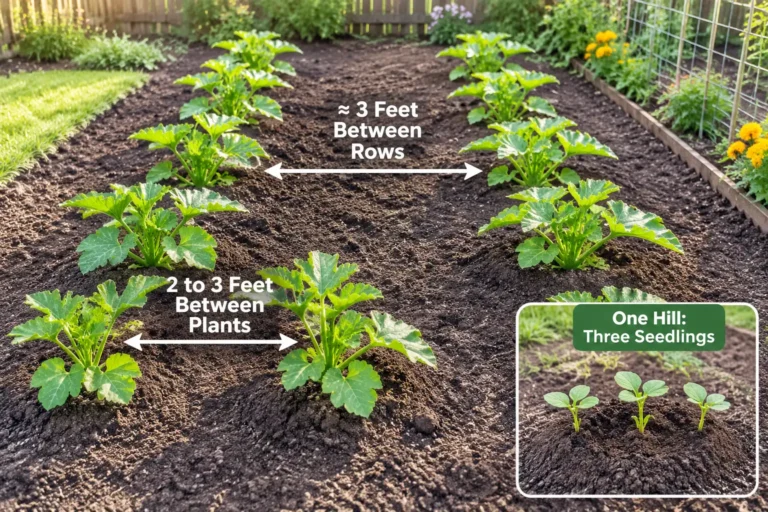
So, pair pruning with a few cultural fixes. First, choose resistant seed. OSU Extension names ‘Payroll’ and ‘Sebring’ as zucchini options for mildew-prone gardens. Next, water at the soil line. OSU recommends drip irrigation over overhead watering, because sprinklers raise humidity around the leaves. Running drip lines instead of sprinklers keeps foliage dry at every watering. Finally, follow full plant spacing guidelines at planting, since crowded vines hold humid air.
Staking Zucchini for Better Airflow
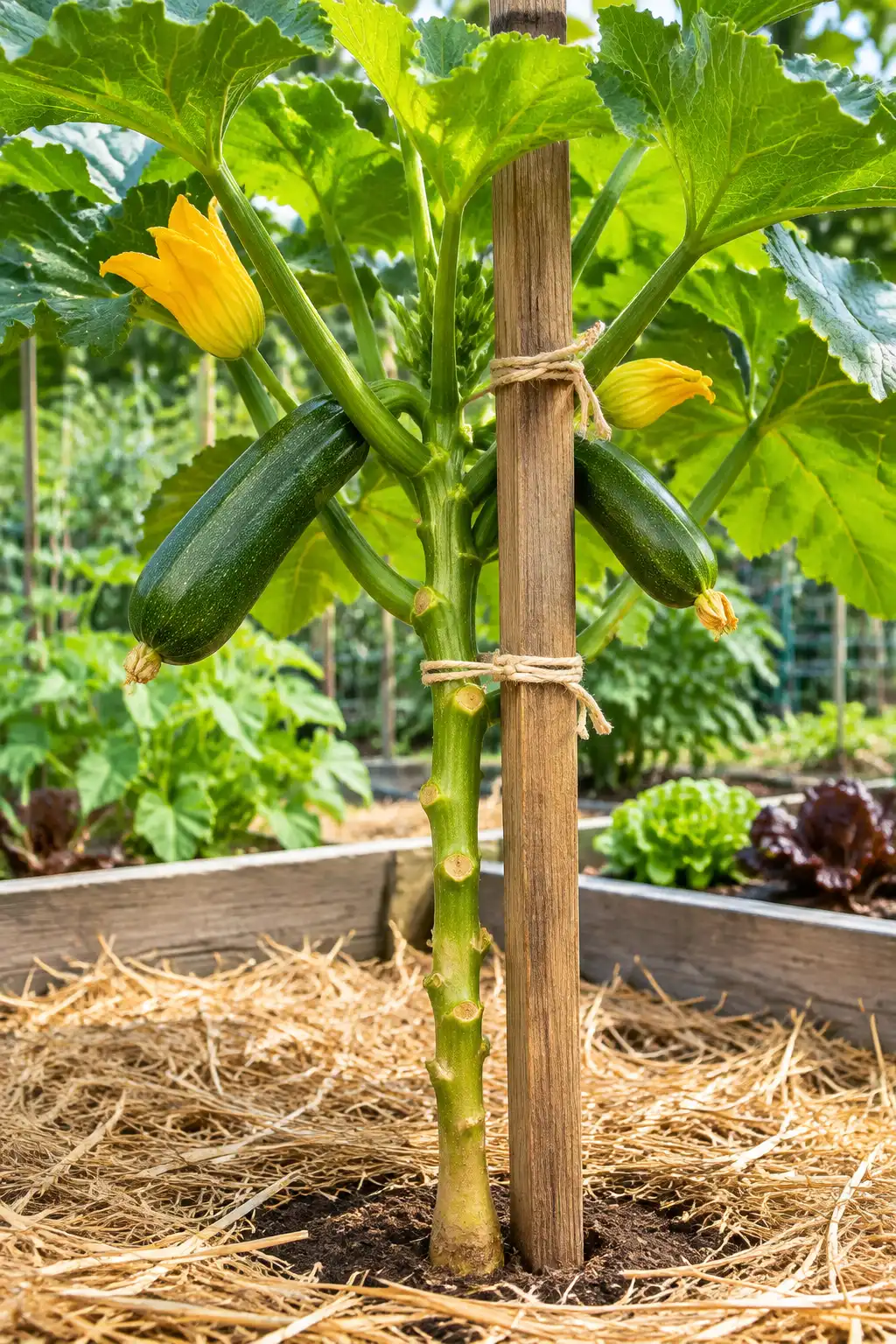
Staking turns a sprawling bush into an upright plant. UMN Extension lists staking alongside spacing and weed control as a way to improve air movement around cucurbits. It helps with pests, too, since squash bugs prefer hiding under thick foliage close to the ground, per the UC ANR Statewide IPM Program.
To stake, set a sturdy 4- to 5-foot stake beside the plant while it is young. Then tie the main stem loosely every 6 inches or so as it grows. Next, remove the leaves below the lowest developing fruit. The bare lower stem lets air pass under the canopy and keeps leaves off wet soil.
Common Zucchini Pruning Mistakes
- Overpruning. Stripping most leaves cuts the plant’s food supply and stalls fruit set.
- Exposing fruit to sun. Leaves above developing zucchini protect them from sunscald.
- Nicking the main stem. A wound in the hollow main stem opens a path for rot.
- Removing flower buds. Each node’s bud is a future flower or fruit, so keep the stub clear of it.
- Skipping disinfection. Dirty blades carry spores from plant to plant.
- Pruning to fix borers. Larvae feed inside the stem, so leaf removal does nothing for them.
- Composting mildewed leaves. Bag or bury them instead.
Frequently Asked Questions
Does pruning zucchini increase yield?
Pruning does not directly increase yield, but it protects it. Removing diseased leaves slows powdery mildew, which University of Minnesota Extension links to fewer and smaller fruit on infected plants.
Will zucchini leaves grow back after cutting?
A cut zucchini leaf does not regrow from its stub. However, the growing tip adds fresh leaves all summer, so healthy plants fill the open space quickly in warm weather.
Should you remove male zucchini flowers?
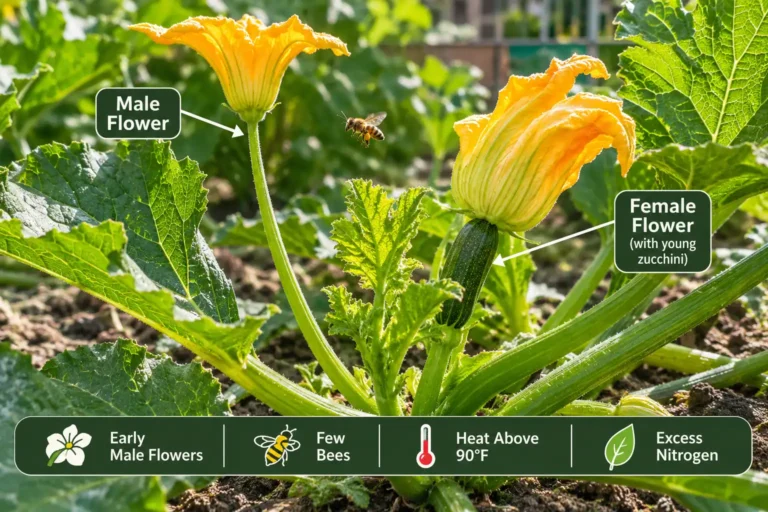
No, leave most male flowers on the plant, because bees carry their pollen to female flowers. Without pollination, young zucchini fruit turn yellow, shrivel, and drop before reaching harvest size.
Can you prune zucchini grown in containers?
Yes, and potted zucchini often needs it more, since a container packs foliage tightly. Remove old lower leaves weekly and stake the main stem to keep air moving through the canopy.
How many zucchini leaves can you remove at once?
Remove no more than about one-third of the total leaf area at one time, a common general pruning guideline. Focus those cuts on leaves that are old, damaged, diseased, or lying on soil.
Key Points for Your Field
Prune zucchini for airflow and sanitation, not shape. Start once flowering begins, then check plants weekly and cut old, yellow, or mildewed leaves about an inch from the main stem. Keep the upper leaves that feed and shade the fruit. When yellowing comes with wilting, inspect the stem base before reaching for the pruners.