Compost for Farming: 7 Mistakes That Cost Yields (Fix Them Fast)
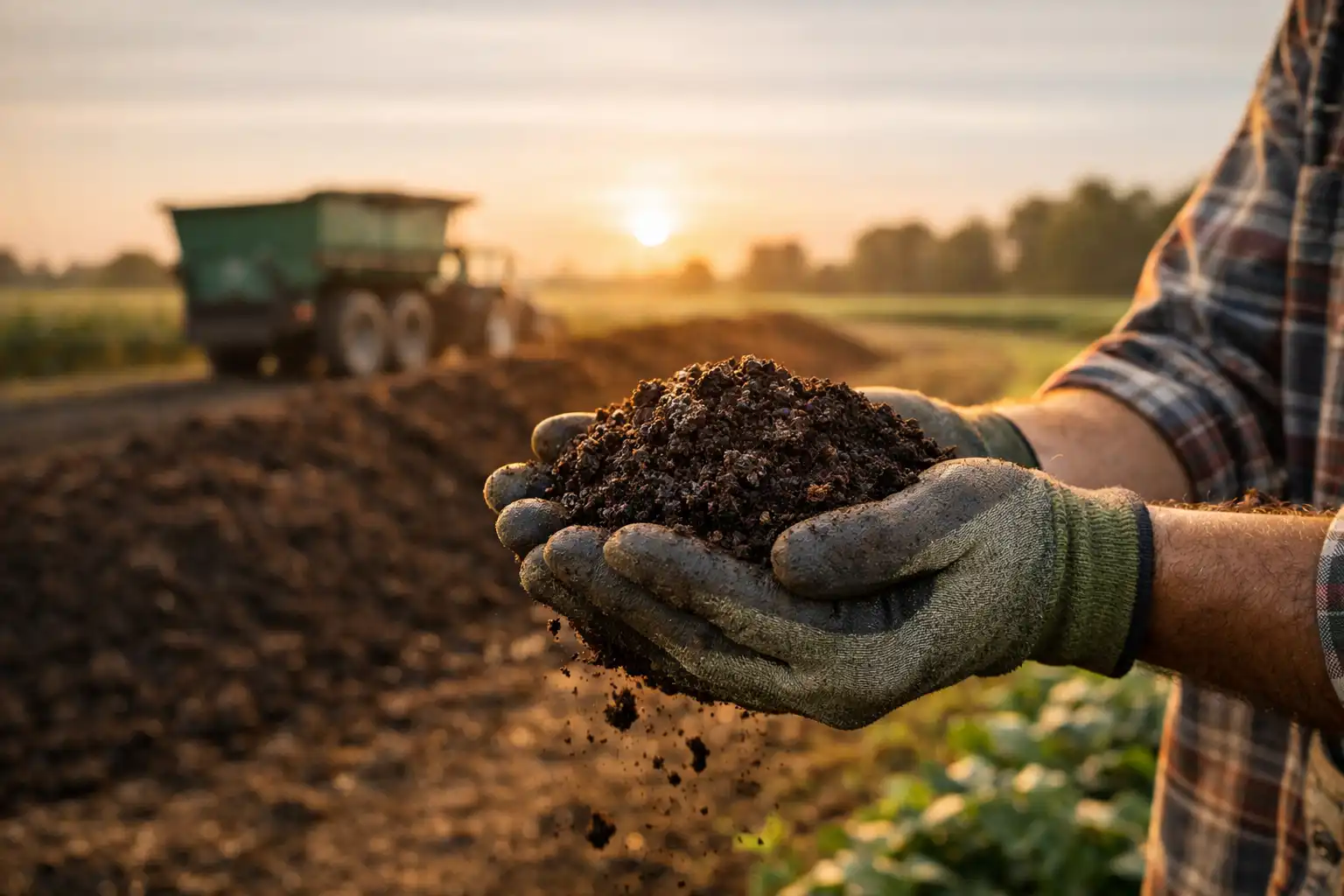
Compost for farming improves soil structure and nutrient cycling when you apply mature, stable compost at the right place and time. Finished compost feeds soil microbes, helps soil hold water, and buffers hard swings in moisture and temperature. Compost also stretches fertilizer dollars because plants use nutrients more steadily from healthy soil. The payoff comes from good sourcing, good curing, and a simple plan: test your soil, match compost to crop needs, and keep food-safety and herbicide risks in mind.
What is compost for farming?
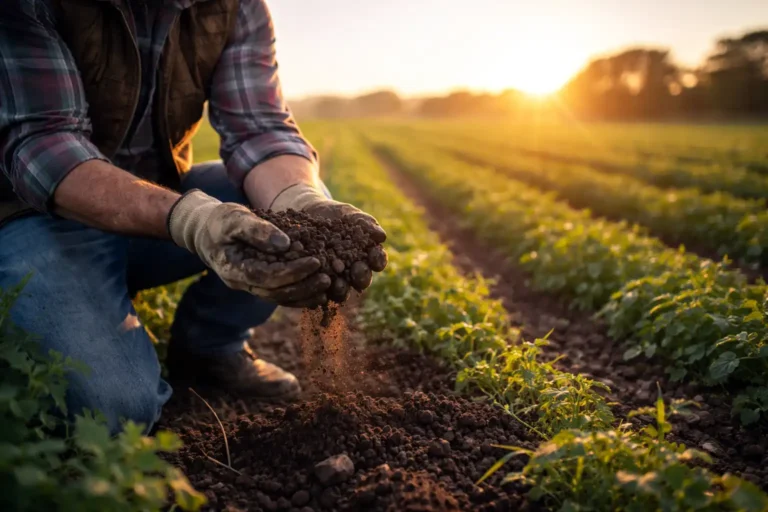
Compost for farming is decomposed organic material that soil microbes convert into a stable soil amendment. Finished compost contains humus-like particles that bind to soil aggregates. Those aggregates improve tilth, infiltration, and root growth. Farmers use compost to build long-term soil fertility, not to “quick-fix” a nutrient deficiency overnight.
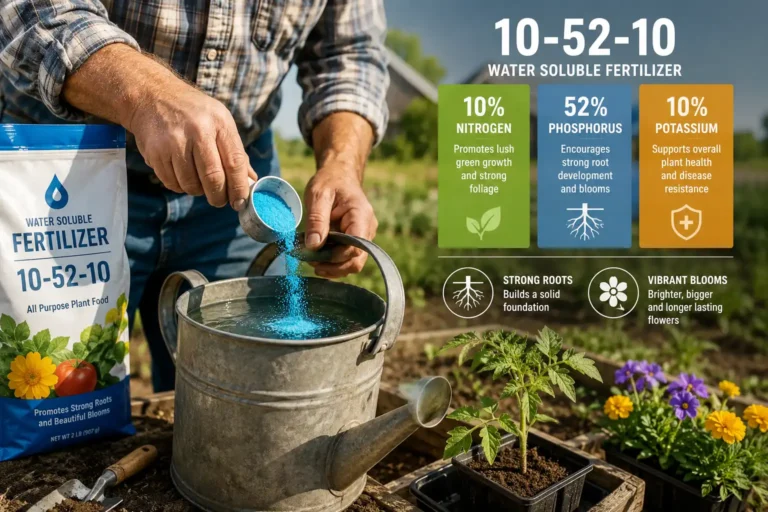
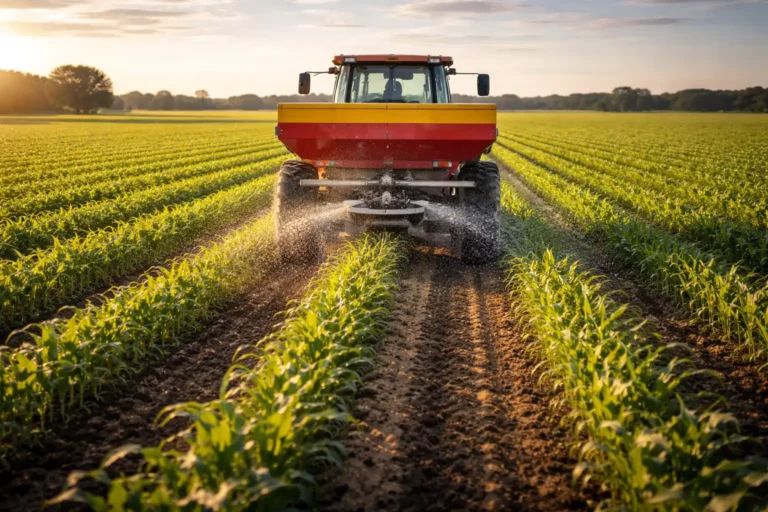
Crop farming fertilizer application pays off when you place the right product in the right spot and time it to the crop’s uptake curve.
What compost does in soil
Compost changes the soil environment more than it changes a single nutrient number. That matters because yield problems often start with roots, water, and biology.
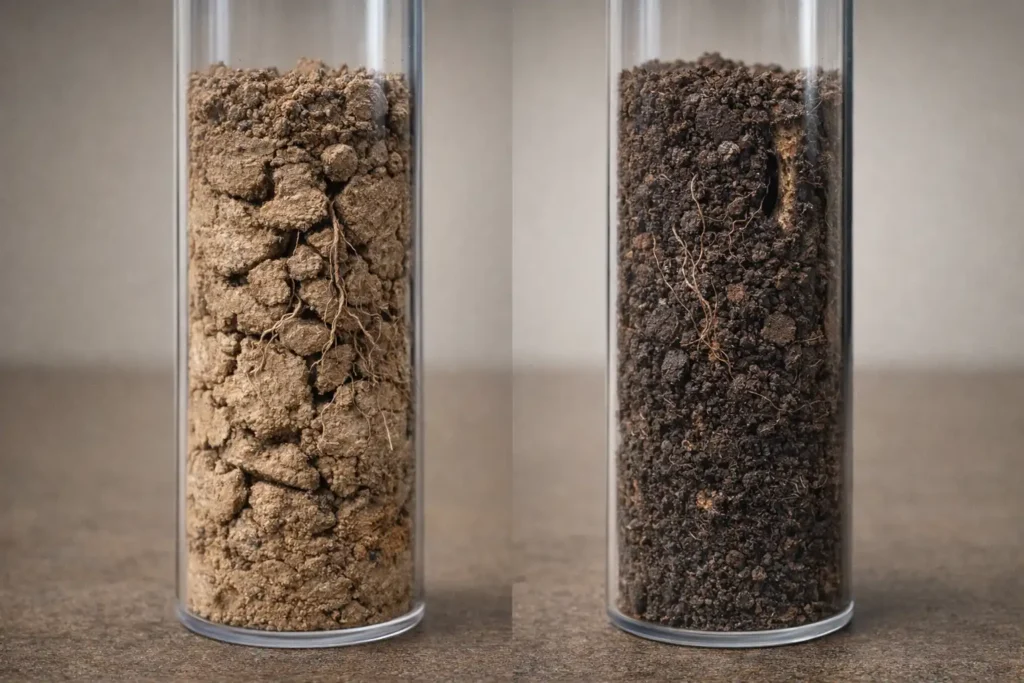
Compost improves soil structure by helping small soil particles stick together. Better structure increases pore space. More pore space improves infiltration and reduces crusting. Roots push easier in aggregated soil.
Compost supports soil biology by feeding bacteria, fungi, and earthworms. A larger soil food web releases nutrients over time. That steady release lowers the risk of burn compared to strong, salty inputs.
Compost helps water management by increasing water holding in sandy soil and improving drainage in tight soils. You still need good irrigation practices, but compost makes water easier to manage. For dialing in watering after an amendment, this section on irrigation and water practices helps keep the field consistent.
Know more: Guide to Improve Soil Fertility Naturally
When compost helps the most on a farm
Compost pays best when your problem is “soil function,” not a single missing nutrient.
Compost helps most when:
- Soil crusts after rain and seedlings struggle to break through.
- Sandy ground dries fast and you fight drought stress between irrigations.
- Heavy soil stays tacky and you see shallow rooting.
- You need better residue breakdown and more even nutrient cycling.
- You are building organic matter for the long haul.
Compost helps less when:
- You need an immediate nitrogen correction for a fast-growing crop.
- Your soil test shows high salts or high phosphorus already.
A soil test keeps compost working for you instead of against you. If you need a refresher on sampling and interpreting results, start with soil fertility basics and keep soil testing and measuring tools handy for repeatable sampling.
How to tell if compost is finished
Finished compost smells earthy and looks dark and crumbly. Unfinished compost heats back up after turning and smells sharp, sour, or like ammonia. Unfinished compost robs nitrogen because microbes pull N from soil while they finish breaking carbon down.
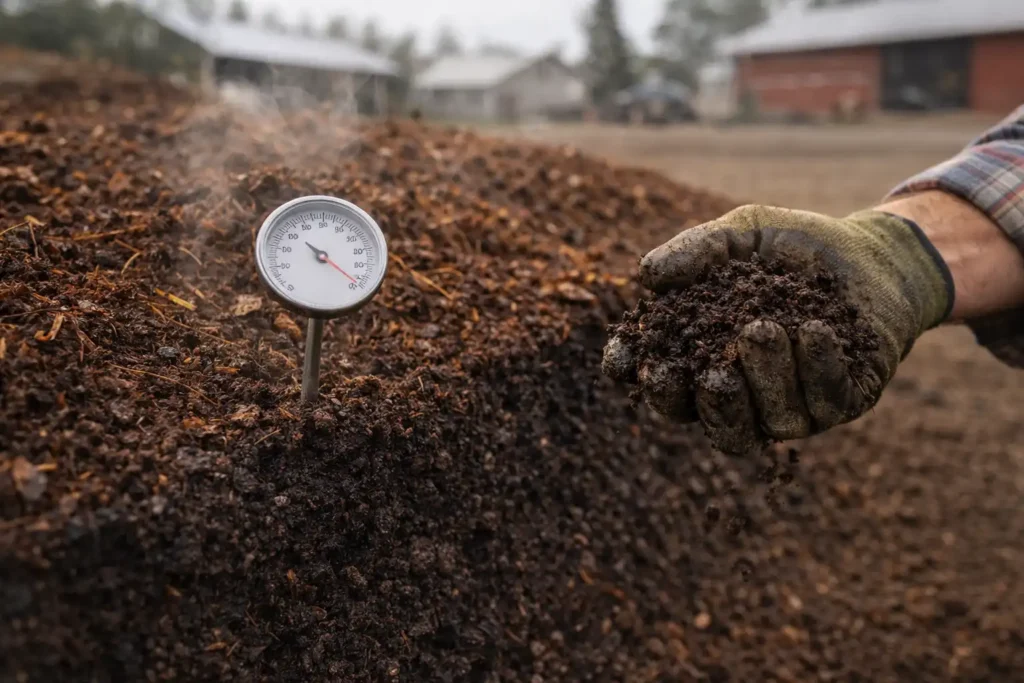
Use three practical checks before compost goes to a field:
- Temperature stability: A finished pile stays near ambient temperature after turning.
- Smell and texture: Earthy smell, no slimy layers, no rotten odor.
- No recognizable feedstocks: You do not see intact food scraps, fresh manure clumps, or mats of green leaves.
If compost is still “hot,” keep it composting. Hot compost belongs in the pile, not around tender roots.
What feedstocks make good farm compost
Good compost starts with predictable inputs. Compost quality depends on what goes in, how it is managed, and how long it cures.
Common farm feedstocks include crop residues, leaves, grass clippings, straw, and livestock bedding. Manure compost can be excellent, but it needs careful management for pathogens and salts. Wood chips work well as a carbon source, but they slow breakdown if you use too much.
If you buy compost, ask what they use. A consistent feedstock list produces consistent compost.
Manure-based compost and food safety
Manure-based compost improves fertility, but it carries higher risk if it is not properly composted. Pathogen risk drops when compost reaches and maintains proper thermophilic conditions and is turned on schedule. That process needs records and active management.
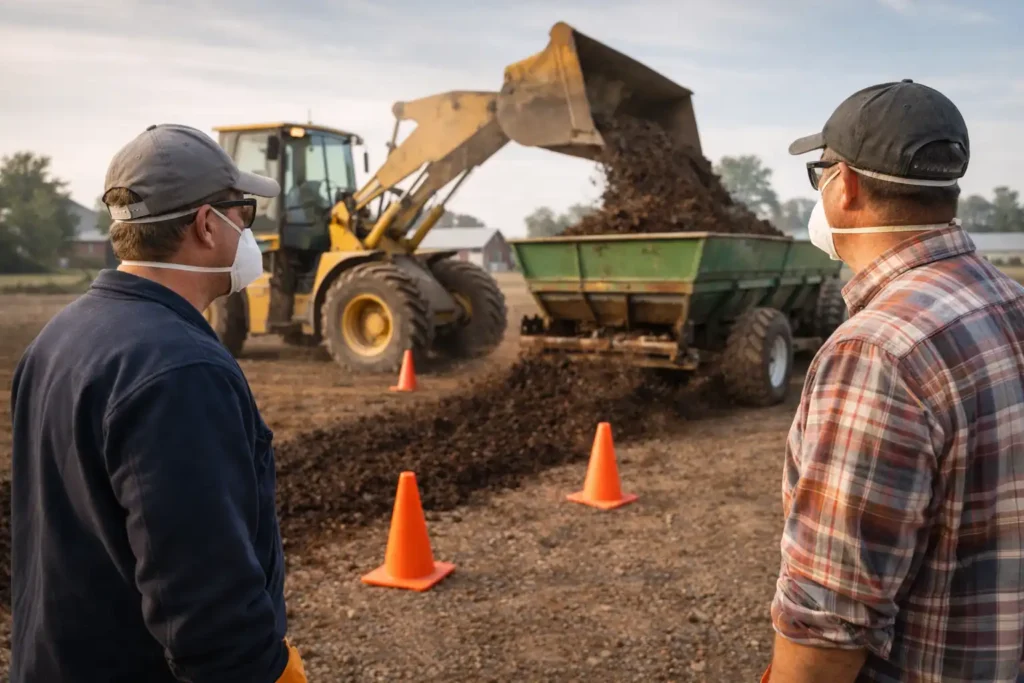
If you grow produce that contacts soil, treat manure compost like a food-safety input. Keep clean tools, keep compost away from harvest bins, and train workers on hygiene. For handling dusty compost or turning piles, basic protection matters. Keep safety and PPE basics in place anytime we are loading, spreading, or turning compost.
If you are unsure about compost process control, lean on your local extension recommendations and keep your records tight.
The herbicide carryover problem farmers miss
Herbicide carryover is one of the costliest compost surprises. Some pasture and hay herbicides survive digestion and composting. Those residues can injure sensitive crops like tomatoes, beans, peas, and potatoes.
You reduce risk by:
- Knowing the source of hay, straw, and manure bedding.
- Avoiding unknown “stable clean-out” compost for market gardens.
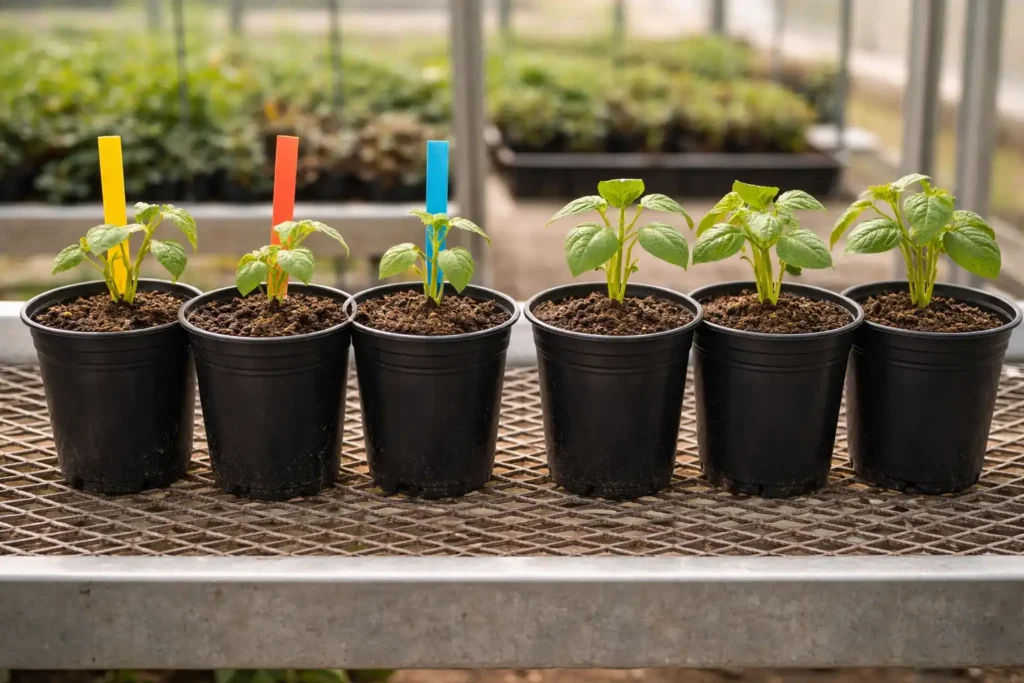
- Running a simple bioassay before wide application.
A bioassay uses the compost in pots with a sensitive plant and compares it to clean potting mix. Twisted new growth, cupped leaves, and stunting point to contamination. If you see symptoms, do not spread that compost on broadleaf crops. Consider using it on grass crops only, or do not use it.
If your farm grows vegetables, you can see how sensitive crops behave in this tomato crop guide and lettuce crop guide. Those crops show stress fast when soil conditions go sideways.
Compost vs manure vs fertilizer
Compost is a soil builder. Raw manure is a short-term nutrient source with higher risk. Fertilizer is a precise nutrient tool.
Compost:
- Builds structure and biology.
- Releases nutrients slowly.
- Varies by batch.
Raw manure:
- Releases nutrients faster.
- Carries higher pathogen and weed-seed risk.
- Can spike salts and ammonia.
Fertilizer:
- Delivers specific nutrients on demand.
- Requires careful timing and placement.
- Does not fix structure problems by itself.
Most farms use compost and fertilizer together. Compost builds the base. Fertilizer finishes the crop.
How to choose compost for your fields
Compost selection is matching, not guessing. You match compost properties to the field’s needs.
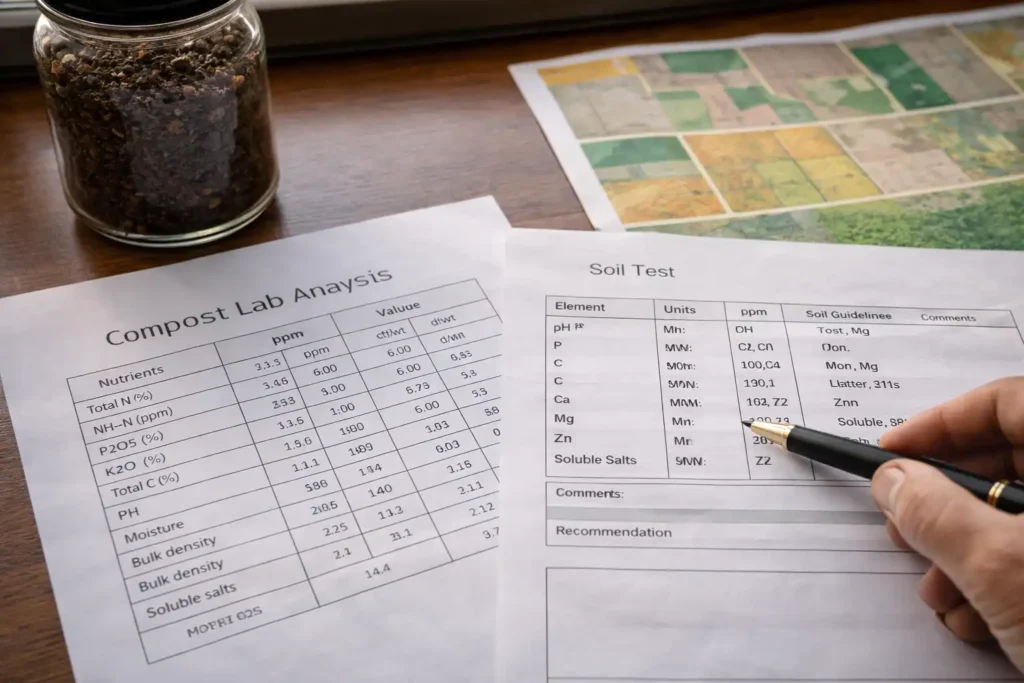
Start with these questions:
- What does your soil test say about organic matter, pH, phosphorus, and potassium?
- What crop is next, and what does it remove from soil?
- Is the compost manure-based, plant-based, or mixed?
- Does the supplier provide a lab analysis for nutrients, salts, moisture, and maturity?
If you run multiple fields, keep compost consistent by labeling loads and tracking where they go. That practice makes troubleshooting possible later.
How much compost to apply
Compost rate depends on crop, soil type, compost analysis, and your fertility goals. A sandy vegetable block often needs a different approach than a high-clay grain field.
Use a simple decision flow:
- Test soil first. Soil test results set the boundaries for phosphorus, potassium, pH, and salinity risk.
- Read the compost analysis. Nutrients and salts vary more than most sellers admit.
- Decide the goal. Soil-building uses different rates than nutrient-supplying.
- Start modest, then repeat. Smaller annual applications are easier to manage than one heavy application.
If your soil already runs high in phosphorus, compost can push it higher. In that case, apply compost for structure only, use low-P compost, or reduce the rate. A soil test keeps you honest. Our practical overview of soil fertility aligns compost decisions with what your field actually needs.
Where compost goes in the profile
Placement matters because compost works where roots and microbes meet.
For row crops, compost usually performs best when it is spread evenly and incorporated shallow. Shallow incorporation mixes compost into the active root zone. Deep mixing burns fuel and can bury compost below the biology that uses it.
For no-till or reduced-till systems, topdressing compost supports surface biology and residue breakdown. It also protects soil from crusting. You may see slower “feel” changes at depth, but surface function improves first.
For transplants, banded compost can help, but avoid placing immature compost directly in the transplant hole. Immature material heats, ties up nitrogen, and stresses roots.
When to apply compost in the season
Timing is about protecting nutrients and protecting field operations.
Fall application fits many farms because:
- You spread after harvest when you have time.
- Winter moisture helps move soluble nutrients into the topsoil.
- Spring fieldwork stays lighter.
Spring application fits when:
- Your soil stays wet in fall.
- You need compost close to planting for a short-term benefit.
- You can incorporate without smearing or compaction.
Avoid spreading compost on saturated ground. Tires compact soil, and compost cannot fix compaction fast enough to save a crop that season.
If you are planning a new operation and building soil from scratch, compost fits well into your startup plan. Our step-by-step guide on way to start a farm helps you think through inputs, equipment, and scheduling.
How to spread and incorporate compost without making a mess
Compost handling is straightforward, but it can turn sloppy without a system.
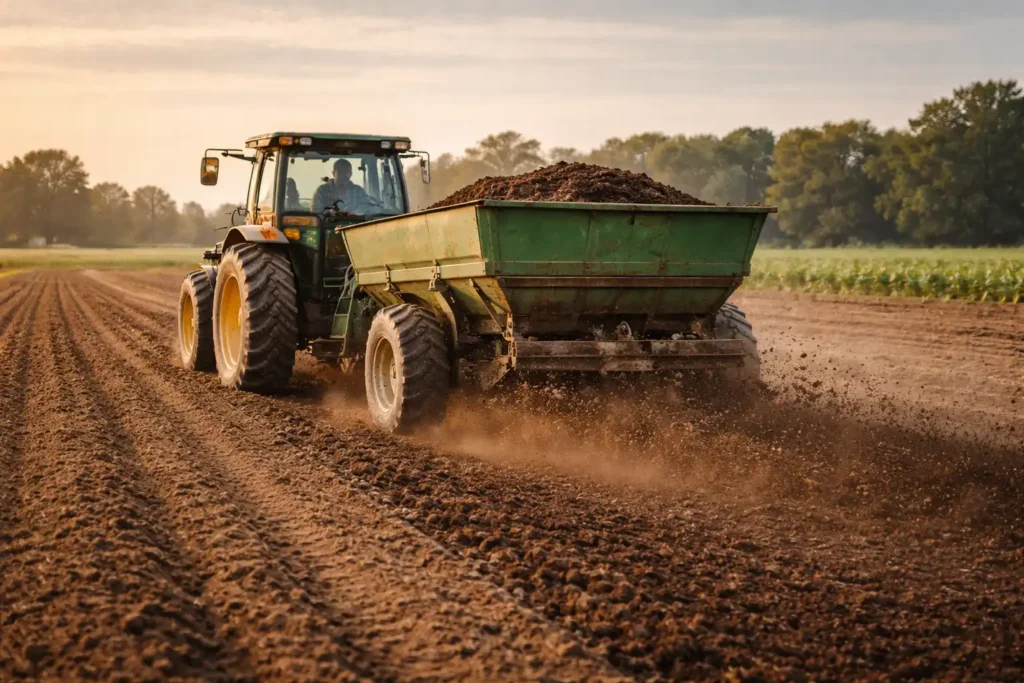
Keep these basics in place:
- Calibrate your spreader so you know your rate per acre.
- Spread on a low-wind day to reduce drift and dust.
- Keep loads covered during transport if you cross public roads.
- Clean spreaders and loaders when you switch compost sources.
Incorporation needs the right moisture. Dry soil creates dust and leaves compost on the surface. Wet soil smears and compacts. Aim for soil that crumbles in your hand.
If you use tractors, loaders, and spreaders often, treat compost work like any other equipment job. Stable footing and good guarding prevent avoidable injuries. For a quick equipment overview, this tools and equipment section keeps the essentials in one place.
Compost tea and extracts for farming
Compost tea is a water-based extract used to apply microbes and soluble compounds. Some farmers use it as a foliar spray or soil drench. Results vary because biology varies. Tea does not replace compost as a soil amendment.
If you use compost tea:
- Start with finished compost only.
- Keep equipment clean to avoid contamination.
- Use the tea quickly after brewing.
For produce operations, follow food-safety guidance and avoid questionable brewing practices. Safety and sanitation protect your customers and your farm’s reputation.
Troubleshooting compost problems in the field
Compost problems show up as uneven growth, leaf burn, stalled seedlings, or odd drainage patterns. The fix starts with narrowing the cause.
Common causes and what they look like:
- Immature compost: Yellowing, slow growth, and a “hungry” look from nitrogen tie-up.
- High salts: Leaf edge burn and poor germination, often worse on field edges.
- Herbicide residue: Twisted growth and cupping on broadleaf crops.
- Uneven spreading: Stripes of dark soil and uneven vigor.
When you see an issue, stop spreading that batch until you confirm the cause. Keep the compost analysis, field notes, and weather notes together. That paper trail saves you from repeating the same problem next season.
Compost for different crop types
Compost use changes with crop rooting and harvest goals.
Vegetables respond fast to improved structure because roots explore shallow soil. Compost also improves moisture consistency, which helps uniform sizing. That matters for crops like onions where uniformity affects curing and storage.
Grains and cereals benefit from long-term soil building. Improved infiltration reduces ponding and root stress. If you raise corn or wheat, compost fits best as a steady program, not a one-time event. Our guides on corn and wheat help you line up soil work with crop timing.
Root and tuber crops punish compaction and clods. Compost helps aggregation and reduces misshapen roots when it is mature and evenly incorporated. If you grow spuds, this ties into this potato guide.
A simple compost plan you can repeat every year
A repeatable plan beats chasing inputs at the last minute.
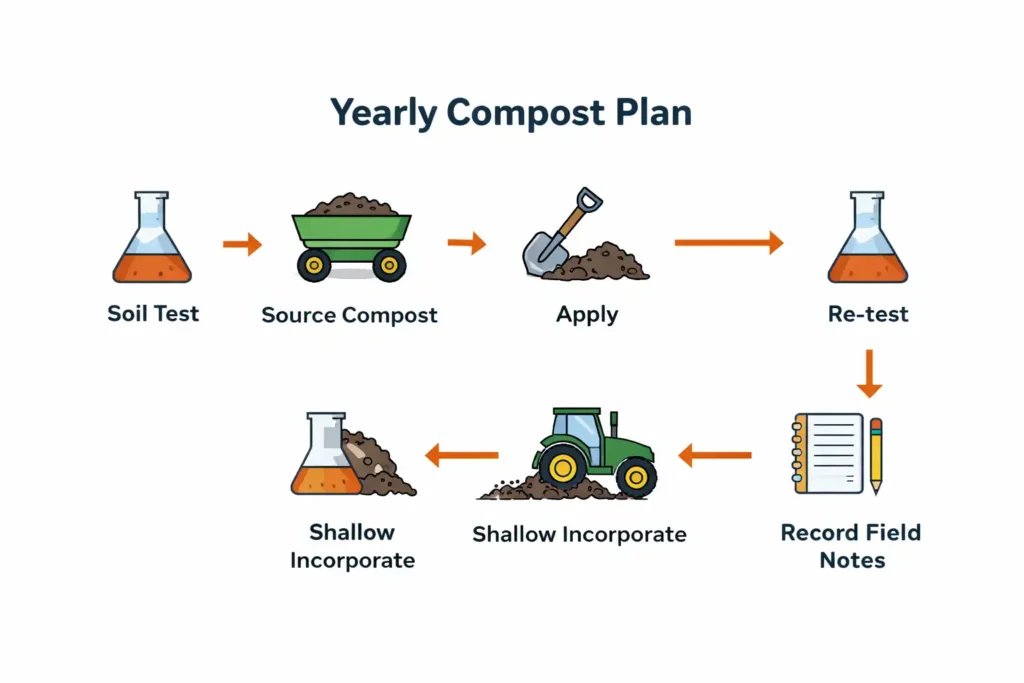
Here is a practical yearly rhythm:
- Test soil after harvest or ahead of spring planning.
- Source compost early and request an analysis.
- Apply compost when soil moisture supports equipment without compaction.
- Incorporate shallow where your system allows.
- Track the field, rate, and compost source in a notebook.
- Re-test soil on the same schedule to measure change.
This plan keeps compost tied to real field needs. It also keeps you from overspending on inputs that do not move the needle.
FAQs about Compost for Farming
Does compost replace fertilizer?
Can I apply compost right before planting?
Is bagged compost good for field farming?
Bottom line
Compost for farming works best as a steady soil-building practice. Finished compost improves structure, supports biology, and helps water management when you source it carefully and apply it with a plan. Start with soil testing, confirm compost maturity, watch for herbicide carryover, and keep food-safety practices tight when manure is involved. Over a few seasons, consistent compost use makes fields easier to work and crops easier to manage.