Drip vs Sprinkler Irrigation Methods: 12 Practical Upgrades That Work
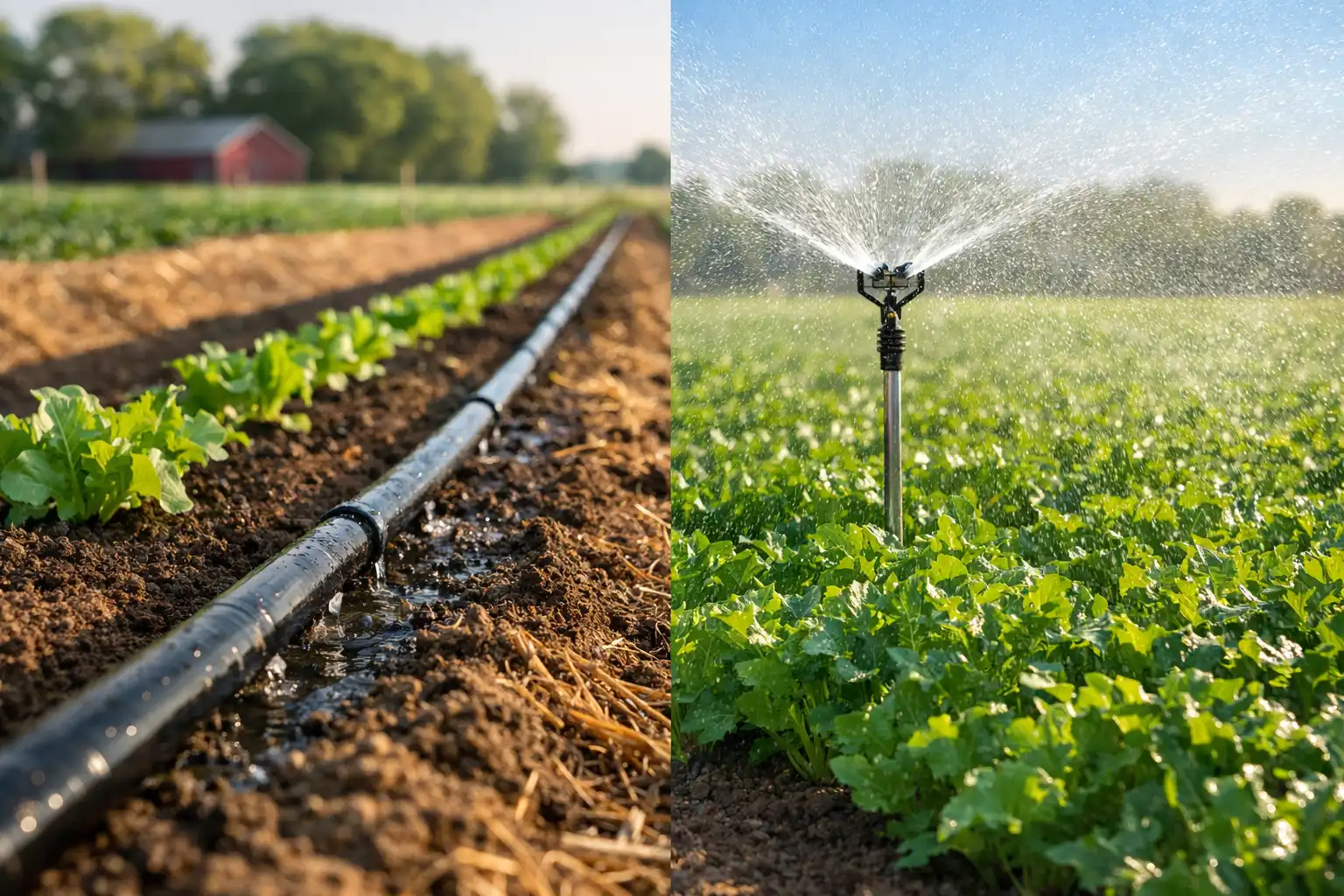
Drip and sprinkler irrigation methods both move water from a pump to a crop, but they deliver it in different places and at different speeds. Drip puts water at the root zone through emitters, so the soil surface stays drier between rows. Sprinklers throw water through the air, so they wet a wider area and cool the canopy. The right choice depends on crop spacing, wind, water quality, labor, and how much pressure your system can hold.
What are drip irrigation methods?
Drip irrigation is a method that delivers water through tubing and emitters directly to the soil near plant roots. The system uses a pump, filter, pressure regulator, mainline, submain, dripline, and emitters. Drip works best when you keep pressure steady and filtration clean, so emitter flow stays uniform.
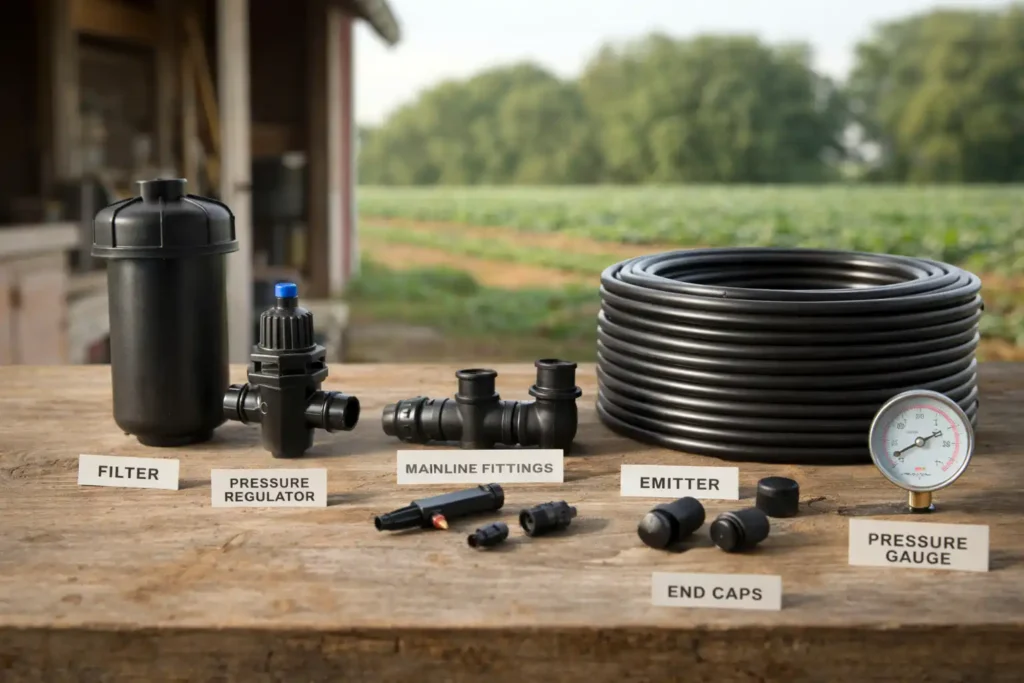
Drip comes in a few common layouts. Surface drip runs dripline on top of the bed or row. Subsurface drip (SDI) buries drip tape or dripline to reduce evaporation and keep equipment lanes cleaner. Micro-sprays and micro-sprinklers sit in the middle, because they still spray, but they run at low flow and cover small circles.
To dial in scheduling, start with a simple crop water requirement calculation so your run times match real demand instead of guesswork.
What are sprinkler irrigation methods?
Sprinkler irrigation is a method that sprays water through nozzles so it lands on the soil and plant canopy like rainfall. The system uses a pump, filtration (often lighter than drip but still important), mainline, laterals, risers, and sprinklers or sprinkler heads. Sprinklers rely on pressure to create droplet size and throw distance.
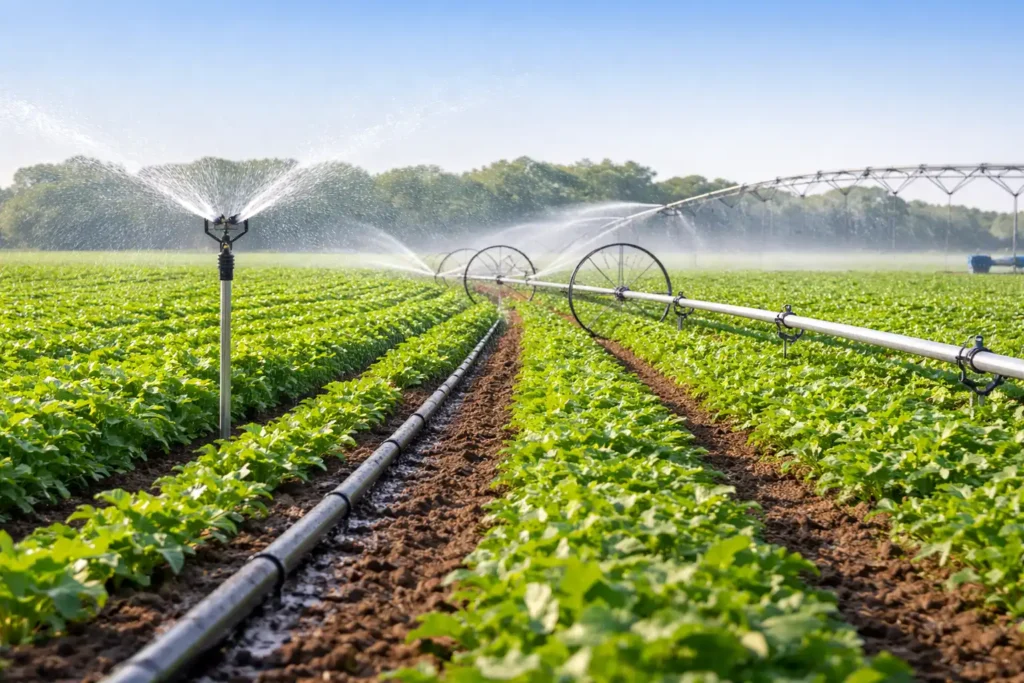
Sprinklers also come in several types. Fixed-set impact or gear-drive heads cover lawns, gardens, and some specialty crops. Solid-set field systems stay in place for a season. Hand-move and wheel-line systems shift between sets. Center pivot and linear move systems cover large acreage with consistent travel patterns.
Know more: Crop farming risk management looks like spreading planting dates, using rotation, watching markets, and building backup plans for weather and equipment breakdowns.
How do drip and sprinklers differ in how they deliver water?
Drip delivers water at low flow in a narrow wetting pattern, so the root zone gets water first and row middles stay drier. Sprinklers deliver water as droplets over a wider area, so the soil surface and leaves get wet and the field looks evenly “rained on.” That single difference changes weeds, disease pressure, runoff risk, and how you schedule irrigations.
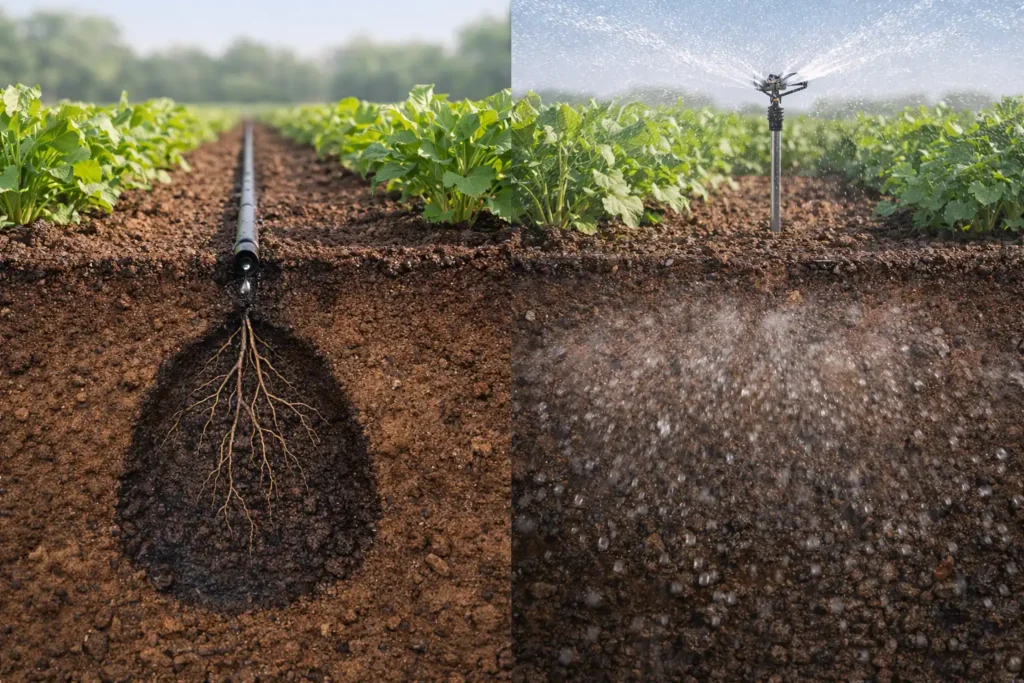
A practical way to think about it is “targeted” versus “broadcast.” Drip targets a band or bulb of soil. Sprinklers broadcast over the whole surface footprint of the nozzle.
If growth still looks off, check micronutrient deficiency symptoms plants early, because uneven uptake often shows up faster when irrigation patterns change.
Which method fits which crops?
Drip fits row crops and high-value crops where you want precise placement of water and fertilizer. Tomatoes, peppers, melons, onions, and strawberries often match well because plants sit on a predictable spacing and beds stay intact. Many orchards and vineyards also run drip because each tree or vine has a defined root zone.
Sprinklers fit crops that want even surface wetting or quick establishment across a whole stand. Pasture, hay, small grains, and many seedings establish well under sprinkler coverage. Sprinklers also fit frost protection in some specialty setups, but that practice demands careful design and reliable capacity.
If you grow mixed crops, look hard at your “widest spacing” and your “tightest spacing.” Drip handles spacing changes by changing emitter layout or adding lines. Sprinklers handle spacing changes by adjusting nozzle package, spacing, and application rate.
How do soil type and field shape affect the decision?
Drip matches soils where you can manage wetting patterns without ponding. Sandy soils take water fast, so drip runs more often with shorter sets to keep moisture steady. Clay soils absorb slower, so drip runs longer at low flow to avoid surface sealing and runoff. Subsurface drip can help in hot, windy areas because it keeps the surface drier and reduces crusting.
Sprinklers match fields with irregular shapes because you can place heads where you need coverage. On slopes, sprinklers need careful application rates to prevent runoff. Nozzle choice and spacing matter more than most folks expect. A heavy application rate on a tight soil turns into sheet flow in a hurry.
If you are still dialing in ground prep and layout, review your baseline farm setup steps in way to establish a crop farm. It helps you think through access lanes, headlands, and where mainlines belong.
Which method handles wind and heat better?
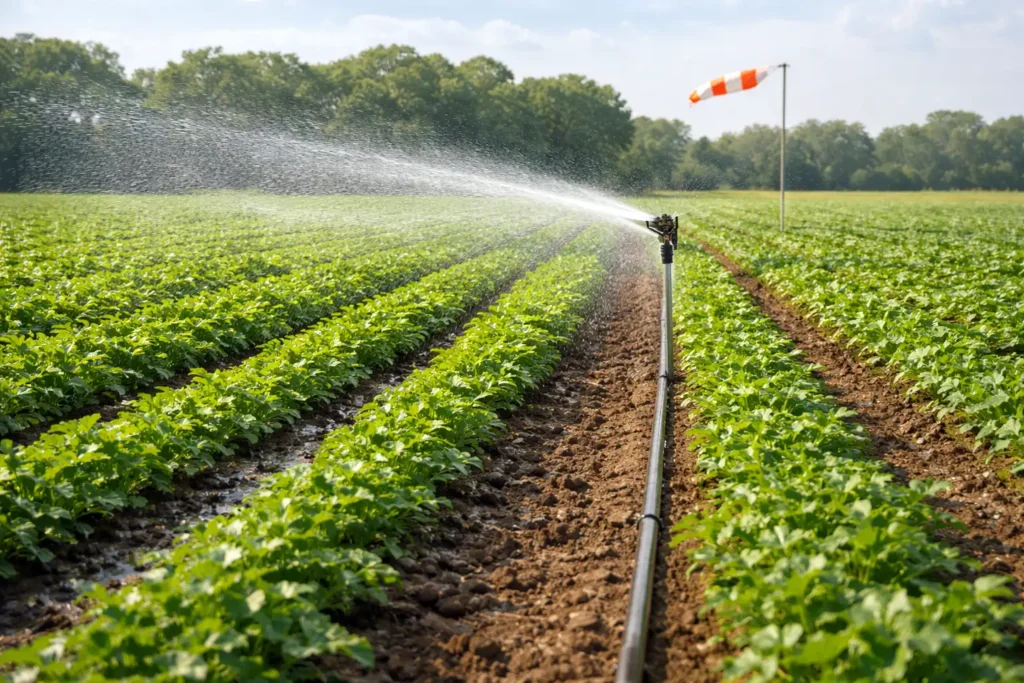
Drip handles wind well because it does not throw water through the air. Wind does not distort emitter placement. Heat still increases plant demand, but water lands where you intended. That improves schedule control on hot afternoons.
Sprinklers lose uniformity in wind because droplets drift and pattern overlap changes. Smaller droplets drift more. Larger droplets drift less but can beat up tender leaves and seal soil surfaces. In hot, dry air, sprinklers also lose water to evaporation before it hits the ground, especially with fine droplets.
If your farm sees regular afternoon winds, drip usually gives you more predictable results. If you need canopy cooling, sprinklers can provide that, but expect to irrigate in calmer windows for better distribution.
What about weeds and plant disease?
Drip reduces weed pressure between rows because it keeps row middles drier when the system runs right. That makes cultivation and herbicide timing easier, especially in vegetable beds. Drip also keeps foliage drier, which often lowers leaf disease risk compared with frequent overhead watering.
Sprinklers wet the whole surface, so weeds germinate across the field footprint. Sprinklers also wet leaves, which can raise disease pressure in crops sensitive to leaf wetness duration. That does not mean sprinklers “cause disease,” but they can create conditions that favor it.
If weed escapes are already a headache, tighten your plan with the tools and timing ideas under weed control practices.
Which method makes fertigation easier?
Drip makes fertigation straightforward because water goes to a defined root zone band. Injection stays efficient when pressure is stable and filtration stays clean. You can spoon-feed nitrogen in smaller doses and keep salts moving away from the crown when scheduling is steady.
Sprinklers can fertigate too, but distribution depends on wind, pressure, nozzle uniformity, and system travel speed for pivots. Foliar contact also increases, which changes burn risk for some materials. Sprinkler fertigation works best with careful product choice and clean water.
No matter the method, match your nutrient plan to the water plan. Fertility works better when you manage soil testing, salts, and pH under soil fertility.
What pressure, filtration, and water quality does each system require?
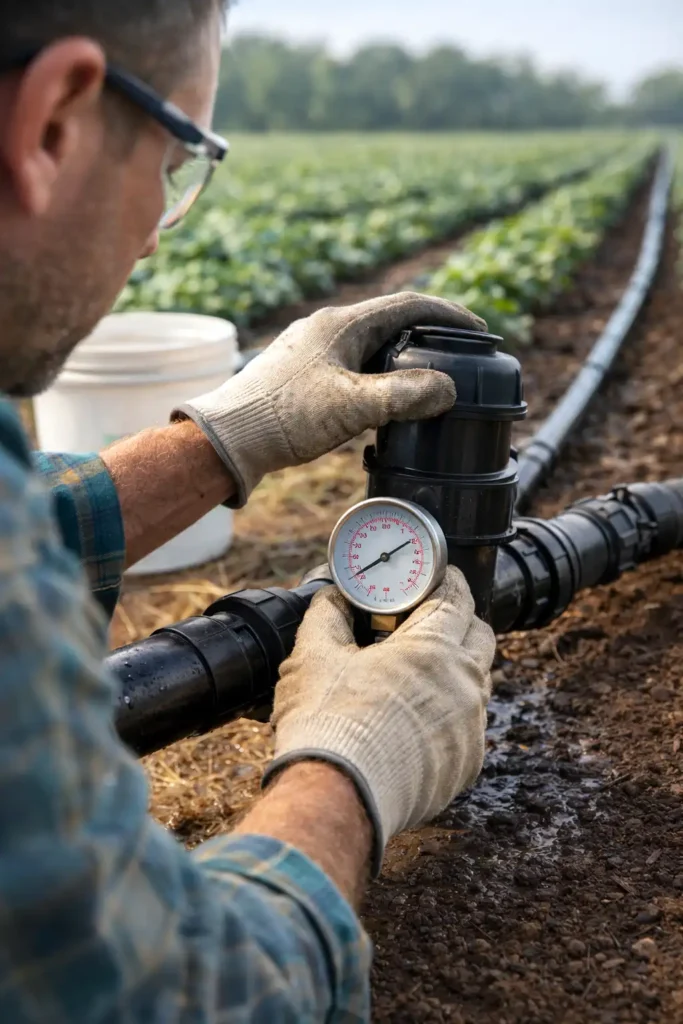
Drip needs reliable filtration because emitters plug from sand, silt, organic growth, or precipitated minerals. Most drip systems also use pressure regulation because small changes in pressure change emitter output. If your water carries algae, iron, or hard minerals, plan for treatment steps and routine flushing.
Sprinklers tolerate more debris than drip in many cases, but nozzles still clog and wear. Poor water quality also accelerates nozzle wear and pattern distortion. High sand content can sandblast nozzles and reduce uniformity over time.
If you are building from scratch, focus on the chain: water source → pump → filtration → regulation → distribution. A weak link shows up as uneven crop growth and wasted water.
What does maintenance look like day to day?
Drip maintenance centers on keeping water moving cleanly through small passageways. That means filter checks, flushing lines, watching pressure gauges, and scouting for leaks or rodent damage. Once a drip system is dialed in, it runs quietly, but it punishes neglect.
Sprinkler maintenance centers on mechanical wear and distribution checks. That means nozzle inspections, leak repairs, checking sprinkler rotation, and watching for pressure drops. Pivots add gearboxes, drive components, and end-gun adjustments.
A simple habit that pays off in either system is a weekly walk with a notebook. Write down pressure at the pump, pressure at the far end, and any wet or dry streaks you see. Trends tell you more than one reading.
How do costs and labor usually compare?
Drip often costs more upfront in materials per acre for closely spaced crops because you buy tubing, fittings, filters, and sometimes tape each season. Labor shifts toward installation, repairs, and end-of-season cleanup if you use disposable tape. Permanent dripline reduces annual replacement but raises the stakes on filtration and repairs.
Sprinklers often cost more in pump horsepower and energy because they run at higher pressure. Labor depends on type. Hand-move takes steady labor. Pivot reduces daily labor but adds mechanical maintenance and a larger initial investment.
Your “best cost” is the system that fits your acres, labor calendar, and crop value without creating chronic downtime.
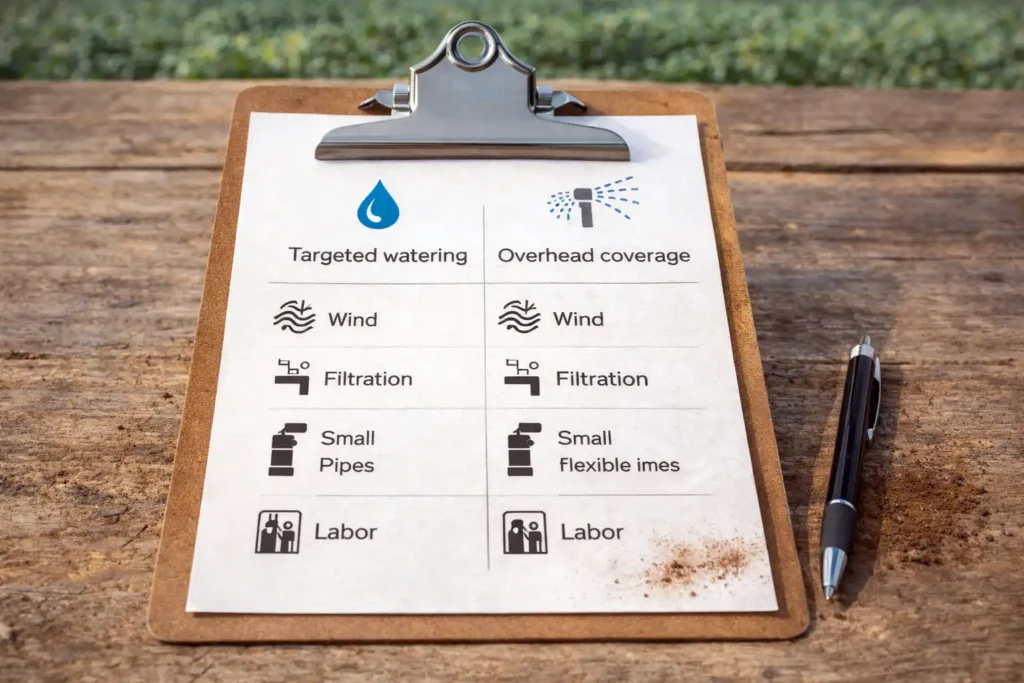
How do you choose between drip and sprinkler for your farm?
Use this quick decision checklist to match the method to your constraints:
- Choose drip when: you need precise water placement, you want dry row middles, you plan to fertigate often, wind is common, or water supply is limited.
- Choose sprinklers when: you need broad coverage for stand establishment, your fields suit pivots or solid-set layouts, your water quality is hard on emitters, or you want canopy cooling.
- Choose a hybrid when: you establish with sprinklers, then switch to drip for the bulk of the season in specialty crops.
If you are new to building systems, start with the fundamentals in guide to start a crop farm so the irrigation plan matches access, power, and labor realities.
Common problems and fixes for drip systems
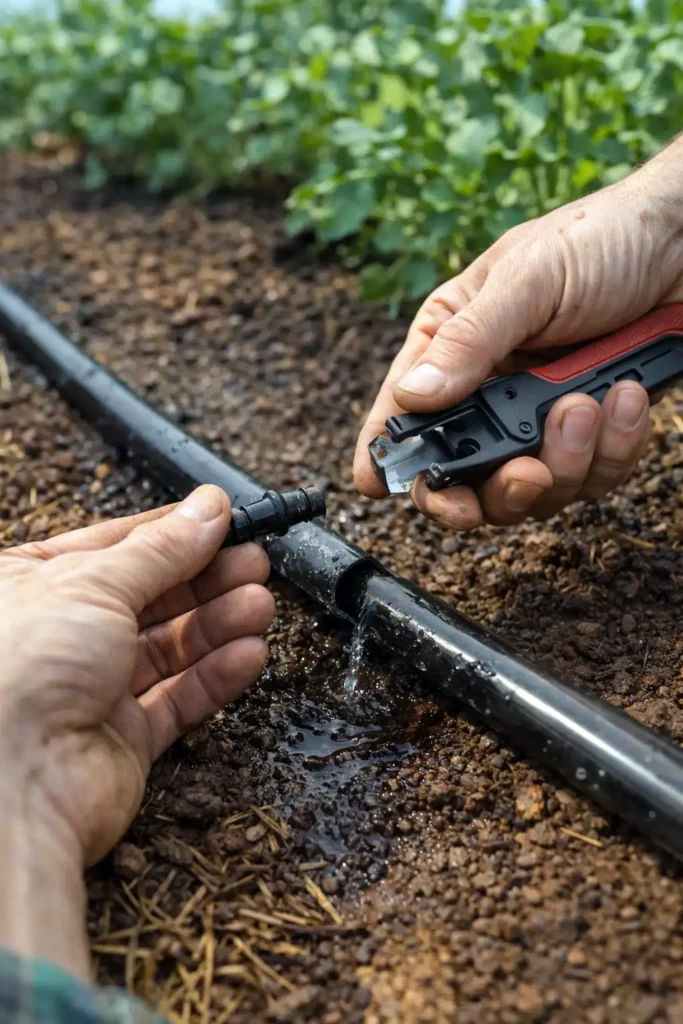
What causes uneven growth under drip? Pressure loss, partial clogging, and leaks cause uneven growth because emitters deliver different flow rates along the line. Start by checking filters, then compare pressure near the pump to pressure at the far end. Flush lines and repair leaks before changing schedules.
Other practical fixes:
- Install pressure gauges at the head and far end of each zone.
- Flush mains and submains on a schedule that matches water quality.
- Keep rodents and chewing damage in mind near field edges and grassy borders.
Common problems and fixes for sprinkler systems
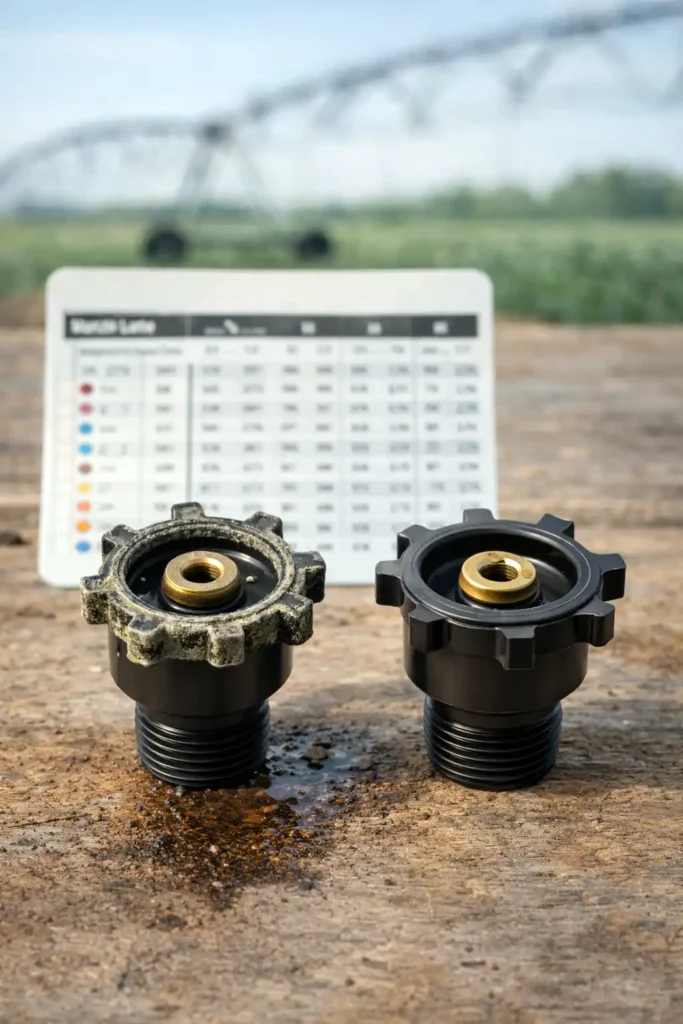
Why do sprinklers leave dry streaks? Wind drift, nozzle wear, plugged nozzles, and pressure variation create dry streaks because the spray pattern loses uniform overlap. Check pressure at the riser or pivot span, then inspect nozzles for plugging and wear. Replace worn nozzles in matched sets.
Other practical fixes:
- Irrigate in calmer parts of the day when wind regularly spikes.
- Watch for pressure drops caused by leaks or undersized mains.
- Set application rates to match infiltration on tight soils and slopes.
Safety notes that save headaches
Water systems mix electricity, pressure, and moving parts. Treat them like equipment, not plumbing.
- Lock out power before servicing pumps or control panels.
- Release pressure before opening filters or end caps.
- Wear eye protection when flushing lines and opening pressurized housings.
- Keep hands clear of pivot drivetrains and rotating sprinkler parts.
For a solid PPE baseline, keep your gear list current under farm safety and PPE.
Bottom line
Drip irrigation wins when you need control at the root zone and predictable performance in wind. Sprinkler irrigation wins when you need broad, even coverage and a system that fits large, open acreage. Your final pick comes down to crop layout, water quality, pressure capacity, wind, and how much time you can spend maintaining the system each week.