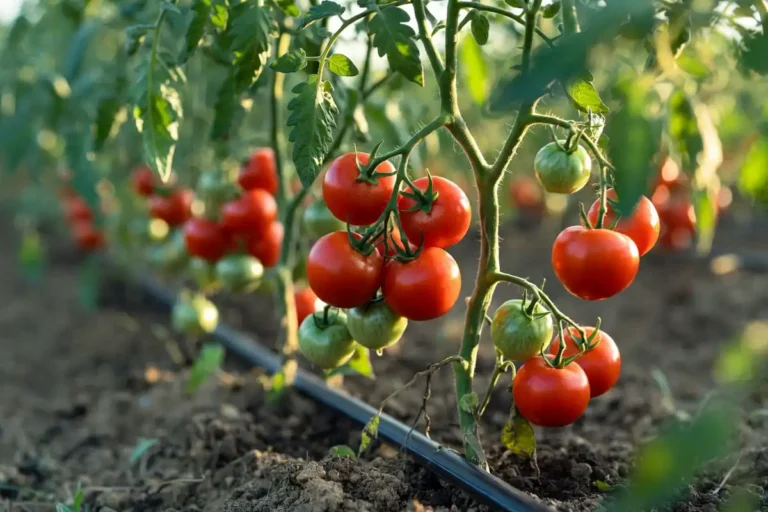
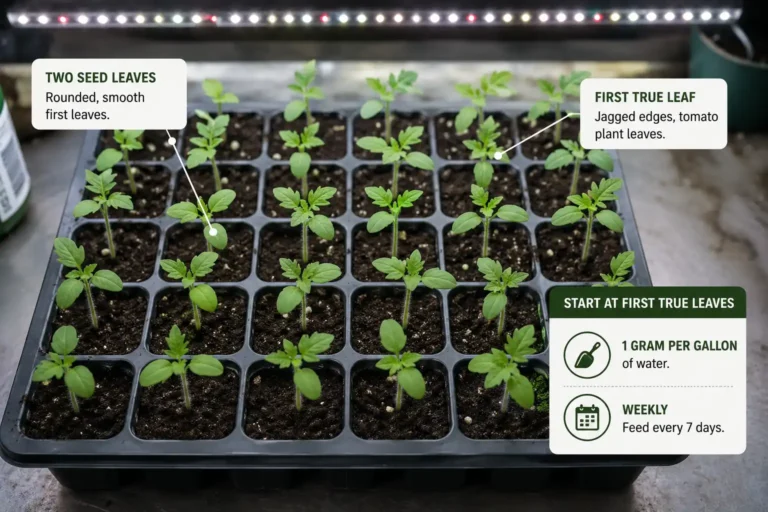
How Does Tomato Pruning Affect Yield and Disease Pressure
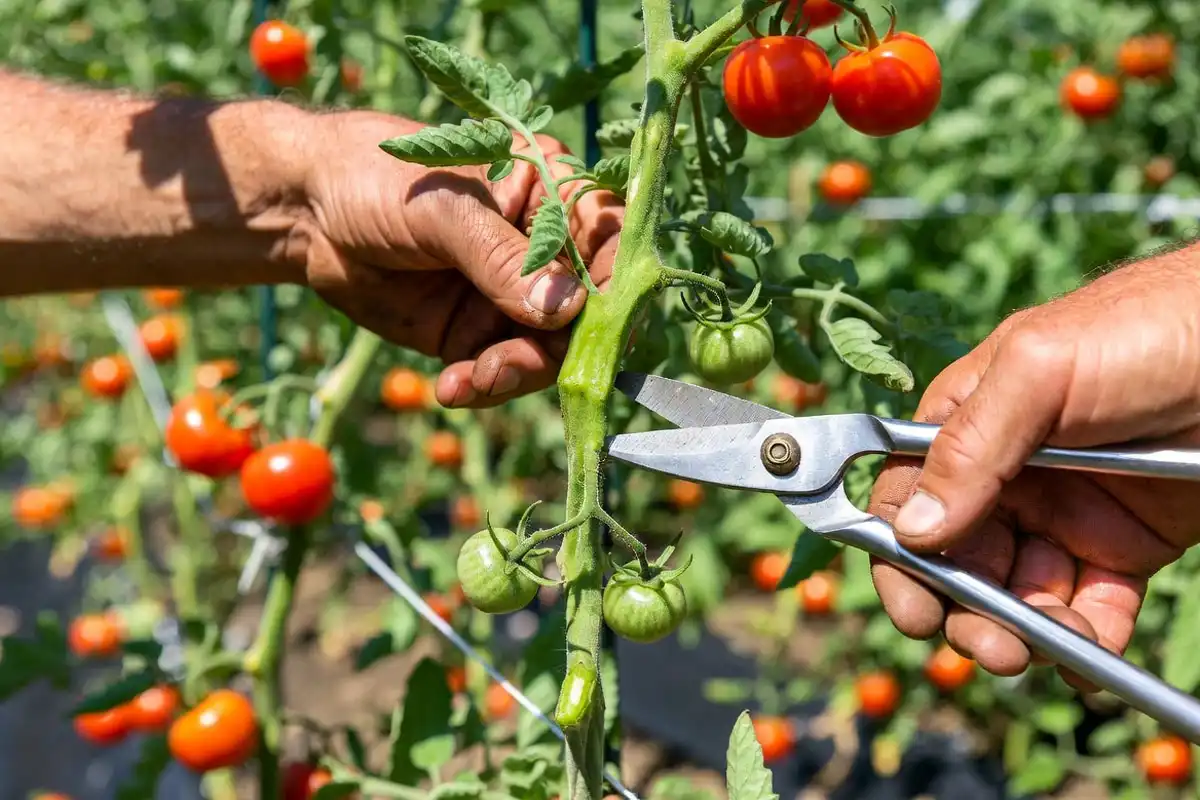
Tomato pruning shapes how a plant produces fruit and how well it resists disease through the season. This guide covers which pruning methods increase marketable yield, which techniques reduce fungal and bacterial pressure, when to prune, how to do it correctly, and what mistakes cause more harm than good.
Tomato pruning increases yield quality by directing energy from suckers into fewer, larger fruits. It reduces disease pressure by improving airflow through the canopy. Indeterminate varieties respond best to single or double-stem training. Pruning works most effectively when combined with consistent soil fertility practices and clean cutting tools.
What Is Tomato Pruning?
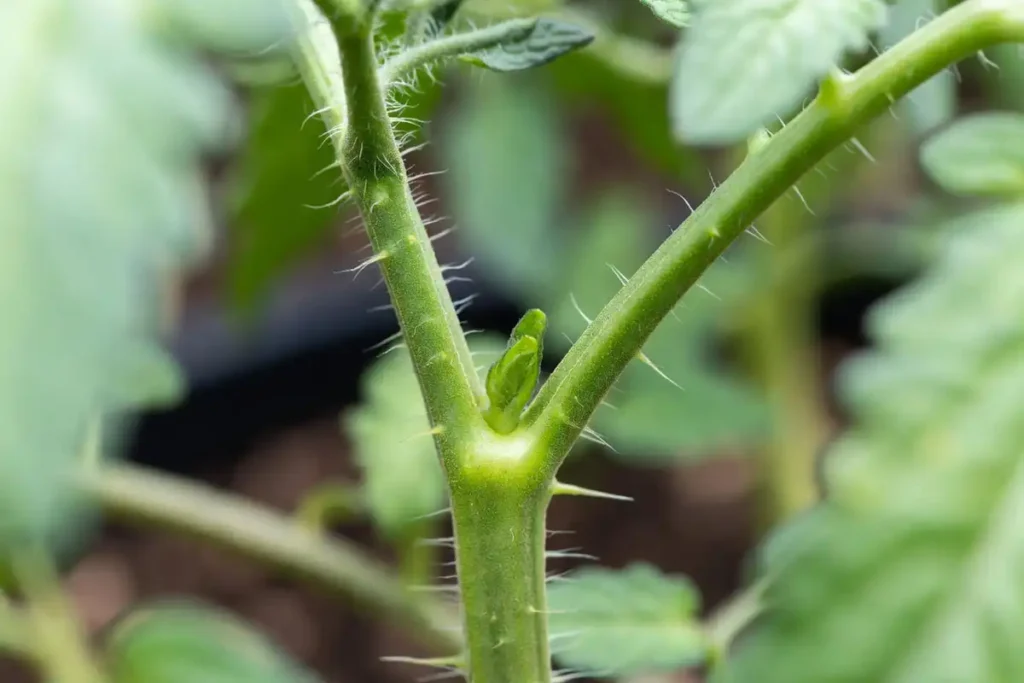
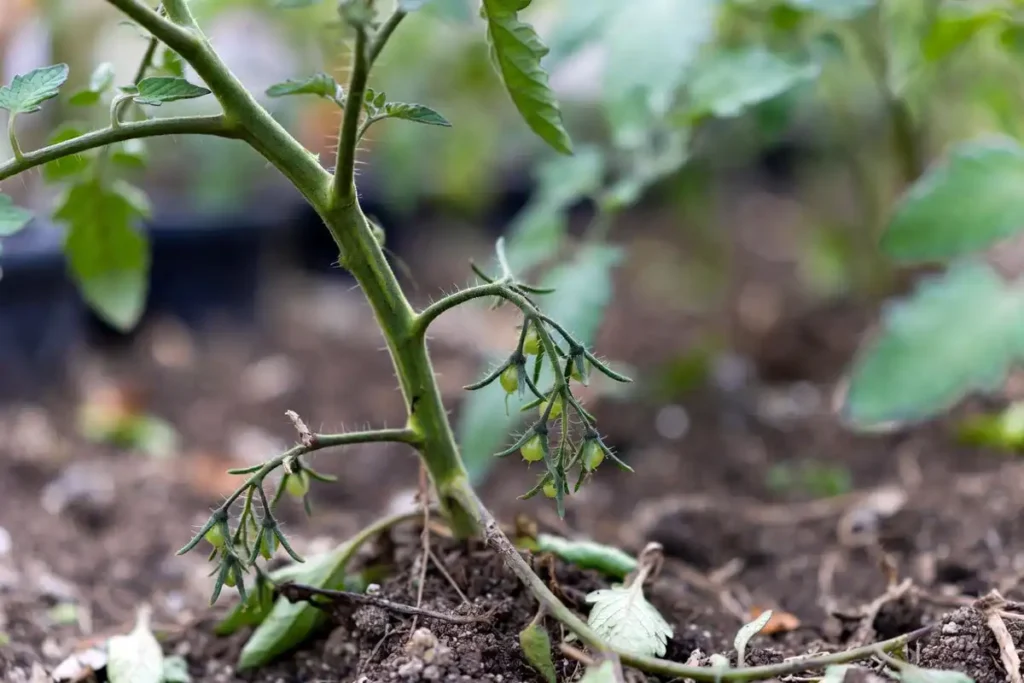
Tomato pruning is the removal of suckers, lower leaves, and sometimes secondary stems to control plant structure. A sucker is a shoot that grows from the axil between the main stem and a branch. Left unpruned, each sucker develops into a full stem, which multiplies fruit sites but reduces fruit size and canopy airflow.
Pruning does not apply equally to all tomatoes. Indeterminate varieties, which include most heirloom and many hybrid types, continue growing all season and benefit from structured pruning. Determinate varieties set fruit on a fixed schedule and do not need the same approach.
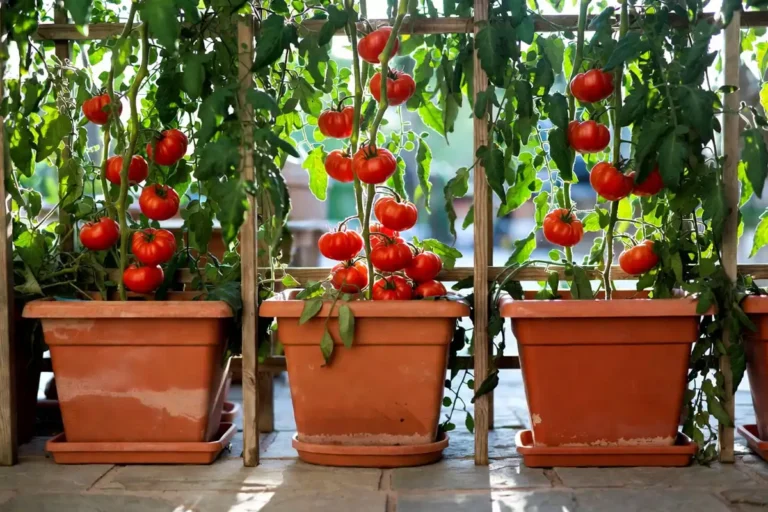
Pruning works alongside support systems, and how you stake, trellis, or cage your tomatoes determines which pruning method fits your setup best.
How Does Pruning Affect Yield?
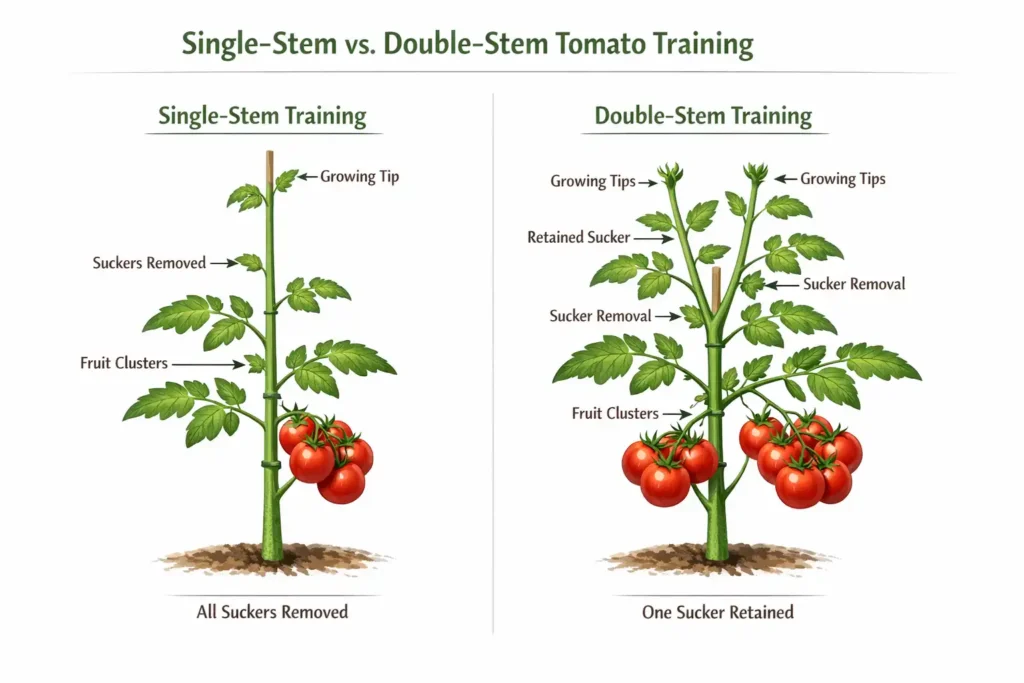
Pruning redirects the plant’s energy. When a tomato grows 4 to 6 stems without management, it produces more fruit clusters but smaller individual fruits. Removing suckers early channels photosynthates into fewer sites, which increases individual fruit weight and improves grade.
Research from extension programs consistently shows that single-stem or double-stem trained tomatoes produce fewer fruits per plant but larger, more uniform fruit compared to unpruned plants. For fresh-market growers, this improves price per pound. For home growers, it produces cleaner, easier-to-manage harvests.
Yield outcomes depend on training method:
- Single-stem training removes all suckers. This produces the largest fruit per site and works well in high-density planting systems.
- Double-stem training keeps the first sucker below the first flower cluster. This balances total output and fruit size and suits most garden and small-farm situations.
- No pruning on indeterminate types often increases total fruit count but reduces average size and increases disease risk.
For more on timing decisions throughout the season, the crop planting calendar provides a useful reference for matching pruning timing to growth stage.
Learn more: When to Transplant Tomatoes: 7 Temperature Rules That Actually Work
How Does Pruning Reduce Disease Pressure?
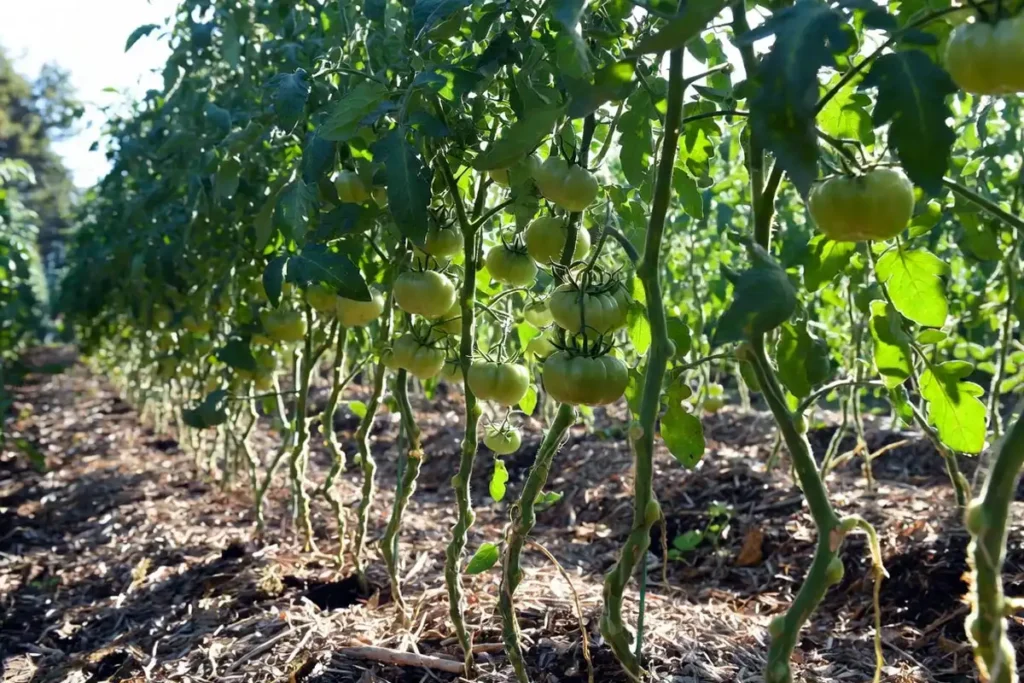
Dense canopies hold moisture. Moisture on leaf surfaces and stems supports fungal pathogens including early blight (Alternaria solani), late blight (Phytophthora infestans), and Septoria leaf spot. Bacterial diseases such as bacterial speck and bacterial canker also spread faster in crowded, wet conditions.
Pruning reduces disease pressure through three mechanisms:
1. Airflow improvement. Removing suckers and lower leaves opens the canopy. Improved airflow dries leaf surfaces faster after rain or irrigation. Faster drying reduces the leaf wetness periods that fungal spores require to germinate.
2. Lower leaf removal. Leaves within 12 to 18 inches of the soil surface contact splash water during rain or irrigation. Soilborne pathogens including early blight spores travel on splash droplets. Removing these lower leaves breaks the primary infection pathway.
3. Reduced inoculum load. Pruning off early-infected leaves before lesions sporulate removes active disease from the canopy. This slows the spread of secondary infections to upper, productive tissue.
Pruning alone does not eliminate disease. It works as part of an integrated approach alongside natural pest control practices and appropriate variety selection.
When Should You Prune Tomatoes?
Start pruning when the plant reaches 12 to 18 inches tall. At this stage, suckers are small, typically 1 to 3 inches, and can be pinched off with two fingers without tools. Small suckers leave minimal wounds and heal quickly.
Continue pruning throughout the vegetative and early fruiting stage. Check plants every 7 to 10 days. Suckers grow fast in warm conditions and become woody if left beyond 4 to 5 inches, at which point removal with a blade becomes necessary and leaves a larger wound.
Remove lower leaves progressively as the season advances. By mid-season, the bottom 12 to 18 inches of stem should be clear of foliage. Do not strip large sections at once. Remove 2 to 3 leaves per visit to avoid stressing the plant.
Avoid pruning during wet or humid conditions. Wet weather increases the risk of bacterial and fungal pathogens entering fresh wounds. Prune on dry mornings when leaves dry quickly.
How to Prune Tomatoes Correctly
Step 1: Identify the Sucker
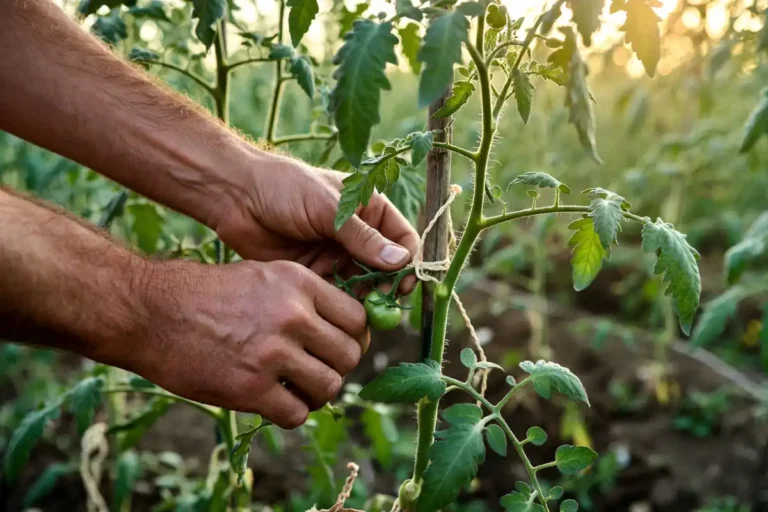
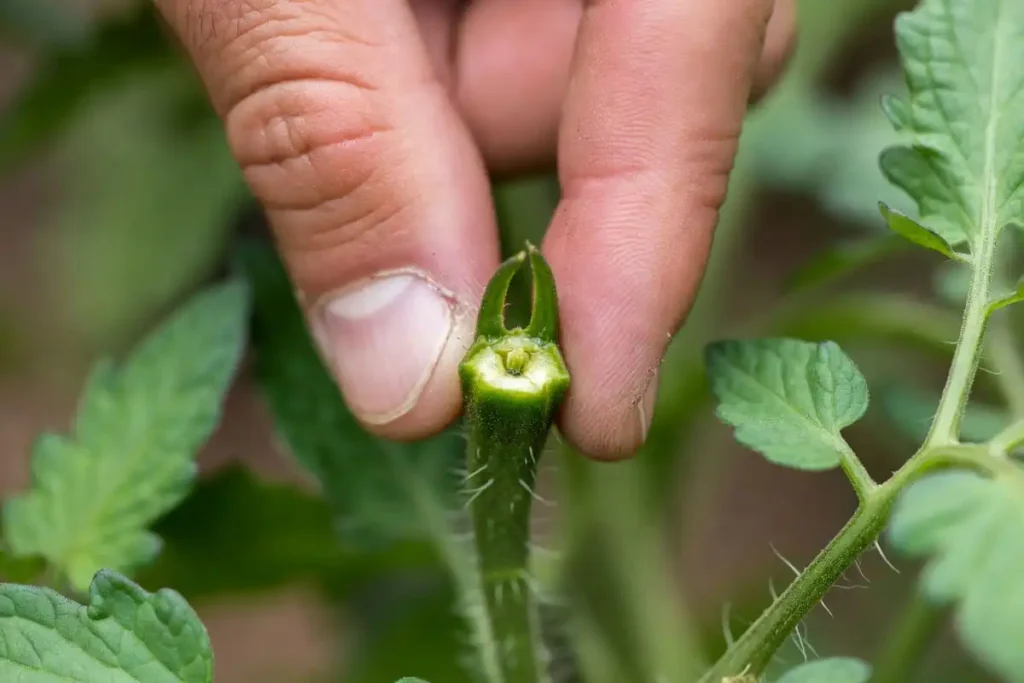
Locate the V-shaped junction between the main stem and a lateral branch. The sucker grows from the center of that V. It is not a leaf stem and not a flower cluster. Confirm identification before removing.
Step 2: Remove Small Suckers by Hand
Pinch suckers that are under 2 inches between your thumb and forefinger. Snap them off with a clean sideways motion. This leaves a small, clean break that closes quickly.
Step 3: Cut Larger Suckers with a Blade
For suckers over 3 inches, use sharp, clean pruning snips or a knife. Cut at the base, leaving a short stub of 0.5 to 1 inch. A complete flush cut against the main stem creates a larger wound and removes the protective collar tissue.
Step 4: Sanitize Tools Between Plants
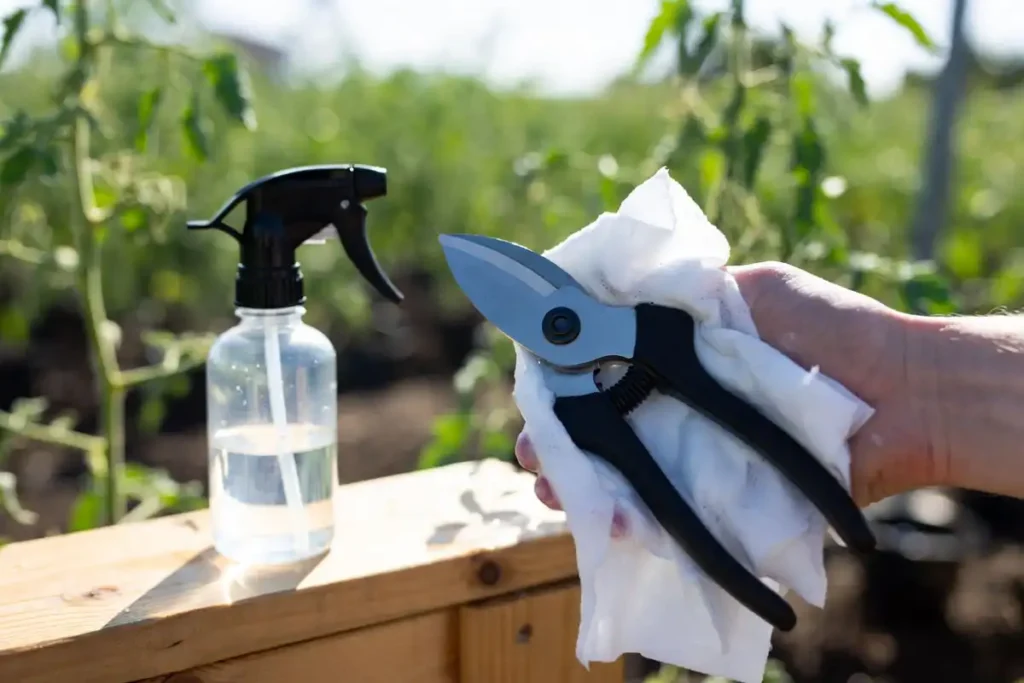
Wipe blades with a 10% bleach solution or 70% isopropyl alcohol between plants. Pruning spreads bacterial canker (Clavibacter michiganensis) and tobacco mosaic virus through contaminated blades. Tool sanitation is non-negotiable in commercial settings and strongly advised in gardens.
Step 5: Remove Lower Foliage
After handling suckers, remove yellowing or damaged lower leaves. Cut cleanly at the petiole base. Avoid tearing, which leaves ragged entry points for pathogens.
Common Mistakes That Reduce Yield or Increase Disease
Pruning too late. Large suckers take 3 to 5 days to heal, compared to less than 24 hours for small pinched suckers. Large wounds on main stems increase susceptibility to bacterial infection, particularly in humid climates.
Removing too much at once. Removing more than 25 to 30% of leaf area in one session stresses the plant. Stressed plants produce fewer flowers and set fruit poorly. Leaf area drives photosynthesis, which drives fruit fill.
Skipping tool sanitation. A single infected plant can spread bacterial canker to every plant in a row through an unwashed blade. This is the most preventable source of late-season bacterial losses.
Pruning determinate varieties aggressively. Determinate types such as Roma and Celebrity set most fruit on lateral branches. Heavy suckering on these varieties reduces total yield without improving quality.
Leaving infected leaf debris in the bed. Pruned leaves and suckers left on the soil surface continue to harbor fungal spores and bacterial inoculum. Collect and remove debris from the growing area after each pruning session.
What to Watch for After Pruning
Check plants 48 to 72 hours after pruning for signs of bacterial entry at wound sites. Symptoms include water-soaked margins around cuts, wilting in the section above the cut, or yellowing that progresses along the stem.
Monitor lower stems for early blight lesions, which appear as small dark spots with yellow halos. Early identification allows targeted leaf removal before spores spread. For a detailed disease reference, the common crop diseases guide covers identification and management across multiple pathogens.
If late blight appears anywhere in the field or garden, stop pruning immediately and address the infection before resuming canopy work. Late blight spreads rapidly through fresh wounds in cool, wet conditions.
Safety Notes
Wash hands before and after working in the tomato patch. Tomato sap contains solanine and other alkaloids that cause skin irritation in some people. Wear gloves if you have sensitive skin or known plant allergies.
Use proper cutting tools, not fingernails, on stems thicker than a pencil. Forcing a tough stem risks slipping and cutting a finger. Sharp snips take less force and produce cleaner cuts.
Store used tools after sanitation, not before. Cross-contamination from stored, unsanitized tools is a common source of early-season bacterial infections.
Pruning in Context: Full-Season Approach
Pruning works best as part of a season-long plant management system. Combine it with:
- Consistent soil fertility to support vigorous regrowth after leaf removal. Nitrogen supports leaf replacement; potassium supports fruit fill. See the NPK fertilizer guide for crops for application timing.
- Irrigation management that avoids overhead watering during flowering and fruiting. Drip irrigation reduces foliar moisture and limits the splash that spreads soilborne pathogens. The drip vs. sprinkler irrigation comparison covers the trade-offs in detail.
- Mulching to suppress soilborne splash. Organic mulch reduces the distance soil particles travel during rain, which reduces early blight infection rates on lower leaves.
Conclusion
Tomato pruning increases fruit size and quality by concentrating plant resources into fewer production sites. It reduces fungal and bacterial disease by improving airflow, reducing foliar moisture, and removing early-infected tissue before it spreads.
The method, timing, and consistency of pruning determine how much benefit it delivers. Prune small suckers early, use clean tools, remove lower foliage progressively, and integrate pruning with irrigation, fertility, and mulching practices for the best results across the season.