How to Get Rid of Squash Bugs on Zucchini (Eggs, Nymphs, and Adults)
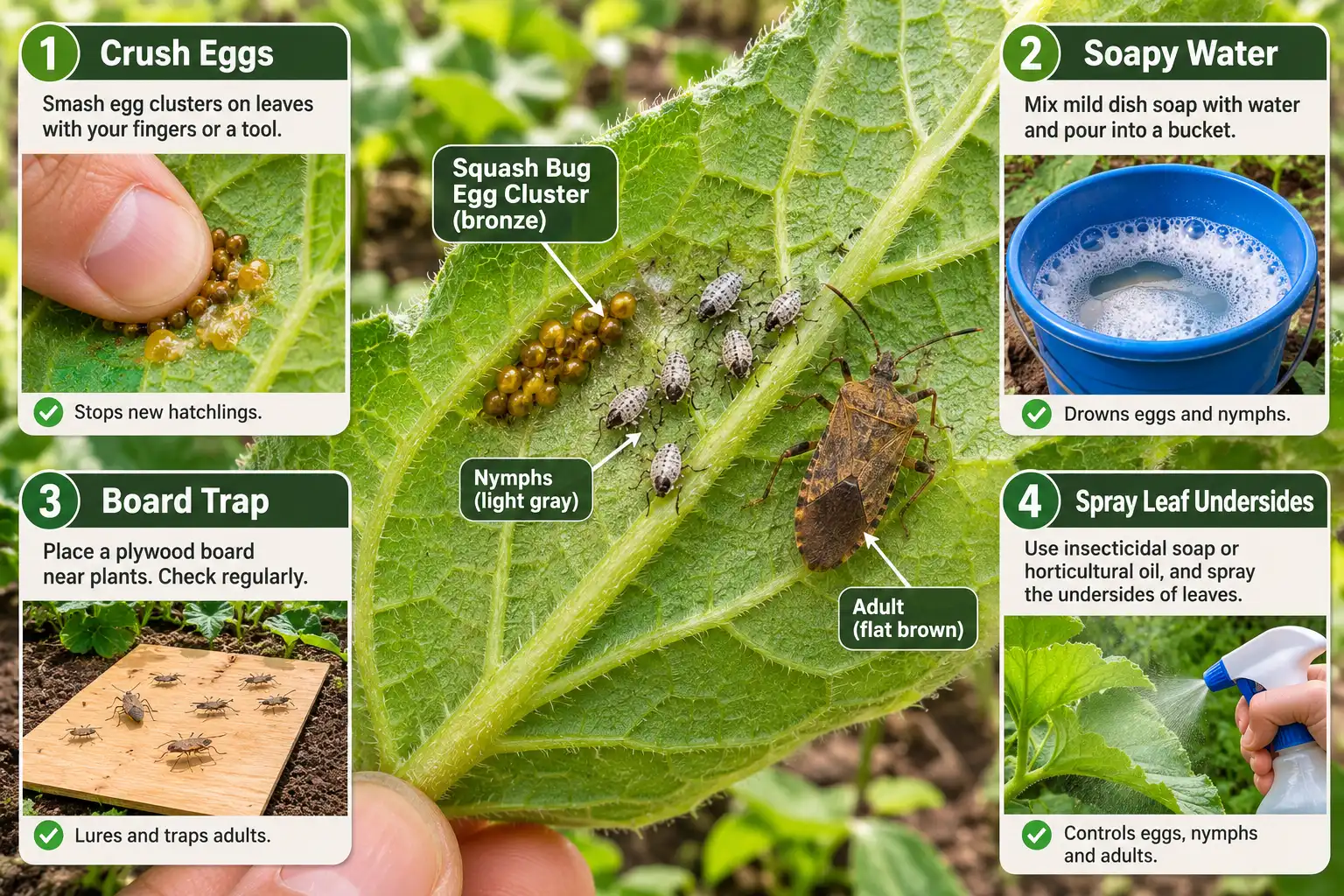
Squash bugs suck sap from zucchini leaves and stems, and heavy feeding wilts and kills young plants. Control comes down to timing. Here is how to get rid of squash bugs on zucchini by hitting the eggs and young nymphs before adults take over.
To get rid of squash bugs on zucchini, crush the bronze egg clusters on leaf undersides every few days. Drop adults and nymphs into soapy water, and trap more under boards overnight. Spray insecticidal soap or neem on small nymphs.
What Do Squash Bugs Look Like on Zucchini?
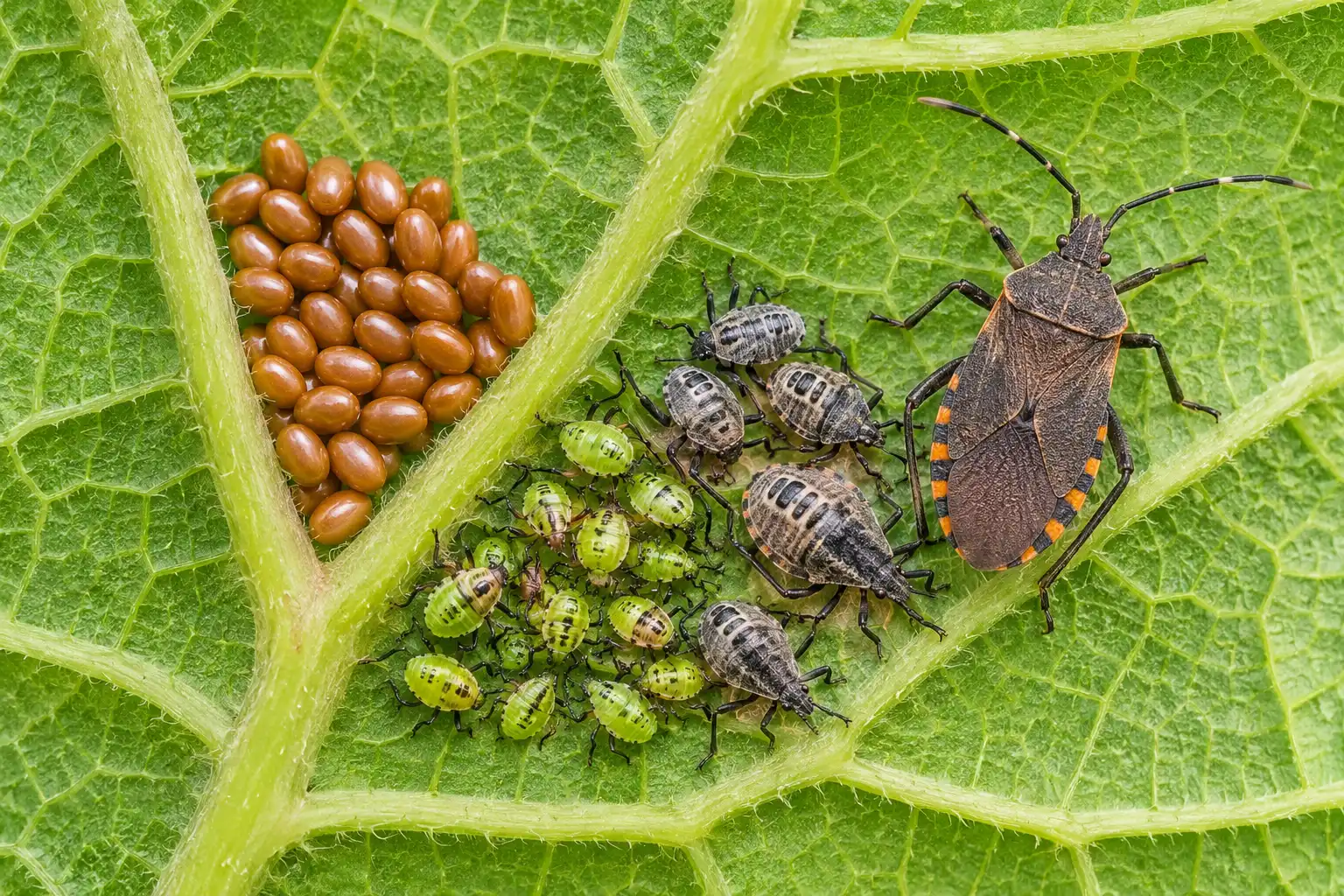
Adult squash bugs are flat, dark gray to dark brown insects about 5/8 inch long, according to University of Minnesota Extension. Turn one over and you will see orange and brown stripes along the edges of the abdomen. The species is Anasa tristis, a true bug that feeds with piercing, sucking mouthparts.
Squash bugs look a lot like stink bugs. However, UC IPM notes that stink bugs are wider and rounder, and they rarely feed on cucurbits. Both give off a foul odor when crushed.
Squash Bug Eggs on Zucchini Leaves
Squash bug eggs are oval, about 1/16 inch long, and yellowish bronze to brick red. Females lay them in clusters of roughly 15 to 40 on leaf undersides, per UC IPM. University of Minnesota Extension adds that clusters often sit in the V where two leaf veins meet. You will also find them on stems.
Squash Bug Nymphs
Newly hatched nymphs have a light green body with a black head and legs. As they grow, they turn light gray and then brownish gray. Young nymphs stay bunched near the empty egg shells, so they are easy to spot and spray. After 4 to 6 weeks, they become adults.
| Life stage | Size | Color | Where to look |
|---|---|---|---|
| Egg | 1/16 inch | Yellowish bronze to brick red | Leaf undersides, vein angles, stems |
| Young nymph | About 1/10 inch | Light green body, black head and legs | Clustered beside hatched eggs |
| Older nymph | Up to 1/2 inch | Light gray to brownish gray, black legs | Leaf undersides and plant crown |
| Adult | 5/8 inch | Dark gray to brown, orange striped edges | Crown, under leaves, under debris |
Learn more: Increase Zucchini Yield
How Squash Bugs Damage Zucchini
Squash bugs drain sap from leaves and stems. Their feeding first shows as small yellow specks that later turn brown, according to University of Minnesota Extension. Penn State Extension notes the spots eventually darken to black as damage builds.
Heavy feeding also blocks water flow through the plant. As a result, leaves wilt, and the feeding point turns black and brittle. UC IPM calls this “Anasa wilt.” Seedlings and flowering plants take the hardest hit, and young plants often die.
The damage reaches the fruit too. Bugs feeding on the shaded underside of young zucchini cause fruit to abort, twist, or scar as it grows, per UC IPM.
Squash bugs also carry Serratia marcescens, the bacterium behind cucurbit yellow vine disease (CYVD), according to UF/IFAS Extension. UC IPM reports heavy CYVD losses in squash, pumpkin, and melon crops across the Midwest and East.
Squash Bug Wilt or Bacterial Wilt?
Squash bug wilt looks a lot like bacterial wilt, a disease that cucumber beetles spread, according to UC IPM. So check before you treat. Lift the lower leaves and inspect the crown and leaf undersides. Egg clusters, nymphs, or adults point to squash bugs. Striped or spotted beetles point to bacterial wilt instead.
When Squash Bugs Show Up on Zucchini
Adult squash bugs spend the winter under plant debris, under rocks, and around buildings, according to University of Minnesota Extension. In spring, they fly to young cucurbits to feed, mate, and lay eggs. In Minnesota, females appear in early June and keep laying eggs through midsummer.
The number of generations depends on your climate. That count tells you how long to keep scouting.
| Region | Generations per year | Peak scouting window | Source |
|---|---|---|---|
| Upper Midwest and Northeast | 1, sometimes a partial 2nd | Early June through midsummer | University of Minnesota Extension, Penn State Extension |
| North Carolina Piedmont | At least 2 | May, then again in August | NC State Extension |
| Florida and other warm regions | 2 to 3 | Spring through fall | UF/IFAS Extension |
| California | 2 to 3 | Spring through fall | UC IPM |
Because life stages overlap, you will find eggs, nymphs, and adults on the same plant at once. So plan to scout from the first true leaves until the final harvest.
How to Get Rid of Squash Bugs on Zucchini by Hand
Hand removal is the backbone of squash bug control in home gardens and small market beds. In fact, University of Minnesota Extension says home gardens normally need no insecticide at all. Work through these four steps in order.
1. Scout Leaf Undersides Every Few Days
UC IPM recommends inspecting young plants daily for wilting, egg masses, and mating adults. At minimum, check every 3 to 4 days. Since eggs hatch in 7 to 10 days, that schedule catches most clusters first. If the canopy is dense, prune a few lower zucchini leaves so you can see the crown.
2. Crush or Lift Egg Clusters
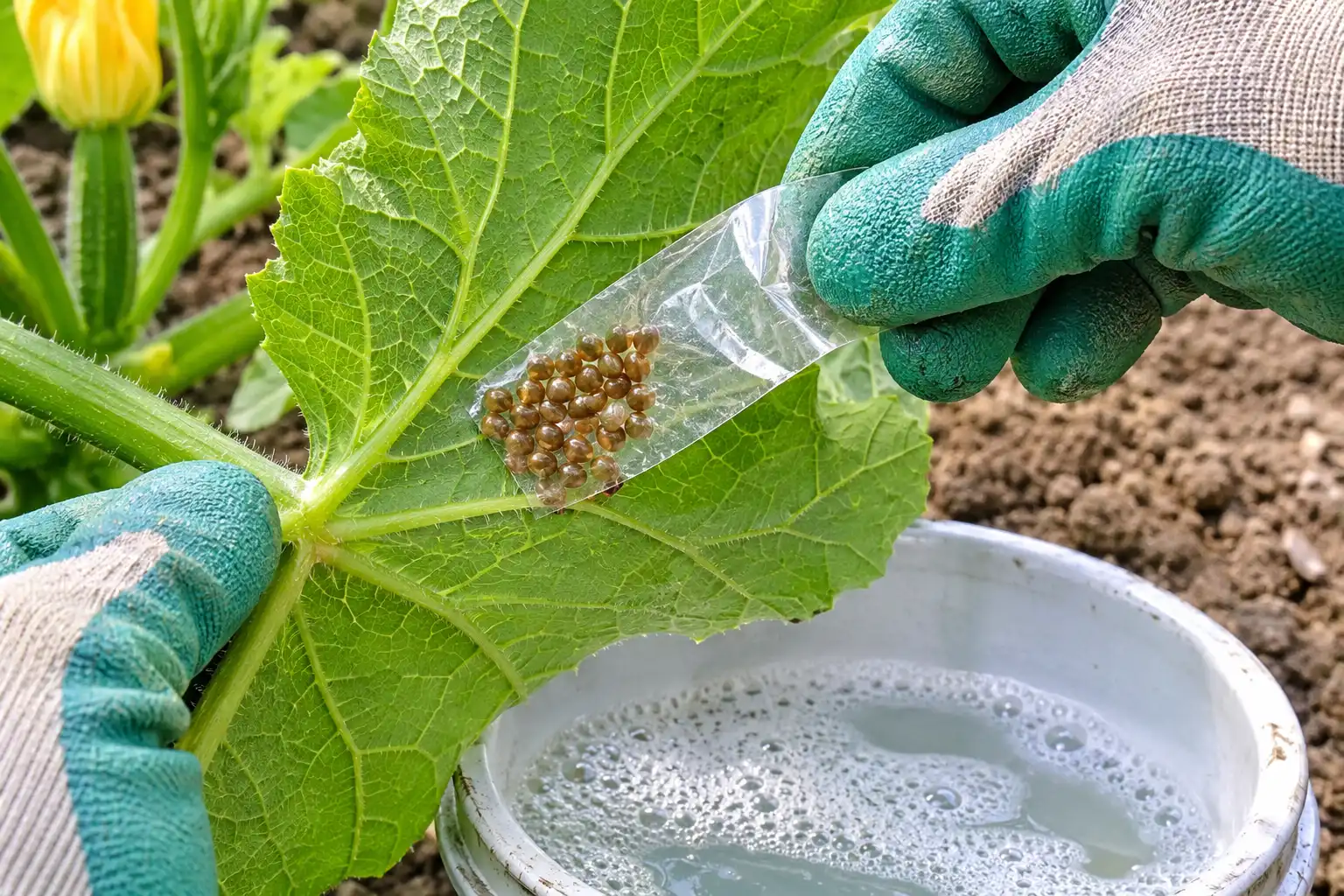
Crush eggs with your thumb, or scrape them into a cup with a butter knife. Wide packing tape also works well. Press it on the cluster, peel it away, then fold the tape over and toss it. Destroying eggs is a core step in the University of Minnesota Extension plan.
3. Drop Nymphs and Adults Into Soapy Water
Hold a bucket of soapy water under the leaf and tap the bugs in. Squash bugs hide and move fast when disturbed, so keep the bucket close. According to University of Minnesota Extension, this works best when only a few plants have bugs.
4. Trap Squash Bugs Under Boards
Lay boards or folded newspaper on the soil beside each plant in the evening. Overnight, squash bugs gather underneath. Then lift the boards early the next morning and crush or drown the bugs, per University of Minnesota Extension.
Sprays That Work on Squash Bug Nymphs
Sprays work on young nymphs, not adults. University of Minnesota Extension notes that adults are hard to kill, so time any spray for shortly after eggs hatch.
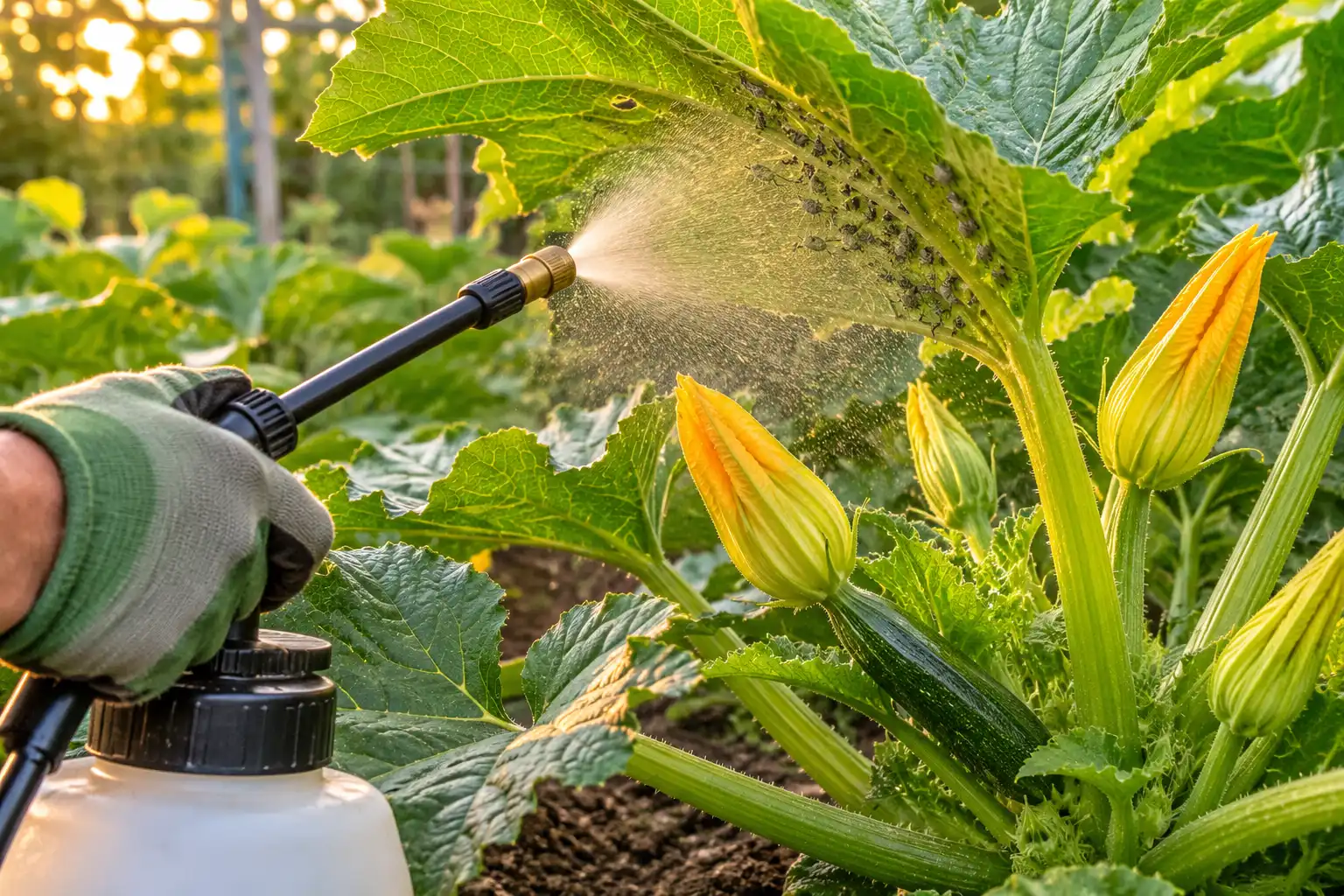
UC IPM lists insecticidal soap and neem oil as lower toxicity options. However, both kill only the smallest nymphs, and only on direct contact. UC IPM also names azadirachtin, pyrethrins, and spinosad as options for home gardens. Follow these rules for better results:
- Spray leaf undersides and the crown, where nymphs hide.
- Apply late in the day, after flowers close, to protect bees.
- Repeat as new egg clusters hatch, within the label interval.
- Confirm the label lists zucchini or cucurbits, and note the preharvest interval.
A pump sprayer with an adjustable wand makes it easier to angle the spray up under the leaves.
When to Use Stronger Insecticides
Michigan State University Extension sets the treatment threshold at any squash bugs on seedlings. After the seedling stage, the threshold rises to one egg mass per plant. Similarly, University of Minnesota Extension uses an average of one egg mass per plant.
Below that level, stick with hand control. Stronger synthetic products also kill bees and the predators that eat squash bugs, warns UC IPM. Plus, they rarely beat handpicking paired with softer sprays. This threshold first logic is the heart of an integrated pest management approach.
Natural Squash Bug Control for Zucchini
Natural squash bug control relies on predators, mineral barriers, and hand removal instead of synthetic sprays.
Several predators feed on squash bug eggs, nymphs, and adults. For example, UC IPM names spiders, ground beetles, big-eyed bugs, and lady beetles. The tachinid fly Trichopoda pennipes also lays its eggs on squash bugs, and its larvae kill the host. UC IPM suggests checking the undersides of squash bugs for these eggs. A bug that carries them already hosts the parasite.
Kaolin clay is another option. University of Minnesota Extension reports that kaolin clay sprays reduced squash bug pressure and raised yields in Iowa trials. The spray leaves a white mineral film on leaves and fruit, so wash zucchini before eating.
Broad spectrum sprays kill helpful predators too. So lean on soap, neem, kaolin clay, and other natural pest control methods first.
How to Prevent Squash Bugs on Zucchini
Prevention starts before you plant and continues after harvest.
Use Row Covers Until Bloom
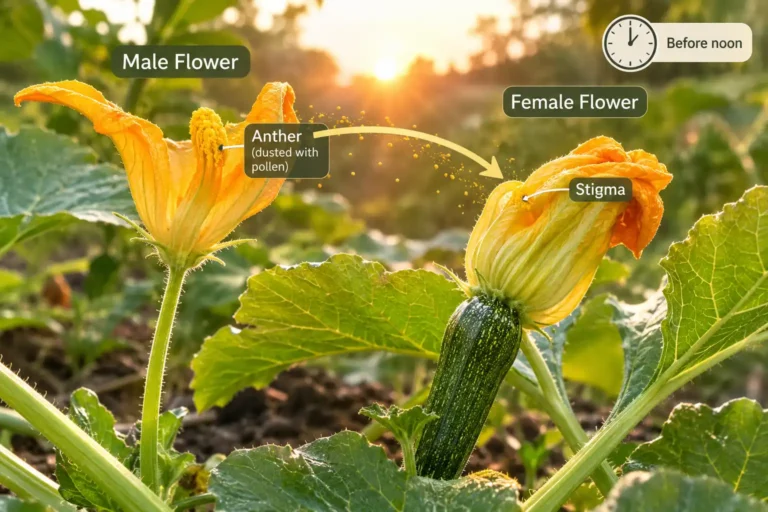
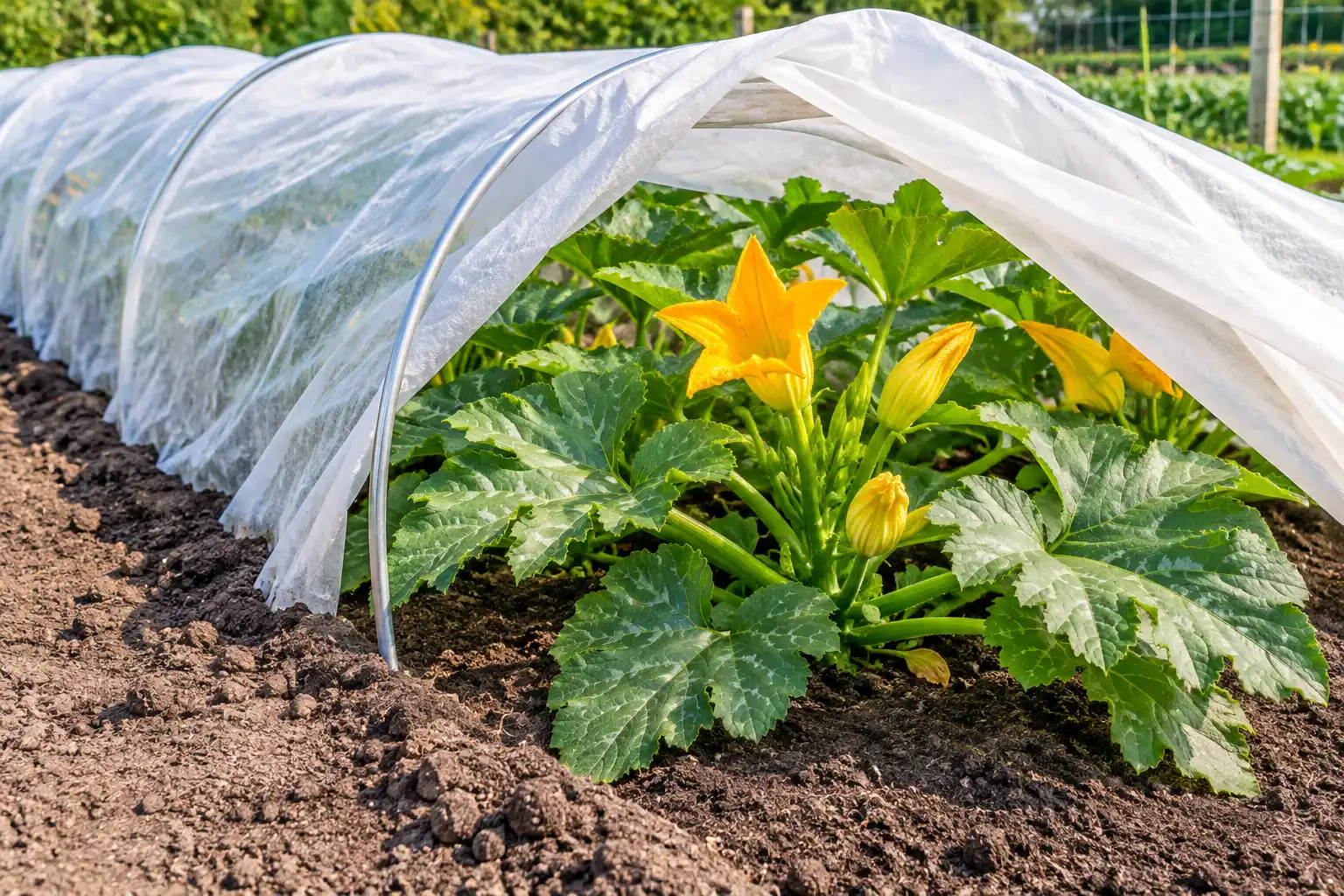
Cover zucchini with floating row cover at planting, and bury the edges in soil. Then remove the covers at bloom, as UC IPM recommends. Zucchini needs bees to carry pollen from male to female flowers, so covers left on too long cut your yield.
Clean Up Overwintering Sites
UC IPM calls sanitation the best cultural strategy. Pull spent zucchini plants right after harvest. Next, compost them or till them under, and clear boards, rubbish, and debris near the garden. Also, if squash bugs are a severe repeat problem, University of Minnesota Extension advises against straw mulch, since it shelters the bugs at night.
Plant a Blue Hubbard Trap Crop
Blue Hubbard squash planted around the perimeter draws squash bugs away from the main crop, according to University of Minnesota Extension. Still, scout the trap crop and destroy its eggs. Otherwise, it becomes a breeding site.
Open Up the Canopy
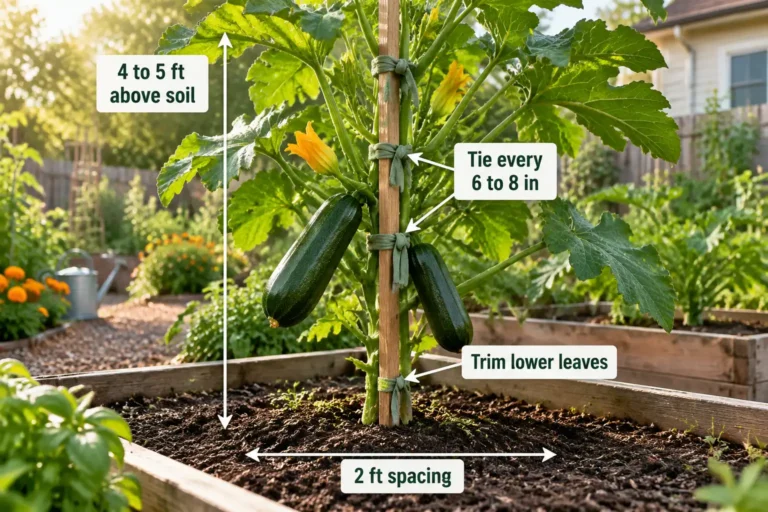
UC IPM notes that squash bugs prefer to hide under thick foliage and lay eggs close to the ground. Correct zucchini plant spacing improves airflow and speeds up scouting. In addition, staking zucchini upright lifts the leaves off the soil, so egg clusters are easier to find. Finally, keep plants well watered and fed. According to University of Minnesota Extension, sturdy plants tolerate more feeding.
Common Mistakes That Let Squash Bugs Spread
- Spraying adults instead of nymphs. Adults survive most contact sprays. Target clusters as they hatch.
- Spraying only the tops of leaves. Nymphs sit on the undersides and at the crown.
- Spraying open flowers. Midday sprays during bloom harm bees. Spray in the evening instead.
- Leaving row covers on through bloom. Female flowers go unpollinated, and fruit set drops.
- Waiting for wilt. By the time leaves collapse, colonies are already large. Start scouting at the seedling stage.
- Skipping fall cleanup. Leftover vines and debris shelter next year’s adults.
FAQs on Squash Bugs on Zucchini
Will squash bugs kill zucchini plants?
Yes, heavy feeding kills seedlings and young zucchini plants, according to University of Minnesota Extension. Larger plants tolerate more damage, but they still lose leaves and fruit when colonies build up unchecked under the canopy.
Does dish soap kill squash bugs?
Soapy water kills squash bugs you knock into a bucket, a method University of Minnesota Extension recommends. For sprays, choose a labeled insecticidal soap, which UC IPM says works only on the smallest nymphs.
How do you get rid of squash bug eggs fast?
Press wide packing tape against the cluster and peel it away, or crush the eggs with your thumb. Check leaf undersides every few days, since eggs hatch in 7 to 10 days, per University of Minnesota Extension.
Where do squash bugs go in winter?
Adult squash bugs overwinter under plant debris, under rocks, and around buildings, according to University of Minnesota Extension. Nymphs die at freezing temperatures, so fall cleanup removes the adults that start next year’s infestation.
Should you spray squash bugs in late summer?
Usually not, because University of Minnesota Extension rates late season squash bug feeding as minor. Put that effort into fall cleanup instead, which removes the adults that would otherwise overwinter near your garden.
Putting This Into Practice
Start scouting at the seedling stage, and check leaf undersides every few days. Crush every egg cluster you find, and trap adults under boards overnight. Spray soap or neem only on young nymphs. Save stronger products for one egg mass per plant. After harvest, clear the debris where adults overwinter.