How to Grow Grapes From Cuttings: Step-by-Step for Beginners
Turning one good grapevine into a whole row costs almost nothing when you root your own wood. You also keep the exact variety you want. Here is how to grow grapes from cuttings, step by step.
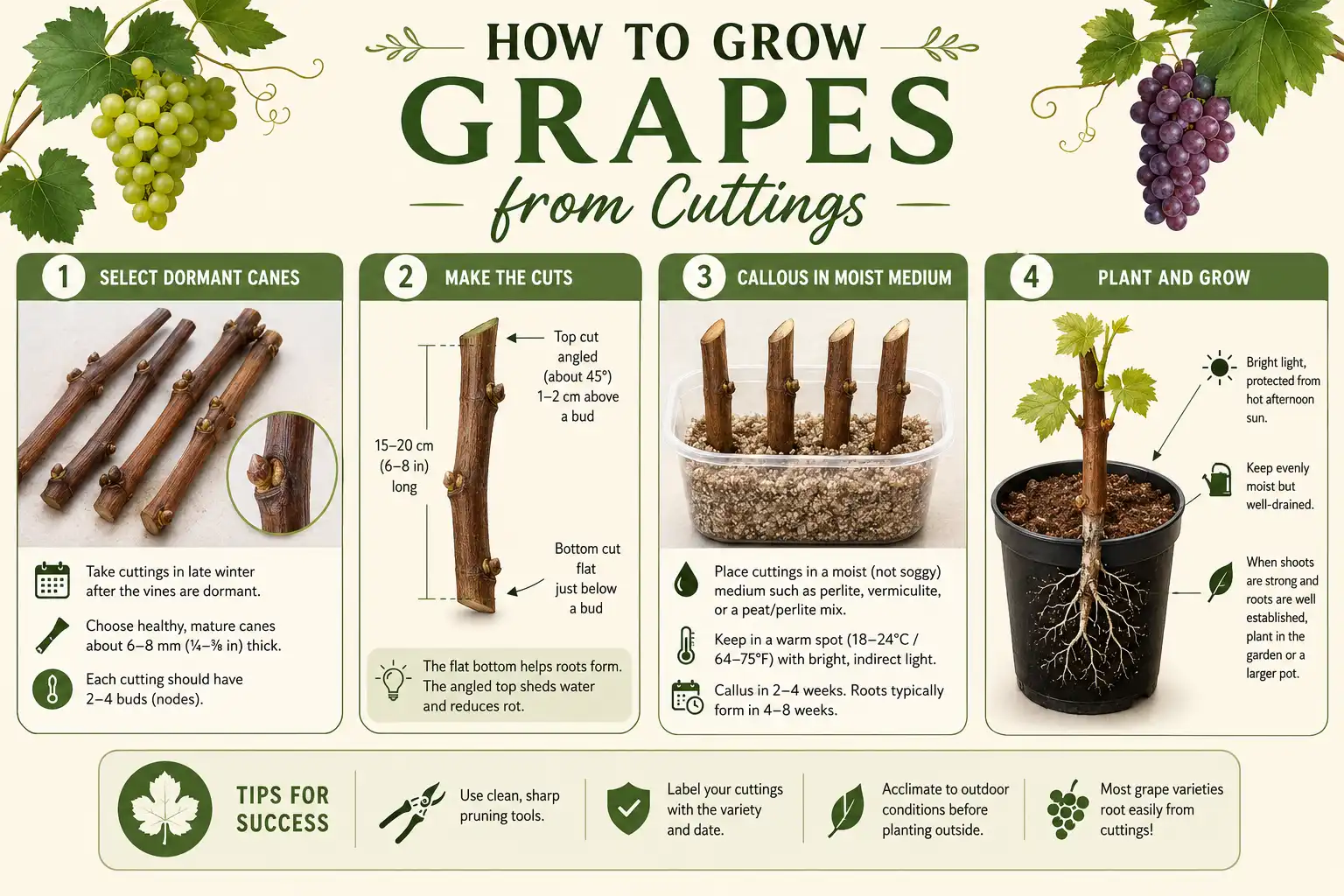
To grow grapes from cuttings, take pencil-thick hardwood from one-year-old wood during dormancy. Cut each 12 to 16 inches with three or four buds. Callus them cold, then plant upright with one bud showing.
Why Grow Grapes From Cuttings Instead of Seed?
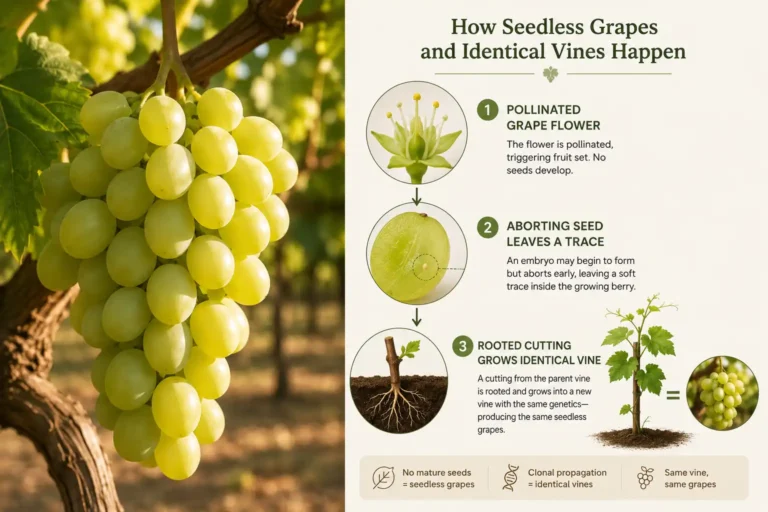
Grape seeds do not grow true to the parent vine. Plant a seed from a sweet table grape and you get a wild card, often sour and nothing like the original. A cutting is different. It is a clone, so the new vine matches the parent exactly. That is why every named grape gets multiplied from wood, not seed. It is also how breeders bulk up a new release once they pick a winner. That is exactly how cotton candy grapes are bred before they reach a store.
Learn more: Grow Grapes From Seed (and What to Expect in 2026)
What Kind of Grape Cuttings Root Best?
Dormant hardwood cuttings root best, with a success rate around 70 to 80 percent. They come from last season’s growth, called one-year-old wood, taken after the leaves drop and the vine goes dormant. Most grapes take to this method, including common Vitis vinifera table and wine types plus American hybrids. Muscadine grapes are the exception. They rarely root from hardwood cuttings, so Southern growers layer them instead.
Pick wood off a vine you know fruits well. Some vines grow plenty of cane but set little fruit, and a cutting only copies what the parent does.
One legal point matters here. You cannot legally propagate patented varieties, even for your own backyard. Cotton Candy, Autumn Crisp, and Candy Snap all carry plant patents, so rooting their wood breaks the law. Stick to older public varieties or anything past its patent term.
When Should You Take Grape Cuttings?
Take grape cuttings during dormancy, in late winter before the buds swell. In Kansas, cuttings are typically taken when pruning, usually February into early March. Cold-climate and dry-climate growers often go earlier, in December or January, before winter air dries the wood out.
Do not wait until the vine starts growing. Cut a grape in active growth and it bleeds sap heavily from the wound. That stresses the parent vine and leaves it open to disease. Dormant wood also stores the energy each cutting needs to push roots later.
How to Grow Grapes From Cuttings, Step by Step
Here is the routine every winter. It works for most backyard and small-vineyard grapes.
Step 1: Pick and Cut One-Year-Old Wood
Choose straight, healthy canes about as thick as a pencil, roughly a quarter inch across. Skip anything thinner, damaged, or diseased. Grape canes do not always harden off fully, so slice into the wood to check it is alive. Green, moist tissue inside means good wood. Brown and dry means dead.
Cut each piece 12 to 16 inches long. Make sure every cutting carries three or four buds. At least one bud goes below the soil later, because that is where roots form.
Step 2: Make the Right Cuts So It Roots Upright
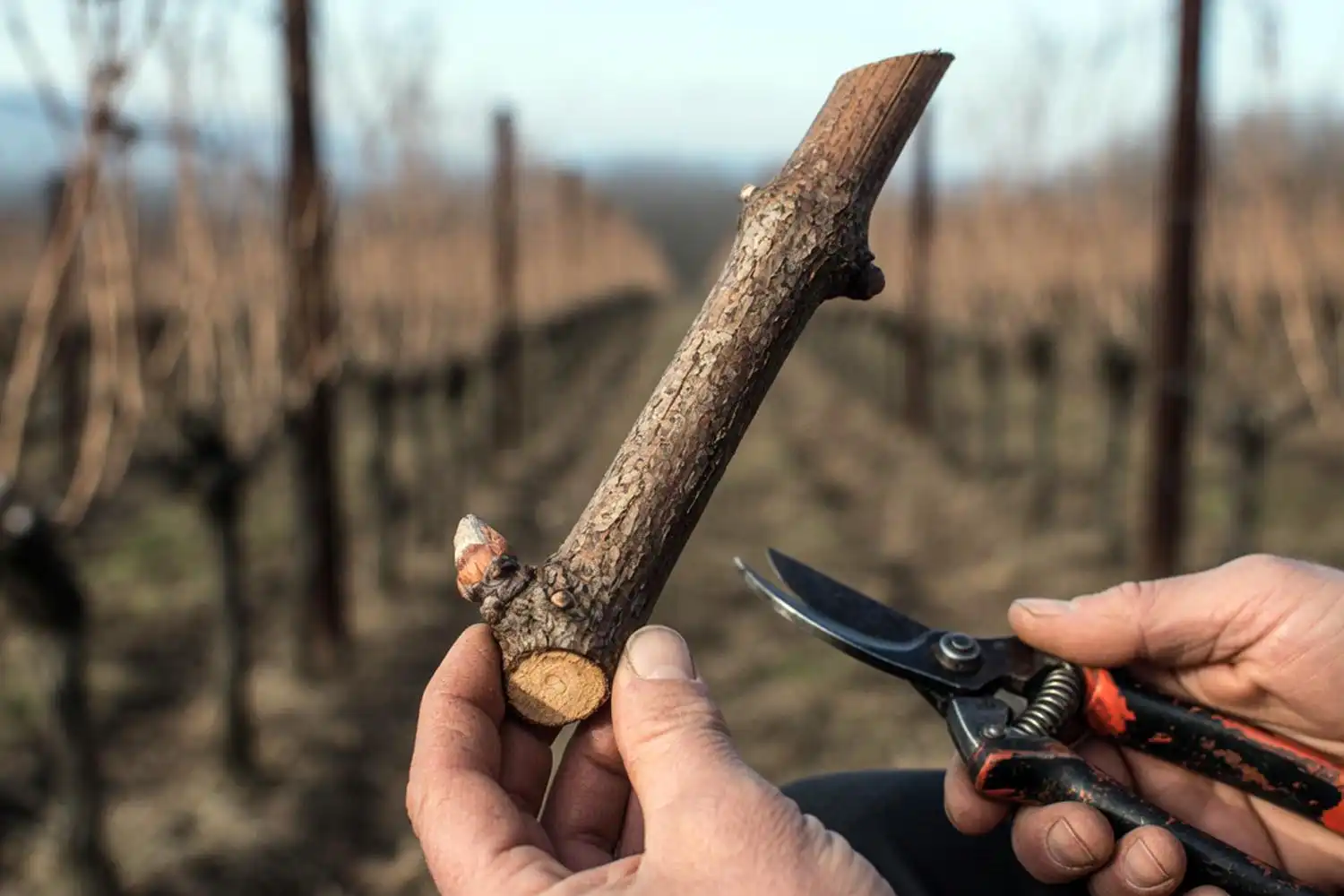
Cut the bottom flat, just below the lowest bud, leaving about half an inch of stem under it. Do not slice into the bud itself. Cut the top at an angle, one to two inches above the top bud.
Those two cut shapes do a job. A cutting only roots if you plant it right side up. The flat bottom and angled top tell you which end is which, even weeks later in a bundle. Plant one upside down and it never roots.
Step 3: Callus the Cuttings in Cold Storage
Callusing is the healing that forms at the base before roots appear. Bundle your cuttings, keep them right side up, and wrap the bases in lightly moist peat moss or sand. Slide the bundle into a plastic bag and store it cold, around 35 to 40°F. A refrigerator or an unheated garage works well.
Leave them for the rest of winter. The cold, moist hold lets the base callus while the buds stay asleep. Check now and then that the moss stays barely damp, never soaked.
Step 4: Plant the Cuttings to Root Them
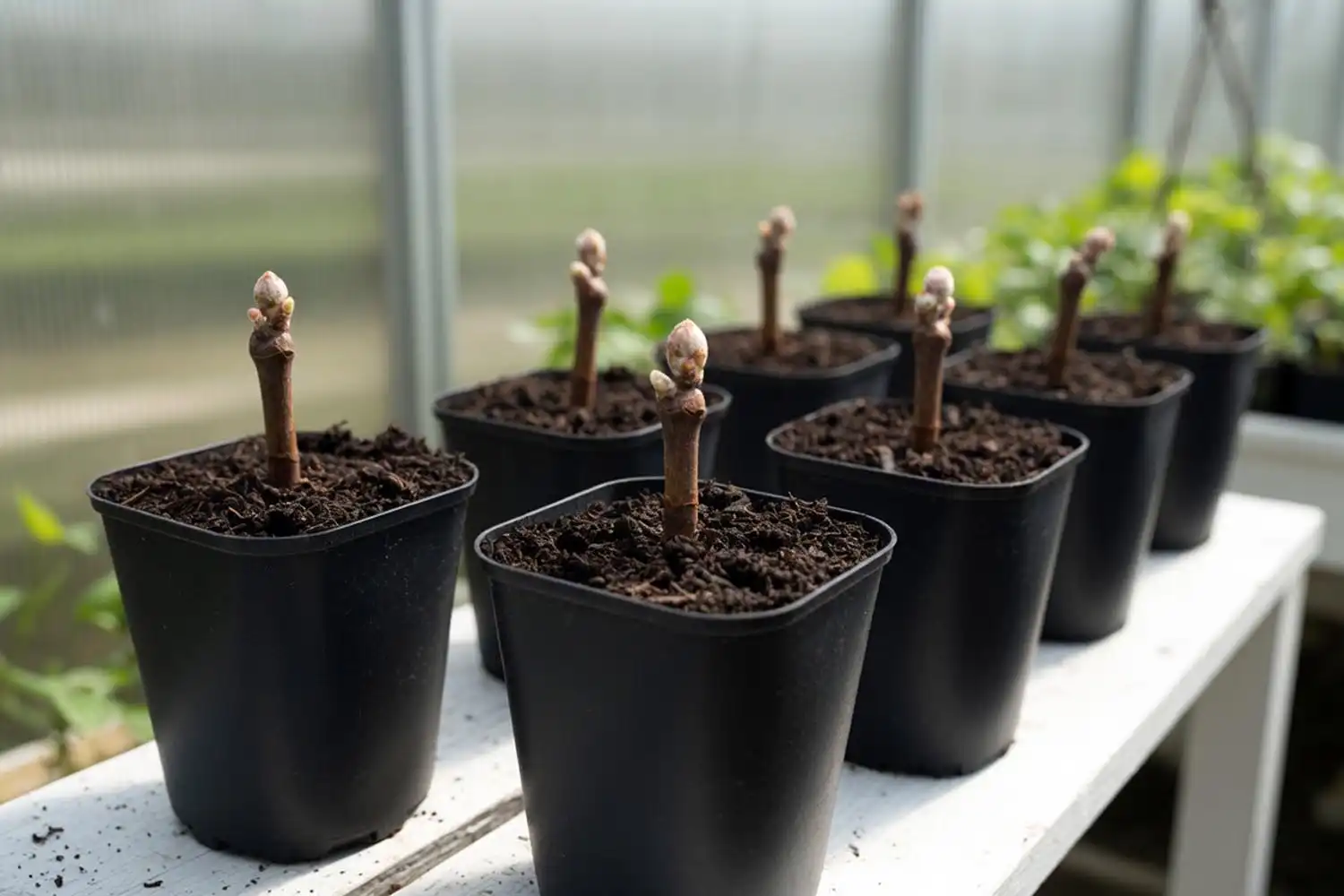
Plant cuttings as soon as the soil works in spring. Set each one upright in a deep pot or a nursery row, with only the top bud just above the surface. Firm the soil so no air pockets sit around the base.
Use a loose, well-drained mix. Potting soil cut with sand or perlite drains fast and still holds moisture. For a richer bed, finished compost can be worked in, one of the simplest ways to boost soil fertility for young roots. Keep the soil consistently moist but never waterlogged. Soggy soil starves roots of oxygen and invites damping off, the rot that kills tender starts fast.
A heat mat under the pots speeds things up. Grape cuttings root faster with warm feet and cool tops. Set them in bright light, but keep them out of harsh midday sun while they are still rooting.
Do Grape Cuttings Need Rooting Hormone?
Rooting hormone is optional for grapes. They root well on their own, which is why many growers skip it. Even so, a quick dip in a rooting powder or gel with IBA can help. It lifts your success rate and speeds rooting on harder-to-root varieties. Dip the bottom inch right before planting. More is not better, so tap off the excess.
How Long Do Grape Cuttings Take to Root?
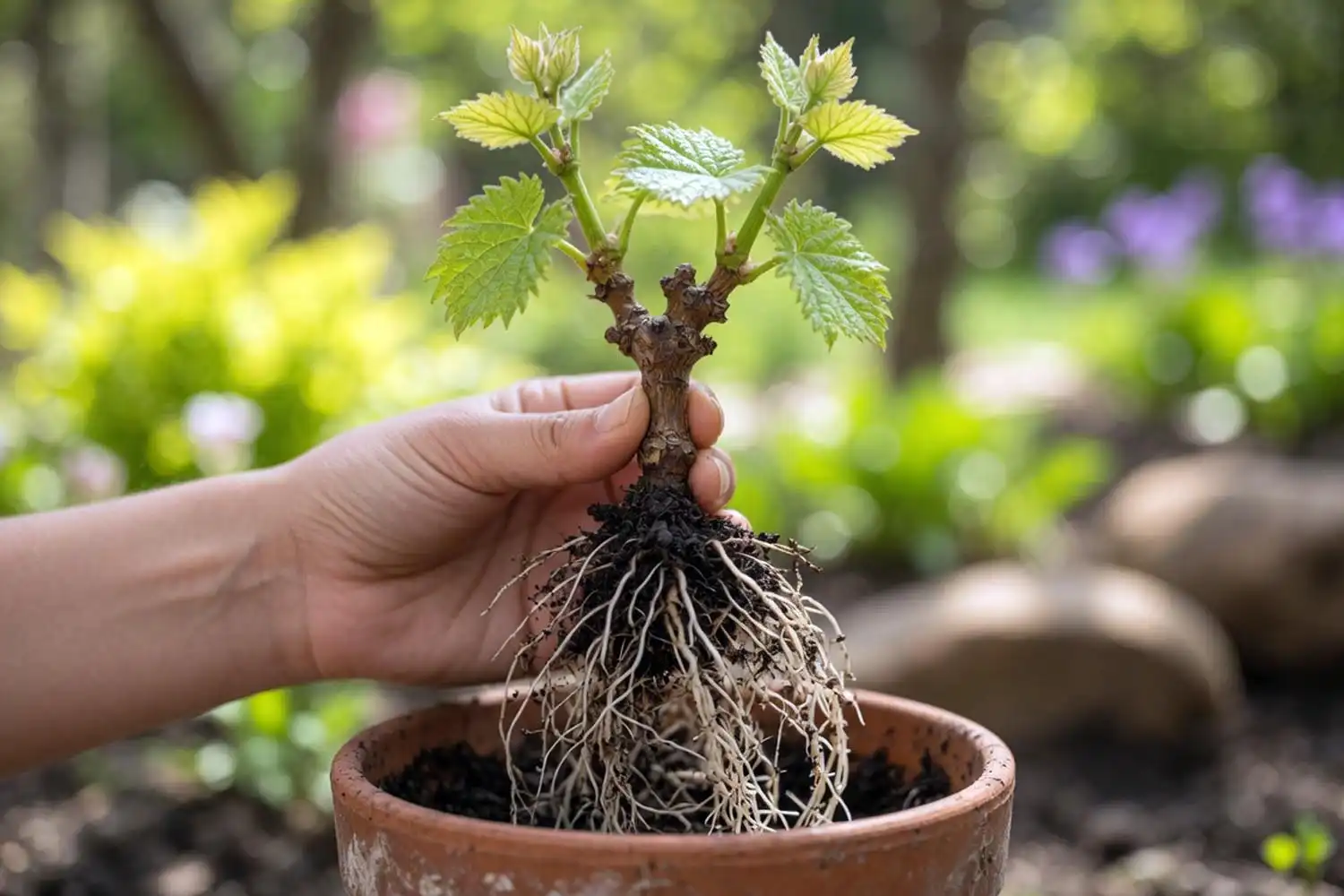
Grape hardwood cuttings usually root in six to eight weeks once you plant them in spring. Warmth speeds it up, cold slows it down.
Watch for a trap, though. Leaves often pop before roots form, since the cutting runs on stored energy at first. Green shoots up top do not prove roots below. Give a cutting a gentle tug after a couple of months. Slight resistance means roots have taken hold. If it slides right out, it needs more time, or it has failed.
When Should You Transplant Rooted Grape Vines?
Transplant rooted cuttings once roots fill the pot and the plant grows strongly, not before. Rushing a weak root system sets the vine back.
Many growers, me included, hold new plants in a nursery bed or pot through the first season. Move them to their permanent spot the next spring, after the last frost. That extra season builds a tough root system that handles the move with little shock. Treat it like any other young transplant, and water it in well right away.
Pick a permanent site with full sun and sharp drainage. A soil test ahead of planting tells you what the ground needs, and grapes prefer a slightly acidic to neutral pH. After planting, a layer of mulch around the base holds moisture and keeps weeds down while the vine settles in.
Can You Root Grape Cuttings in Water?
Yes, grape cuttings can root in water, though water is less reliable than soil. Stand the bottom of a cutting in a jar of water in a bright spot. Change the water every couple of days, or it turns foul and the cutting rots.
Once roots reach a few inches long, pot the cutting up in soil. Water rooting is a fun way to test a few extra cuttings, though not the main method. Soil-rooted cuttings build stronger root systems from the start.
Why Do Grape Cuttings Fail?
Most grape cuttings fail from one of a few causes. Drying out is the big one. Thin wood or dry winter air pulls moisture from the cutting before it can root. So keep cuttings cool and lightly moist until planting.
Overwatering kills just as many. Waterlogged soil rots the base before roots form. Planting upside down is another common miss, and that cutting never roots. Dead wood that never hardened off will not root either, so always check for living tissue first. Get those four things right and most of your cuttings take.
Final Thoughts
The winning move is simple. Cut pencil-thick, one-year-old wood when pruning in late winter. It is then callused cold for the rest of the season and planted upright once the spring soil warms. Keep the soil damp, not wet, and give the cuttings a full season before they go to their permanent row. Start with more cuttings than you need. Some will not take, and the extras cost you nothing. That is the real value in growing your own vines from wood.