Do Grapes Have Seeds? Inside Seeded and Seedless Berries
Store-bought grapes usually slip down with no crunch. Grapes off an old backyard vine often hide hard pits. So do grapes have seeds, or not? Both answers are correct, and the split comes down to cultivar breeding rather than growing conditions.
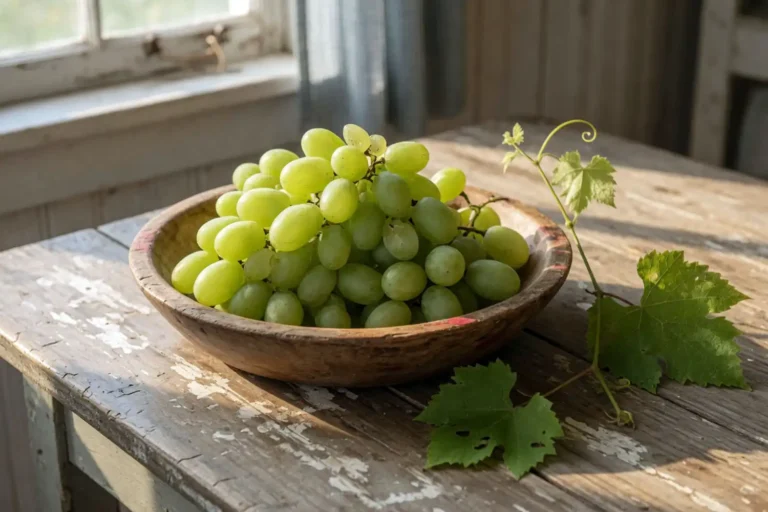
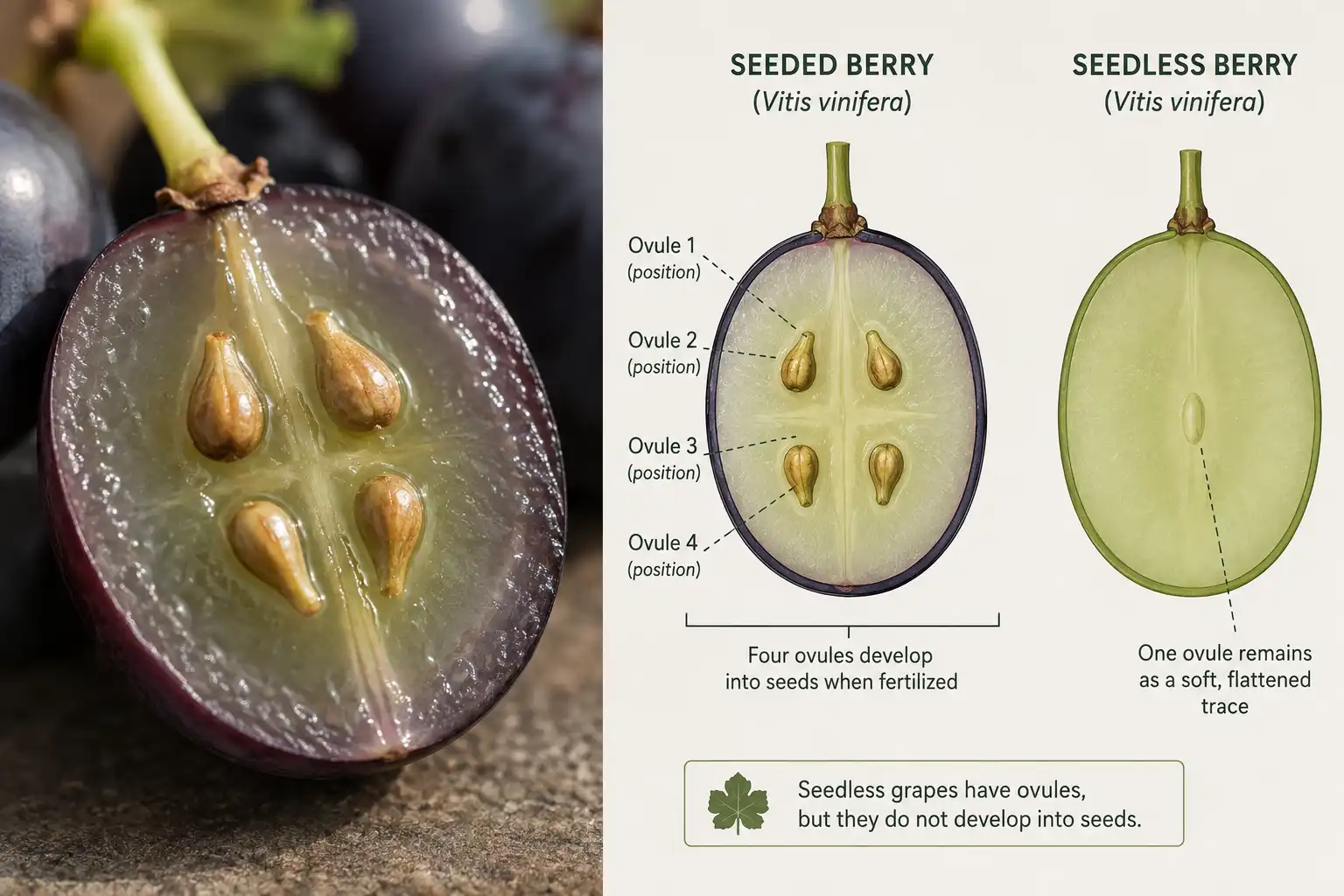
Yes, grapes have seeds. Most berries carry one to four hard seeds formed from four ovules in the flower. Seedless cultivars still set a soft seed trace, so no grape is completely seed free.
Do Grapes Have Seeds Inside Every Berry?
Every grapevine is built to make seeds. Seed production is why the plant sets fruit at all. So seeded berries are the default across the genus Vitis.
Wild American grapes prove the point. Riverbank grape, fox grape, and muscadine all set hard seeds without exception. The same holds for Vitis vinifera, the European species behind nearly every wine grape.
Seedless grapes exist because of natural mutations. Somewhere a vine set berries whose seeds quit developing. A grower noticed, then rooted cuttings off that vine and multiplied them. Since grapes propagate clonally, one mutant plant turned into millions of identical vines.
So the exact answer runs two ways. Botanically, grapes are seeded fruit. Commercially, most fresh grapes in an American grocery store are seedless cultivars carrying nothing but soft remnants.
Learn more: Raisins Dried Grapes Varieties, Drying, and Nutrition
How Many Seeds Are in One Grape?
Most grape berries hold one to four seeds. The flower’s ovary carries four ovules, so four sets the ceiling on bunch grapes.
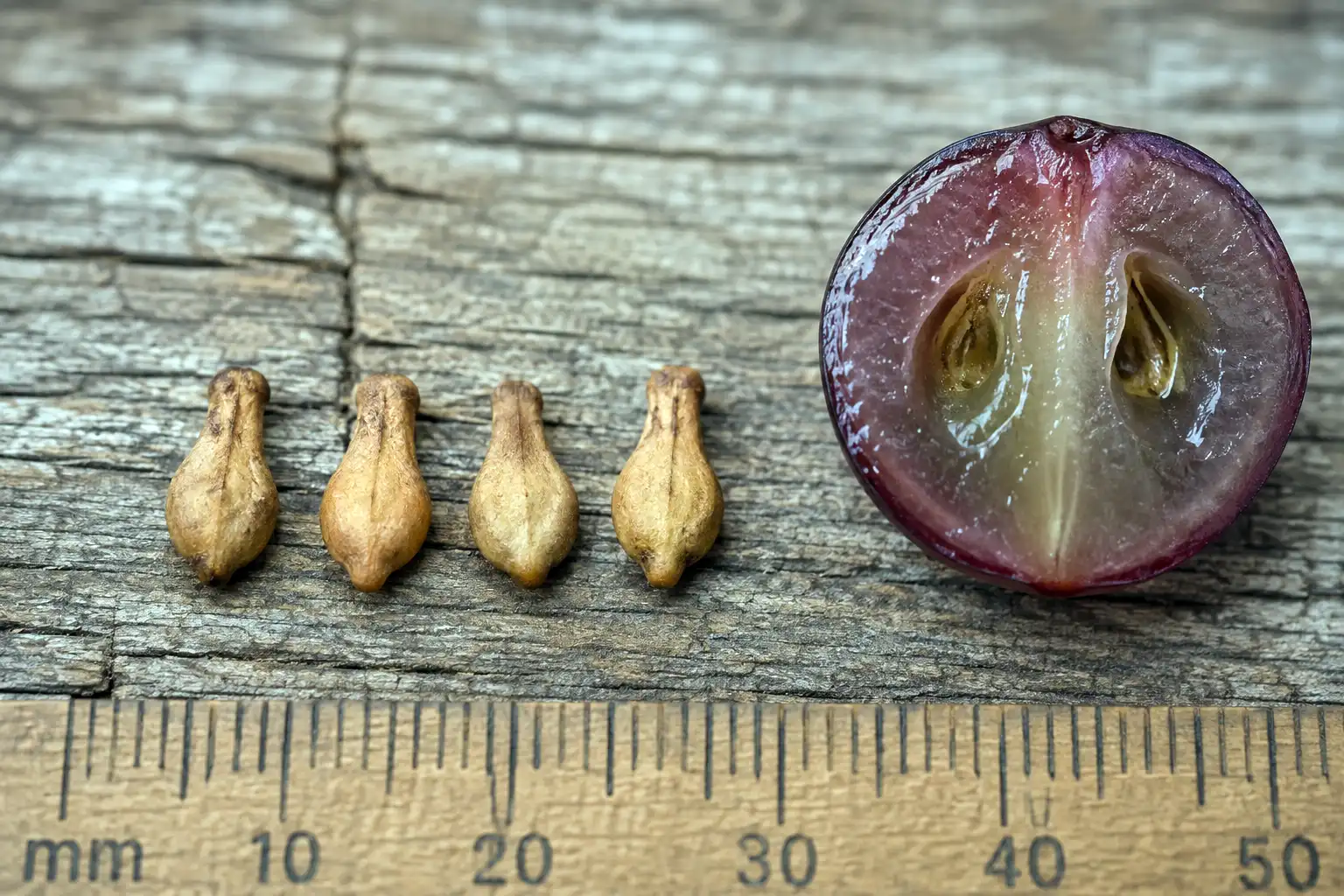
Not every ovule gets fertilized, though. Cold snaps at bloom, rainy pollination weather, or weak pollen all cut the count. A berry with one or two seeds is common. A berry with all four is less so.
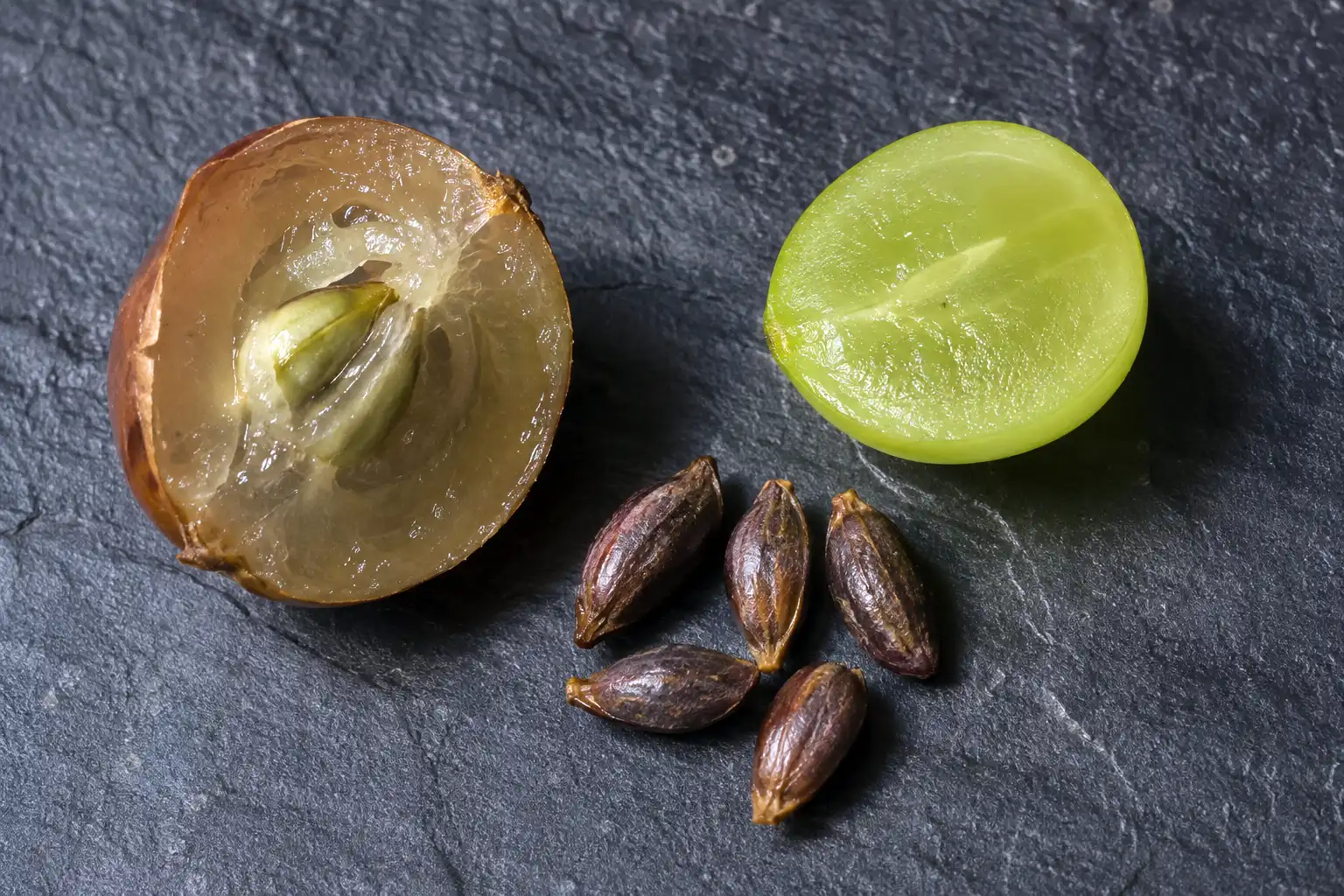
Muscadines break that pattern. Mississippi State University Extension reports muscadine berries holding up to five hard, oblong seeds.
Seed count also drives berry size. Developing seeds release gibberellins, and those hormones pull sugar and water into the berry. More seeds usually means a larger berry.
Here is what the seeds themselves look like:
- Shape: teardrop or pear shaped, with a small pointed beak at one end
- Length: roughly 4 to 8 mm on bunch grapes, noticeably larger on muscadines
- Color: pale green when immature, tan to reddish brown at full ripeness
- Texture: hard, woody coat that resists chewing
- Taste: sharply bitter and astringent from concentrated tannin
Why Some Grapes Have No Seeds
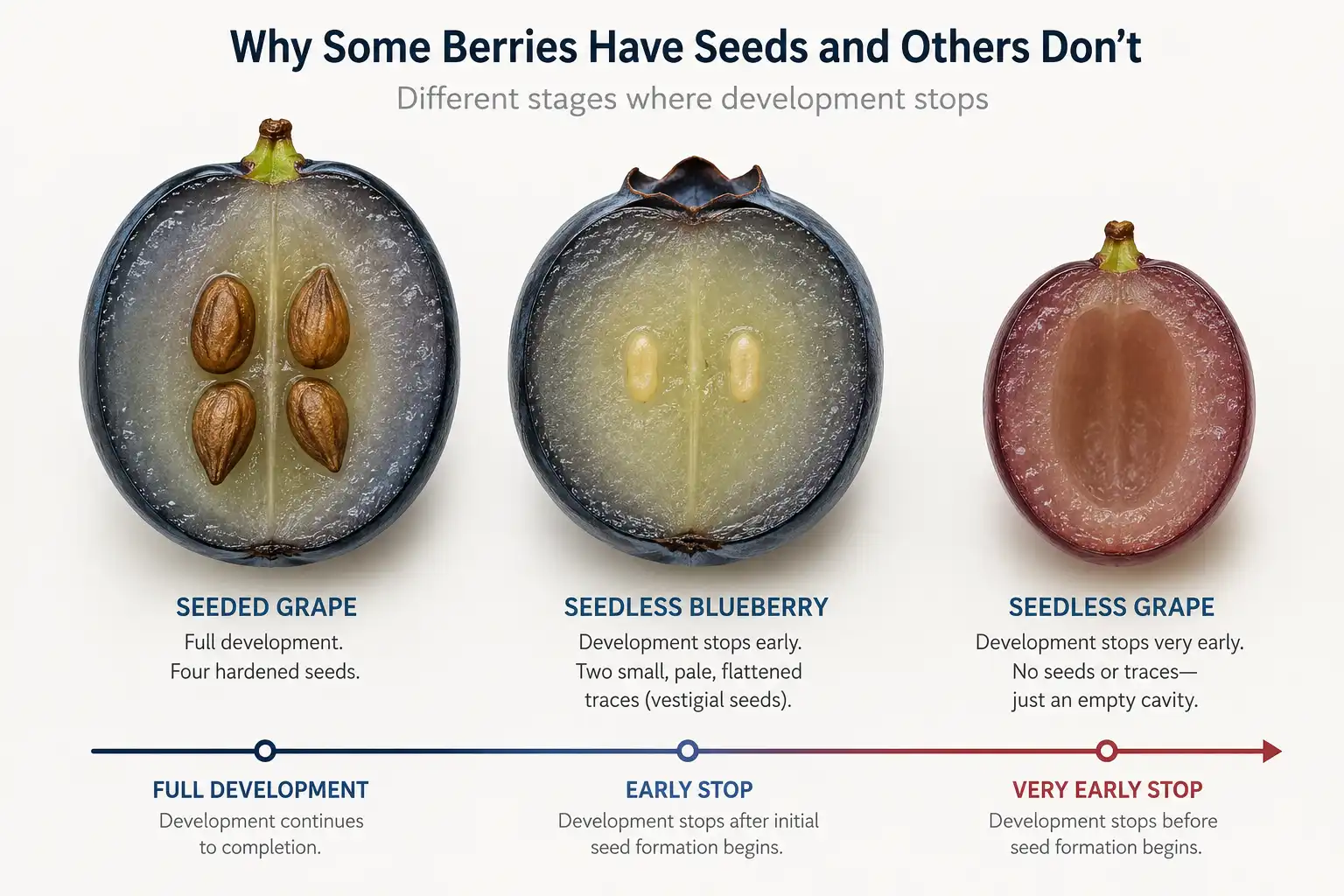
Two biological routes produce seedless grapes. One of them accounts for nearly every commercial cultivar.
Stenospermocarpy. Pollination and fertilization both happen normally. Then the seed coat and endosperm quit developing, and the embryo aborts early. The berry keeps growing and ripening on schedule. Its seed never hardens, though. Thompson Seedless, Flame Seedless, Crimson Seedless, and Mars all work this way.
Parthenocarpy. No fertilization happens at all. The berry sets and swells with no ovule ever fertilized. This route stays rare in grapes. Black Corinth, the vine behind dried Zante currants, is the standard example. Parthenocarpic berries stay small, so the fresh trade favors the other route.
One gene does most of the work. VvAGL11 regulates seed development. Seeded vines express it strongly during early berry growth. Seedless vines barely express it at all. The breeding work behind seedless grapes now leans on DNA markers for that gene. Breeders screen seedlings years before they fruit.
That biology creates a real chore in the vineyard. Seedless berries make little gibberellin of their own. So table grape growers spray gibberellic acid (GA3) at bloom or fruit set. California research shows a single low rate near full bloom thins fruit and sizes berries. Next year’s crop takes no hit.
Do Seedless Grapes Have Any Seeds at All?
Seedless grapes still contain seed remnants called seed traces. Press the pulp of a seedless grape against your tongue. You can usually feel one or two soft flecks.
Those flecks are aborted ovules. The seed coat starts forming, then stops before it lignifies. So it stays pliable instead of turning woody. Grape breeding records set 1.58 mm as the cutoff length. Anything shorter is an unfertilized ovule.
Mars makes a good example, and K-State Research and Extension recommends it for Kansas. Its cultivar description notes very small vestigial seeds that never lignify. Nobody notices them while eating.
So no grape is truly seed free. Seedless only means the remnants stay soft enough that nobody chews one.
Which Grape Varieties Have Seeds?
Seeded and seedless split roughly along intended use. Juice, jelly, and wine grapes are mostly seeded. Fresh-eating table grapes are mostly seedless.
| Species group | Seeded cultivars | Seedless cultivars |
|---|---|---|
| American bunch (Vitis labrusca) | Concord, Fredonia, Niagara, Catawba | Mars, Reliance, Venus, Canadice |
| European (Vitis vinifera) | Red Globe, Cabernet Sauvignon, Chardonnay | Thompson, Flame, Crimson, Autumn Crisp |
| Muscadine (Vitis rotundifolia) | Carlos, Noble, Hall, Paulk, Ruby Crisp | Razzmatazz, Fry Seedless |
| Hybrid wine | Norton (Cynthiana), Chambourcin, Vignoles | None in common use |
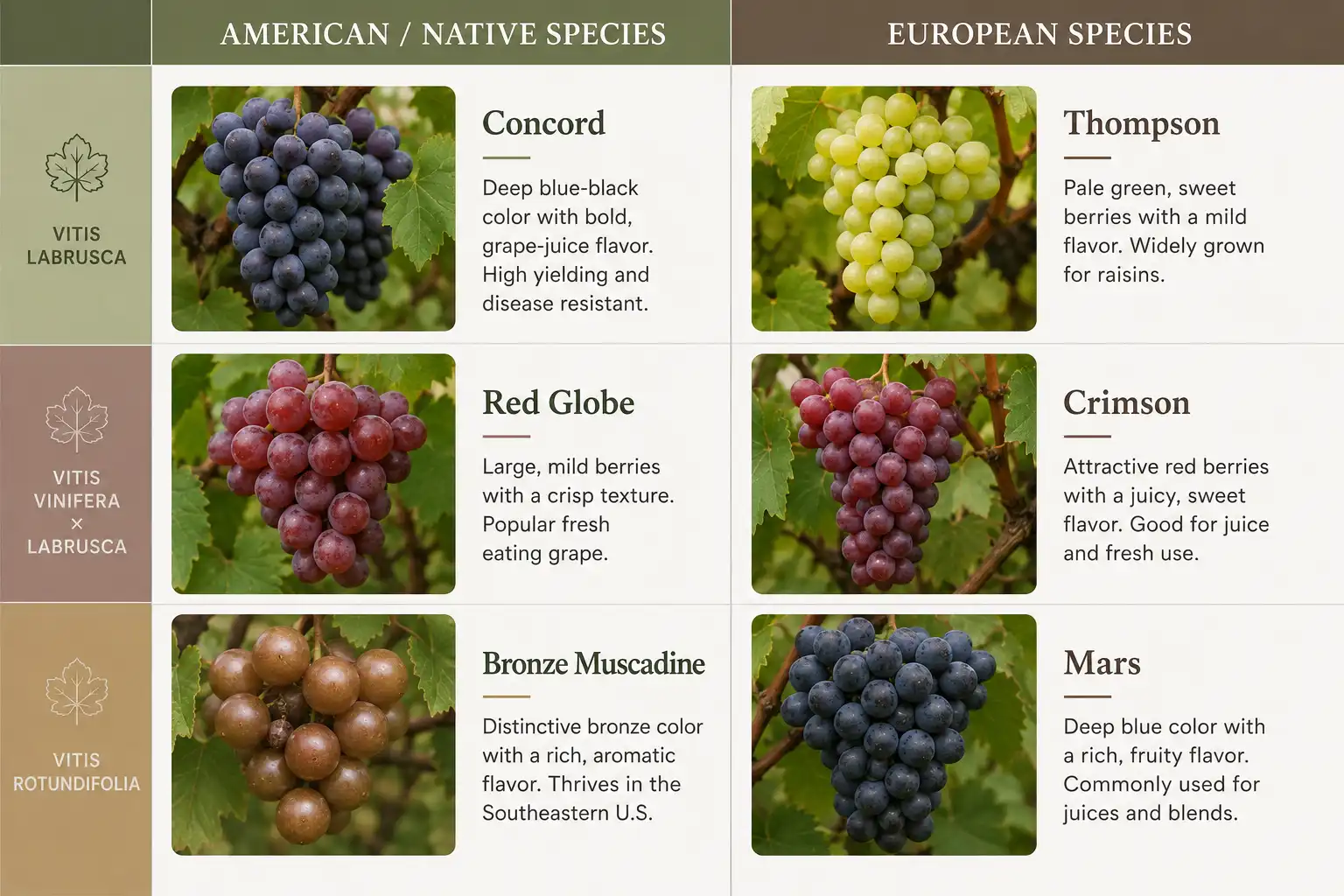
Red Globe is the one seeded table grape you still find in stores. Packers keep it because the berries run huge and ship well. Nearly everything else in the fresh case is seedless.
One naming trap catches home growers every year. Concord Seedless is not a seedless copy of the classic Concord grapes used for juice. It is a separate labrusca cultivar with smaller berries and milder flavor. So plant the seeded vine if you want true Concord juice.
Do Muscadine Grapes Have Seeds?
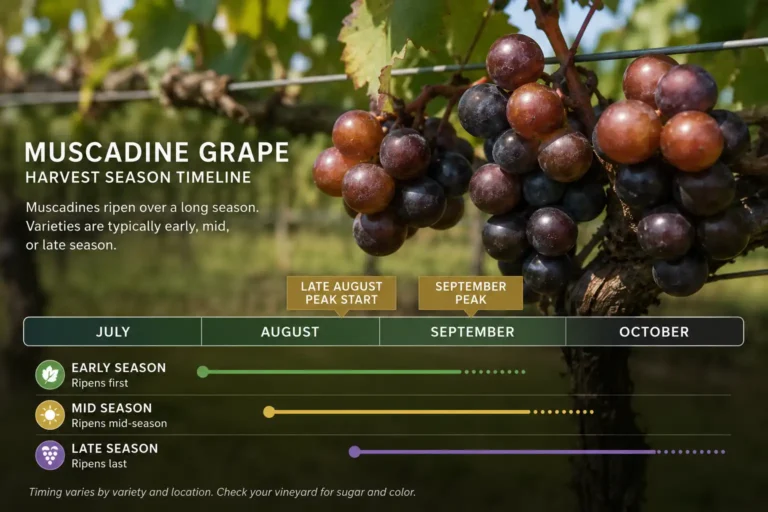
Yes, muscadines have seeds, and they run the largest of any grape. Mississippi State University Extension puts muscadine berries at 1 to 1.5 inches across. Each one holds up to five hard, oblong seeds behind thick, tough skin.
Do not grow them here. Topeka sits in USDA hardiness zone 6a, and native muscadine grapes need zone 7 or warmer. Everything below comes from Southeast extension programs rather than personal observation.
Seed size explains why muscadines never took over the fresh market. Breeders have chased seedless muscadines for decades. Alabama Cooperative Extension trialed Razzmatazz, a muscadine crossed with Vitis vinifera. That vine set seedless berries and fruited without a pollinator. Yield hit 32.6 pounds per vine in 2023 at 17.9 percent soluble solids.
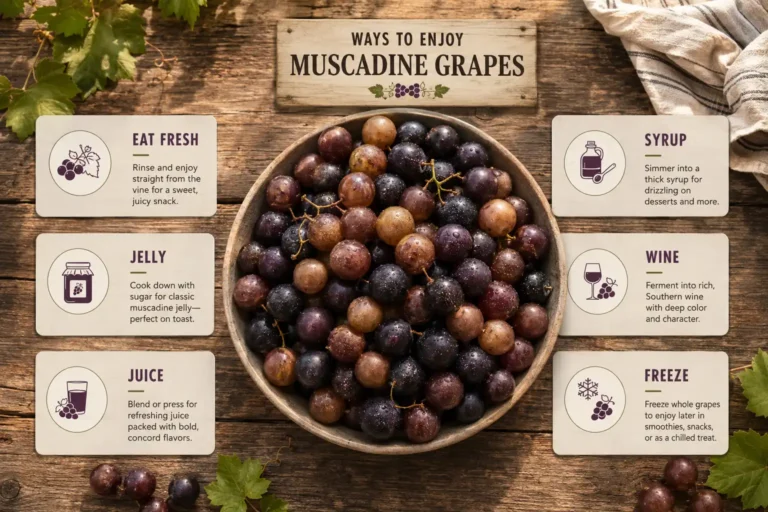
Most muscadine acreage stays seeded, though. Carlos and Noble still dominate juice and wine plantings. Processors do not care about seeds, because crushing and pressing separate them out anyway.
Do Wine Grapes Have Seeds?
All commercial wine grapes have seeds, and winemakers want them there. Seeds carry a large share of the tannin behind red wine structure and aging capacity.
Handling matters more than presence. Seed tannins turn harsh and bitter once seeds crack or grind during pressing. So modern crushers run set to split skins while leaving seeds whole.
Seed color doubles as a ripeness cue. Green seeds mean the fruit is not ready. As berries ripen, seeds shift from green to tan to dark brown. Their tannins soften along the way. Growers taste berries and check seed color alongside sugar readings from a refractometer at harvest.
Seeds do not go to waste after pressing either. Pomace from wine and juice plants gets milled into grape seed oil and grape seed extract.
Are Grape Seeds Safe to Eat?
Grape seeds are safe to eat for most people. They carry nothing toxic, and swallowing a few whole causes no trouble.
The hard coat is the catch. Whole seeds pass through mostly undigested, so you absorb very little of what sits inside. Chewing releases concentrated tannin instead, which tastes sharply bitter.
Grape seeds do hold real compounds. They run rich in proanthocyanidins, also called oligomeric proanthocyanidin complexes or OPCs. They also carry vitamin E and unsaturated fatty acids. Commercial grape seed extract concentrates those polyphenols well past anything chewing delivers.
Two cautions still apply. Hard whole seeds pose a choking risk for toddlers, so pit seeded grapes before serving small children. Grape seed extract also counts as a supplement rather than a food. So check with your doctor first if you take blood thinners.
Can You Plant the Seeds From a Grape?
Grape seeds germinate, but they will not give you the same grape you ate. Grapevines are highly heterozygous, so seedlings scatter across a wide range of traits. Berry size, flavor, color, and disease resistance all shift.
That is why nobody propagates named cultivars from seed. Every Concord vine in North America traces back to cuttings off one original plant. Rooting grape cuttings gives you an exact copy. Starting grapevines from seed gives you unnamed seedlings with unpredictable fruit.
If you want to try it anyway, three steps are not optional:
- Clean the seeds fully. Rinse off all pulp, because leftover sugar invites mold.
- Stratify cold. Hold seeds in moist medium at 33 to 40 degrees F for 90 to 120 days.
- Plan on a wait. Seedlings usually need three to four years before they fruit.
Seed traces from seedless grapes will not sprout. Their embryos aborted before reaching viability. Breeders work around that with embryo rescue, culturing immature ovules before they die off.
Should You Grow Seeded or Seedless Grapes?
Match the choice to what you plan to do with the fruit.
Plant seeded cultivars for juice, jelly, and wine. Concord, Fredonia, and Norton bring flavor depth that seedless types do not match. Seeds come out during pressing, so they cost you nothing. K-State Research and Extension calls Concord the quality standard for juice and jelly here. It does flag uneven ripening in hot summers and under heavy crop loads.
Plant seedless cultivars for fresh eating. Mars, Reliance, and Venus are the three K-State recommends here. All three hold up cold. Reliance also dries well if you want raisins off your own trellis.
Cold hardiness outranks seedlessness when you sort priorities up here. A tender vinifera cultivar will not survive a Kansas winter. Check the hardiness rating first, then sort by seeds.
How to Split Seeded and Seedless Rows
Keep both. Seeded Concord handles the juice and jelly side, and it takes Kansas heat and cold without much fuss. Mars and Reliance cover fresh eating for anyone who would rather not spit pits.
So if you are picking one type for a first trellis in zone 6, start with Mars. It is seedless, disease resistant, cold hardy, and forgiving when you prune it wrong.