Can You Grow Grapes in Florida? Best Varieties and How to Start
Grapes grow in Florida, but the heat and humidity change everything. So can you grow grapes in Florida the way folks do up north? Not with standard wine grapes. The state has its own rules, and the right vine makes all the difference.
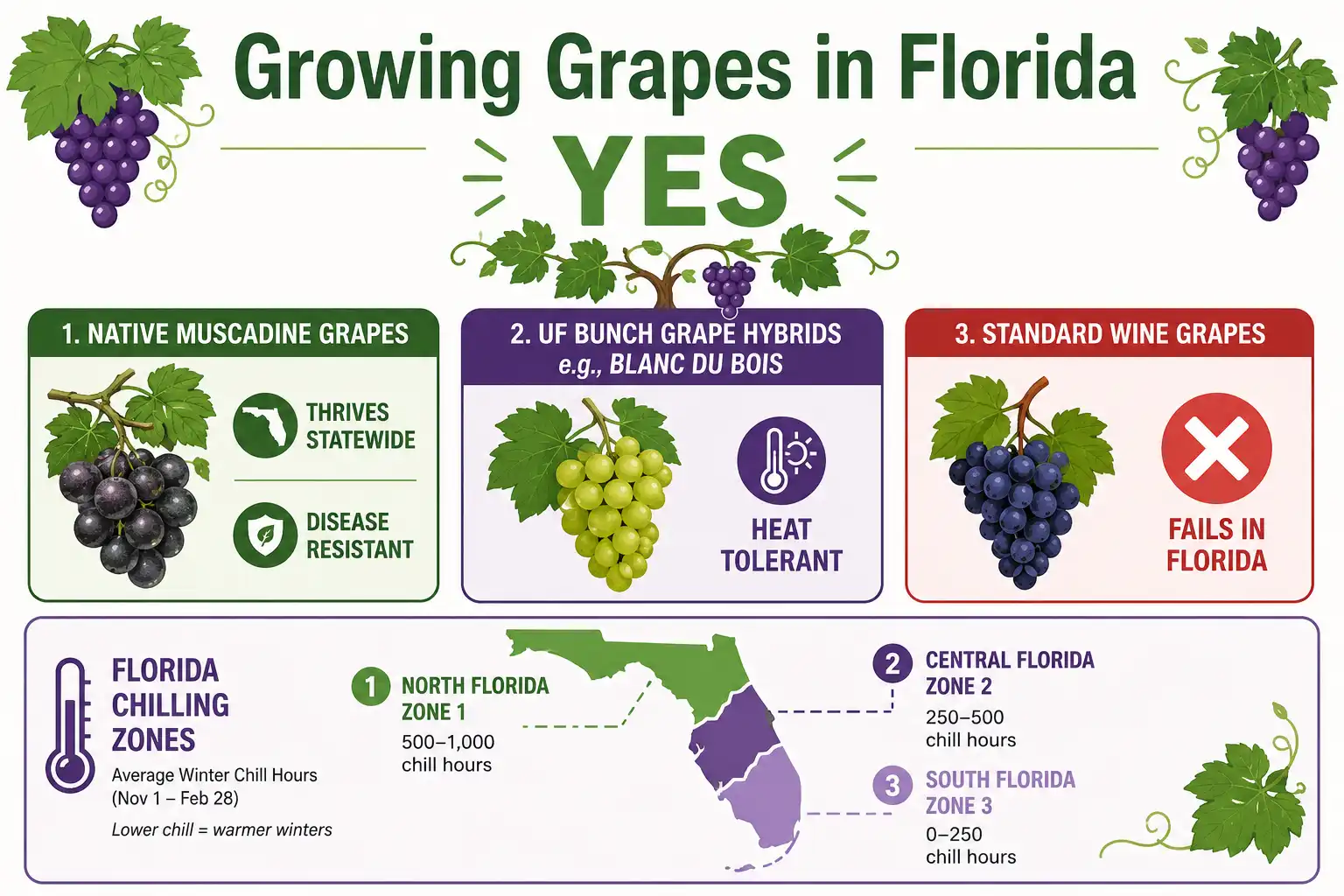
Yes, you can grow grapes in florida, but the vine matters. Muscadines do best because they resist Pierce’s disease, the bacterial killer of standard grapes. For bunch grapes, plant University of Florida hybrids like Blanc du Bois.
Grow Grapes in Florida
Yes, you can grow grapes in Florida, but the type of grape decides your success. Native muscadines (Vitis rotundifolia) thrive across most of the state. They shrug off the heat, humidity, and pests that wipe out other vines. Standard European wine grapes (Vitis vinifera) almost always fail here. So your real job is picking a vine bred for Florida, not fighting the climate. Florida even ranks second in the country for wine consumption, and its muscadine plantings now top 1,000 acres.
Why Do Standard Grapes Fail in Florida?
Pierce’s disease is the main reason standard grapes fail in Florida. This disease comes from a bacterium called Xylella fastidiosa. Leafhoppers spread it when they feed on the xylem, the tissue that moves water up the vine. Once a vine is infected, it clogs, the leaves scorch, and the plant dies within a year or two.
Florida had a real grape industry back in the 1920s. Then Pierce’s disease swept through and killed nearly every Vitis vinifera planting. Muscadines, though, shrugged it off because they evolved right in the Southeast. That single difference shapes almost every grape decision in the state.
What Grapes Grow Best in Florida?
Muscadine grapes grow best in Florida, followed by Pierce’s disease resistant bunch grape hybrids. Muscadines are native, tough, and often grow with no spraying at all. UF/IFAS breeders have also released a short list of bunch grapes that survive the heat. Outside those two groups, your odds drop fast.
Best Muscadine Varieties for Florida
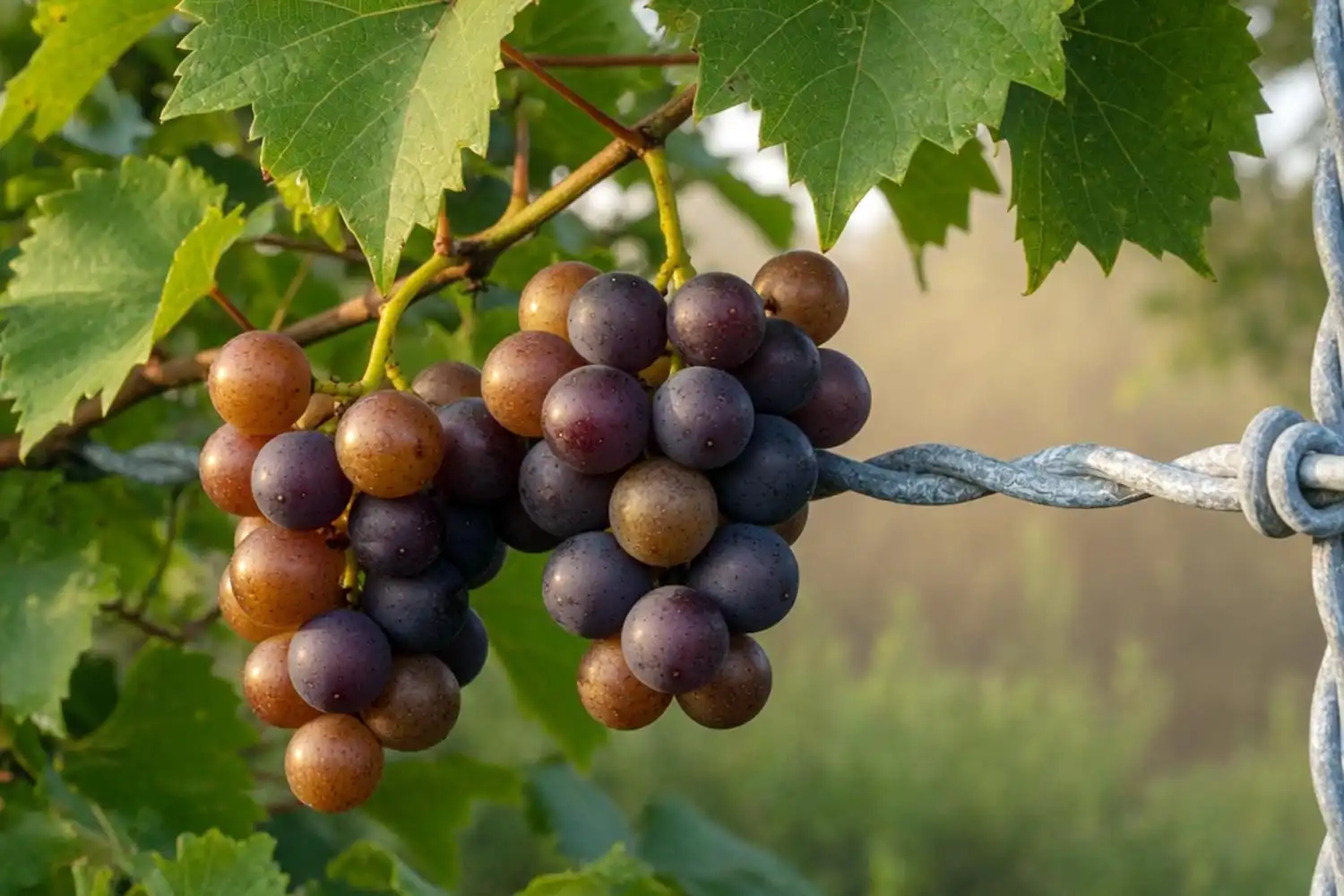
Pick a self-fertile muscadine if you want fruit from a single vine. Self-fertile types pollinate themselves and yield 40 to 50 percent more than female-only vines. For fresh eating, ‘Pineapple’ (bronze), ‘Polyanna’ (purple), and ‘Southern Home’ (black) are reliable picks. For juice, jelly, or wine, most growers lean on ‘Carlos’ (bronze) and ‘Noble’ (red). ‘Noble’ is the most popular red wine muscadine in the Southeast, and its disease resistance runs high. ‘Carlos’ produces heavily, although it can show Pierce’s disease symptoms under drought or heavy stress.
Many large-fruited muscadines are female, so they need a self-fertile vine nearby to set fruit. Always check the plant label before you buy.
Pierce’s Disease Resistant Bunch Grapes
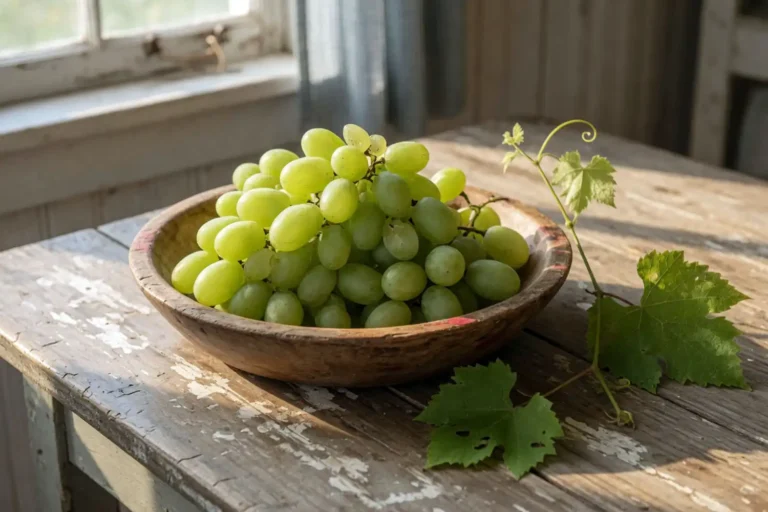
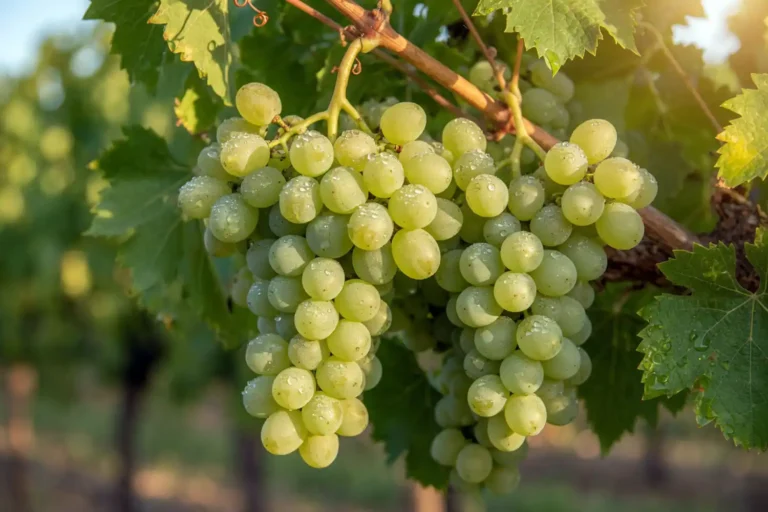
Only seven bunch grape varieties carry enough Pierce’s disease resistance for Florida. ‘Blanc du Bois’ is the standout for wine. UF released it in 1987, and it makes a crisp white with floral, Muscat-like notes. ‘Conquistador’ is a purple grape that looks and tastes close to Concord, so it works well for jelly and red wine. ‘Stover’ and ‘Suwannee’ are light green grapes used fresh and for white wine. ‘Lake Emerald’, ‘Blue Lake’, and ‘Daytona’ round out the recommended list.
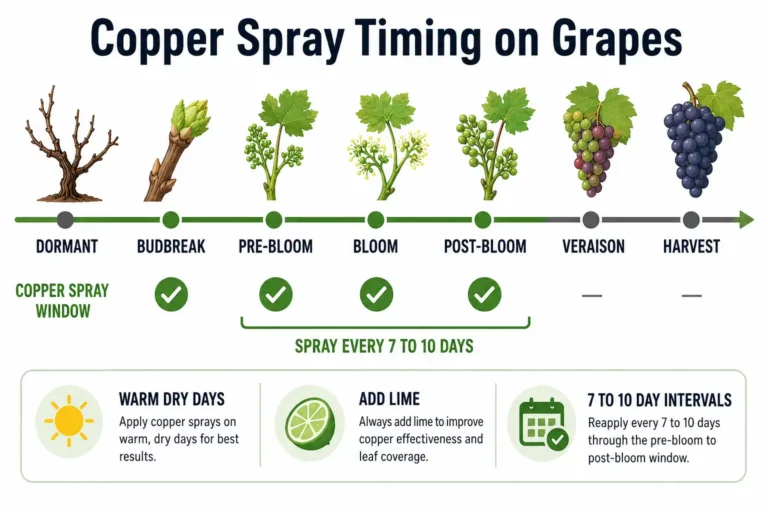
A few of these, including ‘Conquistador’ and ‘Stover’, grow best when grafted onto ‘Tampa’ or ‘Dog Ridge’ rootstock. Bunch grapes also need a fungicide program in wet summers, mostly to fight anthracnose. Muscadines rarely ask for that much spraying.
Can You Grow Grapes in South Florida?
Grapes are harder to grow in South Florida because the winters stay too warm. Grapevines need chilling hours, the time spent below about 45°F, to break dormancy and fruit well. The Florida Panhandle usually banks at least 500 chilling hours each winter. South Florida rarely clears 50 to 100. Those zones line up loosely with the USDA hardiness map. That chill gap is why many temperate fruits, grapes included, struggle in the southern third of the state.
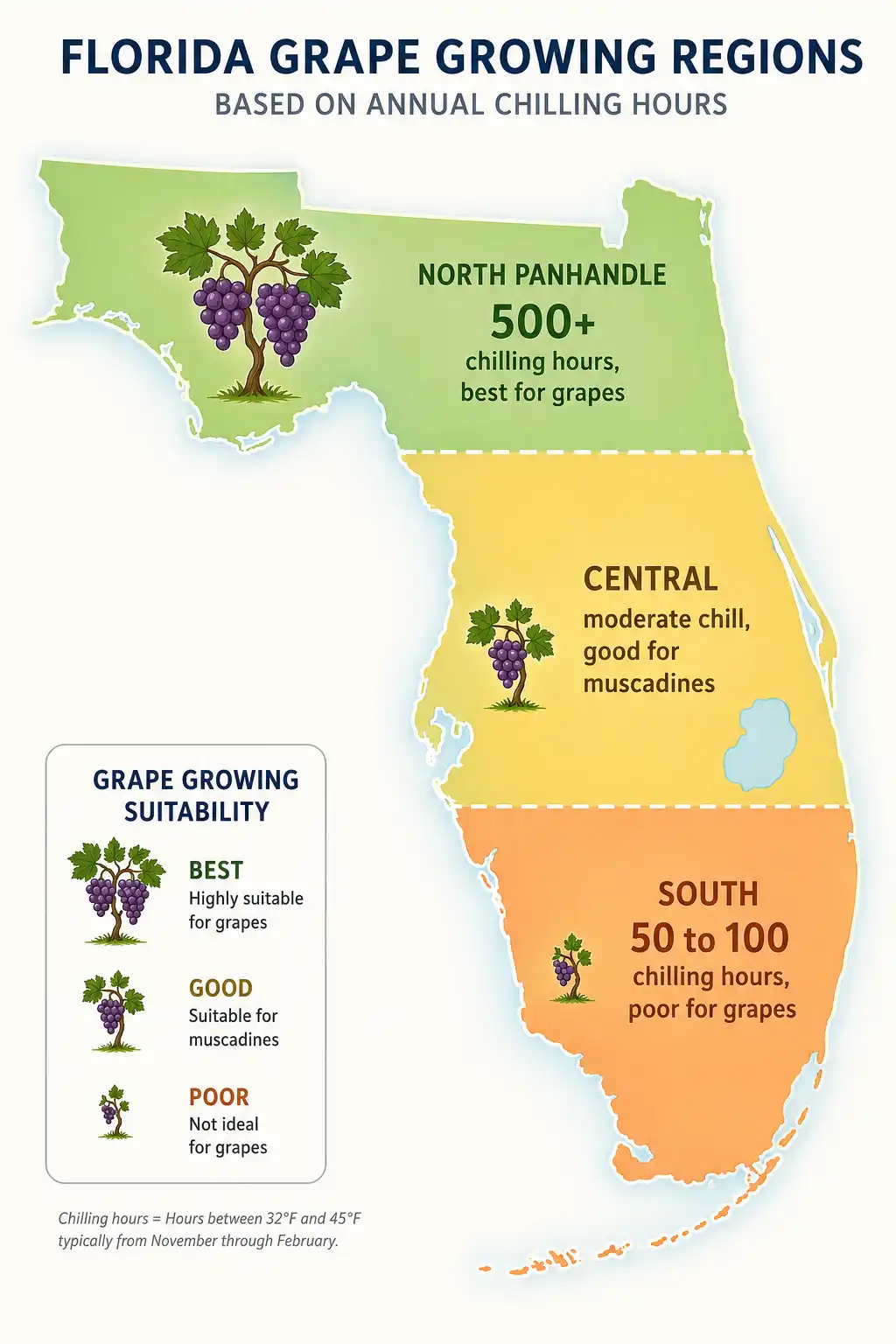
Muscadines still perform best across North and Central Florida. In deep South Florida, expect weaker growth and lighter crops. If space or poor soil is your limit, growing grapevines in containers lets you control drainage and shift the plants when you need to.
When Should You Plant Grapes in Florida?
Plant bare-root grapevines in Florida during the dormant months, December through February. Dormant vines transplant with less shock and root in before the spring flush. Container-grown vines stay more flexible. You can set those out almost any time of year, as long as you irrigate them well. For a fuller look at the best window to plant grapevines across regions, a separate guide breaks the timing down.
Plan ahead on soil too. Test it at least three months before planting, since dolomitic lime needs that long to raise the pH and add magnesium.
How Do You Plant Grapes in Florida?
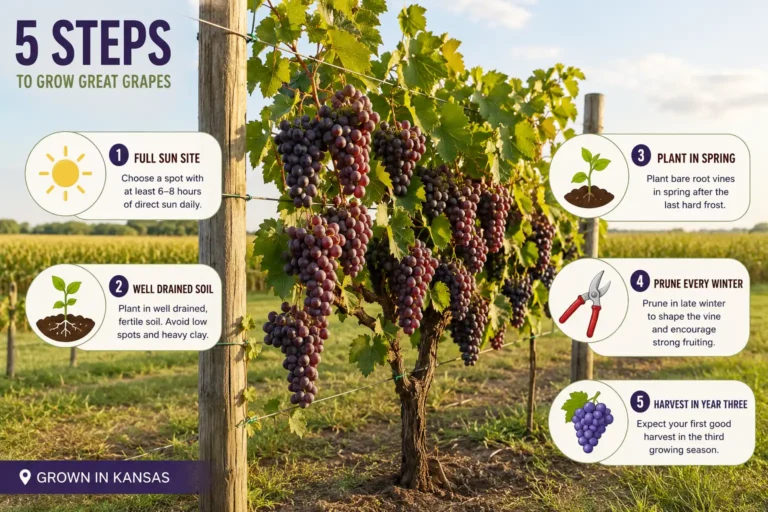
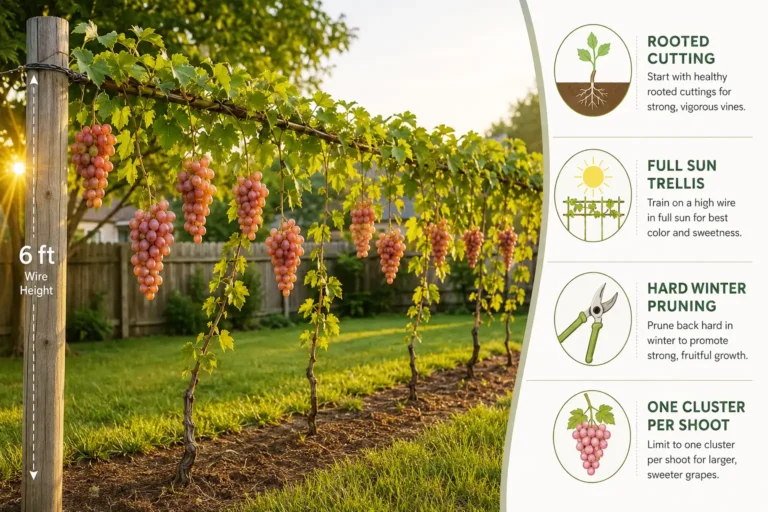
Plant grapes in Florida on a well-drained, full-sun site with a sturdy trellis already in place. Muscadines want a soil pH near 6.0 to 6.5, so adjust with dolomitic lime if your test reads low. Choose high ground with good air flow, because vines sitting in wet soil die young. Build the trellis first, whether that is a single galvanized wire about 5 to 6 feet up or a backyard arbor. The bilateral cordon is the most common training system for muscadines.
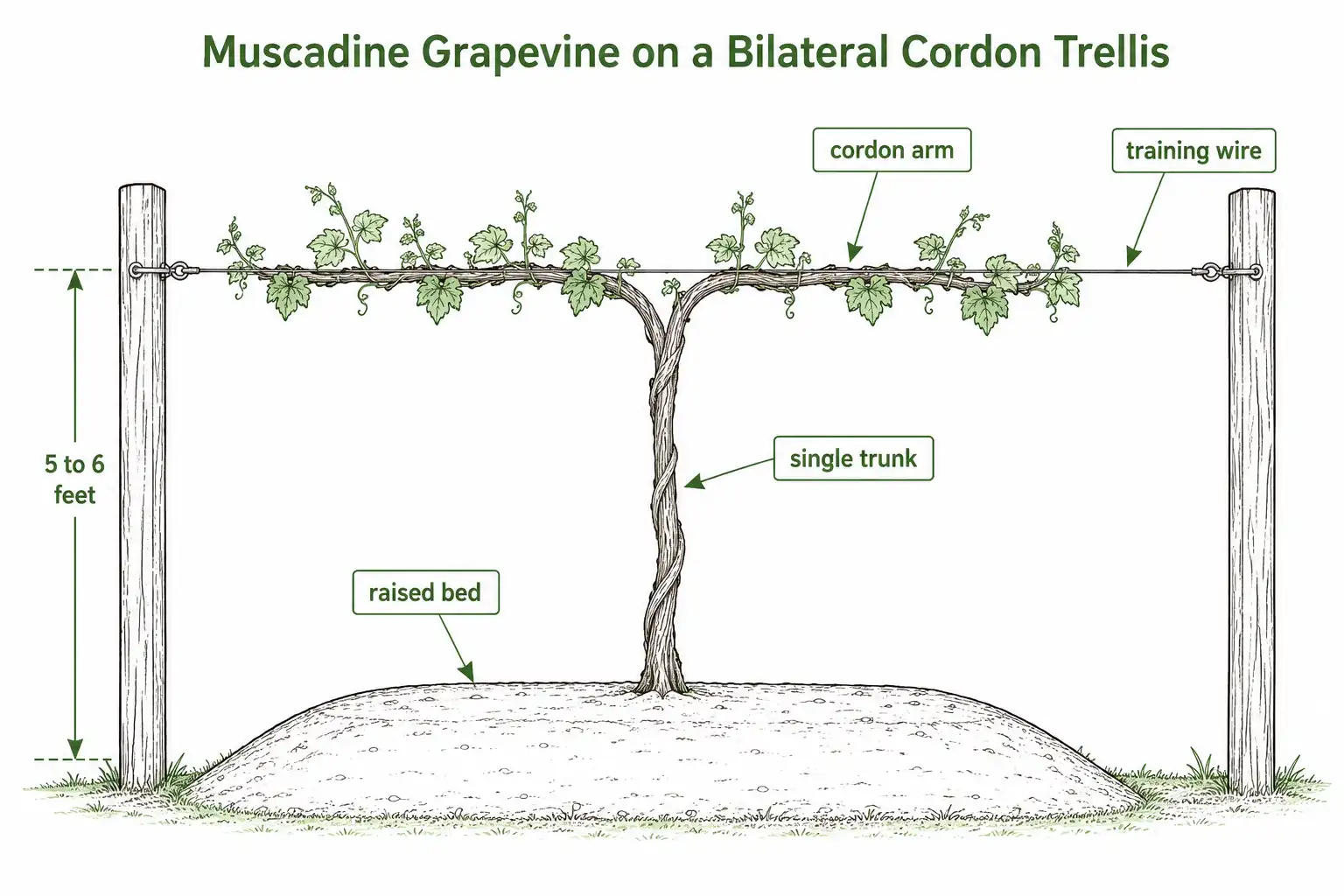
Dig a hole wide enough for the whole root system. Set the vine on a slight raised bed at the same depth it grew in the nursery. Then prune it back to a single stem with three buds and train one strong shoot up to the wire. If you would rather grow your own plants, muscadines root well in summer, and starting grapevines from cuttings costs almost nothing.
How Do You Care for Grapevines in Florida?
Water is the single most important thing for young Florida grapevines. More first-year vines die from drought than from any disease. So irrigate deeply during establishment and through dry spells, sometimes every other day in sandy ground. Knowing how much water vines need each week keeps you from guessing.
Feed lightly but often. A quarter pound of 8-8-8 or 10-10-10 after growth starts, repeated through spring and summer, suits a first-year vine. Raise the rate each season, yet never push past about six pounds per vine in a year. Keep weeds back, because muscadine roots sit shallow and lose to competition fast. Prune during dormancy, from mid-January to mid-March. Avoid fall and early-winter pruning, since that opens the vine to cold injury.
When Are Grapes Ready to Harvest in Florida?
Florida grapes ripen from late July through late September, depending on the variety. Muscadines flower in spring and color up over the summer. You can pick clusters by hand or shake ripe berries loose onto a tarp. Plant early, mid, and late cultivars together and you stretch the harvest over many weeks.
Fresh muscadines keep only about a week, so refrigerate and use them quickly. Bird netting helps too, since wildlife will strip a vine faster than you would believe. New vines also will not carry a real crop right away. Most need until year two or three, which matches how long vines take to produce a full harvest.
Last Words
Florida isn’t the field, but the path here stays simple. Start with a self-fertile muscadine like ‘Noble’ or ‘Carlos’ on a sunny, well-drained site. Build the trellis before you plant, water hard that first year, and prune in late winter. If you want a true wine grape, ‘Blanc du Bois’ is your safest bet. Skip the standard vinifera, and you save yourself a heap of heartbreak.