How to Grow Grapes: A Beginner’s Step by Step Guide
Grapes are one of the most rewarding fruit crops you can plant once. Learning how to grow grapes means getting a handful of things right: a sunny site, the correct variety, a solid trellis, and hard pruning every winter. Do that, and one vine feeds you for decades.
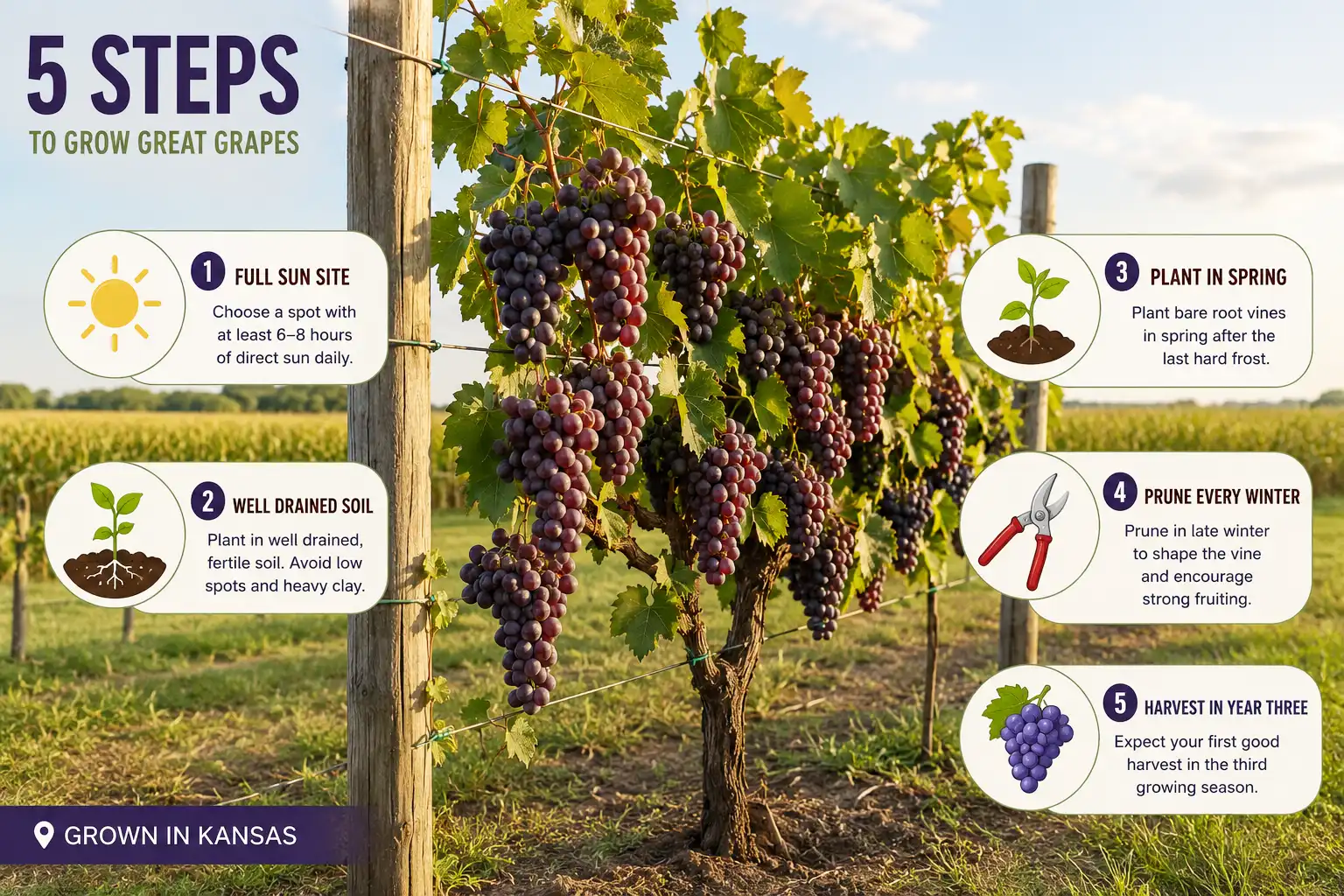
To grow grapes, plant a dormant vine in early spring on a sunny, well drained site. Give it a sturdy trellis, prune hard each winter, and water young vines weekly. Your first full crop comes in year three.
How Do Grapes Grow Through the Season?
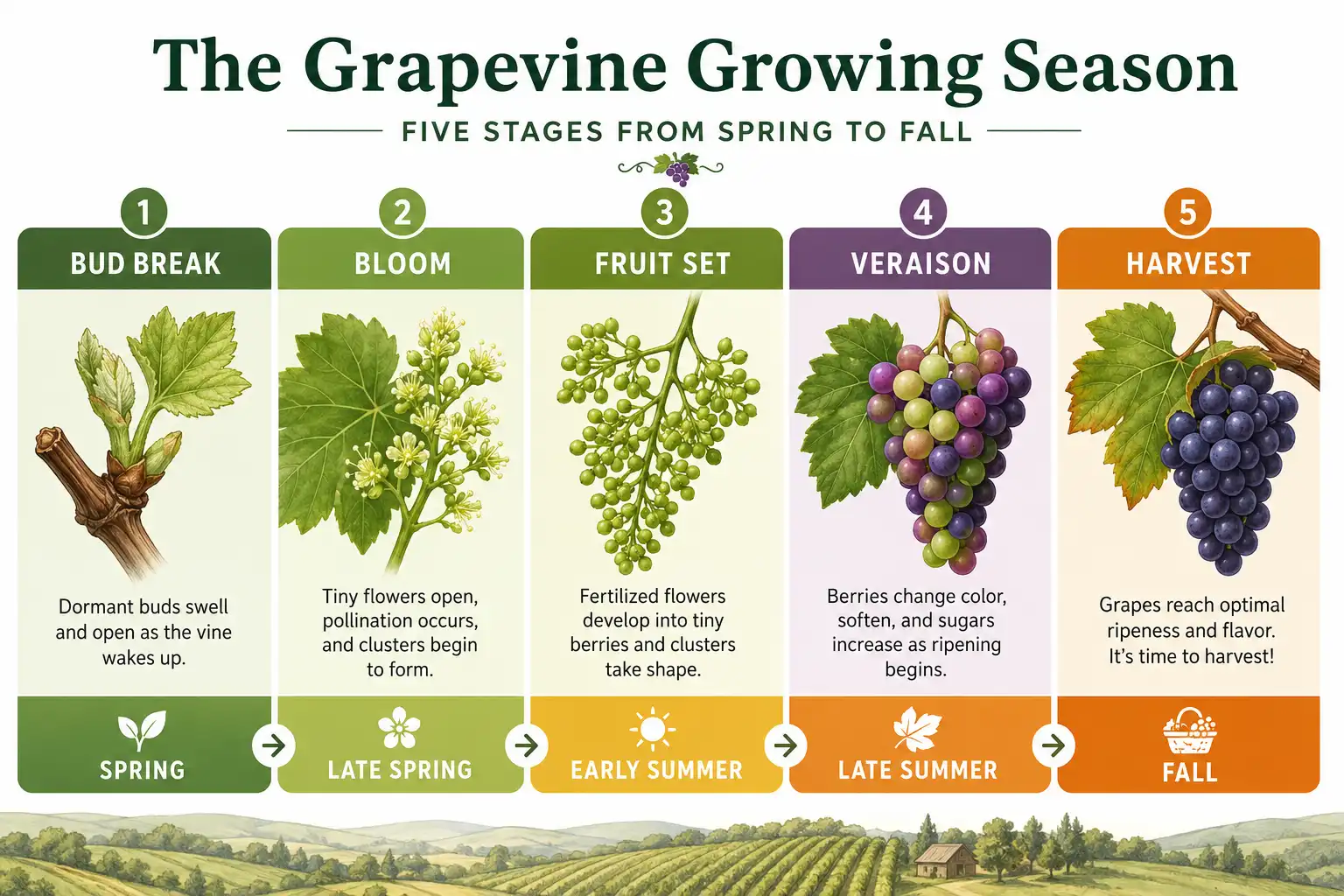
Grapes grow on a yearly cycle that runs from spring budbreak to fall harvest. The vine wakes up, flowers, sets fruit, colors, and ripens, all in one season. Once you know that cycle, timing every job gets easy.
Here is the season for vines in this region:
- Budbreak: Buds swell and push green shoots once the soil warms past about 50°F. For me that lands in mid April.
- Bloom: Small flower clusters open in late spring. Most grapes are self fertile, so they pollinate without a second plant.
- Fruit set: Pollinated flowers turn into tiny green berries in early summer.
- Veraison: Berries soften and change color in mid to late summer. Sugar starts climbing at this stage.
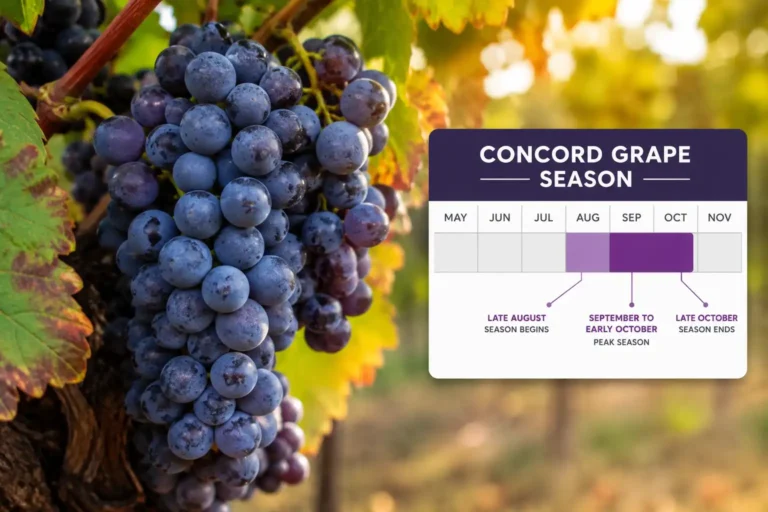
- Harvest: Fruit ripens through late summer and fall, depending on the variety.
Grapes fruit only on shoots that grow from last year’s wood. That one fact shapes pruning decisions, covered further below.
What Do Grapes Need to Grow Well?
Grapes need full sun, sharp drainage, and good air movement. Aim for six to eight hours of direct sun a day. More sun gives you sweeter fruit and less disease.
Drainage matters just as much. Grape roots reach three feet deep or more, and they rot in wet ground. So skip low spots where water pools after rain. A gentle slope is ideal, because both cold air and water drain downhill.
Test your soil before you plant. Most grapes do best at a pH of 5.5 to 6.5. A cheap soil test from your county office shows the pH and what to add. K-State Research and Extension runs one in Kansas for a small fee.
Good airflow dries the leaves and cuts fungal disease. So space your rows to let wind move through. Rows that run north to south also catch the most light.
Which Grape Variety Should You Grow?
Pick a variety that matches your winter lows and how you want to use the fruit. Your USDA hardiness zone rules out anything too tender. So cold hardiness comes first, and flavor comes second.
In zone 6a. That rules out most pure Vitis vinifera, the European wine grapes, since they get hurt below about minus 5°F. American types and cold hardy hybrids shrug off the winters instead. Hundreds of named types exist, so it pays to compare the full range of grape varieties before you buy.
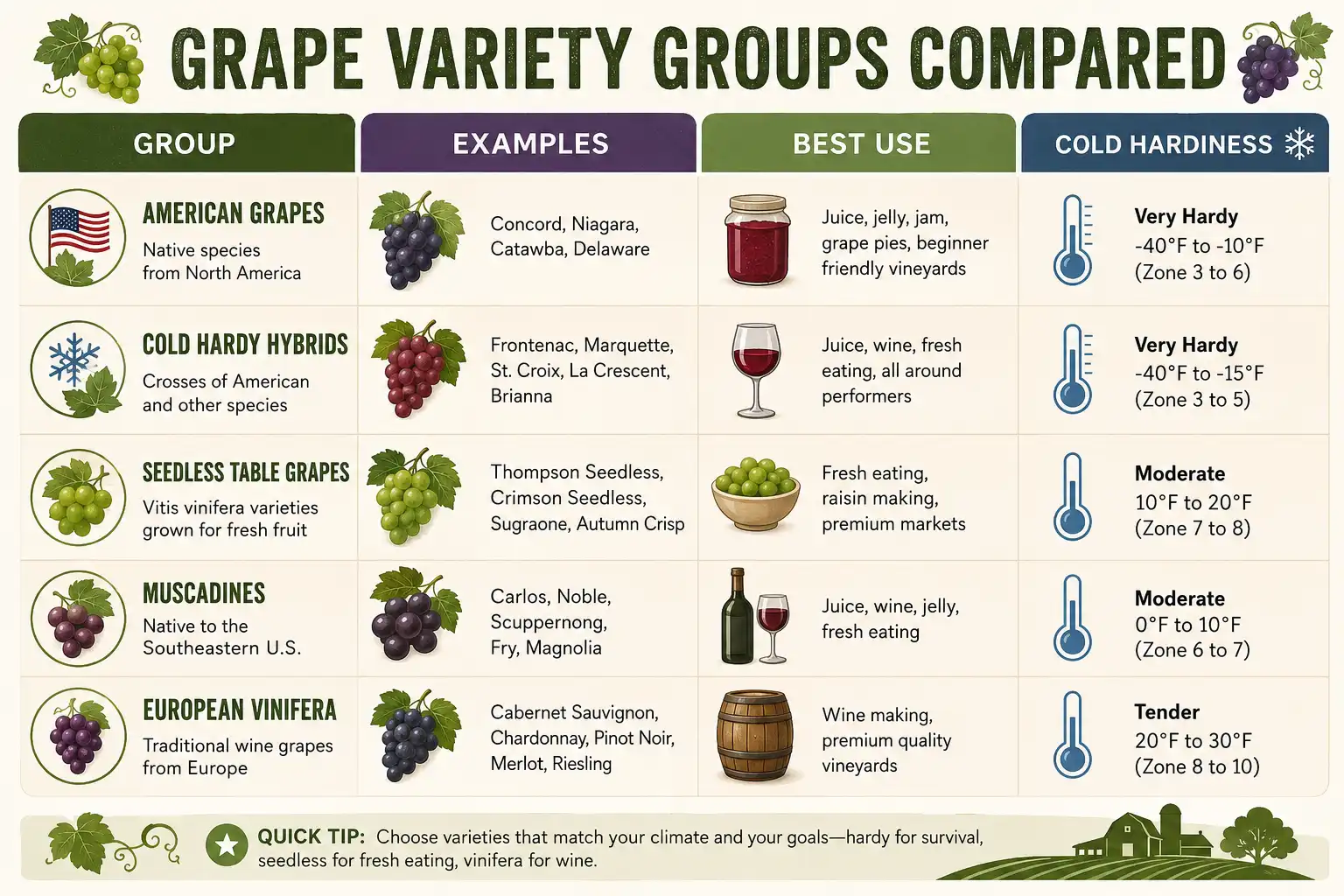
Here is how the main groups sort out:
- American grapes (Vitis labrusca): Concord, Niagara, and Catawba. Tough, disease tolerant, and great for juice, jelly, and fresh eating.
- Cold hardy hybrids: Marquette, Frontenac, La Crescent, and Edelweiss. Bred for hard winters and strong for wine.
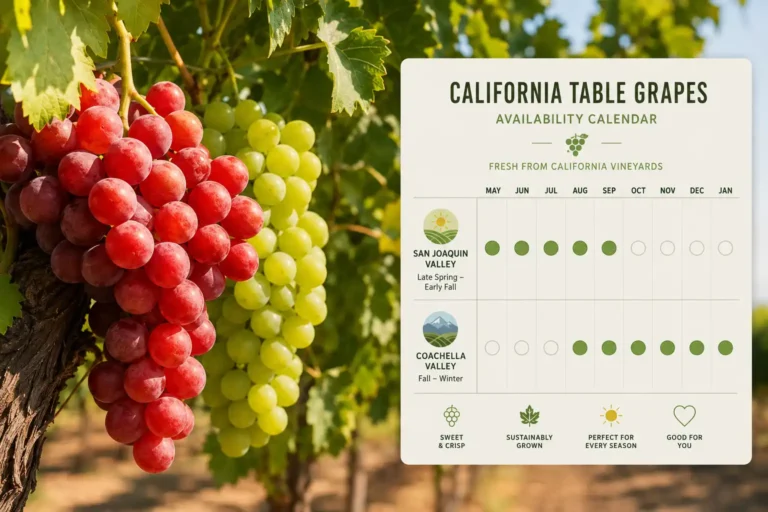
- Seedless table grapes: Reliance, Mars, and Jupiter. Sweet, easy to eat, and hardy across most of the Midwest.
- Muscadines (Vitis rotundifolia): a Southern grape only. They need long, warm seasons and die in a Kansas winter.
- European vinifera: Cabernet, Chardonnay, and the rest. Best kept to mild regions or growers who protect vines each fall.
Always buy certified, virus free plants from a real nursery. Cheap, unnamed vines often carry disease and let you down.
When and How Do You Plant Grapes?
Plant grapes in early spring, while the vine is still dormant and the ground can be worked. Dormant, bare root vines are cheap and settle in fast. Fall planting suits the South, but Kansas winters hit young roots too hard. our guide covers timing your grape planting by region if you want your local window.
Here is how to set a bare root vine:
- Soak the roots in water for two to three hours before planting.
- Dig a hole wide enough to spread the roots without bending them.
- Set the vine at the same depth it grew at the nursery.
- Trim any broken roots, then cut the top back to two or three buds.
- Fill the hole, firm the soil, and water it in well.
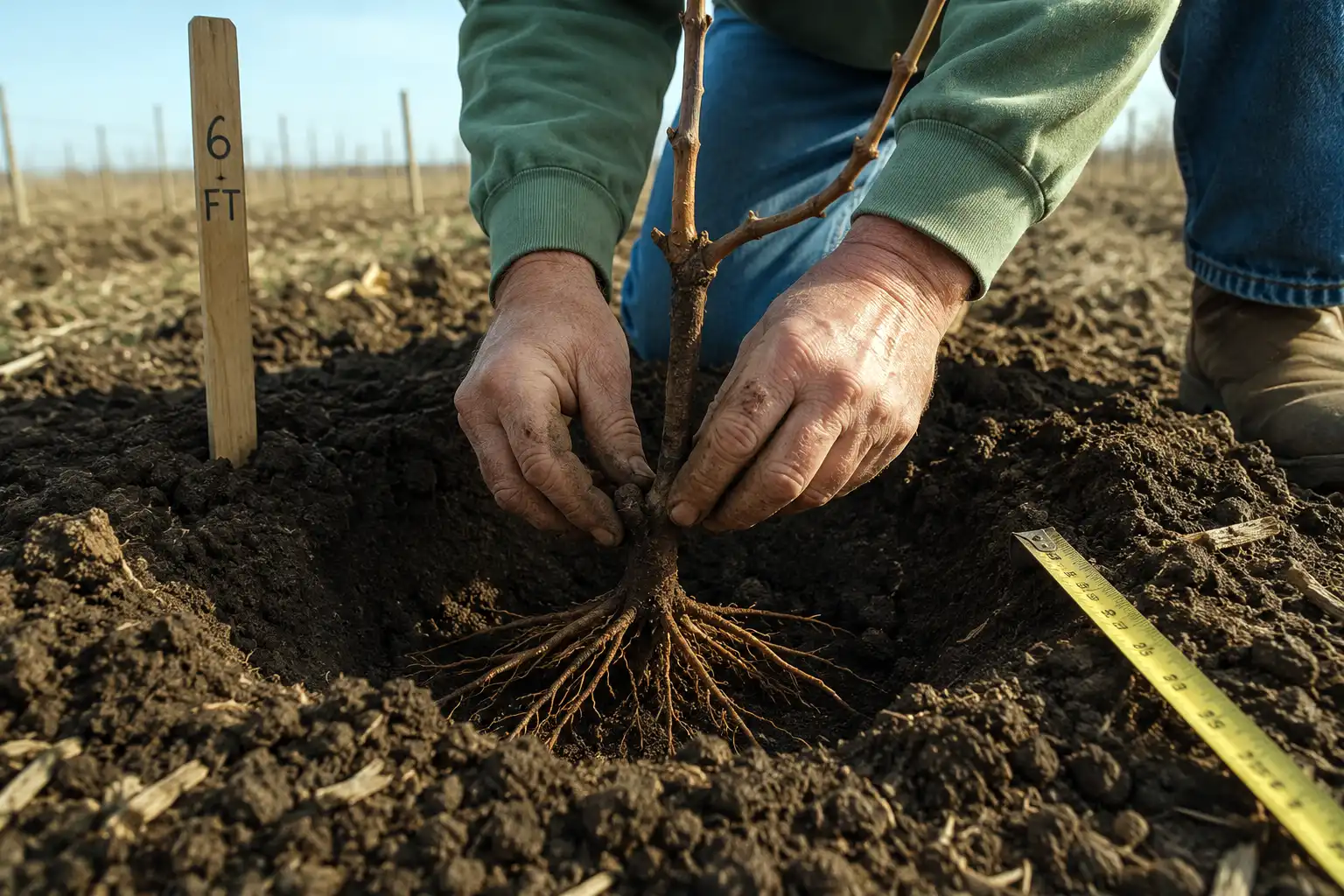
Space vines 6 to 8 feet apart in the row. Leave 8 to 10 feet between rows for American and hybrid types. Muscadines need far more room, up to 20 feet. Crowded vines shade each other and trap disease.
Most people start with a bought vine. You can also root your own from dormant hardwood cuttings, which is cheap and simple. Growing from seed works too, but seedlings are slow and rarely match the parent, so few growers bother.
How Do You Build a Trellis and Train the Vine?
Grapes need a trellis because the fruit hangs on new shoots off a permanent frame. Left on the ground, vines sprawl, rot, and barely produce. A simple two wire trellis handles most backyard and small field plantings.
Set strong end posts first. Then run a lower wire near 3 feet and a top wire at 5 to 6 feet. From there, you train the vine over three seasons.
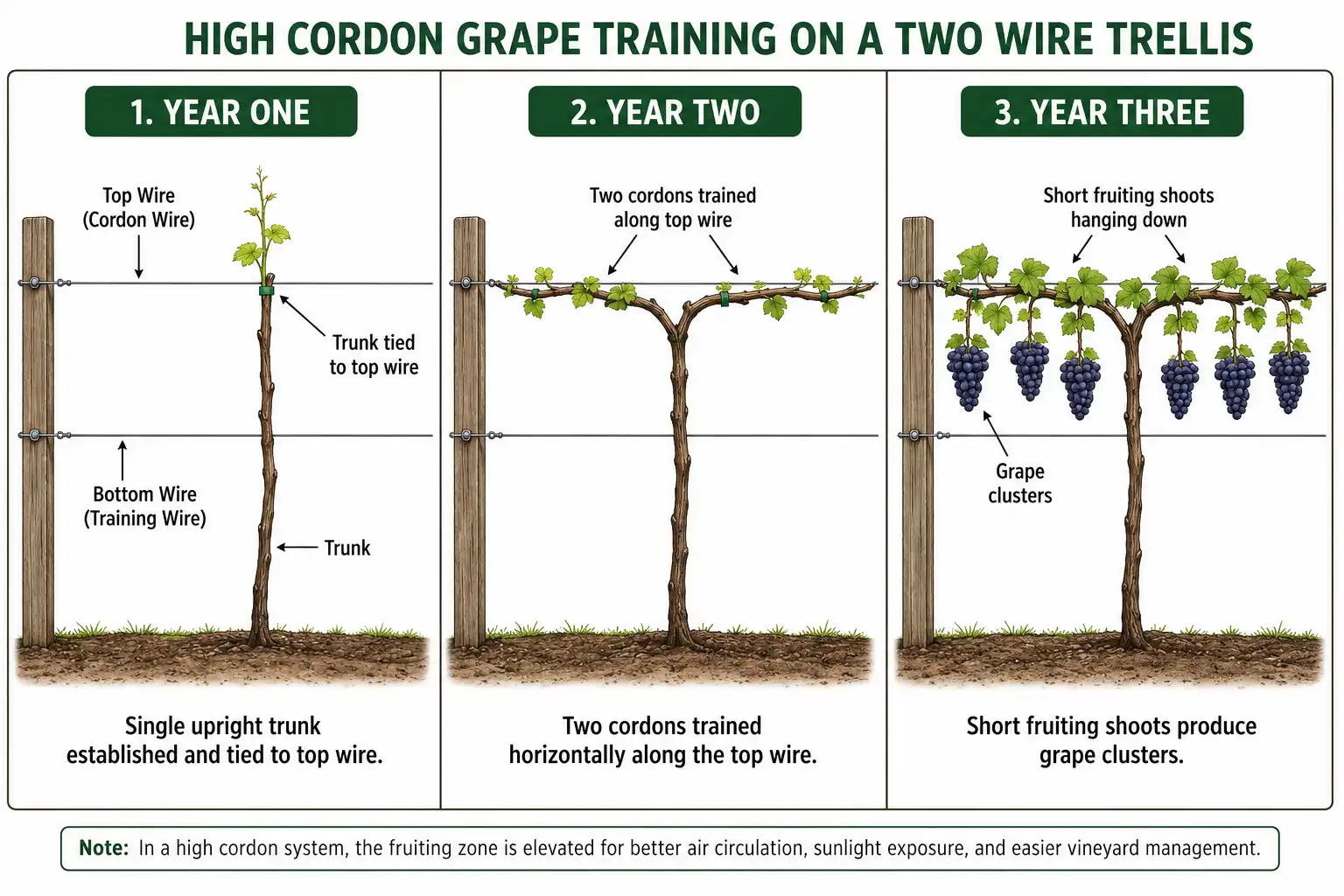
- Year 1: Grow one strong shoot straight up for the trunk. Tie it to the wire and rub off the rest.
- Year 2: Choose two canes near the top wire. Train one each way along the wire. These become the cordons, your permanent arms.
- Year 3: Short shoots rise off the cordons and carry your fruit. Now the vine holds its full shape.
Most Concord and American growers use the high cordon system, with the fruit draping down from the top wire. It forgives mistakes and is easy to manage.
How Do You Prune Grapes Each Year?
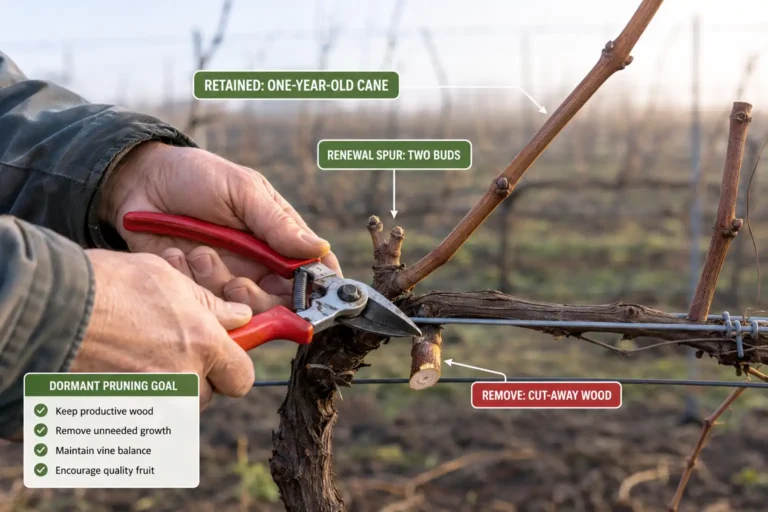
Prune grapes every winter while they sit fully dormant, and take off about 90% of last year’s growth. That feels brutal the first time. But grapes fruit only on canes that grew the year before, so hard pruning sets up next year’s crop. New growers almost always cut far too little.
Prune in late winter, usually February into early March, before budbreak. Prune later and the vine bleeds sap from the cuts. That looks bad but does no harm.
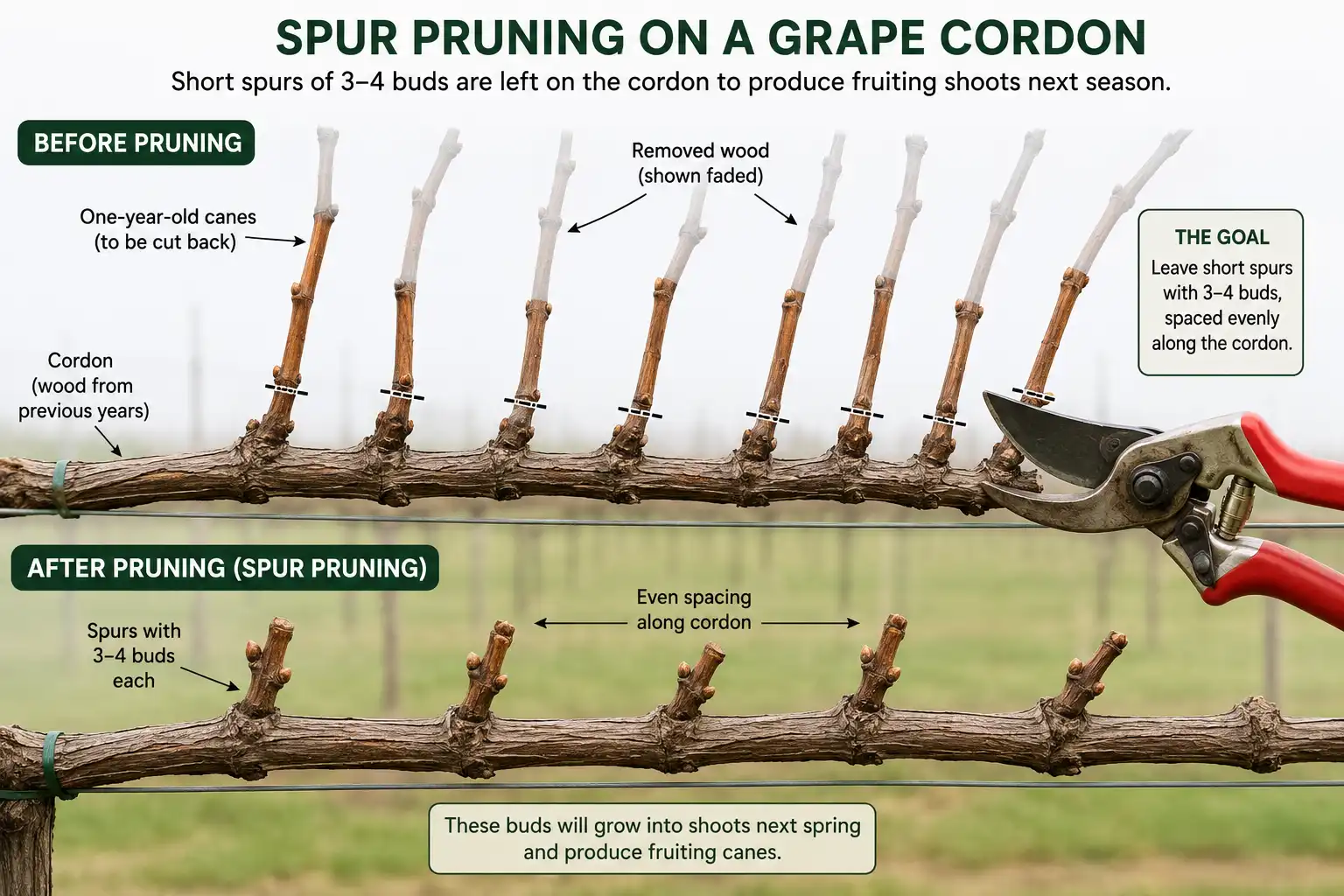
Here is the basic spur pruning method on a cordon:
- Keep canes about as thick as a pencil, roughly 3/8 inch.
- Cut each keeper cane back to a short spur with 3 or 4 buds.
- Space those spurs about 6 inches apart along the cordon.
- Cut everything else off, including thin, shaded, or oversized canes.
A mature vine carries 40 to 60 buds total. Each bud sends out a shoot with two or three clusters. On very vigorous vines, balanced pruning dials in the number. Concord types often use a 30 and 10 rule: 30 buds for the first pound of prunings, plus 10 buds for each extra pound.
How Do You Water, Feed, and Weed Around Grapes?
Give young grapevines about 1 inch of water a week, and keep the ground under them clear of weeds. Established vines handle drought well, one reason they do so well across the Great Plains. Water deeply through the first two seasons while the roots spread. After that, most vines get by on rainfall alone.
Water at the base, not over the top. Drip lines or a soaker hose keep the leaves dry and lower disease. Overhead sprinklers soak the foliage and invite mildew. For a stage by stage look at how much water vines need.
Weeds and grass steal water and nitrogen from young vines. So keep a clean, weed free strip about 3 feet wide down the row. A few inches of mulch or wood chips smother weeds and hold moisture. Just keep the mulch a few inches back from the trunk.
Go light on fertilizer. Too much nitrogen grows leaves at the cost of fruit. A soil test tells you the real need. As a rough guide, extension sources suggest:
- About 8 ounces of 10-10-10 per vine, a week after planting.
- Around 1 pound per vine the second year.
- Roughly 1.5 pounds per vine the third year and after, spread about a month before spring growth.
Scatter it in a ring, never against the trunk. Piled on the trunk, fertilizer burns the bark.
Which Pests and Diseases Hit Grapes?
Grapes deal with a short list of common pests and diseases, and most stay in check with airflow, cleanup, and well timed sprays. Fungal disease causes the most grief in humid summers.
Keep an eye out for these:
- Black rot: brown leaf spots and shriveled black berries. It is the worst grape disease across the eastern half of the country.
- Powdery mildew: a white, dusty film on leaves and fruit.
- Downy mildew: yellow leaf spots with fuzzy growth on the underside.
- Japanese beetles: they chew leaves down to lace in midsummer.
- Grape berry moth: the larvae tunnel into the berries.
Rake up fallen leaves and shriveled fruit every fall, since that is where the fungus overwinters. Many growers run a copper or sulfur fungicide on a set schedule. For the organic route, getting when to spray copper fungicide right holds disease back without harsh chemicals. Plant disease resistant varieties and you spray far less.
How Do You Keep Birds Off the Grapes?
Net the vines as the fruit starts to color, because birds can clear a crop in a matter of days. Ripe grapes pull in robins, starlings, and finches fast. Netting is the only fix that truly works.
Drape bird netting over the whole row and pin the bottom shut so birds cannot duck under. Put it up once the berries begin to soften and sweeten. Reflective tape and scare devices buy a little time, but hungry birds soon ignore them.
How Long Does It Take to Grow Grapes?
Grapes take about three years to give a full crop. The young vine spends its first seasons building roots and a frame before it fruits hard. Here is the rough timeline:
- Year 1: Roots and one trunk. Pinch off any flowers so the vine builds strength.
- Year 2: Cordons form. Let it hold only a handful of clusters, if any.
- Year 3: The first real harvest comes in.
In the coldest zones, mound a little mulch or soil over the base its first winter to shield the young wood. A healthy mature vine gives 20 pounds of fruit or more each year, and some varieties beat that. Well cared for vines keep bearing for 40 years or longer. For the full stage by stage picture, go deeper into how long grapevines take to bear.
When Are Grapes Ready to Harvest?
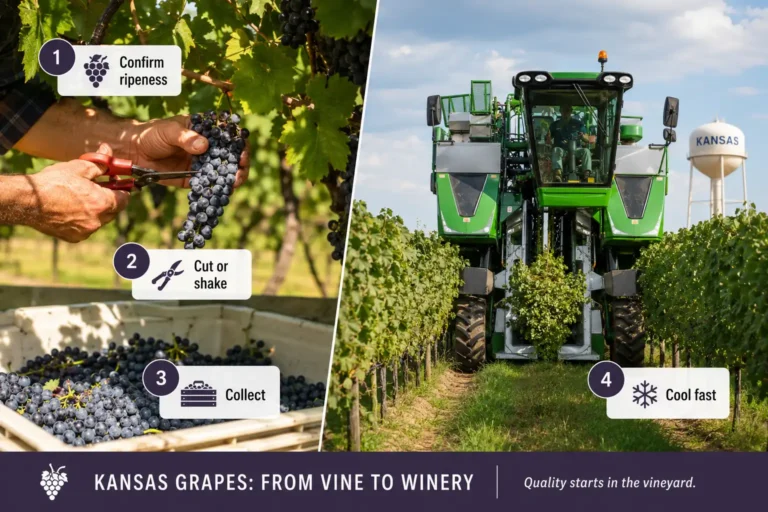
Grapes are ripe when they taste sweet, not by color alone. Color changes weeks before the sugar peaks. So the only sure test is tasting a few berries from different clusters.
Grapes do not ripen after picking. They are non climacteric, meaning sugar stops rising the moment you cut the cluster. Pick too early and the fruit stays sour for good. Serious growers check sugar with a refractometer, reading Brix around 18 to 22 for table grapes.
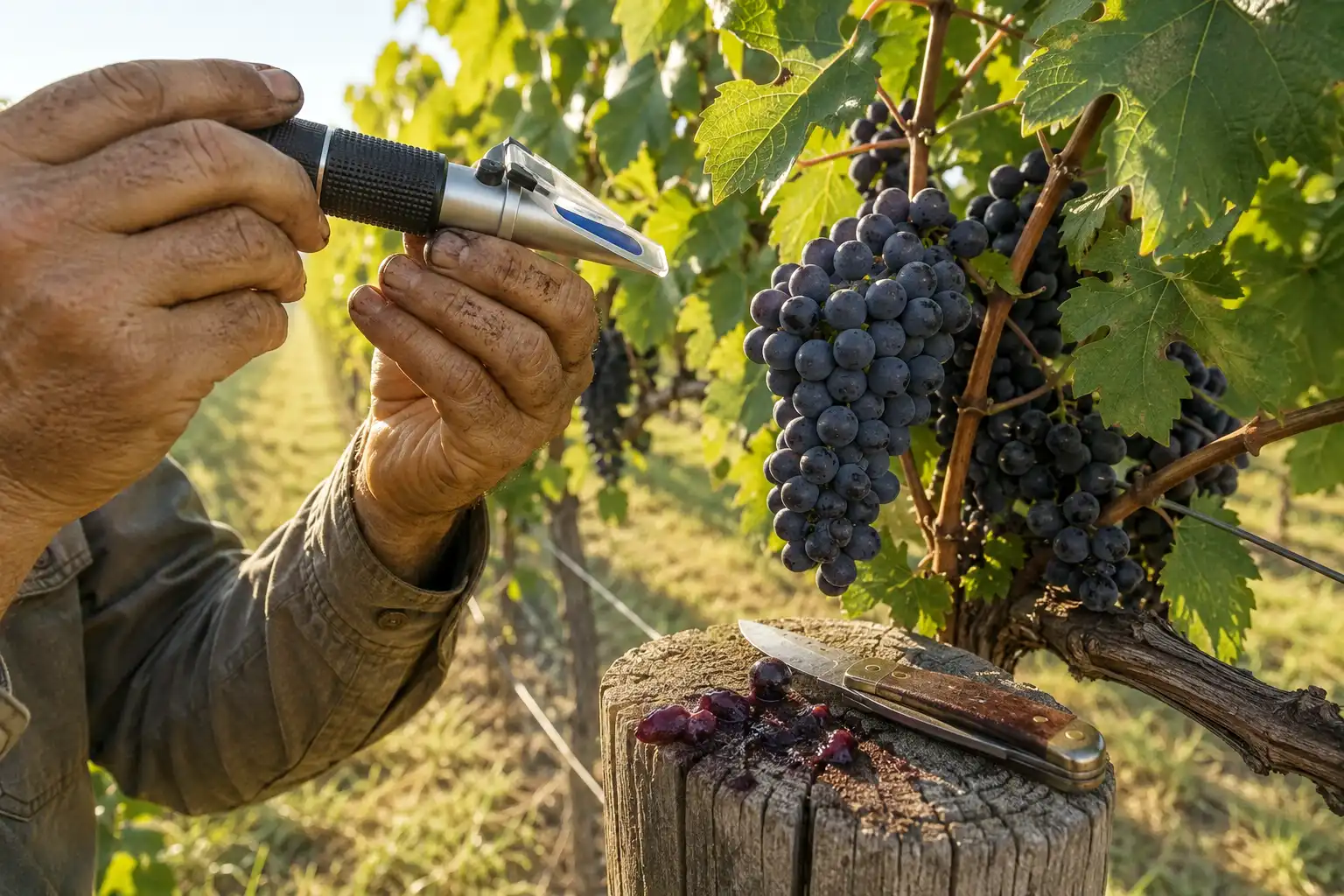
Snip whole clusters with pruners in the cool morning. Handle them gently to keep the bloom, that natural dusty coating. For the finer points on when grapes are ready to pickgo through the signs by type.
Final Words
Growing grapes rewards patience, and the payoff runs for decades. Start with a sunny, well drained spot and a variety built for your winters. Plant a dormant vine in spring, give it a solid trellis, and prune it hard every year. Keep the young vines watered and weed free, watch for disease, and net the fruit before the birds beat you to it. Do all that, and by year three you pick your first real crop. Not many crops give back this much for this long.