Hybrid Vs Heirloom Seeds: 8 Practical Tradeoffs Farmers Actually See
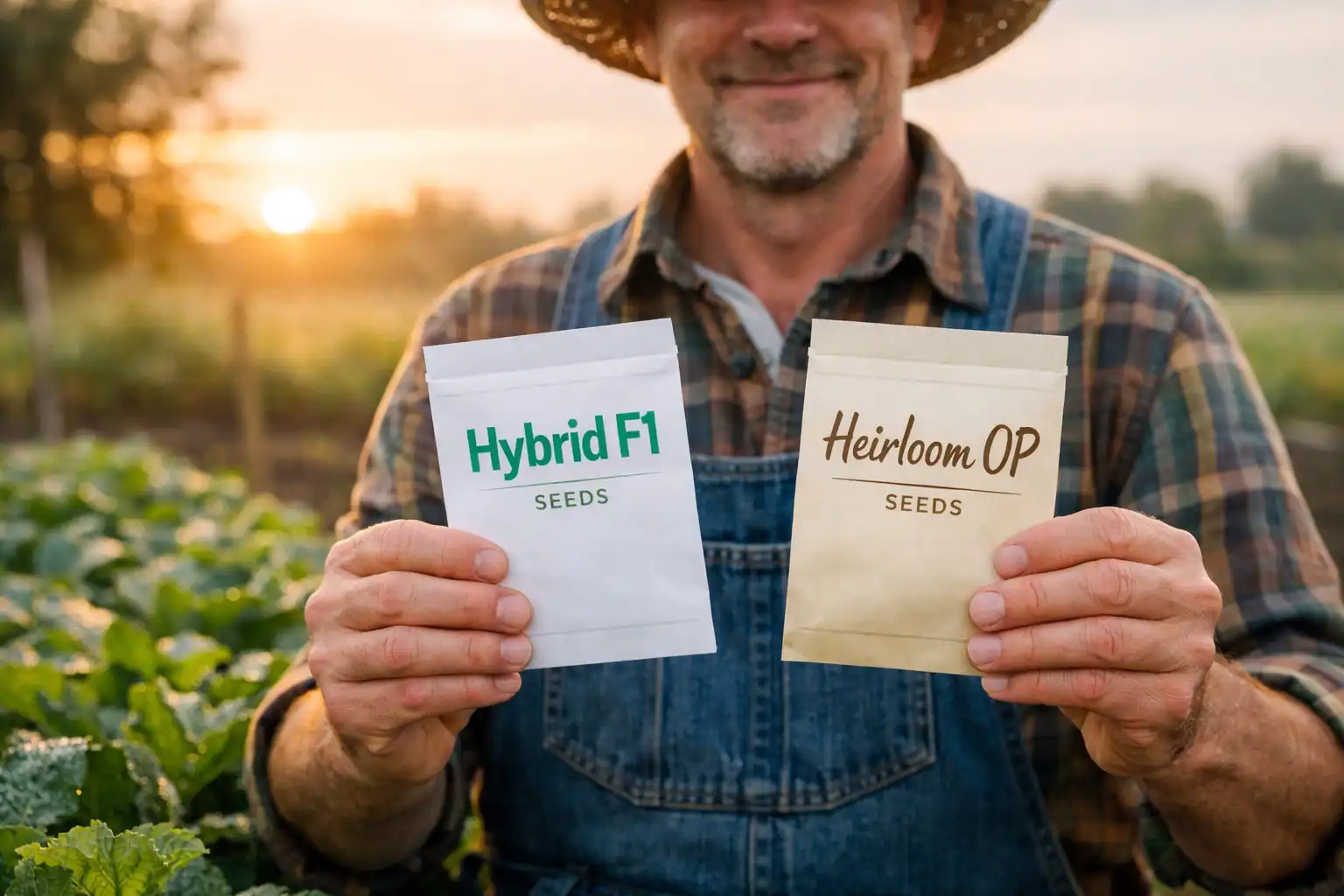
Hybrid vs heirloom seeds comes down to one question: do you want predictable performance from a planned cross, or do you want a stable, seed-saveable variety that stays true year after year. Hybrids (often labeled F1) give uniform plants and often stronger vigor. Heirlooms give dependable genetics for saving seed and preserving traits like flavor, color, and history. Both grow good crops when you match the seed type to your goals, your pest pressure, and your management style. This guide walks you through definitions, real farm tradeoffs, and how to decide crop by crop.
What are hybrid seeds?
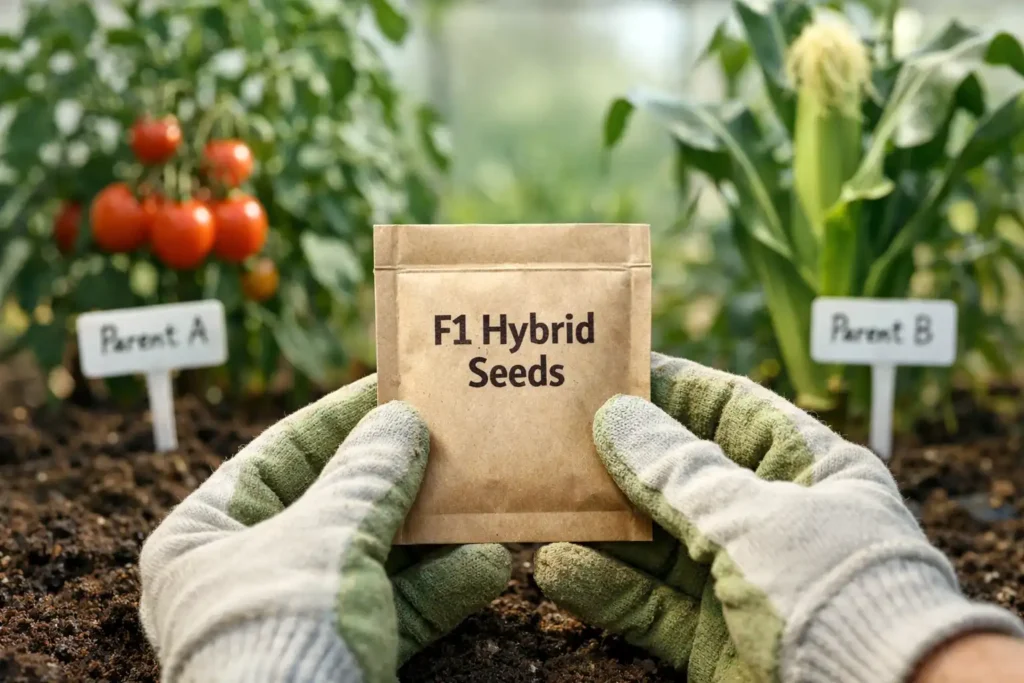
Hybrid seeds are seeds that plant breeders produce by crossing two parent lines to create a first-generation (F1) seed that expresses specific traits. Breeders select parents to deliver uniform maturity, consistent size, disease resistance, or vigor. Farmers buy hybrid seed because the crop often stands evenly, harvests in a tighter window, and grades more consistently.
Crop farming planning starts with your field goals, a realistic budget, and a clear plan for seed, fertility, weed control, and harvest logistics.
If you want a practical planting refresher, see our guide to planting and seeding practices for timing, depth, and stand basics.
What are heirloom seeds?
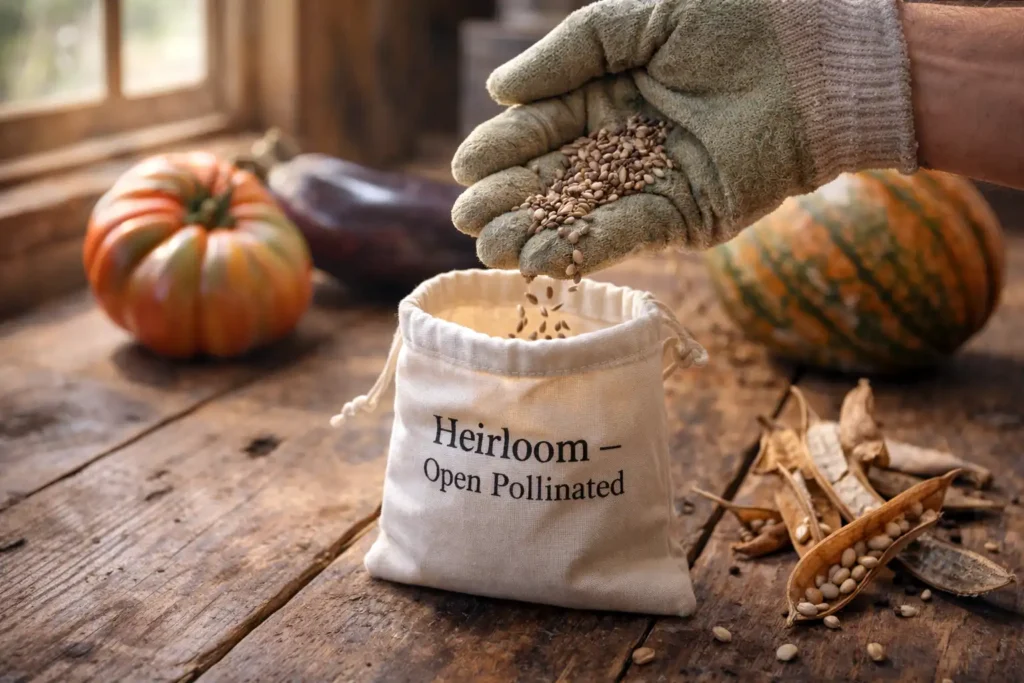
Heirloom seeds are open-pollinated varieties that people maintain over many generations, usually with a history of being saved and replanted within a family, community, or region. Growers save seed from healthy plants, and that seed produces plants that match the parent type when isolation and selection stay tight. Farmers grow heirlooms for seed saving, local adaptation, and traits like flavor and unique market appeal.
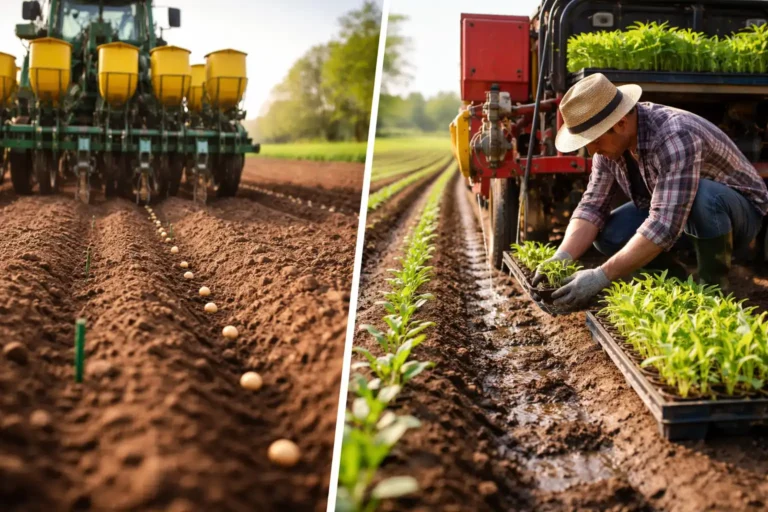
Use your seed choice to match your schedule, because sowing seeds directly vs starting seedlings changes how fast plants establish and how much early-season control you get.
What is an open-pollinated variety, and how does it relate to heirlooms?
Open-pollinated varieties are plants that produce seed that breeds “true” when pollination stays controlled. Heirlooms are a subset of open-pollinated varieties with a longer history and cultural continuity. Garden catalogs sometimes list “OP” and “heirloom” separately, but the seed-saving behavior is the key point: open-pollinated types can produce stable seed when you prevent unwanted cross-pollination.
Mulch supports both hybrid and heirloom plantings by conserving moisture and reducing weed pressure, so farm mulching practices helps you protect stand strength early in the season.
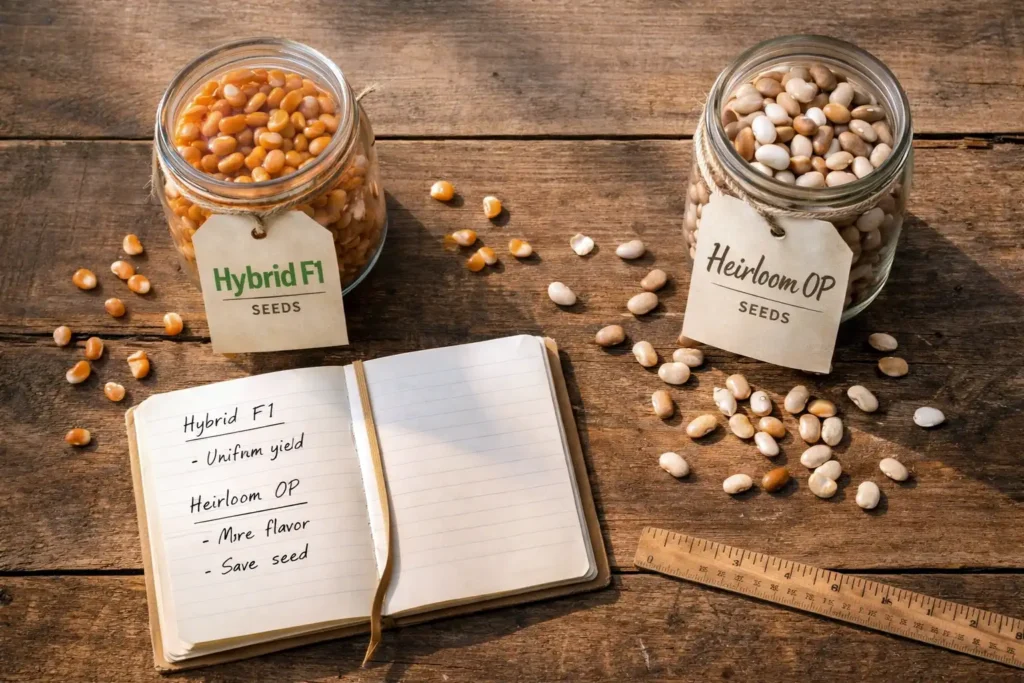
Hybrid vs heirloom seeds at a glance
| Feature | Hybrid (F1) | Heirloom (Open-pollinated) |
|---|---|---|
| Primary goal | Uniform performance from a planned cross | Stable traits you can keep by saving seed |
| Seed saving | Seed usually does not repeat the same traits | Seed repeats traits when isolated and selected |
| Field uniformity | High | Medium to high, depends on the variety |
| Market fit | Volume, consistency, packing sheds | Direct sales, specialty markets, flavor niches |
| Cost per seed | Often higher | Often lower |
| Best use case | Tight harvest windows, disease pressure, consistent grade | Seed saving, local selection, unique quality traits |
Why do hybrids often yield and size more consistently?
Hybrids often yield and size more consistently because breeders build the F1 cross to express uniform traits across the field. Uniform plants line up better with transplant schedules, cultivation passes, and harvest crews. That consistency matters when you sell into channels that pay for grade, size, and predictable supply.
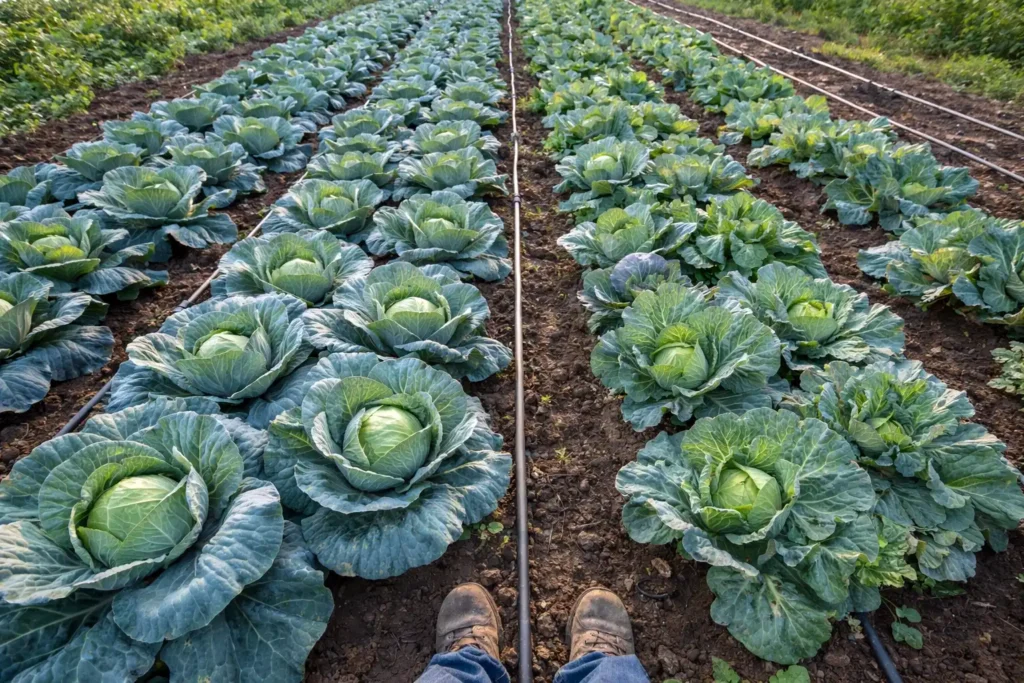
Uniformity does not replace good agronomy. Soil structure, fertility, and irrigation still drive the result. If you are dialing those in, our overview on soil fertility management helps you line up nutrients with crop demand.
Why do heirlooms shine for flavor, diversity, and resilience?
Heirlooms shine when you want diversity and you have room to select plants that perform well on your farm. A grower who saves seed can keep seed from the plants that handle local heat, local soil, and local pest timing. Heirlooms also bring traits that sell on story and eating quality, especially in vegetables where buyers notice taste and appearance.
Heirlooms still need protection from pests and disease. If you fight recurring problems, review your scouting and control options in pest and disease management.
Can you save seed from hybrid plants?
You can save seed from a hybrid plant, but the next generation usually separates into mixed traits instead of repeating the original hybrid. That happens because the F1 cross carries a specific combination that does not stay uniform when it reproduces. Farmers who rely on hybrid consistency usually buy fresh seed each season.
If seed saving is a core goal, choose open-pollinated or heirloom varieties and plan isolation distances, flowering overlap, and rogueing.
Do hybrids require chemicals?
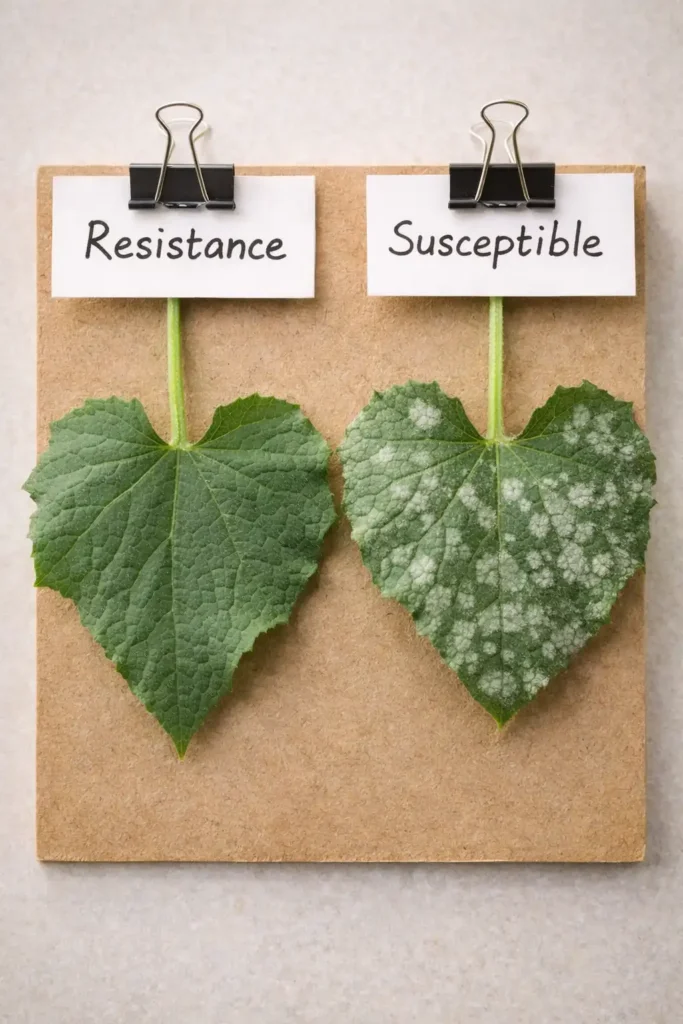
Hybrids do not require chemicals by definition. Hybrids are a breeding method, not a spray program. Some hybrids carry disease resistance traits that reduce the need for fungicides in certain situations, but weather, variety, rotation, and pressure still decide the spray plan.
Are heirloom seeds “non-GMO”?
Heirloom does not equal GMO-free as a legal claim, but heirloom varieties are typically bred by traditional selection and open pollination rather than genetic engineering. If you need a verified claim for a market, buy seed with documentation from the supplier and keep records for traceability.
How do you choose between hybrid and heirloom seeds?
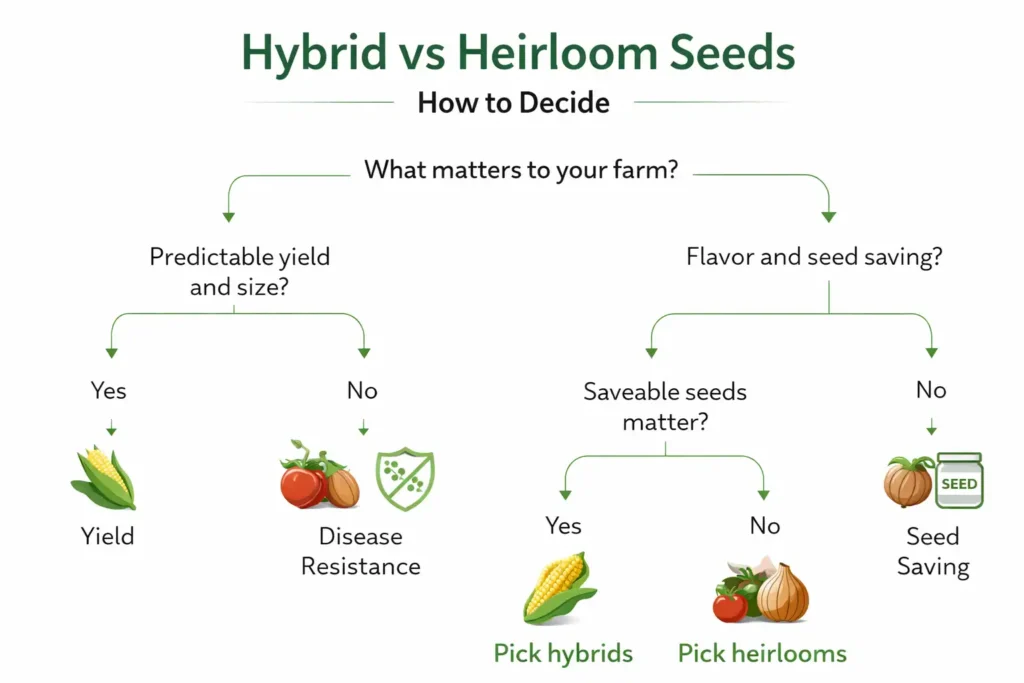
You choose between hybrid and heirloom seeds by matching the seed type to your sales channel, labor, pest pressure, and seed goals.
Choose hybrids when consistency pays the bills
Hybrids fit well when you need:
- Uniform size for packing and grading
- A tight harvest window for crew efficiency
- Strong early vigor for weed competition
- Known resistance packages for common diseases in your area
Weed pressure still demands a plan. For building a tool set, see this overview of weed control practices.
Choose heirlooms when seed saving and specialty quality matter
Heirlooms fit well when you want:
- Saveable seed that stays true with isolation
- Flavor and appearance that sell at direct markets
- On-farm selection over multiple seasons
- Genetic diversity across plantings
Crop-by-crop guidance that works in the field
Tomatoes
Tomato growers often use hybrids for disease resistance and uniform harvest, especially in humid regions or high-pressure fields. Heirloom tomatoes often win on flavor and appearance for farm stands and CSA boxes, but they can need tighter disease management. If tomatoes are central to your plan, start with tomato growing basics and align variety choice with your disease history.
Lettuce
Lettuce growers often pick hybrids for uniform heads and predictable bolting behavior. Heirloom or open-pollinated lettuces can work well for mixed greens, succession plantings, and niche markets. Use variety trials because heat and day length swing lettuce performance fast. The crop page on lettuce production helps you match timing to your climate.
Corn and grains
Field corn and many grain systems rely heavily on hybrids because uniform stand, maturity, and yield stability support mechanized harvest and market specs. Open-pollinated corn exists, but it usually targets seed saving, specialty milling, or local adaptation projects. If you are mapping rotations, the guide on corn cropping is a good anchor point.
Onions and carrots
Root and bulb crops often reward uniformity because sizing drives market grade. Hybrids can tighten sizing and maturity. Heirlooms can still produce well, but expect more variability and plan your harvest and storage accordingly. If you store crops, focus on cure and handling details in harvest and storage practices.
What to look for on a seed packet or catalog listing
A seed listing tells you how the plant behaves if you read it like a production note.
Look for:
- “F1” or “hybrid” labeling for hybrids
- “OP” or “open-pollinated” for saveable seed types
- Days to maturity and whether it refers to transplant date or direct-seed date
- Resistance codes and which diseases they target
- Plant habit, spacing, and harvest window notes
Practical seed-saving basics for heirlooms
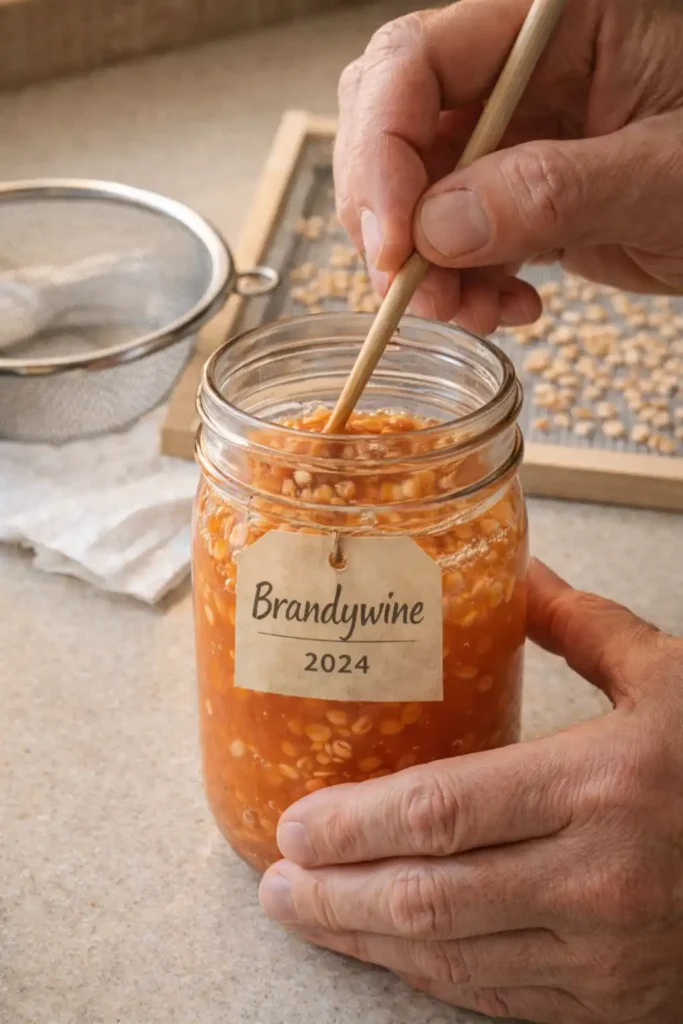
Seed saving works when you control pollination and you select the right parents.
Key checkpoints:
- Save seed only from healthy, true-to-type plants
- Keep distance between varieties that cross-pollinate
- Avoid saving seed from the first plant that bolts or the first fruit that ripens if that trait hurts your goals
- Dry and store seed in cool, dry, dark conditions, labeled with variety and year
Common mistakes farmers make with hybrid and heirloom seed decisions
Most problems come from a mismatch between seed type and production reality.
Watch out for:
- Buying heirlooms for a wholesale channel that pays on uniform grade
- Buying hybrids and expecting saved seed to repeat the same crop
- Ignoring disease history and then blaming the variety
- Planting a specialty heirloom without a marketing plan for its size, color, or shelf life
If you want the “big picture” on planning a production system, our start-up overview on starting a crop farm ties variety choice back to labor, equipment, and sales.
Bottom line
Hybrids deliver uniform crops from planned crosses, and they often fit markets that reward consistency. Heirlooms deliver stable genetics you can maintain through seed saving, and they often fit markets that reward flavor and uniqueness. The right choice is the one that matches your disease pressure, your labor, your harvest plan, and how you get paid.