When to Harvest Soybeans for Edamame for Sweet, Tender Beans
Edamame is just soybeans picked young, while the beans are still green and sweet. Timing is everything here. Knowing when to harvest soybeans for edamame decides whether the pods taste buttery and tender or starchy and tough.
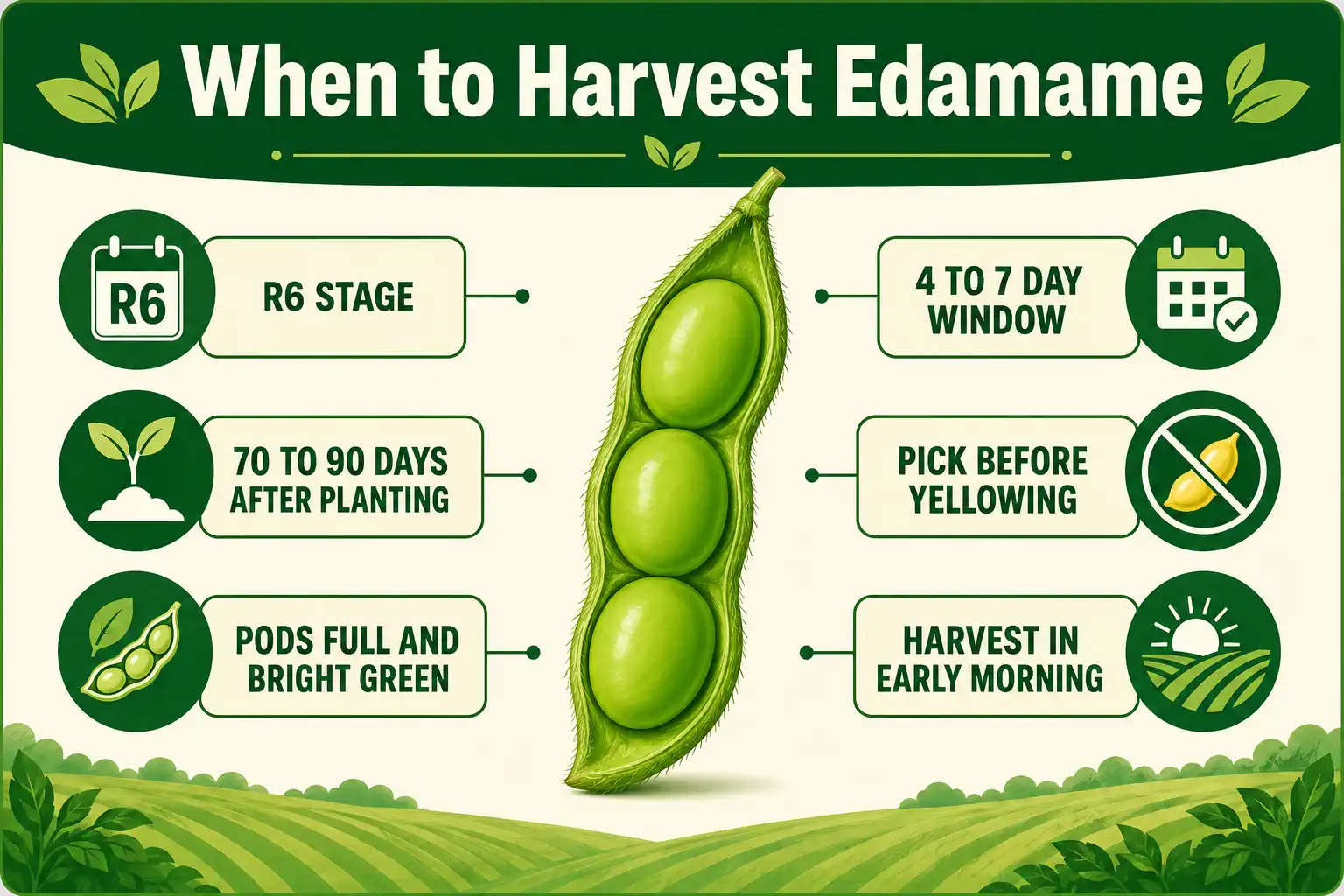
Harvest soybeans for edamame at the R6 stage, when pods turn bright green and plump and the beans nearly touch inside. That lands about 70 to 90 days after planting. The picking window stays open only four to seven days.
When to Harvest Soybeans for Edamame (the R6 Stage)
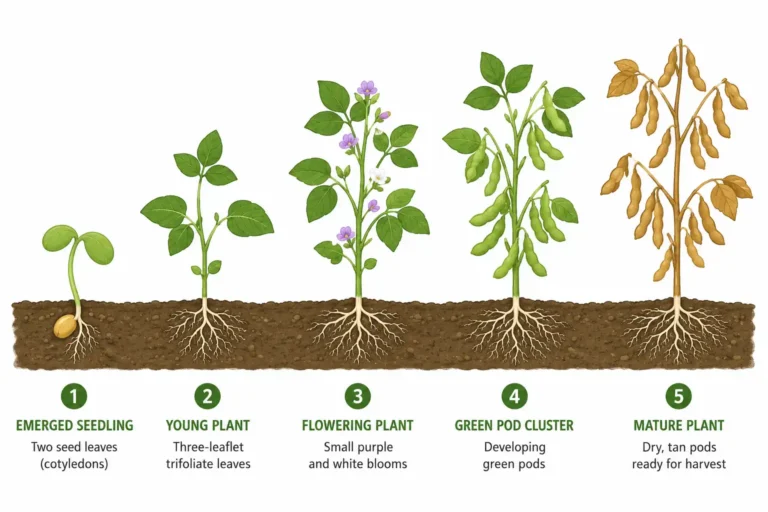
You harvest edamame at the R6 growth stage, the last step before the plant dries down. At R6, the pods are full-sized and bright green, and the beans fill roughly 80 to 90 percent of the pod. Squeeze a pod and the beans almost touch each other.
R6 matters because pod weight, bean weight, and pod thickness all peak there. After that, the plant moves toward R7 and full maturity at R8. Sugars then turn to starch, and the bright green fades to yellow. So R6 is the sweet spot for flavor and size.
Getting comfortable with reading soybean growth stages makes this call simple. Once you can spot R6 by eye, you stop guessing and start picking on time.
How Many Days After Planting Is Edamame Ready?
Most edamame is ready 70 to 90 days after planting, depending on the variety and the weather. South Dakota State University Extension and North Dakota State University both put the season near 10 to 12 weeks for Midwest fields. Warm soil speeds it up. Cool, wet springs slow it down.
Your spring planting date sets the clock, so getting soybean seed in the ground at the right time shapes when you pick. Here in Kansas, I sow after the last frost once the soil hits 60°F. Maturity group also counts. Lower-numbered groups finish earlier, which suits northern fields across the Great Plains.
Which Edamame Varieties Mature Fastest?
Early varieties like Envy and Chiba reach harvest near 75 days, while Midori Giant runs closer to 80 to 85 days. These are vegetable soybeans, not grain types, so they grow larger and milder beans. Edamame cultivars are separate from field beans, and checking the seed packet for days to maturity beats guesswork. If you want the wider view, see the many soybean types grown across the country.
How Do You Know Edamame Is Ready to Pick?
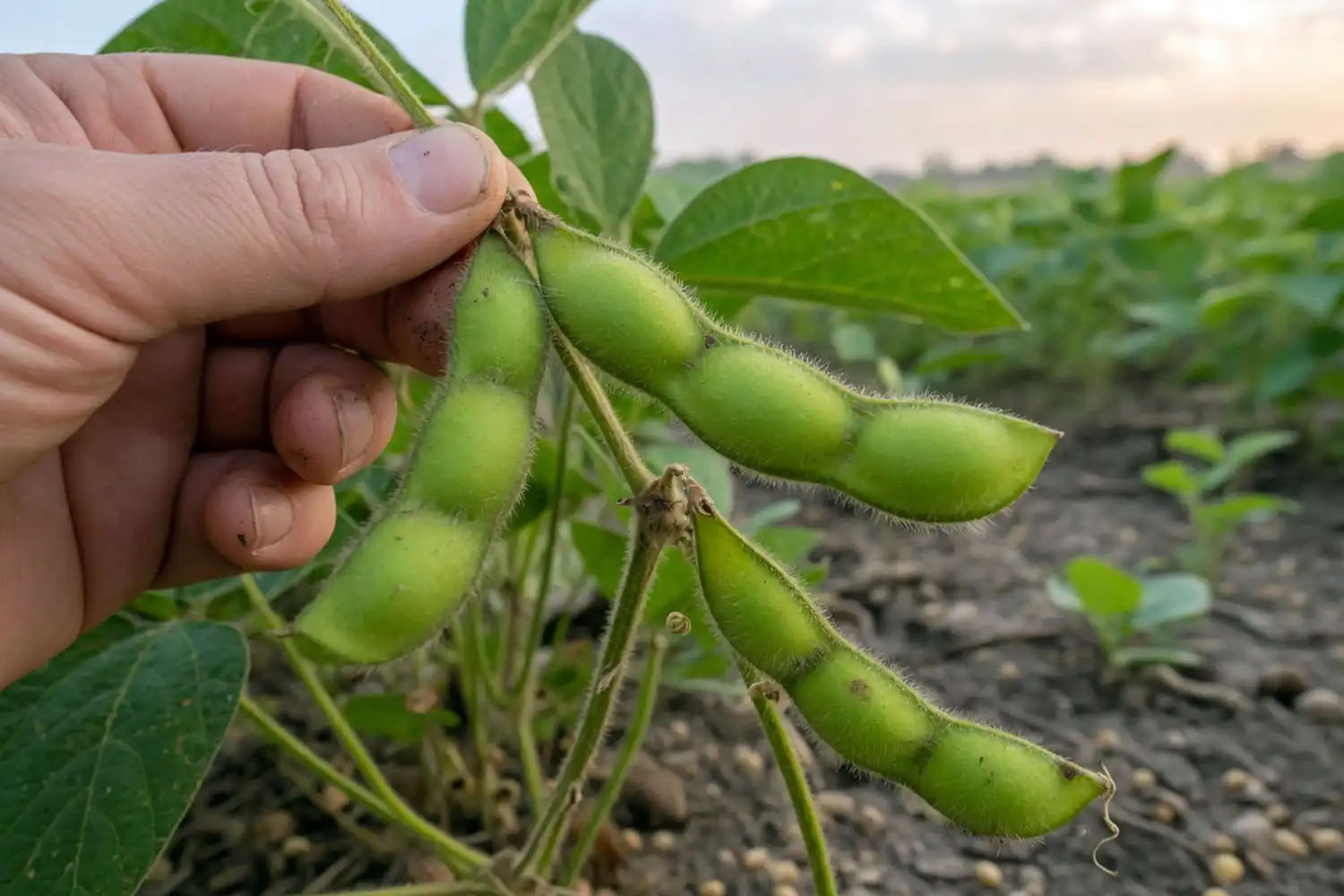
Edamame is ready when the pods look bright green, feel plump, and the beans nearly touch inside the shell. Most pods run 2 to 3 inches long and carry three beans, though some hold one or two. The shells stay slightly fuzzy and firm.
Use a simple squeeze test. Pick a few pods from different plants and press them. Full pods feel firm and rounded, not flat. If the beans look like clear bumps along the pod, you are at R6. It helps to know what soybean plants look like out in the field as the pods fill, since the whole canopy shifts before the pods do.
One more rule: do not wait for yellowing. As soon as the leaves or pods start to fade, the beans turn starchy. Pick while everything is still green.
How Long Is the Edamame Harvest Window?
The edamame harvest window lasts only about four to seven days, so check your field daily once the pods plump up. University of Missouri Extension pegs the prime picking window at roughly four to six days. Miss it, and quality drops fast.
The window is short because most pods ripen at the same time. Soybeans are short-day plants, so the crop sets and fills its pods close together. That makes one big pick easy, but it leaves little room for delay. As the beans mature past R6, sugars convert to starch and the sweet, nutty flavor fades.
For a steady supply, stagger your planting dates instead of trying to stretch one harvest. I plant a second small block about 10 days after the first. That way I pick fresh edamame over a few weeks rather than all at once.
What’s the Best Time of Day to Pick Edamame?
Pick edamame in the early morning, while the plants are still cool from the night. Cool pods hold their sugars and stay fresher after picking. Afternoon heat speeds sugar loss and softens the beans. So I start at first light and get the pods into shade or a cooler right away.
How Do You Harvest Edamame?
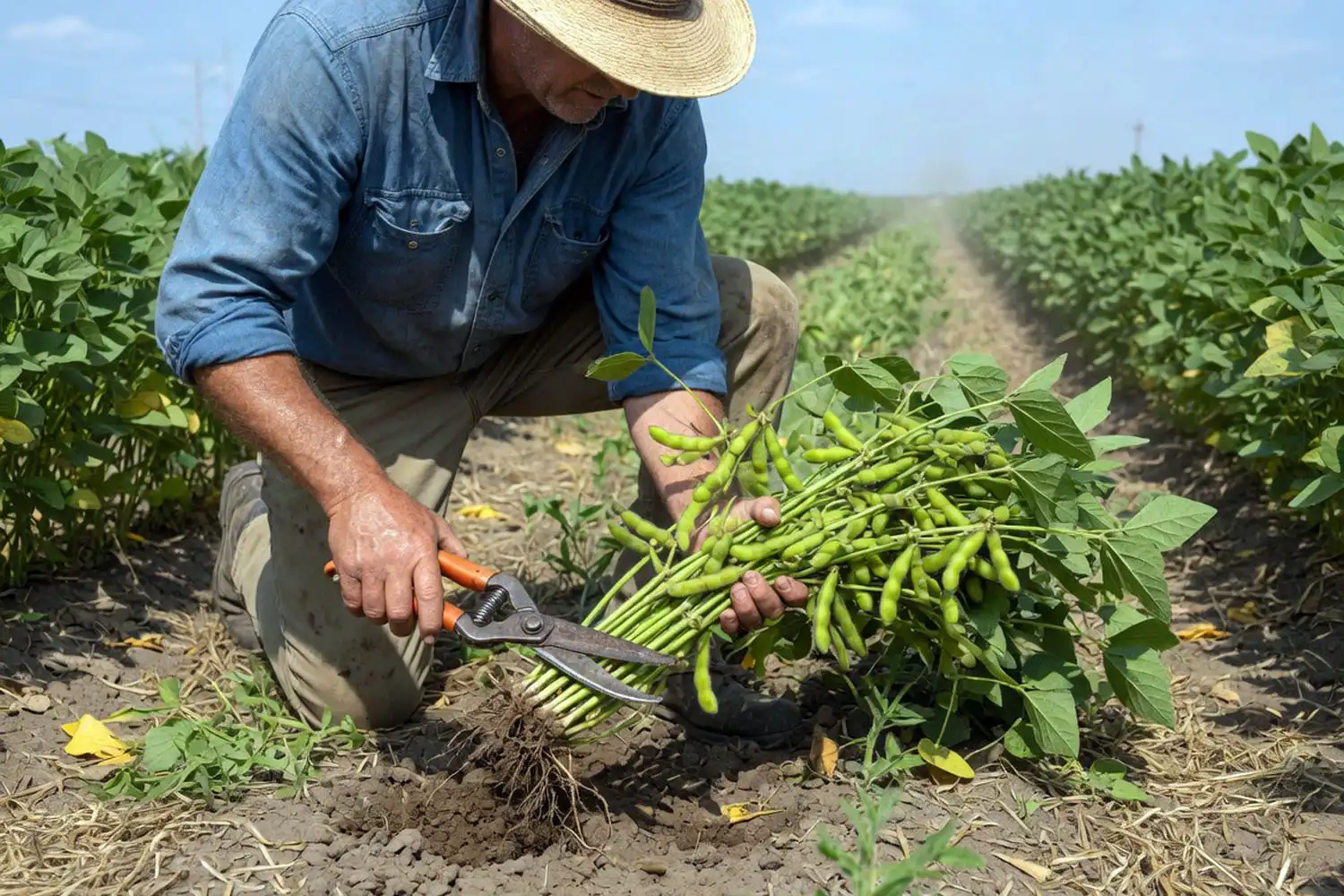
You harvest edamame by cutting or pulling the whole plant, since the pods ripen together. Clip the stem at the soil line with pruning shears, or pull the plant by hand. Then carry it to a shady spot and snip or strip the pods off.
Small farms and gardens pick by hand, much like green beans or peas. Larger operations run a single-row bean harvester to bring in the pods. Either way, leave the beans inside the pods. Raw shells are tough to open, so most people shell them after a quick boil.
What Happens If You Pick Edamame Too Early or Too Late?
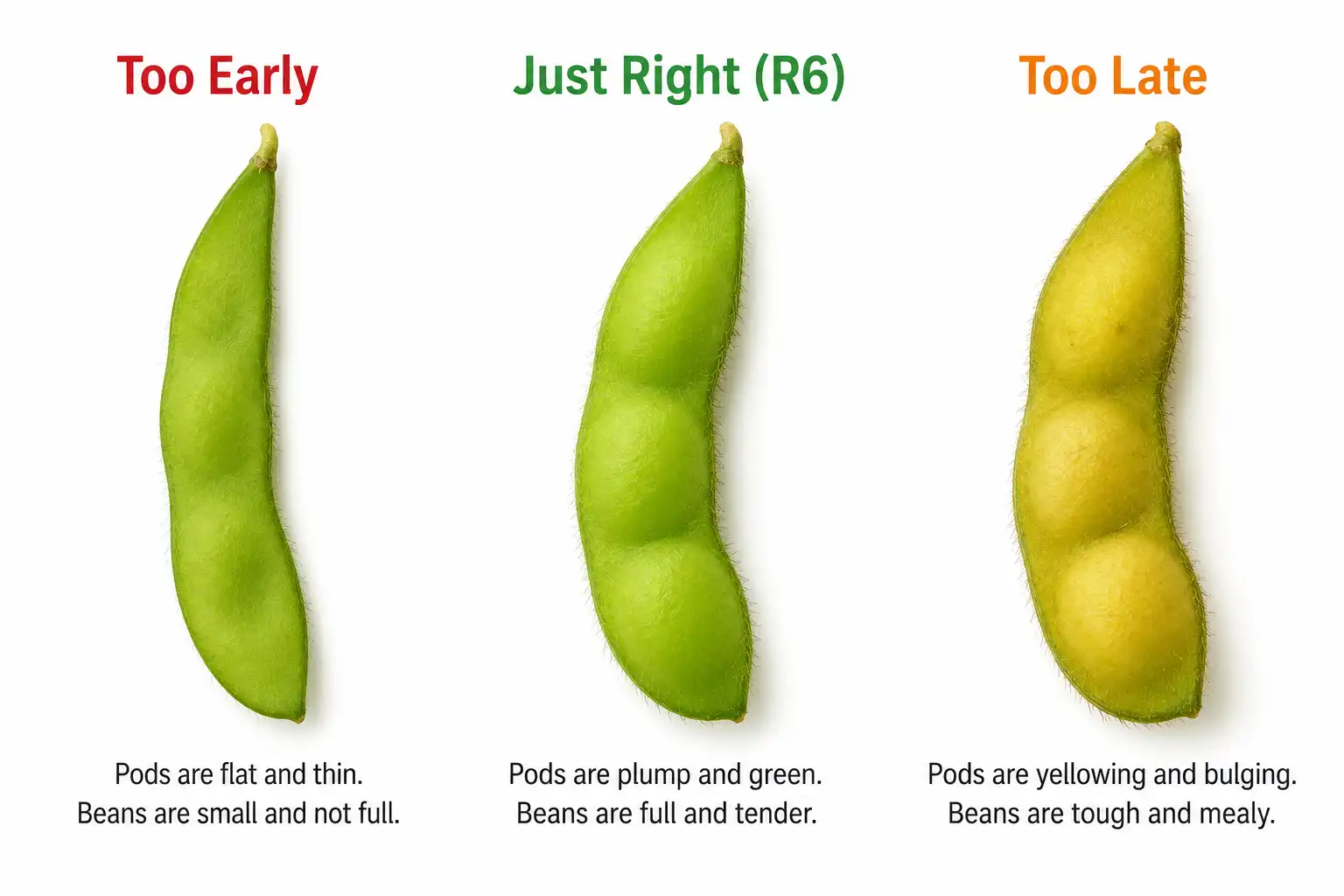
Pick too early and the beans stay small and bland; pick too late and they turn yellow, starchy, and tough. Both mistakes cost you flavor and yield.
Too early, the pods look flat and thin because the beans have not filled. You lose size, sweetness, and total weight. So patience pays until the pods round out at R6.
Too late, the green fades to yellow and the beans get fibrous and chalky. The sugars have already shifted to starch, so the snack flavor is gone. Once pods yellow, your best move is to let them dry fully and save the dry beans for seed or cooking instead.
How Edamame Harvest Differs From Grain Soybeans
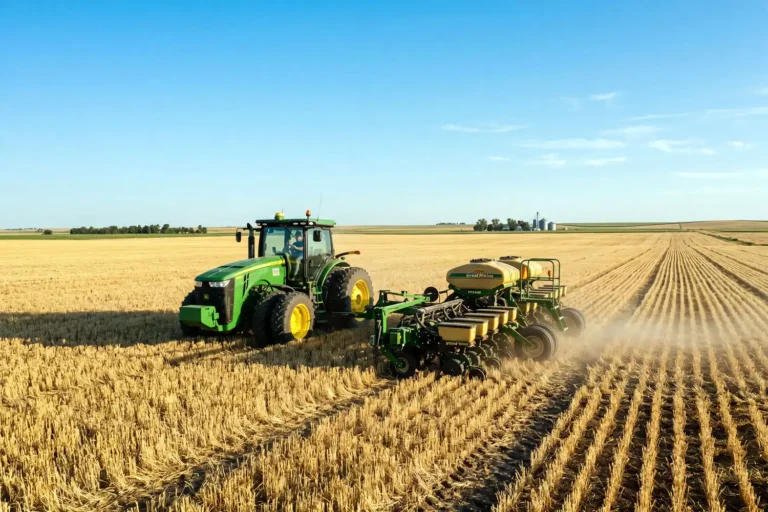
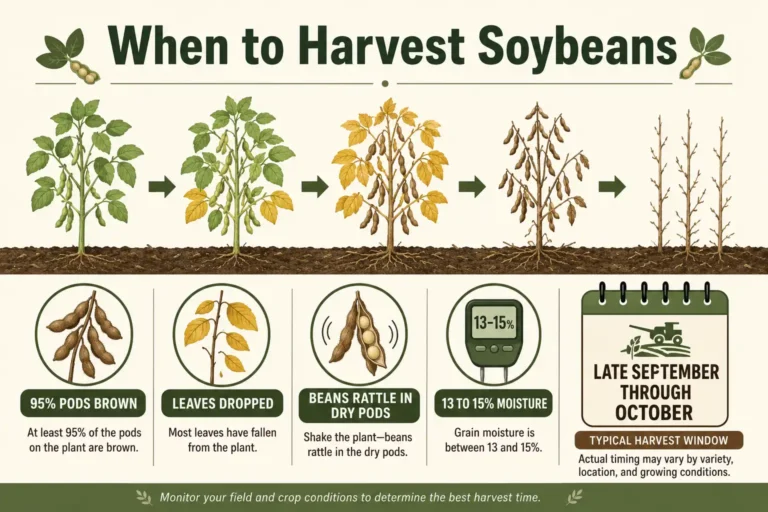
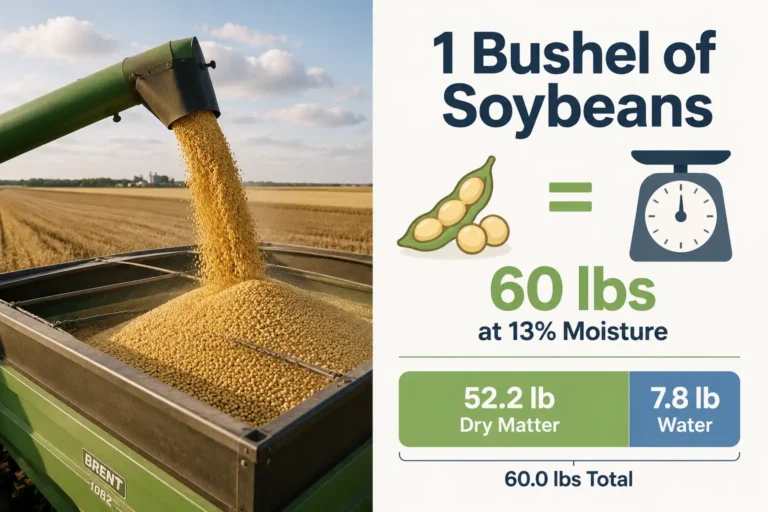
Edamame comes off green at R6, while grain soybeans stay in the field until they dry down near R8. That is the core difference. Grain beans get combined dry at about 13 percent moisture, with brown pods and hard seeds. Edamame gets hand-picked or run through a bean harvester while green and tender.
The plants are the same species, Glycine max, but edamame varieties are bred larger and milder for fresh eating. If you want the full breakdown on how edamame differs from grain soybeans, the short version is simple: same crop, very different harvest timing. And since grain can run 100 days or more, you can compare how long soybeans take from seed to maturity to see how much earlier edamame finishes.
What to Do With Edamame After You Pick It
Use fresh edamame within two to three days, or blanch and freeze it for longer storage. Fresh pods lose sweetness quickly, so cold and speed matter most.
Refrigerate the pods in a perforated plastic bag to keep air moving. For freezing, blanch whole pods in boiling water for three to four minutes, cool them fast, then freeze. Blanching locks in color and flavor, so the beans still taste sweet months later.
Bottom Line for Your Field
Watch the pods, not the calendar. Once they plump up and the beans nearly touch, you are at R6 and the clock is ticking. Pick within that four to seven day window, work in the cool morning, and get the pods cold fast. Do that, and your edamame stays sweet, green, and tender every season.