How Long Can Soybeans Be Stored Before They Spoil?
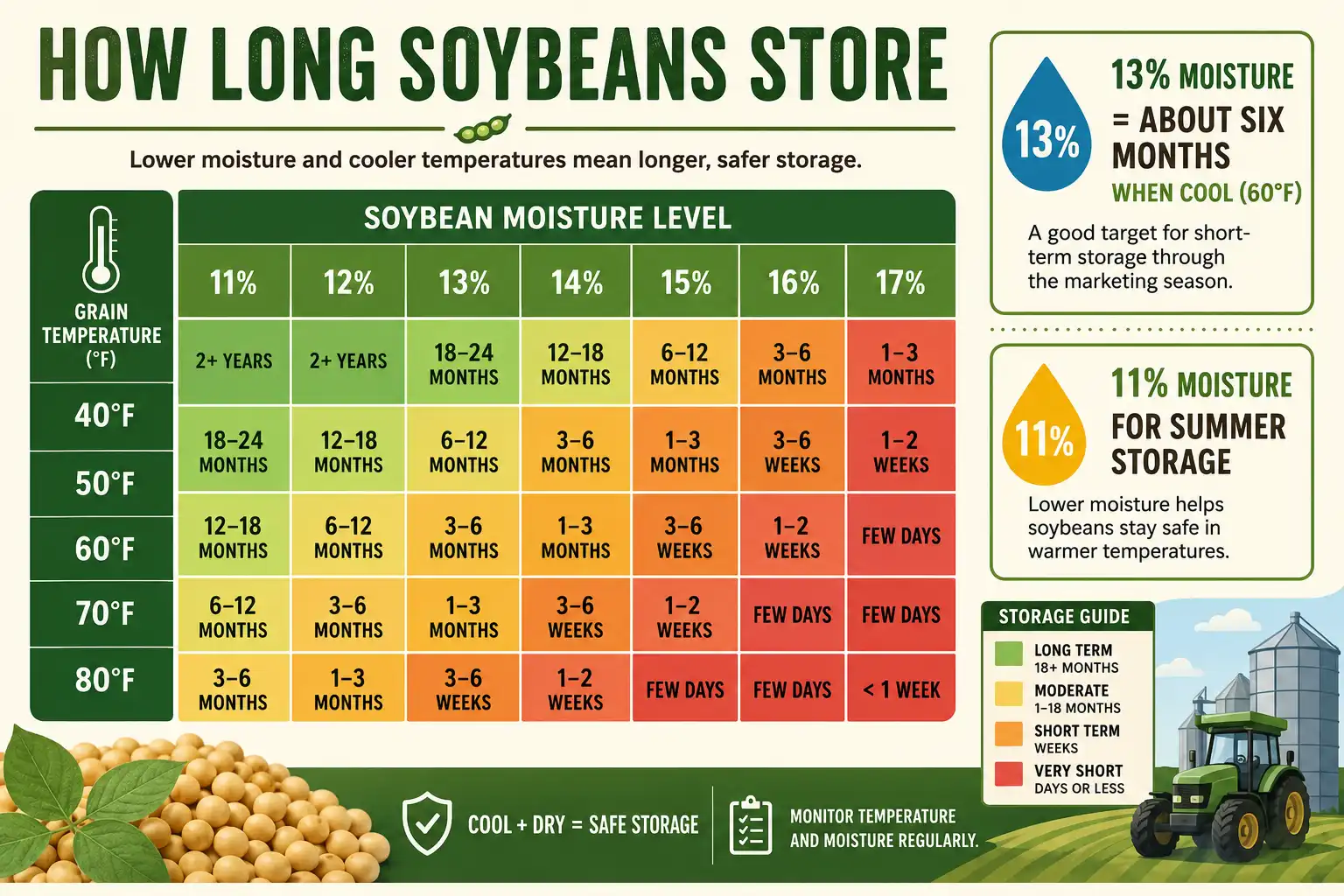
How long can soybeans be stored comes down to two things: moisture and temperature. Dry, cool beans hold for months. Damp, warm beans spoil fast. Get both right, and your beans stay sound from the bin to the buyer or the planter.
Soybeans can be stored about six months at 13% moisture when kept cool, below 60°F. For storage through summer, dry them to 11%. Cooler grain lasts longer, since allowable storage time roughly doubles for every 10°F drop in temperature.
What Determines How Long Soybeans Last in Storage
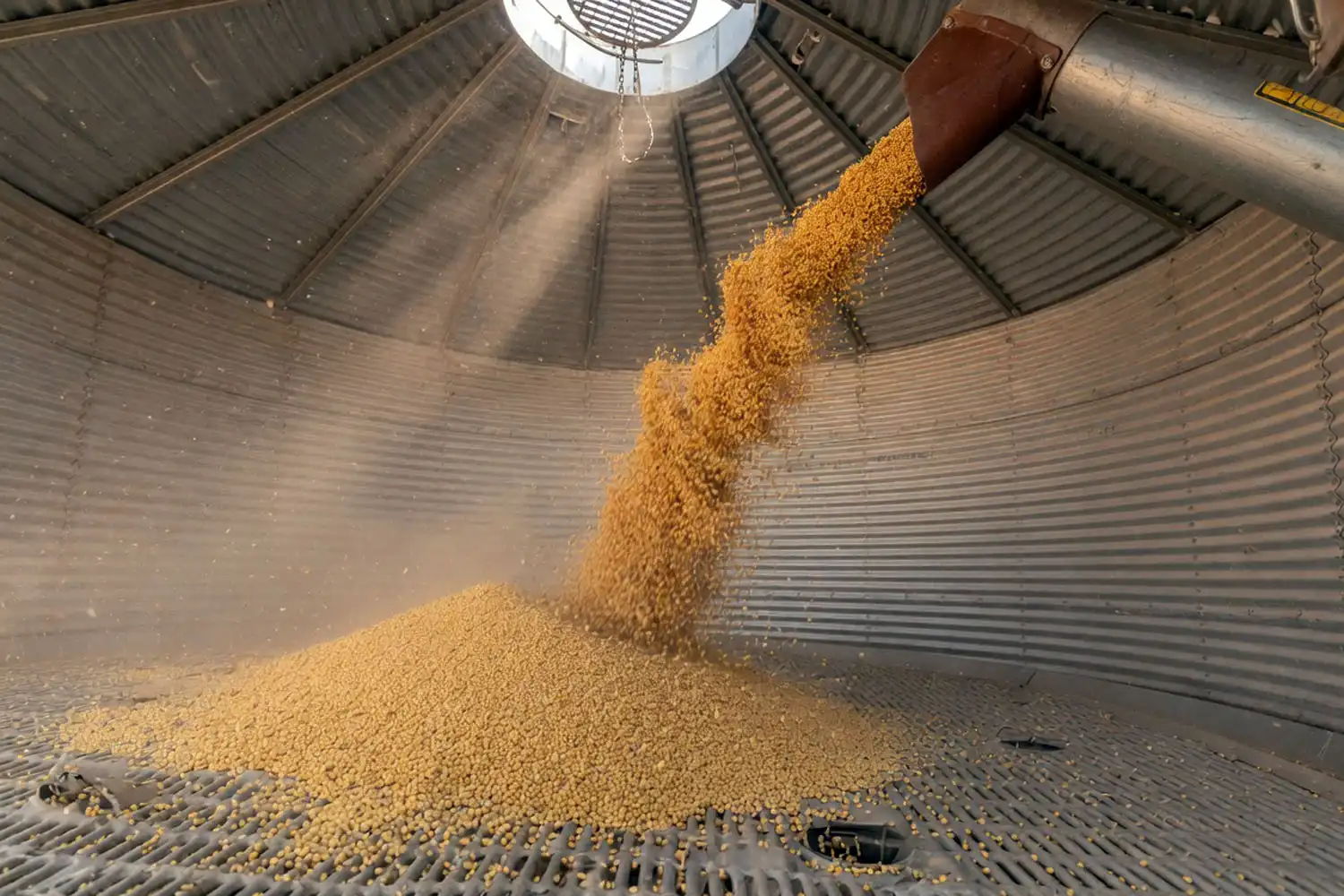
Three things decide it: moisture content, grain temperature, and how clean and sound the beans go in. Moisture and heat feed mold and insects. Cracks and splits open the door wider.
Soybeans spoil faster than corn at the same moisture. The high oil content is the reason. According to Iowa State University Extension, beans need to sit about two points drier than corn for safe storage. So 13% soybeans store roughly like 15% corn.
Seed coat damage matters too. North Dakota State University Extension notes that molds grow faster in beans with cracked coats. Every split from a rough combine setting shortens storage life. Good storage is the last stretch of growing a healthy soybean crop, and the bin only keeps what you put in it.
How Long Can Soybeans Be Stored at Each Moisture Level
At 13% moisture and cool temperatures, soybeans store about six months. Drier beans hold longer. Wetter beans spoil in weeks, not months.
The numbers below come from North Dakota State University Extension. They show the approximate allowable storage time, the days of safe storage before quality starts to slip.
|
Soybean moisture |
40°F |
50°F |
60°F |
70°F |
80°F |
|---|---|---|---|---|---|
|
11% |
300+ days |
300+ days |
300+ days |
200 days |
140 days |
|
12% |
300+ days |
300+ days |
240 days |
125 days |
70 days |
|
13% |
300+ days |
230 days |
120 days |
70 days |
40 days |
|
14% |
280 days |
130 days |
75 days |
45 days |
20 days |
|
15% |
200 days |
90 days |
50 days |
30 days |
15 days |
|
16% |
140 days |
70 days |
35 days |
20 days |
10 days |
|
17% |
90 days |
50 days |
25 days |
14 days |
7 days |
(Source: North Dakota State University Extension. “300+” means storage exceeds 300 days at that temperature.)
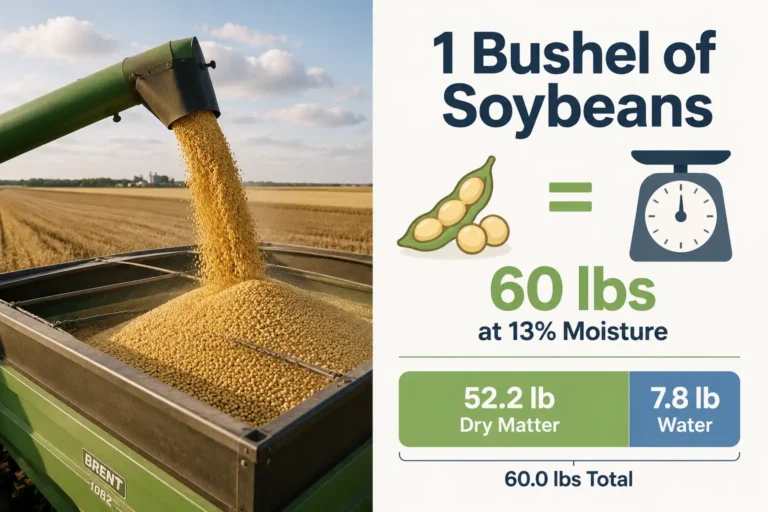
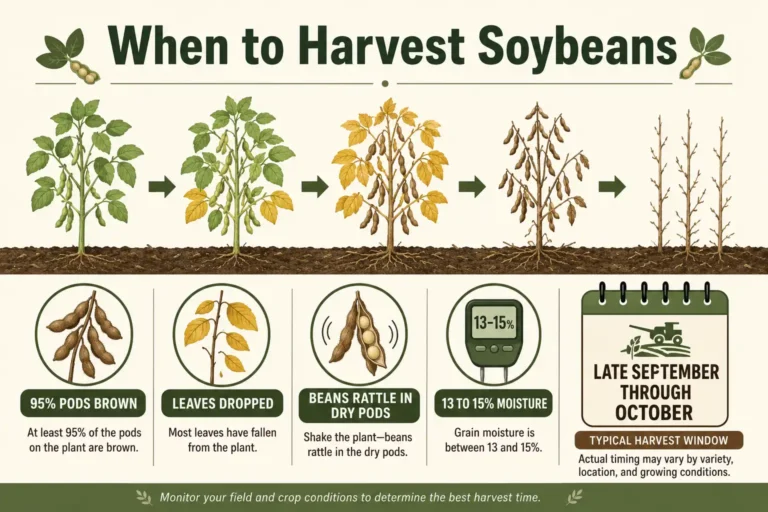
The market moisture for soybeans is 13%, the same level USDA uses as the grading standard. That works well through the cool fall and winter months. For beans you will hold into late spring and summer, dry down closer to 11%. University of Minnesota Extension puts it plainly: at 13% moisture and temperatures under 60°F, soybeans usually keep about six months without mold. Harvesting at the right point, and knowing when your crop is ready to come off, sets the moisture you start with.
How Does Temperature Affect Soybean Storage Life
Cooler beans last longer. Allowable storage time roughly doubles for every 10°F you cool the grain. That single fact drives most storage decisions.
In the fall, aerate to bring the beans within 10 to 15°F of the average outdoor temperature. For winter, NDSU recommends cooling beans near 30°F in northern states and 40°F or lower in the South. Through spring and summer, run aeration to hold the grain as cool as you can, ideally 40 to 60°F. Cool beans slow mold and shut down most insect activity.
Heat also hurts oil quality. Free fatty acids climb with moisture, temperature, and time. In one NDSU study, 12% beans held below 0.75% free fatty acids at 50°F but passed that mark after only four months at 70°F. Keeping beans cool protects the oil, which is what the crush market pays for.
Why Storage Time Adds Up and Does Not Reset
Allowable storage time is cumulative. Once you use part of it, cooling later does not give it all back. Here is the NDSU example. Store 16% beans for 35 days at 50°F and you have used half the storage life. Cool them to 40°F after that, and you have about 70 days left, not the full 140 the chart shows for cold beans. So warm, damp beans in October set the limit for how long they last next spring.
What Is the Best Moisture Content to Store Soybeans?
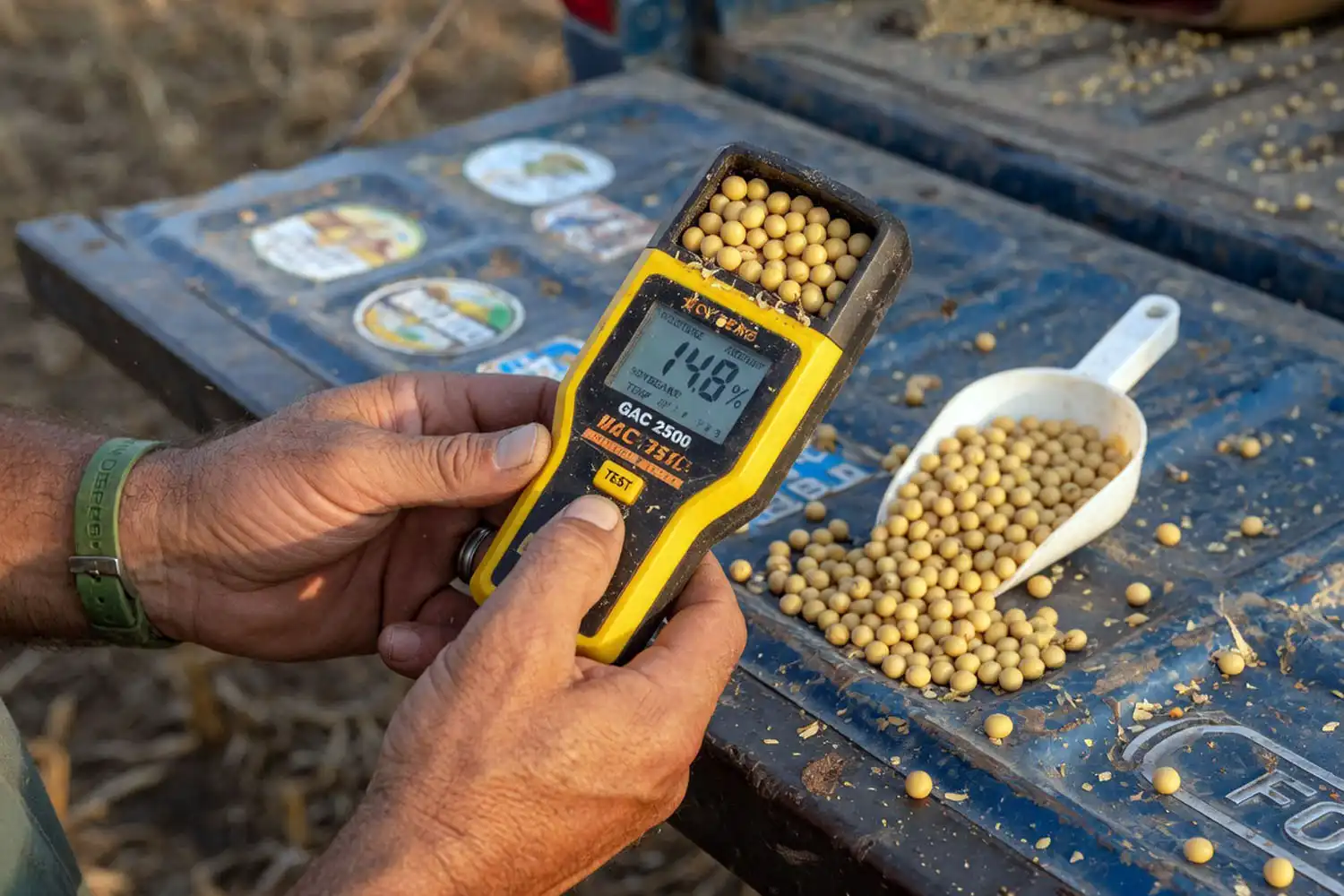
It depends on how long you plan to keep them. The longer the hold, the drier the beans should be.
- For winter storage and sale by spring, 13% or less works.
- For storage across about one year (one planting season), aim for 12% or less.
- And for anything longer, dry to 11% or below.
Soybeans pick up and give off moisture fast, so even a few wet pockets can spoil a bin. Check moisture before binning, then again during storage, with an accurate grain moisture tester. Watch the meter’s temperature compensation, because cold grain reads differently.
How Long Can You Store Soybean Seed for Planting?
Seed beans should be drier than market beans, and they do not keep as long. You are protecting living tissue, not just grain quality.
Iowa State University Extension recommends 12% moisture or less for seed held over one planting season, and 10% or less for carryover seed you keep longer than a year. Germination drops as moisture, temperature, and storage time go up. Repeated wetting and drying is hard on seed, so steady, cool, dry conditions matter most. Store seed cool, keep it dry, and run a germination test before you plant. Old seed that tests low costs you stand before the crop is even up.
How Do You Know If Stored Soybeans Are Going Bad?
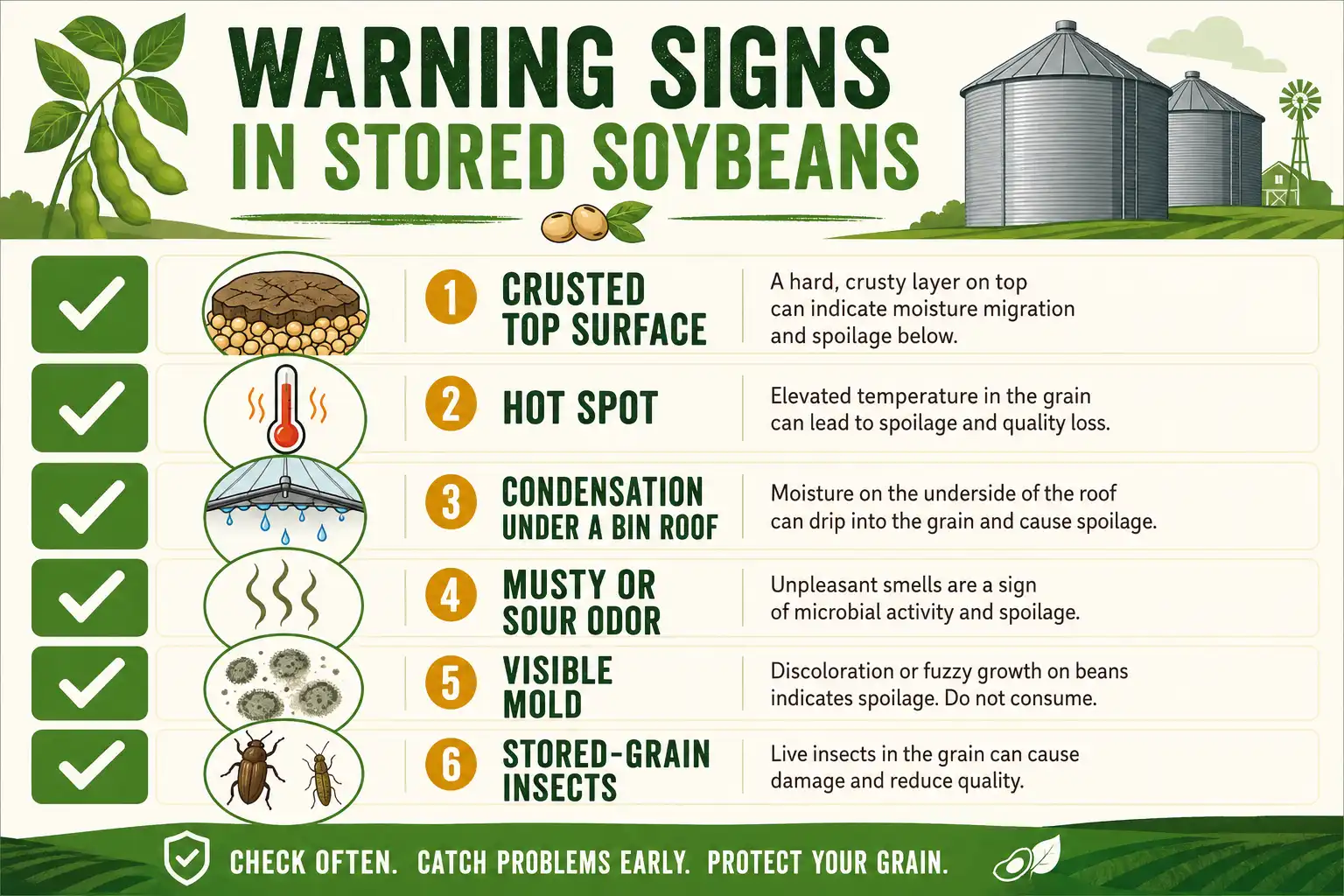
Watch for a crusted top, warm or musty spots, condensation under the roof, off smells, and insects. Any one of these means trouble is starting.
Check bins on a schedule. Monitor weekly through spring and summer, then every two weeks in fall and winter. Feel the air at the fan and at the exhaust. Climb up and smell the grain surface. A sour or musty odor, a hot spot, or a crust on top points to heating and mold. If you find it, cool the bin with aeration right away, and move or sell beans that are already going out of condition. Temperature cables make this easier, but they do not replace a nose and a flashlight.
How to Store Soybeans So They Keep
Start with clean, dry, sound beans, then keep them cool and check them often. The basics do the heavy lifting.
Clean the empty bin before harvest and remove old grain that can carry insects. Set the combine to limit splits and cracked coats. After filling, level the surface and core the bin by pulling a load or two from the center, which clears out the fines and trash that pack up and trap moisture. Cool the beans down through fall with aeration, and keep fan covers on when fans are off so humid air does not creep in. The same rule holds for grain bags: only bag beans that are already dry, because a bag cannot fix wet beans. Your grain storage setup and how you handle beans after harvest both set the stage for a clean bin in March.
Bottom Lines
In Kansas, the target is 13% beans off the combine, cooled hard through fall, and dried to 11% for anything held past spring. Most storage trouble traces back to one thing: warm, damp beans that did not get cooled fast enough. So get the moisture right, pull the heat out early, and walk the bins every couple of weeks. Do that, and how long soybeans can be stored stops being a worry.