Crop Planting Calendar: 6 Steps to Build a Reliable Plan in One Hour
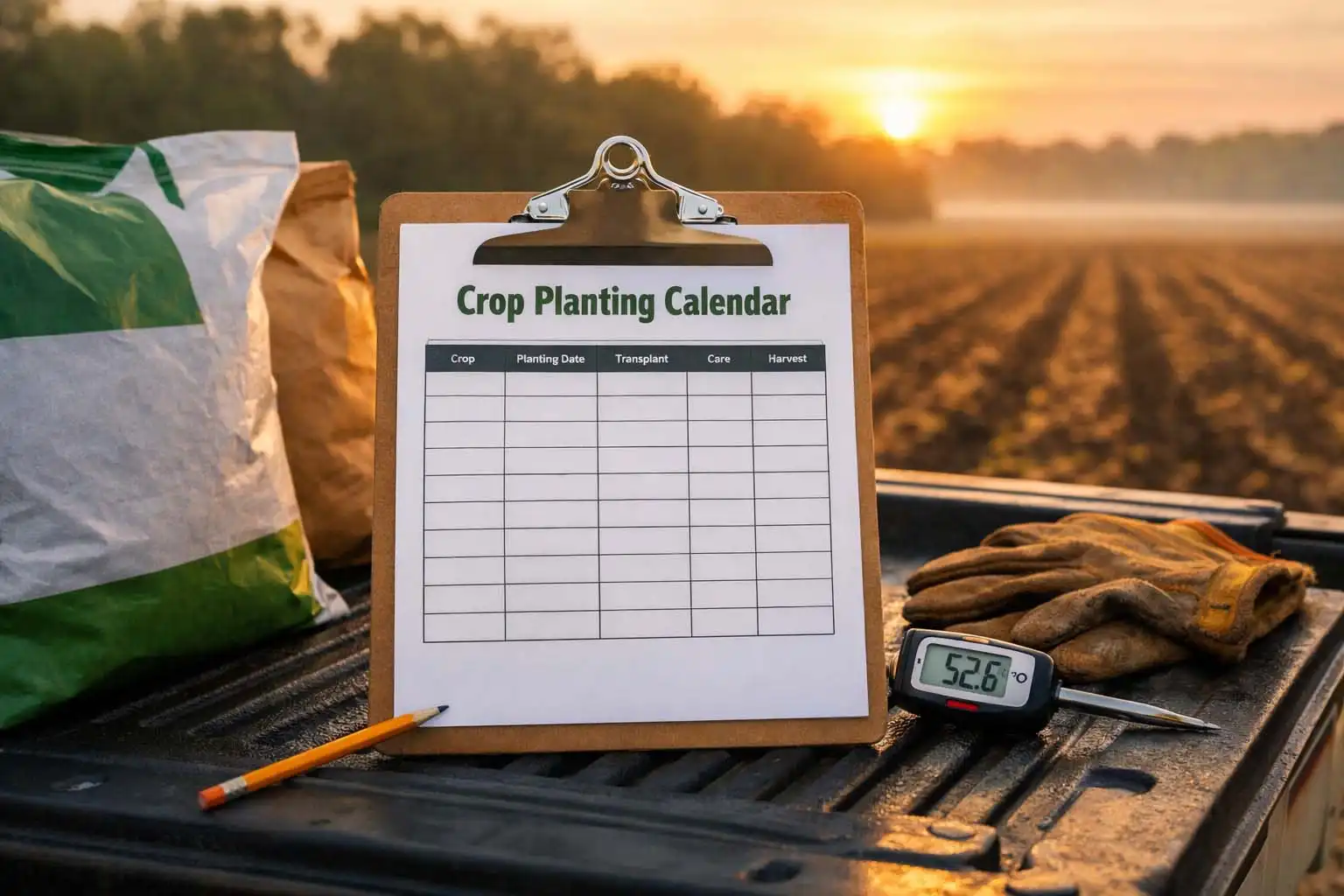
Crop planting calendar organizes your planting, cultivation, and harvest dates around frost risk, soil temperature, and crop maturity. A good calendar reduces replanting, spreads labor, and keeps equipment moving when fields fit. Start with your average last spring freeze and first fall freeze, then layer in soil moisture, residue, and variety days to maturity. This guide shows how to build a calendar for a working farm, plus a simple template to copy for vegetables and row crops.
What is a crop planting calendar?
A crop planting calendar is a season schedule that assigns dates to field jobs based on crop requirements and local weather patterns. It ties seeding, transplanting, cultivation, irrigation startup, and harvest to clear triggers like frost risk, soil temperature, and field workability. A good calendar stays flexible, because each spring turns out different. Crop farming techniques include how you place seed, manage residue, and time field passes so the crop gets ahead early.
Learn more: Choose Crops for Farming: 6 Ways
What numbers decide the dates on a crop planting calendar?
The best planting calendar uses a handful of anchor numbers that you update each year with field notes.
- Average last spring freeze date and first fall freeze date: These dates define your frost-risk edges and help you plan crop maturity windows. NOAA’s Ag Normals include last spring freeze timing, first fall freeze date, and expected growing degree days by station.
- Soil temperature at planting depth: Soil temperature controls germination speed and seedling stress. It also helps you decide when early planting pays and when it backfires.
- Soil moisture and “field fit”: A planter and a boot both tell the truth. Wet sidewalls and compaction cost stand and root depth later.
- Days to maturity or days to harvest: Seed tags and variety guides give this number. Your calendar uses it to back-plan harvest and the last safe planting window.
- Transplant age: Many vegetables perform better when transplanted at a specific age range, because root systems and stems need enough time to develop.
If you want a deeper walk-through on seedbed prep, depth, and placement that pairs with the calendar, use this planting and seeding guide.
How do you build a crop planting calendar from scratch?
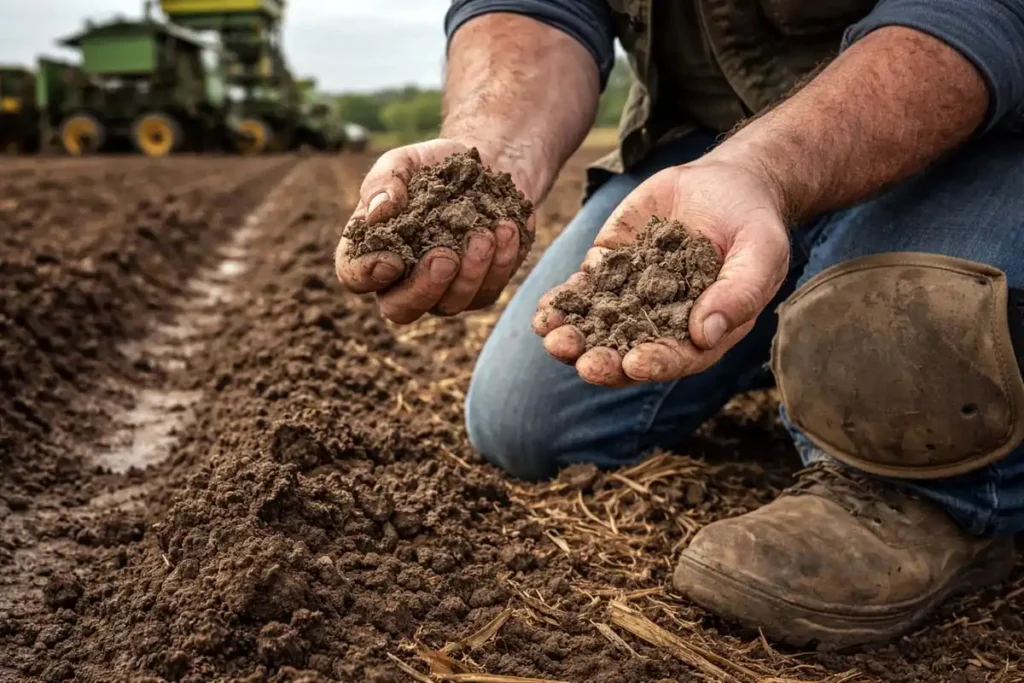
You build a reliable crop planting calendar by moving from climate anchors to crop triggers, then to field operations.
- Write your climate anchors on paper first. Put your average last spring freeze and first fall freeze at the top of the page, plus your target frost-free window.
- List your crops and your target harvest windows. Harvest timing drives planting timing more than most folks think.
- Assign a planting trigger to each crop. Use frost tolerance, minimum soil temperature, and field fit as the trigger.
- Add prep jobs that take real time. Include soil sampling, fertilizer, tillage, bed shaping, and irrigation setup. This soil fertility guide helps you place those steps where they belong.
- Block your equipment and labor bottlenecks. Planter days, sprayer days, and cultivation windows need space, not hope.
- Leave weather buffer on purpose. Buffer keeps you from squeezing seed into mud or planting warm-season crops into cold wind.
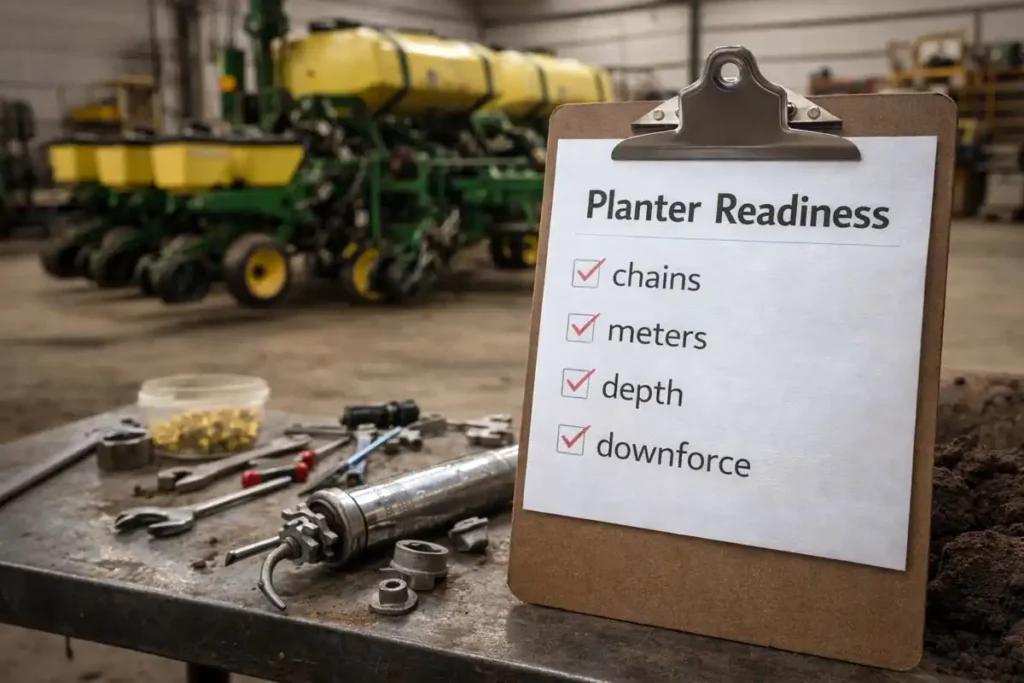
For measuring tools that support those triggers, a quick look at soil testing and measuring tools helps you pick practical gear for the job.
Also know: 5 Smart Rotations That Protect Yield Fast
How do frost dates and growing degree days set your calendar?
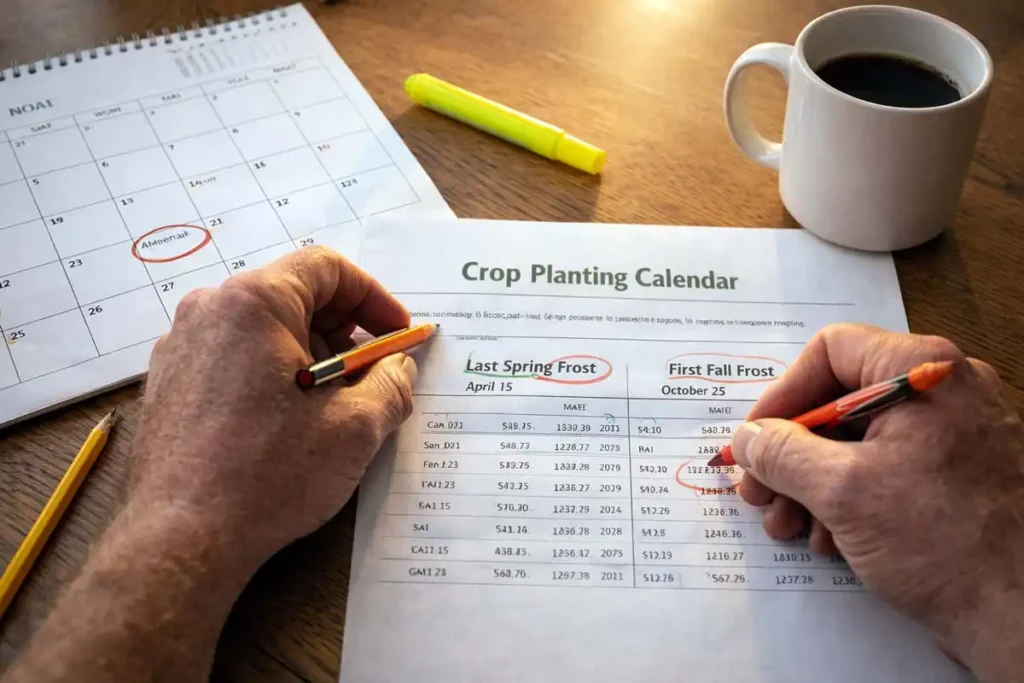
Frost dates set your risk boundaries, and growing degree days help you predict crop development inside those boundaries. NOAA’s Ag Normals provide freeze-date timing, growing season length, and expected growing degree days by climate station, which gives you a solid planning baseline.
Treat that baseline like a fence line, not a guarantee. Adjust in-season using soil temperature, field moisture, and what the forecast shows for the next 7 to 14 days.
What soil temperature targets guide spring planting for field crops?
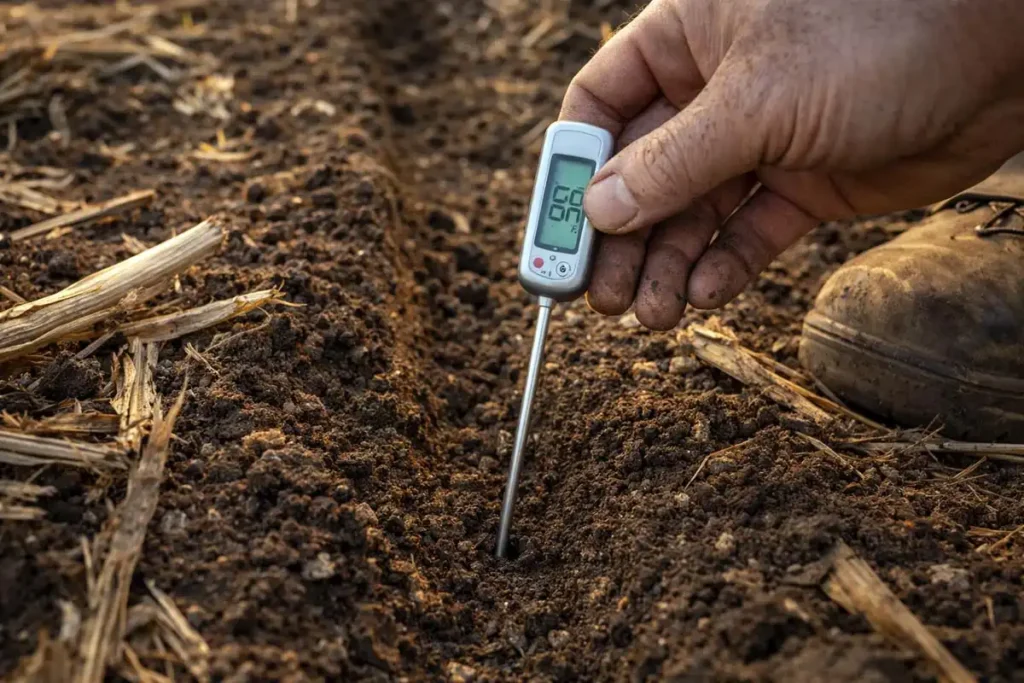
Soil temperature targets guide spring planting because seeds respond to soil heat first, not air heat.
Nebraska Extension summarizes common minimum planting temperatures this way: corn and soybean are safe to plant at 50°F soil temperature, and sorghum needs about 55°F to 60°F.
South Dakota State University Extension adds a useful stand-quality detail: corn needs a three-day average of at least 50°F to germinate, while soybeans need about 55°F or higher for uniform germination.
Iowa State’s corn field guide puts the risk in plain terms: plant corn when soils are near 50°F and expected to rise, because colder soils raise disease and emergence problems.
Pair temperature with moisture. If you want the crop-by-crop basics for the big three row crops, start with this corn guide, then read the matching soybean guide and sorghum guide.
How do you time cool-season and warm-season vegetables on the same calendar?
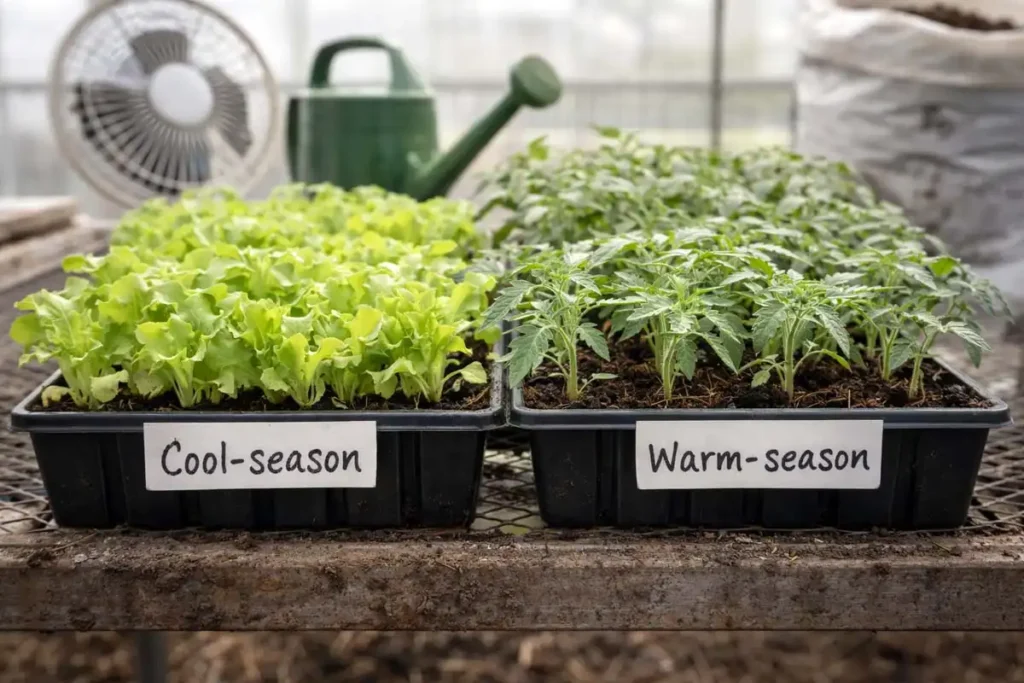
You time vegetables cleanly by sorting them into frost tolerance groups, then planting each group by soil condition and frost timing.
Colorado State University Extension lays out clear windows:
- Hardy vegetables (broccoli, cabbage, onions, lettuce, peas, spinach, radish) plant as early as 2 to 4 weeks before the average last spring frost, as soon as soil dries enough to work.
- Semi-hardy vegetables (beets, carrots, potatoes, cauliflower) plant 0 to 2 weeks before the average last spring frost, again when soil fits.
- Tender vegetables (beans, corn, cucumbers, summer squash) direct-seed around the average last spring frost date, using soil temperature as the deciding factor.
- Very tender vegetables (tomato, pepper, eggplant, melons, winter squash) go in 2 or more weeks after the average last spring frost, when weather turns consistently warm.
CSU also lists minimum germination soil temperatures that help you pick planting order, like lettuce at 35°F, peas at 40°F, corn at 50°F, and snap beans at 55°F.
For growers raising a lot of greens, this lettuce guide is a handy companion when you match variety choice to spring and fall slots.
How do you schedule transplants and indoor seed starts?
You schedule transplants by picking the outdoor planting window first, then counting backward using the transplant’s target age.
Tomatoes make a clean example. University of Minnesota Extension recommends starting tomatoes indoors five to six weeks before planting outside and transplanting outdoors after frost danger passes and soils warm.
CSU’s vegetable planting guide lists tomato transplant age at 5 to 7 weeks, which lines up with that approach.
After the calendar gives you a start date, the work turns into consistency: steady light, steady moisture, and a gradual transition outdoors before transplant day. For tomato-specific field notes, see this tomato guide.
How do you plan succession plantings and fall crops?
You plan succession plantings by using the crop’s days-to-harvest and working backward from your first fall freeze risk window. That approach keeps late plantings from running out of heat units at the finish line. NOAA’s Ag Normals help here because they provide freeze dates and growing degree day expectations by station.
For cool-season vegetables, CSU notes that these crops often plant early in spring and then replant mid-summer for fall harvest when temperatures cool back down. This harvest and storage section helps you think through timing, handling, and space.
What safety checks belong on a planting calendar?
A planting calendar protects people when it includes safety steps as real tasks, not afterthoughts.
- Seed treatment handling: Schedule PPE and clean-up time when you handle treated seed or dusty seed lots. This farm safety and PPE page covers the basics.
- Equipment setup windows: Plan time for planter inspection, chain guards, and calibration checks before the rush.
- Weather exposure: Cold rain plus wind turns a long planting day into a hypothermia risk. Put dry gear and warm-up breaks in the plan.
- Chemical timing: If your program includes herbicides, place application windows on the calendar so you do not rush mixing or spray in bad wind. The weed control section helps you align timing with crop stage.
What mistakes ruin planting calendars?
Planting calendars fail when the schedule ignores field reality.
- A calendar fails when it uses air temperature and ignores soil temperature at planting depth.
- A calendar fails when it plans planting before soil dries enough to avoid sidewall smear and compaction.
- A calendar fails when it forgets prep time for fertility, irrigation, and equipment readiness.
- A calendar fails when it treats days-to-maturity as a promise instead of a planning estimate tied to heat units.
- A calendar fails when it packs every crop into the same two-week window and leaves no labor slack.
What is a simple crop planting calendar template you can copy?
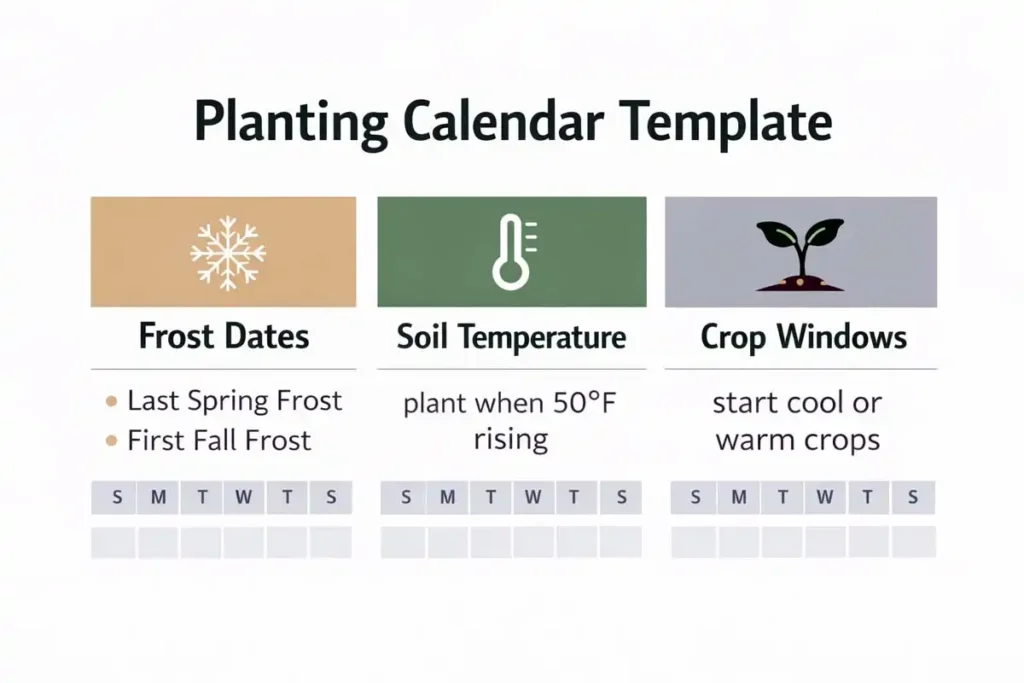
A copyable template works when it separates climate anchors, crop triggers, and field jobs.
Step 1: Fill in your anchors
| Anchor | Your local value | What it controls |
|---|---|---|
| Average last spring freeze date | ____ | Early outdoor planting risk |
| Average first fall freeze date | ____ | Last reliable harvest window |
| Expected growing degree days (season) | ____ | Crop development pacing |
| Typical “field fit” start date | ____ | First workable planting days |
NOAA Ag Normals provide freeze timing and expected growing degree days by station, which helps you fill the first three lines with real data.
Step 2: Add crop triggers (examples you can reuse).
Use triggers that match the crop’s germination and stress limits.
- Corn: Plant when soil sits near 50°F and rising.
- Soybeans: Aim for about 55°F three-day average for uniform emergence.
- Sorghum: Target 55°F to 60°F soil temperature for strong start.
- Hardy vegetables: Place them 2 to 4 weeks before last spring frost, as soon as soil works.
- Very tender vegetables: Place them 2 or more weeks after last spring frost.
Step 3: Build one line per crop
For each crop, write one clean line in your notebook or spreadsheet:
- Crop and variety: ____
- Planting trigger: ____
- Planting window start and end: ____
- Key operations: seedbed prep, planting, early weed pass, irrigation start, harvest prep
- Notes from last year: stand count, emergence days, pest pressure, replant decisions
What is the takeaway?
Crop planting calendar works when it ties each crop to a real trigger, not a hopeful date on the wall. Start with frost risk, then use soil temperature and field fit to decide the first safe planting day. Keep the calendar flexible, write down what happened, and update it after harvest while the season is still fresh in your mind.