Choose Crops for Farming: 6 Practical Ways to Lock In Profit
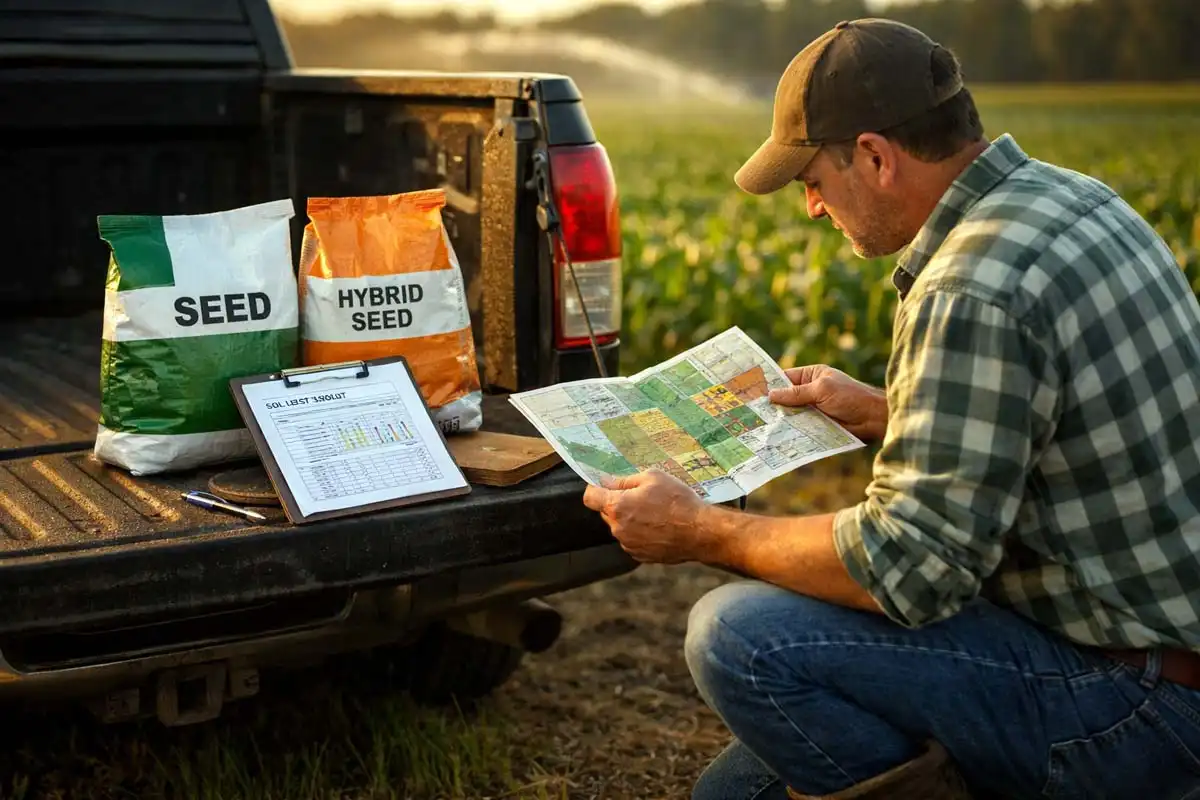
To choose crops for farming, match your soil and climate to a crop you can water, manage, harvest, and store on time, then confirm a real buyer and test it on a small acreage before scaling up.
The right crop fits your soil texture, drainage, and water supply. It also fits your equipment, labor schedule, and storage space. This guide walks through the field checks, buyer questions, and simple budgeting that narrow your options fast. By the end, you will have a short list of crops and a plan to test them on a small acreage before you scale.
How do you choose crops for farming?
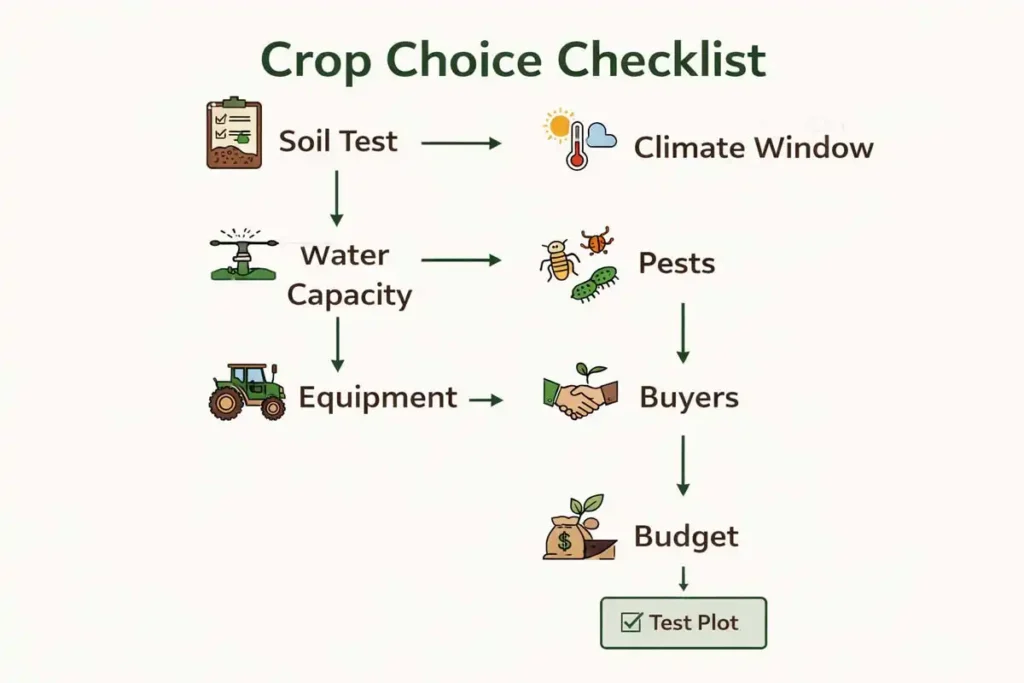
You choose crops for farming by writing down your goals, measuring soil and water limits, and matching crops to climate and buyers. A crop that looks profitable on paper fails when harvest equipment, storage, or labor falls short. Use the steps below to move from a long wish list to a workable short list.
A practical crop-choice checklist:
- Define 1–2 main farm goals (steady cash flow, soil improvement, livestock feed).
- Map constraints (acreage, slope, drainage, irrigation, labor hours).
- Identify 3 market paths (contract buyer, wholesale, direct sales).
- Pick 3–5 candidate crops that fit your season.
- Estimate input costs and realistic management intensity.
- Check rotation fit and risk, then test on a small block.
If you are still building the operation, start by tightening your plan for land access, equipment, and basic cash flow in this guide on way to start a crop farm. Stay connected with crop farming methods.
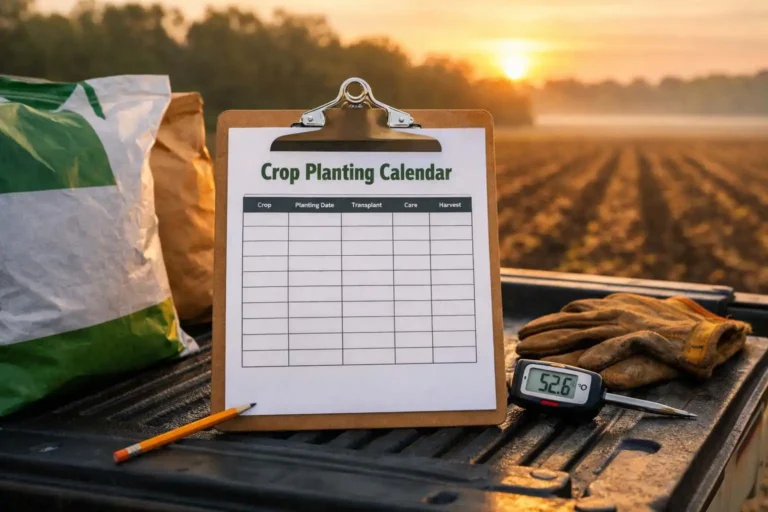
Know more: 6 Steps to Build a Crop Planting Calendar
What farm goals drive the “right crop” decision?
Farm goals drive crop choice by setting your target for income timing, workload, and risk. One farm targets predictable sales to local buyers. Another farm targets higher margins with higher labor. A third farm targets soil health first, then cash crops second.
Use goals that read like decisions, not wishes:
- Cash-flow goal: You pick crops with clear buyers, simple grading, and reliable harvest timing.
- Labor goal: You pick crops that match your crew size during planting, scouting, and harvest.
- Risk goal: You spread risk with more than one crop or more than one market channel.
- Soil goal: You build rotation that reduces pest pressure and balances nutrients.
A clear goal keeps you from chasing a price spike that disappears before harvest.
Read more: Crop Farming Basics in 8 Essential Checks
What field data do you collect before choosing a crop?
Field data tells you which crops fit your ground without expensive surprises. A crop “fits” when the field supports root growth, traffic during wet weeks, and harvest on time.
Collect this information before you fall in love with a crop:
- Soil test results: pH and nutrient levels guide fertility planning.
- Soil texture and structure: sand, silt, clay, and compaction change rooting and water holding.
- Drainage and ponding areas: wet spots delay planting and raise disease pressure.
- Slope and erosion risk: steep ground favors residue cover and careful tillage choices.
- Field history: last 3–5 crops, herbicide programs, and problem weeds.
- Water source details: irrigated acres, well output, and water quality.
- Access and logistics: field entrances, turn areas, and distance to storage or packing.
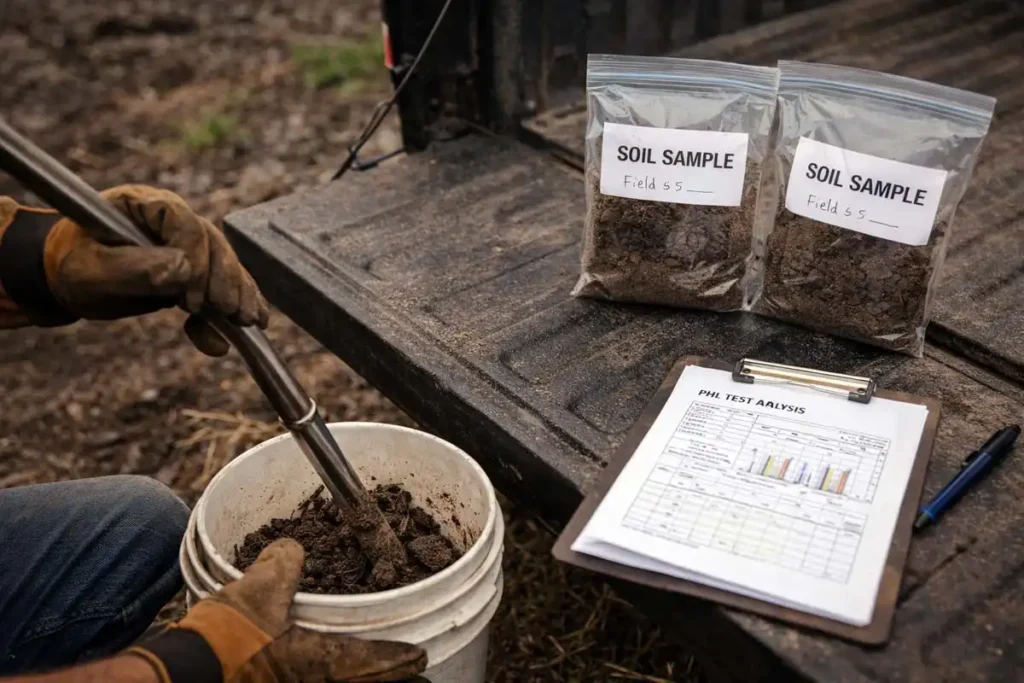
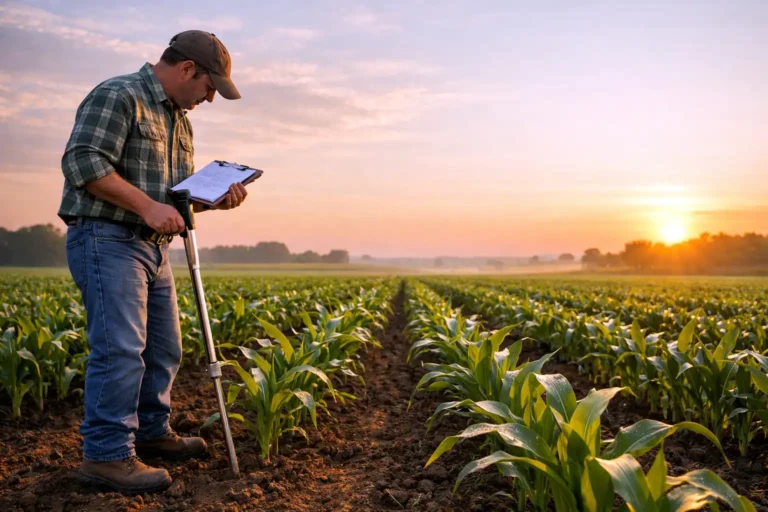
Good sampling tools improve decisions because they reduce guesswork. This overview of soil testing and measuring tools helps you set up a clean, repeatable sampling routine. You will need reliable soil testing kit after collect soil sample.
When your field notes and soil results sit in one folder, crop selection gets faster.
How does climate narrow the crop list?
Climate narrows the crop list by controlling planting windows, frost risk, and heat stress. Your season length sets which maturity groups finish on time. Your rainfall pattern sets how often crops hit drought stress during flowering and grain fill.
Climate filters that matter in the field:
- First and last frost timing: frost risk limits warm-season crops.
- Heat and humidity: heat pushes water demand and raises some disease risks.
- Rain timing: wet springs delay fieldwork; dry summers stress shallow roots.
- Wind and storms: lodging and hail risk change variety and insurance decisions.
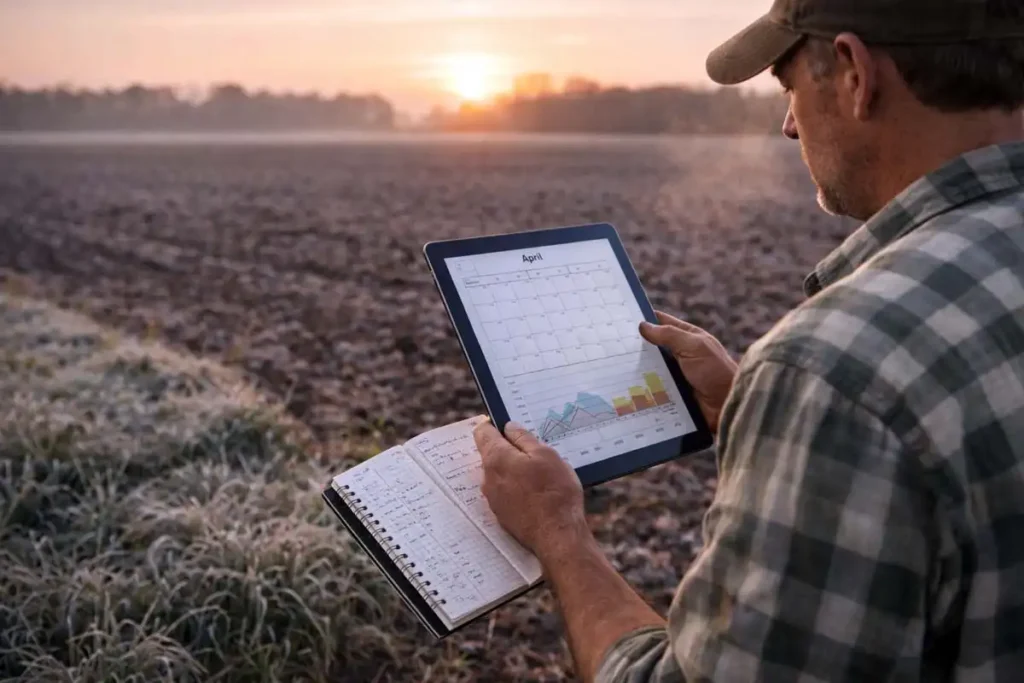
A crop plan fits your climate when planting and harvest land inside your “normal” workable weeks, not only the best-case year.
How does soil type and fertility steer crop selection?
Soil type and fertility steer crop selection because roots need oxygen, water, and nutrients in balance. Heavy clay holds water but limits oxygen after big rains. Sandy ground drains fast and needs tighter water and nutrient timing. Compaction blocks roots even when fertility looks good on a test.
Match crops to soil traits you already have:
- Poorly drained ground: favors crops and systems that tolerate wet feet or use raised beds and drainage work.
- Light sandy ground: favors crops that handle drought or systems with dependable irrigation and split fertilizer.
- Compacted headlands: favor deep rooting and traffic control plans.
- Low organic matter: favors residue building, cover crops, and careful nitrogen timing.
Fertility planning works best when the whole season stays in view. This guide to soil fertility management helps you connect soil tests, nutrient timing, and crop demands into one plan.
How does water access and irrigation capacity affect crop choice?
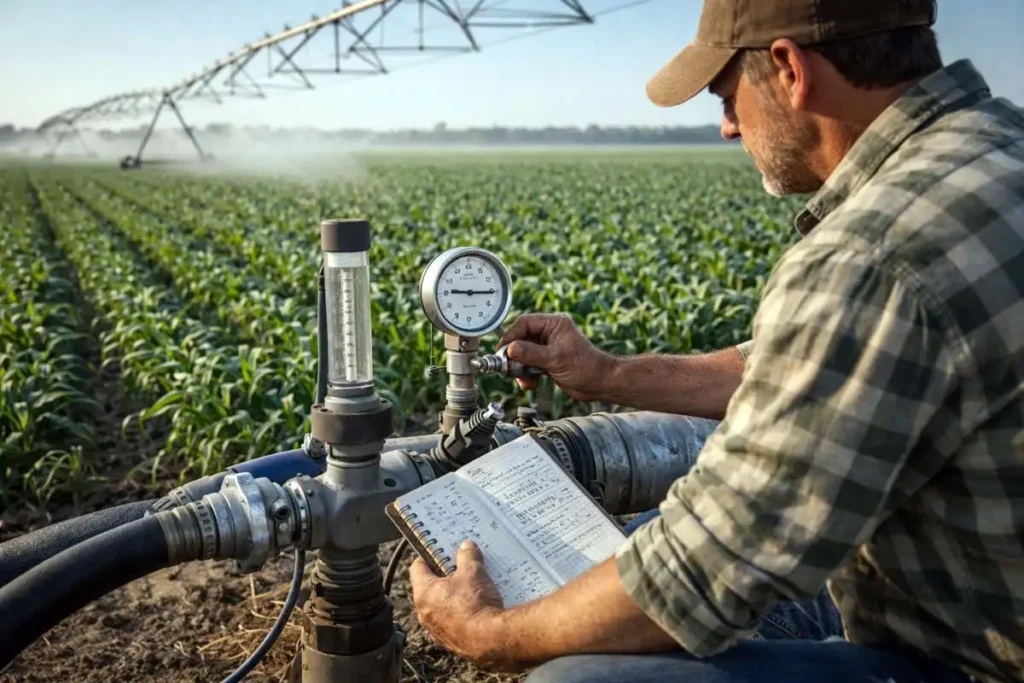
Water access affects crop choice because irrigation capacity sets the ceiling on stable production. Dryland acres rely on stored soil moisture and timely rain. Irrigated acres rely on pump output, system coverage, and water scheduling.
Treat water like a hard limit, not a hope:
- Irrigation capacity: gallons per minute and system layout limit how many acres you irrigate well.
- Application timing: a crop with tight water timing fails faster under limited capacity.
- Water quality: salinity and sediment change emitter clogging and crop tolerance.
- Drought planning: backup plans protect income when allocations drop.
A clear water plan also improves variety selection and planting dates. This guide on irrigation and water management lays out the decisions that matter before you seed the first acre.
How do local markets and buyers affect profitability?
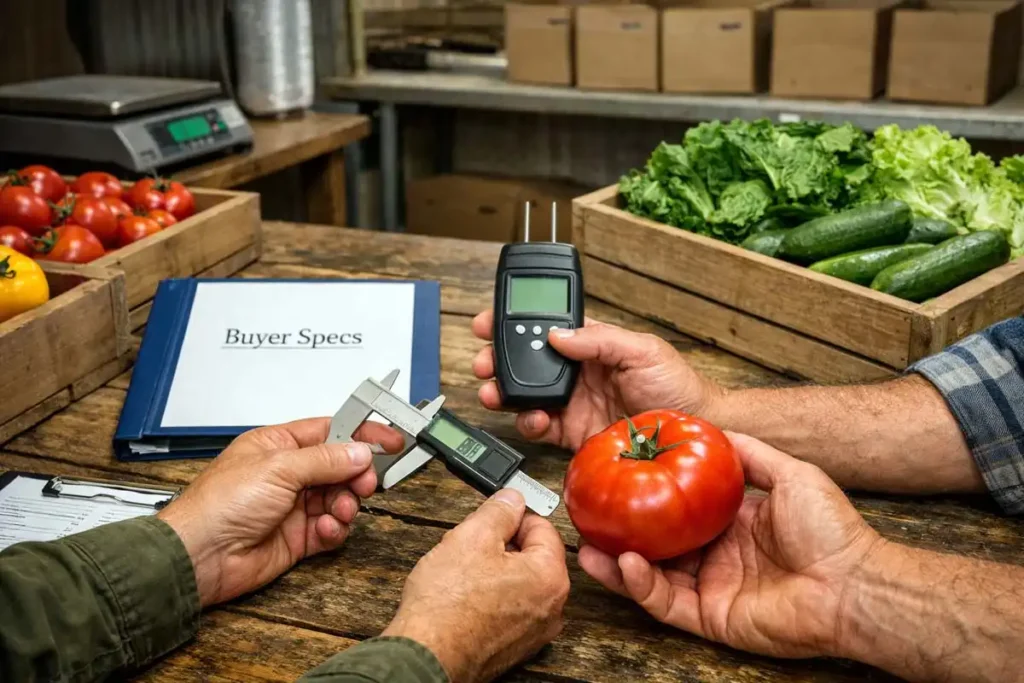
Markets affect profitability because a crop earns money only after it reaches a buyer in acceptable condition. A strong yield still loses money when the buyer is far away, the grade rules are strict, or storage is missing.
Start market research early and keep it concrete:
- Identify buyers within hauling distance: elevators, processors, produce wholesalers, restaurants, or direct customers.
- Ask for specifications in writing: moisture, grade, size, color, residues, packaging, delivery windows.
- Check payment timing: weekly, net-30, or seasonal payouts change cash flow.
- Confirm volume needs: some buyers need steady loads, not one large delivery.
Buyer questions that save headaches:
- What grades do you reject most often?
- What is the dockage schedule or shrink policy?
- What paperwork do you require at delivery?
- What crop protection rules do you enforce?
A crop fits your market when the sale steps feel routine, not like a custom project every load.
How do equipment, labor, and storage limits cut risk?
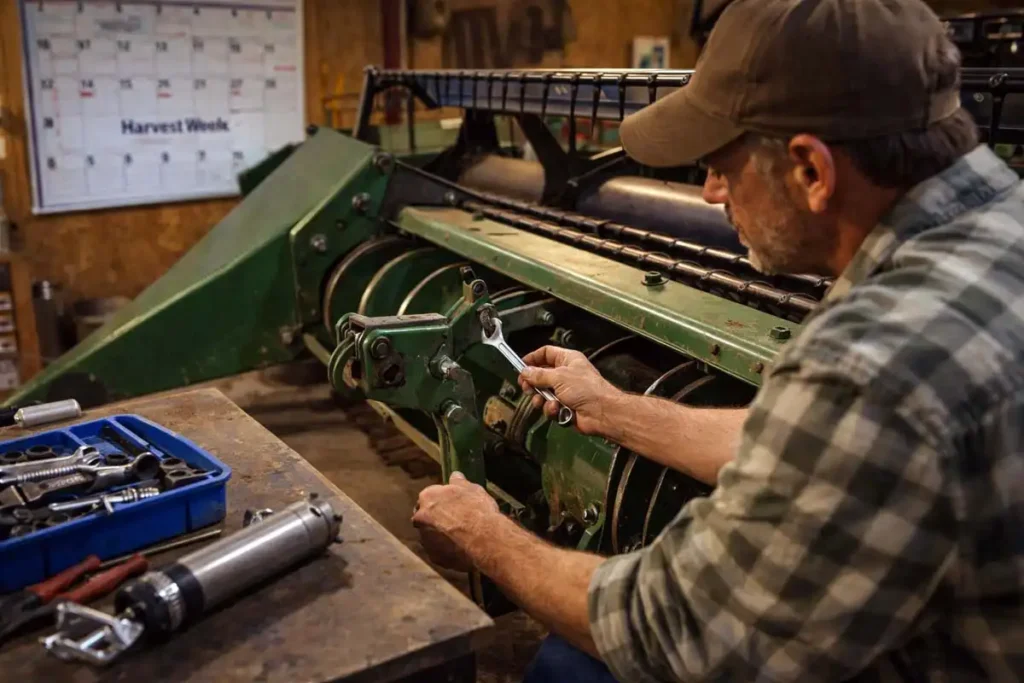
Equipment, labor, and storage limits cut risk by keeping your plan inside what your farm can finish on time. Planting delays lower yield potential. Late weed control raises herbicide costs and harvest losses. Slow harvest increases quality risk.
Match crops to the tools and time you already control:
- Planting and stand establishment: planters, seeders, and bed prep set the start.
- Weed control windows: cultivation and spraying demand timely passes.
- Harvest capacity: combining, digging, picking, or cutting takes crews and machines.
- Storage and handling: grain drying, cooling, washing, packing, and bins protect quality.
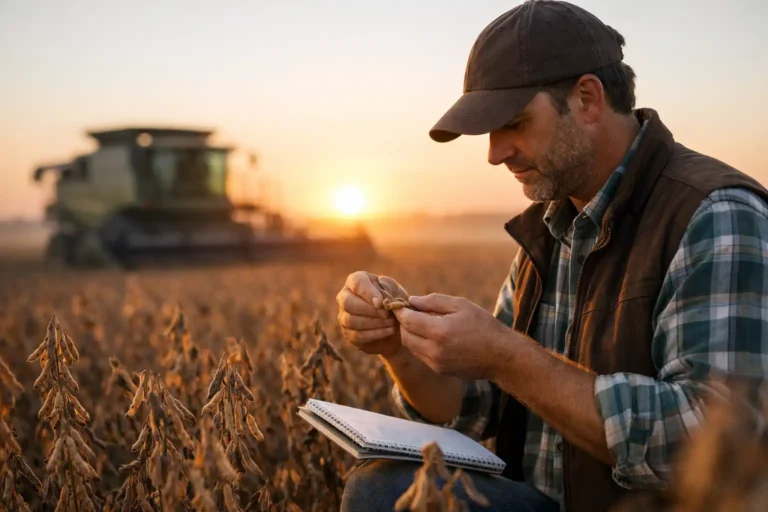
Storage needs drive crop choice more than most beginners expect. Grain needs dry, protected storage. Fresh produce needs fast cooling and careful handling. This overview of harvest and storage planning helps you check the weak links before you plant.
How do pests, diseases, and weeds change the crop decision?
Pests, diseases, and weeds change the decision because prevention costs less than rescue treatments mid-season. Field history tells you what pressure repeats. Rotation tells you how to break cycles. Variety selection tells you what resistance you bring to the fight.
Build protection into the crop choice:
- Start with field history: map problem weeds and disease areas.
- Choose varieties with resistance traits: resistance reduces spray dependence.
- Plan scouting and thresholds: frequent scouting improves timing and limits waste.
- Protect beneficial insects: calmer programs often keep secondary pests lower.
For deeper planning, this guide on pest and disease management helps you connect scouting, resistant varieties, and treatment timing.
Weed pressure also decides labor and chemical costs. This overview of weed control practices helps you plan rotation, residuals, cultivation, and clean equipment habits.
Safety stays part of crop planning because some crops demand more spraying and more field passes. Use the right gloves, eye protection, respirator filters, and clean-up routines from this farm safety PPE guide before you handle pesticides or treated seed.
How does crop rotation protect next year’s profit?
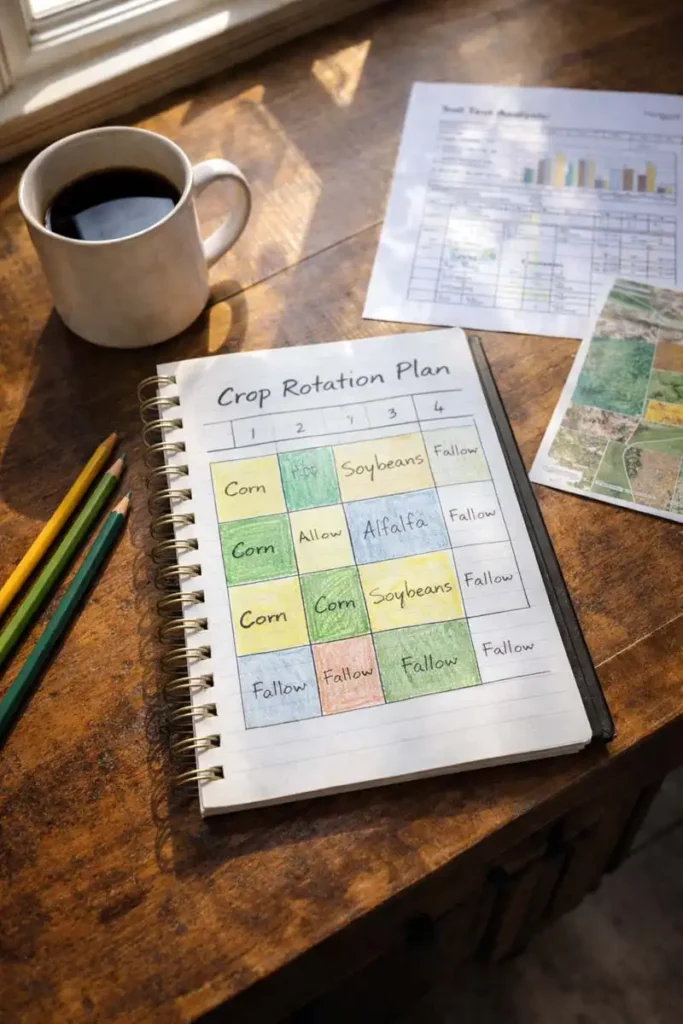
Crop rotation protects profit by breaking pest cycles, spreading workload, and balancing nutrient demand across seasons. Rotation also changes residue cover, soil structure, and infiltration. Those changes affect planting dates and weed pressure next year.
A rotation plan works when it does three jobs at once:
- Disease control: switching crop families reduces repeating pathogens.
- Weed control: changing timing and chemistry disrupts weed life cycles.
- Nutrient balance: legumes and heavy feeders trade places to reduce extremes.
Rotation also protects your “options.” A field that stays healthy keeps more crops on the table.
Which crop types match common farm setups?
Crop types match farm setups when management intensity matches your time, tools, and buyers. Use crop types as categories first, then narrow to specific crops and varieties.
When do grain and cereal crops fit best?
Grain and cereal crops fit best when you have acreage, mechanized harvest, and a nearby buyer. They often store well, which supports flexible marketing. They also work well in rotations that build residue cover and reduce erosion. If you want a starting point for specifics, review a crop like this corn growing guide.
When do legumes fit best?
Legumes fit best when you want rotation benefits and strong demand for protein crops. They often improve rotation flexibility and support soil biology through different residue and rooting patterns. Legumes still require tight weed control early and careful harvest timing to protect quality.
When do vegetable crops fit best?
Vegetable crops fit best when you have labor, irrigation control, and a clear market plan. They also fit farms that can handle frequent harvest and fast handling. Perishability changes everything, so pack-out and cooling matter as much as yield. For an example of management intensity, see this tomato growing guide.
When do root and tuber crops fit best?
Root and tuber crops fit best when soil structure stays loose and drainage stays consistent. They also fit operations that can handle digging, cleaning, and storage. Soil clods and compaction cause grading losses, so field preparation carries more weight.
When do vine crops and perennials fit best?
Vine crops and perennials fit best when you want multi-year production and you can invest in trellising, training, and long-term pest management. They also require a market that pays for quality because the establishment cost lands upfront.
How do you build a short list and test a new crop before scaling up?
You test a new crop by planting a small block, tracking costs and labor, and grading the harvest like a real sale. A small test also reveals hidden constraints like irrigation timing, weed escapes, and harvest bottlenecks.
Use this order to keep the test honest:
- Write a one-page crop plan. Include planting date range, fertility plan, weed plan, and harvest plan.
- Choose a small acreage you can watch closely. Pick a field with average conditions, not the best corner.
- Track every input and every hour. Seed, fertilizer, fuel, hired labor, scouting, and repairs all count.
- Record “failure points” weekly. Note stand issues, water stress, weed flushes, and disease patches.
- Sell the crop through the real channel. Use the buyer, grade rules, and packaging you plan to use later.
- Review results within 14 days of harvest. Decide: expand, repeat the test, or drop the crop.
A test block that runs like a business teaches more than a perfect plot.
What mistakes derail crop selection?
Crop selection fails when farmers skip field data, underestimate labor, or plant without a buyer. Most crop problems trace back to one missing link in the chain from field to sale.
Common mistakes that cause expensive pivots:
- Picking crops before checking soil drainage: wet feet and compaction punish stand establishment.
- Ignoring harvest and storage needs: quality drops fast when handling is slow.
- Chasing price without a marketing plan: a high price means little without grade acceptance.
- Underestimating weed pressure: early weed escapes steal yield and raise harvest headaches.
- Overloading the labor calendar: overlapping harvest windows create losses across every crop.
- Skipping a small-scale test: first-year surprises cost the most on full acreage.
FAQ: Choosing the right crops
How many crops belong in a beginner’s plan?
Do I need a contract before I plant?
What makes a crop “profitable” on a small farm?
How do I balance profit and soil health?
Conclusion
Choosing the right crops comes down to fit. The crop needs to fit your climate window, your soil and water limits, and your labor and equipment capacity. The crop also needs to fit a real buyer with clear grade rules and payment terms. When you gather field data first, narrow to a short list, and test on a small block, you turn crop selection into a repeatable farm decision instead of taking risk.