What Flowers to Plant with Tomatoes to Improve Your Garden Yield
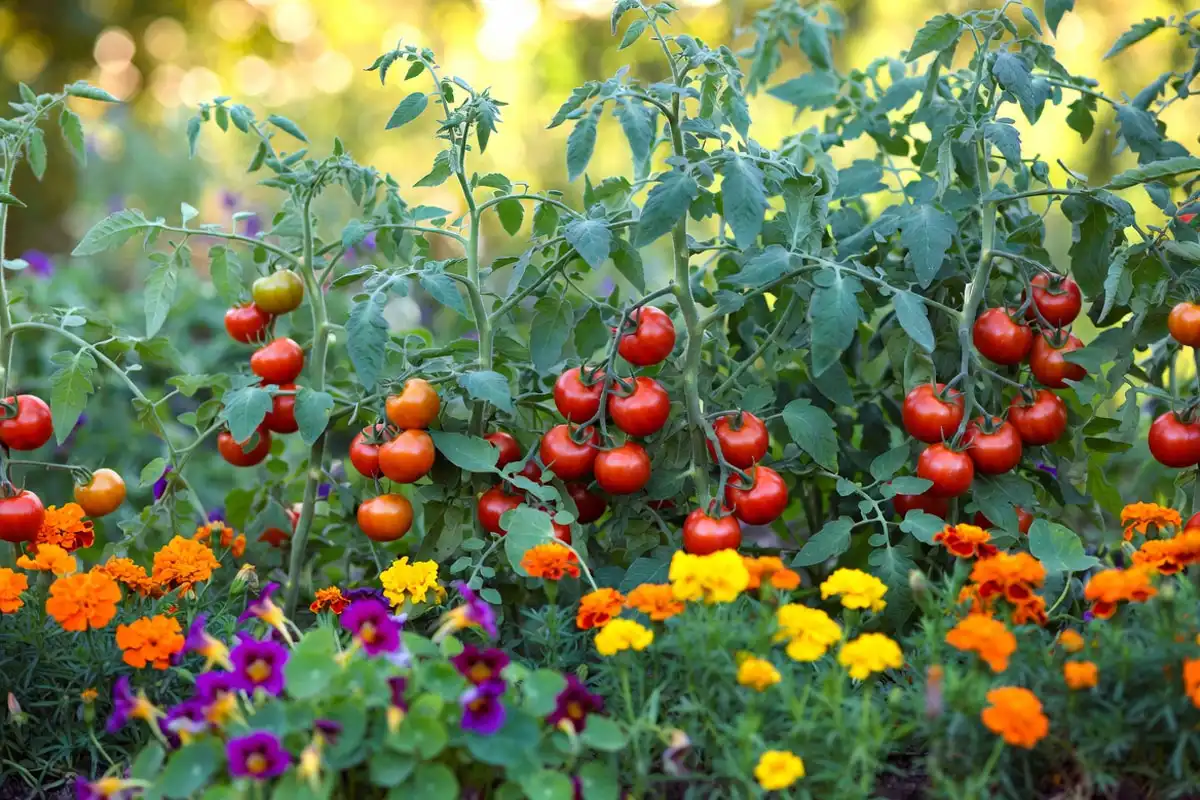
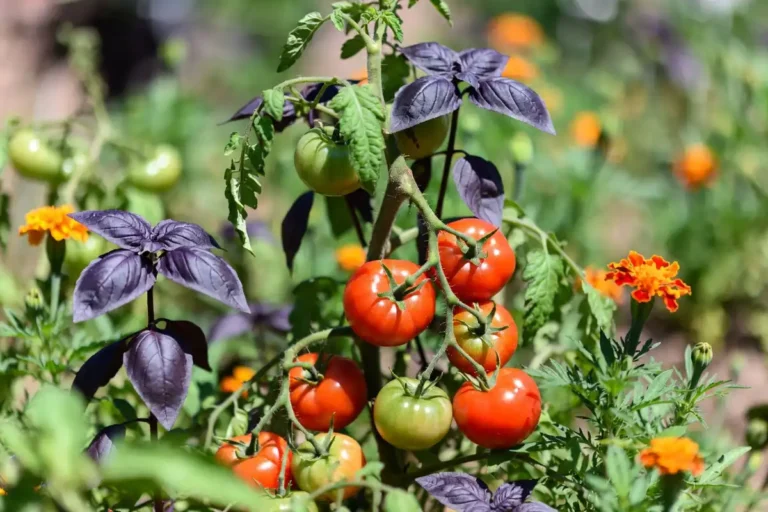
Marigolds, nasturtiums, borage, calendula, zinnias, sweet alyssum, and petunias are flowers that all grow well when you plant them with tomatoes. This guide covers which flowers deliver the most benefit, what each one does for the plant, where to position them in the garden, and how to plant them correctly. Whether you grow tomatoes in rows, containers, or raised beds, adding the right companion flowers reduces pest pressure, increases pollinator activity, and supports better fruit set throughout the season.
The best flowers to plant with tomatoes are marigolds, nasturtiums, borage, calendula, zinnias, sweet alyssum, and petunias. These flowers repel pests, attract pollinators, and draw beneficial insects that feed on aphids, caterpillars, and whiteflies. Plant them 12 to 18 inches from tomato stems to avoid root competition.
Why Do Flowers Benefit Tomato Plants?
Companion flowers serve three roles in a tomato garden: pest deterrence, pollinator attraction, and beneficial insect support.
Pest-deterrent flowers release chemical compounds that repel or confuse insects. Pollinator-attracting flowers increase bee visits, which improves fruit set. Beneficial insect flowers draw predatory wasps and hoverflies that feed on aphids and caterpillars on tomato foliage.
Planting a mix of two or three flower types covers all three functions at once.
Learn more: Plant Tomatoes and Zucchini Together? Here Is the Truth
Best Flowers to Plant with Tomatoes
Marigolds
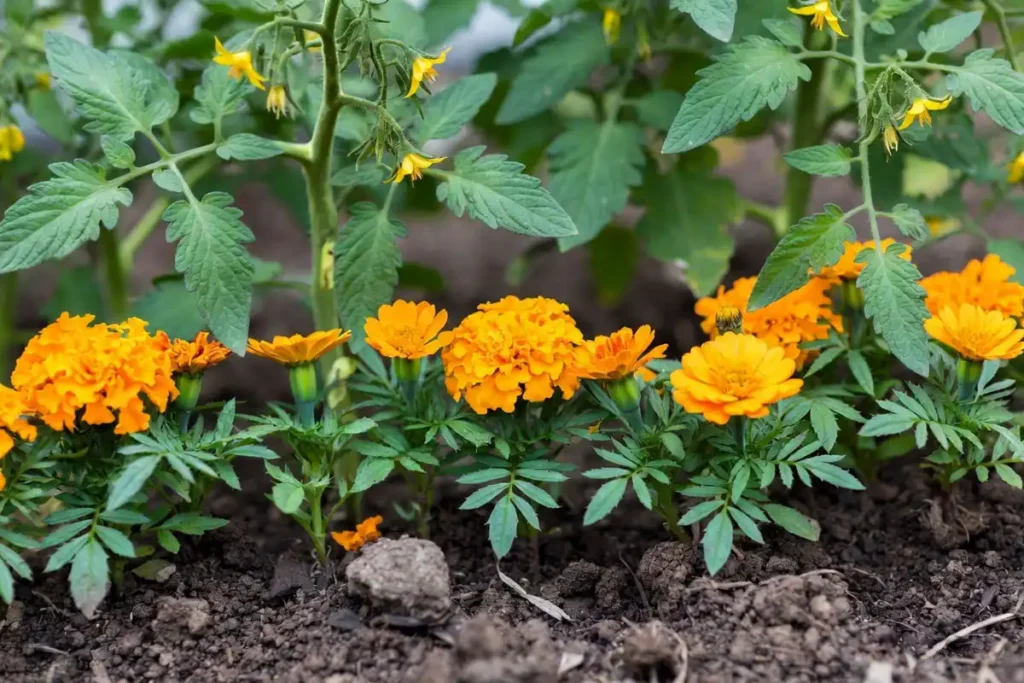
French marigolds (Tagetes patula) produce a root compound called alpha-terthienyl that suppresses root-knot nematodes in the soil. They also release a scent above ground that deters whiteflies and aphids.
African marigolds (Tagetes erecta) provide above-ground pest deterrence but do not produce the same nematode-suppressing root effect as French varieties.
Plant marigolds 12 inches from tomato stems. Both varieties flower continuously through summer, making them the most consistent all-season companion for tomatoes.
To know more: Plant Squash and Tomatoes Together: What Farmers Know
Nasturtiums
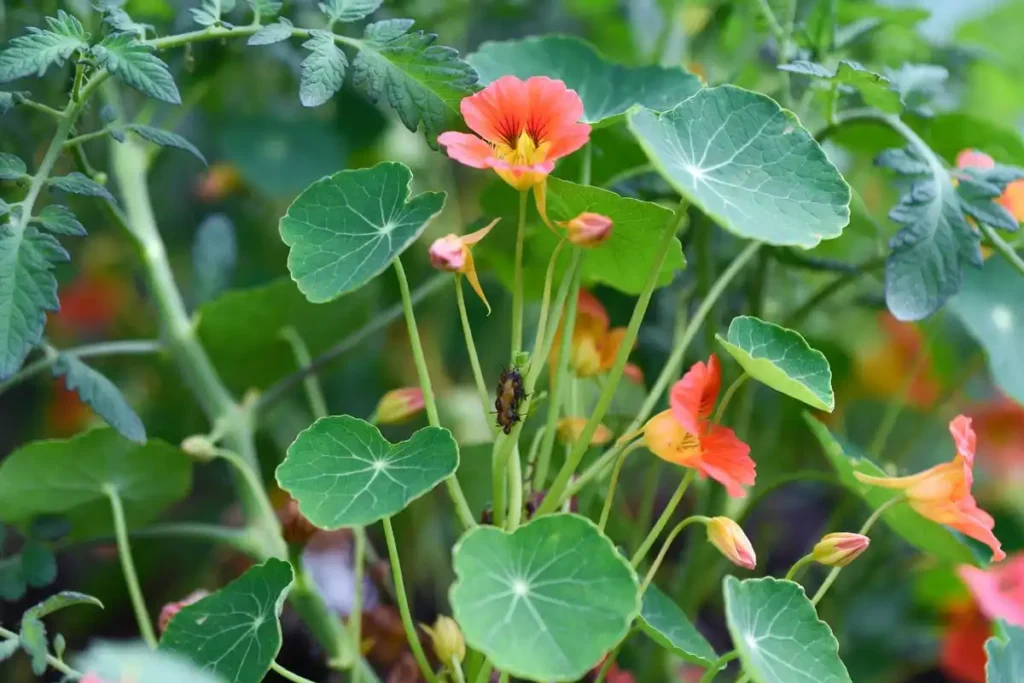
Nasturtiums (Tropaeolum majus) act as a trap crop for aphids. Aphids prefer nasturtium leaves over tomato foliage and concentrate on the flower stems instead.
This draws aphid colonies away from tomatoes without pesticide use. Nasturtiums also attract predatory insects that feed on those same aphids, creating a natural control loop.
Remove nasturtium stems with heavy aphid colonies before populations transfer back to tomatoes. For a broader list of plants that keep insects off tomatoes, companion planting for pest reduction covers additional options beyond flowers.
Borage
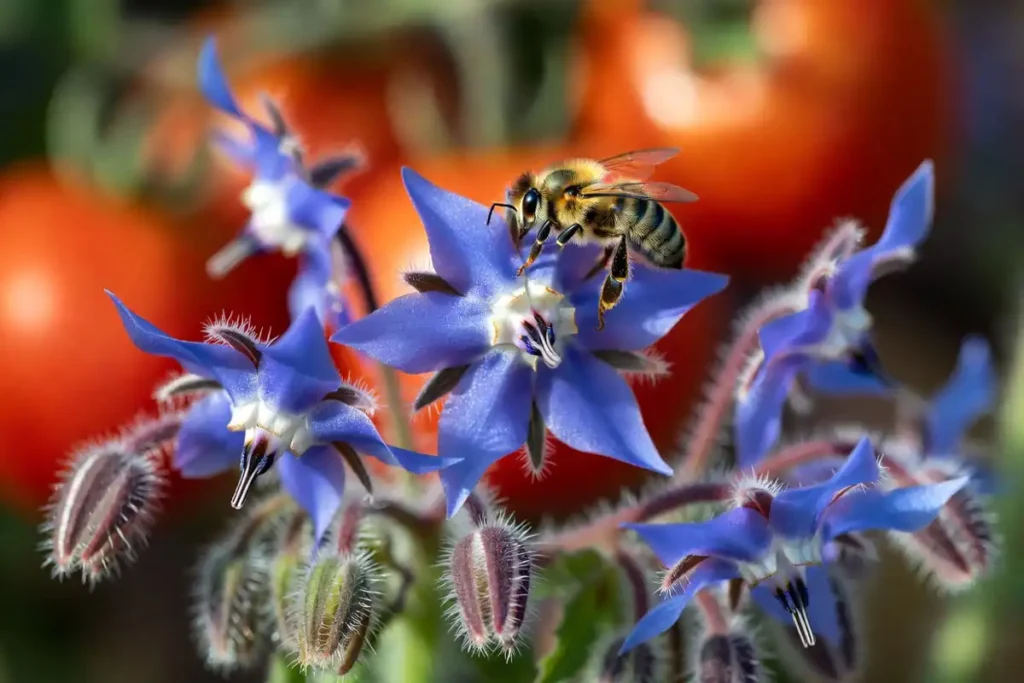
Borage (Borago officinalis) produces star-shaped blue flowers that attract bees and other pollinators. It also attracts predatory wasps that parasitize tomato hornworm (Manduca quinquemaculata) eggs.
Gardeners commonly report that borage deters tomato hornworm, though this effect remains observational rather than confirmed by controlled studies.
Borage self-seeds and spreads readily. Pull volunteer seedlings from areas where they compete with tomato root space.
Calendula
Calendula (Calendula officinalis) produces sticky stems and flowers that physically trap aphids and whiteflies on contact. It also attracts hoverflies, whose larvae feed on soft-bodied pests at the plant base.
Plant calendula at the edge of tomato rows to create a pest-trapping border. Deadhead spent blooms every 7 to 10 days to extend flowering through late summer.
Zinnias
Zinnias attract bees, butterflies, and parasitic wasps throughout the growing season. Parasitic wasps target caterpillars and aphid populations on nearby tomato foliage.
Plant tall zinnia varieties at least 18 inches from tomato stems to prevent shading of lower leaves. Shorter zinnia varieties fit between plants without competing for light.
Sweet Alyssum
Sweet alyssum (Lobularia maritima) produces small white flower clusters that attract ground-dwelling predatory beetles and hoverflies. These insects hunt aphids, thrips, and other small pests at soil level.
Sweet alyssum stays low and fits between tomato plants without shading foliage. It works well as a living ground cover between rows in both field beds and containers.
Petunias
Petunias release solanine, a natural alkaloid compound that deters aphids, tomato hornworm, and spider mites.
Tomatoes and petunias share the Solanaceae family, which means both plants carry similar disease vulnerabilities. Monitor petunias alongside tomatoes when scouting for early blight, late blight, and mosaic virus.
Where to Position Companion Flowers in a Tomato Garden
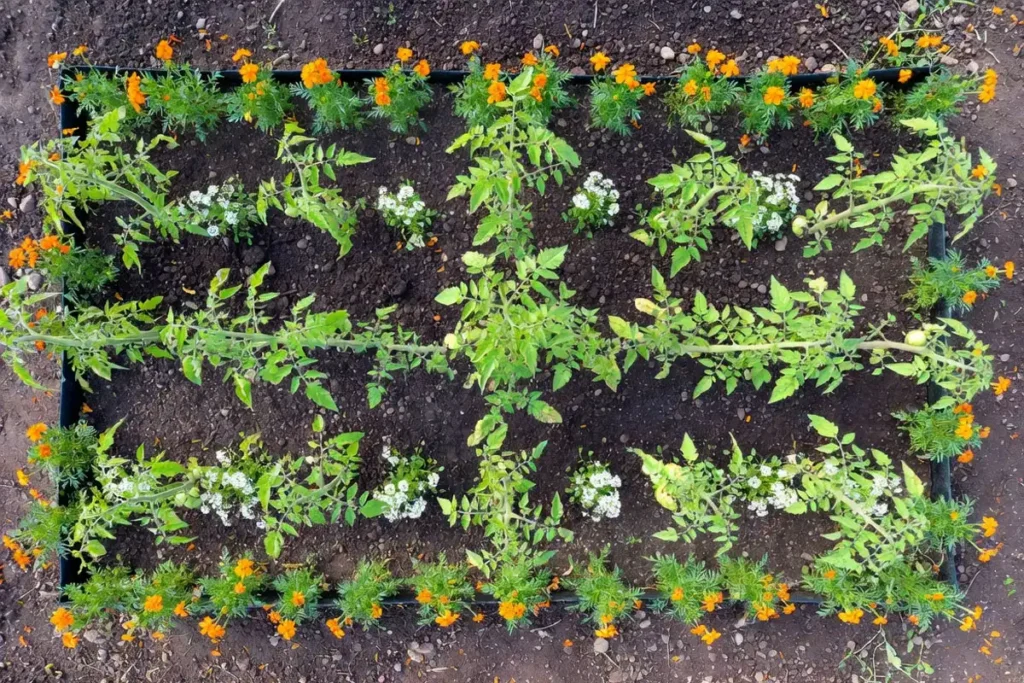
Companion flowers deliver the most benefit when placed in three positions: between plant rows, at the row border, and at the outer edge of the growing area.
Between rows, low-growing flowers like sweet alyssum and nasturtiums fit without shading tomato foliage. At the row border, marigolds and calendula form a perimeter that intercepts flying pests before they reach tomato stems. At the outer edge, taller zinnias and borage attract pollinators from a distance and direct them toward tomato flowers.
Keep all companion flowers at least 12 inches from tomato stems. Flowers planted too close compete for water and nutrients and slow tomato growth. For spacing principles that apply across vegetable crops, crop plant spacing guidelines provide a reliable reference.
If you grow in a raised bed, companion planting in a raised bed with tomatoes covers how to integrate flowers in tighter spaces where root zones overlap.
How to Plant Flowers with Tomatoes
Order matters in this process, so follow these steps in sequence.
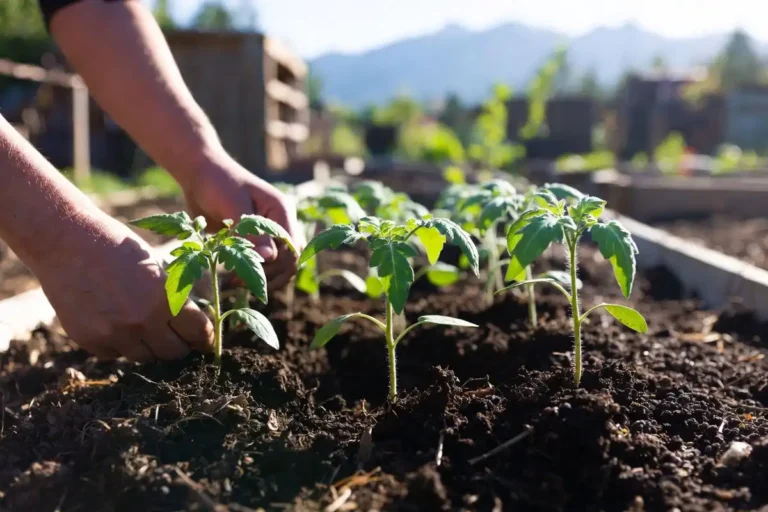
- Set tomato transplants first and allow them to establish for 7 to 10 days before adding companions.
- Transplant or direct-sow companion flowers after your last frost date.
- Space flowers 12 to 18 inches from tomato stems based on the mature width of each variety.
- Water tomatoes and companion flowers at the base to keep foliage dry and reduce fungal disease risk.
- Deadhead spent blooms on zinnias and calendula every 7 to 10 days to extend the flowering period.
- Remove nasturtium stems with heavy aphid colonies before populations transfer to tomato foliage.
What Flowers Harm Tomatoes?
Some flowers compete with or introduce problems to tomatoes and belong outside the tomato growing area.
Fennel (Foeniculum vulgare) inhibits tomato root growth through allelopathic compounds it releases in the soil. Keep fennel at least 6 feet from all tomato plants.
Tall sunflowers planted too close shade tomato foliage, reduce photosynthesis, and decrease fruit production. Plant sunflowers on the north side of tomato rows so shade falls away from the plants.
Ornamental brassica flowers, including flowering kale and ornamental cabbage, attract cabbage moths that also feed on tomato foliage. Keep brassica flowers out of the tomato growing area entirely.
Common Mistakes to Avoid
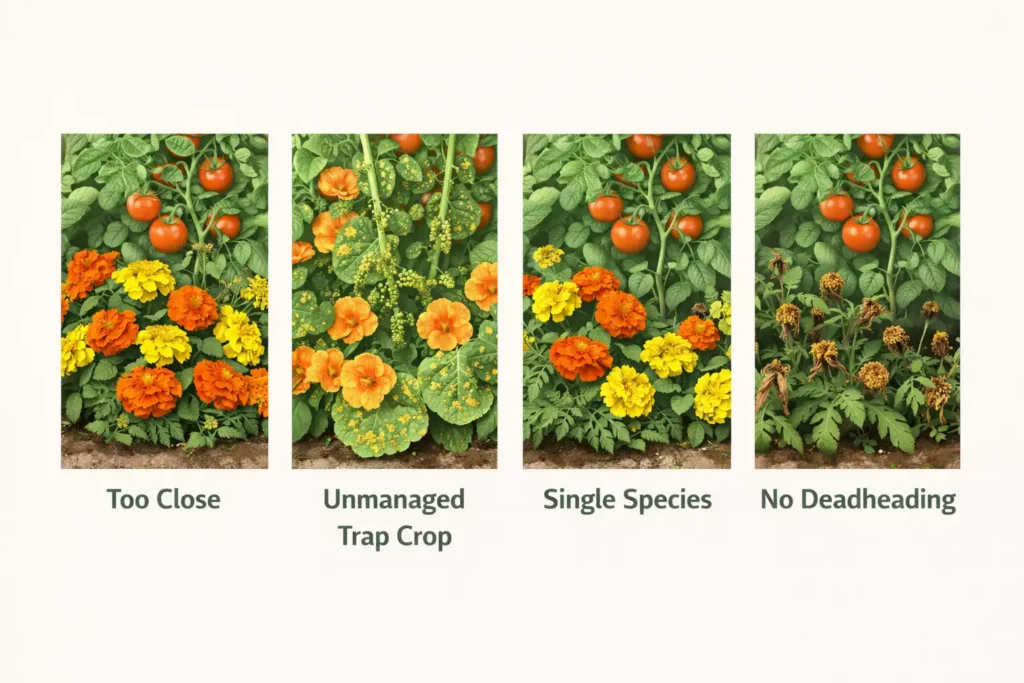
Planting only one flower type limits results. A single species covers only one function. A mix of two or three species covers pest deterrence, pollinator attraction, and beneficial insect support at the same time.
Planting flowers too close crowds the root zone. Both tomatoes and companion plants compete for water and nutrients, and tomato yield decreases as a result.
Ignoring aphid buildup on nasturtiums defeats their trap-crop purpose. Nasturtiums draw aphids away from tomatoes, but once infestation builds without management, populations migrate back.
Skipping deadheading shortens the bloom period. Zinnias and calendula stop producing flowers when spent blooms stay on the plant. Regular removal keeps them flowering through late summer.
For non-chemical approaches to pest management that work alongside companion planting, natural pest control for crops covers integrated options for vegetable gardens.
Safety Notes
Nasturtiums and borage attract pollinators throughout the day. Do not apply insecticides to companion flowers while bees are actively foraging.
If pesticide application near companion flowers becomes necessary, apply it in the evening when pollinator activity drops. For guidance on when pesticide use is appropriate and how to time applications correctly, knowing when to use pesticides in farming covers thresholds and timing.
Petunias share disease pathways with tomatoes. If disease symptoms appear on petunia foliage, check tomato plants immediately. Early detection limits the spread of fungal and viral infections across both plant types.
Conclusion
The most effective companion flower plan for tomatoes combines pest deterrence, pollinator support, and beneficial insect attraction in one planting arrangement.
Marigolds and nasturtiums handle pest pressure at the plant level. Borage, zinnias, and sweet alyssum increase pollinator and predatory insect activity. Calendula and petunias add deterrence at the row edge.
Plant a mix of two or three species around your tomato rows, maintain 12 to 18 inches of spacing, and monitor through the season. Consistent deadheading and aphid management on trap crops keep the system working from transplant to final harvest.