How Do You Plant Spring Onions: Seed, Sets, and Transplants
Store bunches wilt fast and cost more every season. Growing your own fixes both problems, and the crop is one of the easiest in the garden. So how do you plant spring onions and keep a steady supply? The method depends on whether you start from seed, sets, or transplants.
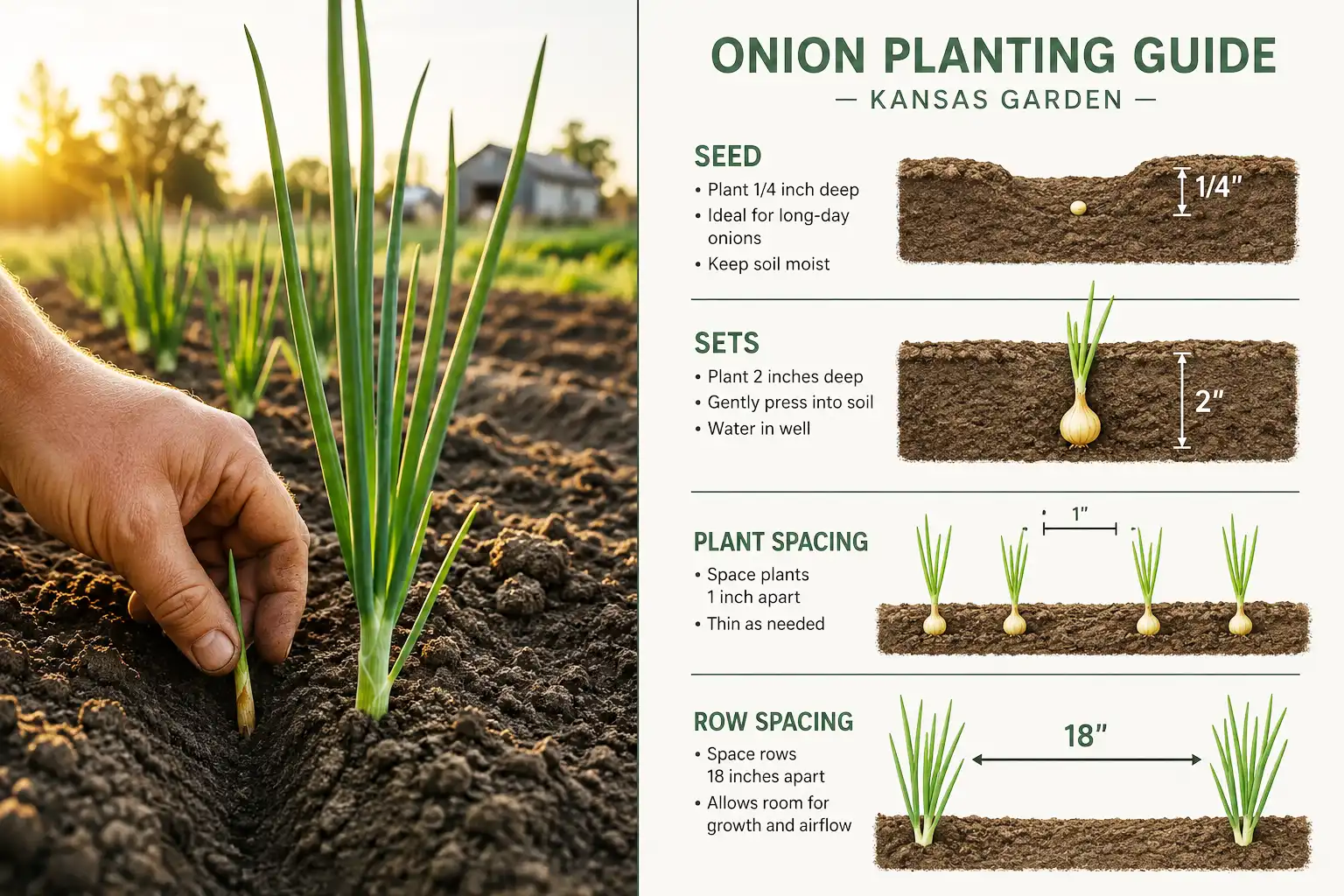
Sow spring onion seed a quarter to a half inch deep in rows 12 to 18 inches apart, then thin seedlings to one inch. Sets and transplants go 1 to 2 inches deep instead.
What Counts as a Spring Onion
A spring onion is a young onion pulled before the bulb sizes up. Two different plants carry that name. True bunching onions (Allium fistulosum) never form a bulb at all. Regular bulb onions (Allium cepa) pulled early show a small round base.
Purdue Extension draws the line at that base. A scallion has a straight white shaft. A spring onion carries a slight swelling. Both plant the same way, so pick based on what you want on the cutting board.
For long, straight white shanks, choose a bunching type. ‘Evergreen Hardy White’ survives Kansas winters. ‘Tokyo Long White’ and ‘Ishikura’ push tall shanks. ‘Deep Purple’ gives red stems. If you want the small bulb instead, sow any yellow or white variety and pull it young. The same seed works for starting bulb onions from seed, so one packet covers both jobs.
When to Plant Spring Onions
Direct sow as soon as the ground works up in spring. In Topeka that lands in late March, roughly three weeks ahead of the mid-April last frost. Seedlings shrug off light frost, so early sowing costs you nothing.
Soil temperature matters more than the calendar. Onion seed crawls below 50°F and stalls above 85°F. The useful range runs 60 to 75°F, where seed emerges in 7 to 14 days. Before opening a packet, a reading should be taken at seeding depth. Also, checking soil temperature with a thermometer beats guessing off the air forecast.
Late summer sowing works too. Seed a row in late July or August for fall pulls. Extra hardy bunching varieties then overwinter wherever soil drains well, which covers most of zones 4 through 9. In zone 6a under a light straw cover and give the first cut in April.
Soil and Bed Prep Before You Plant
Loose, well-drained soil does most of the work here. Onion roots are shallow and weak, so they cannot push through crust or clods. Work the top 8 to 10 inches until the soil crumbles in your hand.
Target a pH of 6.0 to 6.8. Below 5.5 the soil ties up phosphorus and young plants stall. Pull a soil test the fall before if you can, then apply lime or sulfur based on the result.
Four steps on every bed:
- Spread 1 to 2 inches of finished compost and till it in.
- Broadcast starter fertilizer per your soil test. Without a test, 1 pound of 10-10-10 per 100 square feet is a fair default.
- Rake the surface smooth, then firm it lightly. Fine seed needs even contact.
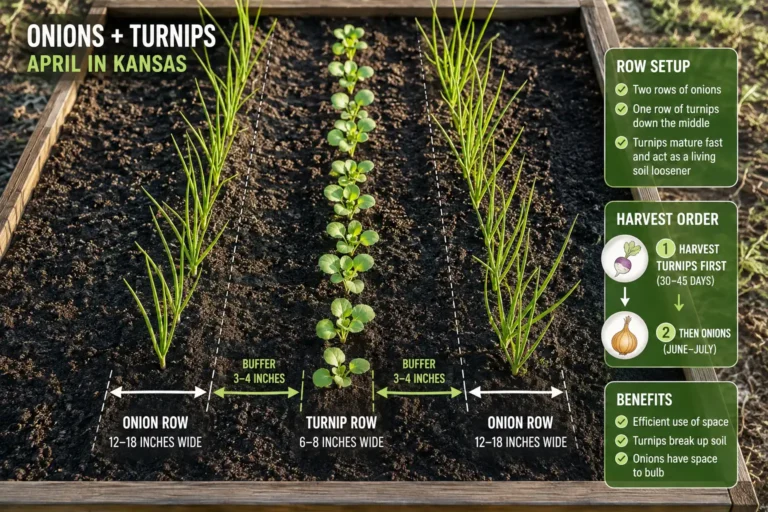
- Mark rows 12 to 18 inches apart before you open the packet.
Skip fresh manure. It carries weed seed, and the salts burn shallow onion roots.
Planting Spring Onions From Seed, Step by Step
Seed costs the least and gives you the widest variety choice. Plan on 60 to 80 days from sowing to your first pull.
- Open a furrow a quarter to a half inch deep. For a heavier cut, scratch out a 2 inch wide band instead of a single line.
- Drop 3 to 4 seeds per inch along the band. Onion seed is cheap and emergence runs uneven, so a thick stand helps.
- Cover lightly, then firm the soil with the back of a rake.
- Water in gently and keep the top inch damp until seedlings show.
- Thin to one plant per inch once seedlings reach 2 inches tall. Eat the thinnings.
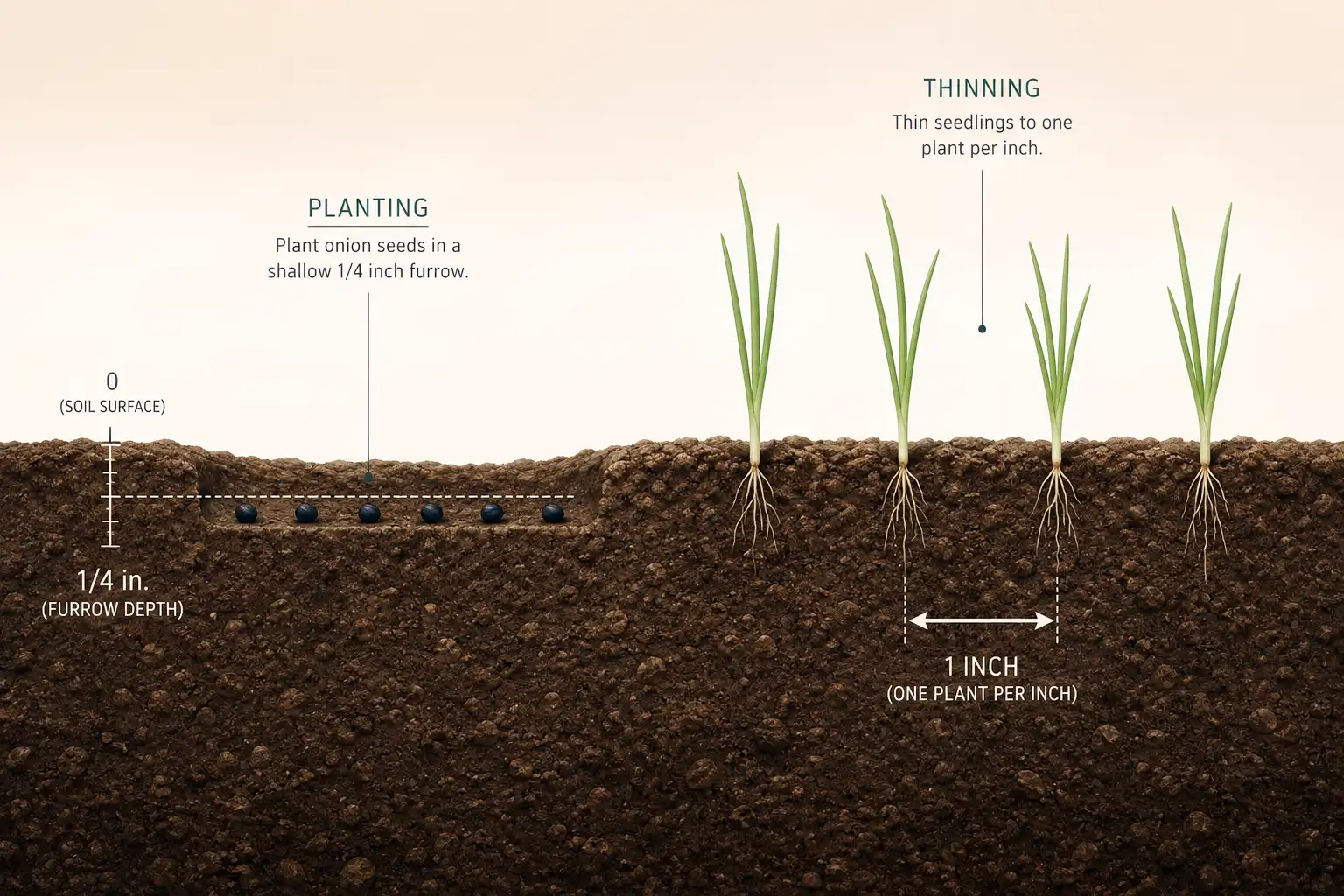
University of Minnesota Extension recommends that same 2 inch band, and it beats single-line seeding for yield per foot of row. Use fresh seed every year. Onion seed loses vigor fast, and packets older than two seasons often germinate under half.
| Planting method | Depth | In-row spacing | Row spacing | Days to first pull |
|---|---|---|---|---|
| Direct sown seed | 1/4 to 1/2 inch | Thin to 1 inch | 12 to 18 inches | 60 to 80 |
| Sets | 1 to 2 inches | 1 inch | 12 to 16 inches | 25 to 35 |
| Transplants | 1 to 2 inches | 1 inch | 12 to 18 inches | 30 to 45 |
| Regrown root ends | Crown at soil line | 2 inches | Pot or bed edge | 14 to 21 |
How to Plant Spring Onions From Sets
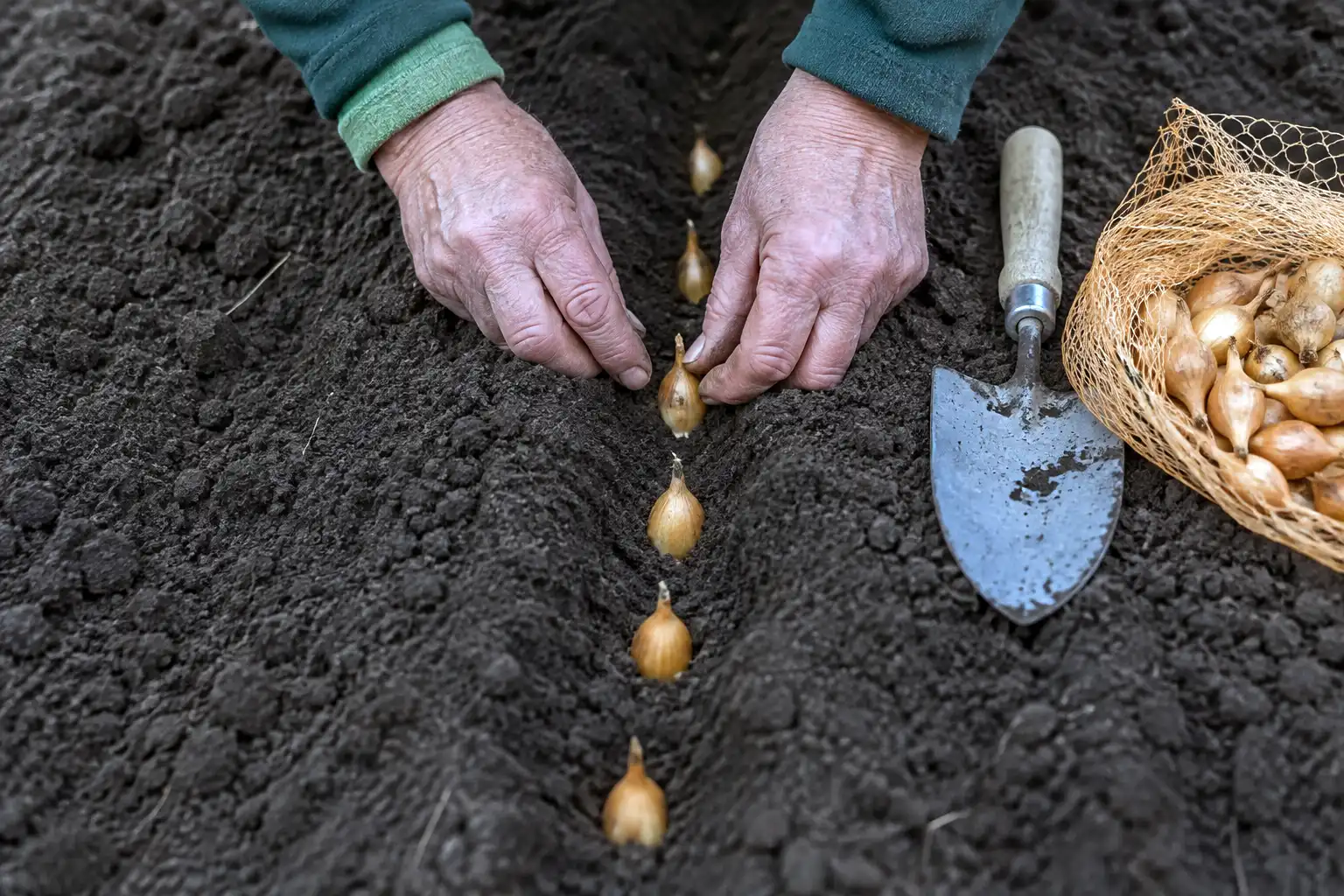
Sets give you the fastest crop of the three methods. A set is a small dormant bulb grown thick the season before, and it pushes green in about a week.
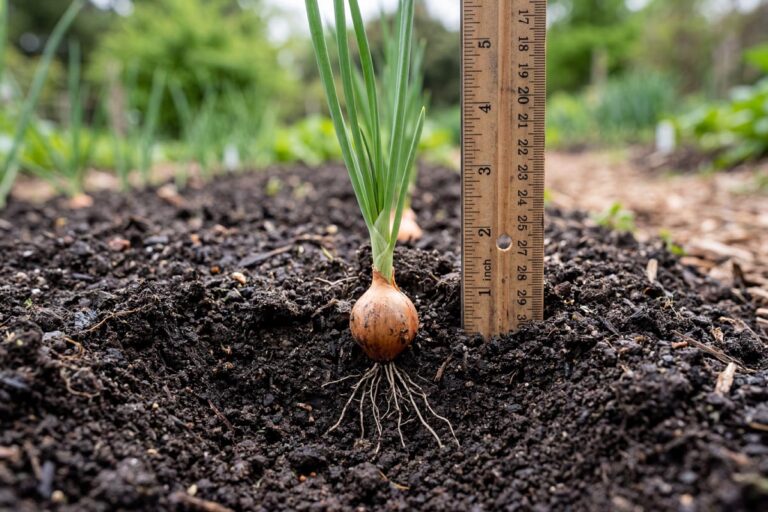
Pick the smallest sets in the bin, under a half inch across. Oversized sets bolt. Press them 1 to 2 inches deep, pointed end up, one inch apart. Deeper planting stretches the white shank, which is exactly what you want for scallions.
Sets earn their keep when you want green onions in April. Kansas garden centers stock them by mid-March. K-State Research and Extension also lists sets as the standard route for green onions in this state. Just pull them young, because sets rarely cure into good storage bulbs.
How to Plant Spring Onions From Transplants
Start seed indoors 4 to 8 weeks before you set plants out. Sow thickly in a flat, or drop 6 to 8 seeds per cell in a 72-cell tray. Clusters transplant fine and save a lot of handling time.
Then move them out this way:
- Open a furrow 2 inches deep.
- Trim roots to a half inch and tops to 4 inches.
- Set plants 1 inch apart, or space 6-seed clusters 6 inches apart.
- Backfill, firm gently, and water right away.
That trimming step surprises people, but it cuts shock and speeds rooting. The same routine applies when transplanting onions for full bulbs, only the spacing widens to 3 or 4 inches.
How to Regrow Spring Onions From Store Bought Roots
Cut the bunch an inch above the roots, then replant the base. New roots form within days and green pushes inside a week.
Two methods work:
- Water: stand the root ends in a jar holding an inch of water on a bright sill. Change the water every two days.
- Soil: press the bases into potting mix with the cut tips just above the surface.
Soil gives better flavor and holds up far longer. Water-grown regrowth thins out after the second cut, because nothing is feeding the plant. Expect two or three usable cuts, then start fresh. This trick fills a gap, but it will not replace a sown row.
Hilling for Longer White Shanks
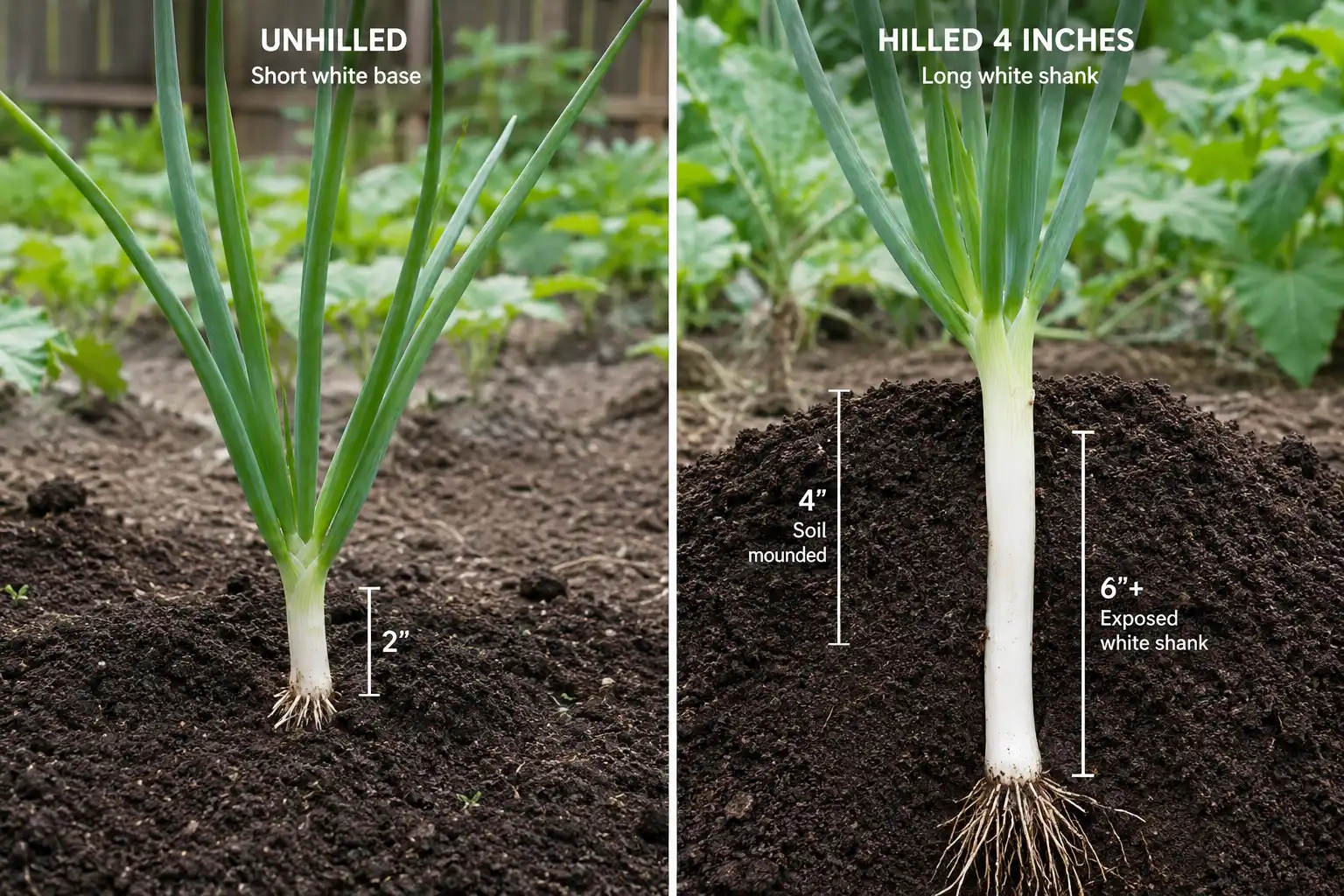
Pull soil up around the stems as the plants grow. Blanched tissue stays white, mild, and tender.
Start once stalks reach pencil thickness. Draw loose soil or fine mulch up the stems an inch at a time, every two weeks. Stop about an inch below the leaf split, otherwise grit lodges between the leaves and never washes out.
Skip hilling if you prefer the sharper flavor of green-shouldered stalks. Market growers hill because buyers pay for white length. In this method, half the row is hilled while the rest is left alone.
Watering and Feeding a New Planting
Give the bed one inch of water per week, rainfall included. Onion roots stay in the top 6 inches of soil, so the crop dries out before most others show stress.
Check with a trowel rather than a schedule. An inch of water wets sandy soil about 10 inches down and heavy clay about 6 inches, according to University of Minnesota Extension. Dig and look before you turn on the hose again.
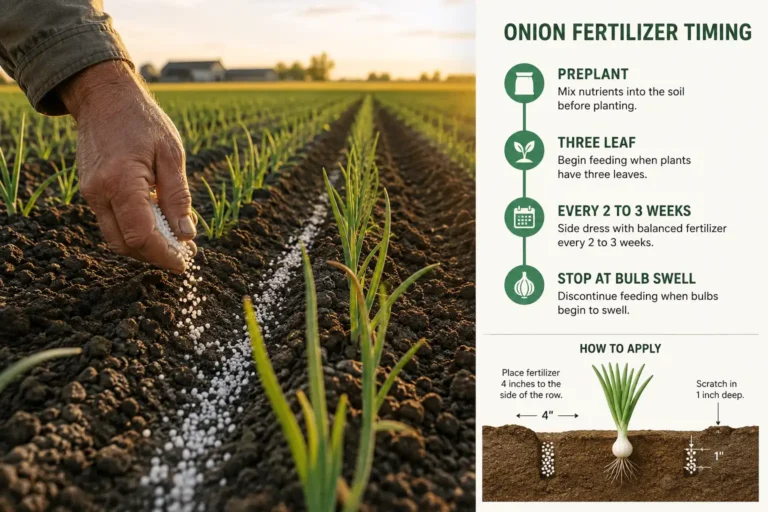
Side-dress nitrogen three weeks after emergence, then repeat every three weeks. Spring onions run entirely on leaf growth, so nitrogen drives the crop. A light band of ammonium sulfate along the row works well. Picking the right onion fertilizer also keeps you from overdoing it, since heavy rates soften the stalks and shorten shelf life.
Keeping Weeds Out of a Young Stand
Weeds beat spring onions unless you stay ahead of them. Onion leaves stand upright and thin, so they never shade the ground.
Cultivate shallow and often. Feeder roots run within 2 inches of the surface, and deep hoeing tears them. A stirrup hoe skims just under the soil and cuts weeds at the crown without lifting the row.
Mulch once plants stand 4 inches tall. An inch of straw or dry grass clippings holds moisture and blocks new flushes. Hand-pull anything inside the row. A weed pulled at thread stage takes one second, while the same weed at two weeks takes an onion with it.
Planting Spring Onions in Containers
A pot 6 to 8 inches deep grows a full crop. Roots stay shallow, so depth is rarely the limit. Surface area is.
Fill with a peat or coir based mix instead of garden soil. Sow seed a quarter inch deep and thin to one inch, or press sets in an inch deep. A 12 inch pot holds roughly 40 plants at that spacing.
Containers dry out fast in Kansas heat. Check daily through July and water before the surface goes pale. The same watering habit applies if you grow onions in a bucket, and drainage holes are not optional.
Succession Planting for a Steady Supply
Sow a short new row every two to three weeks. One planting matures all at once, and stalks turn fibrous if they sit in the ground too long.
Here is the schedule in zone 6a:
| Sowing window | Method | Harvest window |
|---|---|---|
| Late March to mid-April | Seed and sets | Late May to July |
| Late April to early June | Seed | July to September |
| Mid-July to mid-August | Seed | September to November |
| Late August to September | Hardy bunching seed | Overwinter, cut in April |
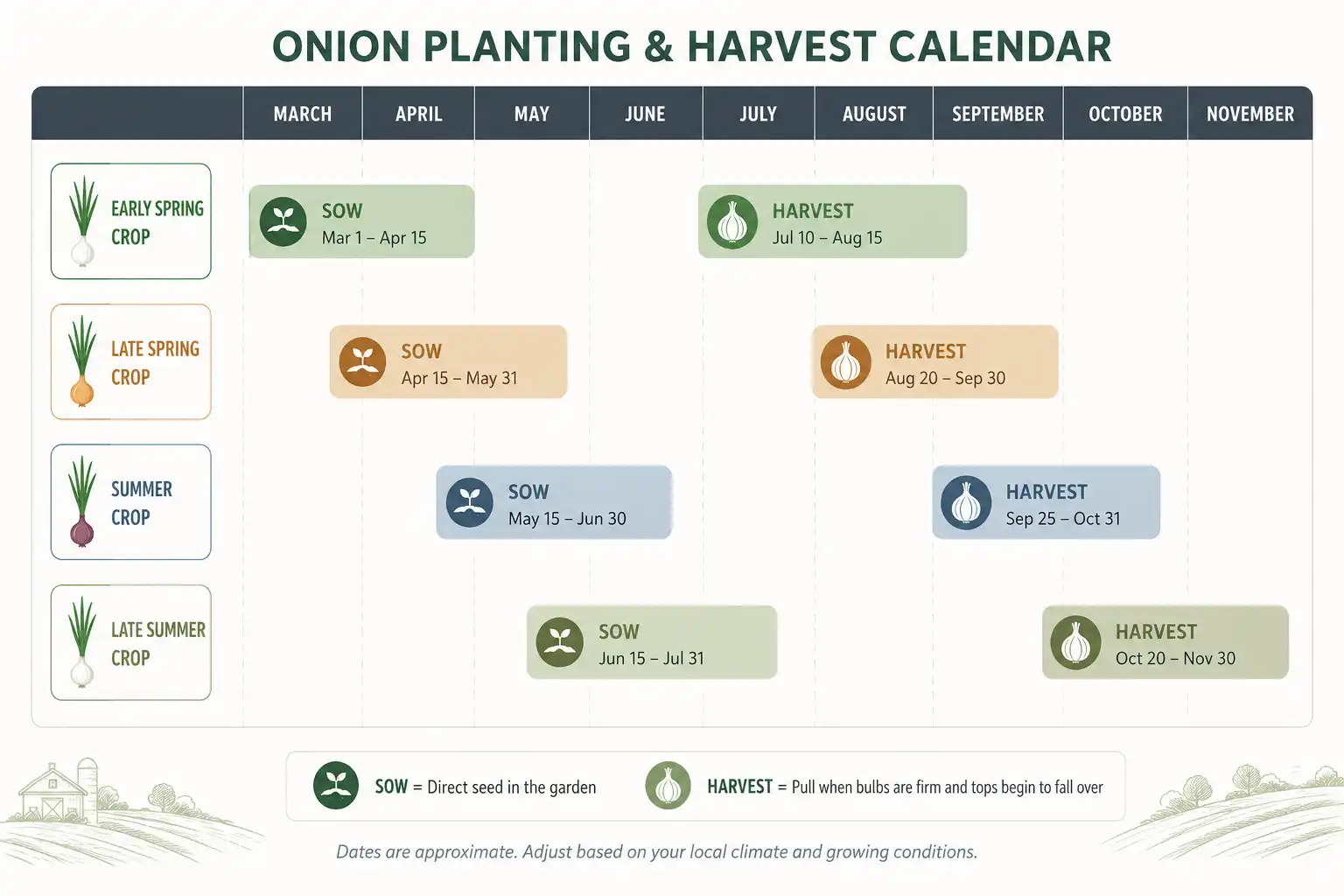
Shift every window about two weeks earlier in the South and two weeks later across the northern Corn Belt. Ten feet of row per sowing feeds a family of four with plenty to give away.
Problems That Show Up After Planting
Why Did Your Spring Onion Seed Not Come Up?
Old seed and crusted soil cause most failures. Onion seed stays reliable for one year and drops off sharply after two. Buy fresh every spring.
Crust is the other culprit. Onion seedlings emerge as a bent loop, and a hard rain followed by sun seals them under. Break the crust gently with a rake, or cover the row with a thin layer of compost that will not set up hard.
Why Are Your Spring Onions Bolting?
Cold weather after the plant passes pencil thickness triggers a seedstalk. Once that stalk forms, the center core goes woody and the plant stops adding leaves.
Two fixes work. First, plant only small sets, since oversized sets bolt almost every time. Second, pull bolted plants right away and use them fresh. They still eat fine, but they will not improve.
What Is Eating Your Spring Onions?
Onion thrips and root maggots cause nearly all the damage. Thrips leave silvery streaks where leaves meet the stem, and populations explode in hot, dry stretches. Cornell and Michigan State both push weekly scouting and threshold-based sprays rather than calendar treatments.
Maggots tunnel into the stem base and the plant yellows, then wilts. Floating row cover laid at seeding stops the adult flies from laying eggs. Rotate away from any bed that grew garlic, leeks, or onions the year before.
When to Harvest Spring Onions
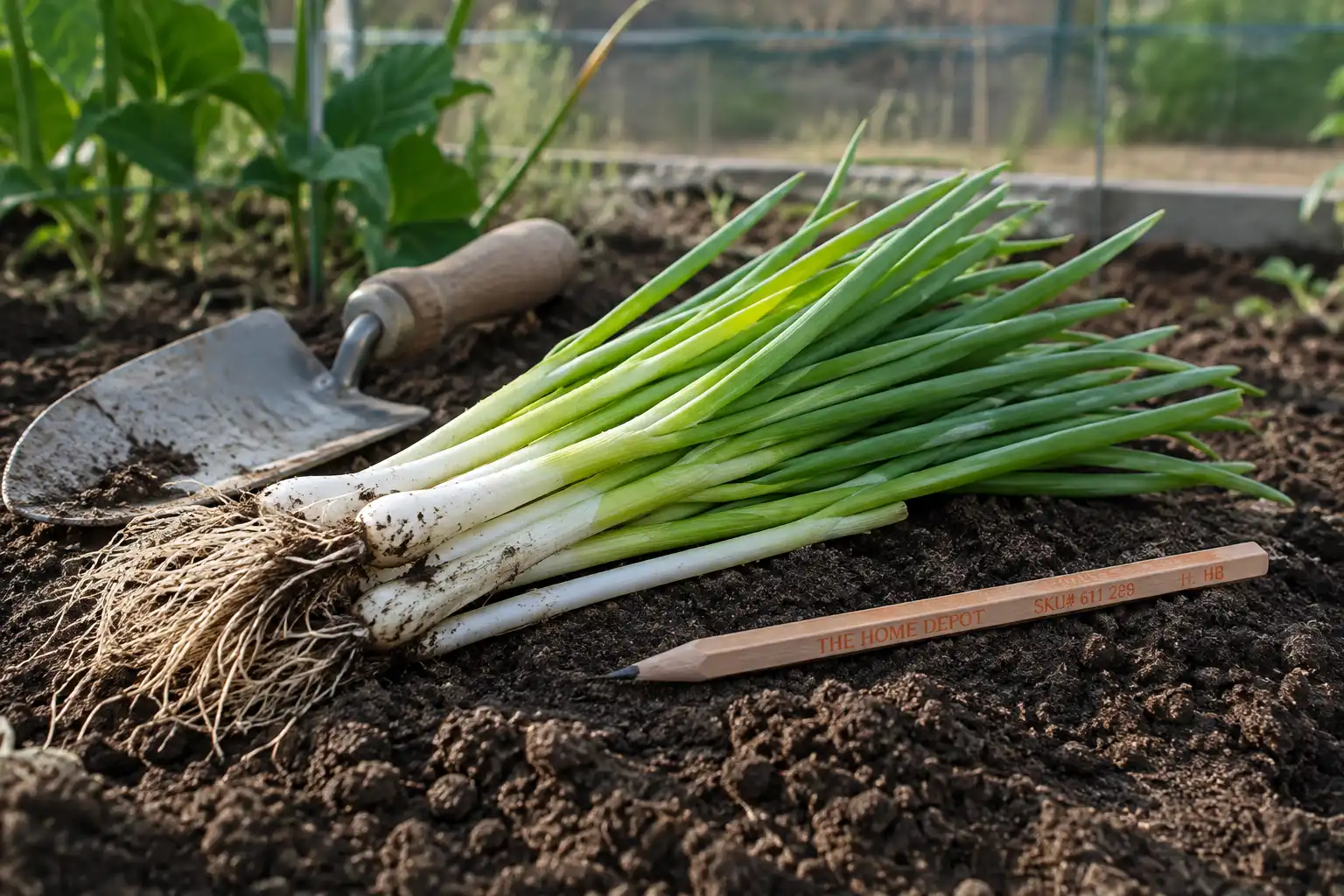
Pull them at pencil thickness with 6 to 12 inches of green top. From seed that runs 60 to 80 days, from sets 25 to 35 days, and from transplants 30 to 45 days.
Loosen the soil with a trowel first. Tops snap off if you yank a dry bed, so water the row the evening before when the ground is hard.
Bunching types give you a second cut. Slice the greens an inch above the crown and leave the roots in place. New leaves push within two to three weeks. Divide established clumps every second spring, and one planting keeps producing for years.
Final Words about Planting Spring Onions
Buy a bag of sets and sow a row of seed the same week. Sets get you cutting within a month, while the seeded row builds toward a summer crop. After that, keep the bed damp, cultivate shallow, and start a new short row every three weeks. That rotation keeps green onions on the table from May through Thanksgiving.