What Are Boiler Onions? Size, Uses, and How to Grow Them
Boiler onions confuse a lot of people at the store. They look like undersized regular onions, and that is basically what they are. These are small onions, grown or picked young, meant to cook whole.
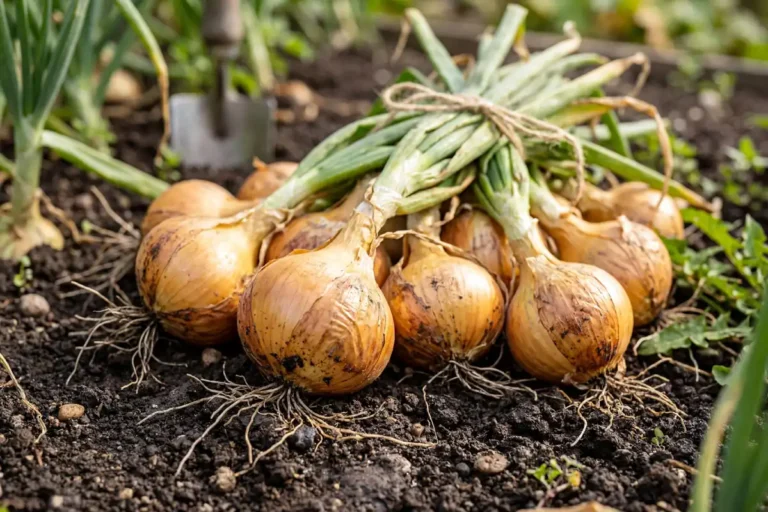
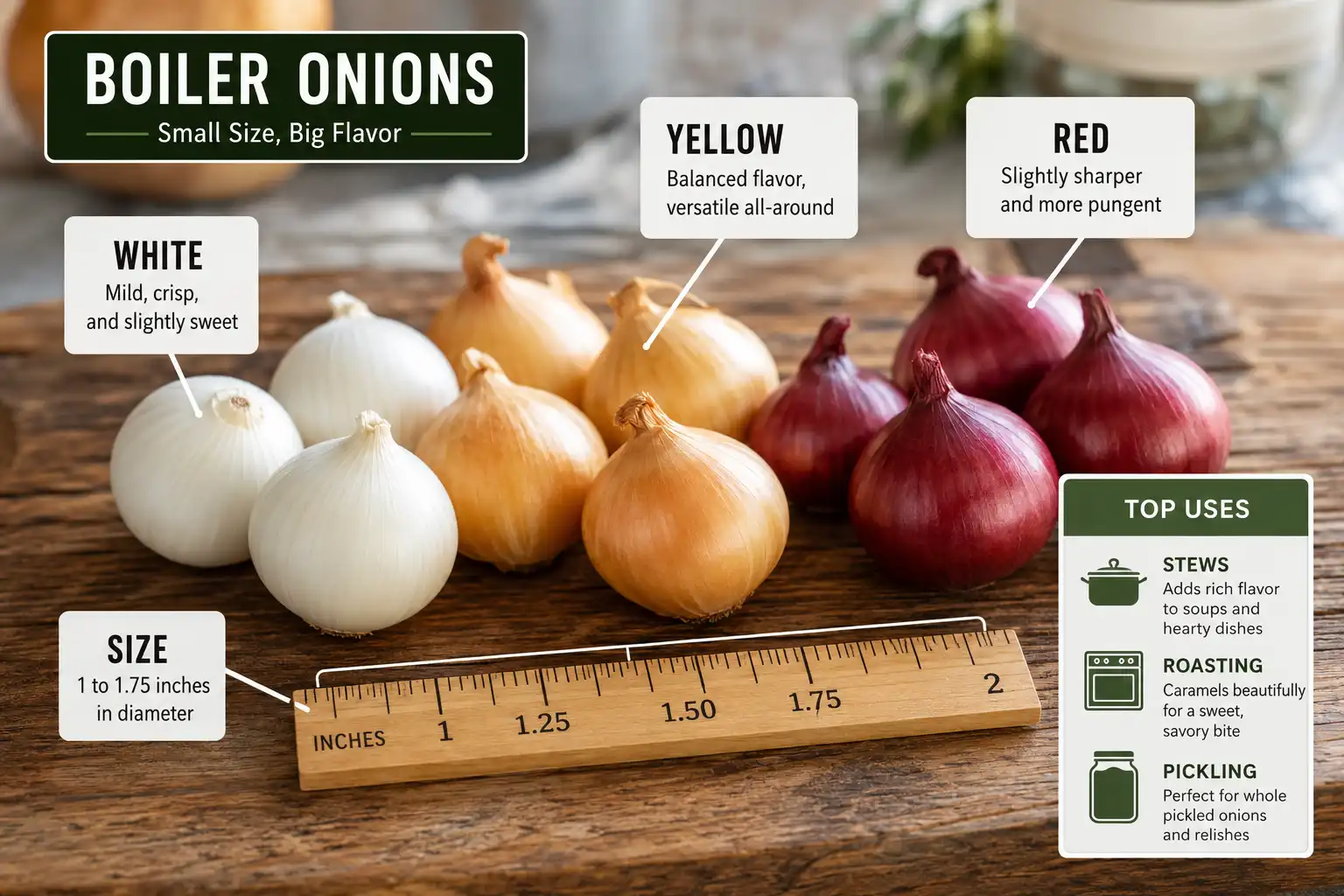
Boiler onions are small onions, roughly 1 to 1.75 inches across, harvested before full size. Any yellow, white, or red onion picked young qualifies. Cooks use them whole in stews, roasts, and pickles because they hold their shape.
What Are Boiler Onions, Exactly?
Boiler onions are regular onions harvested at a small size, not a separate species or a fancy variety. Botanists file every one under Allium cepa, the same species as the big yellow onions found in storage sheds. The name points to how you cook them, not to a special seed packet. So a boiler onion is really a size class. Growers get that size two ways. Some pick standard onions young. Others plant certain varieties thick so the bulbs stay small. Either path gives you the same little onion.
How Big Are Boiler Onions, and What Colors Show Up?
Boiler onions run about 1 to 1.75 inches wide, bigger than a pearl onion but smaller than a slicing onion. You will find them in three colors: white, yellow, and red. White ones cook up mild and tender. Yellow ones sit in the middle, sweet with a little bite. Red ones hold color and add a sharper edge. All three have thin, papery skin and firm, juicy flesh. Raw, they taste sharp. Cook them slow, though, and that bite turns mild and sweet.
Boiler Onions vs Pearl Onions vs Cipollini: What Is the Difference?
Size and shape set these three apart: pearl onions are the smallest, boiler onions sit in the middle, and cipollini grow flat.
| Onion | Size | Shape | Best for |
|---|---|---|---|
| Pearl | 0.5 to 0.75 in | Small round | Creamed peas, garnish |
| Boiler | 1 to 1.75 in | Round globe | Stews, roasts, pickles |
| Cipollini | 1 to 2 in | Flat disc | Roasting, glazing |
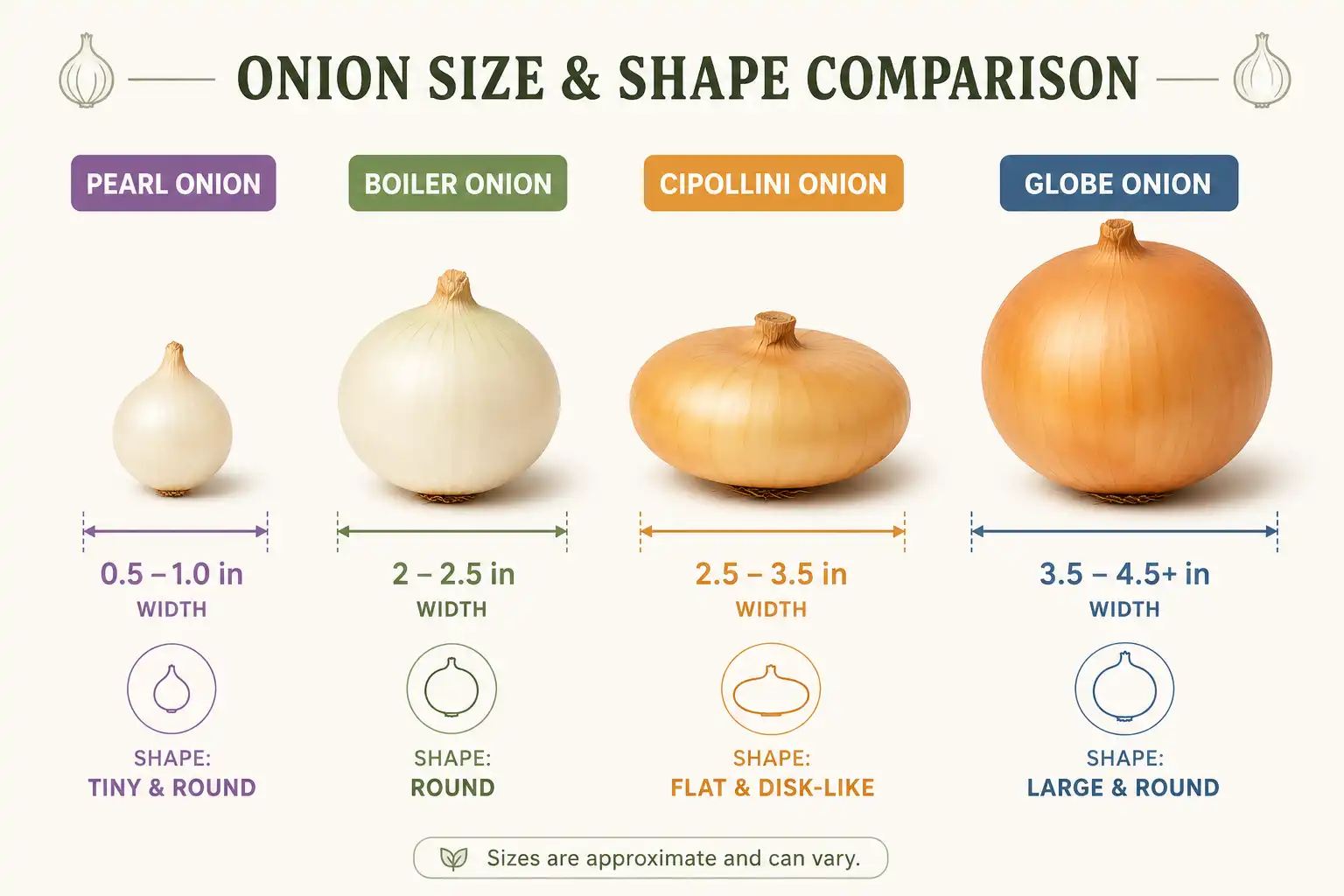
Pearl onions are the tiniest, about half an inch to three quarters of an inch. They take the most work to peel. Boiler onions are the middle size, and they peel far easier. Cipollini look different because they grow flat, like a little disc, and they carry more sugar. So if a recipe wants tiny whole onions and you only have boilers, use them. Just cut the bigger ones in half.
What Do Cooks Use Boiler Onions For?
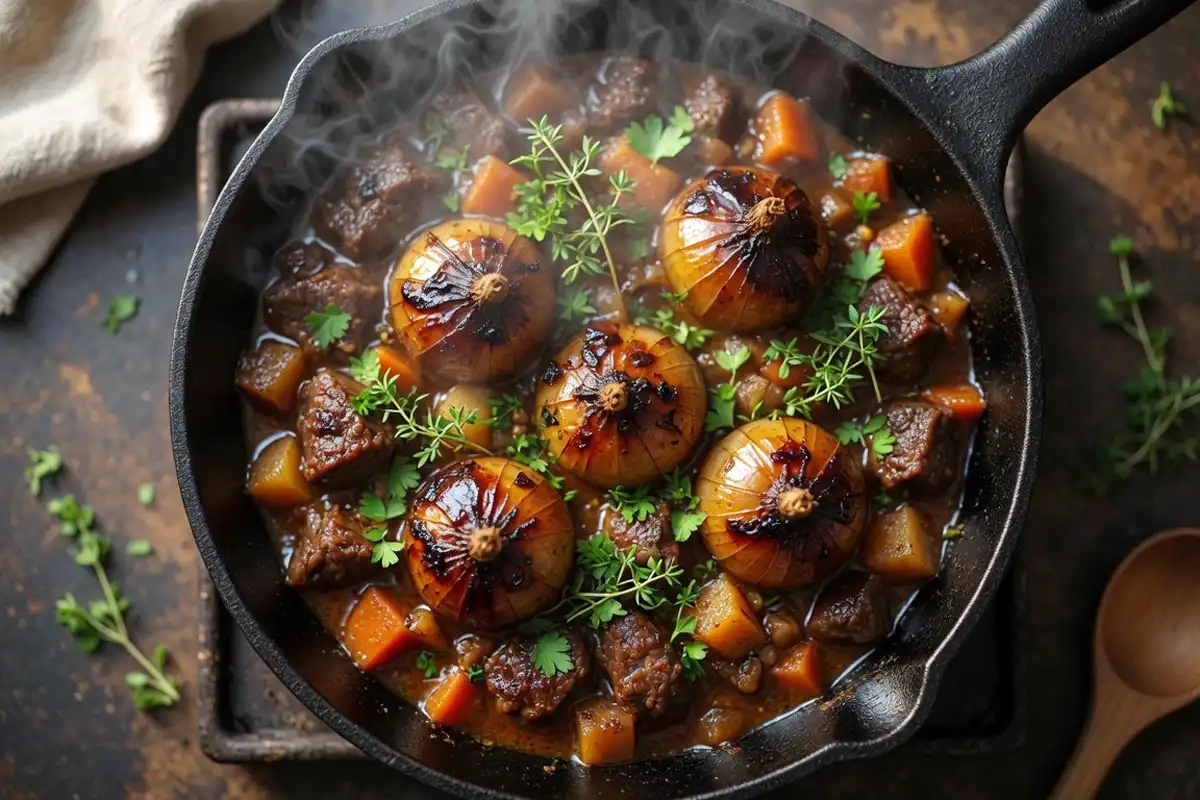
Cooks use boiler onions whole, in dishes that simmer or roast long enough to turn them sweet. The small size means no chopping. The firm layers hold together over low heat. That makes them a good fit for a short list of jobs. Braises and stews lean on them, and classics like beef bourguignon and coq au vin call for them by the handful. Roast them with carrots and potatoes, and they caramelize at the edges. Thread them on skewers next to meat for even cooking. Drop them in a jar for pickling, since they pack tight and stay crisp. Simmer them in butter with a little sugar for a glazed side dish. You rarely chop or slice a boiler onion. Whole is the point.
What Is the Fastest Way to Peel Boiler Onions?
Blanching is the fastest way: drop them in boiling water for two minutes, then shock them in ice water. After that, the skins slip right off when you pinch the root end. Here is the routine at home. First, trim the top off each onion. Next, boil a pot of water and drop the onions in for about two minutes. Then drain them and dump them straight into a bowl of ice water. Once they cool, squeeze gently and the skin pops loose. Cut a shallow X in the root end before cooking. That keeps the layers from sliding apart in the pot.
How Do You Grow Boiler Onions?
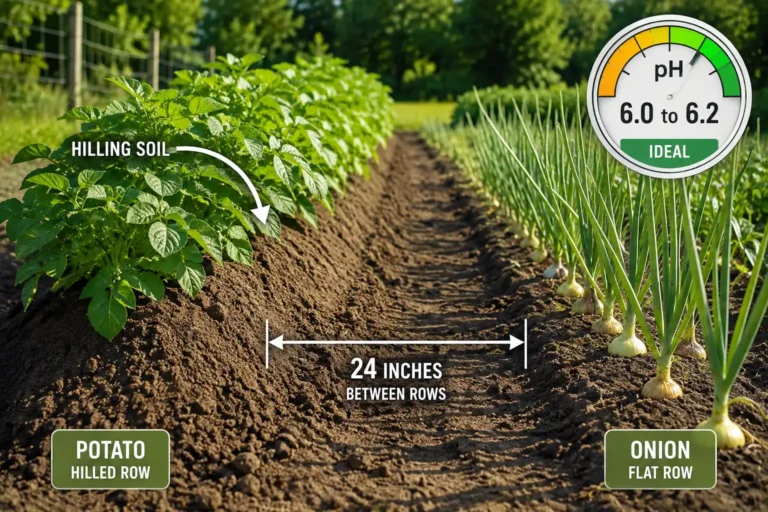
You grow boiler onions by planting onions close together so the bulbs stay small. Onion size comes down to a few things: variety, plant spacing, day length, and water. Crowd the plants, and you cap how big each bulb gets. That is the whole trick behind a small onion. Tight spacing works well for this, about 2 inches apart in the row, sometimes closer. Wide spacing grows big slicers. Tight spacing grows boilers. You can start from seed or from sets, the little dormant bulbs. Seed gives you more control over variety and spacing. If you want a head start, look at starting onions from seed indoors before your last frost.
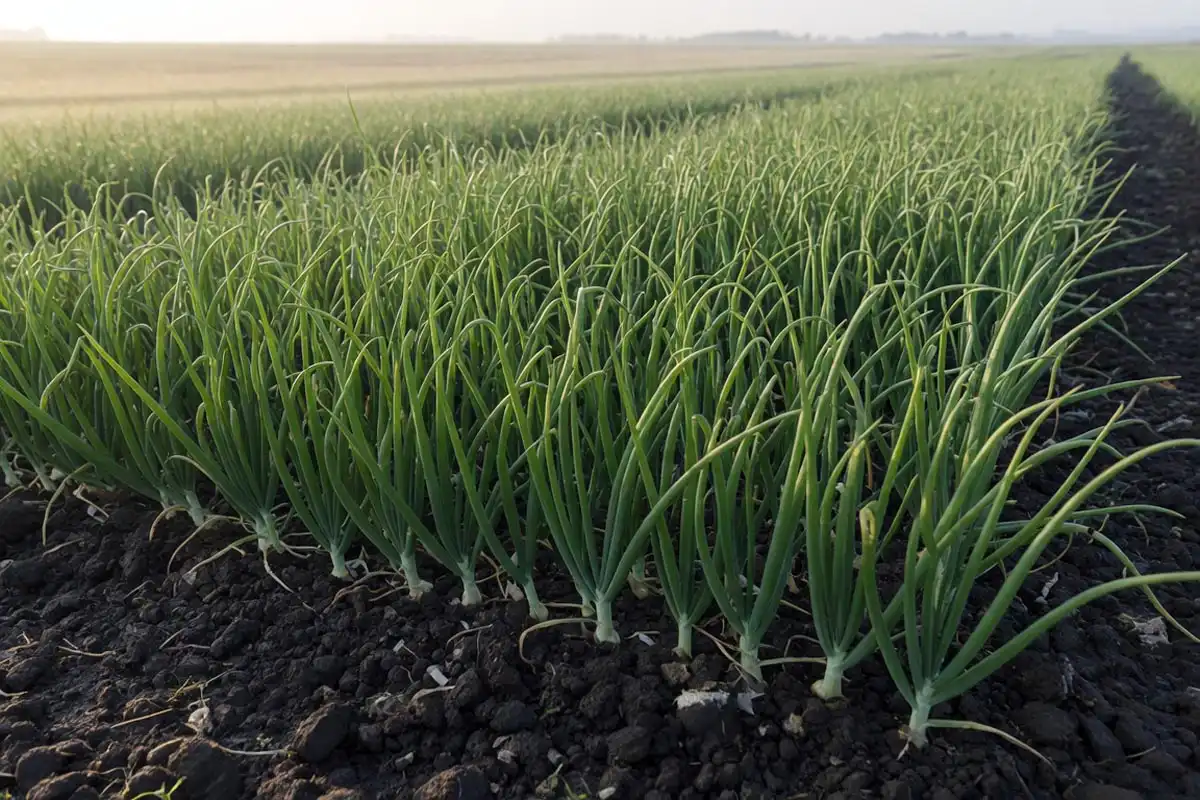
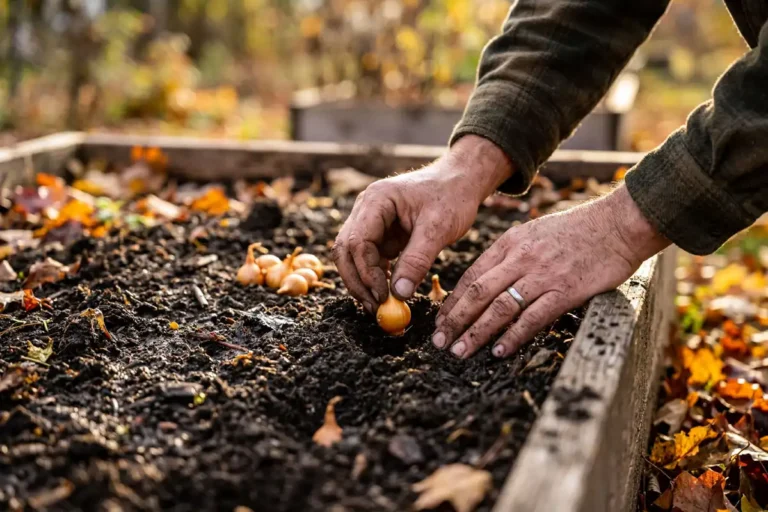
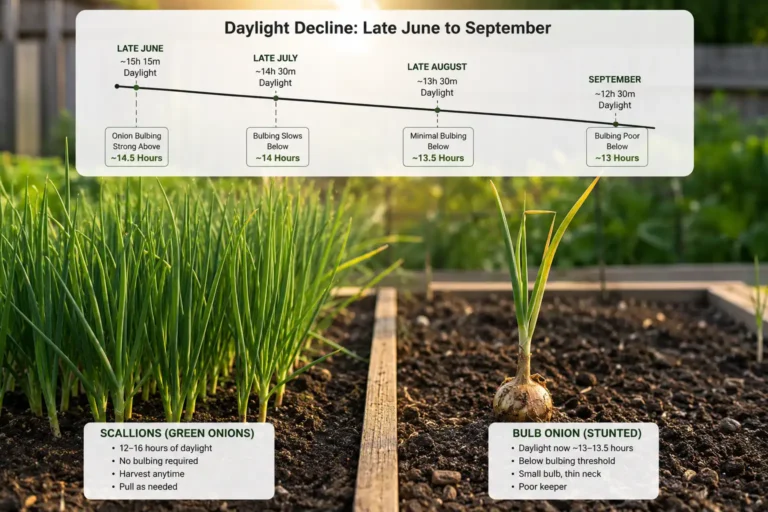
Timing matters too. Onions and garlic can go in the ground on the same schedule, and the guide on when to get garlic and onions planted for the windows. Onions bulb on day length. Long-day types suit us in Kansas and across the northern Great Plains. Short-day types fit the South. A fall planting can also give you small, early bulbs the next season, and onions started in the fall overwinter fine with a little mulch.
What Varieties Make Good Boiler Onions?
Almost any onion works, but a few varieties grow small and firm on purpose. For white boilers, Southport White Globe is a standard pick. For yellow, growers lean on Australian Brown, Stuttgart, and Yellow Ebenezer. Seed catalogs also sell them as pickling onions or baby onions, so watch for those labels. K-State Research and Extension and other land-grant programs list day-length types that fit each region. Match the type to your latitude, and the bulbs size out right.
When Do You Harvest and Store Boiler Onions?
Harvest boiler onions once they reach about an inch or so, or when the tops start to flop and the skins go papery. For a true small onion, pull them at size instead of waiting on the tops. After lifting, let them cure a week or two in a dry, shaded spot with air moving. Cured skins seal the bulb and keep it from rotting. Store them cool and dry, around 32 to 40°F, in a mesh bag or crate. Skip the fridge drawer, since the damp air makes them sprout and soften. Kept right, they hold a month or two. The same curing and cool-storage rules for other crops apply here, so read more on storing the crop after harvest.
Are Boiler Onions the Same as Boiling or “Broiler” Onions?
Boiler onions and boiling onions are the same thing, just two spellings of one name. Both point to the same small, cook-whole onion. You will also see “broiler onion” online, but that is a misspelling. There is no separate broiler variety in the field or the seed catalog. One more mix-up is worth clearing up. Some sites call boiler onions large, around 2 to 4 inches. That is wrong. A boiler onion is small by definition. If it grew that big, it is just a regular onion.
Final Words
A boiler onion is nothing exotic. It is a small onion, white, yellow, or red, grown or picked young and cooked whole. Buy them for stews, roasts, skewers, and pickling. Grow them by planting thick and pulling early. Blanch to peel, cure to store, and keep them out of the fridge. That is the whole story.