Can You Plant Turnips With Onions in the Same Bed?
Bed space runs short in early spring, and both crops go in the ground the same week in Kansas. That raises a fair question: can you plant turnips with onions without shrinking the bulbs? The answer depends less on the pairing itself and more on timing.
Yes, the pairing works. Turnips and onions sit in different plant families, so they share no pests or diseases. But can you plant turnips with onions for the full season? No. Pull turnips inside 45 days, before bulbing starts.
Know more: How to Plant Broccoli and Onions Together
Can You Plant Turnips With Onions in One Bed?
Yes, and the reason is simple. Turnips (Brassica rapa) and onions (Allium cepa) belong to separate plant families. Nothing carries between them. Both handle cool soil, and both go in the ground the same two weeks in eastern Kansas.
The catch is competition, not compatibility. Onions run a weak, shallow root system and cannot fight for light, water, or nitrogen. Turnip tops grow fast and spread wide. So this pairing only pays when the turnips leave early.
Think of turnips as a short catch crop in the row middles. They are not a season-long neighbor.
Why Turnips and Onions Get Along
Two Separate Plant Families
Nothing that attacks a turnip attacks an onion. Clubroot (Plasmodiophora brassicae) hits turnips, rutabaga, radish, and mustard weeds. Onions are not a host. Onion pink root and white rot stay inside the allium family. Flea beetles chew brassica leaves and skip onions entirely.
That clean break is the main reason the pairing is safe. You are not stacking disease pressure the way you would with two brassicas side by side.
The Kansas Planting Windows Line Up
Both crops go in during the same stretch. K-State Research and Extension puts spring turnips in the ground mid to late March. Onion plants and sets go in mid to late March too, so most growth happens before hot, dry weather arrives. In zone 6a around Topeka, that means the last two weeks of March most years.
Root Zones Sit at Different Depths
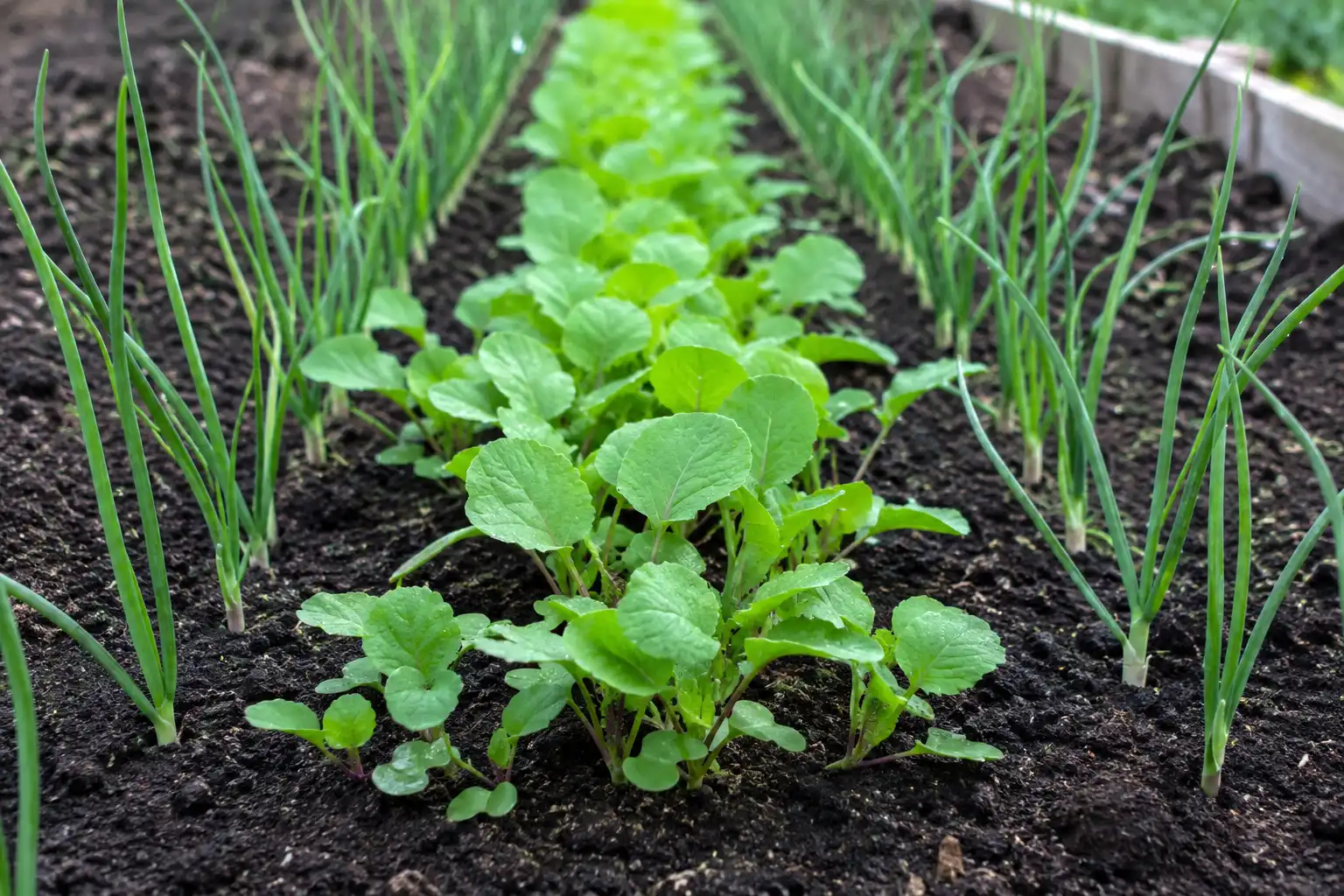
Onions feed shallow. Research puts onion water uptake in roughly the top 10 inches of soil, and the root system stays sparse with few root hairs. A turnip drives a taproot below that band. So for part of the season the two crops pull moisture from different layers.
The Real Risk: Onions Lose Every Competition
Onions are poor competitors, and K-State states it plainly: onions compete poorly with weeds and other crops. NC State Extension puts the critical weed-free period at roughly four to six weeks after emergence. Season-long weed competition has cut seeded onion yields by as much as 96 percent in published trials.
Bulb size traces straight back to leaf count. Each onion leaf becomes one ring in the finished bulb. Bulb size then depends on how large the plant is when bulbing begins. So anything that shades an onion in April and May costs you rings in July.
Turnip tops reach 12 inches or taller. Left in place, they shade the onion row through exactly the weeks that decide bulb size. That single fact drives every rule below.
How to Space Turnips and Onions in One Bed
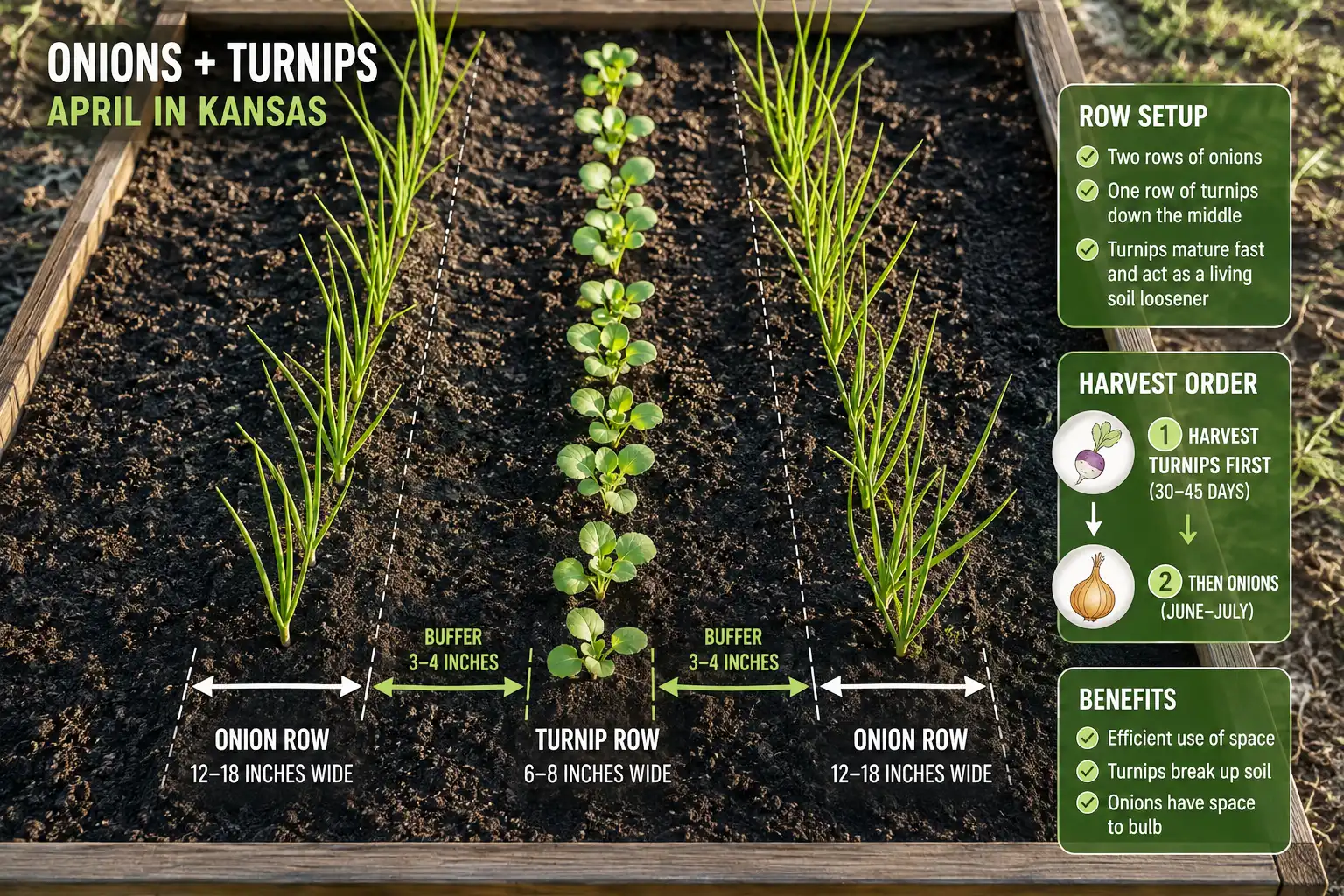
Widen the onion rows first, then seed turnips down the middle. Here is the sequence.
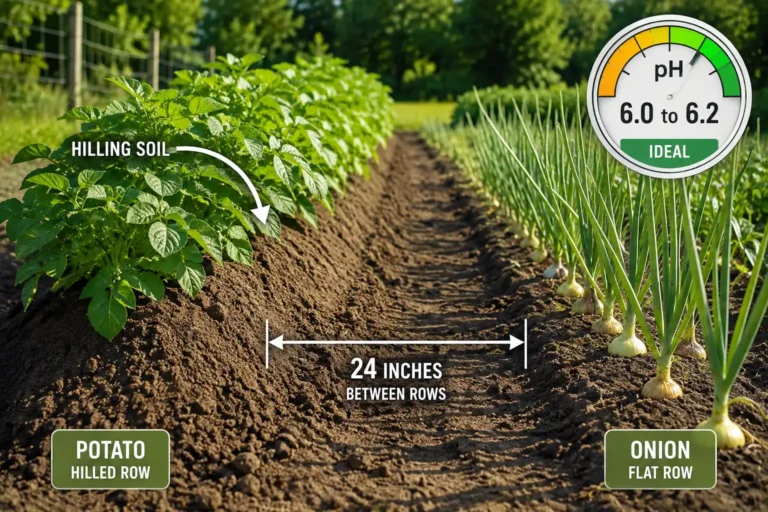
- Set onion rows 15 to 18 inches apart instead of the usual 12. K-State calls for 12 to 16 inches for onions alone, and turnips want rows at least 15 inches apart.
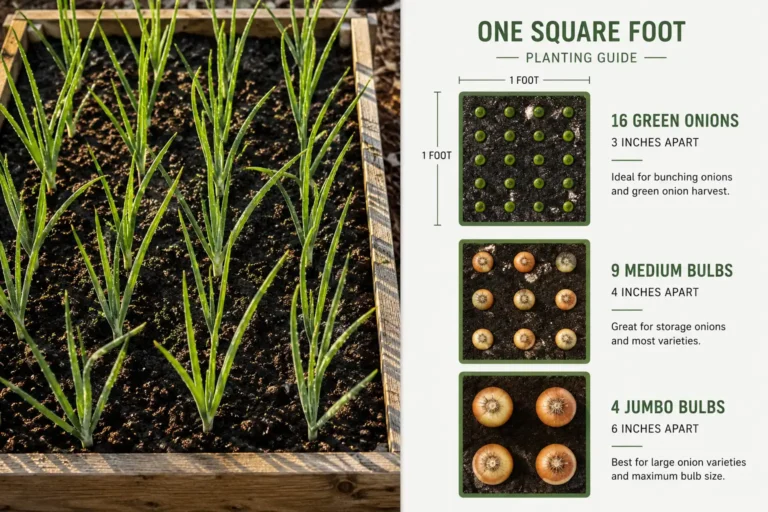
- Space onion transplants 2 to 4 inches apart in the row, 1 to 1.5 inches deep.
- Seed one turnip row down the center of each gap, half an inch deep.
- Thin turnip seedlings to 2 to 4 inches apart once true leaves appear.
- Keep at least 6 inches of clear soil between the turnip row and each onion row.
- Skip the interplant on beds narrower than 30 inches.
| Spec | Onions | Turnips |
|---|---|---|
| Row spacing in a mixed bed | 15 to 18 in | one row centered in the gap |
| In-row spacing | 2 to 4 in | 2 to 4 in after thinning |
| Planting depth | 1 to 1.5 in (transplants) | 0.5 in |
| Days to harvest | 100 to 120 from transplant | 40 to 50 for roots |
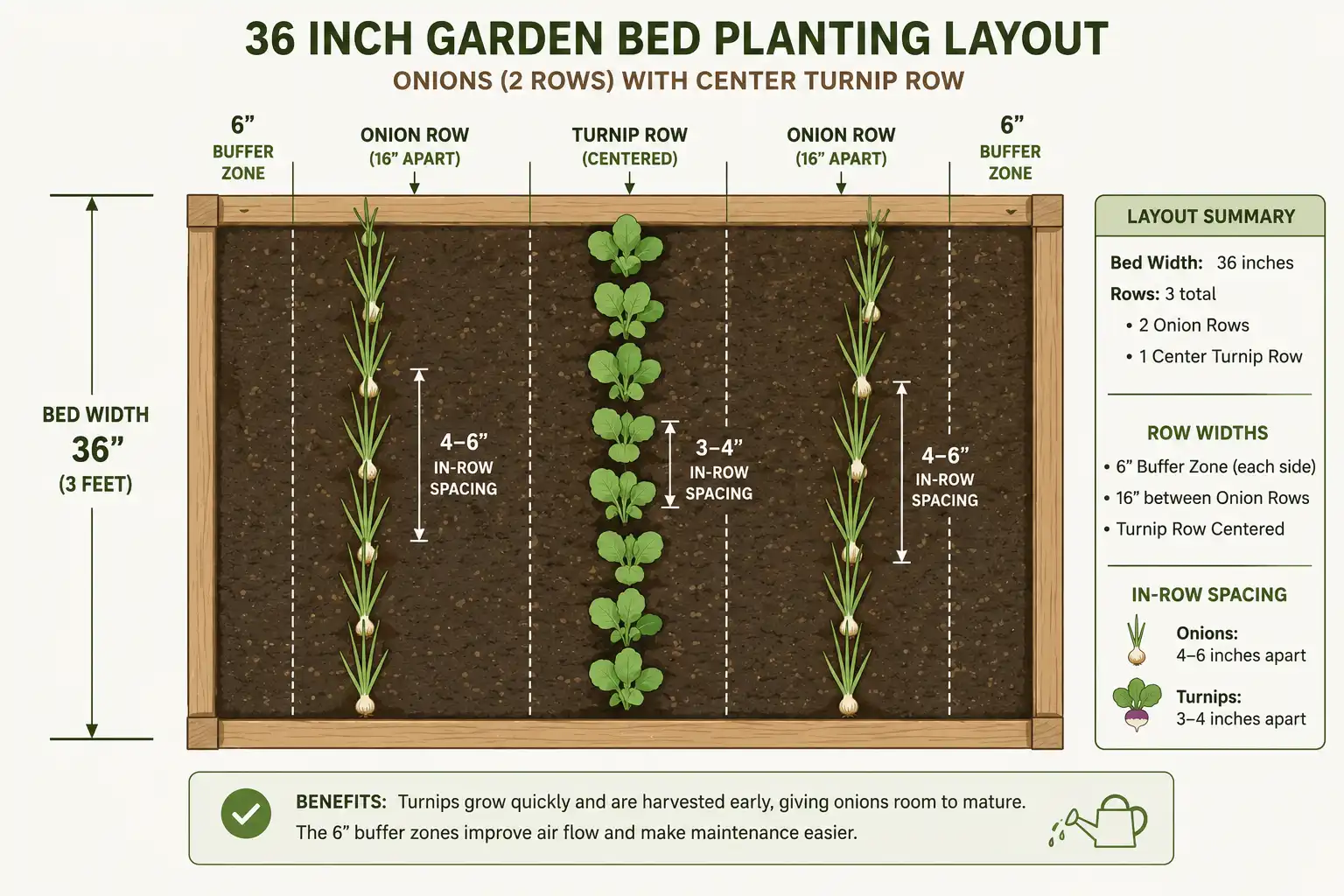
Do not crowd the onion row to fit more turnips. If you already run your beds tight, check your onion plants per square foot before you give up any of that space.
Timing: Treat Turnips as a 45 Day Catch Crop
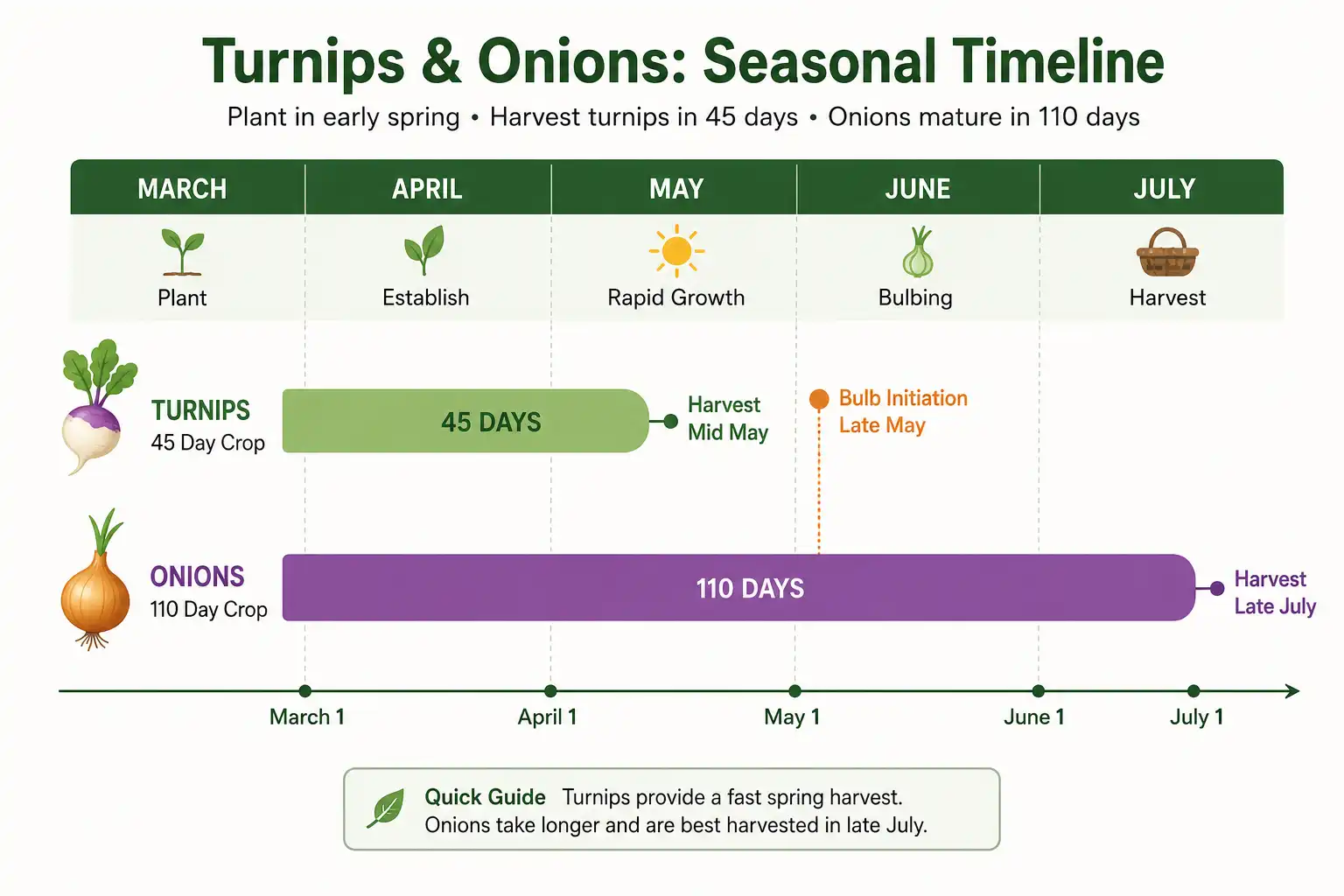
Turnips belong in the bed for the first six weeks only. Roots reach harvest size at 2 to 4 inches across in 40 to 50 days. Onions from transplants need 100 days or more. That gap between the two is what makes the pairing profitable.
K-State already recommends a smaller version of this trick. Gardeners drop a radish seed every 6 to 8 inches in a seeded onion row to mark the rows, harvest the radishes early, then let the onions use the space. A turnip row does the same job and feeds you twice, since you take greens and roots instead of a marker.
Here is the spring sequence in zone 6a:
- Mid to late March: set onion plants, seed turnips the same afternoon
- Early April: thin turnips to final spacing
- Late April to mid May: pull turnips at golf ball to 3 inch size
- Late May onward: onions hold the bed alone as bulbing begins
Spring turnips also bolt once air temperatures push past 75 degrees F, so the Kansas calendar pushes them out on its own. For fall, sow turnips late July into early August. Fall onion planting leaves less room to interplant, so keep fall turnips in a block of their own.
Pick a Fast Turnip Variety for a Shared Bed
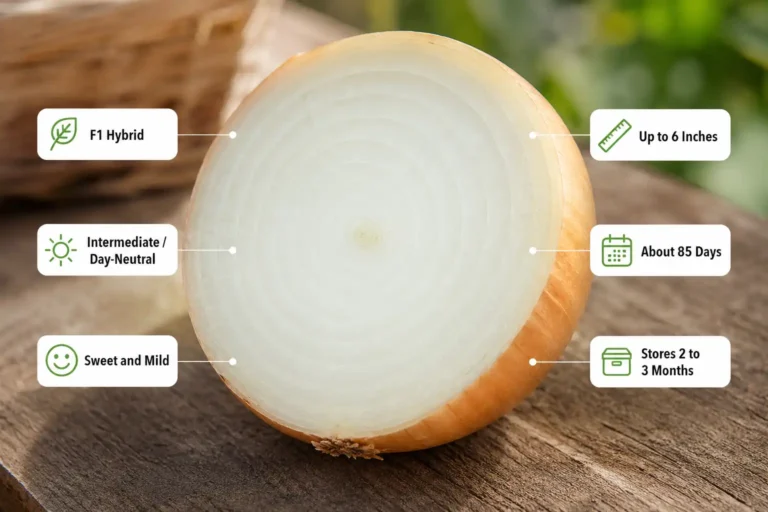
Choose a 35 to 45 day turnip whenever it shares a bed. Hakurei and Tokyo Cross finish in about 35 days. Purple Top White Globe, the standard K-State lists for Kansas, needs closer to 55. Rutabagas take far longer and never belong in an onion row. On the onion side, K-State recommends intermediate-day varieties for Kansas, including Candy, Red Candy Apple, and Super Star.
Feeding Both Crops Without Ruining Either
Onions want steady nitrogen. Turnips want less. Too much nitrogen on onions delays maturity, builds thick necks, and shortens storage life. Too much nitrogen on turnips grows leafy tops over woody roots. Turnips do better on moderate nitrogen with higher phosphorus and potassium.
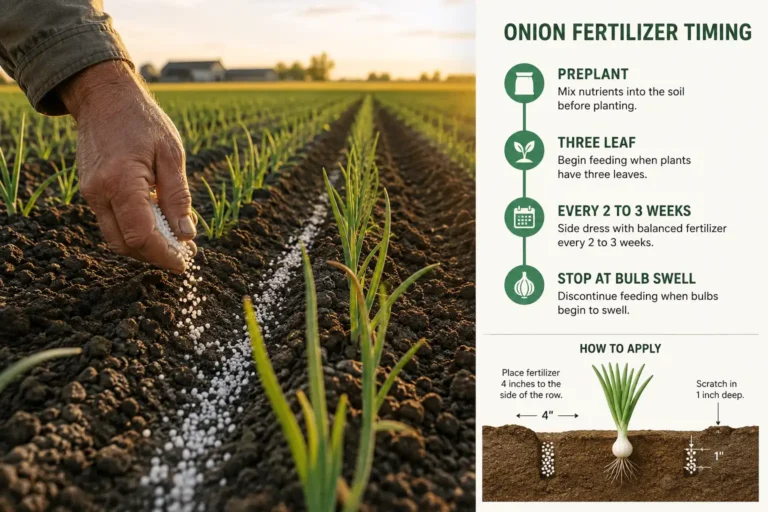
So side dress the onion rows only. K-State calls for urea (45-0-0) at 0.25 to 0.5 pound per 25 feet of row, placed about 6 inches out from the plants and scratched in. Keep that band on the onion side of the row, never down the middle where turnip roots sit. Choosing the right fertilizer for an onion crop matters more here than in a single-crop bed, because you cannot broadcast and walk away.
Both crops overlap comfortably at pH 6.0 to 7.0. If clubroot has appeared in that bed before, extension guidance calls for lime above 7.0 to slow spore germination. Onions handle that range fine, so raising pH costs you nothing on the allium side.
Water and Mulch in a Mixed Bed
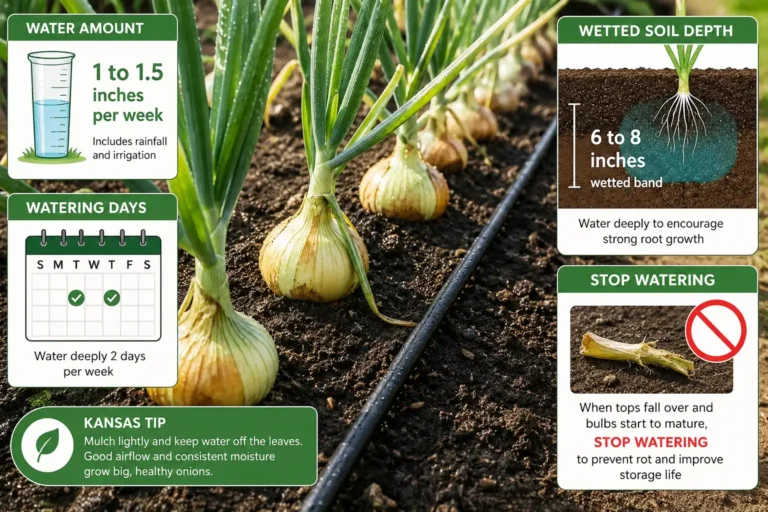
Water on the same schedule, because both crops want the same thing. Onions need 1 to 1.5 inches per week, and moisture stress during bulbing causes split and double bulbs. Turnips need steady moisture too, or the roots turn tough and bitter.
Mulch is where the pair disagrees. Onions gain from 3 to 4 inches of clean straw or herbicide-free grass clippings for weed control. Turnip seed needs bare, firm soil to germinate. So mulch the onion rows at planting and leave the turnip band open. Mulch that band later, right after the turnips come out.
Cultivate shallow either way. Onion bulbs sit near the surface, and a nicked bulb rots faster in storage. Never hill soil onto onions, since that encourages neck and stem rot. Shallow weeding with a stirrup hoe clears the middles without cutting onion roots.
Pests and Diseases to Watch in the Pair
Scout each crop for its own pests, because neither one hosts the other’s problems. K-State lists flea beetles and aphids as the common turnip concerns in Kansas. Onions bring thrips and onion maggot instead. Clubroot is the one disease that decides whether turnips belong in that ground at all.
Intercropping research from cabbage systems shows onion rows lowering cabbage aphid and diamondback moth counts, and researchers credit sulfur compounds in onion foliage. Still, results vary across trials, and no published work appears to test this on turnips in the Great Plains. So treat any pest benefit as a bonus rather than a plan.
Row cover creates the only real conflict. Floating row cover at seeding gives the cleanest flea beetle control on turnips. Covering a shared bed also covers the onions, which does no harm but makes weeding and side dressing awkward. Cover turnip-only blocks and hand-scout the mixed bed twice a week.
Pulling Turnips Without Damaging Onion Roots
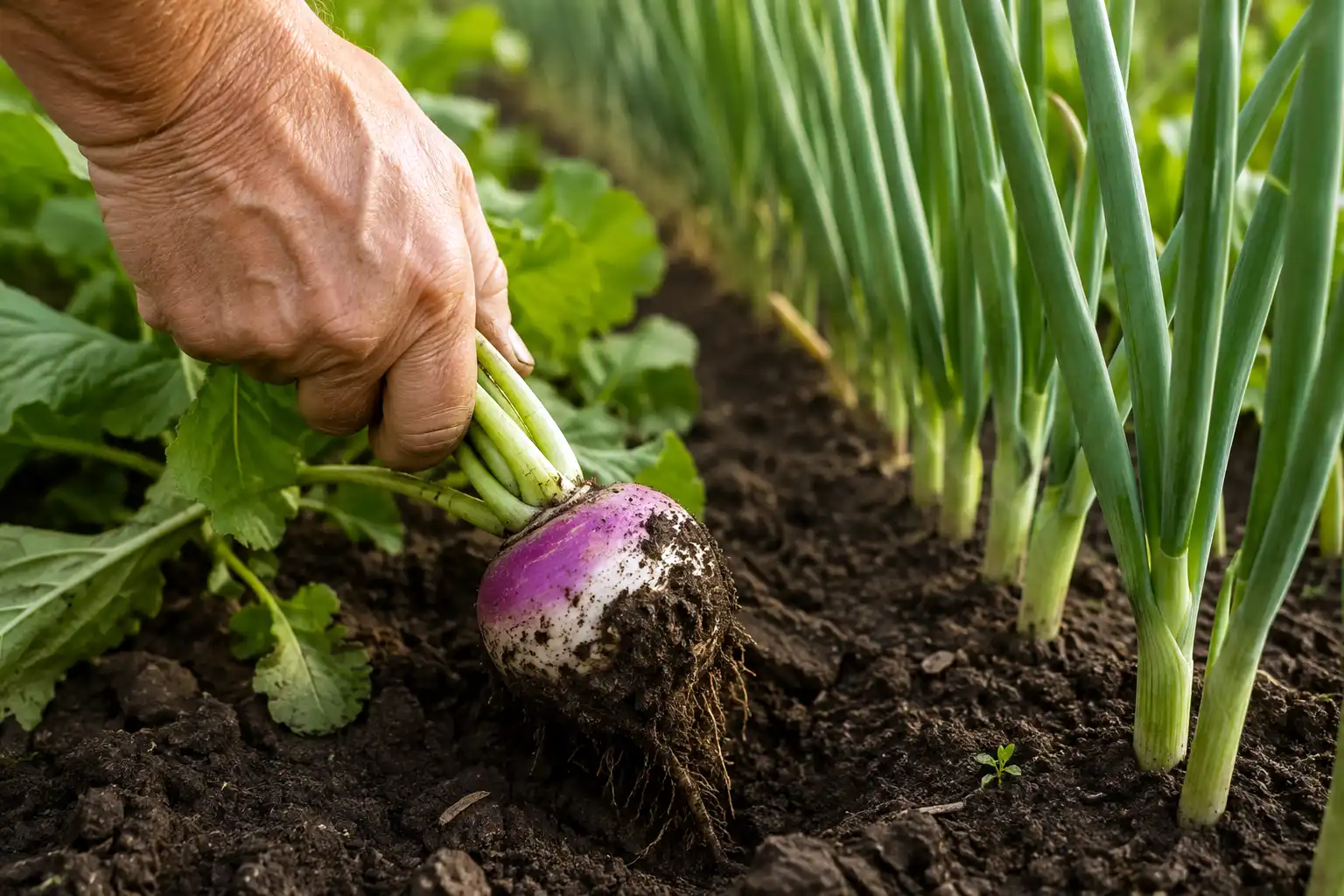
Water the bed deeply the day before you pull. Damp soil releases the root instead of tearing a channel beside it. Then grab the turnip where the stem meets the root, twist, and lift straight up. Never lever it sideways toward the onion row.
Two habits protect the onions further:
- Pull turnips at 2 to 3 inches across instead of waiting for maximum size. Smaller roots come out cleaner.
- Harvest the greens first if that row sits tight to the onions. Cut outer leaves, leave the central growing point, and take the root a week later.
Press the soil back flat after every pull. Open holes dry out the shallow onion roots right next to them.
When to Keep Turnips and Onions Apart
Skip the interplant in five situations:
- Direct seeded onions. Seeded onions establish slowly and stay weak for weeks, so they cannot carry a neighbor.
- Beds under 30 inches wide. There is no room for a clear 6 inch buffer on both sides.
- Storage onion crops. If you want maximum bulb size for winter, give those rows the whole bed.
- Clubroot history in that bed. Keep every brassica out, whatever else you plant.
- Wet, poorly drained ground. Both crops suffer, and clubroot worsens with excess moisture.
Onions pair more easily with crops that never throw a wide canopy. Planting onions alongside carrots runs the whole season without any harvest deadline, which makes it the easier choice for a first attempt.
What to Plant After a Turnip and Onion Bed
Move both crops out next season. Clubroot spores survive 10 to 20 years in soil, and extension guidance treats 5 to 7 years between brassica crops as the realistic rotation length. Onions carry their own soilborne problems, so they need a break too.
Corn, soybeans, and clover following brassicas may lower clubroot levels in the soil. That fits Kansas ground well, since most of us already have those crops in the sequence. A written rotation plan keeps the whole bed order honest instead of guessing each March.
Last Notes
Set onion transplants mid to late March, then seed one turnip row down each row middle the same afternoon. Turnips clear the bed by mid May. After that the onions get full sun, clean soil, and the entire root zone through bulbing.
Two crops out of one bed, and the bulbs never notice. But that only holds because the turnips leave on schedule. Miss the window and your onions pay for it in rings.