How to Get Rid of Wild Onions in Lawn Areas: A Farmer’s Guide
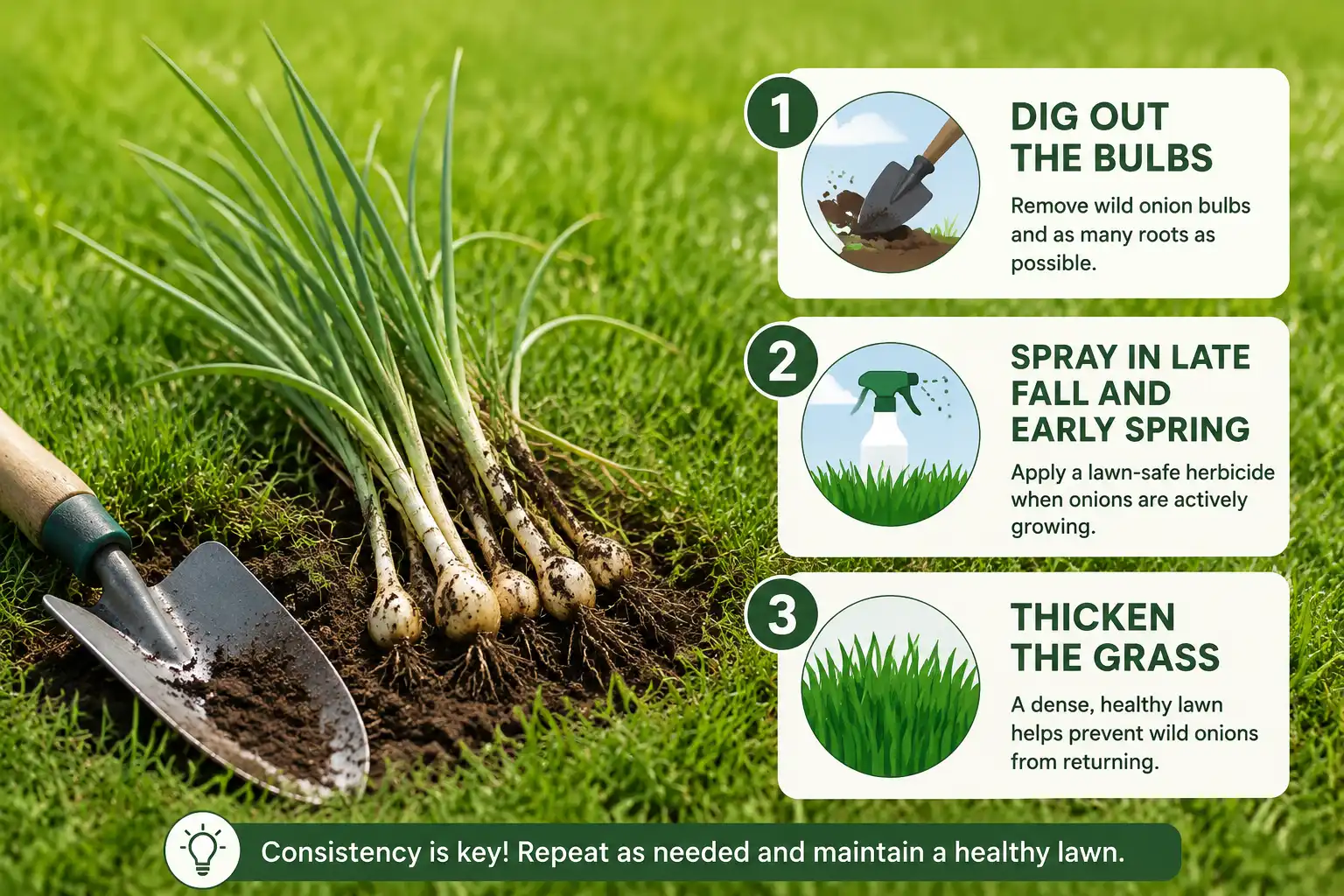
Wild onions show up in clumps of skinny green blades. They appear every fall and spring, right when your lawn should look its best. They spread fast and shrug off most weed killers. So here is how to get rid of wild onions in lawn grass for good.
To get rid of wild onions in lawn areas, dig small patches with a thin trowel and lift every bulb. For bigger stands, spray a post-emergent herbicide in late fall and again in early spring.
What Are Wild Onions and Wild Garlic?
Wild onions and wild garlic are cool-season perennial weeds that grow from small underground bulbs. Both send up thin, waxy leaves that look a lot like grass, in clumps about 10 to 18 inches tall.
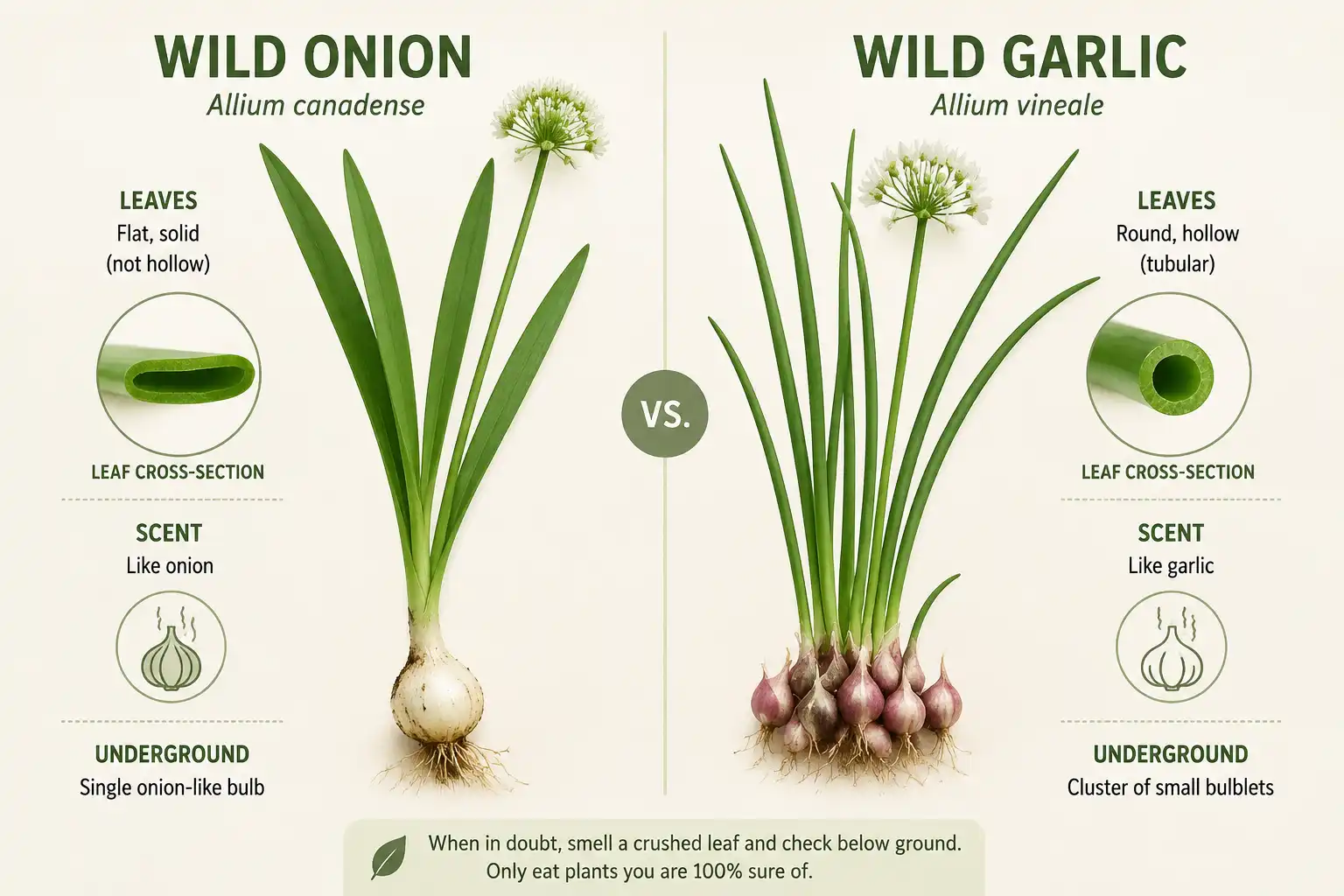
The two look almost the same, so most folks lump them together. There is one easy way to tell them apart, though. Wild onion (Allium canadense) has flat, solid leaves. Wild garlic (Allium vineale) has round, hollow leaves you can pinch shut. Crush either one and you get that sharp onion smell right away.
Wild garlic tends to be the more aggressive spreader. Still, both plants are commonly called wild onions, so they are treated together here.
These plants emerge from bulbs in late fall. Then they grow through winter and into spring while your grass sits mostly dormant. In late spring they set tiny bulblets on top of the stems. After that, they die back and go quiet through the summer heat. The bulbs stay alive underground, sometimes for several years.
Take this weed more seriously than most lawn owners do. In Kansas, wild garlic is a real problem in wheat. Its bulblets run close to the size of a wheat kernel. So they ride into the grain and dock the load at the elevator. A flour mill will reject wheat with garlic in it. When it creeps into the yard, dealing with it before it reaches the fields is the recommended approach.
One more note. Star-of-Bethlehem looks similar but has a white stripe down each flat leaf and no onion smell. No smell means you are not dealing with wild onion.
Why Are Wild Onions So Hard to Kill?
Wild onions are hard to kill because the part that matters lives underground. You can pull the green tops all day. But the bulbs stay put and push up fresh leaves within a week or two.
Two things work against you. First, the leaves are narrow and waxy. So spray beads up and rolls right off instead of soaking in. Second, each plant sits on a cluster of bulbs and little offset bulblets. Even if you kill the top, one leftover bulblet can start the patch over.
On top of that, no pre-emergent weed preventer touches them. The granules you spread to stop crabgrass do nothing here. Wild onions come back from bulbs, not from seed on the surface.
That is why a single spray never finishes the job. This weed needs the same layered plan it helps to use for weed control on the farm, not one big knockout.
How Do You Dig Wild Onions Out for Good?
Dig wild onions out with a narrow trowel while the soil is moist. Then lift the whole bulb cluster in one scoop. Pulling snaps the leaves off and leaves the bulbs behind, so digging is the only hand method that sticks.
Water the spot first if the ground is dry. Damp soil lets the bulbs slide out whole. Then push a thin trowel, hori-hori knife, or narrow spade straight down beside the clump. Set the blade a few inches out. Rock it back and pry the whole plug up. Shake off the loose dirt and check for small offset bulbs clinging to the base.
Drop everything into a bucket. Do not toss wild onions in the compost or leave clumps on the grass. The bulblets will just re-root. Bag them and throw them out instead.
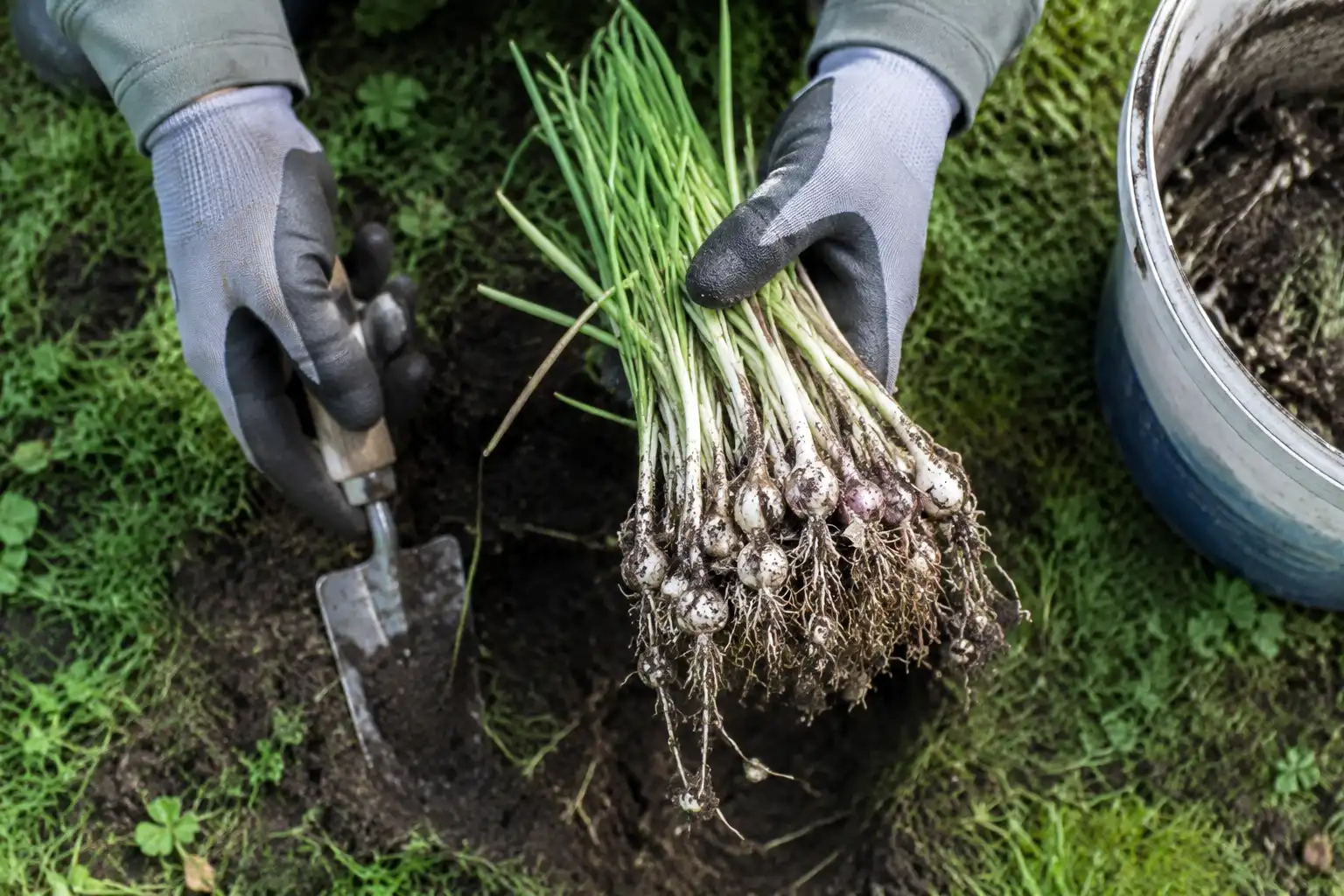
This works well for a handful of clumps or a small yard. For a lawn full of them, digging turns into a second job. So most people switch to a spray at that point. Fall or early spring is the easiest time to dig. The plants are up and the ground is soft.
What’s the Best Herbicide to Get Rid of Wild Onions in Lawn Grass?
The best herbicide to get rid of wild onions in lawn grass is a post-emergent broadleaf product. Apply it while the plants are actively growing. A three-way mix of 2,4-D, dicamba, and MCPP works in most lawns. Metsulfuron works even better where the label allows it.
You have a few solid choices. A standard three-way broadleaf herbicide combines 2,4-D, dicamba, and mecoprop. It controls wild onion and wild garlic in cool-season lawns like tall fescue and Kentucky bluegrass. Those are the grasses growers grow in Kansas, and it handles warm-season turf too.
Metsulfuron, sold to homeowners under names like Top Shot, gives excellent control. It carries a label for many grasses, including turf-type fescue, Kentucky bluegrass, bermuda, and zoysia. Match the product to your grass on the label first, every time.
In warm-season lawns such as bermuda or zoysia, imazaquin is another strong option. It is the active ingredient in Image, and it shines in fall.
Here is the trick that makes any of these work better. Mix in a non-ionic surfactant, sometimes sold as a spreader-sticker. Those waxy leaves shed plain spray, but a surfactant helps it grab and soak in. Some products already include one, so read the label before you add more.
Cover the leaves evenly, without soaking them to runoff. For more than a few clumps, a battery-powered backpack sprayer spreads even coverage better than a small hand bottle. Spraying is a tool, not a reflex. So it helps to know when to use a pesticide and how to read a label first.
What about glyphosate? Save it for driveways, gravel, fence lines, and garden beds, where you have no grass to protect. Glyphosate kills whatever it touches, grass included. So spot-spray it on a lawn, even a dormant one.
When Should You Spray Wild Onions?
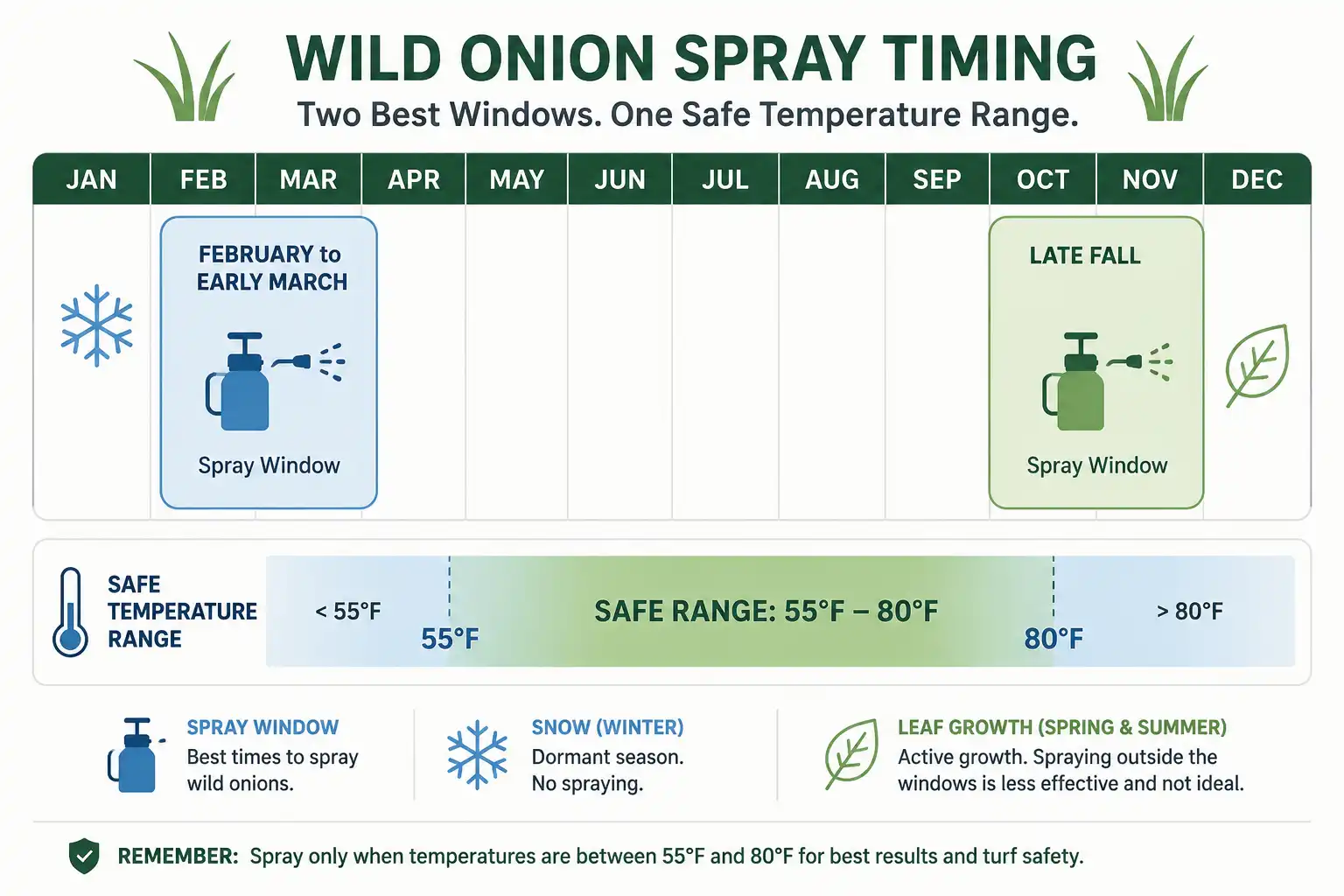
Spray wild onions in late fall, after they green up, and again in early spring around February or early March. Fall is the pass skip. The plant pulls energy down into the bulbs then, and carries the herbicide along.
Aim for a calm day between 55°F and 80°F. Cold below 55°F slows the kill. Heat above 85°F can burn the grass, especially warm-season types. Also, do not spray bermuda, zoysia, centipede, or St. Augustine while they green up in spring. That is when they take herbicide damage most easily.
One odd tip actually helps here. Mow the lawn a day or two before you spray. Bruising the leaves opens them up so the herbicide gets in. After spraying, though, leave it alone. Do not mow for at least two weeks, so the plant can move the chemical down to the bulb.
Then plan to repeat. Spray again the next fall and spring. Most stands need two or three years of steady treatment before the bulbs finally give out.
Can You Kill Wild Onions Without Chemicals?
Yes, you can kill wild onions without chemicals, but it takes patience and steady effort. Digging every clump and mowing often are your main tools, and results come over seasons, not weeks.
For a chemical-free lawn, digging is still the surest fix. Beyond that, mow on a regular schedule. Mowing will not kill the bulbs, yet it weakens the plants. More important, it clips off the aerial bulblets before they scatter and start new clumps. So even if you never spray, frequent mowing keeps a patch from spreading.
Some folks pour boiling water or spray horticultural vinegar on clumps. Both scorch the leaves and can work on a stray plant in a crack or a bed. On turf, though, they kill the grass right along with the weed, and the bulbs often survive to regrow. So it helps to skip them on a lawn.
If you like a chemical-free yard, the same logic behind keeping pests down with natural methods fits weeds too. Steady pressure beats one quick fix.
How Do You Stop Wild Onions From Coming Back?
Stop wild onions from coming back by growing a thick, healthy lawn that leaves them no room. Dense turf shades the soil and crowds out new bulblets far better than thin, bare grass ever will.
So feed your lawn on schedule and mow at the right height for your grass. Overseed thin spots in the fall to close gaps. That full canopy is your best long-term defense.
Clean your mower deck and boots after working in an infested area, since bulblets hitch rides on gear. Scout thin edges and fence lines each fall, when the fresh green leaves stand out against dormant grass. Then pull or spot-treat any new clumps right away, before they build a bulb bank.
None of this rests on a single trick. It is an integrated pest management approach, where thick turf, timely mowing, and spot-spraying add up over time.
Where to Start on Your Lawn
Here is the short version. Dig out the clumps you can reach, and get every bulb. For a bigger stand, spray a post-emergent broadleaf herbicide in late fall and again in early spring. Add a surfactant, and repeat for two or three years. Meanwhile, keep the lawn thick so new bulblets have nowhere to land. Wild onions are stubborn, not unbeatable. Stay after them and the patch shrinks every season.