Can You Transplant Onions? Yes, Here’s How to Do It Right
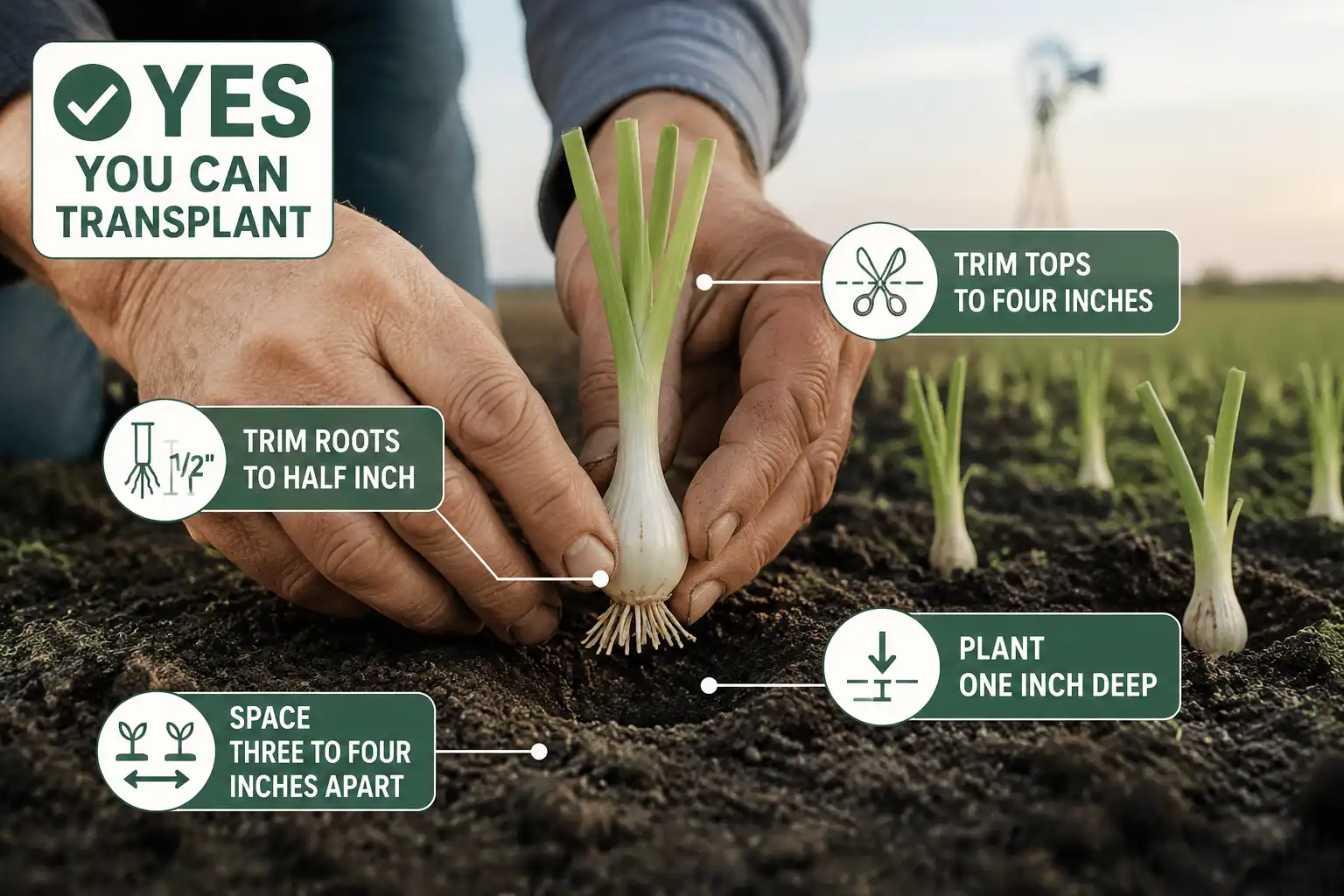
Can you transplant onions? Yes, and this is how the biggest bulbs come every season. Moving young seedlings into prepared beds beats direct seeding for size and timing. The catch is doing it before bulbing starts and setting each plant at the right depth.
Yes, you can transplant onions, and it is the standard way to grow large storage bulbs. Move pencil-thick seedlings before bulbs form. Trim the roots and tops, then set them one inch deep in cool spring soil.
Can You Transplant Onions?
Yes, onions transplant well and reward you for it. Onion growers rely on three starting methods: seeds, sets, and transplants. Transplants give the biggest, most uniform bulbs, so that is what it helps to use.
A transplant is a young onion plant with a pencil-thin stem and a small root system. You either grow your own from seed or buy bareroot bundles in spring. Either way, the plant already has a head start over a seed dropped straight into cold March soil.
Sets look easy, but they often bolt and give you small bulbs. Direct seeding works too, though it is slow and weeds crowd the tiny seedlings. For weighing both approaches, direct sowing versus transplanting is broken down in a separate piece. For storage onions, transplants win most seasons.
When Are Onion Seedlings Ready to Transplant?
Onion seedlings are ready to move once they reach pencil thickness, usually 6 to 8 weeks after seeding. At that stage the stem stands about as thick as a pencil lead and the plant carries three to four leaves. That size handles the move without stalling.
Do not wait for big, tall plants. Smaller seedlings root faster and catch up quickly. Seedlings no thicker than a toothpick have been set out, and most pulled through fine.
If your seedlings flop over under their own leaf weight, trim the tops back and keep going. Flopping alone does not hurt them. Yellow, wilting seedlings are a different problem, usually water related. Growing from seed gives cleaner control over timing, and this covers growing onions from seed indoors starting in January.
When Should You Transplant Onions Outdoors?
Transplant onions outdoors in early spring, as soon as the soil is workable and daytime temperatures hit 50°F. In eastern Kansas, that lands in late March for me. K-State Research and Extension points to that same late-March window for central and eastern parts of the state.
Onion transplants shrug off light frost, so an early set-out is safe. Hard freezes still do damage, so watch the forecast. Soil temperature matters more than the calendar. Aim for soil between 50 and 70°F. Below 45°F, roots stall and damping-off in cold soil becomes a real risk.
Timing also ties back to day length. Onions bulb on a photoperiod trigger, so match your variety to your latitude. In Kansas, intermediate-day types like Candy and Super Star fit best, though long-day varieties work too. Growers farther south run a fall schedule instead, and walk through fall onion planting separately for that. Kansas growers mostly stick with the spring window for storage bulbs.
How to Transplant Onions for Bigger Bulbs
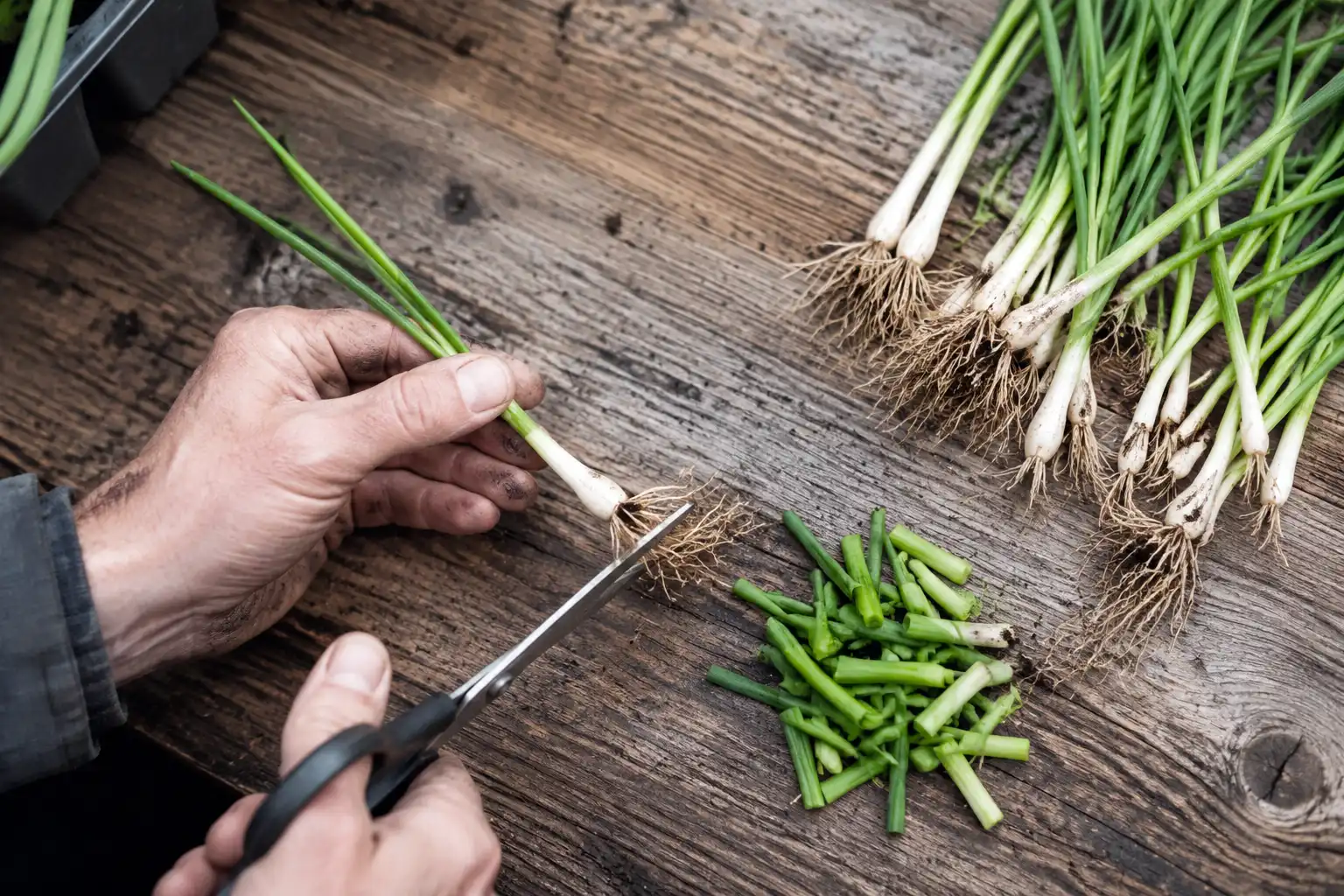
Transplanting onions comes down to five quick steps: loosen, lift, trim, set, and firm. The whole job moves fast once you get a rhythm. Prep your bed first with loose, well-drained soil and compost worked in.
- Loosen the soil around each seedling, then lift the plant gently. Keep the roots intact.
- Trim the roots back to about half an inch. Short roots point downward and settle in faster.
- Trim the tops to roughly 4 inches. That balances the plant and stops tall leaves from flopping.
- Set each seedling 1 to 1.5 inches deep, with the basal plate (the flat root base) just under the surface.
- Firm the soil around the stem, then water it in.
Work in the cool of morning or late afternoon. Cooler conditions and overcast skies cut transplant stress. Pull only as many seedlings as you can set in about 15 minutes. Bare roots dry out fast in sun and wind.
How Deep and How Far Apart to Set Onion Transplants
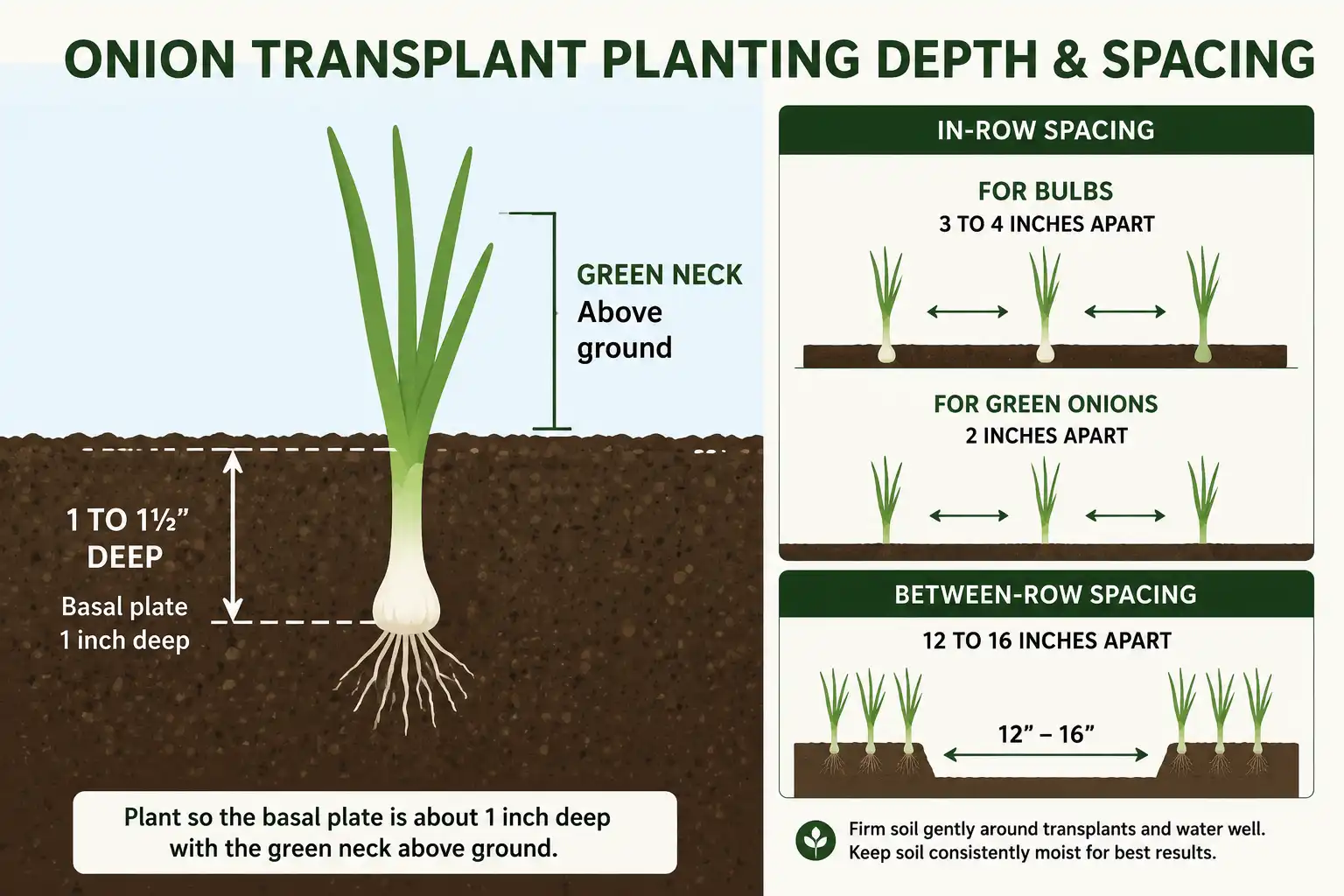
Set onion transplants 1 to 1.5 inches deep and space them 3 to 4 inches apart for full-size bulbs. Rows work best at 12 to 16 inches apart. Tighter spacing gives smaller bulbs, so match the gap to the size you want.
Depth is where growers slip up. Too deep and the bulb struggles to form and push out of the soil. The basal plate should sit about an inch down, no more. The green neck stays above ground.
For green onions instead of bulbs, plant closer, around 2 inches apart. Then pull every other plant young and leave the rest to size up. That double-duty spacing stretches one bed into two harvests.
Can You Transplant Onions That Are Already Bulbing?
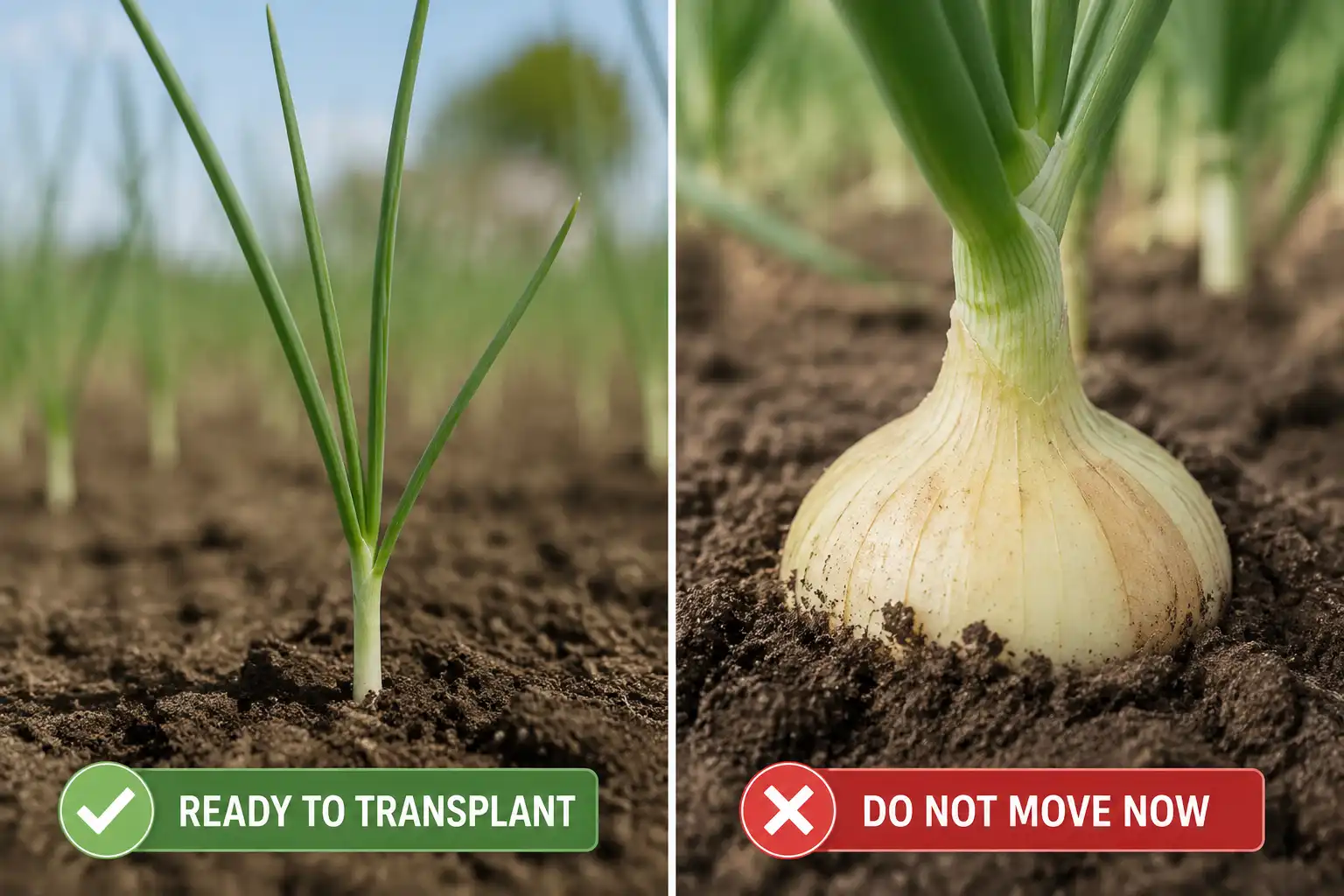
You can move actively growing onion seedlings, but you should not transplant onions once bulbs start forming. Bulbing kicks in when day length crosses your variety’s threshold. Disturb the roots at that point and bulb growth stalls, leaving you with small onions or scallions.
The fix is timing. Move seedlings while they are still in leaf, before any swelling shows at the base. If a bed is overcrowded and tiny bulbs are already setting, thin it instead. Pull the extras as green onions and let the keepers finish.
Mature onions dug mid-season rarely bounce back to full size. So plan your transplant date around the leaf stage, not around a rescue later. That single habit protects your bulb size more than anything else.
Will Transplanting Shock Your Onions?
Onions handle transplanting better than most crops, so shock stays mild when you do it right. Trimmed roots and cool-weather timing keep stress low. Still, a few habits make the move smoother.
Homegrown seedlings suffer the least. They go from tray to soil in minutes, so they barely notice. Bareroot bundles from a store or catalog sit out of the ground for a week or two. So they take longer to wake up. Keep those bundles cool, dry, and out of soil or water until you plant. The plant lives off its little bulb for up to three weeks.
Harden off seedlings for about a week before they go out. Gradual time outdoors toughens the leaves. The same routine used to harden off transplants for the field works for onions too.
Caring for Onions After Transplanting
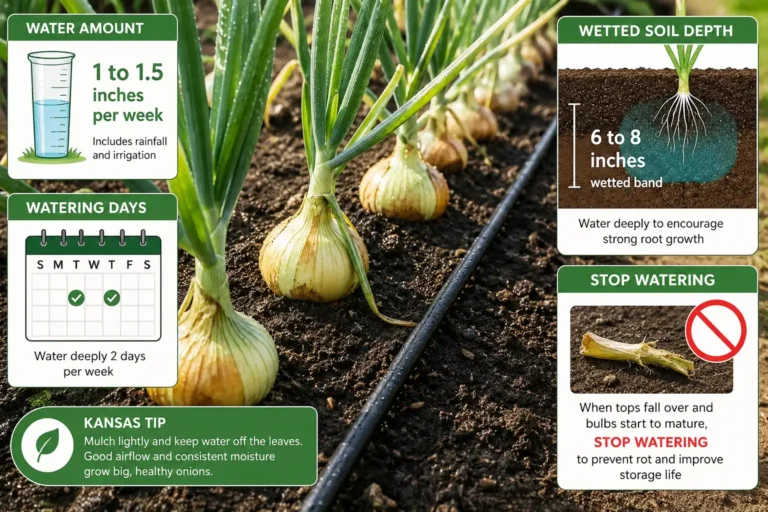
Water new onion transplants right after setting them, then keep the bed evenly moist. Onions carry shallow roots, so they need steady water: about 1 to 1.5 inches per week when rain falls short. Dry spells stall growth fast.
Mulch the rows with straw or prairie hay. Mulch holds moisture, moderates soil temperature, and knocks back weeds. Weeds hit onions hard, since those thin leaves lose every crowding fight. Keep hoeing shallow so you do not nick the roots.
Feed lightly at first, then side-dress nitrogen as the plants add leaves. Too much nitrogen early gives thick necks and soft bulbs that store poorly. Good beds start with good ground, so build up soil fertility with compost before a single transplant goes in. A quick soil test ahead of the season tells you what the ground actually needs.
Final Thoughts
So, can you transplant onions? Do it every year and it beats seeding straight into the ground for size and timing. Start seed in January, harden off in early March, and set trimmed seedlings in late March. Keep the plant shallow, keep the bed moist, and move seedlings before bulbs form. Do that, and you will pull big, firm bulbs by mid to late summer.