What Not to Plant Near Onions (And What to Grow Instead)
Onions grow shallow roots and cast almost no shade of their own. So the wrong neighbor takes light, water, and nitrogen first. Knowing what not to plant near onions protects bulb size more than any fertilizer choice does.
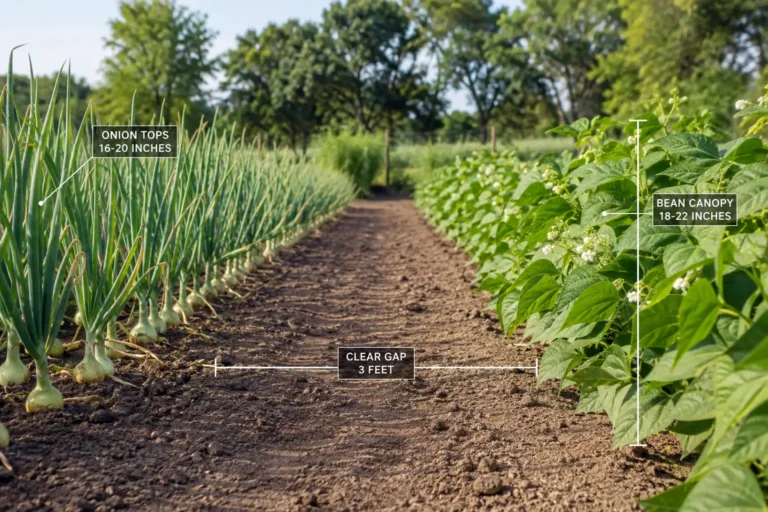
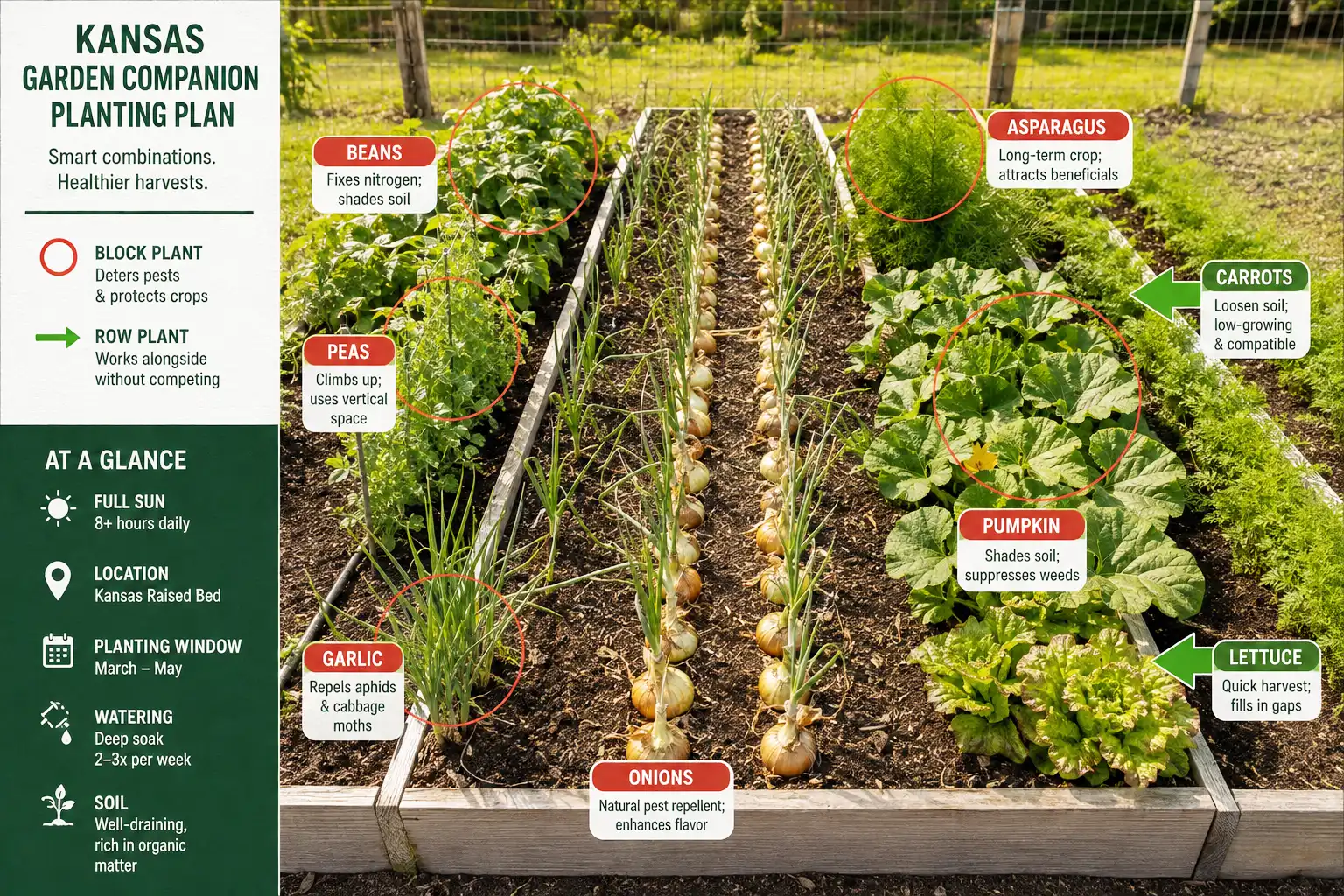
Beans, peas, asparagus, fennel, and other alliums top the list of what not to plant near onions. Tall or sprawling crops belong on that list too, such as sweet corn, sunflowers, and winter squash. Shade shrinks bulbs.
Learn more: How to Plant Onions Next to Cucumbers
Why Onions Lose Ground to the Wrong Neighbor
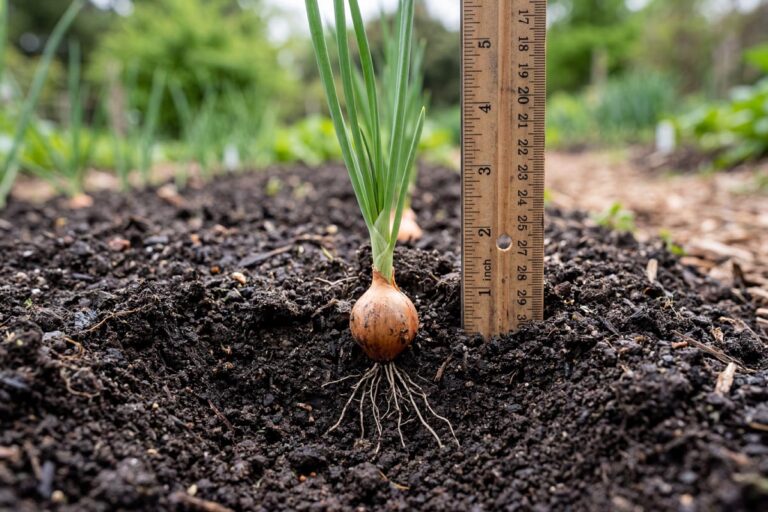
Onions compete poorly against anything growing beside them. Their roots stay sparse, unbranched, and shallow. Most water uptake happens in the top 10 inches of soil. On top of that, narrow upright leaves throw no canopy, so onions never shade out a competitor.
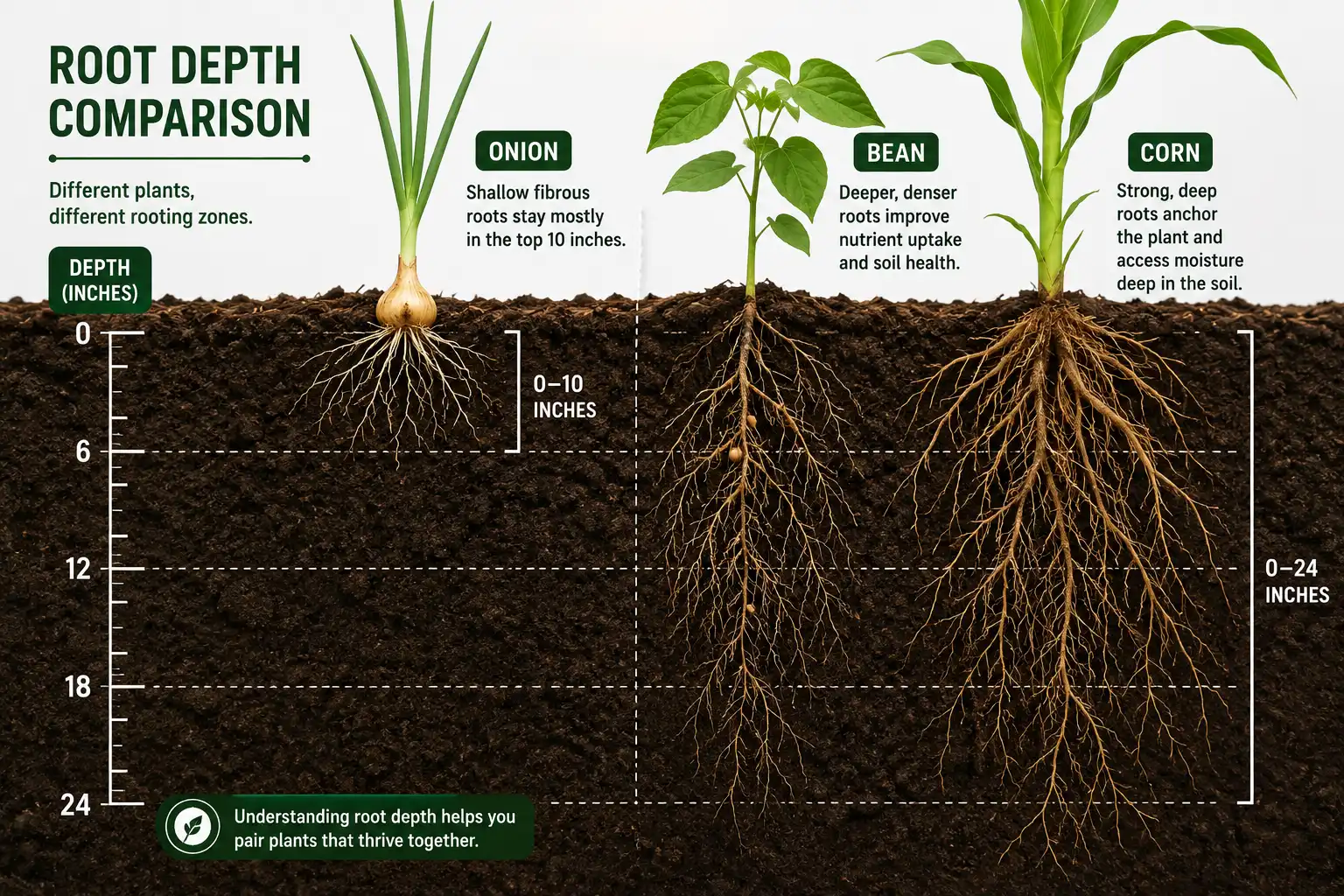
The weed research shows how weak that position really is. Season long weed pressure can cut seeded onion yield by as much as 96 percent. Worse, the first six to eight weeks after emergence decide the crop. A neighboring vegetable behaves the same way a weed does. It just looks nicer doing it.
Four problems drive almost every bad pairing:
- Shade. Bulbing runs on day length and sunlight. Short day types bulb near 11 to 12 hours, intermediate types near 13 to 14, and long day types at 16 or more. Less light means fewer sugars and smaller bulbs.
- Root competition. Shallow onion roots lose the race for water and nitrogen.
- Shared soil pests. Some neighbors host the same fungi and flies that ruin bulbs.
- Physical disturbance. Hilling and vining bury shallow roots or the bulbs themselves.
What Not to Plant Near Onions
Here is the list to work from, with the reason behind each one and a better arrangement.
| Keep away from onions | Why it hurts | Better arrangement |
|---|---|---|
| Bush beans, pole beans, peas | Allium root exudates appear to suppress the Rhizobium bacteria legumes need for nodules; pole types add shade | Own bed, 3 to 4 feet off |
| Garlic, leeks, shallots, chives | Share white rot, pink root, Fusarium basal rot, onion maggot, and thrips | One allium block on clean ground, fully separate beds after any white rot |
| Asparagus | Permanent crowns, deep roots, and yearly bed disturbance | Never in the same bed |
| Fennel | Allelopathic to a wide range of vegetables | Container or a far corner |
| Mint, oregano, other runners | Rhizomes take over the top few inches of soil | Containers only |
| Sweet corn, sorghum, sunflowers | Heavy shade; corn and sorghum also host the pink root fungus | North side of the plot |
| Winter squash, pumpkins, melons | Runners cover the bed and trap moisture against necks | Opposite side of the garden |
| Potatoes | Hilling buries onion roots and bulbs | Separate rows with real space |
| Cabbage, broccoli, cauliflower | Heavy nitrogen feeders with broad shading leaves | Fine at a distance, poor in the row |
Beans and Peas Belong in a Separate Bed
Beans and peas sit farthest from onions, and nitrogen explains why. Legumes make their own nitrogen through Rhizobium bacteria in root nodules. Alliums release sulfur compounds through their roots, and those compounds appear to suppress that bacteria. Fewer nodules mean less nitrogen and a weaker legume crop.
Still, be honest about the strength of this evidence. The effect turns up in controlled work. Yet the size of it swings widely, and some field trials show almost nothing. Treat it as a sensible caution rather than a hard rule.
The shade problem is firmer ground. Pole beans and trellised peas throw real shade at bulbing time. That stage is when onions need every hour of sun. A 2024 Slovenian field trial makes the competition point well. Intercropped white clover cut both thrips and onion maggot damage. Yet the clover competed so heavily that onion yield still dropped.
Three to four feet of separation solves all of it. So does a different bed.
Other Alliums Are the Riskiest Neighbors of All
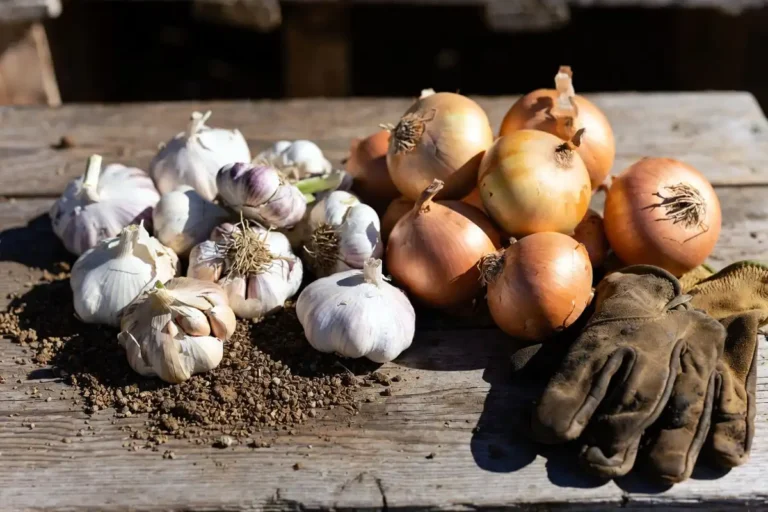
Garlic, leeks, shallots, and chives carry more risk than any other neighbor. They host every serious soil disease onions get.
White rot deserves the most respect. Its sclerotia survive in soil for 20 to 40 years, and only alliums host the fungus. As little as one sclerotium per 20 pounds of soil causes measurable yield loss. Mycelium then grows through soil from an infected plant into its neighbors. One sclerotium can take out 20 to 30 adjacent plants. Rotation alone never clears it.
Pink root and Fusarium basal rot behave much the same way, though they cost less over time. Onion maggot and onion thrips also build up wherever alliums cluster year after year.
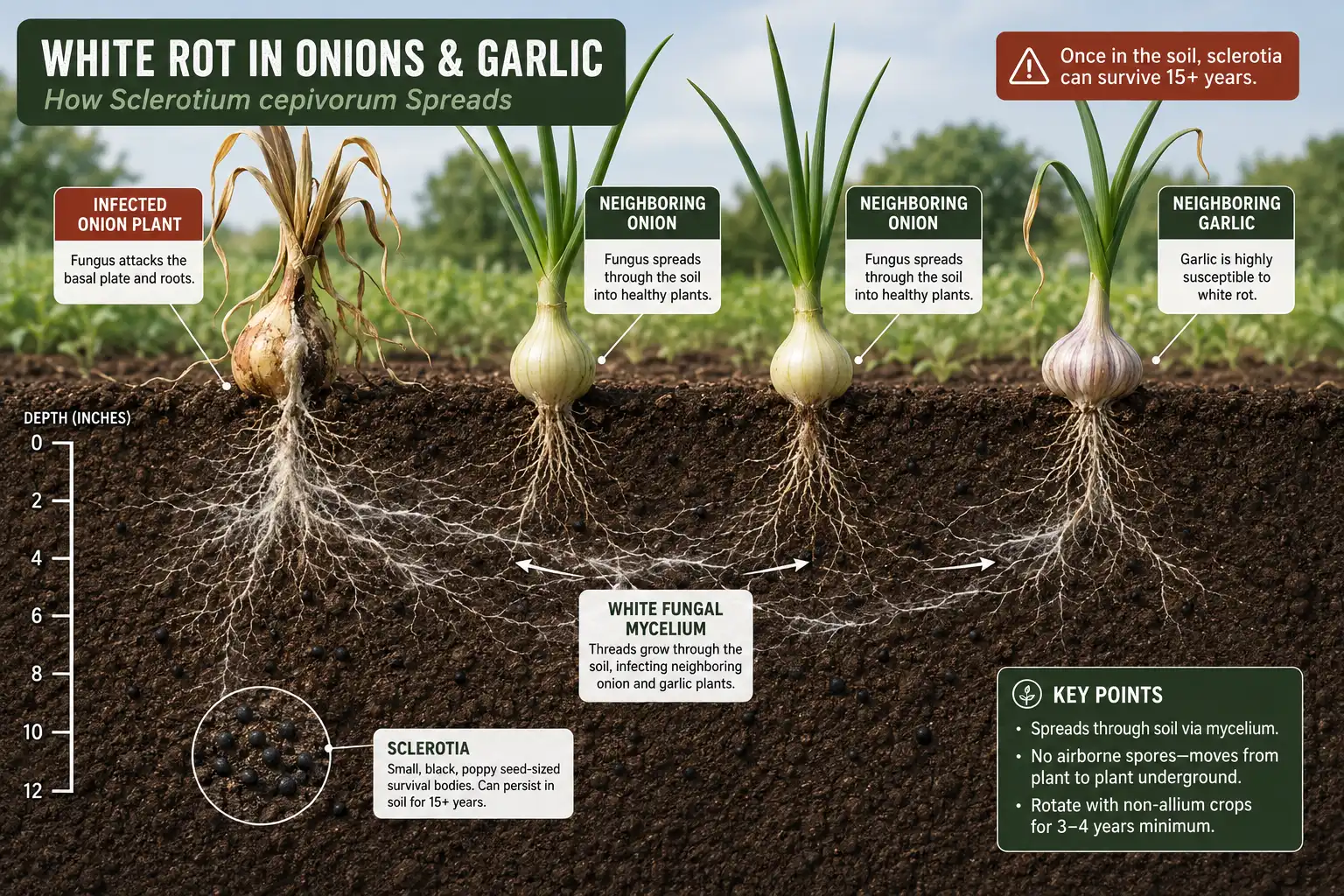
So the practical call depends on your ground. On clean soil, one allium block keeps rotation simple and works fine. Once white rot appears, separate every allium, and stop moving soil, boots, and tools between beds. The fact that onions and garlic share the same family is exactly why they share the trouble.
Asparagus, Fennel, and Mint Cause Longer Term Problems
These three cause trouble that outlasts a single season. Each one changes the bed rather than just crowding it.
Asparagus holds a bed for 15 years or more. Its crowns run deep, drink hard, and demand shallow cultivation every spring. Onions in that bed lose the water race and take damage during asparagus work.
Fennel runs mildly allelopathic against a broad range of vegetables, and bulb fennel is the worst of the types. Give it a pot or a far corner.
Mint, oregano, and similar runners spread by rhizome. They claim the top few inches of soil, which is exactly the layer onions depend on. Containers only, with no exceptions.
Crops That Shade the Onion Row
Anything taller than roughly 18 inches on the sun side of the bed cuts onion yield. Sweet corn does the most damage since a single row throws afternoon shade a long way. Sunflowers do the same and pull heavy water besides.
Corn and sorghum bring a second problem. Setophoma terrestris, the pink root fungus, also colonizes corn, sorghum, wheat, and oats. A corn row beside the onion bed can therefore hold inoculum that carries straight into the next onion crop.
Tomatoes come up constantly in this conversation. Shade and watering timing cause the real conflict, not chemistry. Our notes on onions and tomatoes in one bed cover how to make that pairing work when space is tight.
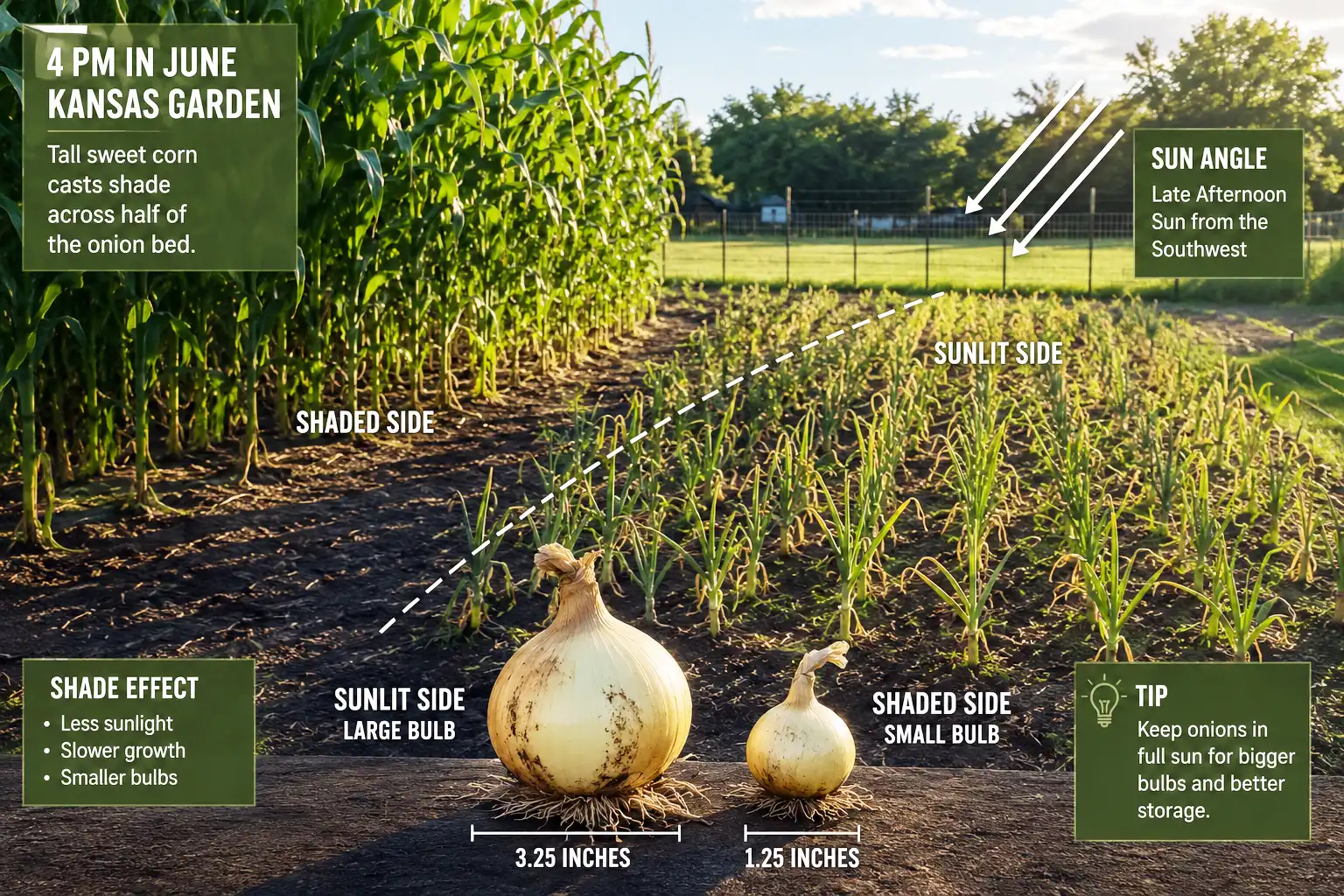
The fix here costs nothing. Put tall crops on the north side of the plot and onions on the south side.
Sprawling Vines and Hilled Crops
Vine crops and hilled crops harm onions physically rather than chemically. The damage comes from soil and foliage moving where it should not.
Winter squash, pumpkins, melons, and cucumbers push runners 8 to 15 feet. Those vines reach the onion bed by midsummer, cover the tops, and hold moisture against the necks. Wet necks in July invite neck rot and shorten storage life badly.
Potatoes fail for a different reason. You hill potatoes, yet you never hill onions. University of Maryland Extension says it plainly: do not mound soil onto onions. Every pass with a hoe or hiller either buries the bulb or tears those shallow roots. Both crops also pull heavy nitrogen and potassium at the same time. Growing onions alongside potatoes only works with separate rows and real space between them.
Where Companion Planting Advice Goes Wrong
Much of the published enemy plant advice carries no field data behind it. Read the same charts you do, and many list precise yield loss percentages for pairings nobody ever trialed. Skip those numbers.
Here is what actually holds up:
- Onion volatiles interfere with carrot rust fly host finding. Repeatable and useful.
- Alliums do reduce legume nodulation in controlled work, though effect sizes vary a lot.
- Shade, water competition, and shared soilborne pathogens explain nearly every real failure.
So judge any neighbor with four questions. Does it shade the onions? Does it drink the same water at the same time? Does it host the same pests? Does it force soil disturbance? Four clean answers mean the pairing usually works.
Good Neighbors That Actually Work
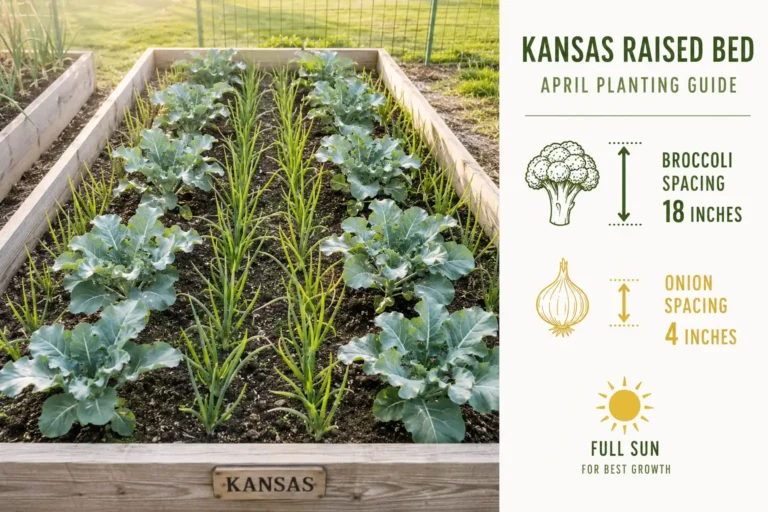
Carrots, beets, lettuce, spinach, radishes, and strawberries all pair well with onions. Each one stays short, roots at a different depth, or finishes before bulbing peaks.
Carrots lead that list. Alternating onion and carrot rows measurably reduces carrot rust fly damage, which remains the cleanest documented allium companion effect. Planting onions next to carrots also splits the root zone. Carrots reach 12 to 18 inches deep, while onions stay in the top 10.
Lettuce and spinach finish early and never rise high enough to shade a bulb. Lettuce and onions in the same row work especially well in spring beds. Beets and radishes fill gaps without crowding.
Growers mention chamomile and summer savory often. Both stay harmless, yet neither one has solid trial support.
How Far to Keep Bad Neighbors From the Onion Bed
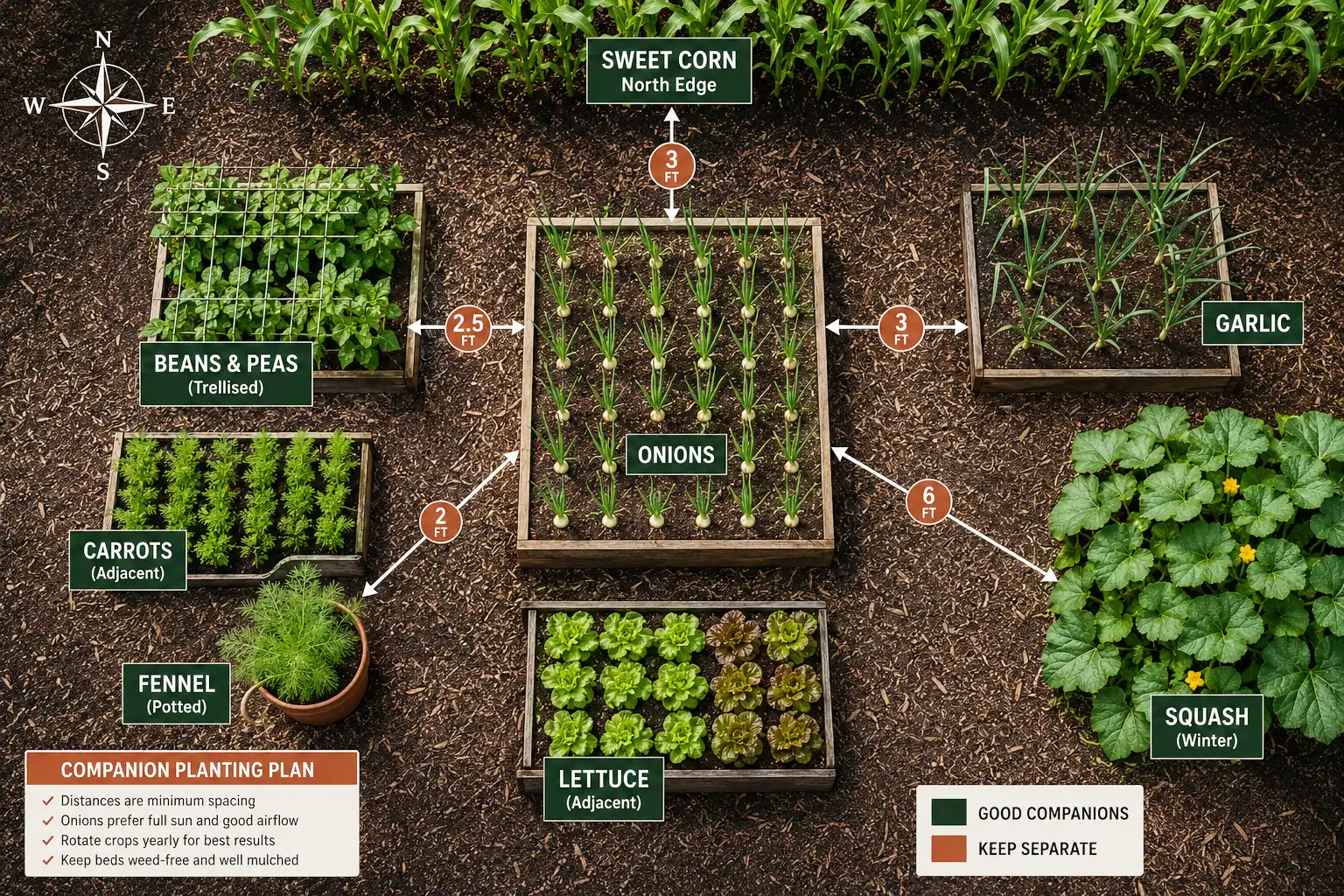
Three to four feet of separation handles almost every problem pairing. Use these working distances:
- Beans and peas: 3 to 4 feet, or a separate bed
- Fennel and mint: containers, or 6 feet plus a root barrier
- Sweet corn, sorghum, sunflowers: north side, 6 feet minimum
- Vine crops: opposite side of the garden
- Other alliums: one block on clean ground, fully separate beds after white rot
- Asparagus: never in the same bed
Keep the onion row itself clean too. Weeds cost far more yield than any neighbor on this page. Effective weed control matters most in those first six to eight weeks.
What to Plant After Onions
Legumes, brassicas, and leafy greens make the best crops to plant after onions. The reversal surprises people, and it is worth understanding.
Beans and peas make poor onion neighbors, yet they make excellent onion followers. That interference happens in a shared root zone during the same season. Once the onions come out, the problem leaves with them. Beans and peas then rebuild the nitrogen the onion crop pulled down.
Sugar beets and soybeans earn a mention for a different reason. Both act as poor hosts for the pink root fungus. Multi year rotation work in Hokkaido tracked its soil populations declining under those crops. That makes them useful cleanup crops on ground with onion history.
Solid choices to grow after onions:
- Beans, peas, or cowpeas to restore nitrogen
- Cabbage, broccoli, or kale, given a fresh nitrogen application
- Lettuce, spinach, or chard for a quick fall crop
- Cereal rye or buckwheat as a cover crop to rebuild organic matter
What to skip after onions:
- Any allium for at least three to four years, and far longer where white rot exists
- Corn, sorghum, wheat, or oats on ground with a pink root history, since all four host the fungus
Two timing notes matter here. Terminate cover crops several weeks ahead of the next onion planting, because fresh residue hurts onion establishment. Also avoid slotting onions directly behind a legume or heavy manure, since seedcorn maggot flies chase that decaying residue. A written rotation plan keeps the allium block moving and prevents both mistakes.
Last Words
Onions fail quietly. You rarely notice the damage until undersized bulbs come out of the ground in July. So the onion block gets laid out first each spring, before anything tall or sprawling claims a spot. Beans and peas go across the plot. Garlic gets its own block. Corn goes on the north end, while carrots and lettuce fill the rows beside the onions. Keep that bed clean for two months and let day length finish the job.