Best Stirrup Hoe for Weeding in 2026 (Top Picks by Soil Type)
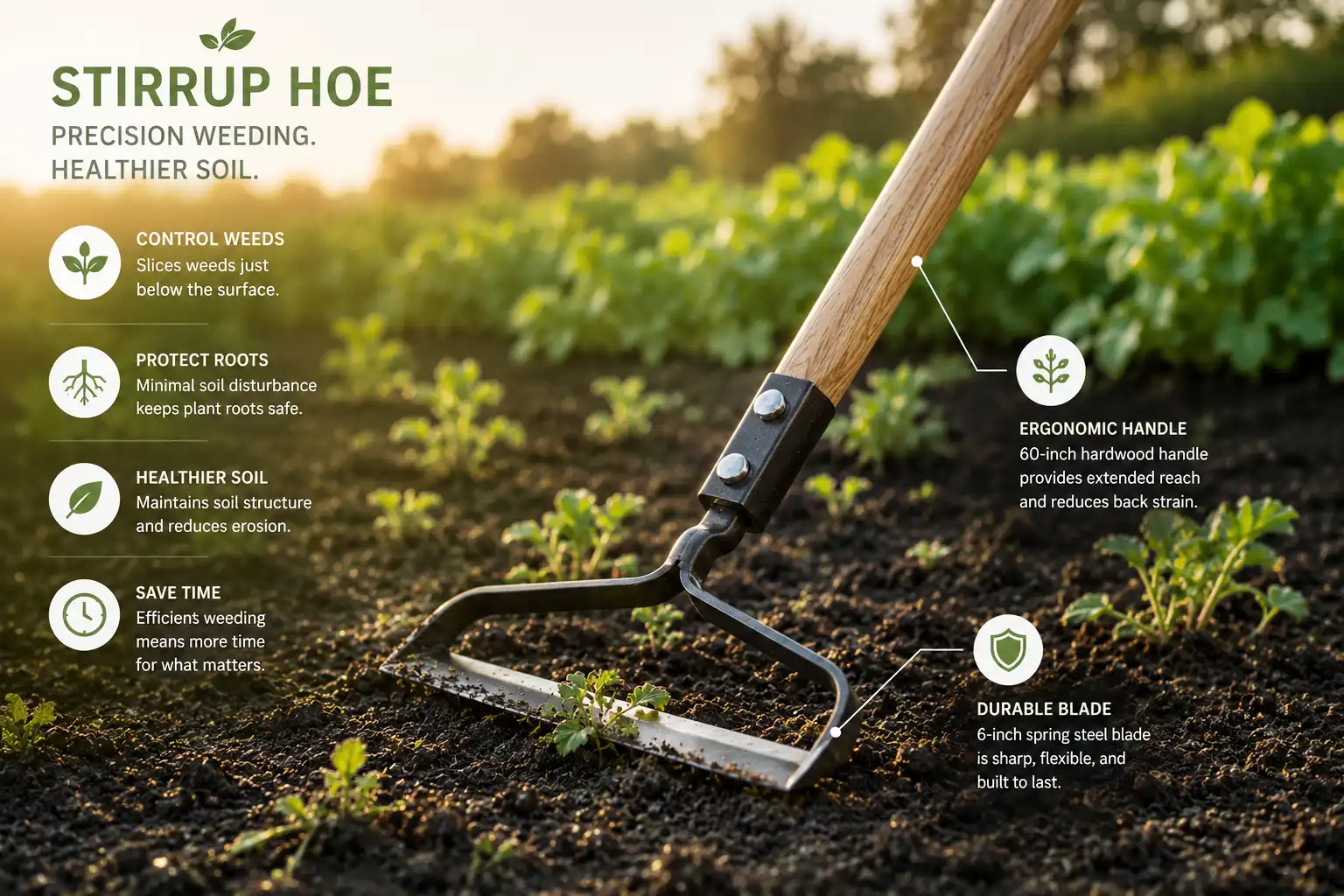
A stirrup hoe for weeding is the standing, push-pull tool that slices weeds below the soil line before they crowd your row crops. Hand-pulling never keeps up.
The best stirrup hoe for weeding overall is the Hoss Stirrup Hoe, thanks to its welded frame and sharp edge. For heavy clay, the Rogue Scuffle Hoe is great. On a budget, the Flexrake Hula-Ho handles light work.
Quick Comparison: Stirrup Hoe for Weeding
| Hoe | Best for | Head | Handle | Weight |
|---|---|---|---|---|
| Hoss Stirrup Hoe | Overall pick | 6″ spring steel, oscillating | 60″ ash | 1 lb |
| Rogue Scuffle Hoe | Heavy-duty, hard soil | 6″ triangular hardened steel | 60″ hickory | 2.3 lb |
| A.M. Leonard | Speed, sharp out of box | Thin spring steel, oscillating | American ash | 2.5 lb |
| Bully Tools Loop Hoe | Rugged build | 6″ x 3.25″ 12-gauge steel | 55″ fiberglass | 2.35 lb |
| True Temper Action Hoe | Beginners | Triangular hardened steel | 54″ hardwood | 1 lb |
| Flexrake Hula-Ho | Budget, self-sharpening | 6″ x 1″ flexing blade | 54″ hardwood | 1.3 lb |
| DonSail Loop Hoe | Adjustable budget | Push-pull loop | 30–70″ steel | 3 lb |
| Lilyvane 2-in-1 | Weed plus cultivate | Stirrup + 4-tine cultivator | 62″ metal | 2.86 lb |
| Bird Twig | Light-duty budget | Stainless steel loop | 30–54″ steel | 1.3 lb |
The 10 Best Stirrup Hoes for Weeding: Reviews
These are grouped from the top all-around pick down to the light-duty budget tools. Match the build to your soil and your rows.
1. Hoss Stirrup Hoe for Weeding and Edging
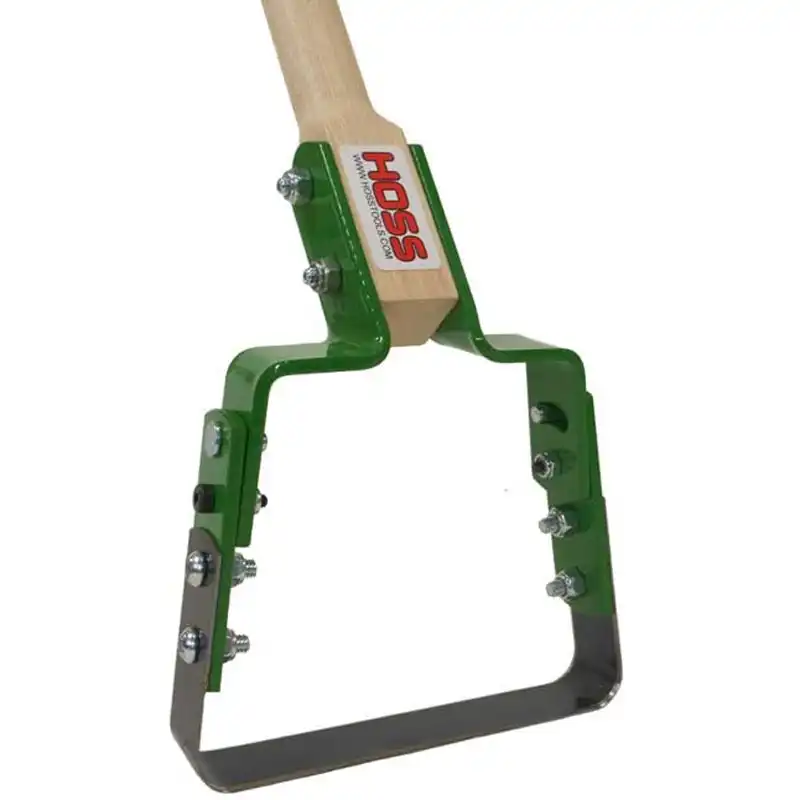
Hoss Tools is a family-run Georgia company known for market-garden gear, and this is the Best Overall pick. The 6-inch spring steel blade comes pre-sharpened and cuts on both strokes. The pivoting head rocks 20 degrees, so it slices going forward and back. It works best in loose or tilled soil and shines on small to medium beds.
PROS
- Cuts both directions fast.
- Pre-sharpened spring steel blade.
- Waxed ash handle, no cracking.
- Built to last decades.
CONS
- Expensive for a garden tool
Specifications:
- 6-inch oscillating spring steel blade.
- 60-inch waxed ash handle.
- Square peg, powder-coated frame.
- Made in USA.
2. Rogue Scuffle Hoe for Weeding
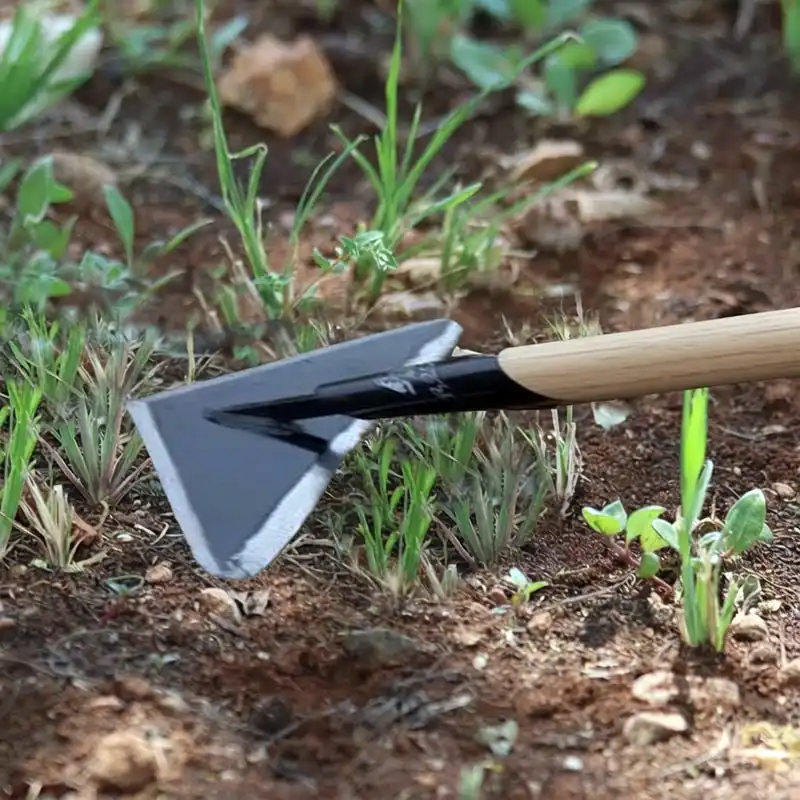
Rogue Tool Line forges these by hand from recycled agricultural disc blades, right in Kansas. That’s a solid kind of tool. The 6-inch triangular head is sharp on all three sides and holds an edge through hard, dry ground. It cuts on push and pull, and you can tip it to dig or loosen soil. Best for serious gardeners working tight beds and borders.
PROS
- Sharp on three sides.
- Hardened, rust-proof steel.
- Hickory handle, great balance.
- Handmade in Kansas, USA.
CONS
- Sits at a premium price.
Specifications:
- 6-inch triangular hardened steel head.
- 60-inch hickory wood handle.
- 2.3 pounds, well balanced.
- 2-year blade warranty.
3. A.M. Leonard Stirrup Hoe for Weeding
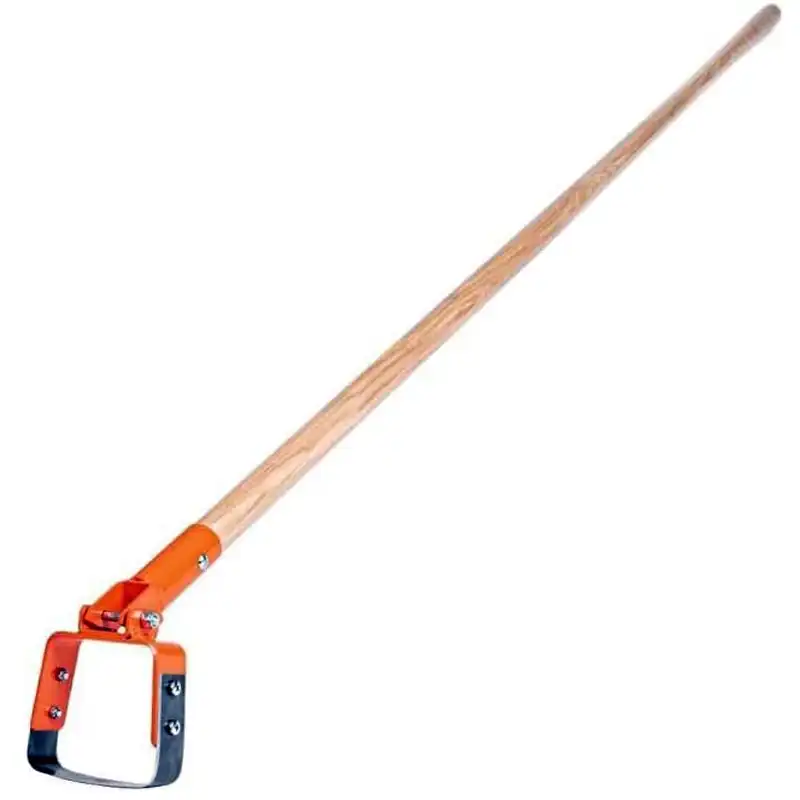
A.M. Leonard is a longtime Ohio horticultural supplier trusted by pros. This stirrup hoe uses a thin, machine-sharpened spring steel blade that arrives razor sharp. The oscillating fixture flexes with the soil, so it cuts fast with little effort. Growers report weeding three times faster than a standard hoe. You pick your head size and handle length before you buy.
PROS
- Arrives very sharp.
- Cuts three times faster.
- Light American ash handle.
- Handles tough, persistent weeds.
CONS
- Assembly needed
Specifications:
- Thin spring steel oscillating blade.
- American ash handle.
- Multiple head and length options.
- Made in USA.
4. Bully Tools 12-Gauge Loop Hoe for Weeding
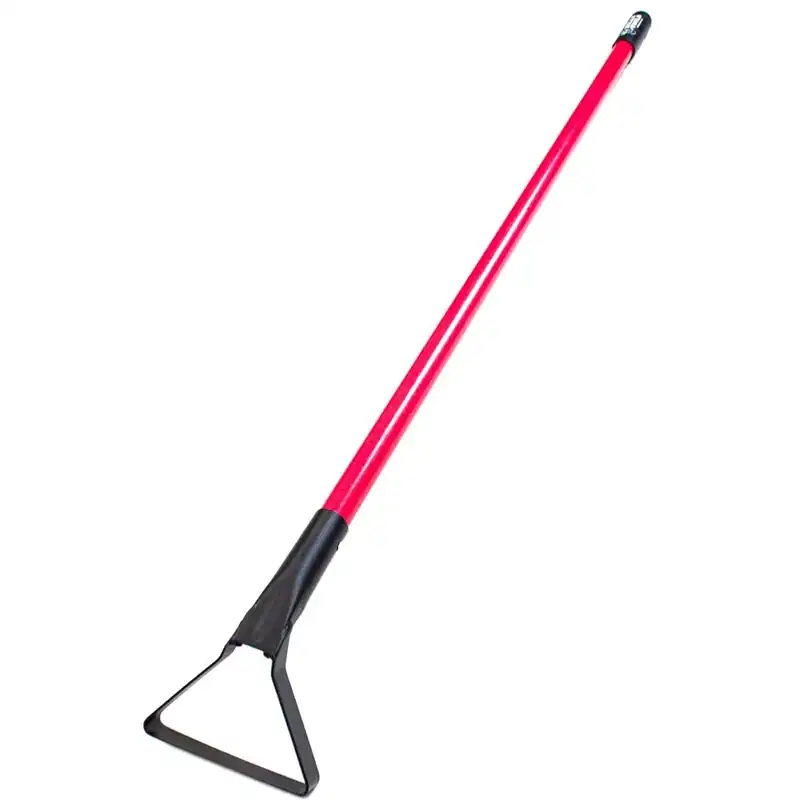
Bully Tools builds heavy commercial gear in Ohio, and this loop hoe is built like a tank. The extra-thick 12-gauge steel head does not flex, and the triple-wall fiberglass handle takes abuse. It carries a limited lifetime warranty. Honest heads-up: many arrive dull with an off blade angle, so plan to sharpen and true it first. Best for folks who value long-term durability.
PROS
- Extra-thick 12-gauge head.
- Triple-wall fiberglass handle.
- Steel ferrule reinforces the joint.
- Limited lifetime warranty.
CONS
- Arrives dull, needs sharpening.
Specifications:
- 6 by 3.25-inch steel head.
- 55-inch fiberglass handle.
- 2.35 pounds, heavy build.
- Made in USA.
5. True Temper Action Hoe
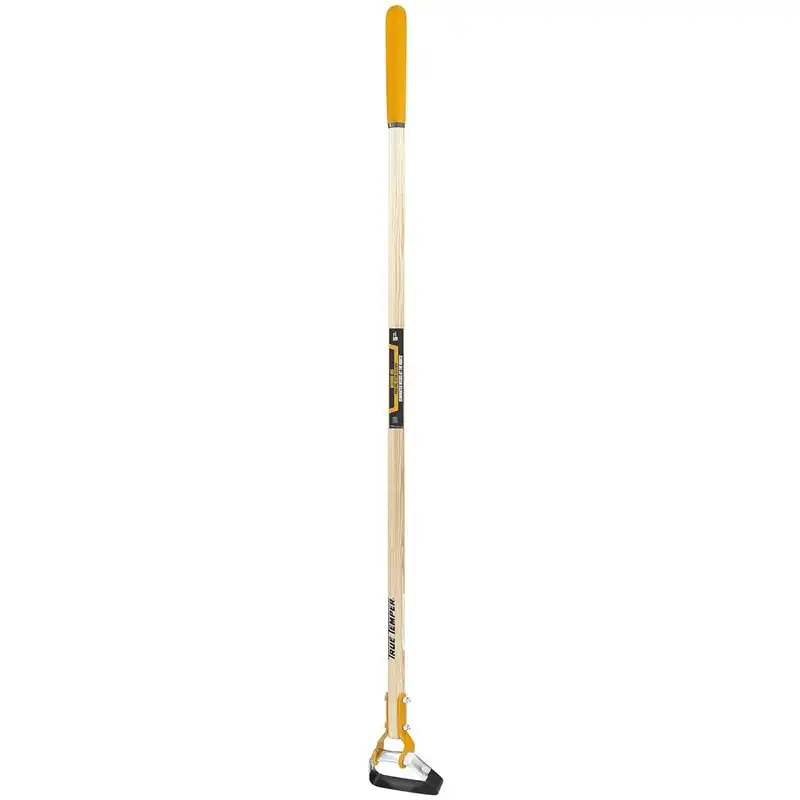
Ames True Temper is one of the oldest names in American garden tools. This action hoe has a triangular head and a plain 54-inch hardwood handle. The push-pull blade cuts weed roots about an inch down and works great around mulched plants and in potato trenches. It’s a light, easy first stirrup hoe at a fair mid-range price.
PROS
- Cuts weeding time down.
- Light and easy to swing.
- Great around mulched plants.
- Trusted, long-standing brand.
CONS
- Not Ideal for Hard Ground
Specifications:
- Triangular hardened steel head.
- 54-inch hardwood handle.
- About 1 pound.
- Cuts roughly 1 inch deep.
6. Flexrake 1000L Hula-Ho Weeder Cultivator
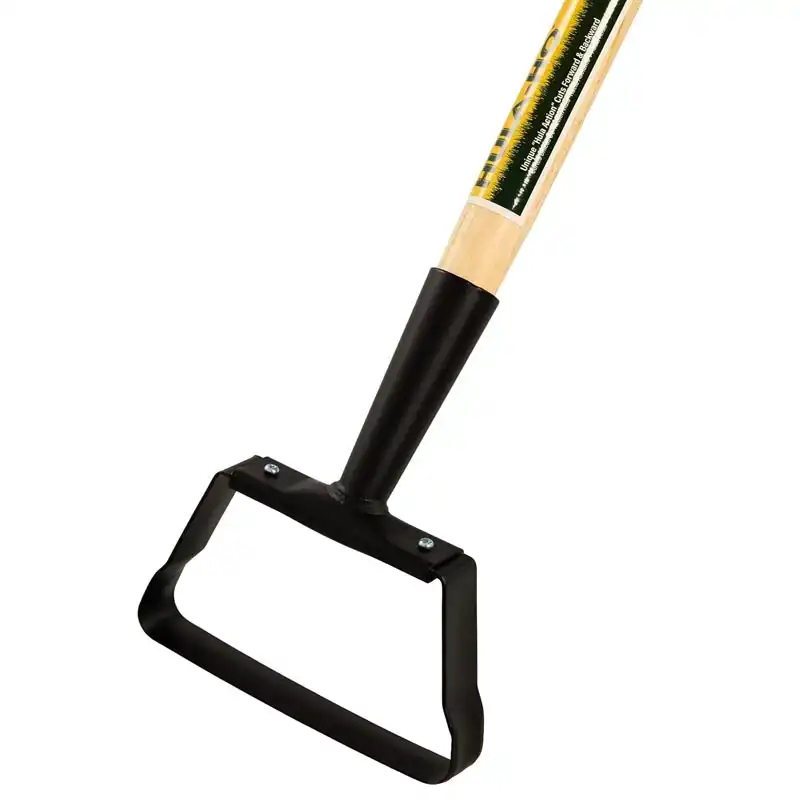
The Flexrake Hula-Ho is a classic American weeder, and it arrives fully assembled. The heat-treated, self-sharpening blade wiggles as you push and pull, so it finds its own cutting angle. It skims about an inch deep and clears young weeds fast in loose, damp soil. Replacement blades are sold, which stretches its life. A solid budget pick for garden beds.
PROS
- Self-sharpening heat-treated blade.
- Arrives fully assembled.
- Very light to swing.
- Replaceable blade available.
CONS
- Weak in hard soil.
Specifications:
- 6 by 1-inch flexing blade.
- 54-inch hardwood handle.
- 1.3 pounds.
- Made in USA.
7. DonSail Adjustable Weeding Loop Hoe Garden Tool
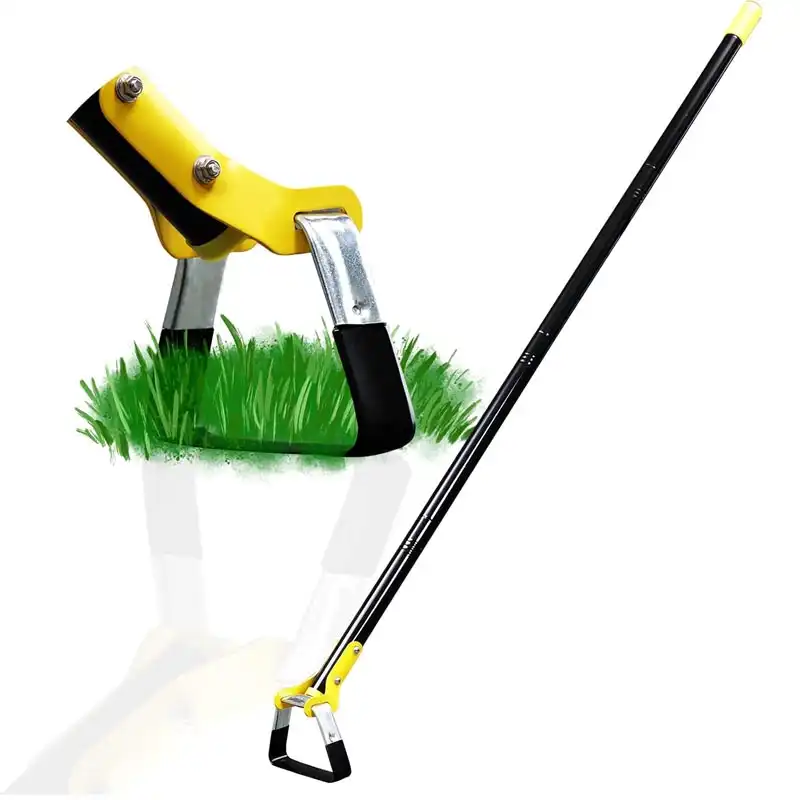
DonSail makes affordable stand-up garden tools, and this loop hoe adjusts from 30 to 70 inches. That range suits any height and cuts down bending. The hollow commercial-grade steel keeps it light, and the push-pull head pulls weeds at the root in soft ground. Assembly takes about a minute. Good value for light cultivating and young weeds.
PROS
- Adjusts 30 to 70 inches.
- Light hollow steel build.
- One-minute tool-free assembly.
- Easy on your back.
CONS
- Weak on hard soil.
Specifications:
- 1.3-inch thick steel poles.
- Adjustable 30 to 70 inches.
- Around 3 pounds.
- Push-pull loop head.
8. Lilyvane 2-in-1 Garden Hoe with Cultivator Gardening Tool
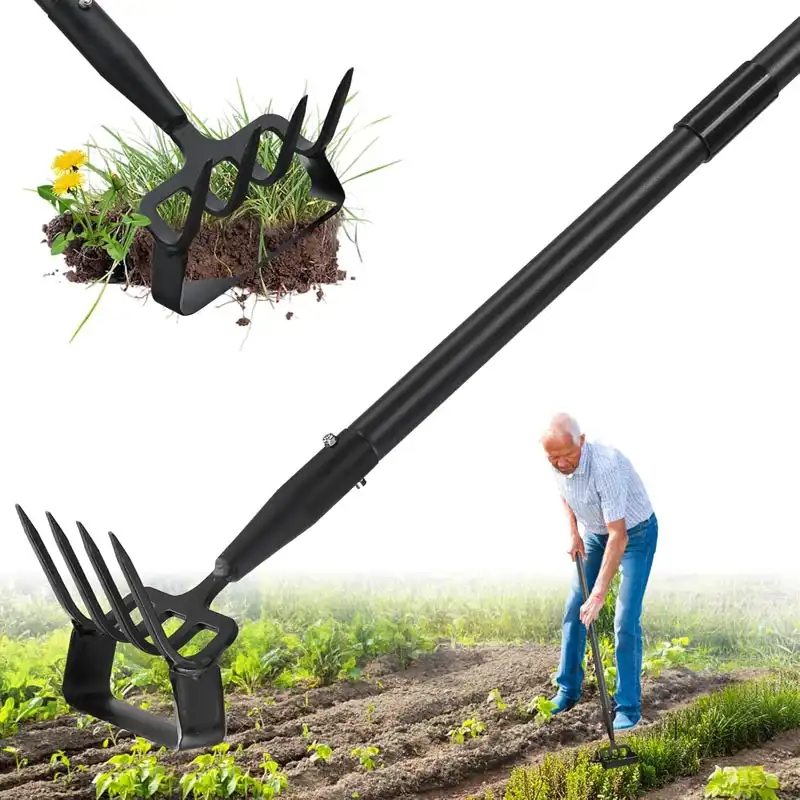
Lilyvane puts a stirrup hoe on one side and a 4-tine cultivator on the other. Flip it to weed, then flip again to aerate or grab deep roots. The 62-inch handle keeps you upright, which seniors appreciate. It’s all-metal and budget-friendly. Fair warning: the screw-together handle can loosen or crack under hard use, so treat it gently.
PROS
- Two tools in one.
- Long 62-inch handle.
- Handy for soil prep.
- Easy hand assembly.
CONS
- Handle loosens under strain.
Specifications:
- Stirrup hoe plus 4-tine cultivator.
- All-metal rust-resistant steel.
- 62-inch detachable handle.
- 2.86 pounds.
9. Bird Twig Garden Hoe for Weeding
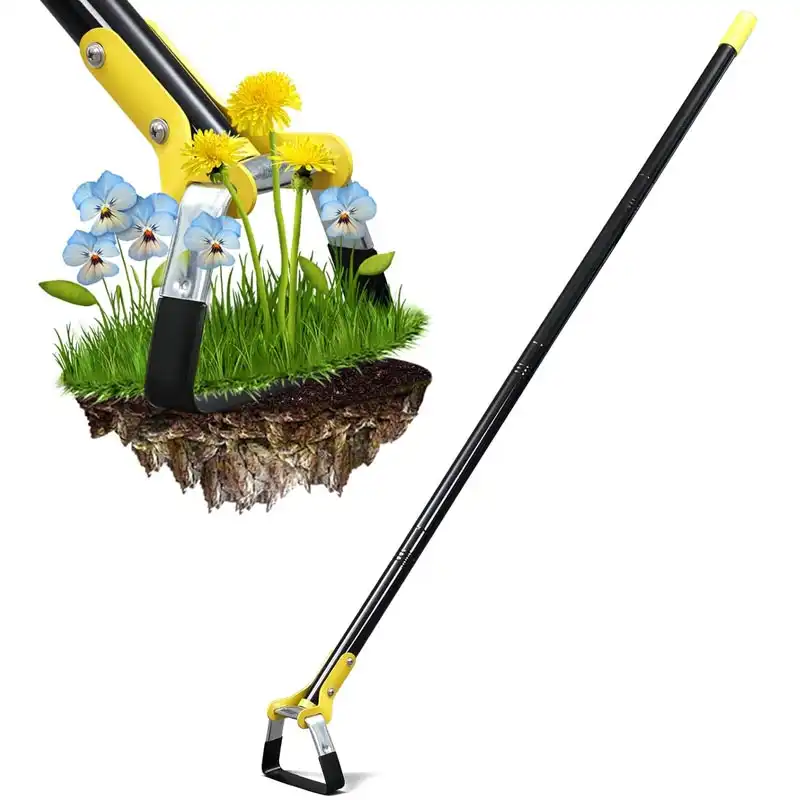
Bird Twig offers a low-cost telescoping stirrup hoe that adjusts from 30 to 54 inches. The stainless steel loop blade cuts on both strokes and works best in moist, loose soil. At just 1.3 pounds, it’s easy to control around plants and borders. It’s fine for light cleanup, but be honest with yourself about the trade-offs below.
PROS
- Stainless steel loop blade.
- Very light, 1.3 pounds.
- Adjustable telescoping handle.
- Good around tight spaces.
CONS
- Often arrives fairly dull.
Specifications:
- Stainless steel stirrup blade.
- Adjustable 30 to 54 inches.
- 1.3-inch thick handle.
- Tool-free assembly.
What Is a Stirrup Hoe and How Does It Cut Weeds?
A stirrup hoe (also called an oscillating hoe, scuffle hoe, hula hoe, or loop hoe) has a pivoting, C-shaped blade that cuts weeds just below the soil surface on both the push and the pull. That two-way action comes from the oscillating blade, which rocks slightly on its hinge so the cutting edge stays flat to the ground in either direction.
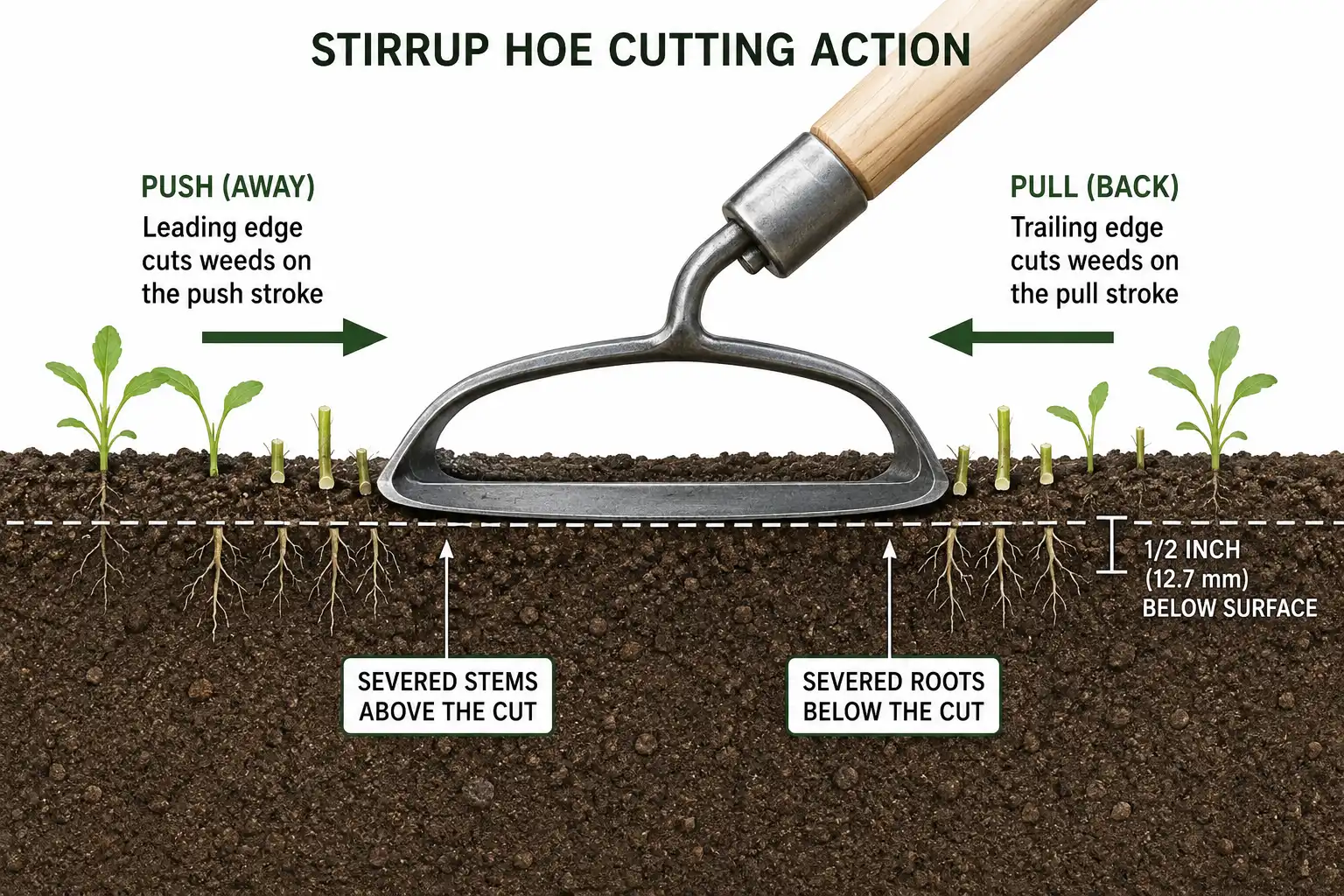
It slices instead of chops. A push-pull motion shears weeds off at the root line rather than digging and flipping soil. That matters. Shallow cultivation keeps moisture in the ground and leaves the soil structure alone, so you disturb fewer weed seeds waiting to sprout. It works best on small thread-stage weeds, the ones barely up. A Dutch hoe, by contrast, only cuts on a forward push, so the stirrup gives you twice the cutting per pass.
How to Choose a Stirrup Hoe for Weeding
Choosing a stirrup hoe for weeding comes down to five things: blade steel, frame build, handle, head width, and weight. Match each one to your soil and your rows.
Blade and Frame
Look for high-carbon steel or spring steel in the blade. Both take a sharp edge and hold it through abrasive Kansas dirt. The frame should be thick and welded, not thin stamped metal that flexes and snaps under load.
Handle Material and Length
A handle length of 54 to 60 inches lets you stand straight and cuts down on back strain. Hickory and European ash give you a stiff, shock-absorbing wood handle. Fiberglass runs lighter and shrugs off weather, though it can feel less ergonomic in cold hands.
Head Width
Head width should follow your row spacing. A 6 to 7 inch head clears open rows fast. A 3 to 5 inch head fits tight spacing without clipping your crop. If you run narrow beds like tight rows of lettuce, a slim garden hoe for weeding saves a lot of crop damage.
Weight and Assembly
Heavier heads bite harder into clay. Lighter heads glide in sandy loam. Check that the head bolts on tight, since a loose connection wastes every stroke. Some models offer an adjustable blade width or angle, which helps if you weed several crops with one tool.
How to Use a Stirrup Hoe for Weeding
To use a stirrup hoe for weeding, stand upright, drop the blade about a half-inch into the soil, and work a smooth push-pull stroke down the row. The leading edge cuts on the push, the trailing edge cuts on the pull, so you sever weeds at the roots in both directions.
Keep the blade at a shallow angle and skim the surface. You are slicing, not digging. Going deeper wastes energy and drags up buried seeds. Let the sharp edge do the work.
Timing beats muscle. Hit weeds young, at the thread-stage when they show as barely visible white threads. Those die from a single pass. Older weeds with real roots fight back. Dry, sunny afternoons work best, since cut weeds wilt on top of the soil instead of re-rooting.
Work slowly near young transplants. The same care applies when you’re thinning carrot seedlings by hand. This tool shines in stone-free ground and in raised beds, where the soil stays loose. Rocky fields chip the blade and stop the glide. A stirrup hoe is one piece of a broader weed-control plan, not the whole answer.
How to Sharpen and Maintain a Stirrup Hoe
A sharp stirrup hoe blade is the single biggest factor in easy hoeing. A dull edge tears and drags. A sharp one glides through weeds like butter.
Clamp the head in a vise. Run a 10-inch mill bastard file along the original bevel angle, pushing in one direction and lifting on the return. A stirrup hoe cuts on both edges, so sharpen the blade on both faces, working from inside the loop outward. Ten to fifteen strokes per edge usually restores it. Then knock the small burr off the flat back.
For rust prevention, scrape off the soil and dry the blade after every use, then wipe the carbon steel with a light oil. Treat wood handles a couple of times a season with boiled linseed oil to stop cracking. Keeping a small hand file in a back pocket and touching up the edge right in the field before a big weeding session is a useful habit.
Stirrup Hoe vs Dutch Hoe (and Other Hoes)
A stirrup hoe uses a back-and-forth, push-pull oscillating blade, while a Dutch hoe cuts on a forward slicing motion only. The stirrup wins on control for most growers because it cuts on the pull, so you never reset your stance between strokes.
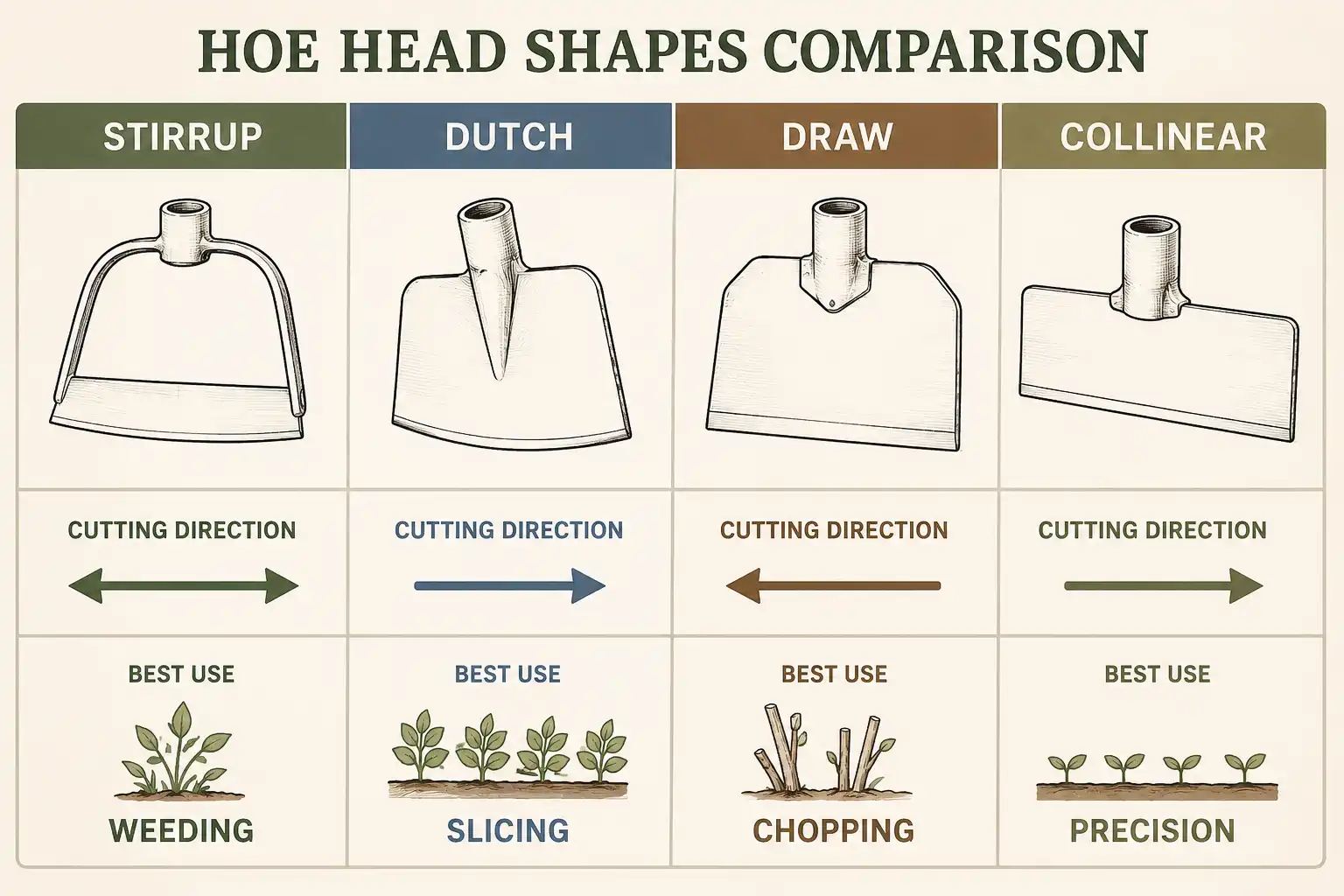
Here’s how the common hoes stack up:
- Dutch hoe: cuts on the forward push, good for open ground, one direction only.
- Draw hoe: chops downward and drags soil, better for hilling and breaking crust than fine weeding.
- Collinear hoe: a thin, flat blade on an angled handle, built for skimming tight spaces while standing up.
- Hula hoe: just another name for the stirrup, with the same oscillating action.
Your soil type decides a lot. In loose loam, any of these glide. In heavy clay, the stirrup’s thin blade and two-way cut save the most effort. The best stirrup hoe for weeding earns its keep when your rows are long and your weeds are still small.
FAQs about Stirrup Hoe for Weeding Rows
What is a stirrup hoe used for?
How do you use a stirrup hoe correctly?
What is the difference between a stirrup hoe and a Dutch hoe?
Will a stirrup hoe cut large or established weeds?
What size stirrup hoe blade do I need?
How do you sharpen a stirrup hoe?
Does soil type matter for a stirrup hoe?
Can a stirrup hoe do anything besides weeding?
Final Thoughts on Stirrup Hoe for Weeds
Match the tool to your ground and weed early, and any of these will serve you for years. For buy-it-for-life quality, to hang the Hoss Stirrup Hoe in your shed. For heavy clay that eats cheap steel, the Rogue Scuffle Hoe is the one.
On a tight budget or for light beds, the DonSail loop hoe or the Flexrake Hula-Ho covers you. Stay ahead of weeds by pairing it with mulch between the rows. The right stirrup hoe for weeding pays for itself the first summer.