Can You Plant Onions in July? Greens Yes, Big Bulbs No
Sets go on clearance in July, and beds open up once the garlic comes out. So the real question is whether you can plant onions in July and still harvest something worth the space. You can, but the type you choose decides the outcome.
Yes, with limits. Plant onions in July for scallions, salad onions, and perennial types, all of which grow without a bulbing signal. Storage bulbs started this late build too few leaves and finish small.
Why Day Length Decides What a July Onion Becomes
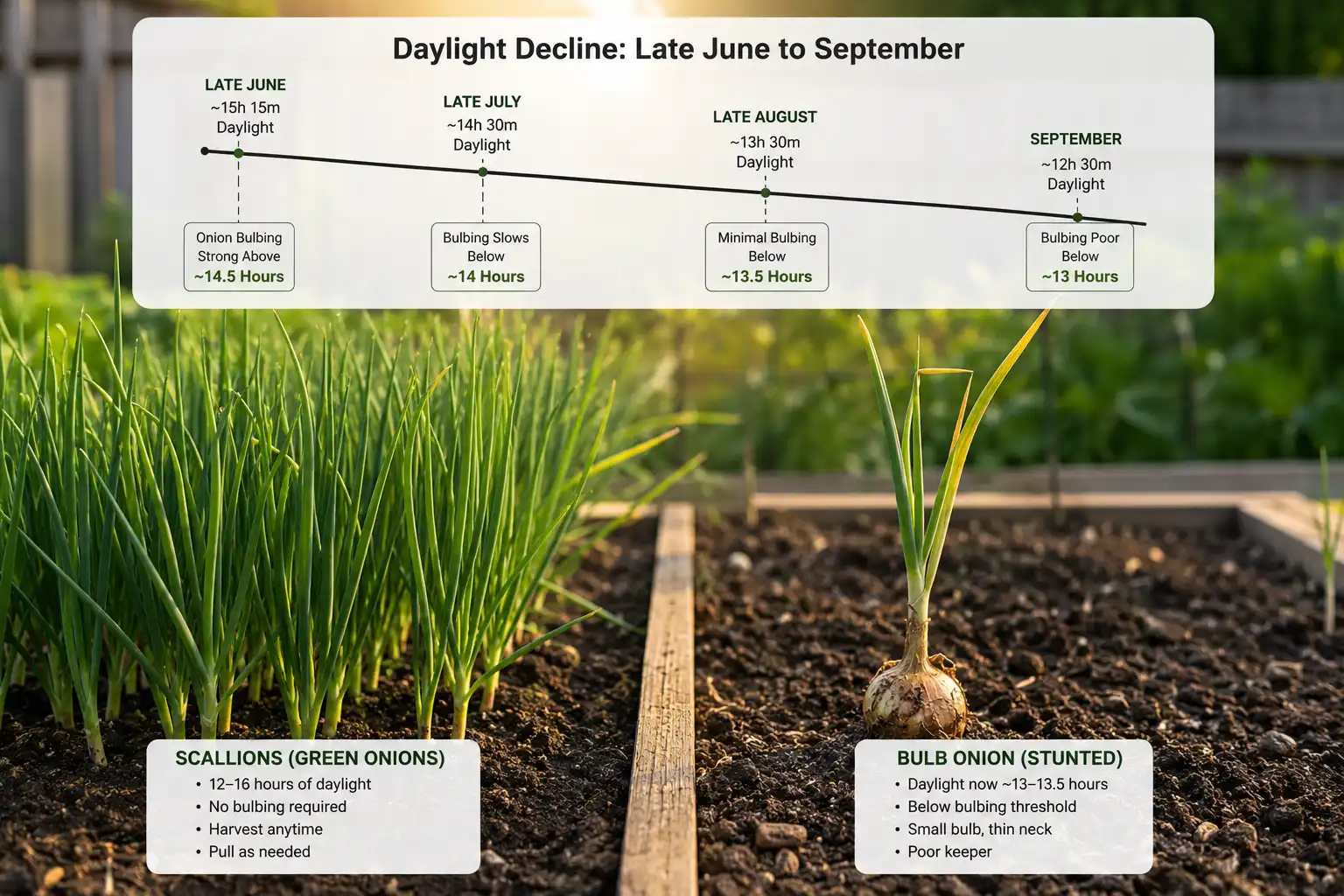
Day length, not the calendar, decides whether an onion forms a bulb. Onions build leaves first. Then they switch to bulbing once daylight crosses a threshold set by the variety. The University of Georgia Extension onion production guide lists those thresholds. Short-day varieties bulb at 10 to 13 hours of daylight. Intermediate types need 13 to 14 hours. Long-day types wait for more than 14.
July sits on the wrong side of that curve. Daylight peaks at the solstice in late June, then shortens every week after. So a seed sown in July gets only a few weeks of leaf growth before the switch arrives. Each leaf becomes one ring in the finished bulb. Few leaves therefore always produce a small onion.
Nebraska Extension describes the same failure from another angle. Short-day onions grown in northern gardens begin bulbing too soon. The plant has not built enough leaves yet, so bulbs come out disappointingly small. A midsummer sowing creates that identical leaf shortage on purpose.
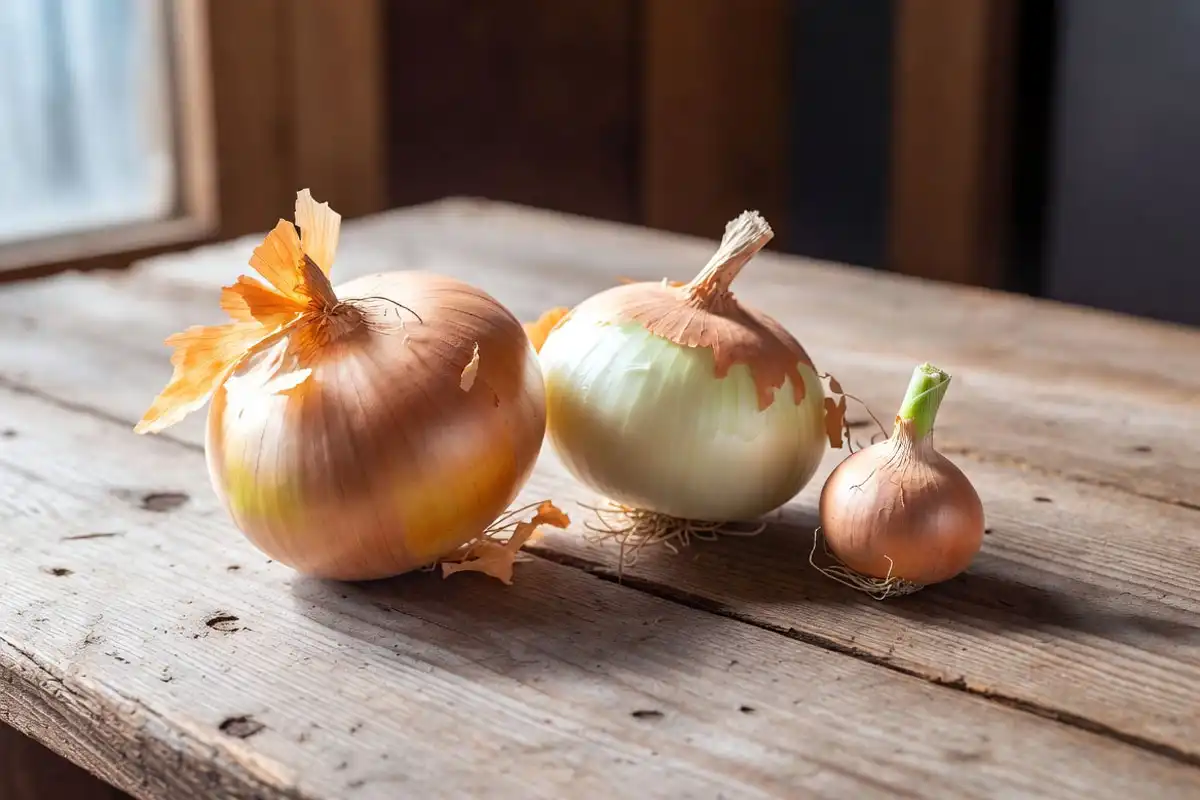
What You Get When You Plant Onions in July
A July sowing gives you greens, not storage onions. The table below sorts the common options by what actually finishes.
| Onion type | What sets the harvest | Result from a July start |
|---|---|---|
| Bunching onion (Allium fistulosum) | Plant size, not day length | Full scallion crop in roughly 60 to 70 days |
| Bulb onion from large sets | Pulled young as greens | Usable green onions in 4 to 6 weeks |
| Bulb onion from seed for storage | Daylight above the variety threshold | Thin necks, few leaves, undersized bulbs |
| Overwintering bulb onion from seed | Spring daylight after a cold rest | Oversized by winter, high bolting risk |
| Perennial allium such as walking onion | Established roots | Greens the following spring |
Iowa State University Extension puts most storage cultivars at 90 to 120 days from planting. Count that forward from mid July. The crop then lands in late fall, long after daylight drops below every bulbing threshold. That arithmetic, rather than frost, is what rules out storage onions.
Which Onions Are Worth Sowing in July
Bunching onions and scallions
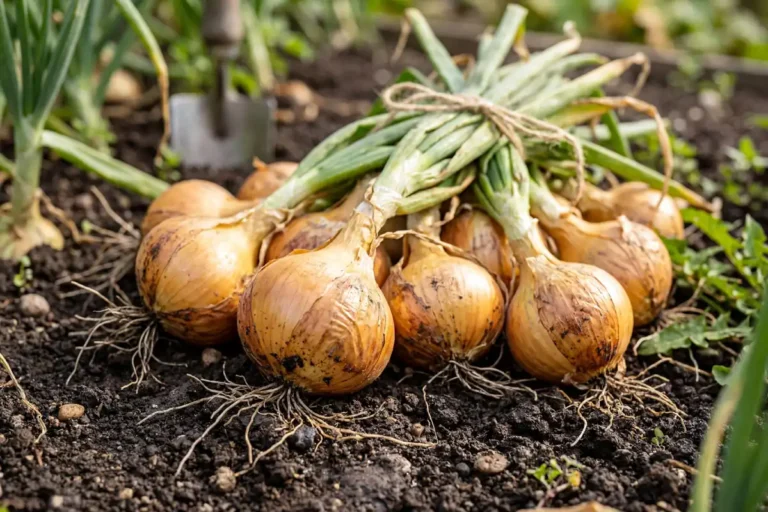
Bunching onions ignore day length entirely. University of Minnesota Extension notes that scallions, or Allium fistulosum, produce green and white stalks and never form a bulb. Since there is no bulbing signal to wait for, latitude and sowing date stop mattering. Oregon State University treats green bunching onions as a 60 to 70 day crop. So a mid July sowing reaches pulling size by mid September.
Reliable summer performers include Evergreen Hardy White, Tokyo Long White, and White Lisbon. All three hold up in heat and tolerate close spacing. The same sowing also covers spring onion planting if you leave part of the row standing through fall.
Large sets pulled young for greens
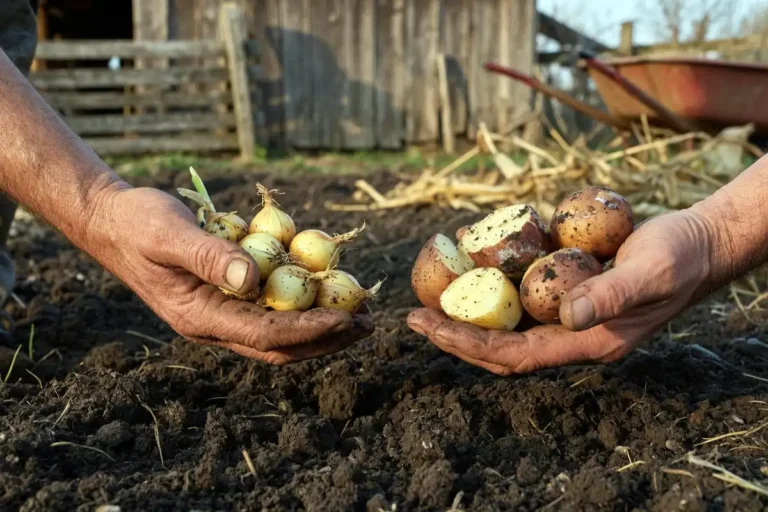
Large sets are the fastest July option. Iowa State University Extension recommends splitting sets by size before planting. Sets under half to three quarters of an inch develop best into mature bulbs. Larger ones flower instead. Nebraska Extension explains why. Sets have already completed one growing season, which pushes them toward bloom rather than bulb.
That tendency ruins a storage crop, but it costs nothing here. Plant the oversized sets you would otherwise discard, then harvest the tops. Iowa State puts green onions at 4 to 6 weeks after planting.
Perennial alliums
Perennial alliums pay off next season, not this one. University of Minnesota Extension groups the Egyptian walking onion, Allium cepa var. proliferum, with the green onions home gardeners can grow. Its topsets ripen through mid and late summer. So July and August are the natural time to break a cluster apart and replant. Check walking onion timing before you set the bulbils, since depth and spacing differ from seed sowing.
How to Sow Green Onions in July Heat
Heat, not cold, is the limiting factor for a July sowing. Onion seed germinates across a wide range, but the top of that range matters in midsummer. UC Agriculture and Natural Resources puts the optimum soil range at 65 to 85 degrees Fahrenheit. The maximum is 95 degrees. Emergence takes roughly 3.6 days at 77 degrees, then stretches to 12.5 days at 95.
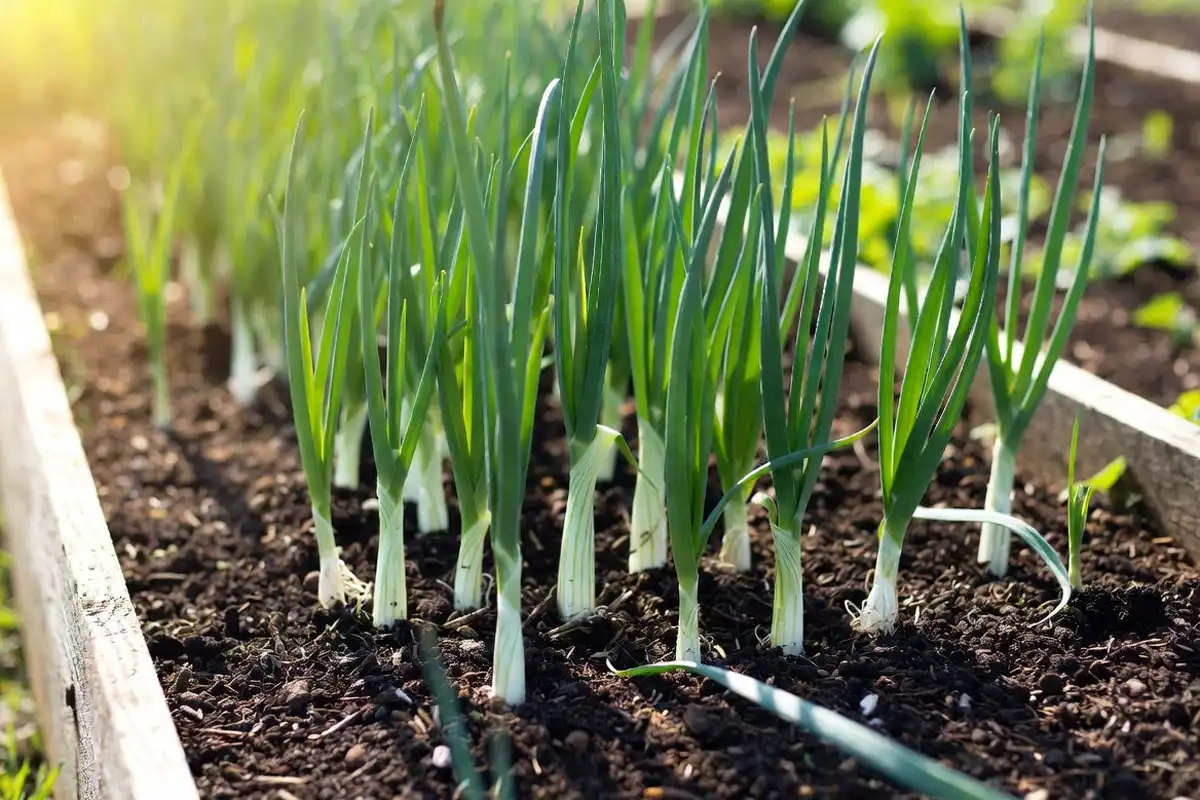
- Sow into cooled soil. Water the bed the evening before, then seed in the morning while the profile is still cool.
- Set depth at a quarter to a half inch, following University of Minnesota Extension guidance for a two inch band with rows 12 to 18 inches apart.
- Thin to one plant per inch once seedlings stand up. Crowded rows stay thin and weak.
- Shade the bed for the first two weeks. A 30 to 40 percent shade cloth takes the edge off surface temperature.
- Plant large sets an inch to an inch and a half deep, close enough to touch, since you pull them young.
- Pull at pencil thickness. Cutting an inch above the crown lets bunching types push a second flush.
Bare soil in July runs far hotter than the air. So take a reading with a soil thermometer at seeding depth rather than guessing from the forecast. Moisture is the other daily job. Oregon State University describes onions as shallow rooted. Its guidance keeps the top foot of soil at 65 to 70 percent of field capacity. In western Oregon, 12 to 15 inches of water carries a 60 to 70 day crop. A short mid morning cycle usually beats one long soak. Also, onion watering needs rise sharply once daytime highs pass 90 degrees.
Is July Too Early to Start Overwintering Onions?
Yes, in nearly every region. Oregon State University reports an August to mid September window for seeding overwintered onions. The earlier dates suit the most bolt resistant varieties only. The target is a plant about a quarter inch in diameter as it goes dormant. A July sowing overshoots that size badly.
University of Georgia Extension states the consequence directly. Its guidance puts plantbed seeding in September, ideally the second and third weeks. Earlier seeding produces transplants that grow too large. Those oversized plants then bolt in spring, sending up seedstems instead of sizing a bulb. Notably, UGA also records the one exception. Growers seed early on purpose when the target is salad onions. That is exactly the July use case, and it confirms the split.
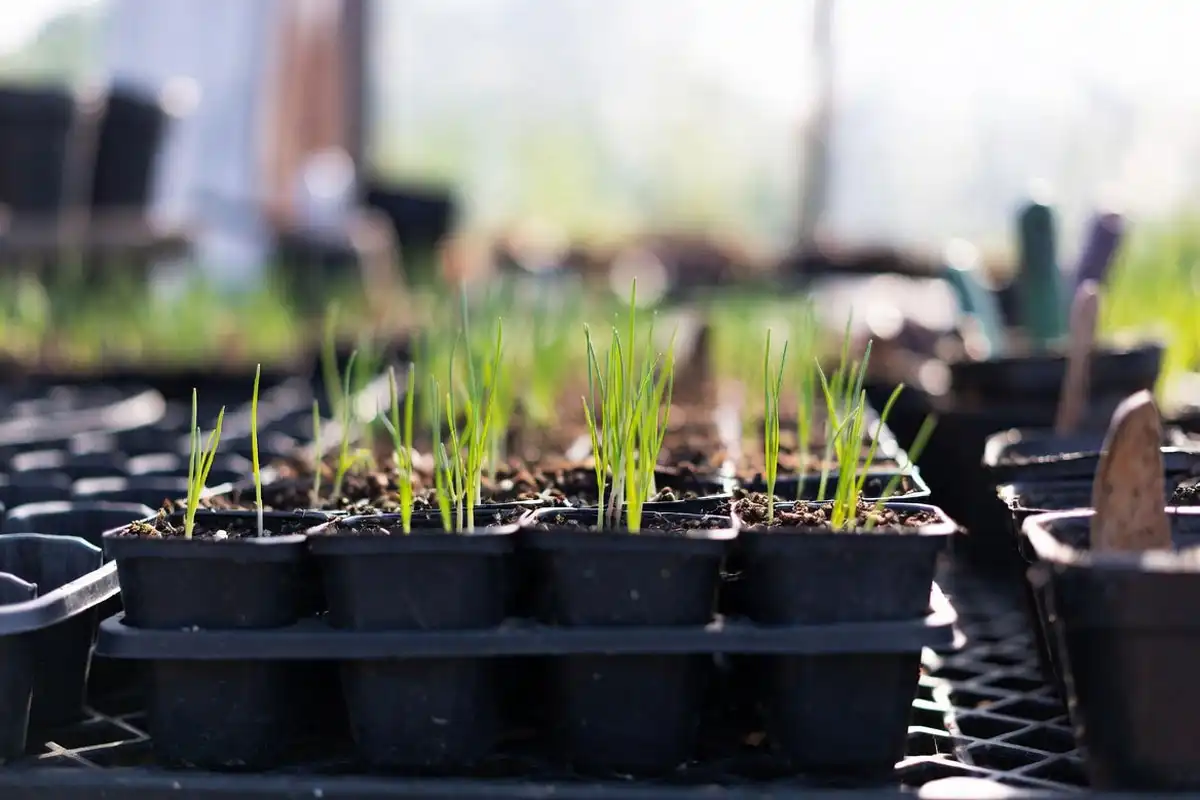
Two situations still justify a late July start. Cool maritime areas of the Pacific Northwest sometimes sow in the last days of the month. Short season northern gardens may also need the extra establishment time before hard freeze. Even then, watch the target size rather than the date. If you are working from seed either way, review starting onions from seed for tray timing and hardening off.
July Onion Planting by Region
Regional differences change what you sow in July and what you put on the calendar instead.
| Region | Sow in July | Schedule instead |
|---|---|---|
| Deep South and Gulf Coast (zones 8 to 9) | Scallions and salad onions under afternoon shade | Short-day plantbeds in September, transplants late fall |
| Southeast Piedmont (zones 7 to 8) | Bunching onions, large sets for greens | Short-day seed in early fall, transplants in winter |
| Corn Belt and Central Plains (zones 5 to 6) | Bunching onions, sets for greens | Long-day or intermediate seed in trays in late winter |
| Pacific Northwest west of the Cascades (zones 7 to 8) | Late July overwintering sowing, bolt resistant types only | Main overwintering sowing August to mid September |
| Upper Midwest and Northern Plains (zones 3 to 4) | Bunching onions only, harvested before hard frost | Long-day seed in trays in February |
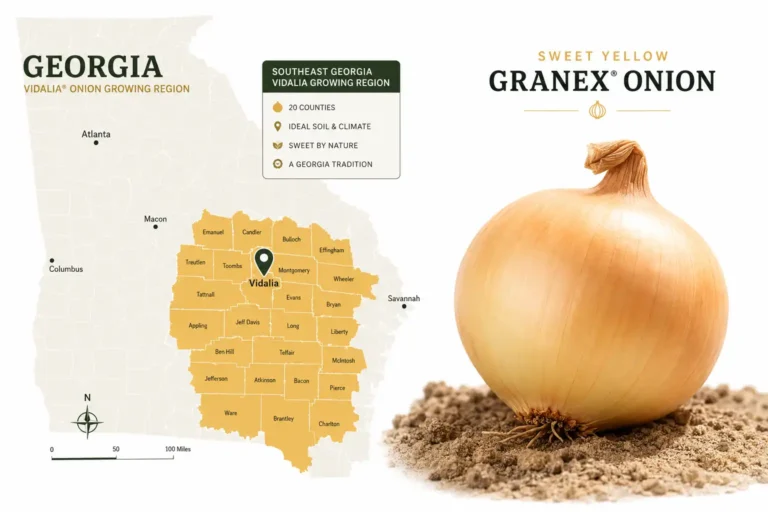
Georgia is the clearest case. University of Georgia Extension ties the state’s Yellow Granex crop to September plantbeds and late fall transplanting. So a July bulb attempt there has no path to a spring harvest.
What Goes Wrong With July Onion Plantings
Most July failures trace back to four decisions.
- Expecting bulbs from sets. Sets planted now give tops. Harvest them young rather than waiting on a bulb that will not size up.
- Sowing overwintering seed too early. Oversized plants bolt in spring instead of bulbing, the risk University of Georgia Extension flags for early seeding.
- Seeding into baked soil. Above 95 degrees, emergence stalls and stands come up ragged. Shade cloth and evening irrigation fix most of it.
- Mismatching day length to latitude. Long-day types in the South make tops and no bulb. Short-day types in the North bulb early and stay small, the outcome Nebraska Extension describes.
Thin, pale tops often point to nitrogen shortage rather than heat damage. Work compost in before sowing, then side-dress once seedlings reach three inches.
FAQs on Planting onions in July
Can onion sets planted in July produce bulbs by fall?
What is the fastest onion to plant in midsummer?
Is July too late to plant onions in the South?
Can you grow July onions in containers?
What to Sow Now and What to Put on the Calendar
Sow bunching onions and oversized sets in July, and treat the row as a greens crop from the start. Hold storage onions for their proper window. Overwintering seed goes in from August through mid September. The South uses September plantbeds. Northern gardens start trays in late winter. Perennial alliums can also go in now for next spring. Once you match the type to the daylight you actually have left, a midsummer row stops being a compromise. Growers weighing a later start can compare the tradeoffs in fall onion planting.