How to Irrigate Carrots Early to Prevent Crusting and Gaps: 5 Tips for Even Germination, No Gaps
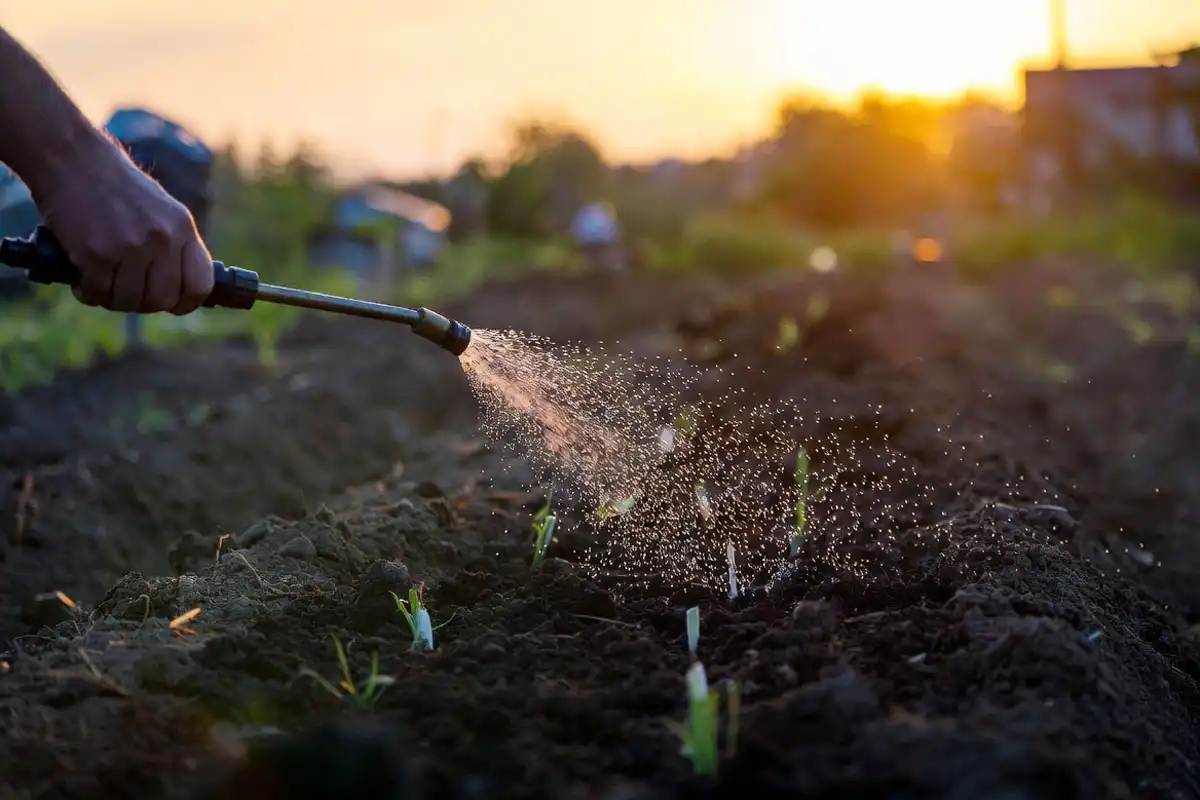
Irrigate carrots early by keeping the soil surface evenly moist with light, frequent waterings that avoid forming a crust. This guide covers seedbed prep, irrigation set-up, and a simple early routine that prevents crusting and stand gaps. Carrot seed sits shallow, so a dry afternoon or a pounding sprinkler droplet can kill germination. You will learn how to run gentle irrigation sets, check moisture in the seed row, and adjust for wind and soil type. Quick fixes when crusting starts and what to change after seedlings emerge are also covered.
Use overhead sprinklers or micro-sprayers that deliver a soft mist. Water in short sets often enough to keep the seed row damp from sowing through emergence. Stop before puddles form, because puddles move seed and seal fine soils. Add a light cover like row fabric or a thin mulch when the surface dries fast.
What causes crusting and gaps in carrot rows?
Soil crusting forms when fine particles seal into a hard skin after irrigation or rain. That skin blocks air exchange and stops carrot seedlings from pushing through.
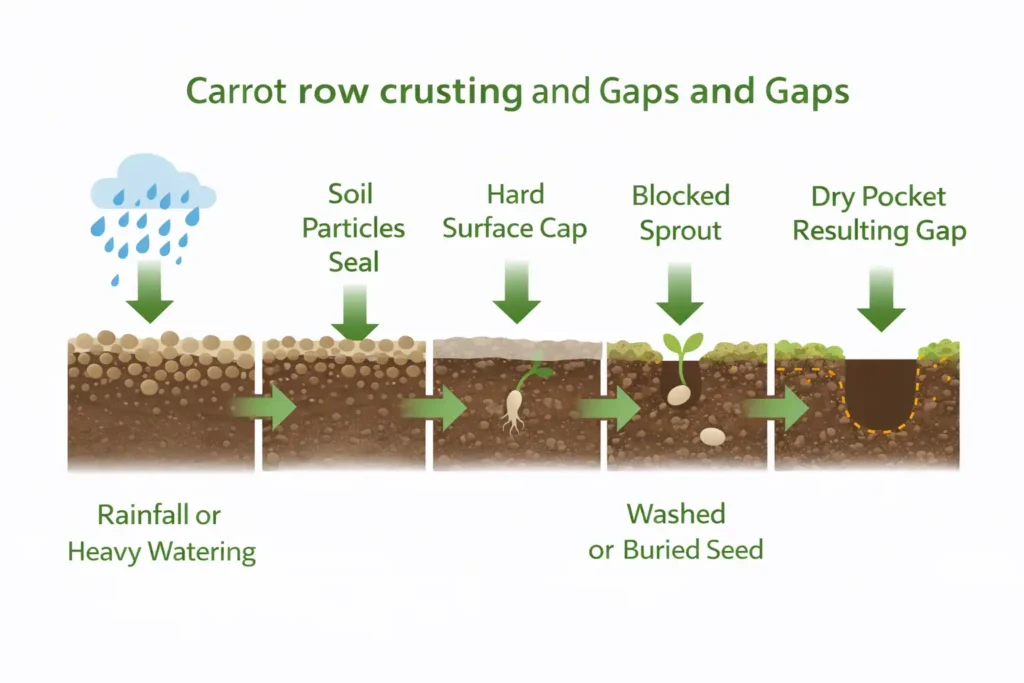
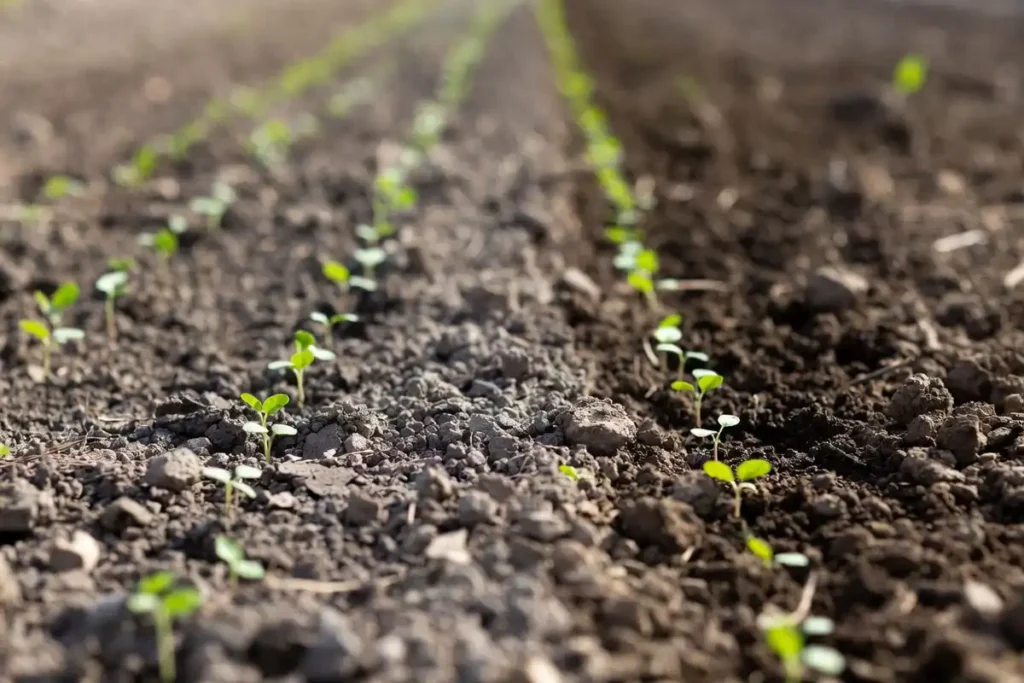
Stand gaps follow a simple chain. Seed starts germination, the seed zone dries, and the sprout dies. Gaps also form when water washes seed, buries seed, or leaves dry pockets along the row.
When do carrots need their most careful irrigation?
Carrots need steady surface moisture from sowing until the row emerges evenly and seedlings hold the soil. This window lasts longer than most vegetables because carrot germination runs slow in cool or drying weather.
The highest risk days are windy, sunny days that dry the bed top fast. The next highest risk is the day after a hard rain or a heavy irrigation that forms a sealed cap.
Where does crusting hit hardest?
Crusting hits hardest on bare beds with silt loam or fine clay at the surface. Those soils seal when droplets break aggregates and drying tightens the surface.
Crusting also shows up on smooth, over-worked beds that lack organic matter. Sloped ground adds another problem because runoff strips the seed row.
What irrigation method protects carrot germination best?
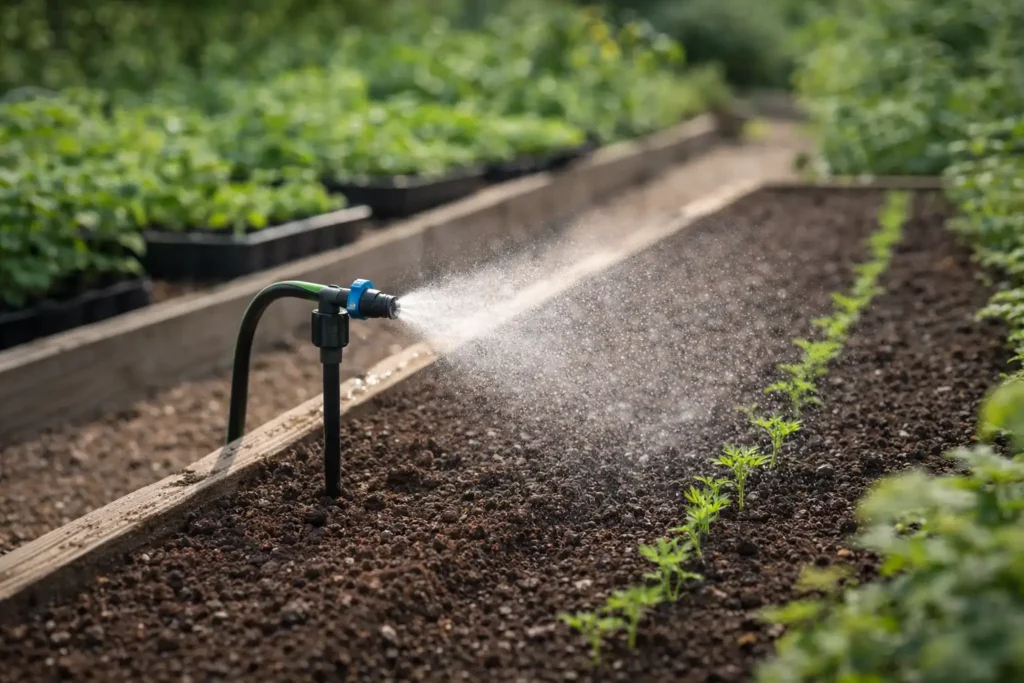
A gentle overhead sprinkler or micro-sprayer gives the most reliable surface moisture for carrot seed. Overhead wets the whole bed top, which prevents dry streaks that turn into gaps.
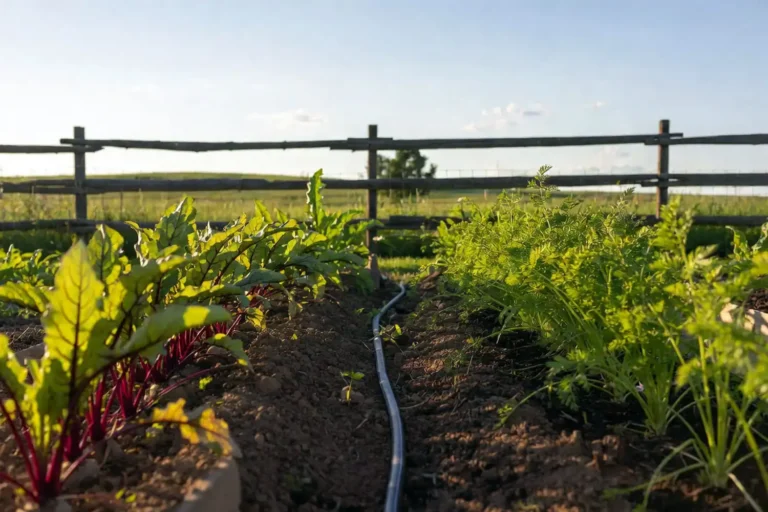
Drip irrigation works after carrots root deeper, but drip often leaves the surface dry during germination. If you are weighing systems, see this breakdown of drip tape and sprinkler irrigation choices so you match the method to the growth stage.
What sprinkler output reduces crusting?
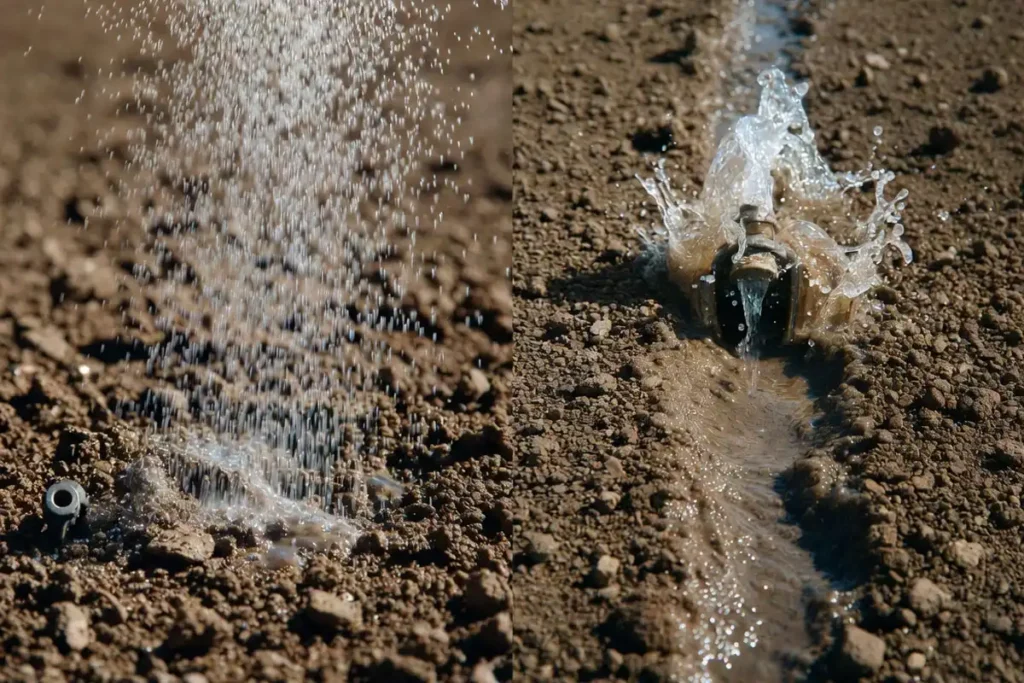
A fine droplet pattern reduces crusting because it limits impact on the soil surface. Low-impact sprinklers, oscillating sprinklers, and micro-sprayers keep the bed top open longer.
A hard stream causes trouble fast on silt soils. It pounds the surface, pushes seed downhill, and leaves a sealed strip right over the row.
How do you prepare the bed so water spreads evenly?
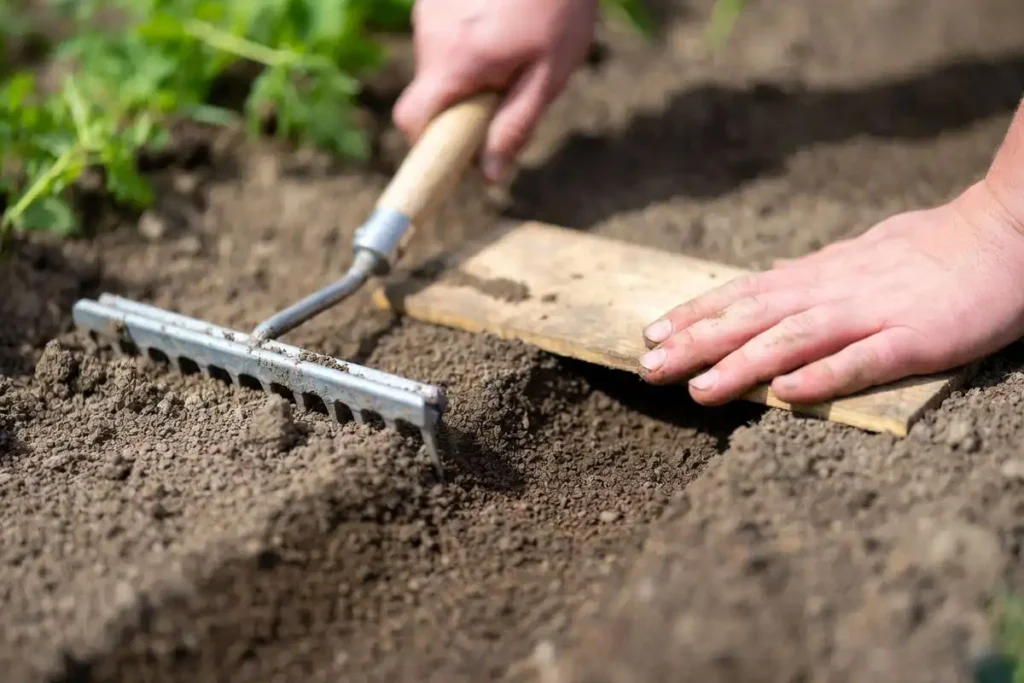
A firm, fine, level seedbed spreads water evenly and reduces dry pockets. Firm soil also improves seed-to-soil contact, which helps moisture move into the seed.
Start with good planting fundamentals. If you want a full walk-through on row prep and seeding, follow these practical steps for planting carrots and apply the irrigation plan below right after sowing.
What bed prep reduces crust risk before you irrigate?
A crust forms faster on powdery soil. Stop aggressive tillage that leaves flour-like fines at the surface, especially on silt.
Organic matter improves aggregation and helps water enter without sealing. Build that structure over time with compost, residues, and rotation, as outlined in our guide to improving soil fertility naturally.
Step-by-step early irrigation routine to prevent crusting and gaps
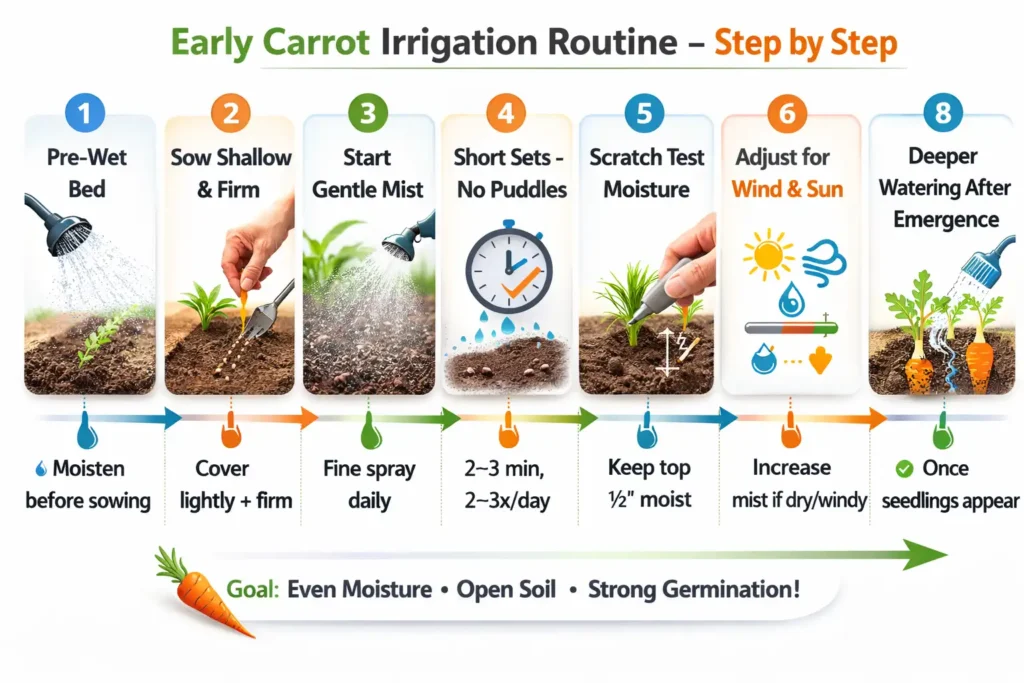
- Pre-wet the bed before seeding: Bring the bed to an even moisture level so the row starts uniform. A pre-wet bed also reduces the urge to overwater right after seeding.
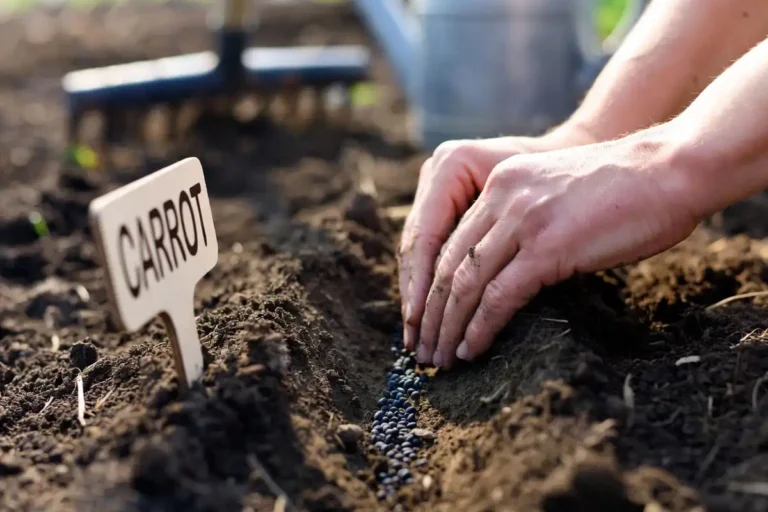
- Sow shallow and firm the row: Firming reduces air gaps around seed. Air gaps dry first and create patchy germination.
- Start irrigation immediately after sowing: Apply water gently so the row stays damp without moving seed. Early watering sets the moisture pattern for the whole bed.
- Use short irrigation sets, then stop before puddles: Short sets wet the seed zone without sealing the surface. Puddles signal excess application rate or poor infiltration.
- Check the seed row moisture, not the walkway: Scratch the surface lightly over the row and feel the soil beneath. Irrigate again when the row top dries and lightens in color.
- Adjust for wind and sun the same day: Wind strips moisture from the bed top and creates crust risk. Add an extra light set when the surface dries between checks.
- After a rain or heavy set, focus on crust prevention: Run a gentle irrigation to keep the cap from hardening as it dries. Protect the bed top with a cover if the soil seals easily.
- After emergence, transition toward deeper watering: Reduce surface-wetting frequency as seedlings anchor and root depth increases. Use your season plan to calculate crop water needs once carrots move beyond germination irrigation.
What add-ons prevent crusting without washing seed?
A moisture buffer on top of the row slows drying and reduces capping. These options work well when used lightly so seedlings still push through.
- Row cover or light fabric: It cuts wind at the soil surface and reduces evaporation. It also softens droplet impact if you irrigate through it.
- A thin mulch layer: It shades the surface and holds moisture. Use fine material so the row does not smother. For mulch types and placement, see these mulch options for vegetable beds.
- A light topdress over the seed line: Screened compost or fine soil reduces crusting compared with raw silt. Keep the layer thin and uniform.
What do you do if a crust forms before carrots emerge?
Soften the crust with a gentle irrigation that wets the top without ponding. A wet crust stays flexible and gives seedlings a path up.
If the bed top dries into a hard cap, avoid aggressive raking. Heavy disturbance moves seed and breaks emerging sprouts. Use water first, then reassess after the surface relaxes.
If a crust forms repeatedly, change the surface conditions. Add a light cover, reduce droplet impact, and avoid heavy sets that seal fine particles.
What do you do if you already have gaps?
Gaps have causes, and the fix depends on what you find in the row.
Start with a short diagnosis.
- Dig a small section in a gap. Look for sprouted seed that dried out, seed that washed deeper, or seed that never swelled.
- Check sprinkler coverage. Look for dry stripes, wind shadow, or end-of-line pressure drops.
- Look at the surface texture. A shiny sealed skin points to capping from droplet impact and drying.
Then choose a response.
- If seed dried mid-germination: Re-seed the gap early and run the moisture routine tighter for that bed.
- If seed washed or buried: Reduce application rate, shorten sets, and level the bed top before re-seeding.
- If a crust blocked emergence: Add a surface buffer and switch to finer droplets for future plantings.
How do you avoid disease when you keep the surface damp?
Avoid standing water around seedlings. Standing water increases damping-off pressure and slows root growth.
Improve airflow and dry the foliage between irrigations. If you see pinched stems or sudden seedling collapse, use these damping-off prevention steps and adjust irrigation to reduce saturation.
What mistakes create crusting and poor carrot stands?
These errors produce crusting and gaps fast.
- One heavy irrigation, then long dry time
- High-impact sprinkler streams that beat the seed row
- Uneven bed shaping that creates runoff channels
- Powdery, over-tilled soil at the surface
- Irrigating only the walkway and skipping the actual seed line
- Staying on drip during germination when the surface stays dry
What safety checks matter when irrigating beds and field rows?
Water and power create real hazards on a farm and in a backyard garden.
Shut off power before you move pumps, timers, or cords. Keep electrical connections off wet soil and away from spray patterns.
Relieve pressure before you change sprinklers or fittings. Wear eye protection when you work around pressurized lines and clogged nozzles.
Watch footing on wet plastic mulch and wet headlands. Slips happen fast when you rush around sprinklers.
Conclusion
Early carrot irrigation protects stand establishment by keeping the seed zone consistently moist while preventing the soil surface from sealing. Gentle droplets, short sets, and frequent moisture checks stop crusting before it starts. A firm seedbed and a light surface buffer reduce drying and protect the row. Once seedlings emerge and anchor, shift from surface-wetting to deeper, steadier irrigation that supports root growth.