What to Plant After Corn to Rebuild Soil and Boost Yield
Corn is one of the hungriest crops in your rotation. Knowing what to plant after corn sets up your soil and your next crop for a strong season. Soybeans lead the list, but the best pick depends on your goal.
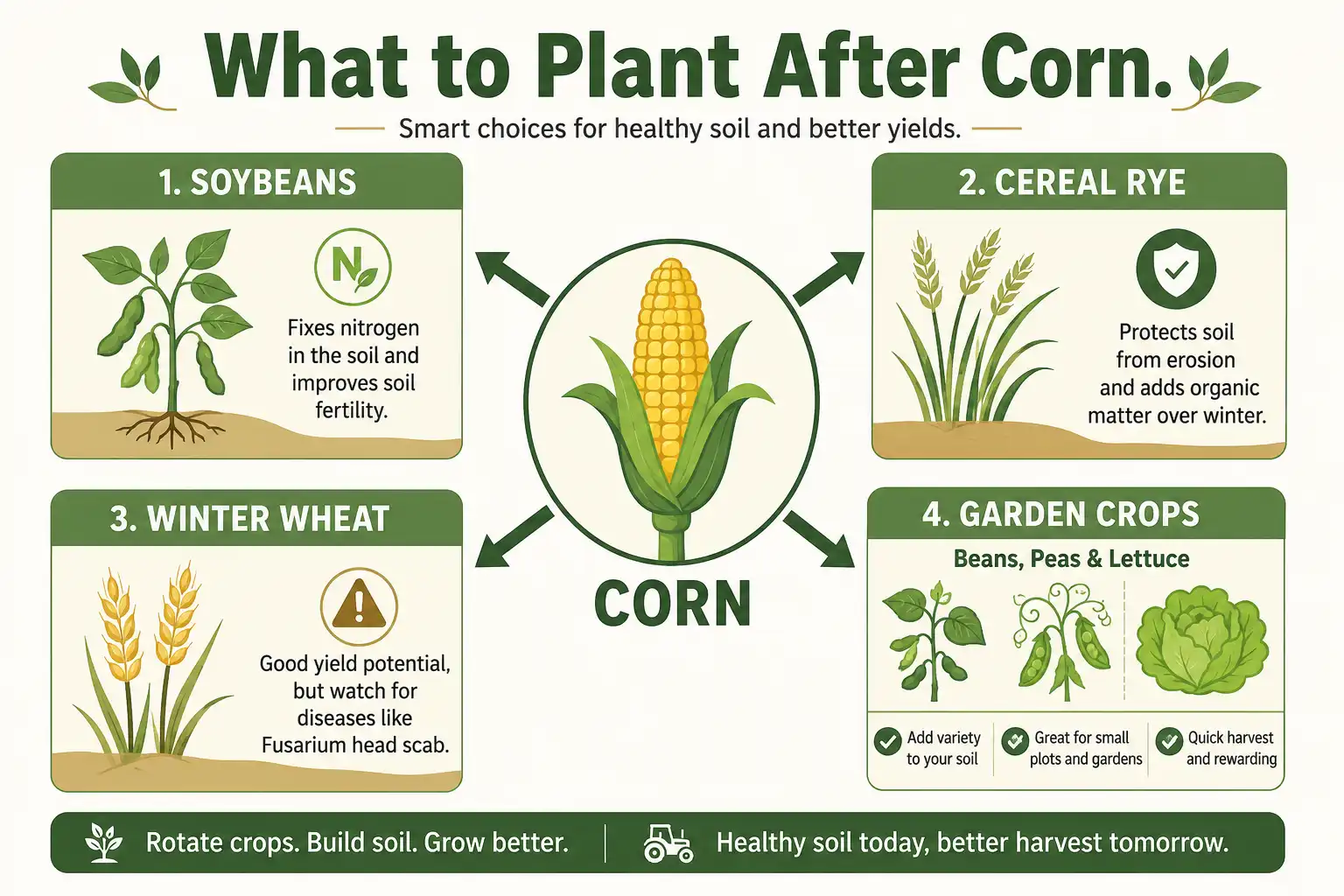
The best crops to plant after corn are soybeans, cereal rye, oats, or winter wheat. Soybeans win most often because they fix nitrogen and break corn pests. In a garden, follow sweet corn with beans, peas, or leafy greens.
Best Crops to Plant After Corn at a Glance
Here is how the main options stack up. Pick based on whether you farm acres or garden beds, and what you want the next crop to do.
| Crop | Why it works after corn | Watch out for | Best for |
|---|---|---|---|
| Soybeans | Fix nitrogen, break corn diseases and rootworm | No major downside | Most row-crop fields |
| Cereal rye (cover crop) | Soaks up leftover nitrogen, guards soil, blocks weeds | Skip if certified wheat is coming | Winter cover before soybeans |
| Oats | Fast growth, low disease carryover, good forage | Winterkills in the north | Nurse crop, forage, light rotation |
| Winter wheat | Winter cover plus a cash grain | High head scab risk on corn residue | Fields you can manage for scab |
| Legume cover (clover, hairy vetch) | Adds nitrogen for next year’s corn | Slower fall growth than rye | When you are headed back to corn |
| Garden beans and peas | Fix nitrogen right in the bed | Time it to your first frost | Home gardens after sweet corn |
Why the Crop After Corn Matters
Corn pulls a heavy load out of the soil. It takes large amounts of nitrogen, plus potassium and phosphorus. It also builds up pests and diseases when it follows itself year after year. So your next crop has two clear jobs.
First, it should let the ground rebuild what corn stripped out. Second, it should break the pest and disease cycle corn leaves behind. Corn is a heavy nitrogen feeder. The nitrogen corn needs each acre runs high, so the soil sits short after harvest. Nail the next crop, and next season starts on better footing.
What to Plant After Corn on Row-Crop Acres
For field acres, three moves cover almost every situation: soybeans, a cover crop, or small grains.
Soybeans: The Classic Follow-Up to Corn
Soybeans are the top choice after corn for most American farmers. The corn-soybean rotation runs across the Corn Belt and the Great Plains, and the reasons stack up fast.

- Soybeans are a legume, so they fix their own nitrogen from the air.
- The rotation breaks disease cycles that drag down both crops.
- A year of beans starves out corn rootworm, since the larvae need corn roots to live.
The yield math is just as clear. First-year soybeans after corn often out-yield continuous soybeans by around 10 percent, based on University of Wisconsin research. Corn that follows those beans needs far less nitrogen too. Iowa State University put the target near 103 pounds of nitrogen per acre for corn after soybeans. Corn after corn needed about 163 pounds. That gap is real money back in your pocket.
If you are new to growing a soybean crop, the jump from corn is easier than most first-timers expect.
Cover Crops: Cereal Rye and Legume Mixes
Cereal rye is the standard cover crop after corn, especially before soybeans. It is the most winter-hardy cereal grain, so it lives through cold that kills other species. After corn harvest, rye roots dig in fast. They soak up leftover nitrogen and hold the soil against wind and runoff. Come spring, that residue smothers early weeds for your beans. The Midwest Cover Crops Council and several land-grant programs rank rye as the first pick for a corn-to-soybean gap.
If you are headed back to corn instead, a legume cover fits better. Crimson clover and hairy vetch pull nitrogen from the air and leave some for next year’s corn. They grow slower than rye in fall, so seed them early.
One warning from Nebraska Extension is worth repeating. Do not use cereal rye if certified wheat is coming to that field within five years. Volunteer rye is a headache to clean out of a wheat crop. If this is your first season adding cover crops, rye is the easiest place to start.
Small Grains: Oats and Winter Wheat
Small grains work after corn, but winter wheat comes with one big catch. Oats are the low-risk option. They grow fast in cool weather, and they carry less disease risk than winter wheat after corn. Oats also make solid forage or a nurse crop. Spring oats or fall oats both fit a corn rotation well.
Winter wheat is trickier. The fungus behind Fusarium head blight, also called head scab, survives on corn residue. Purdue Extension and Oklahoma State both flag it. Wheat after corn can be five to ten times more likely to catch scab than wheat after soybeans.
You can still grow winter wheat after corn. It just takes a plan. Start by getting winter wheat planted at the right time for your region, then work through four steps.
- Pick a scab-tolerant wheat variety.
- Break down or bury the corn residue where you can.
- Time planting to your local window, after the Hessian fly-free date.
- Spray a fungicide at early flowering if the weather turns wet.
Do those four things, and the scab risk drops to a level you can live with.
What to Plant After Sweet Corn in a Garden

In a home garden, follow sweet corn with legumes or light feeders. Sweet corn is the same hungry plant as field corn, so it leaves the bed short on nitrogen. The best next crops either put nitrogen back or ask for very little.
- Legumes: bush beans and peas fix their own nitrogen and rebuild the bed.
- Leafy greens: lettuce and spinach are light feeders that do fine in that soil.
- Root crops: carrots, beets, and radishes work once you loosen the ground.
- Alliums: garlic is a strong fall pick if your corn comes off in late summer.
Whatever you plant, work in compost first. It is one of the easiest ways to keep garden soil fertile the natural way.
What Not to Plant After Corn
Skip grain sorghum and back-to-back corn right after a corn crop. These options keep corn’s problems alive instead of breaking them.
- Grain sorghum (milo): shares corn’s pests and diseases, so it carries them over.
- Continuous corn: shows an 11 to 28 percent yield drag against a corn-soybean rotation, per Iowa State tillage trials.
- Winter wheat without a plan: high head scab risk from corn residue, as covered above.
You can grow corn after corn with heavy nitrogen and tight pest control. It just costs more and yields less, so most farmers rotate out.
How Long Until You Can Plant Corn Again?
You can plant corn again the very next year in a two-year rotation. Corn and soybeans swap places every season across most of the Midwest, and that single-year break does real work. For heavier pest or disease pressure, stretch to a three-year rotation. A common one runs corn, then soybeans, then a small grain or hay crop. In this region, the corn-and-soybean swap is the go-to, with cereal rye between them on erosion-prone fields.
How to Rotate After Corn
The short version is simple. Plant soybeans after corn when you want the biggest return for the least fuss. Reach for cereal rye when bare soil needs cover through winter. Save winter wheat for fields where you can stay on top of scab. In a garden, lean on beans, peas, and greens to bring the bed back. Whatever you choose, a written rotation plan you can look back on keeps you from planting yourself into a corner. Corn takes a lot from the ground. The right next crop hands it back.