How to Tell When Sweet Corn Is Ready in 18 Days After Silking
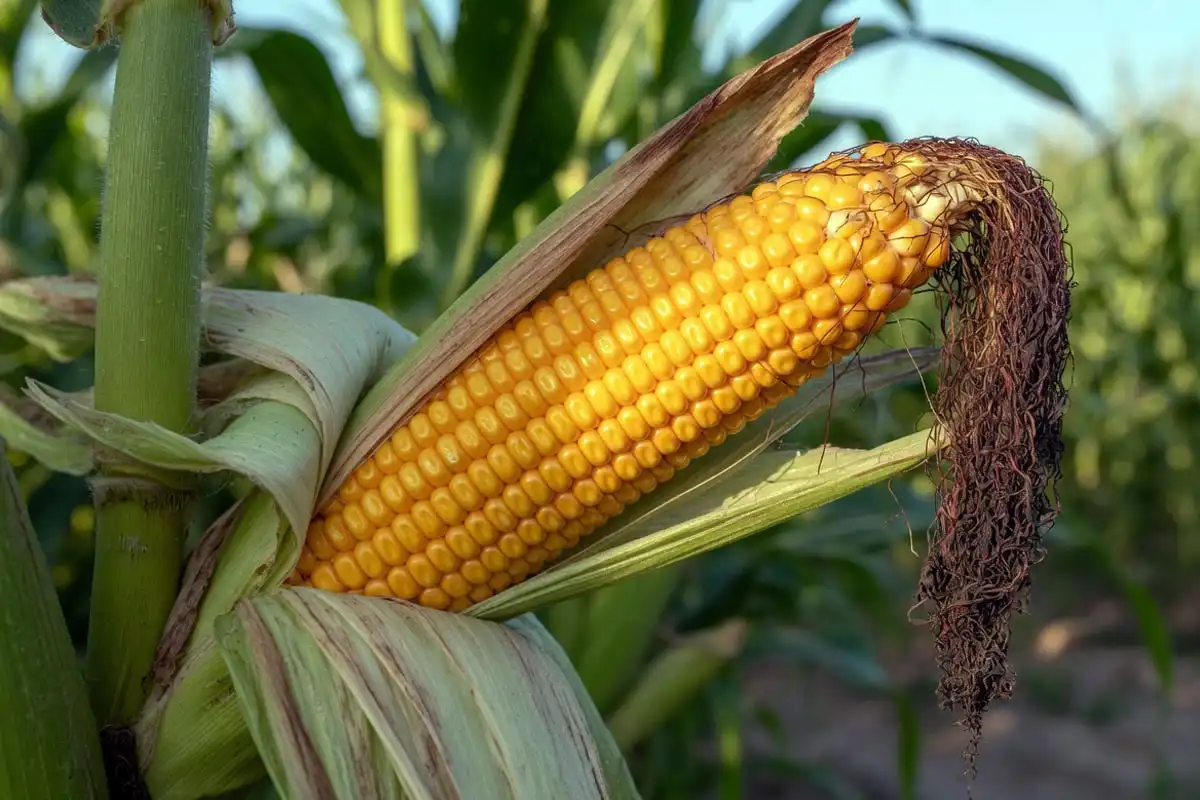
To tell when sweet corn is ready, look for silks that have turned dark brown and dried at the tips, while the ears feel plump and firm all the way to the end. This guide walks through every reliable sign to time the sweet corn harvest window correctly.
Sweet corn is ready to pick about 18 to 24 days after silking, when silks go dark brown and dry, ears feel full to the tip, and a punctured kernel releases milky white liquid. Pick in the morning for peak sugar content.
What “ready” means for sweet corn
Sweet corn reaches the milk stage when kernels fill with sweet, milky liquid. This is the window growers target. Before this stage, kernels stay watery and bland. After this stage, sugars convert to starch within days, and eating quality drops fast.
Variety matters here. Standard sugary (SU), sugar-enhanced (SE), and supersweet (SH2) types hold their sugars for different lengths of time. SH2 hybrids can stay sweet in the field for 4 to 6 extra days. SU types lose quality within 2 to 3 days after peak.
When is sweet corn ready to pick?
Sweet corn is ready 18 to 24 days after the silks first appear. Count from the day you see silks emerge on most ears in the block. Hot weather speeds this up. Cool weather slows it down by 2 to 5 days.
Most hybrids mature 60 to 100 days after planting. Check the seed packet for your hybrid’s days-to-maturity figure. Track silking dates in a notebook and set harvest reminders based on that date, not the planting date. Timing logic earlier is covered in our crop planting calendar guide.
Key signs sweet corn is ready
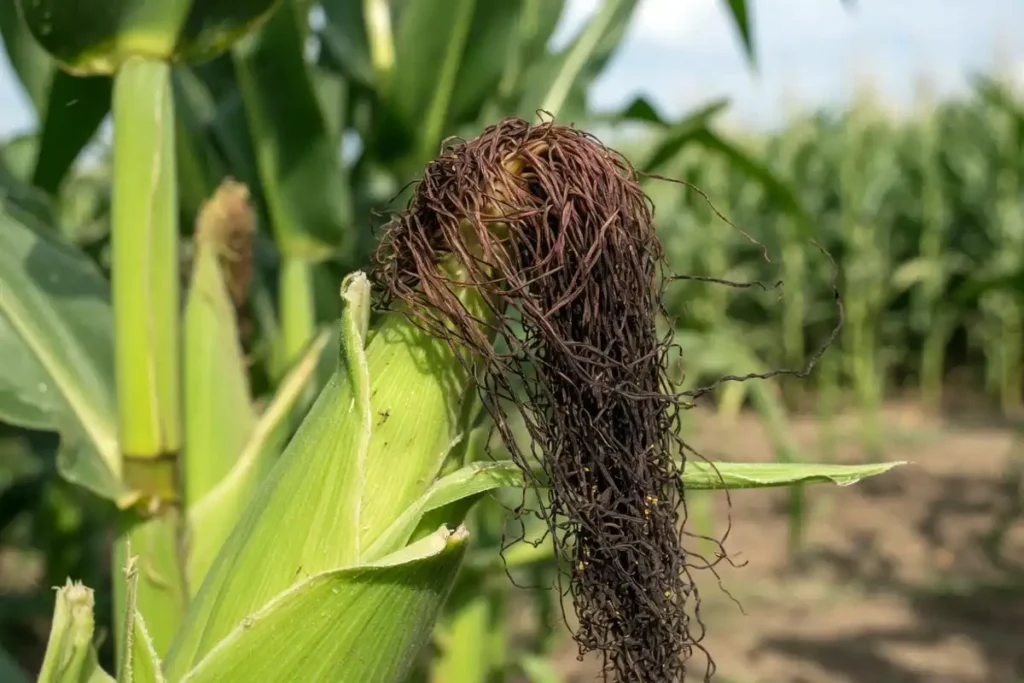
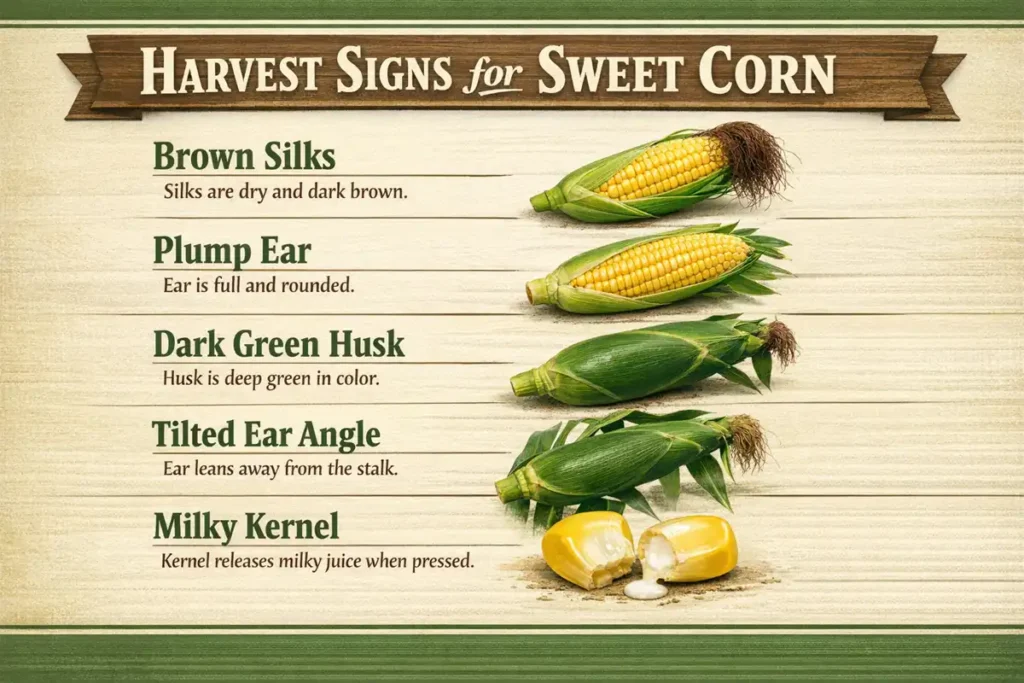
Silk color and dryness. Silks shift from pale green to dark brown. The tips feel dry and brittle, not sticky. Green silks mean wait.
Ear feel. A firm, plump ear filled to the tip signals readiness. Running a hand down the husk is a useful check. A rounded, full tip is the strongest visual cue.
Husk color. Husks stay dark green while ears mature. Pale or yellowing husks often mean the ear is past prime.
Ear angle. Ears start tight against the stalk. As kernels swell and ears gain weight, they tilt outward by 30 to 45 degrees.
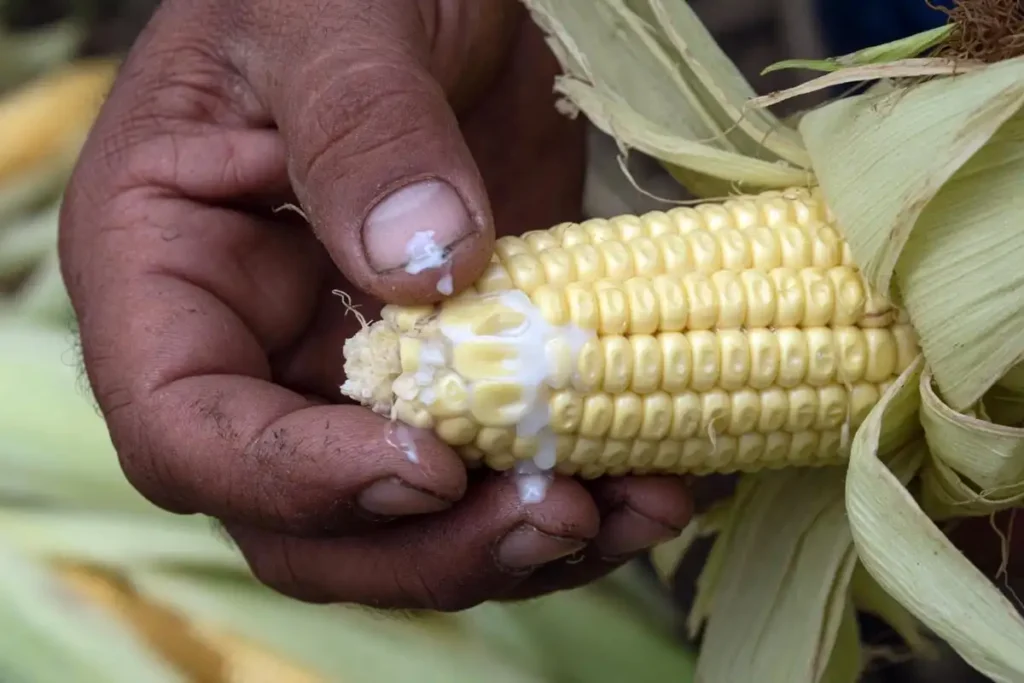
Kernel milk test. This is the field standard. Pull back a small section of husk, puncture a kernel with a thumbnail, and check the liquid.
Learn more: Understanding Corn Season in Florida
How to do the milk test step by step
- Walk the block and pick two or three representative ears.
- Peel back the husk about 2 inches near the tip.
- Press a thumbnail firmly into a kernel in the middle third of the ear.
- Watch what comes out. Milky white liquid means pick now. Clear sap means wait 2 to 3 days. Pasty dough means you are late and quality is dropping.
- If the ear is early, fold the husk back and check again in 2 days.
The University of Minnesota Extension sweet corn guide recommends the milk-stage check as the most reliable field test for harvest timing.
Where to check first in the field
Check ears in the center of the block before the edges. Edge rows mature 1 to 2 days earlier because they catch more sun and wind. The center of the block gives a true picture of the main harvest window.
On small plots, sample 5 ears per 100 row-feet. On larger fields, pull samples every 50 feet along a diagonal line across rows.
Variety differences that change timing
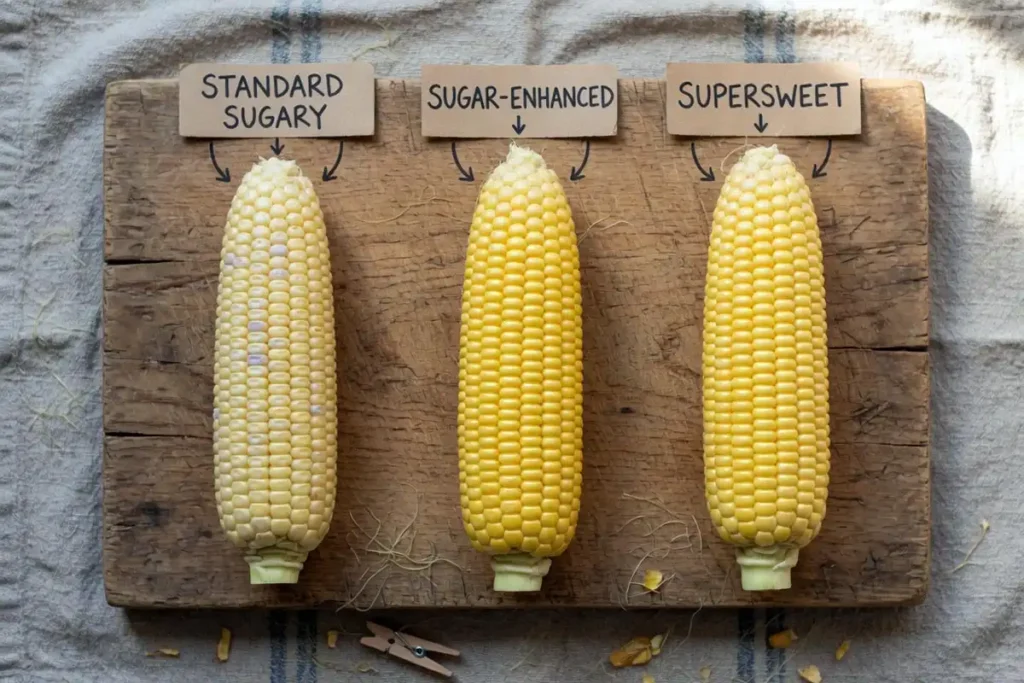
- Standard sugary (SU) hybrids hit peak sugar fast and drop fast. Pick within 1 to 2 days of the signs above.
- Sugar-enhanced (SE) hybrids hold sweetness for 3 to 4 days after peak. More forgiving for small growers.
- Supersweet (SH2) hybrids keep sugars high for 4 to 6 days. Useful for market growers who need a wider harvest window.
University of Illinois Extension research confirms SH2 hybrids retain sugars longer after the milk stage than SU types.
Common mistakes to avoid
- Picking by calendar only. Weather shifts timing by days. Trust the ear, not the date.
- Testing one ear and harvesting the whole block. Sample 3 to 5 ears from different rows.
- Ignoring silks. Dry brown silks are the first free signal, and they cost nothing to check.
- Pulling husks all the way back. A 2-inch window at the tip is enough. Full exposure invites pests and damages the ear.
- Harvesting in mid-day heat. Sugars drop after sun-up. Pick in cool morning hours and chill the ears right away.
Troubleshooting late or uneven ears
Silks are brown but the tip is not filled. Pollination was spotty. Kernels at the tip often miss pollen on hot, dry, or windy days. The rest of the ear may still eat well.
Kernels look wrinkled or dented. You are past the milk stage. Use that corn for grinding or livestock rather than fresh eating.
Some ears are ready, others are not. Uneven silking causes uneven maturity. Pick ready ears and come back in 2 days for the rest.
No ears forming at the tip at all. Nitrogen or water shortage during tasseling is the common cause. Note it for next season and work on building higher crop yield going forward.
Safety notes for harvest
Sweet corn stalks and leaves carry sharp edges. Wear long sleeves and leather gloves to guard against cuts. Raccoons and deer often hit ready corn the night before harvest. Walk your rows at dusk and pick ripe ears same-day when wildlife pressure is high.
To pick, twist the ear down and out with one firm motion. This keeps the stalk intact and prevents wrist strain on longer picks.
How to keep quality after picking
Cool the ears within 1 hour of harvest. Sugars convert to starch fast at 80°F. Drop ears into a cooler of ice water, then move them to refrigeration at 32 to 34°F.
For market sales or longer holding, A full workflow is covered in our notes on handling crops after harvest and on keeping produce fresh with proper storage.
FAQs about Tell When Sweet Corn Is Ready
How do you know if sweet corn is ready without opening the husk?
What does sweet corn look like inside when ready?
How many days after silking is sweet corn ready?
Will sweet corn ripen after you pick it?
What time of day should you harvest sweet corn?
Conclusion
Timing the sweet corn harvest comes down to reading the plant, not the calendar. Brown dry silks, a plump ear tip, and a milky kernel test give a clear picture every time. Pick a few sample ears, cool them fast, and you will hit peak sweetness season after season.