What to Do With Corn Stalks After Harvest: 6 Smart Options
Corn stalks after harvest are not trash. That leftover residue holds nutrients, feeds cattle, and shields your soil through winter. The right move depends on your operation, your rotation, and whether you run livestock.
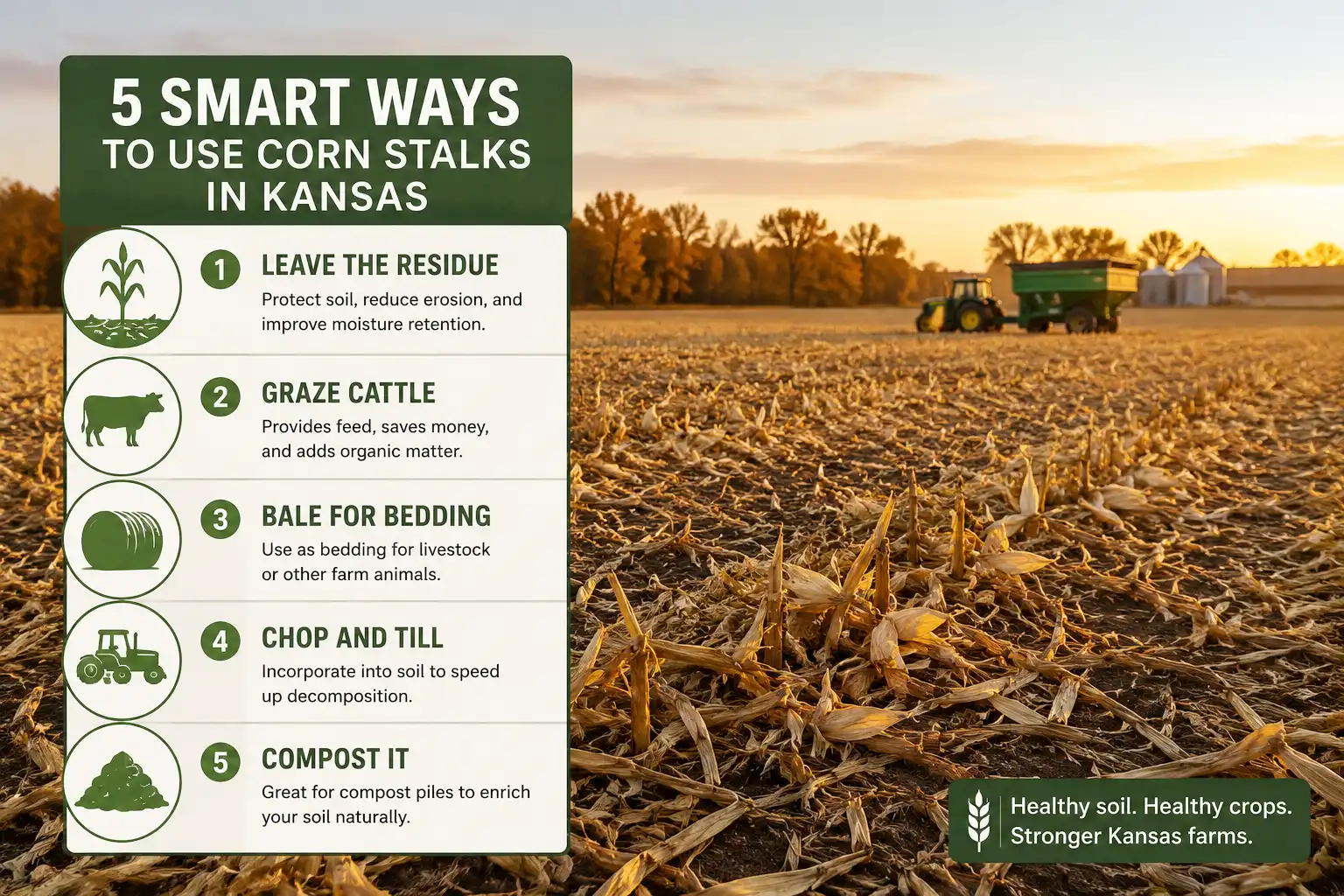
After harvest, most farmers leave corn stalks on the field, graze them with cattle, bale them for bedding, or till them in. Leaving or grazing protects your soil and recycles nutrients. Baling and burning strip the most value away.
What Corn Stalks After Harvest Are Really Worth
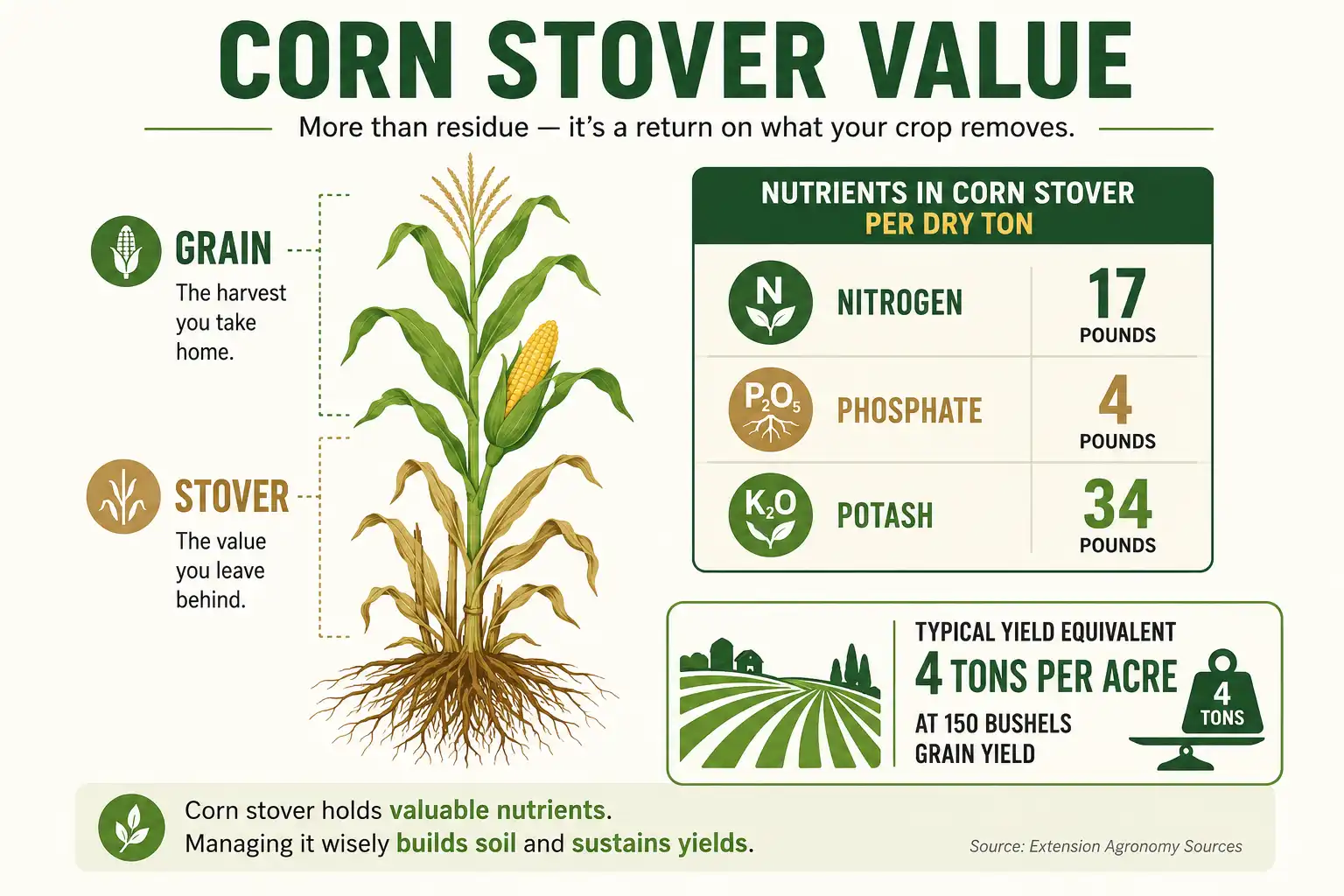
Corn residue is one of the cheapest soil inputs you own. Farmers call it stover: the stalks, leaves, husks, and cobs left after the combine takes the grain. A corn crop drops about as much stover as grain by weight. So a 150 bushel field leaves roughly 4 tons of stover per acre. Chop the field for silage instead, and you haul off nearly the whole plant, which is a different decision.
That residue carries real fertilizer value. Per dry ton, corn stover holds roughly 17 pounds of nitrogen, 4 of phosphate, and 34 of potash. Those numbers come from University of Nebraska-Lincoln. Leave it, and those nutrients cycle back into the ground. Haul it off, and you buy them back at the fertilizer dealer.
Residue does more than feed the soil. It shields bare ground from rain and wind, holds moisture, and slowly builds organic matter. K-State and other land-grant programs point to organic matter as the backbone of good soil structure. That is why building soil fertility starts with what you leave behind, not just what you spread.
Keep one number in mind. Nebraska research suggests leaving about 2.4 tons of residue per acre each year to hold soil carbon steady. On erosion-prone or low-organic-matter ground, leave more.
Learn more: Plant After Corn to Rebuild Soil and Boost Yield
Leave the Residue on the Field
Leaving corn stalks in place is the simplest and often the smartest choice. It costs nothing, protects the soil, and returns every nutrient to the field. Most no-till and reduced-till operations run this way by default.
The residue acts like armor. It cuts water erosion, blunts wind, and keeps the surface cooler and moister into spring. Earthworms and soil microbes feed on it through the year. Over time, that feeds organic matter and tilth.
Sizing matters. A chopping corn head or a stalk chopper cuts residue into shorter pieces. Shorter pieces break down faster and spread more evenly, so your planter runs cleaner next spring. If you run a true no-till system, row cleaners on the planter help you plant into that residue without hairpinning.
One more benefit: chopped residue makes a ready seedbed for cover crops. Drill in a cover crop like cereal rye after grain harvest. That adds living roots on top of the residue armor.
Graze Cattle on Corn Stalks
Grazing corn stalks is one of the cheapest winter feeds in the country. Turn cows out after harvest and they clean up dropped grain, husks, and leaves. Those parts are the most digestible, so cattle hold body condition without much help.
Stocking rate drives everything. A common Nebraska rule of thumb: 100 bushels of grain yield gives about 30 grazing days for a 1,000-pound cow. For a 1,200-pound cow, divide bushel yield by 3.5 to get grazing days per acre. A 180 bushel field, for example, feeds that cow about 51 days per acre.
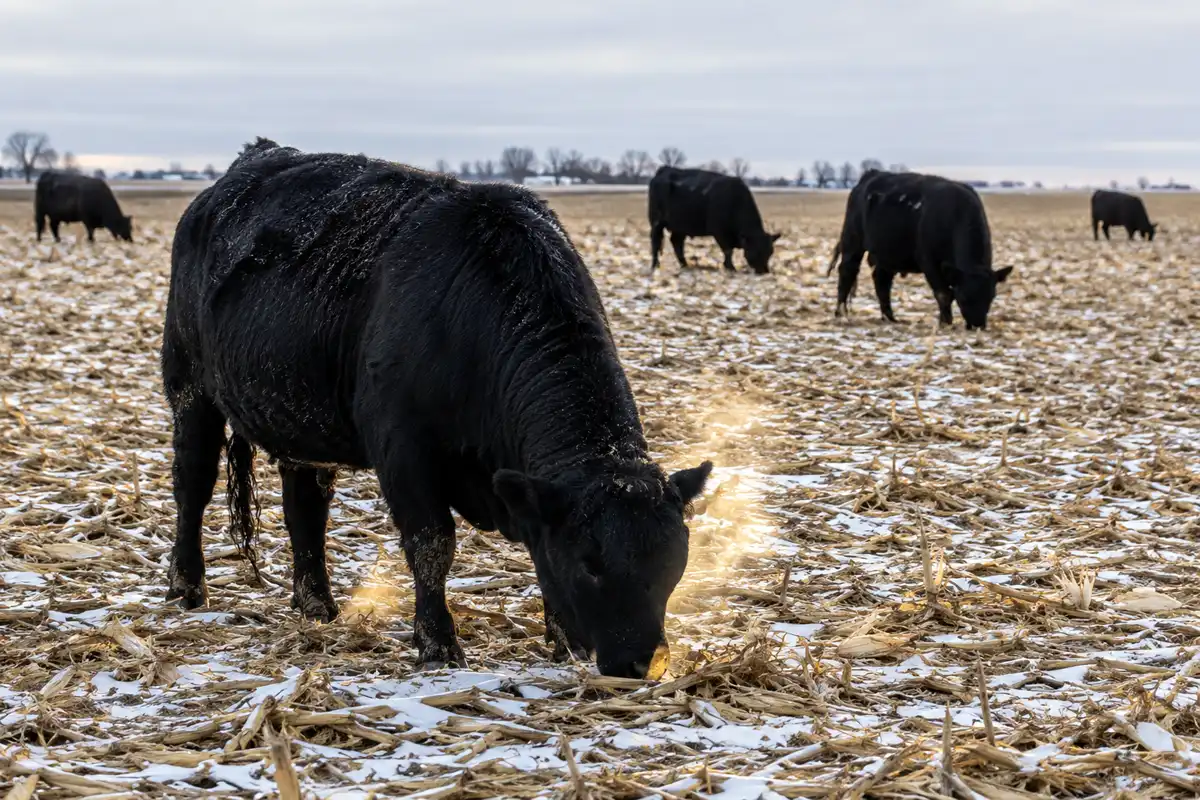
Scout before you turn out. Walk the field and check for downed ears. More than 8 to 10 bushels of ear drop per acre risks grain overload and bloat. In that case, limit intake with a temporary fence. Do not force cattle onto cobs and stalks. Once the husk and leaf run out, cows start losing weight.
Here is the part that surprises folks: grazing barely touches your nutrients or your next crop. A cow removes only about 2 pounds of nitrogen per acre over a season, and almost no phosphorus or potassium. University of Nebraska studies found no yield drag the following year on grazed ground. Some corn-soybean fields even gained 2 to 3 bushels of soybeans per acre after grazing.
A few practical notes. Cattle graze fine through 4 to 6 inches of snow. Ice shuts them down, so keep a backup feed plan. Offer a free-choice mineral with phosphorus and calcium, since residue runs short on both.
Bale Corn Stalks for Bedding or Feed
Baling turns corn stalks into bedding or low-quality roughage. Round or big square bales of stover make solid bedding for cattle lots and calving pens. In a tight feed year, ground and supplemented stover can stretch a ration.
Know the cost before you bale. Baling removes nutrients for good. Take a 150 bushel field baled at a typical 2 to 2.5 tons per acre. Purdue figures show that hauls off roughly 9 pounds of phosphate and 50 pounds of potash per acre. Budget to replace that potash especially. It adds up fast over several years.
Erosion is the other cost. Bare, baled ground washes and blows more than covered ground. Skip baling on slopes, sandy soils, and low-organic-matter fields, and never bale the same acres year after year. Keep that 2.4 ton per acre floor in mind.
As feed, stover is thin. It runs about 50 to 55 percent TDN and only 5 percent crude protein. So test it, then supplement protein and energy. It works as filler, not as a standalone diet.
Chop and Till Stalks Back In
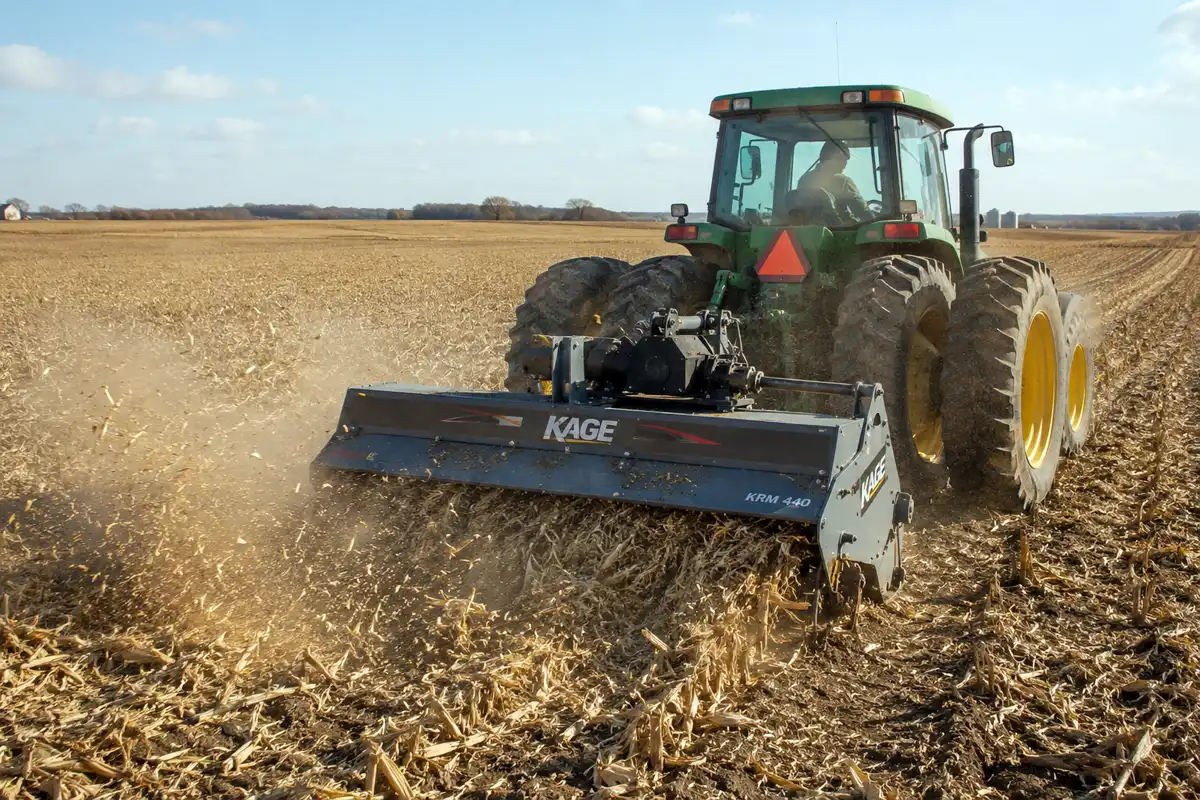
Chopping and light tillage speed residue breakdown and even out the seedbed. A stalk shredder or flail mower sizes the stalks. Then a vertical-tillage or disk pass mixes them into the top few inches. That gets you a smoother field and faster decomposition for spring.
Corn residue breaks down slowly on its own. It has a high carbon-to-nitrogen ratio, around 57 to 1. So soil microbes pull a little nitrogen from the surface as they break it down. The tie-up is usually small and short-lived, and it frees back up as residue rots. Still, factor it in when you plan the nitrogen your corn needs for next season.
Tillage also fights disease. Foliar diseases like tar spot, gray leaf spot, and northern corn leaf blight overwinter in infected residue. Ear rots that cause mycotoxins survive there too. Burying or breaking down that residue lowers the spore load for the next crop, which matters most in continuous corn.
That said, tillage is not a cure by itself. Tar spot, first found in the US in 2015, now blows in on the wind across the Corn Belt. So spores arrive even in tilled fields. Pair residue management with resistant hybrids, rotation, and a well-timed fungicide. And weigh the tradeoff. Every tillage pass burns fuel, invites erosion, and slowly spends the organic matter you built.
Compost or Mulch Corn Stalks on Small Plots
For gardens and small plots, chop corn stalks and compost or mulch them. Whole stalks break down slowly, so run them through a chipper or mower first. Chopped stalks are a high-carbon “brown” that balances nicely against green, nitrogen-rich material.
For composting on the farm or the backyard pile, layer chopped stalks with grass clippings, manure, or kitchen greens. Keep the pile damp and turn it, and you get finished compost in a season or two. Diseased stalks are the exception. Hot compost them fully, or keep them out of the pile.
Chopped stalks also make a decent winter mulch. A layer of mulch over beds shields the soil, cuts weeds, and slowly feeds organic matter as it breaks down. Sweet corn growers can also bundle clean stalks for fall decoration, which turns leftovers into a little extra cash.
Should You Burn Corn Stalks?
Skip burning in almost every case. Fire destroys organic matter, sends nutrients up in smoke, and leaves the soil bare and exposed. Many counties and states also restrict open field burning, so check local rules first.
The rare exception is heavy, proven disease pressure where nothing else has worked. Even then, weigh it against tillage or removal, and confirm what your local regulations allow before you strike a match.
Fit the Choice to Your Field and Rotation
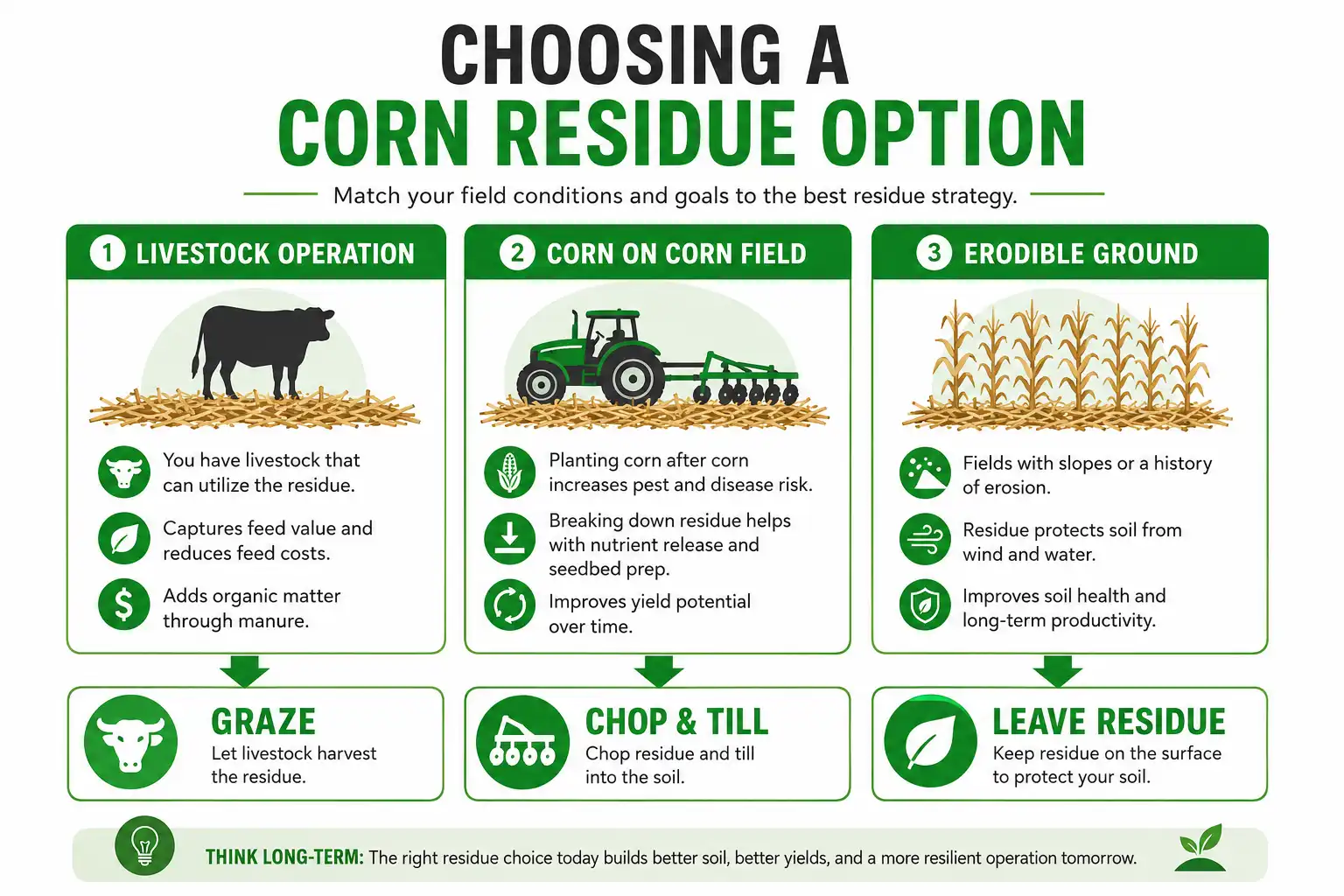
The right move depends on your ground, your rotation, and whether you run cattle. Corn-on-corn acres carry the highest disease and residue load, so those fields need harder residue and disease management. A corn-soybean setup breaks disease cycles on its own, so residue is easier to handle.
If you run livestock, grazing is almost always the best return. It feeds cattle cheap, keeps nutrients home, and leaves cover on the field. If you farm erodible or sandy ground, lean toward leaving residue and away from baling. And whatever your setup, how you plan the rotation shapes how much residue you face each fall.
Bottom Lines
On most ground, corn residue is best left where it falls, feeding the soil. When a neighbor runs cows, we graze the stalks over winter. That pays better than baling and does no harm to the next crop. Chopping and tilling is only recommended when disease pressure builds in a corn-on-corn field. Start with what your soil and your cattle need, and let that decide.