How Do Farmers Harvest Corn? The Full Field-to-Bin Process
Corn harvest looks simple from the road. One machine rolls through, and grain pours out. But how do farmers harvest corn from a standing field to a full grain bin? The answer is a combine, good timing, and careful drying.
Farmers harvest corn with a combine and a corn head. The head snaps ears off the stalks. A rotor threshes the kernels off the cobs, and fans clean the grain. A dryer then brings it down to safe storage moisture.
How Do Farmers Harvest Corn Step by Step?
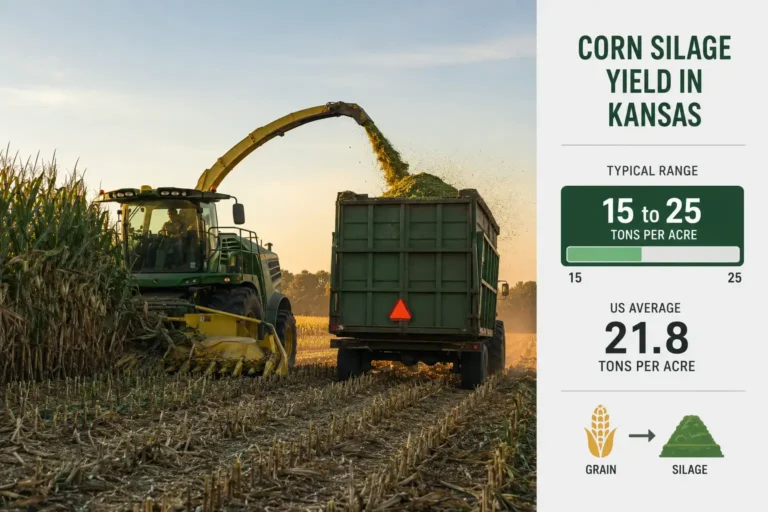
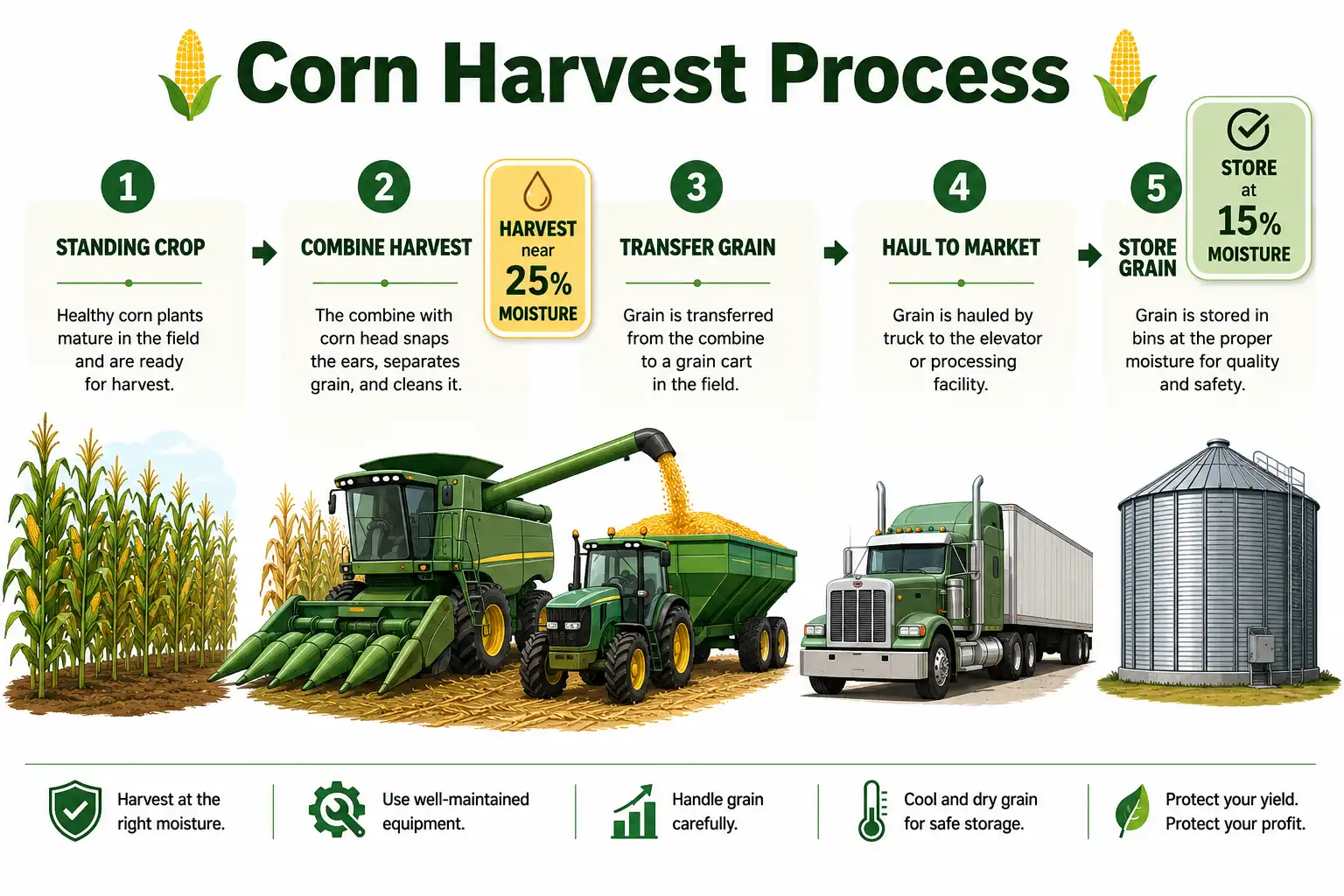
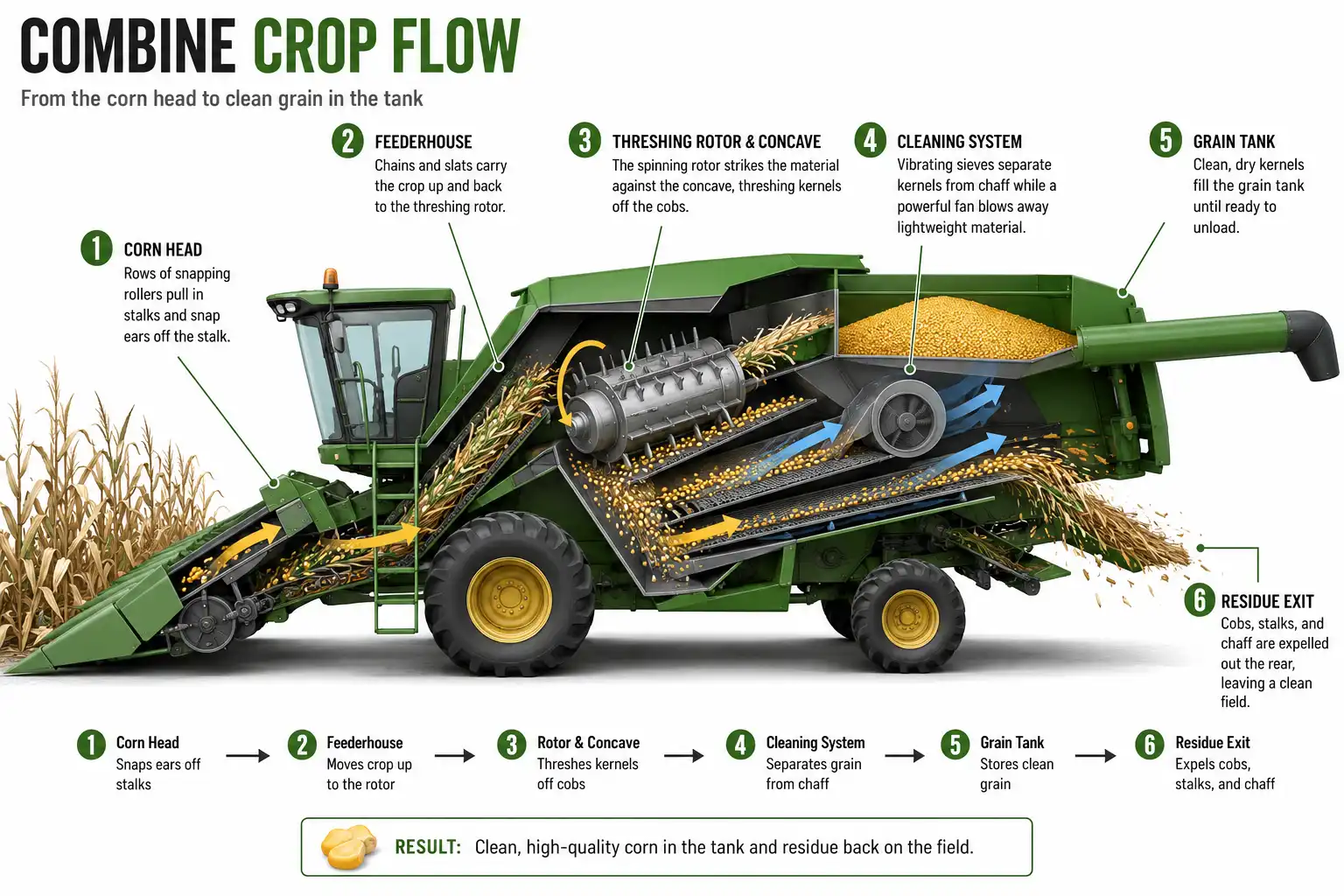
Farmers harvest corn in a single pass with a combine and a corn head. The corn head pulls in each row, snaps the ears off, and feeds them into the machine. Inside, the combine threshes the kernels loose, cleans them, and drops the grain into a tank. Stalks, cobs, and husks go back onto the field.
So that one machine does the work of a whole crew. Old timers picked ears by hand and shelled them later. Today the combine snaps, shells, and cleans in seconds.
The Corn Head Snaps the Ears
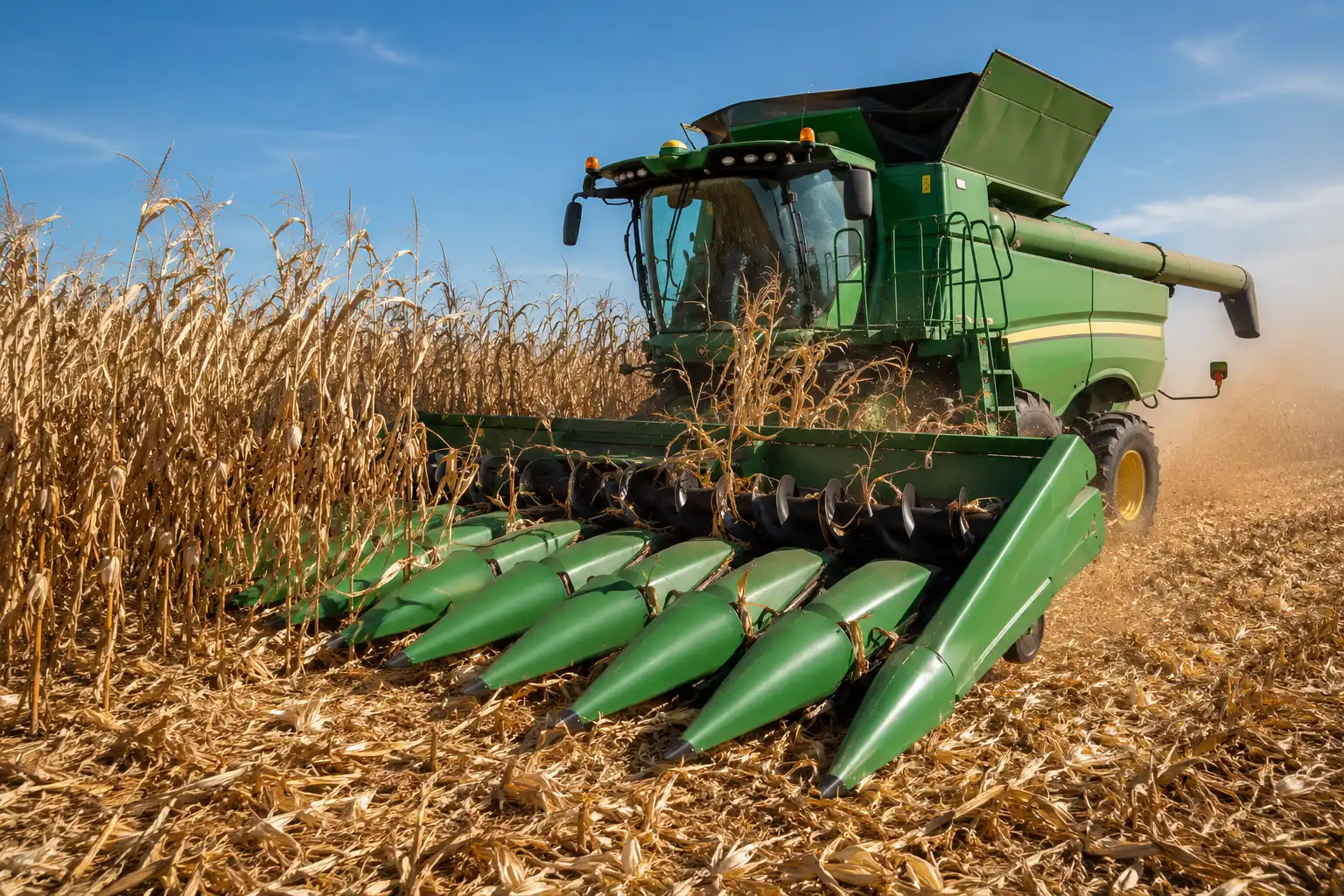
The corn head does the first and most important job. It has a set of points, one per row, that guide standing stalks into the row units. Under each row sit two snapping rolls, sometimes called stalk rolls. These rolls spin toward each other and pull the stalk straight down. The ear is too wide to follow, so it snaps off cleanly against the deck plates above. Gathering chains carry the loose ears back. Then a cross auger moves them to the center and into the feederhouse.
Still, setup matters here. Set the deck plates too wide and kernels shell off the butt of the ear. Too narrow and stalks jam. The header is the first place you lose grain. Plate spacing should be checked against stalk size before starting.
The Rotor Threshes Kernels From the Cob
Threshing knocks the kernels off the cob. Once ears reach the threshing unit, a spinning rotor rubs them against a curved metal grate called a concave. That rubbing action strips the kernels free. The empty cob and bits of stalk keep moving toward the back.
Rotor speed drives grain quality. Spin it too fast and you crack kernels. Spin it too slow and kernels stay on the cob. Run the lowest rotor speed that still shells clean.
The Cleaning Shoe Separates Grain From Trash
The cleaning system splits good grain from everything else. Below the rotor, the grain drops onto vibrating sieves. A fan blows air up through those sieves. Light chaff, husk pieces, and dust blow out the back. Then heavy, clean kernels fall through and head to the tank. Cob chunks with kernels still attached ride a return system back for a second pass.
Clean Grain Fills the Tank, Residue Feeds the Soil
Clean corn collects in the grain tank on top of the combine. When the tank fills, an unloading auger swings out and empties it, often without stopping. Meanwhile the combine chops the stalks, husks, and cobs and spreads them behind the machine. That residue protects the soil and feeds it over winter.
Read next: Fertilizer Per Acre for Corn
When Is Corn Ready to Harvest?
Corn is ready to harvest once the kernels hit black layer and the grain dries down to a workable moisture. Black layer is a dark spot that forms at the base of each kernel. It means the plant has finished filling the grain. At that point kernels sit around 30 to 35 percent moisture, which is still too wet for the combine.
So farmers wait for field drydown. Corn loses about 0.4 to 0.5 points of moisture a day in warm, dry weather. Most start combining field corn near 25 percent and aim to finish before it drops much below 20. Iowa State research shows mechanical damage stays low in that range. Push much lower and you risk ear drop, stalk lodging, and shatter loss.
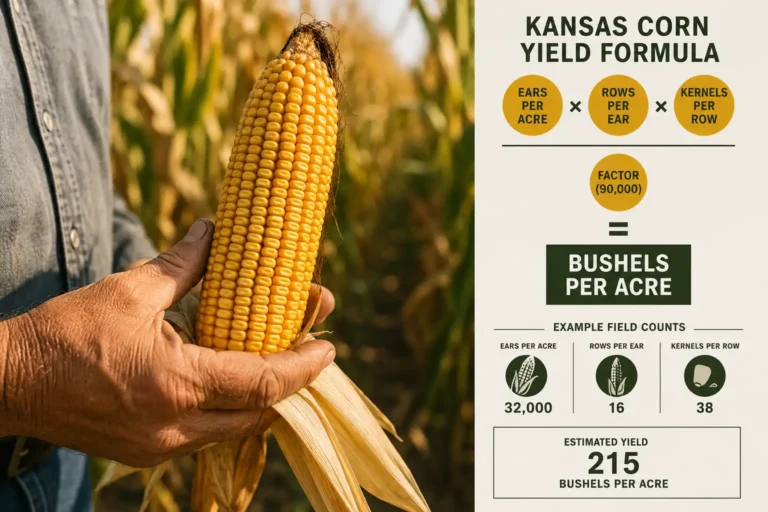
Timing runs on heat. Growing degree units push both maturity and drydown, so warm falls dry corn fast and cool falls stall it. In the Great Plains, most field corn comes off from late September into November. Before harvest, sizing up the yield by ear is a useful step. The black-layer check also helps confirm the crop is mature. For the full timing picture, see our guide on when field corn is ready.
A good grain moisture tester tells me exactly where each field stands. Pull a handful, check the number, and decide whether to run today or wait.
How Do Farmers Get Corn Out of the Field?
Farmers move corn out of the field with a grain cart and semi trucks. The combine unloads on the go into a grain cart running alongside. That cart, pulled by a tractor, holds hundreds of bushels. It then dumps into a semi trailer parked at the field edge.
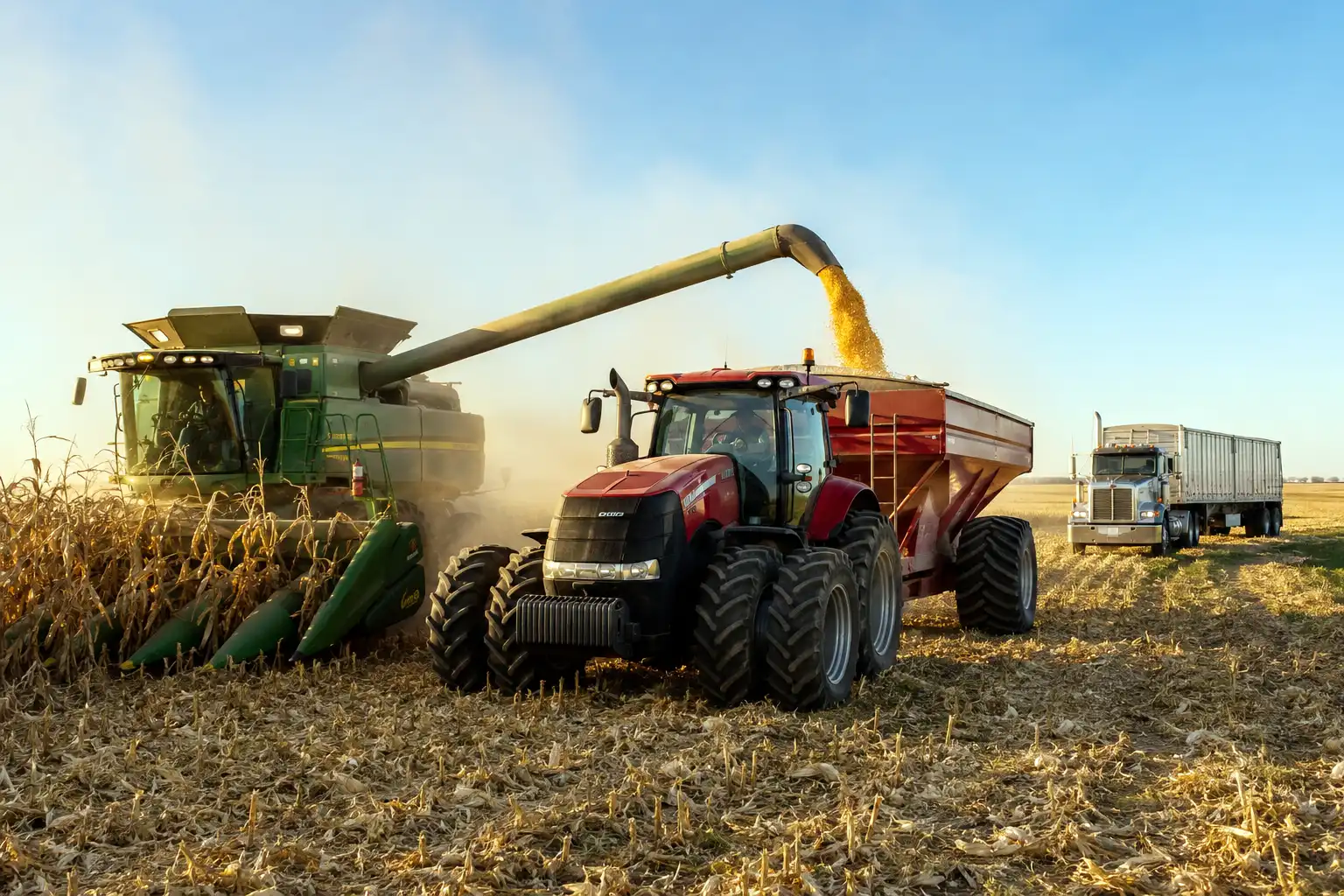
This relay keeps the combine cutting. Stopping to unload wastes time and fuel. From the truck, corn heads one of two places. It goes to a local grain elevator for sale, or to on-farm bins for drying and storage. A modern combine can cover 150 acres in a day, sometimes more, so the trucks stay busy.
Drying and Storing Corn After Harvest
Corn dries to a safe moisture before it goes into long-term storage. Fresh off the combine, field corn often runs 18 to 25 percent moisture. That is too wet to keep. Mold and heat set in fast on damp grain, so farmers dry it down right away.
The target depends on how long the corn will sit. Purdue and NDSU guidelines line up here. Sell by spring and 15 to 15.5 percent works. Hold it 6 to 12 months and drop to 14 percent. Store past a year or through a warm summer and get it to 13 to 13.5 percent.
Two drying methods cover most farms. A high-temperature dryer forces heated air through the grain and pulls moisture out fast. Natural-air drying uses big fans to push outside air through a bin, which is slower but cheaper. Either way, farmers cool the grain to around 30 degrees for winter. Cold grain keeps far longer. Every 10-degree rise roughly cuts the safe storage time in half.
How Is Field Corn Harvest Different From Sweet Corn?
Field corn and sweet corn come off very differently. Farmers grow field corn, the dent corn across the Corn Belt, and let it dry on the stalk. Then a combine shells the hard kernels loose. Sweet corn is a different story. Growers pick it young, at the milk stage, while the kernels stay soft and sweet.
That timing gap changes the whole job. Crews pick fresh-market sweet corn by hand or with a special harvester that keeps each ear whole. They race a tight window, because sugar turns to starch within days. Field corn, by contrast, waits weeks for the grain to harden and dry.
Most corn in big fields is field corn. It feeds livestock, runs into ethanol, or sells as grain. It is not the sweet corn on your plate. Sweet corn stays a small, separate crop grown for eating fresh.
How Do You Harvest Corn by Hand?
You harvest corn by hand by twisting each ripe ear off the stalk, then husking, drying, and shelling it. For a garden plot or a few rows, you need no machine. Grab the ear, twist down, and snap it free.
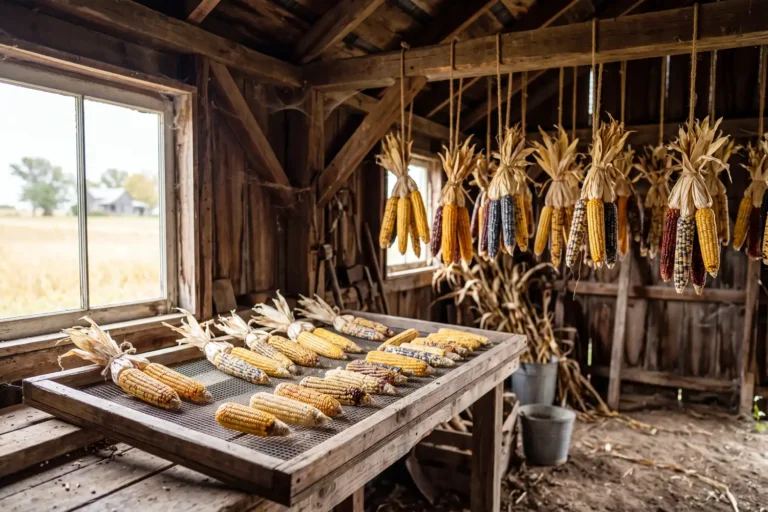
Here is the simple order on small batches. First, pick the ears once they are mature. Then peel back the husks. After that, let the ears dry on the cob until the kernels are hard and pull off easily. our guide covers how to dry the ears on the cob in more detail elsewhere. Once dry, twist the kernels off by hand for small amounts. For anything bigger, run the ears through a hand corn sheller.
You shell field corn for grain the same way a combine does, just at tiny scale. Sweet corn for eating skips all of this. You pick it, shuck it, and cook it fresh.
Bottom Lines
By fall, most of the corn harvest here comes down to one thing: timing the moisture right. Watching for black layer, checking a moisture tester, and starting combining while the grain is near 25 percent is the recommended approach. The combine snaps, threshes, and cleans in one pass. The corn is then dried down and cooled for storage. Whether you run 500 acres or a single garden row, the steps are the same. Get the corn off at the right moisture, treat the grain gently, and store it cool. Do that, and your crop keeps its value all the way to the sale.