Can You Plant Broccoli and Onions Together? Spacing and Timing
Two cool season crops, one bed, and only so much room. That is the situation most growers face in spring. So can you plant broccoli and onions together without hurting either crop? Yes, and the pairing works better than most, once you get spacing and feeding right.
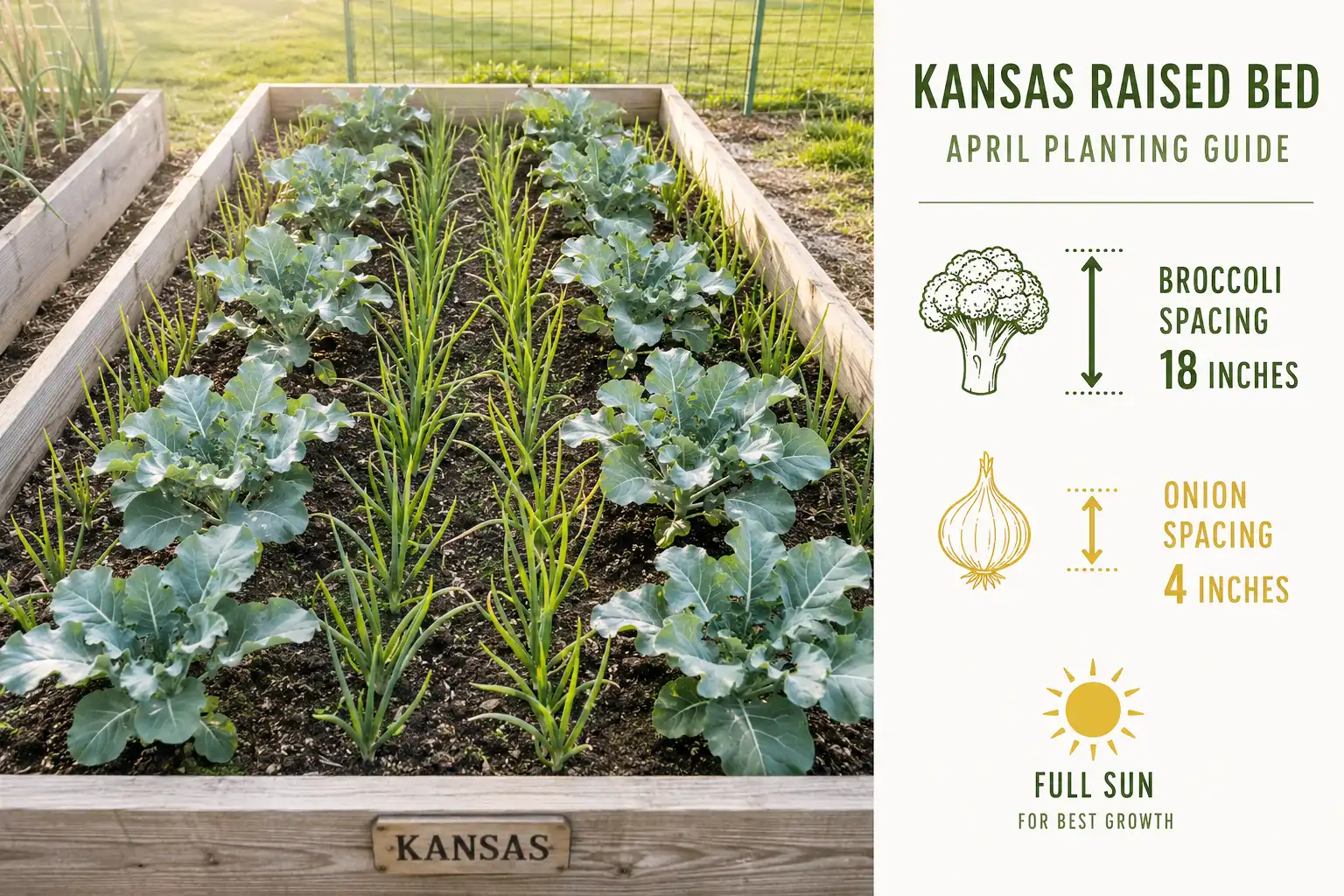
Yes. Not only can you plant broccoli and onions together, the pairing also saves bed space. Set broccoli 18 inches apart, then fill the open soil with onions 4 inches apart. Both crops share the same cool season window.
Also know: How to Plant Onions and Strawberries Together
Why Broccoli and Onions Get Along in One Bed
They sit in different plant families, so they do not trade diseases or feed the same pests. Broccoli is Brassica oleracea. Onions are Allium cepa.
Three things make the pair work.
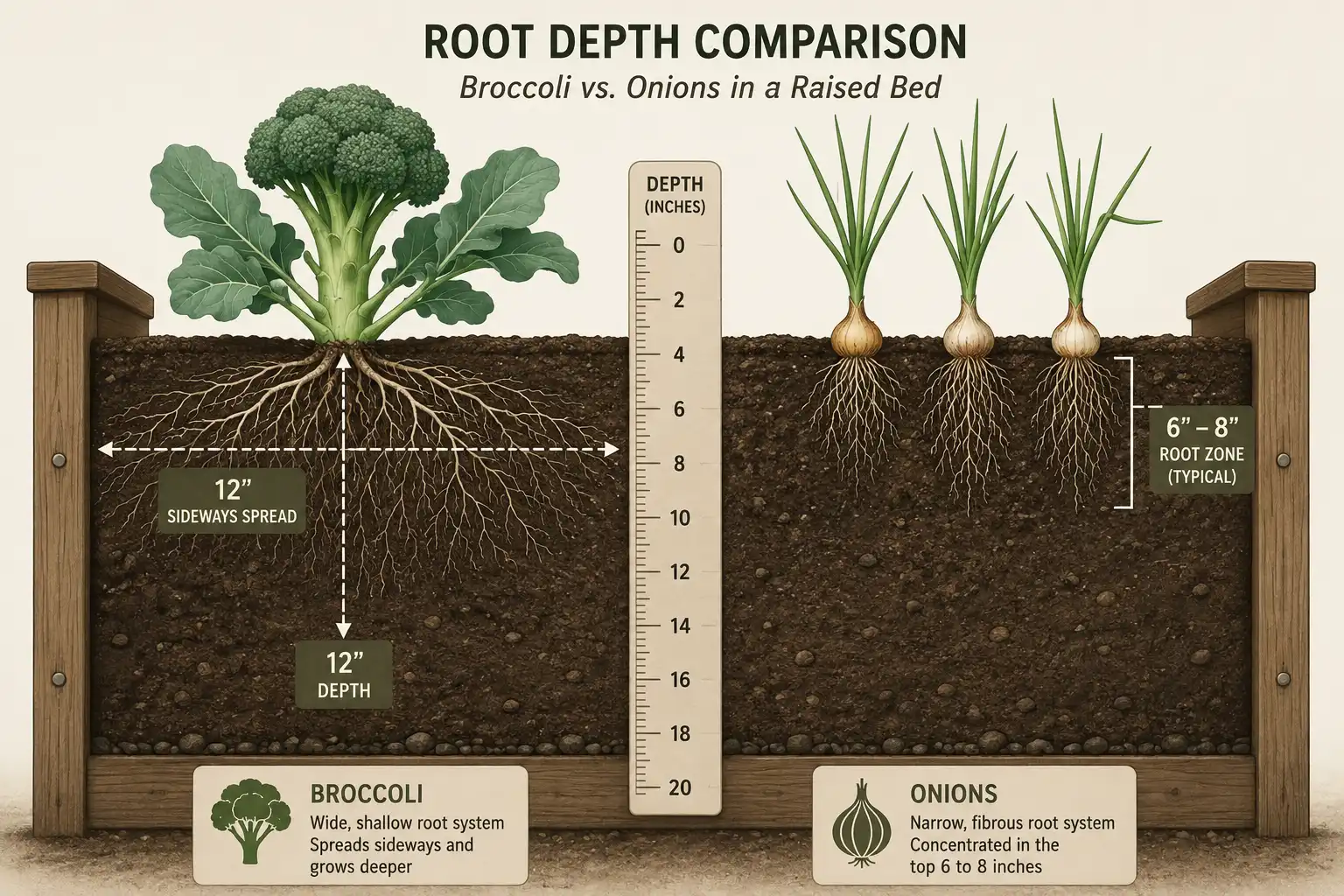
Different root zones. Broccoli roots run shallow and spread wide. Onion roots stay shallower still and hold narrow, with most activity in the top 6 to 8 inches of soil. So the two crops pull water from slightly different places.
Different canopy shape. Onion leaves stand straight up and throw almost no shade. Broccoli grows outward instead of upward. That gap in growth habit is what lets you tuck onions into space broccoli would otherwise waste.
Same temperature window. Both crops take light frost. Both quit in July heat. So one planting window covers both.
The disease side matters just as much. Clubroot attacks brassicas only. Onion white rot only germinates when allium roots leak exudates into the soil. Non allium roots do nothing to trigger it. So neither pathogen builds up because of the other crop. That makes this pairing safer than setting broccoli next to cabbage.
Can You Plant Onions With Broccoli for Pest Control?
Onions can cut cabbage worm damage in broccoli, but they will not cover every pest. University of Minnesota Extension reviewed the companion planting research. It cites an Iowa study on broccoli. There, thyme, onion, and nasturtium all reduced cabbage looper and imported cabbageworm damage.
That same review is blunt about the limits. Plenty of charts list green onions as a flea beetle repellent. Yet little research supports that claim, and some studies point the other way.
So here is how to handle it. Onions form one layer of protection, not a replacement for anything else. Floating row cover still does most of the work against cabbage worms. Run it from transplant until heading. The onions add a second scent signal that makes the broccoli harder for egg laying adults to lock onto.
How to Space Broccoli and Onions in the Same Bed
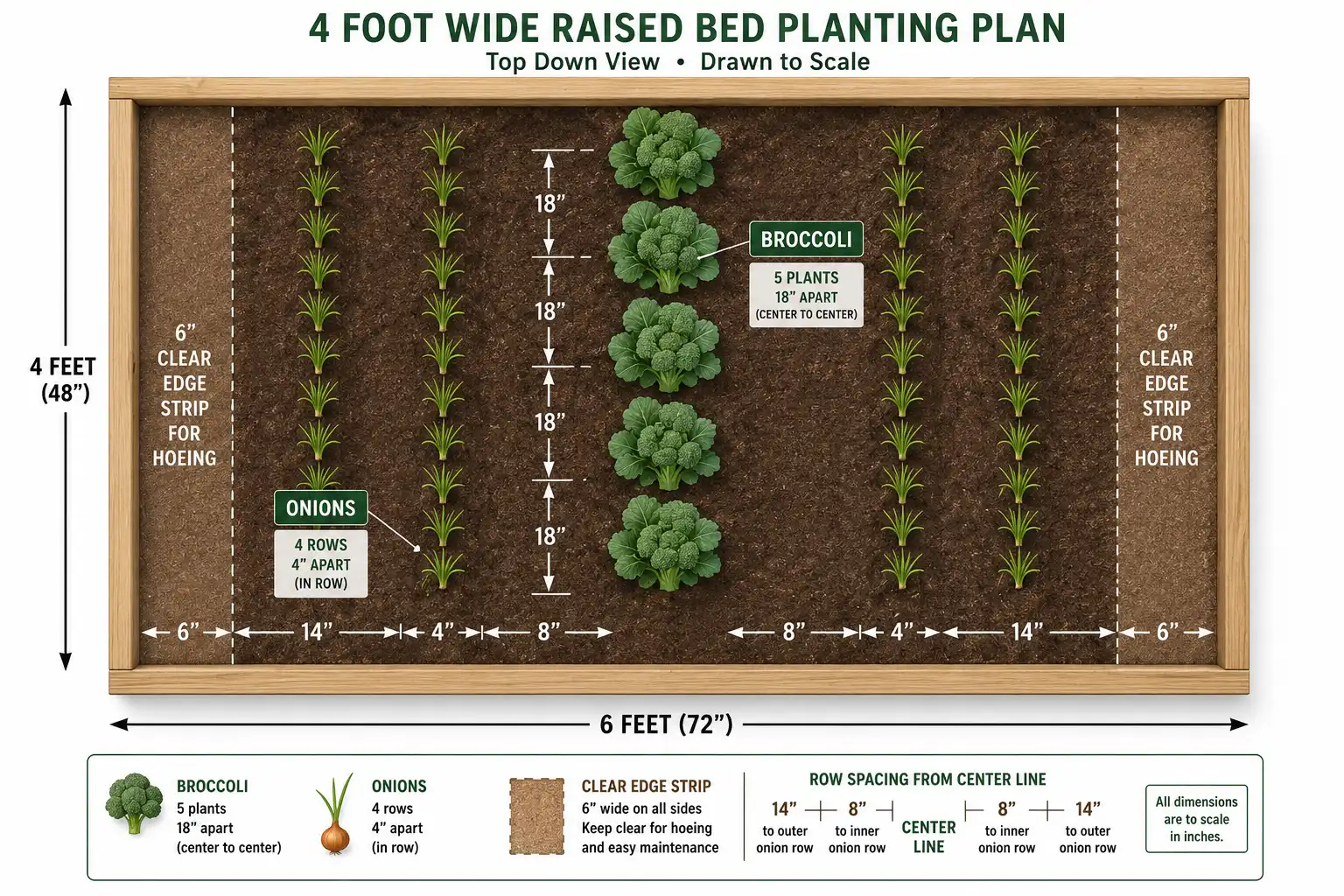
Set broccoli 18 inches apart in the row, then fill the open soil with onions 4 to 6 inches apart. Keep at least 8 inches between any onion and a broccoli stem.
Broccoli spacing drives the whole layout. Extension guides list a range from 12 to 24 inches in the row. Tighter spacing gives smaller main heads and more side shoots. Run 18 inches because it leaves real working room for the onions without costing much head size.
| Crop | In row spacing | Clearance from broccoli stem | Where it goes |
|---|---|---|---|
| Broccoli transplants | 18 in | n/a | Single center row of a 4 ft bed |
| Bulb onions | 4 to 6 in | 8 in minimum | Two rows down each side |
| Green onions | 2 to 3 in | 6 in minimum | Gap filler, pulled early |
Lay the bed out in this order:
- Mark a center line down a 4 foot bed.
- Set broccoli transplants on that line at 18 inches.
- Measure 8 inches out from the center line on both sides.
- Run your first onion row there.
- Add a second onion row 6 inches farther out.
- Leave the outer 6 inches of bed edge clear for hoeing.
Before you buy sets, work from onions per square foot and count backward from bed size.
When to Plant Broccoli and Onions Together
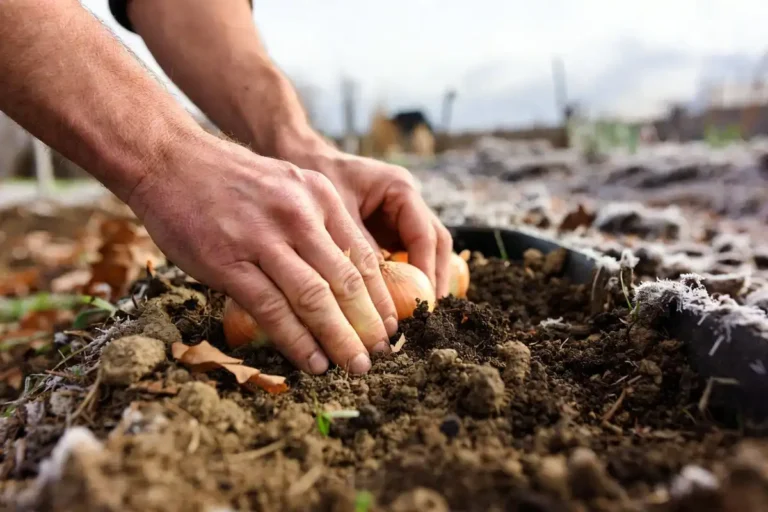
Onions go in first, then broccoli follows two to three weeks later. In zone 6a near Topeka, that means mid to late March for onion plants and sets. Go as soon as the ground works.
Broccoli transplants follow from late March into early April. K-State Research and Extension puts broccoli, cabbage, and cauliflower transplants in that same window across most of Kansas. Start your own broccoli seed 6 to 8 weeks ahead of that date.
Onions from seed need a longer indoor run, usually 10 to 12 weeks. Before you choose between seed, sets, and bare root plants, starting onions from seed is worth reading through.
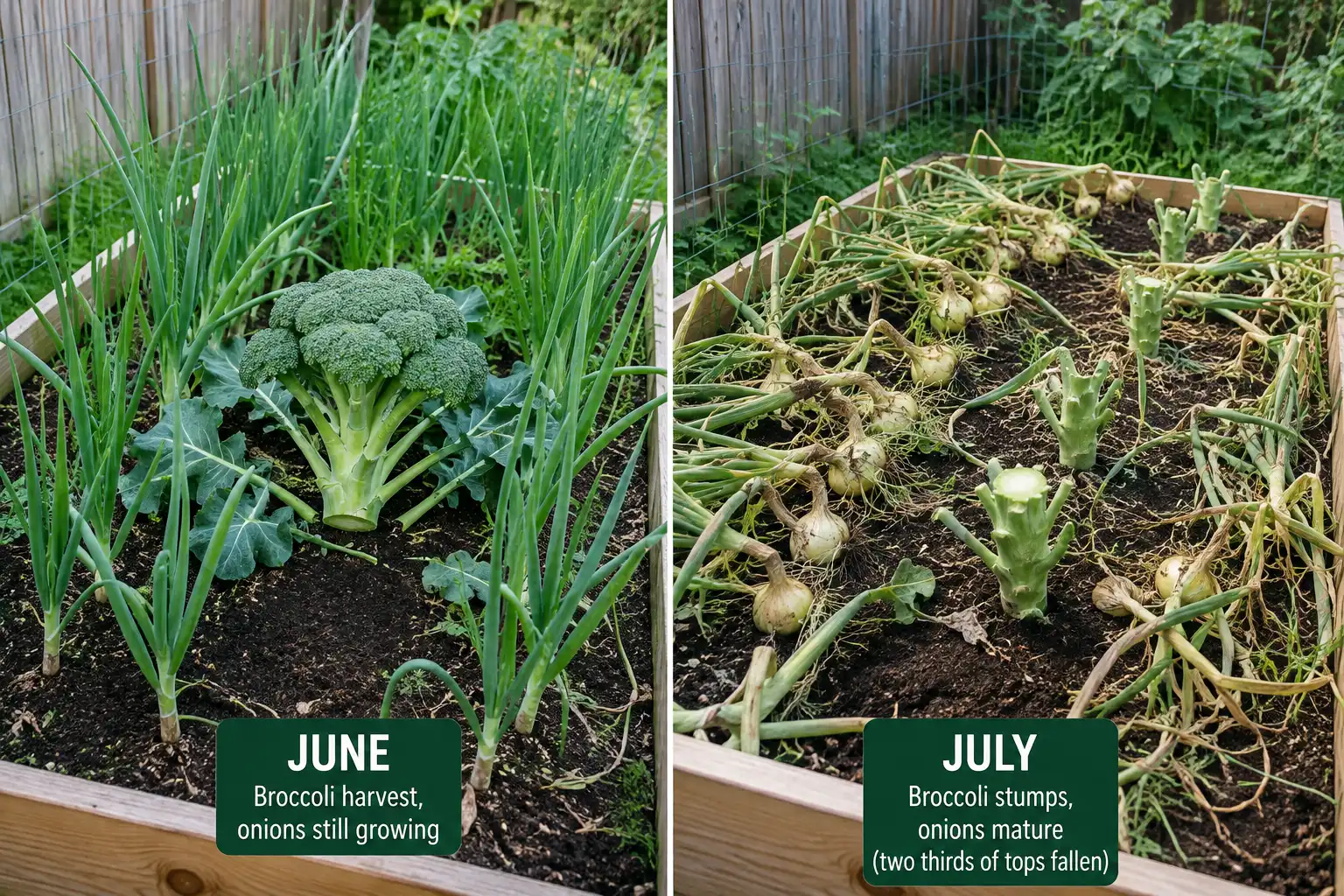
One timing detail shapes the whole season. Onions need a longer run than broccoli. Spring broccoli comes out in June. Onions stay in the ground into July. So plan the bed around the onions and treat broccoli as the crop that leaves early.
Fall changes the math. Broccoli transplants go in from late July to mid August across Kansas. Fall heads often beat the spring crop for quality. Bulb onions will not finish a fall cycle in zone 6a, though. Pair fall broccoli with spinach or leaf lettuce instead.
How to Feed Both Crops Without Shrinking the Bulbs
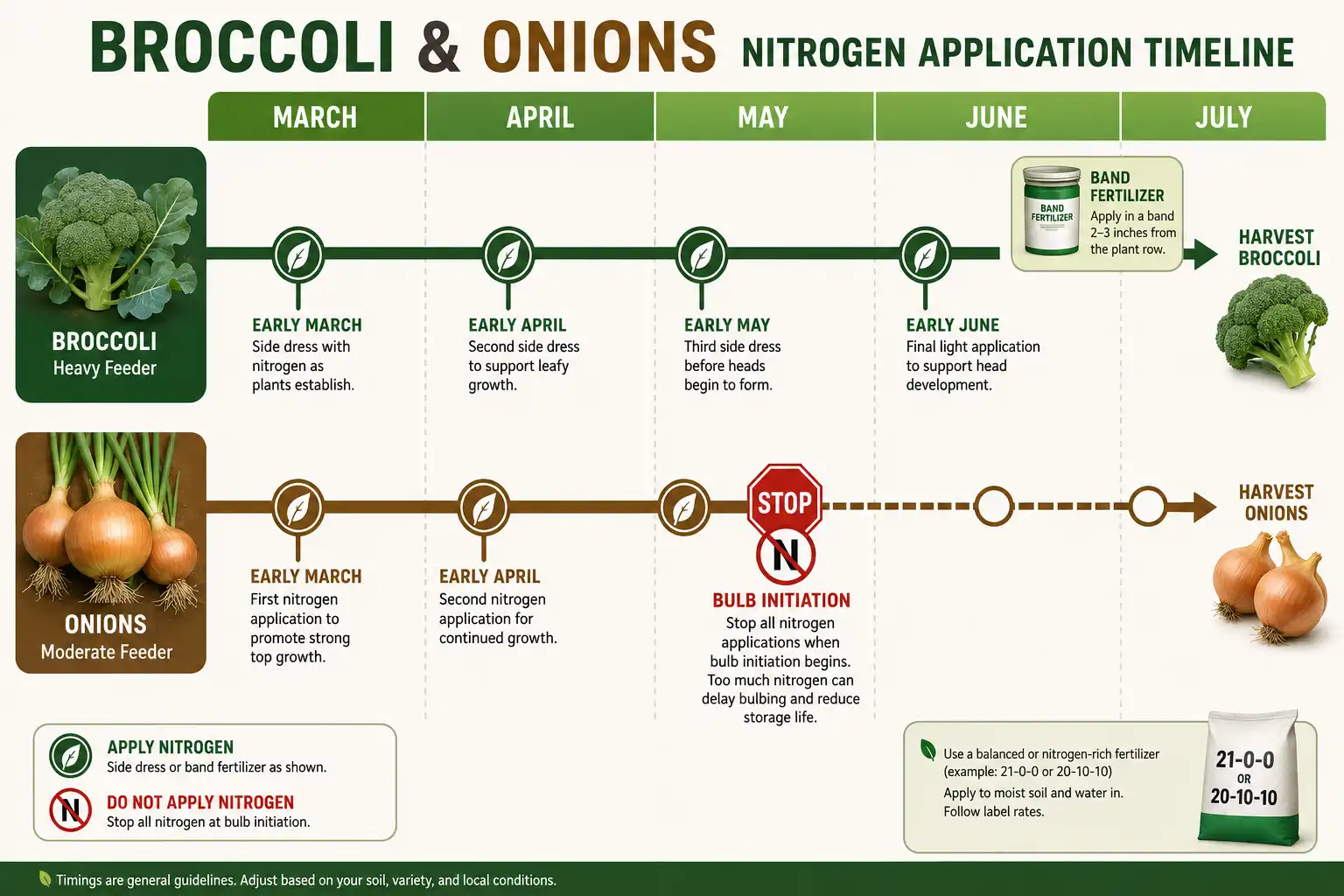
Band the broccoli nitrogen tight to the broccoli stem, then stop all nitrogen in the bed once onion necks thicken. That one rule prevents most of the trouble in a mixed bed.
Broccoli feeds heavily on nitrogen. Clemson Extension calls for a side-dress three to four weeks after transplanting. The rate is calcium nitrate at 15.5-0-0, 2 pounds per 100 feet of row. Broccoli wants a second push as the head forms. Add another after you cut the main head if you are chasing side shoots.
Onions want nitrogen too, just on a different clock. Uptake stays low until the three leaf stage, then climbs steadily through bulb growth. Onion nutrient guides put most of the crop’s total nitrogen uptake in the second half of the season. Late nitrogen gives you thick necks and short storage life.
| Stage | Broccoli | Onions |
|---|---|---|
| At planting | Starter solution in the hole | Preplant P and K worked into the bed |
| 3 weeks after transplant | Banded side-dress 6 in from stem | Nothing extra |
| Bulb initiation | Nothing extra | Final nitrogen application |
| Head forming | Second banded side-dress | Nothing |
| Tops starting to fall | Banded only, after head cut | No nitrogen anywhere in the bed |
Test the soil before you plan any of this. Onions want pH 6.0 to 6.5, while broccoli handles 6.0 to 7.0, so aim the bed near 6.5. One honest catch sits here. If clubroot lives in your soil, liming above 7.1 helps the broccoli but pushes onions past their comfortable range. Pick which crop to favor and move the other one.
For bulb size, start with a fertilizer built for onions and hand feed the broccoli separately.
Watering and Weeding a Shared Bed
Both crops want steady moisture, roughly 1 to 1.5 inches of water per week. Neither one shrugs off a dry spell.
Drip beats overhead irrigation once onions start bulbing. Water sitting on bulbing onions raises the risk of bacterial soft rot and sour skin. Drip also keeps broccoli leaves dry, which helps against downy mildew.
Weeding takes more care than most growers expect. Onions compete poorly with weeds because of their narrow upright leaves and shallow roots. Early weed pressure can cost bulb size for good, even if you clean the bed up later. So stay ahead of it from the start.
Work the bed this way:
- Hoe shallow, no deeper than an inch anywhere near onions.
- Hand pull anything inside 3 inches of an onion.
- Never hill soil onto onion necks, since that invites stem rot.
- Cultivate the broccoli side more freely, because broccoli roots sit deeper.
Straw mulch solves most of this. Lay 2 inches once the soil warms, then keep it pulled back off the onion necks. Mulching a crop bed also holds moisture through Great Plains wind. Some years that wind costs me more water than low rainfall does.
Mistakes That Shrink Onion Bulbs in a Broccoli Bed
Shade causes more small bulbs than anything else. Onions need full sun straight through bulbing, and a finished broccoli plant covers a lot of ground.
Watch for these six:
- Broccoli shading the onion rows. Keep the onions on the south side of the bed and hold that 8 inch clearance.
- Crowding onions against broccoli stems. Both root systems fight for the same water in that strip.
- Broadcasting nitrogen after bulbing starts. Thick necks and poor storage follow every time.
- Deep hoeing near onions. Cut roots stall bulb growth for weeks.
- Leaving spent broccoli in the bed. Pull it so the onions get their light back.
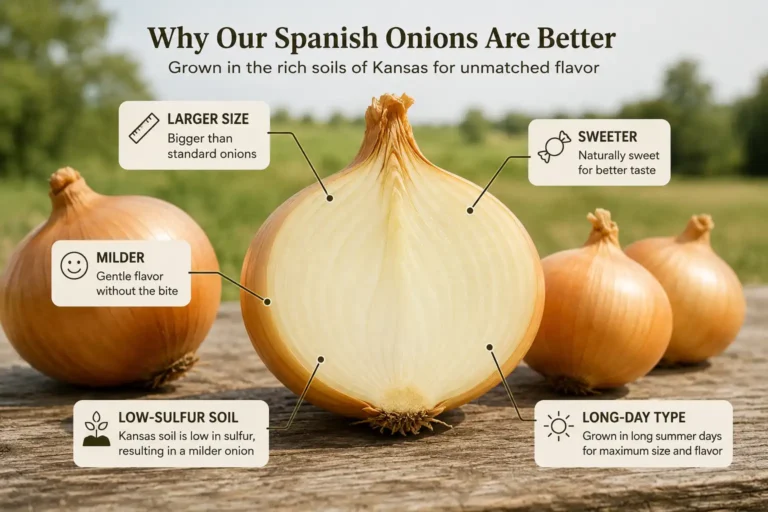
- Choosing the wrong day length onion. Long day types suit Kansas. Short day types bulb too early here and finish small.
What Else Can Share the Bed, and What to Keep Out
Lettuce, spinach, and beets fit the same bed. All three finish early and stay short, so they never shade the onions.
Skip beans and peas, though not for the reason most charts give. The usual claim says onion roots interfere with the bacteria legumes use to fix nitrogen. Research behind that is thin. The practical reason is simpler. Peas and beans climb, and anything climbing next to onions blocks the June sun those bulbs need.
Keep other brassicas out as well. Two brassicas in one bed doubles clubroot pressure and hands cabbage worms a bigger target. Garlic and leeks belong elsewhere too, since stacking alliums raises white rot risk in the same soil.
For a second pairing on the same logic, try lettuce and onions in the same bed. One crop stays short, the other stays upright. No shade conflict either way.
Harvest Order and What to Plant Next
Broccoli leaves the bed first. Cut the main head once it reaches 3 to 6 inches across with the buds still tight. After that, side shoots keep producing for another three to four weeks.
Onions stay until their tops say otherwise. Pull them when two thirds to three quarters of the tops have fallen over. Stop watering as the tops start drying so bulbs finish in dry soil. Then cure them out of direct sun for one to two weeks.
Pull the broccoli without hurting the onions:
- Cut the stalk at soil level with loppers.
- Leave the root ball in place until onion harvest.
- Do not till or fork the bed.
- Pull the mulch back over the open spot.
The next crop matters more than growers think. That bed carried a brassica and an allium in the same season, so both families need time off. Build a rotation plan that puts a legume or a fruiting crop there next year. Keep brassicas out for at least three seasons.
Final Words
Broccoli down the center at 18 inches, onions in double rows down both sides. Nothing else goes in until the broccoli comes out in June. Feed each crop separately, and never broadcast nitrogen once bulbing starts. That is the whole system. It works because the two crops use different space at different times, not because one of them protects the other.