Can Onions and Strawberries Be Planted Together in One Bed?
Bed space runs short fast, and strawberries hold their ground for years. So the question comes up every spring: can onions and strawberries be planted together in one bed? They can, with the right layout.
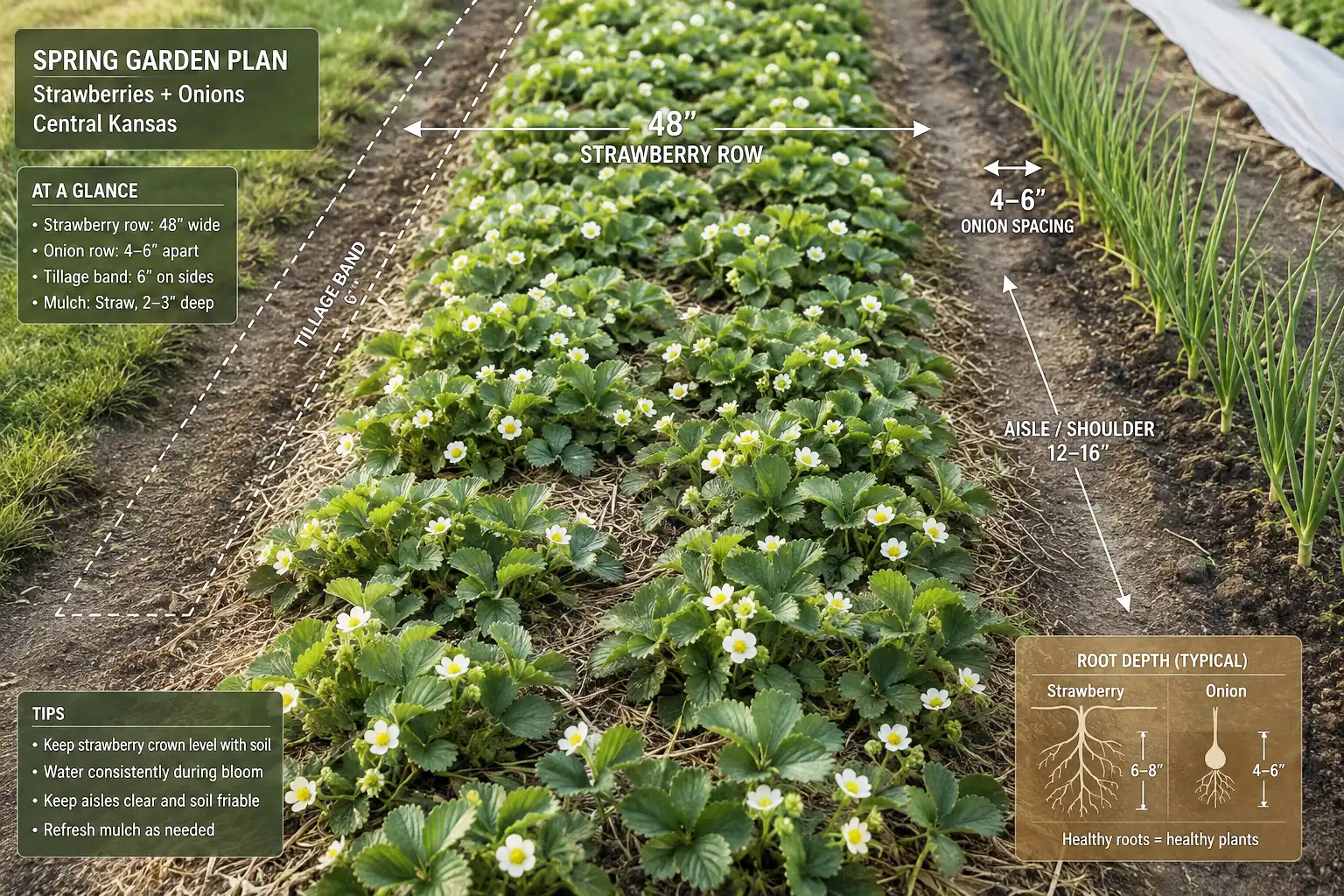
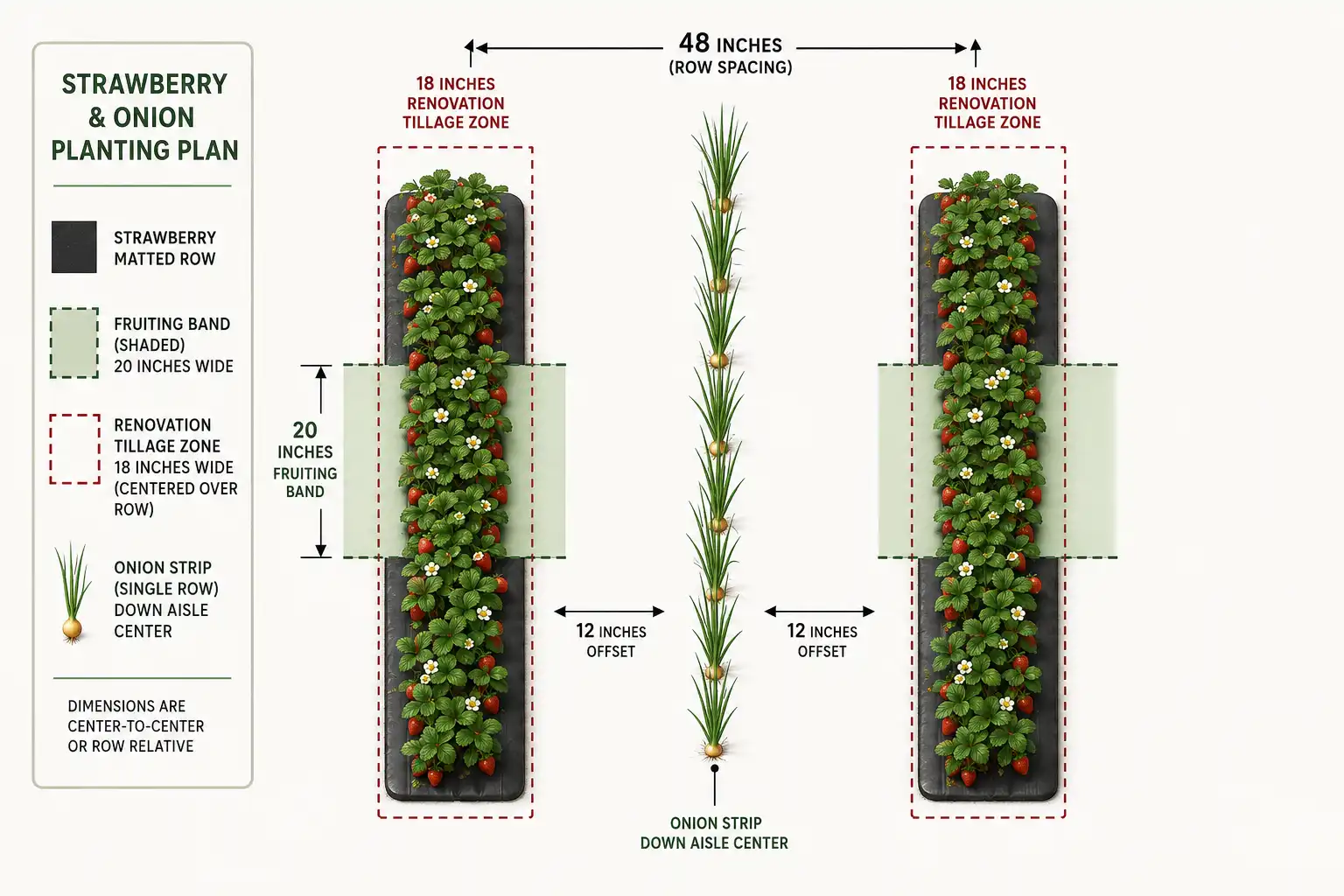
Yes. Onions fit beside strawberries, just not inside the fruiting row. Set them on the aisle shoulder, 12 inches or more from the crowns. Then summer runners and renovation tillage both miss the bulbs.
Also know: How to Plant Onions and Peas Together
Why This Pairing Works on Paper
Both crops want the same ground conditions, and that is the honest place to start. K-State Research and Extension puts strawberries at a soil pH of 5.8 to 6.5. NC State Extension puts bulb onions at 6.0 to 6.5. So the shared band runs 6.0 to 6.5, and one soil test ahead of planting covers both crops.
Timing lines up too. In USDA hardiness zone 6a near Topeka, set strawberry crowns from late March to mid April. Onion transplants go in during March. So both crops hit the ground inside the same three week window.
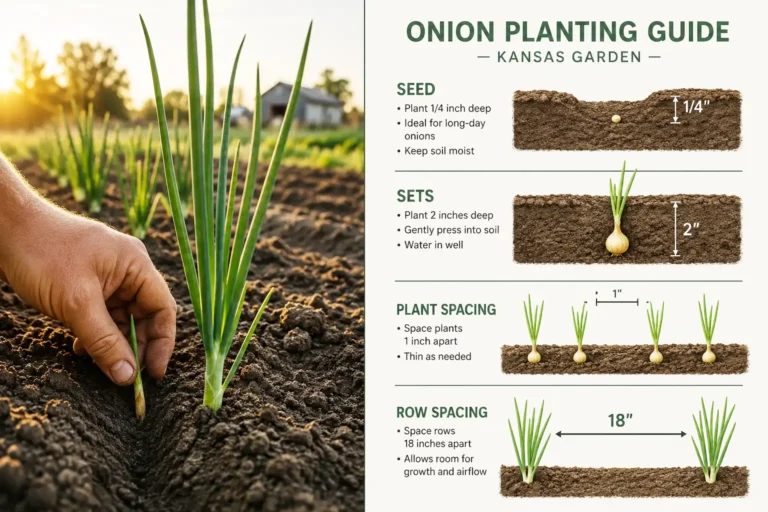
The onion footprint also stays small. K-State spaces onions 2 to 4 inches apart in rows as close as 15 inches. A single onion strip needs about 6 inches of width. That fits an aisle without stealing fruiting ground.
Onions Carry No Strawberry Root Disease
Onions are not a Verticillium host, and that matters more than most companion charts admit. Extension guidance says to keep strawberries off ground that grew tomatoes, potatoes, eggplant, peppers, brambles, or squash. Those crops build Verticillium dahliae in the soil. Onions do not. So an onion crop the season before strawberries counts as a clean rotation.
Four Conflicts You Have to Plan Around
Matching soil needs do not make two crops good neighbors. When people ask whether you can plant onions and strawberries together, the answer turns on timing and traffic, not chemistry. No research shows allelopathy between the two. Allium root compounds do suppress beans and peas, and that effect repeats in trials. Strawberries react differently.
Nitrogen Timing Runs in Opposite Directions
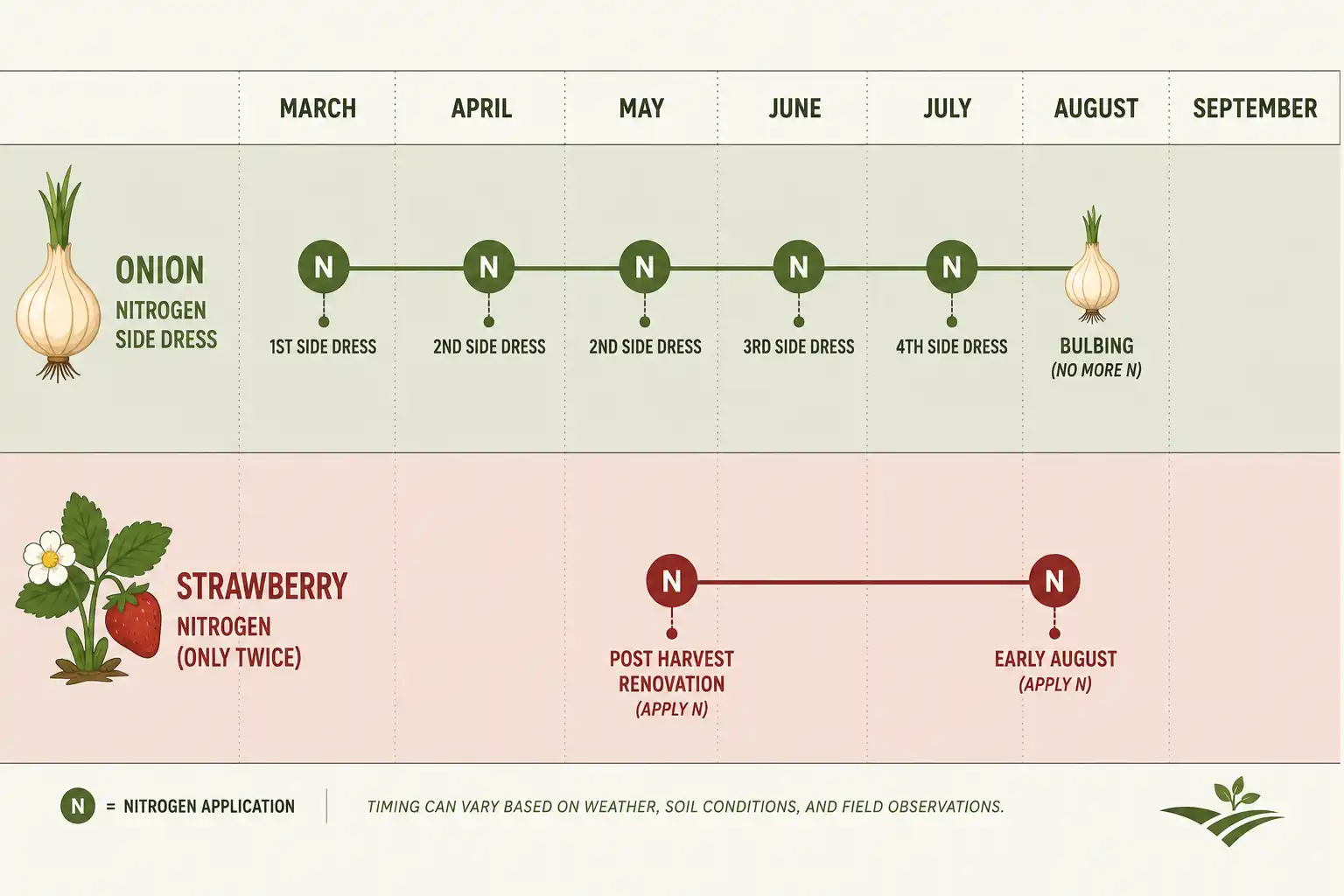
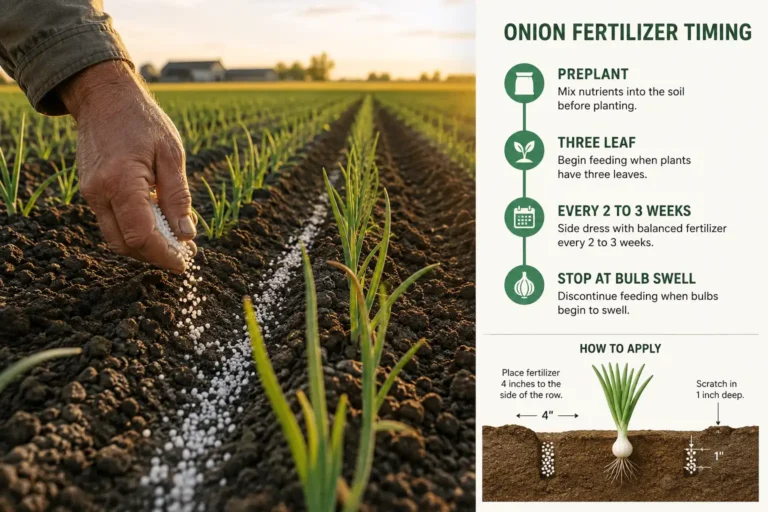
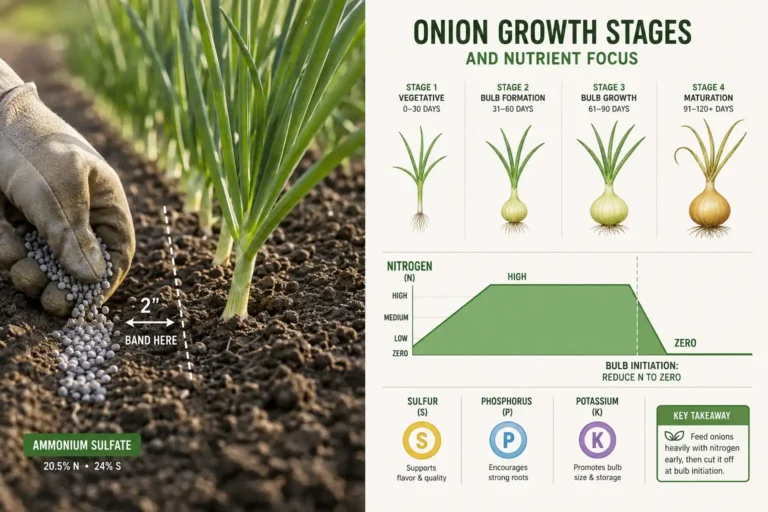
Onions want steady nitrogen through spring, and strawberries do not. Bulb onions take 120 to 150 pounds of nitrogen per acre across a season, split into stages, then cut off once bulbing starts. Strawberries flip that schedule. K-State warns that dense foliage after a spring nitrogen application sets up gray mold on the fruit. So strawberry nitrogen waits for renovation right after June harvest, then goes on again in early to mid August at a quarter to a third pound of urea per 25 feet of row.
Because of that split, broadcast onion fertilizer over a fruiting berry bed. Instead, it gets banded along the aisle strip only. For rate guidance, our notes on onion fertilizer options break down the grades on hand.
Runners Swallow Onions by July
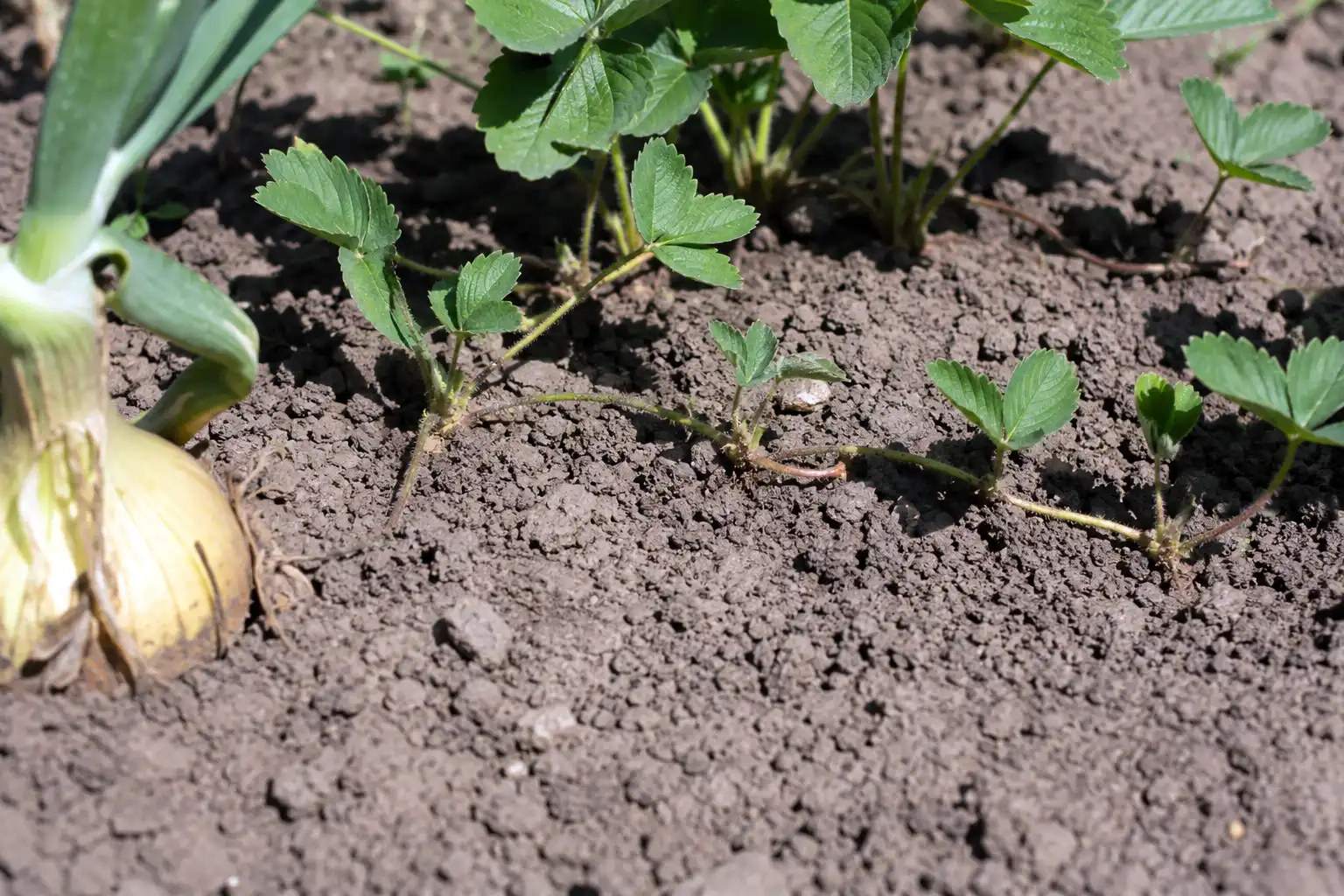
Strawberry daughter plants root across open soil, and onions lose that race. Mother plants sit 18 to 24 inches apart in the row. Runners then fill a matted band about 20 inches wide through summer. That is exactly when onion bulbs size up. So an onion inside the band ends up shaded, buried under a rooting daughter plant, or both.
Root zones overlap as well. Onion roots stay mostly in the top 4 inches and rarely reach past 12. Strawberry roots concentrate 6 to 10 inches down. Onion roots are sparse and lack root hairs, so they need high nutrient levels close by. Once the berry canopy closes, onions come up short.
Renovation Wipes Out Anything in the Row
Renovation is mechanical, and it spares nothing planted inside the row. After the last June picking, strawberry foliage is mowed just above the crowns. Till both row edges to narrow the band back to 8 to 18 inches. Many growers also apply 2,4-D amine three to five days before mowing to knock down broadleaf weeds.
Two problems follow. First, tillage shreds any onion sitting inside that band. Second, 2,4-D amine carries a strawberry renovation label, not an onion label. So never spray over onions you plan to eat. Keep the onion strip outside the treated zone, or skip the herbicide and hoe instead.
Allium Disease Builds Up in Permanent Ground
Strawberry beds stay put for three or four harvest seasons, and that breaks onion rotation. Pink root, caused by Phoma terrestris, calls for 3 to 6 years out of allium ground. White rot runs worse. Its sclerotia survive 20 to 40 years in soil, and they germinate only when allium root exudates reach them. Growing onions in the same bed four years running sets up exactly what those pathogens need.
Shift the onion strip to a different aisle each year, or pull onions out of the bed after the establishment season. Sound rotation planning solves this without giving up the space.
How to Plant Onions With Strawberries
Work outward from the strawberry row. Berries hold the ground for years, so they set the layout and onions fit around them.
- Test the soil, then correct pH into the 6.0 to 6.5 band before planting anything.
- Mark strawberry rows 48 inches apart. Set mother plants 18 to 24 inches apart in the row, crowns level with the soil surface.
- Measure 12 inches out from each row edge. Everything inside that line belongs to strawberries.
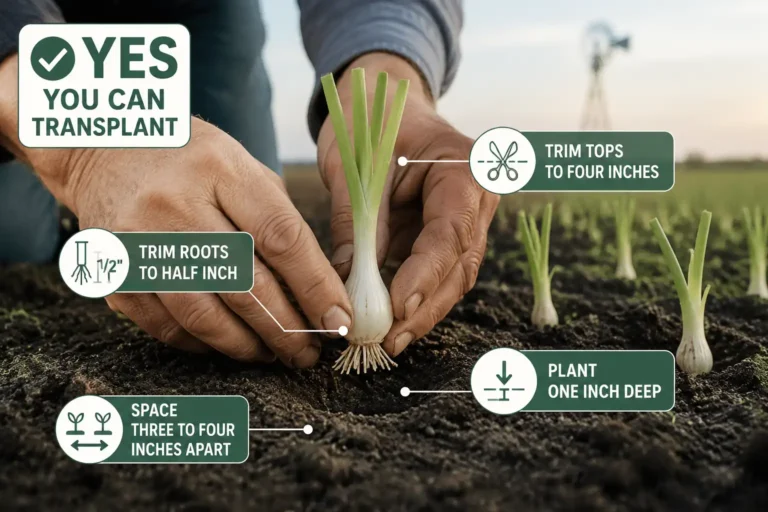
- Plant one onion row down the aisle center. Space bulbs 2 to 4 inches apart, and set sets 1 to 1.5 inches deep.
- Feed the onion strip by banding along the row, never by broadcasting across the bed.
- Pull onions by mid July, ahead of the strawberry watering push and ahead of renovation tillage.
- Leave the aisle bare after onion harvest so daughter plants can root into it.
Green Onions Fit Better Than Storage Bulbs
Green onions clear the bed early, and that removes most of the conflict. Scallions pull in 60 to 70 days, so they leave before runners spread and before renovation starts. Storage bulbs need until mid July or later, which puts them right in the way. If you want dry bulbs anyway, choose long day or intermediate day varieties, since Topeka sits near 39 degrees north. Starting onions from seed in January gives the widest variety choice.
The Establishment Year Is the Best Fit
Year one is the only season where interplanting stays easy. All June bearing blossoms are removed that first spring, so no fruit needs protection from gray mold. Runners have not filled the band yet. No renovation happens either. So spring nitrogen helps both crops instead of pulling two directions at once.
Spacing and Layout Numbers That Work
| Measurement | Number | Why it matters |
|---|---|---|
| Onion strip offset from row edge | 12 inches minimum | Keeps bulbs outside the renovation tillage band |
| Strawberry fruiting band width | About 20 inches | K-State target for the matted row area |
| Between strawberry rows | 48 inches | Leaves aisle room for one onion strip |
| Onion in-row spacing | 2 to 4 inches | Use 2 for scallions, 4 for storage bulbs |
| Onion rows per aisle | One | Two rows crowd the picking path |
| Strawberry mother plants in row | 18 to 24 inches | Matted row standard |
| Renovation tillage band | 8 to 18 inches wide | Anything inside gets rototilled |
| Onion set planting depth | 1 to 1.5 inches | Shallow sets cure and size better |
Do Onions Keep Pests Off Strawberries?
Not reliably, so planting them for that purpose is not recommended. Onion scent does interfere with carrot rust fly host finding, and that is the best documented allium effect. Nothing similar holds up for strawberry pests. Tarnished plant bugs, garden slugs, strawberry leaf rollers, and white grubs all work a berry bed regardless of nearby onions.
One real overlap deserves watching. Onion thrips feed on hundreds of plant species, and in alliums they carry Iris yellow spot virus. Hot dry weather pushes their numbers up fast. So scout onion necks through June instead of assuming the pairing protects anything. The same scouting habit applies when you set onions beside carrots.
Watering and Mulching Two Crops in One Bed
Water schedules split in July, and that is the hardest part to manage. Strawberries need about an inch a week in spring, then 2 inches a week through July and August. Onions want the opposite late in their cycle. Soil should dry as tops tip over, because dry conditions firm the bulb and improve storage life.
Two fixes work here. Pull onions before the July water push begins. Or run separate drip lines so you can shut off the onion strip while berry rows keep drinking.
Mulch needs splitting too. Three inches of wheat straw goes over strawberry crowns for winter cover, usually between Thanksgiving and Christmas. Straw packed against onion necks traps moisture and invites neck rot. So keep the onion shoulder bare, and rake straw back off it in spring. These mulching decisions follow the same rule across other paired crops.
Slugs deserve one note. Garden slugs thrive under strawberry mulch, and they chew both foliage and ripe fruit. Bare aisle soil around the onion strip gives them less cover.
When to Rotate Instead of Interplant
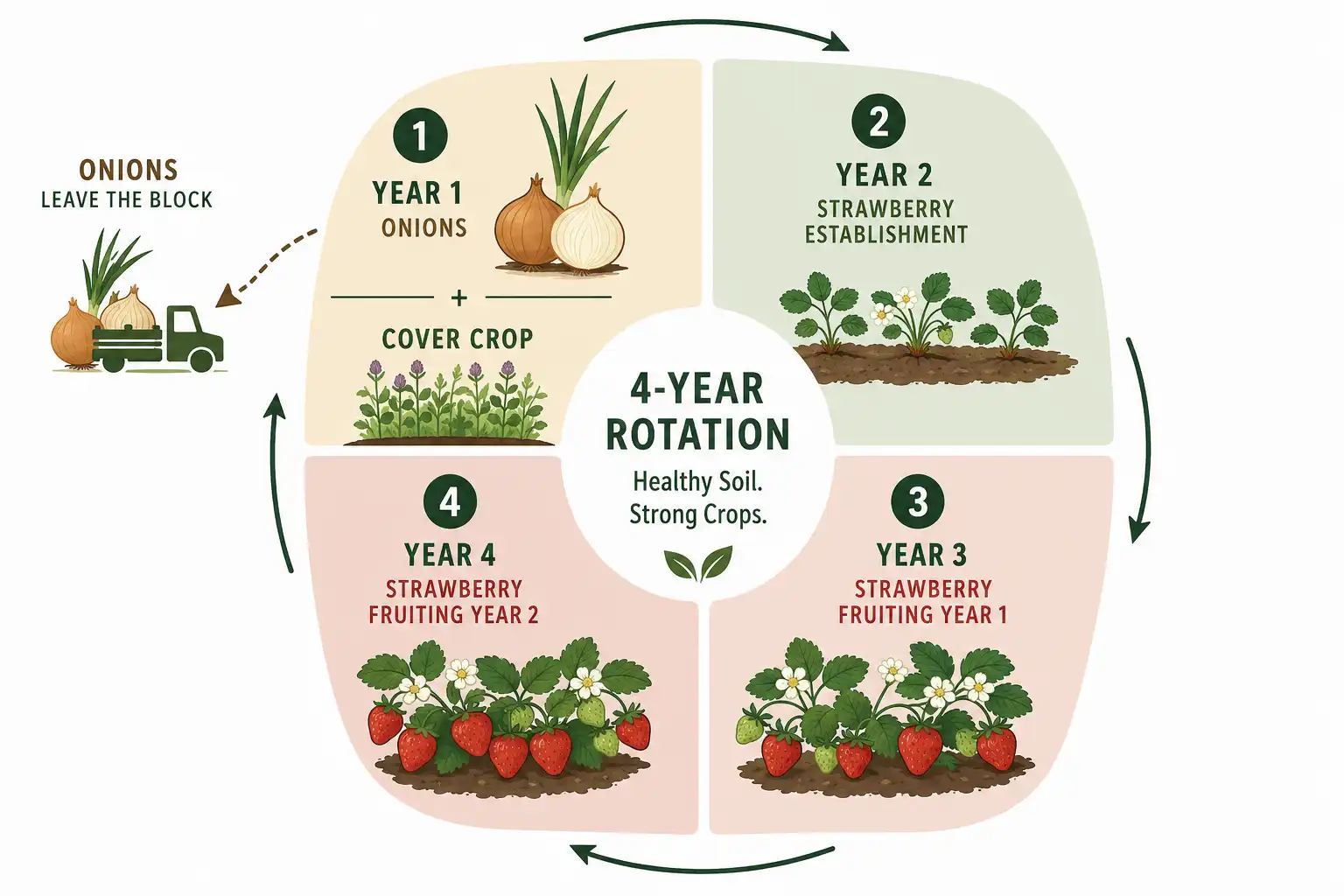
Rotation beats interplanting on most ground, and the reason is simple. Onions grown the season before strawberries hand you clean Verticillium free soil. Onions grown inside a four year berry bed hand you allium ground for four straight years.
So here is the order. Grow onions, pull them by midsummer, then drill a cover crop. Set strawberry crowns the following March. Keep onions out of that block until the berries come out three or four seasons later.
FAQs on Planting Together Onions and Strawberries
Can I Plant Onions With Strawberries in a Raised Bed?
Do Onions Stunt Strawberry Growth?
Can Strawberries Follow Onions the Next Season?
Final Thoughts
Onions and strawberries share a bed fine, so long as onions stay in the aisle and leave by mid July. Mark the 12 inch line first, then work outward from there. Green onions cause the fewest problems. Storage bulbs earn their spot only during the establishment year. After that, move onions to their own ground and let the berry rows fill in.