How Often to Water Onions: Full Season Schedule by Stage
Onions carry a shallow root system, so they run dry faster than almost anything else in the garden. Knowing how often to water onions keeps bulbs sizing instead of stalling at golf ball width. Below is the weekly amount, frequency by soil type, and the shutoff point before harvest.
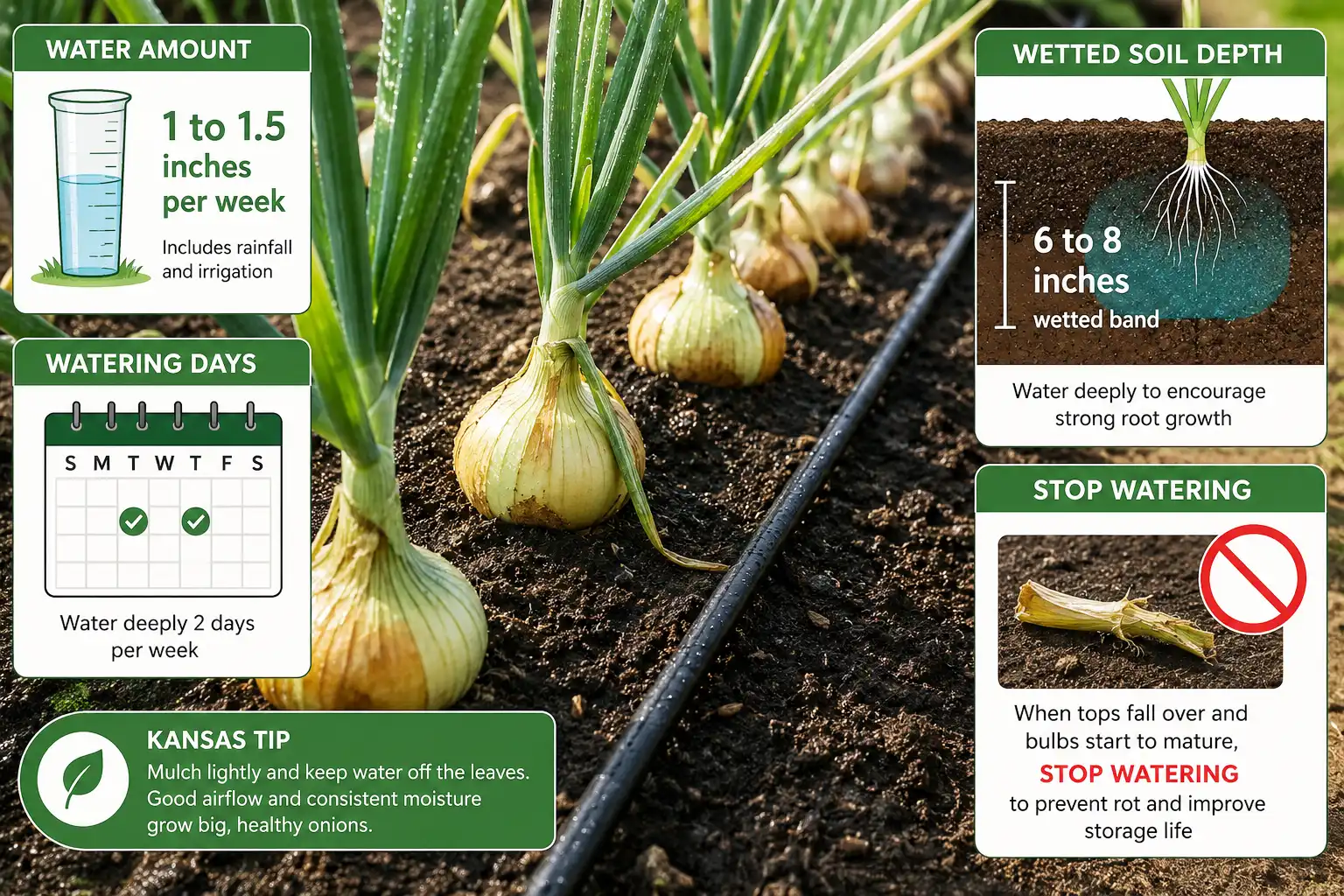
Water onions once or twice weekly with 1 to 1.5 inches total, rain included. How often to water onions also depends on soil texture. Sandy beds want three lighter passes, while heavy clay takes one deep soak.
How Often to Water Onions at Each Growth Stage
Frequency changes four times across an onion season. Seedlings want light, frequent water. Bulbing plants want deep, steady water. Then you shut the water off completely.
| Stage | When it happens | How often | Water applied |
|---|---|---|---|
| Germination | Sowing to emergence, 7 to 14 days | Light water daily or every other day | Keep the top inch damp |
| Establishment | First 3 weeks after sets or transplants go in | 2 to 3 light passes weekly | 0.75 to 1 inch |
| Leaf growth | Week 4 until bulbing starts | 1 to 2 soakings weekly | About 1 inch |
| Bulb enlargement | Bulbing until necks soften | 2 soakings weekly, deeper each time | 1.5 to 2 inches in heat |
| Maturity | Tops yellow and flop | Stop watering | None |
Those early passes stay light on purpose. Roots sit inches below the surface at that point, so heavy water pushes nitrogen straight past them. Utah State University Extension recommends light, frequent irrigation while plants are small for that exact reason.
Once a plant carries eight or nine leaves, roots reach deeper and volume can climb. That bulbing window sets your final bulb size. So never let the bed dry down then.
If you start onions from seed under lights, keep the flats evenly damp until the flags straighten. Seed trays dry out in a matter of hours.
Learn more: What Not to Plant After Onions
How Much Water Do Onions Need Each Week?
Onions need 1 to 1.5 inches of water per week, and rainfall counts toward that total. K-State Research and Extension gives the same figure for Kansas gardens. The bulletin also notes that onions carry a shallow, inefficient root system.
During peak summer heat, a bulbing crop uses 0.15 to 0.25 inch per day. That pushes the weekly need closer to 1.75 inches.
Guessing at that number wastes water and yield. Keep a cheap rain gauge staked at the end of the onion bed. It’s read every Monday, then only the difference gets made up.
To measure sprinkler output, set three straight-sided cans across the wetted area. Run the zone for 15 minutes, measure each can, and average them. Multiply that average by four for inches per hour. From there, any run time is simple math.
Why Onions Need Such Steady Moisture
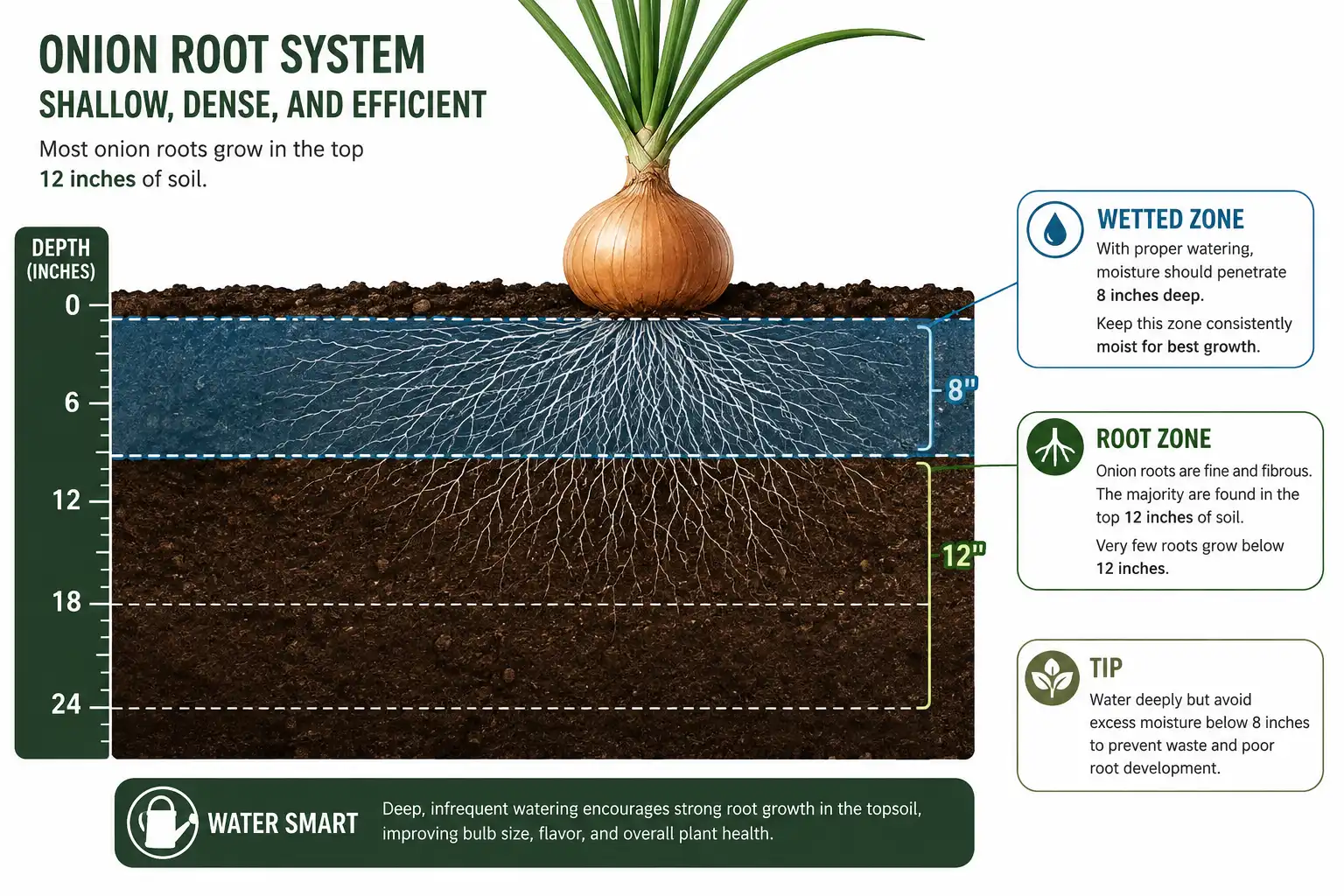
Onions have almost no reach. Utah State University Extension reports that 90 percent of onion roots sit in the top 12 inches of soil. Most of the working roots run far shallower than that. So when the surface dries, the plant has nowhere else to go.
That shallow habit creates three specific problems once water gets irregular:
- Early bulbing. A dry spell tells the plant to quit making leaves and start a bulb. Fewer leaves means fewer bulb scales, so the onion finishes small.
- Splits and doubles. Dry, then wet, then dry again causes the growing point to divide. Pacific Northwest field trials logged split-bulb losses climbing 18 to 40 percent under withheld irrigation.
- Harsh flavor. Bulbs grown dry turn sharper and more pungent. Steady water is part of why mild onions taste mild.
Bulb size tracks water applied across the season. That single fact matters more than fertilizer timing, spacing, or variety choice.
Do Onions Like a Lot of Water?
Onions like a lot of water, but they never like standing water. The crop wants soil that stays evenly damp and drains freely. Saturated ground for even a day or two suffocates those surface roots.
Soggy onion beds bring on white rot, pink root, and downy mildew. Waterlogged plants also lose root mass, so they end up thirstier than a properly watered crop. Raised rows fix this on tight clay. Water moves down and out instead of sitting in the crown.
Here is the working rule. Soak deeply, then let the top inch dry slightly before the next pass. Never water a bed that still feels wet two inches down.
How Watering Frequency Changes With Soil Type
Soil texture decides frequency, not total seasonal water. Sandy ground holds less, so it needs smaller amounts more often. Heavier ground holds more, so it takes bigger drinks farther apart.
Onions hit stress once 25 percent of the available water in the top foot is gone. That threshold is far tighter than corn or soybeans. It also explains why the frequency table below looks so aggressive.
| Soil texture | Available water in top foot | Depletion before stress | Frequency in peak heat |
|---|---|---|---|
| Coarse sand | 0.5 to 0.75 inch | About 0.15 inch | Every 1 to 2 days, light |
| Sandy loam | 1.25 to 1.75 inch | About 0.35 inch | Every 2 to 3 days |
| Silt loam | 2.0 to 2.5 inch | About 0.55 inch | Every 3 to 4 days |
| Clay loam | 1.75 to 2.0 inch | About 0.45 inch | Every 4 to 5 days |
Beds outside Topeka sit on silt loam. Twice a week carries the crop until July, and then move to every third day. Growers on river sand in the Kansas River bottoms water nearly every morning in that same weather.
Mulch stretches all of those intervals. Two to three inches of clean straw over the row cuts evaporation and holds surface moisture where onion roots feed. The same logic behind mulching in the field works even better in a small onion bed. It holds weeds down too.
How to Check Onion Soil Moisture Before You Water
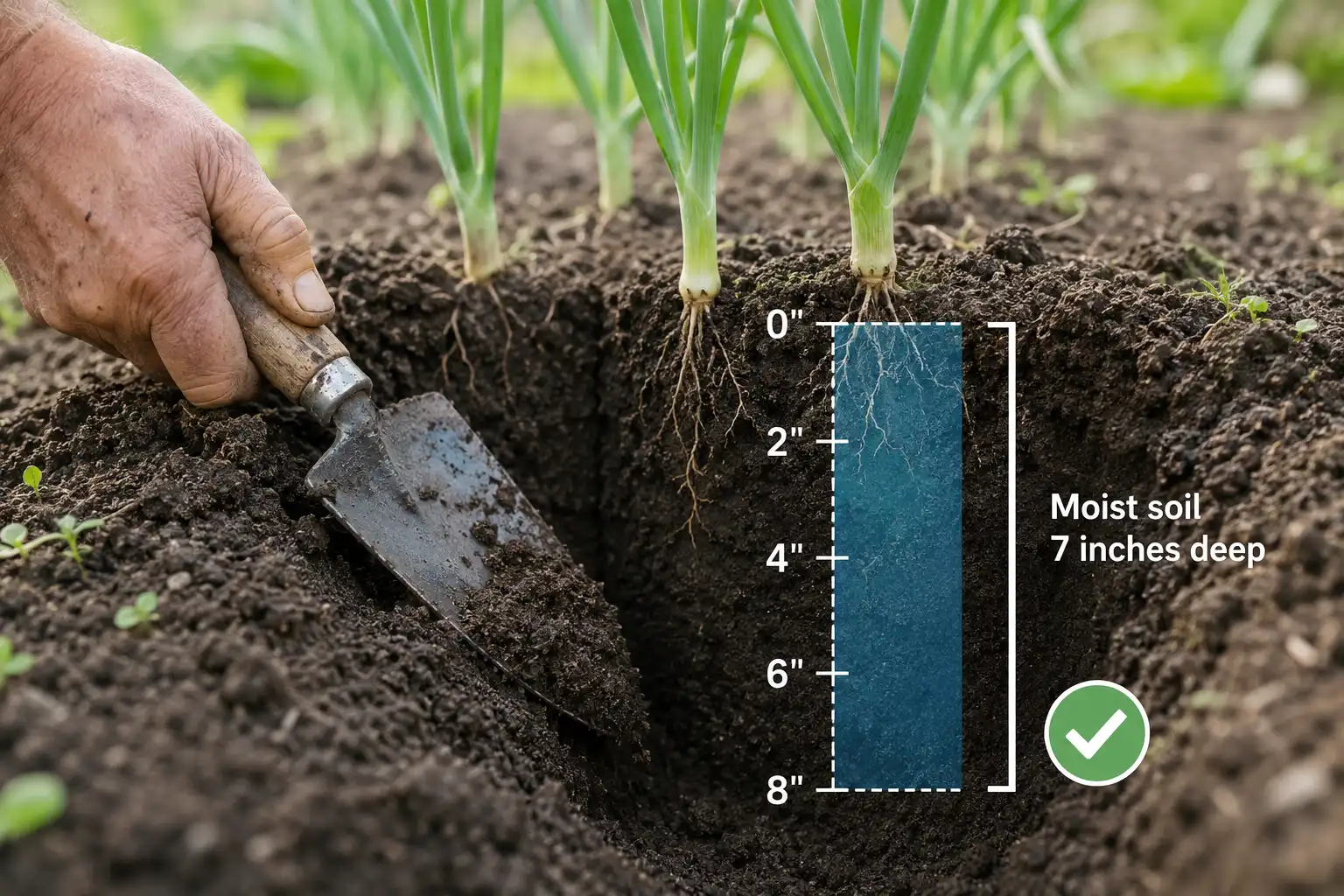
Check the soil, not the calendar. Three methods work, and each takes under a minute.
- Knuckle test. Push a finger into the row beside a plant. Dry at the first knuckle means water today.
- Trowel test. Dig a 6-inch slot. Squeeze soil from the bottom of the hole. Crumbly and pale means dry, and moist soil forms a loose ball that darkens your palm.
- Meter or sensor. A soil moisture meter reads the root zone without digging, which helps in a mulched bed.
For anyone running tensiometers or gypsum blocks, Oregon State University research on onion irrigation gives clear targets for silt loam. Readings near 10 centibars sit close to field capacity. Between 15 and 25 centibars, it is time to irrigate. Above 25 centibars, the crop is already stressed.
After you water, dig again and confirm the wetted band reaches 6 to 8 inches. Shallow watering trains roots to stay at the surface. Then one hot afternoon wilts the whole row.
The Best Way to Water Onions Without Spreading Disease
Water at the base of the plant, early in the morning. Wet foliage overnight invites downy mildew and purple blotch. Onion leaves also hold water in their crevices for hours.
Drip tape is the cleanest option for onions. Set 1 gallon-per-hour emitters at 8 to 12 inch spacing down the bed center. Then run 30 to 60 minutes on sand. Clay takes 60 to 90 minutes to reach 6 to 8 inches. Commercial growers bury tape 3 to 4 inches deep between paired rows for even wetting.
Soaker hoses do nearly the same job in a garden bed. Lay one line per 12-inch row spacing, then run it 60 to 120 minutes. Hand watering works too, as long as you aim at the soil and soak instead of sprinkling.
Overhead sprinklers are the weakest choice once leaves close over the row. If sprinklers are your only option, water by 9 a.m. so leaves dry before evening. For watering onions, you can use a drip irrigation kit with a water timer for consistent, automated watering.
Watering Onions in Containers and Raised Beds
Containers need water far more often than ground beds, usually daily in summer heat. Potting mix holds little water, and pot walls heat up fast. Check every morning, then water until it runs from the drainage holes.
Raised beds fall in between. Expect every 2 to 3 days in July, since the sides of the bed dry from all directions. Deeper beds hold moisture longer than shallow ones.
If you grow onions in a bucket, plan on twice-daily checks during a heat wave. A 5-gallon container carrying three or four onions can dry down in a single afternoon at 100 degrees.
Watering Green Onions and Onion Sets
Green onions follow the same 1 inch per week rule as bulb onions. Their season is shorter, though, so there is no bulbing surge and no shutoff period. Keep the soil evenly damp right up to the day you pull them.
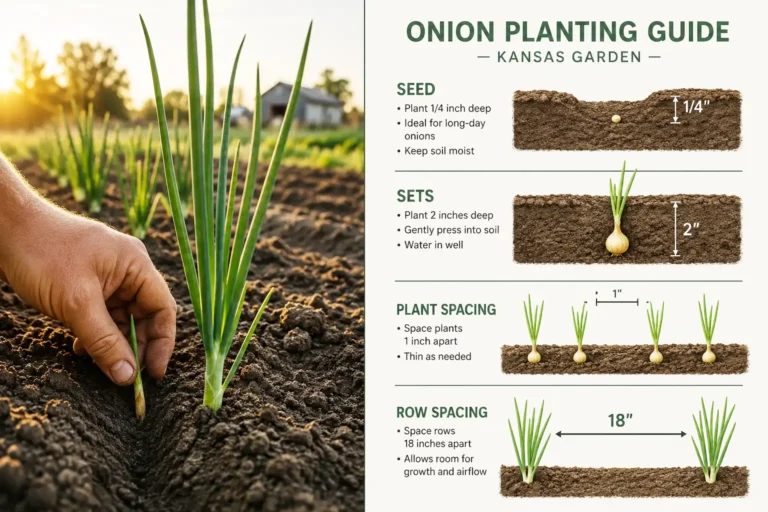
Onion sets need a good soak at planting to settle soil around the dry bulb. After that, hold back on volume for two weeks while roots form. Too much water on an unrooted set causes rot at the basal plate.
Transplants get the opposite treatment. Water them in heavily at planting, then again two days later. Trimmed roots cannot pull much moisture yet.
When to Stop Watering Onions Before Harvest
Stop watering once 25 to 50 percent of the tops have fallen over on their own. University of Minnesota Extension puts it plainly: cut water when bulbs reach full size and tops begin to fall. Utah State University Extension goes further and ends irrigation at least two weeks before lifting.
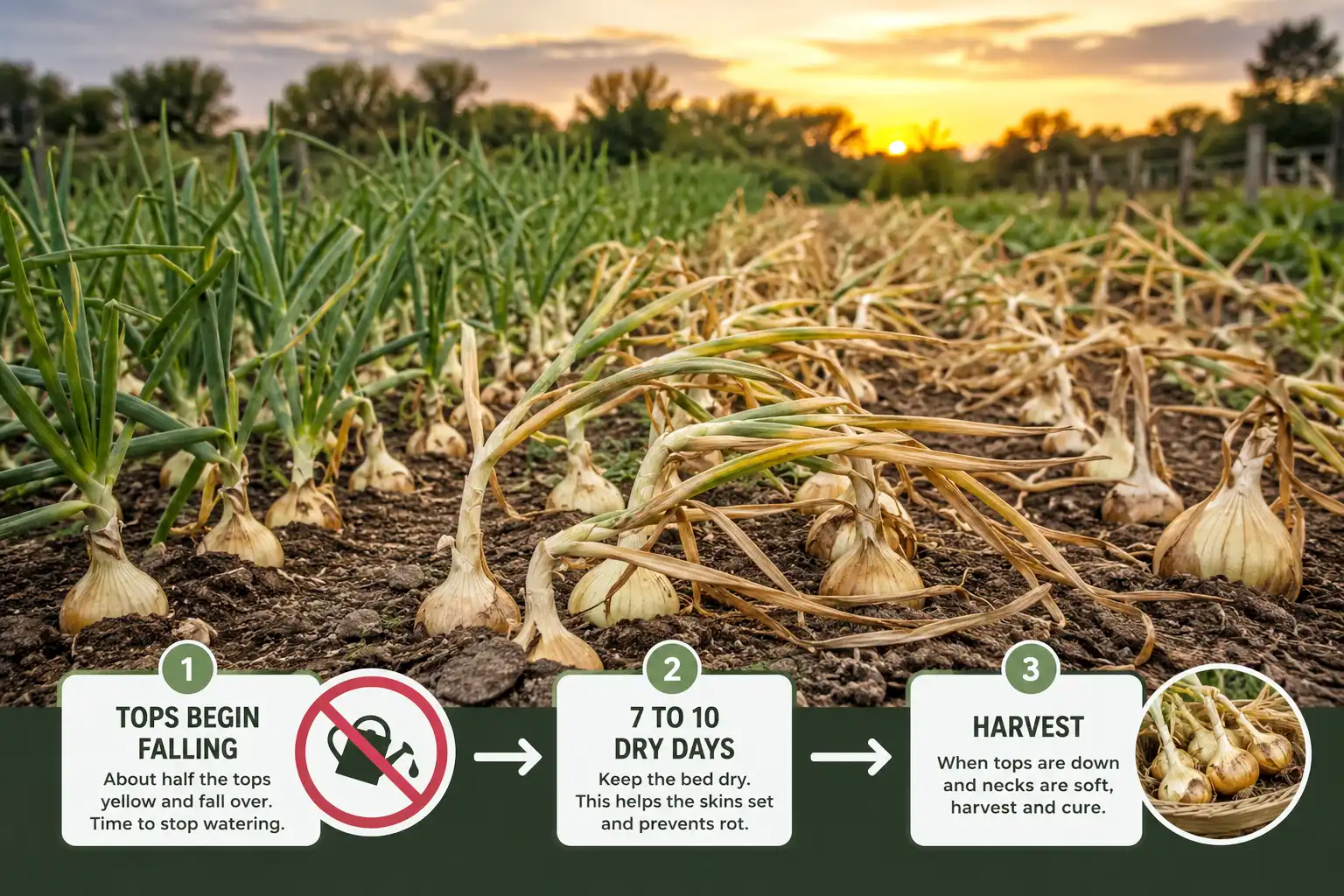
Water applied late in the season causes real damage:
- Necks stay thick and green, so they never seal during curing
- Botrytis neck rot moves in through that open neck during storage
- Outer skins crack or slip off, which ruins shelf appeal
- Bulbs hold extra moisture and rot from the top down in the shed
Do not bend the tops over to force maturity. That bruises the neck and gives fungus a way in. Let them fall on their own schedule, then wait for a dry stretch to lift.
After the tops flop, give the bed 7 to 10 dry days before you dig. Then cure the bulbs at 75 to 90 degrees with good airflow. Two to four weeks does it, until the necks feel tight and papery.
Signs of Overwatering and Underwatering Onions
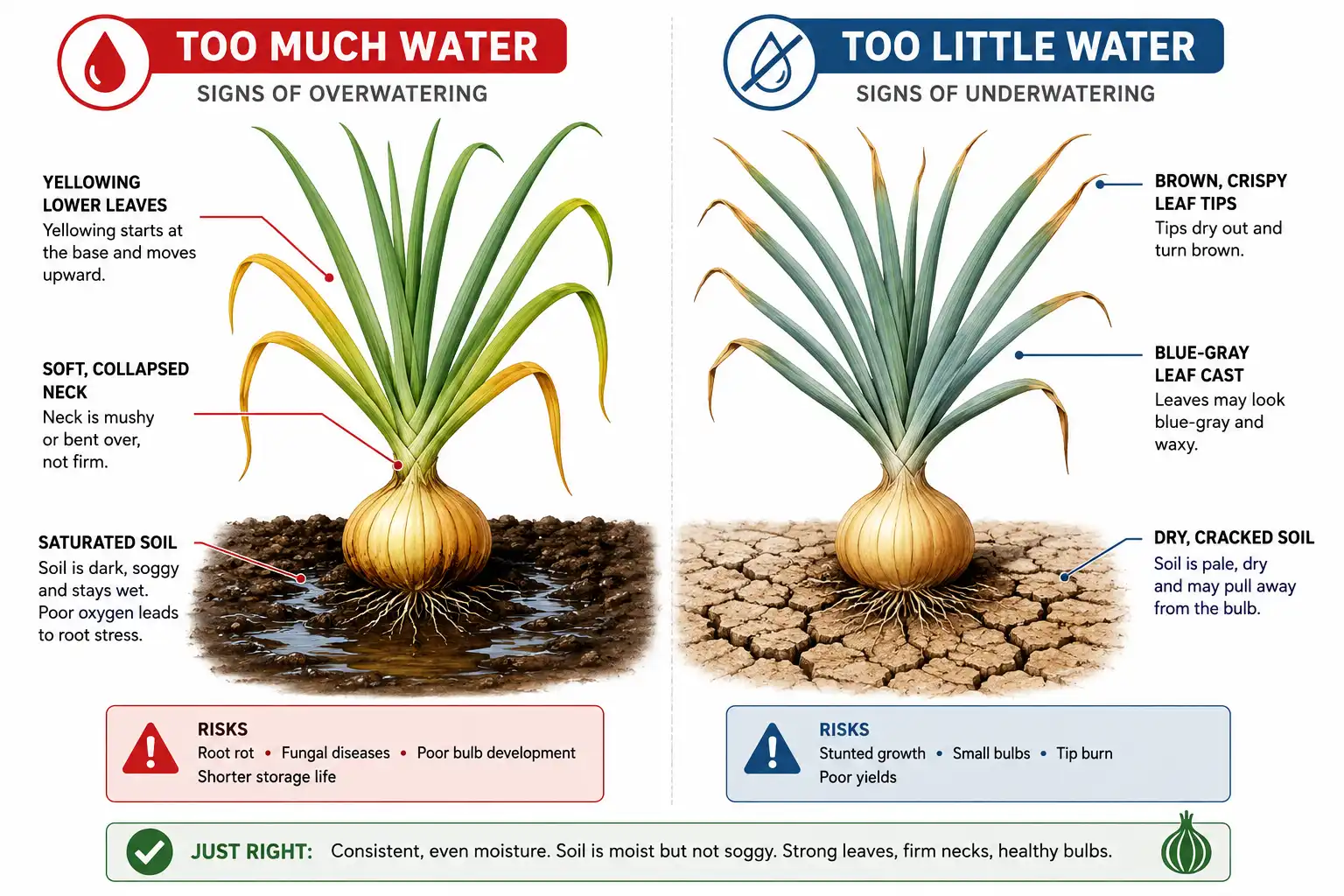
Both problems show up in the leaves before the bulb tells you anything. Read the symptoms below and adjust the same week, because a stalled onion never catches up.
| What you see | Cause | What to do |
|---|---|---|
| Lower leaves yellow first, neck feels soft | Too much water | Skip a pass, check drainage |
| Sour smell, mushy basal plate | Saturated soil | Improve drainage, raise the row |
| Gray fuzz or pale lesions on leaves | Wet foliage overnight | Water at the base, water in the morning |
| Leaf tips brown and crisp | Too little water | Soak deeper, add mulch |
| Blue-gray waxy cast to the leaves | Drought stress starting | Water today |
| Bulbs split into two or three centers | Uneven watering | Move to a fixed schedule |
| Bulbs stopped sizing at 1.5 inches | Dry spell during bulbing | Keep moisture steady through bulbing |
Yellowing confuses a lot of growers, since both extremes cause it. So look at the soil before you act. Wet soil plus yellow leaves means back off. Dry soil plus yellow leaves means water first, then feed, because nitrogen leaches out of dry sandy ground. Matching your onion fertilizer choices to your watering schedule clears up most of that confusion.
FAQs on Watering onions
Should you water onions every day?
Can you overwater onions?
How often should I water onions during a heat wave?
Does rain count toward the weekly inch?
Bottom Notes
Set intermediate-day onions in late March in zone 6a. Water twice a week through May on silt loam. Once July heat arrives, move to every third day and add straw mulch. The rain gauge decides everything, not the calendar.
Two moments matter most, and those are bulbing and shutoff. Keep water steady while bulbs swell, then quit completely when the tops start to fall. Get those two right and the rest of the season forgives small mistakes.