Are Spanish Onions Yellow Onions? Here’s the Simple Truth
Walk any produce aisle and you’ll spot big golden bulbs labeled Spanish, sitting right beside the regular yellows. So are Spanish onions yellow onions, or something different? The short version: they’re closely related.
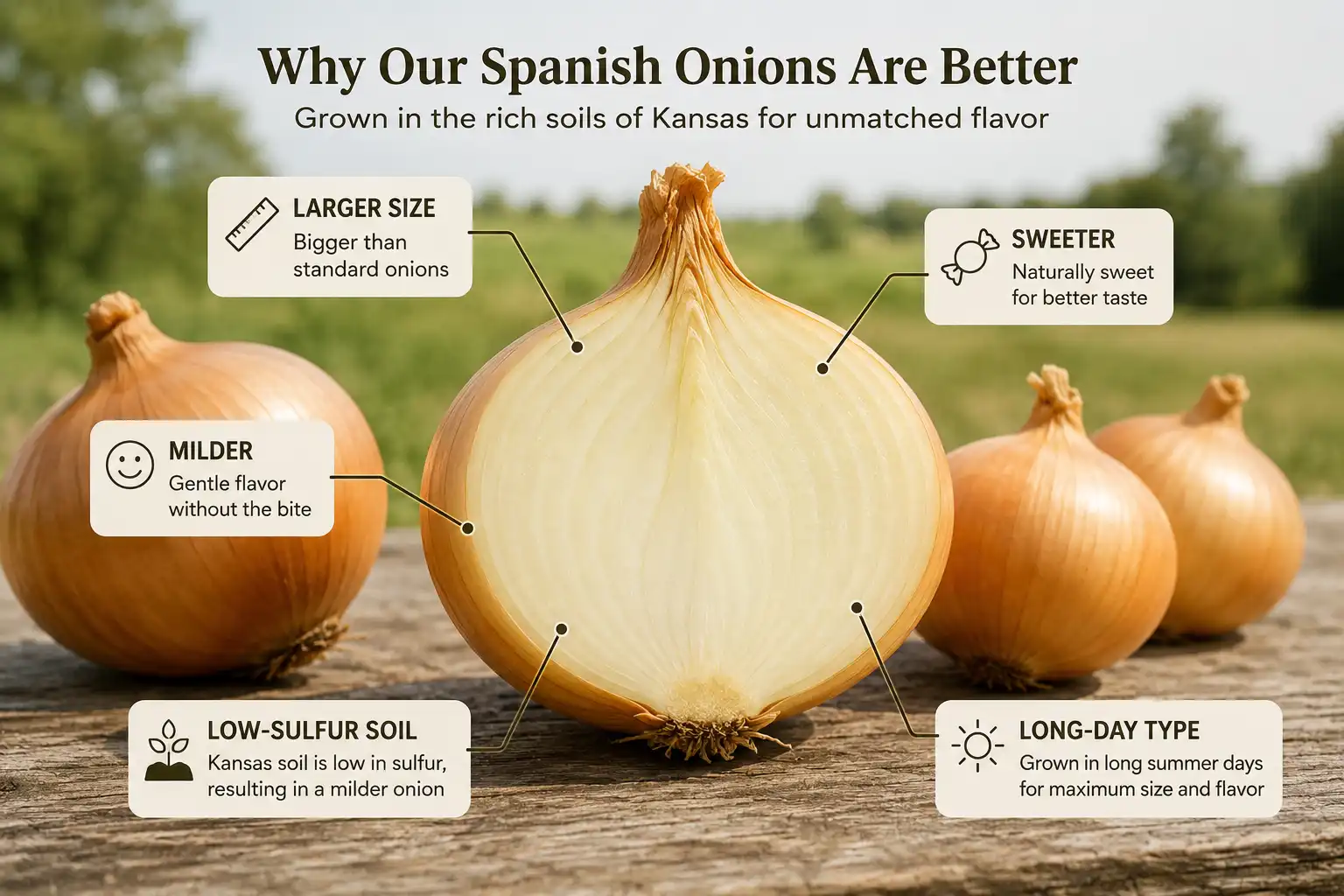
Yes. Spanish onions are yellow onions, specifically a large, mild, sweeter subtype. Every Spanish onion is a yellow onion, but not every yellow onion counts as Spanish. Low-sulfur soil and bigger bulbs are what set them apart.
Are Spanish Onions Yellow Onions? The Straight Answer
Yes, a Spanish onion is a yellow onion at its core. It sits inside the yellow onion family as one specific type, not a separate species. All of common bulb onions are the same plant, Allium cepa. So a Spanish onion carries the same golden, papery skin you already know from a standard yellow.
So why do stores shelve them on their own? Mostly it comes down to size. Spanish bulbs run large and round, and shoppers pick them out by eye. The name points to Spain, but growers there didn’t create them. Romans cultivated this style of onion first, then carried it into Spain as they moved through the region.
Know more: Candy Onions 101
How Do Spanish Onions Differ From Standard Yellow Onions?
Size and raw bite are the two clearest differences. A Spanish onion is bigger, often 3 to 6 inches across, and some bulbs top a pound or two. Its flavor stays mild and slightly sweet, even raw. A standard yellow onion is smaller and sharper, with a harsher kick when you bite it uncooked.
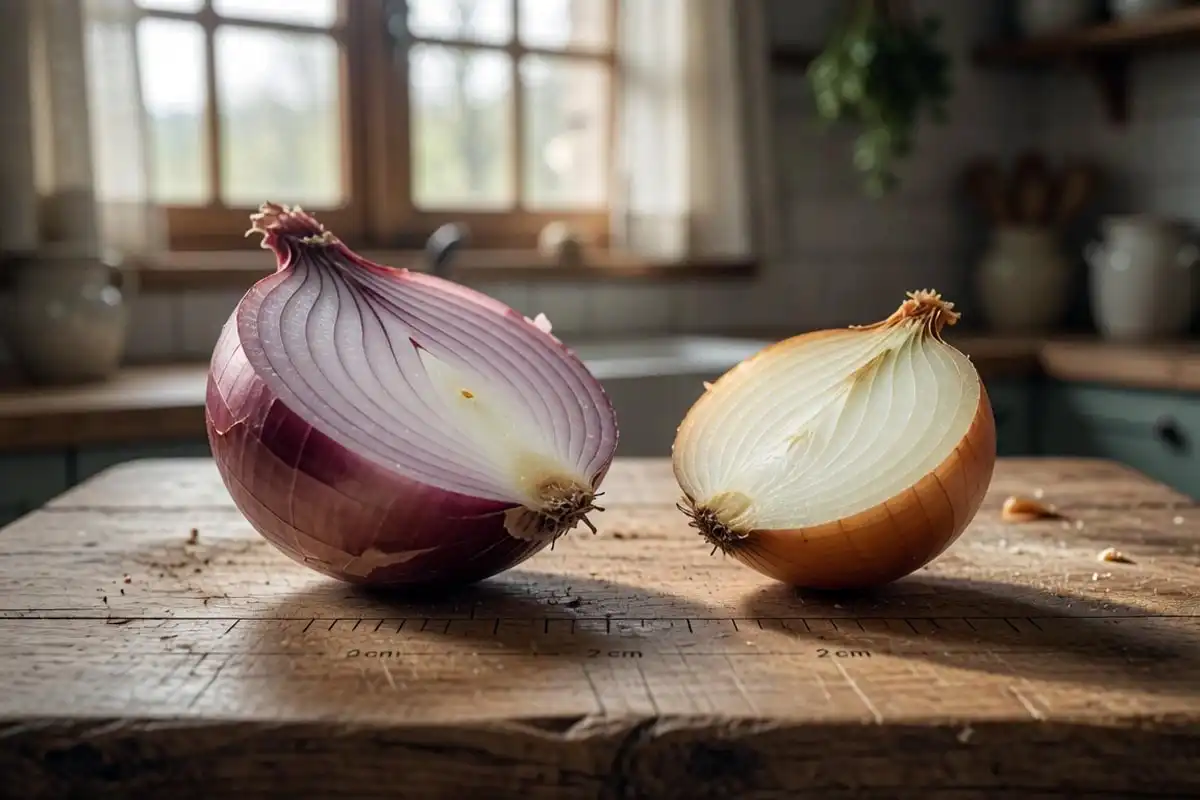
Water content shifts too. Spanish onions hold more moisture, so they turn tender fast in a hot pan. Because the flavor is gentle, reach for them when to want onion presence without the punch. For everyday cooking, both work. But for raw rings on a burger or a fresh salad, the Spanish type is the easier eat.
Why Are Spanish Onions Milder and Sweeter?
Low sulfur in the growing soil is the main reason. The sharp, eye-watering punch in an onion comes from sulfur compounds. When growers raise these onions in low-sulfur ground, that punch drops, and the natural sugars come through instead. Those sugars are glucose, fructose, and sucrose.
Size helps too. A bigger bulb spreads the same flavor across more onion, so each bite feels gentler. Standard yellow onions, by contrast, pack high sulfur and taste pungent raw. That’s why they mellow and sweeten so well once you cook them down. According to the National Onion Association, yellow onions make up the bulk of the U.S. crop, and Spanish types fit right inside that group.
Is a Spanish Onion the Same as a Sweet Onion?
Not quite, though the two overlap. A true sweet onion, like a Vidalia or a Walla Walla, runs even lower in sulfur and softer in texture. A Spanish onion sits in the middle. It’s milder than a standard yellow, yet firmer and more all-purpose than a dedicated sweet onion.
That middle spot is handy. Spanish onions hold up better in storage than a fragile summer sweet onion. Still, they carry enough sweetness for raw use. So think of the Spanish onion as the bridge between a sharp yellow cooking onion and a delicate sweet onion.
Are All Spanish Onions Yellow?
Almost always, but not every single one. The classic Spanish onion you meet in the store is yellow, plain and simple. Once you move into seed catalogs, though, “Sweet Spanish” shows up as a whole variety group. That group includes the popular Yellow Sweet Spanish and a paler White Sweet Spanish strain.
So the color you find at the market is yellow, while a grower can also pick a white type from seed. The Yellow Sweet Spanish is an old heirloom, grown in the United States since at least 1916. Because it’s open-pollinated, you can keep the line going yourself. If you want a steady supply, learn the basics of saving your own onion seed from your best bulbs each year.
Where Do Spanish Onions Grow Best?
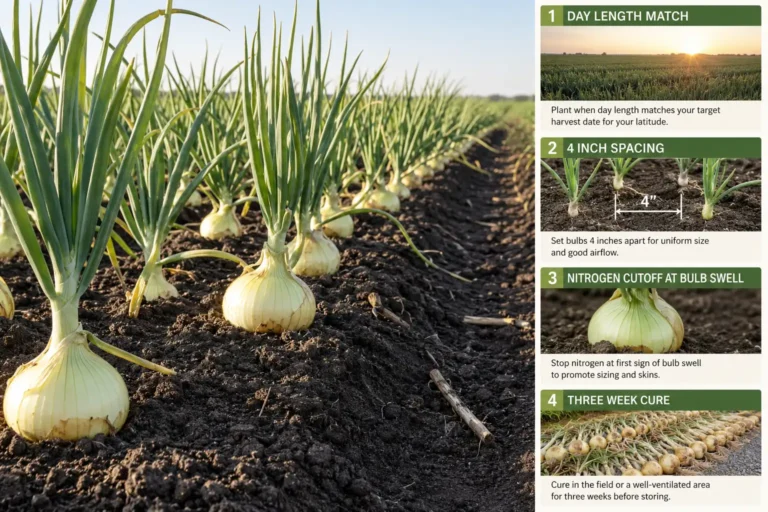
Up north, because Sweet Spanish types are long-day onions. Onions bulb in response to day length, not just age. A long-day onion starts forming its bulb when daylight stretches to about 14 to 16 hours. That kind of daylight shows up in the northern half of the country, roughly USDA zone 6 and cooler.
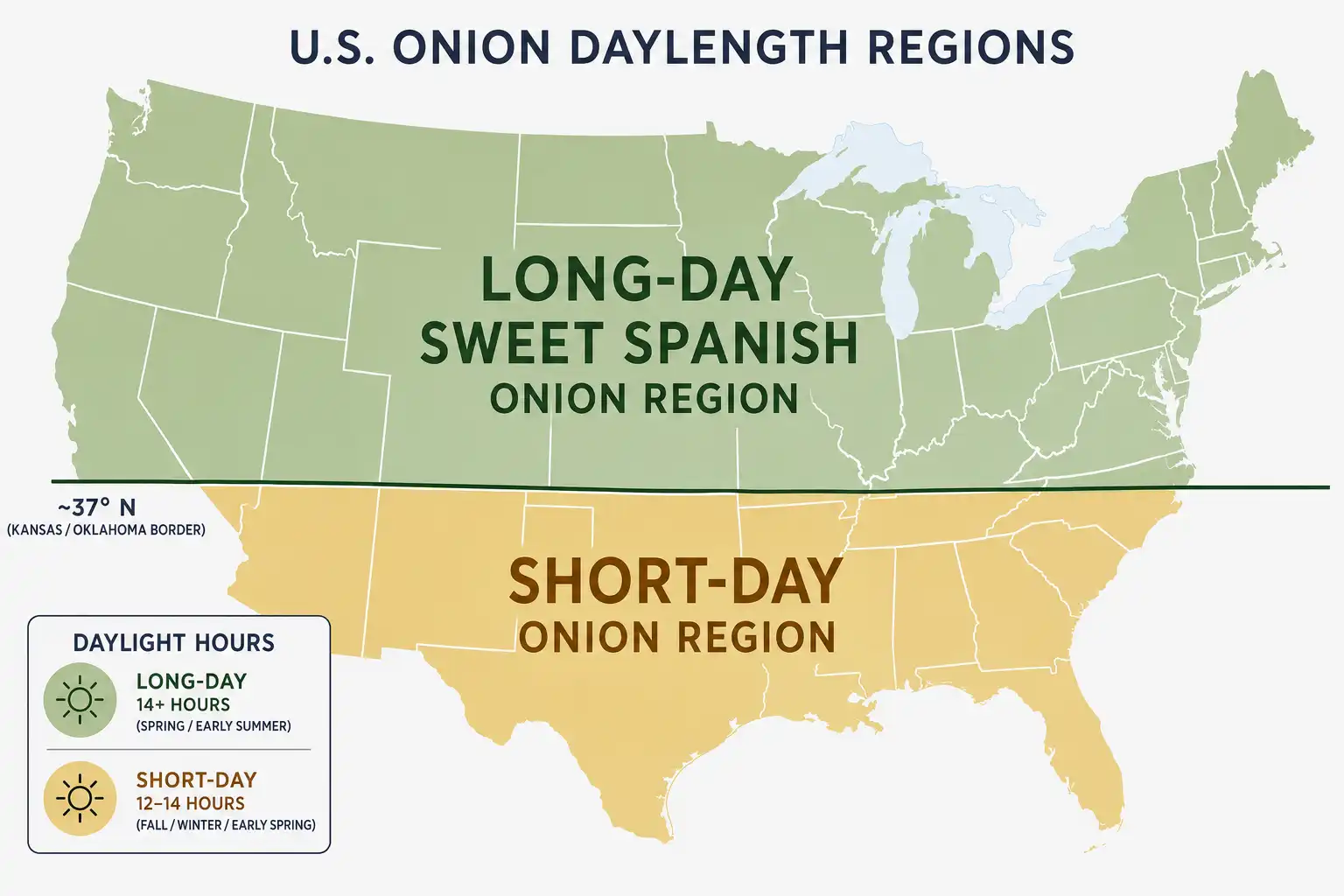
The rough dividing line falls near the 37th parallel, which runs close to the Kansas and Oklahoma border. In Topeka, well north of that line, long-day Spanish onions size up nicely. Down south, growers lean on short-day varieties and often use fall onion planting instead. Plant a long-day onion in a short-day climate and it may never see enough daylight to bulb.
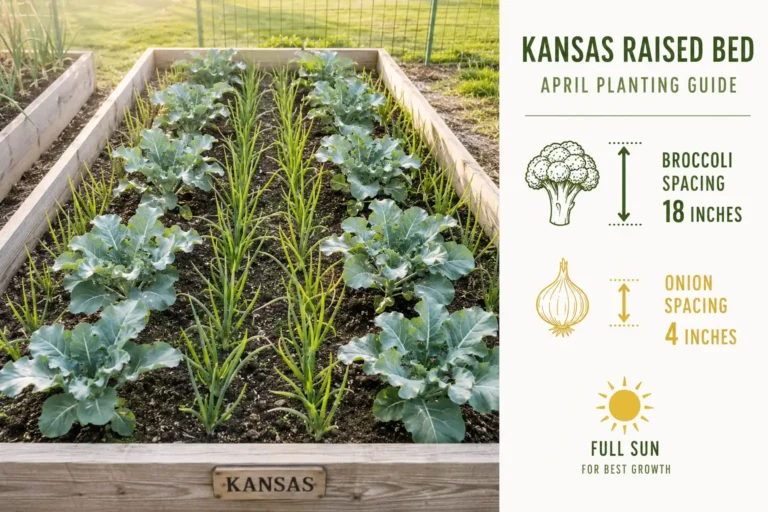
How to Grow Sweet Spanish Onions in Kansas
Sweet Spanish onions need a long season, so start early. Plan for roughly 110 days from transplant to a mature bulb. First, begin seed indoors 8 to 10 weeks before your last frost. Or just buy ready transplants and skip that step. If you go the seed route, the same rules for starting Spanish onions from seed apply to any long-day type.
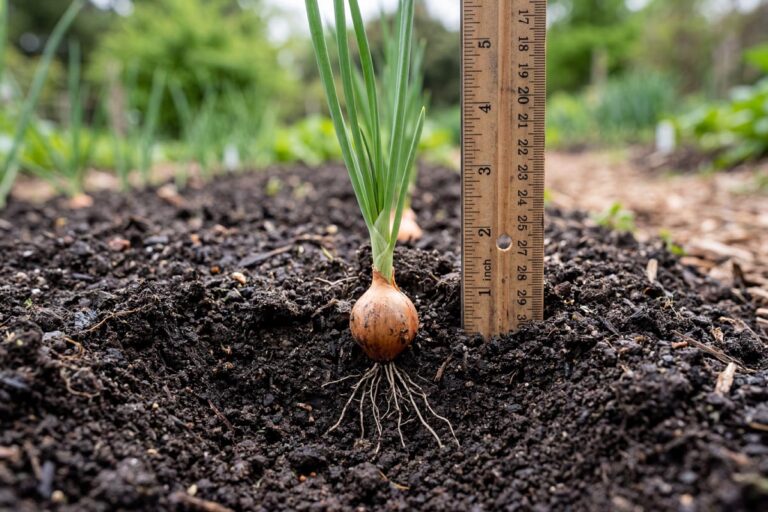
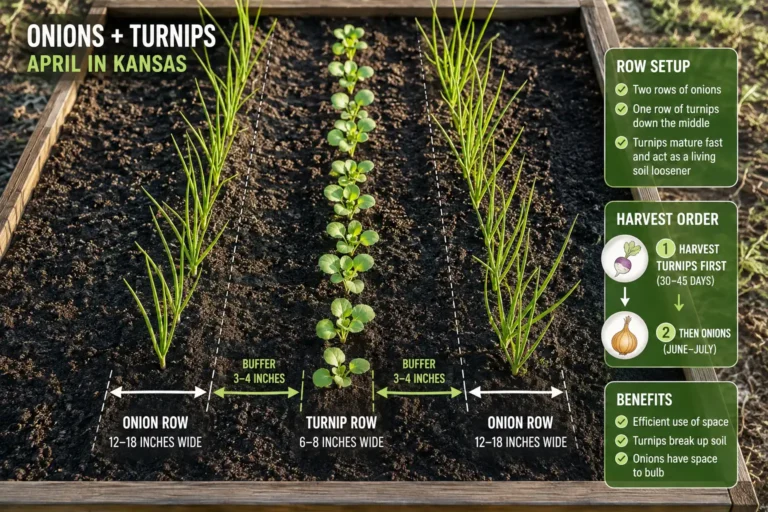
Next, harden the seedlings off for a week. Then get them in the ground as soon as the soil can be worked in early spring. Matching the window to the last frost is the same approach used for timing your onion planting every year. When you’re setting out onion transplants, space them 4 to 6 inches apart. Keep rows about 12 to 18 inches wide. Give them full sun and loose, well-drained soil.
Feeding matters, since onions are heavy feeders. So work compost and a balanced 10-10-10 fertilizer into the bed at planting. After that, side-dress with nitrogen through spring while the tops grow. A nitrate-based nitrogen source pushes sweetness. Once the bulbs start swelling, ease off the feed. For water, keep the soil evenly moist, around an inch a week, and never let it dry out during bulbing.
Harvest comes when the green tops flop over and the necks go soft. Pull the bulbs on a dry day. Then cure them in the sun for 2 to 7 days. Move them to a dry, airy spot to finish. After they’re dry, clip the tops and roots.
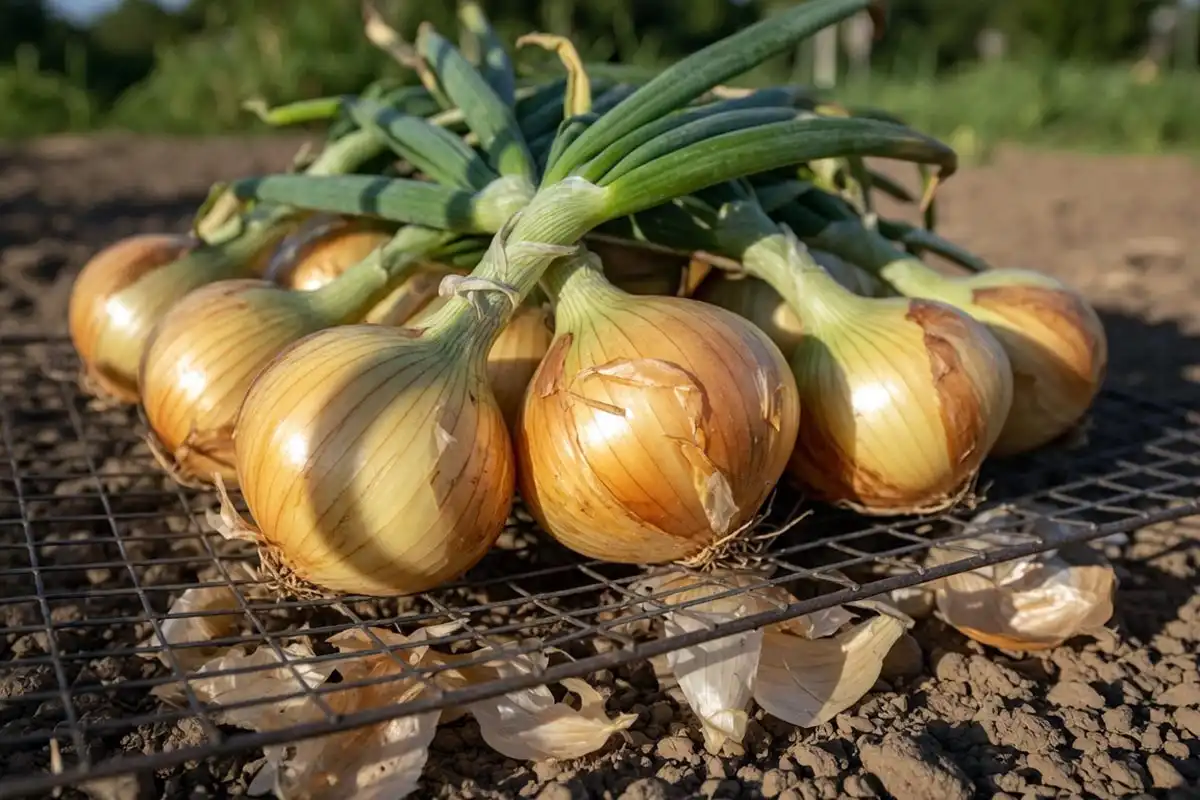
For storage, keep expectations fair. Spanish onions hold for a few months, not all winter. Since they’re sweeter, they don’t keep as long as a pungent storage onion. So eat your Spanish onions first, and save the sharp storage types for later in the season.
Bottom Line for Your Onion Patch
A Spanish onion is simply a big, mild yellow onion. Same family, gentler flavor, a little more sweetness. If a recipe calls for Spanish and you only have standard yellow on hand, swap it in. You’ll lose a touch of sweetness, nothing more. For growing, match the day length to your latitude and feed the plants well. Do that, and you’ll pull nice heavy bulbs come summer.