16 16 16 Fertilizer: What It Is, What It Feeds, and How to Use It
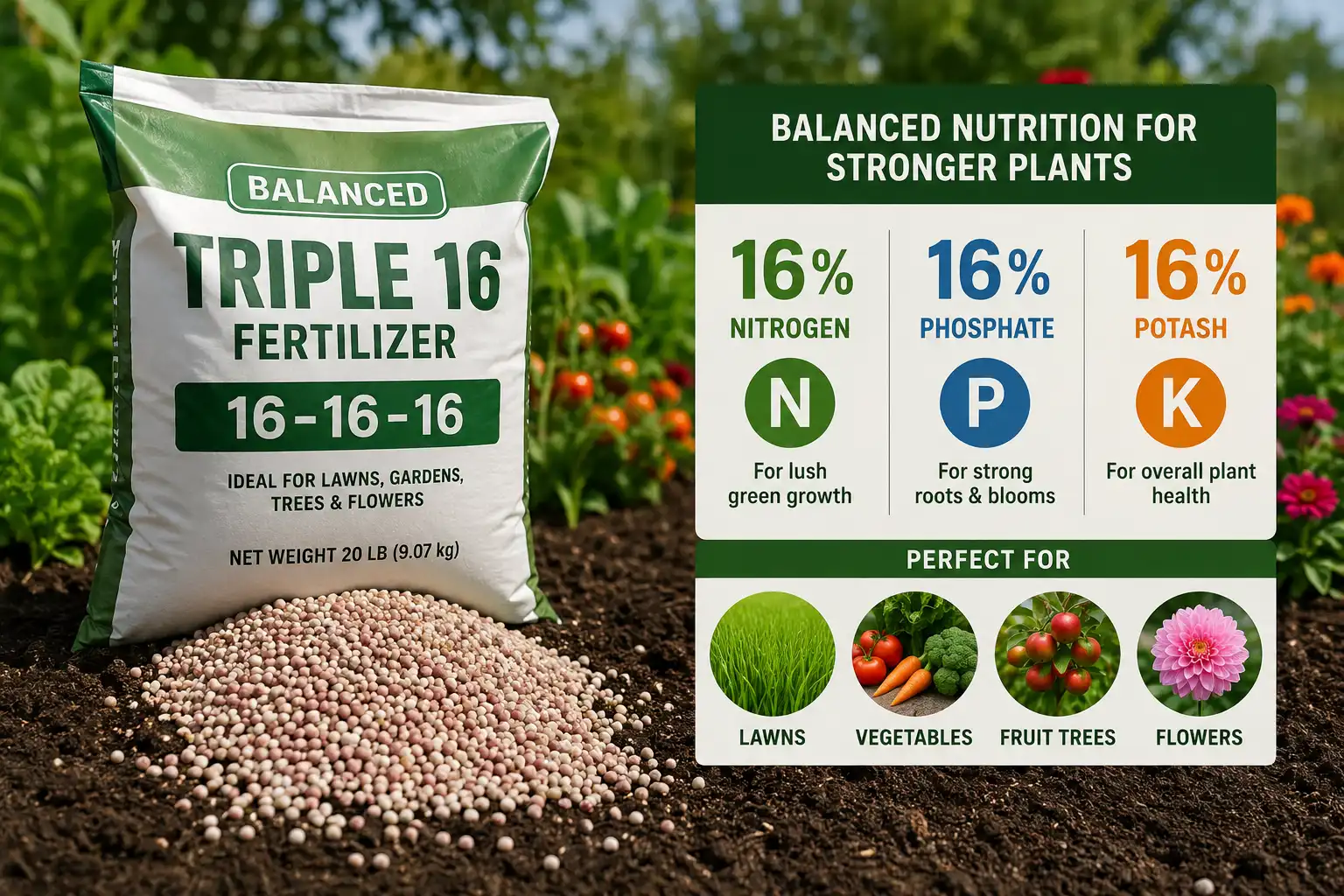
16 16 16 fertilizer is one of the most common balanced blends you will find, yet plenty of folks spread it without knowing what fits and what does not. This guide breaks down what triple 16 feeds, how much to use, and where it belongs on your land.
16 16 16 fertilizer is a balanced, all-purpose blend with equal parts nitrogen, phosphate, and potash. It feeds vegetables, flowers, shrubs, new lawns, and young trees. Since the numbers are high, you spread less per square foot than lighter blends.
What Is 16 16 16 Fertilizer?
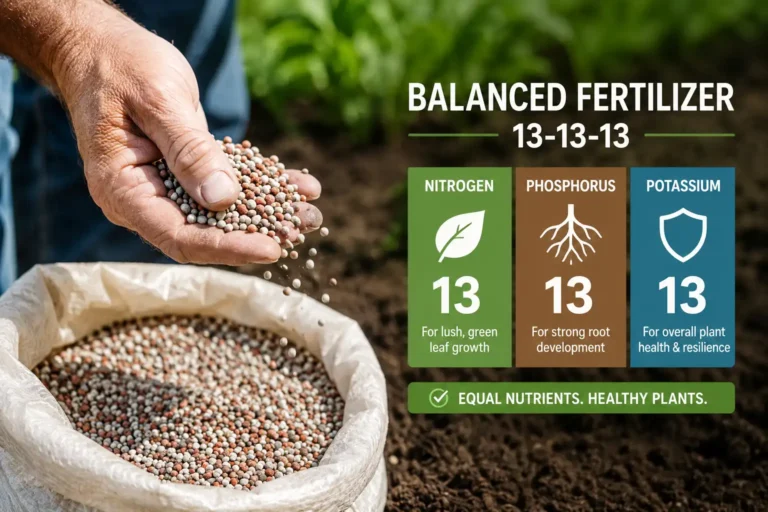
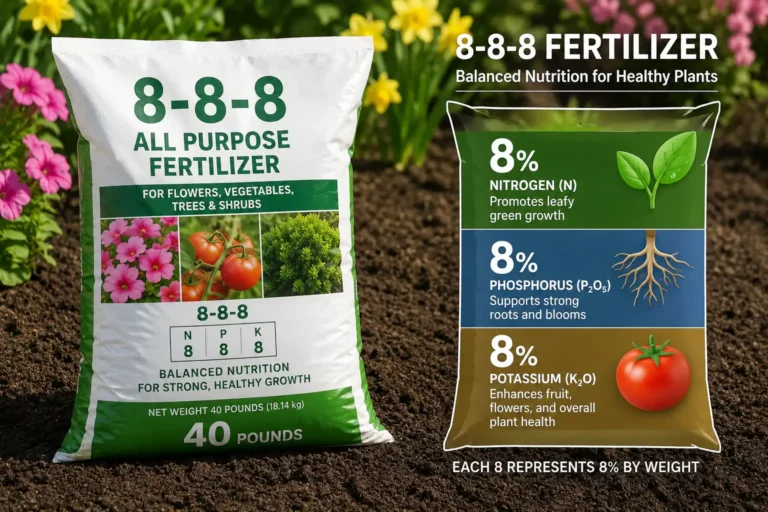
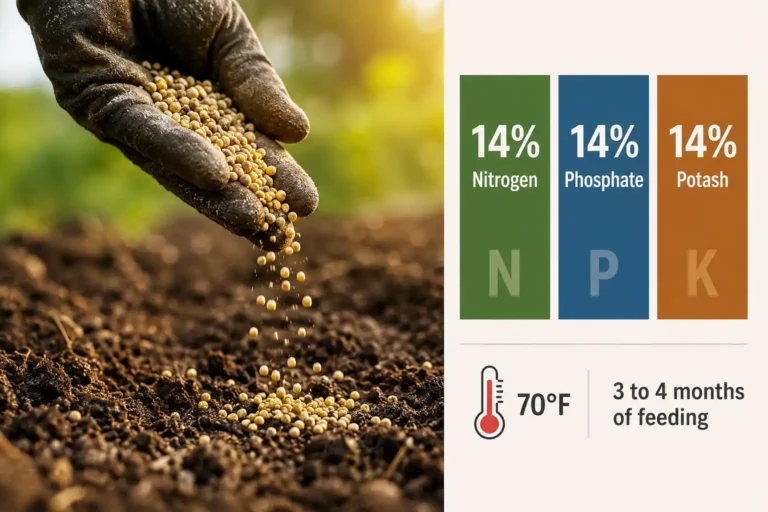
16-16-16 fertilizer is a balanced, complete fertilizer. It holds 16% nitrogen, 16% phosphate, and 16% potash by weight. Growers also call it triple 16. All three primary nutrients sit at the same level. So it feeds most plants without favoring one job over another.
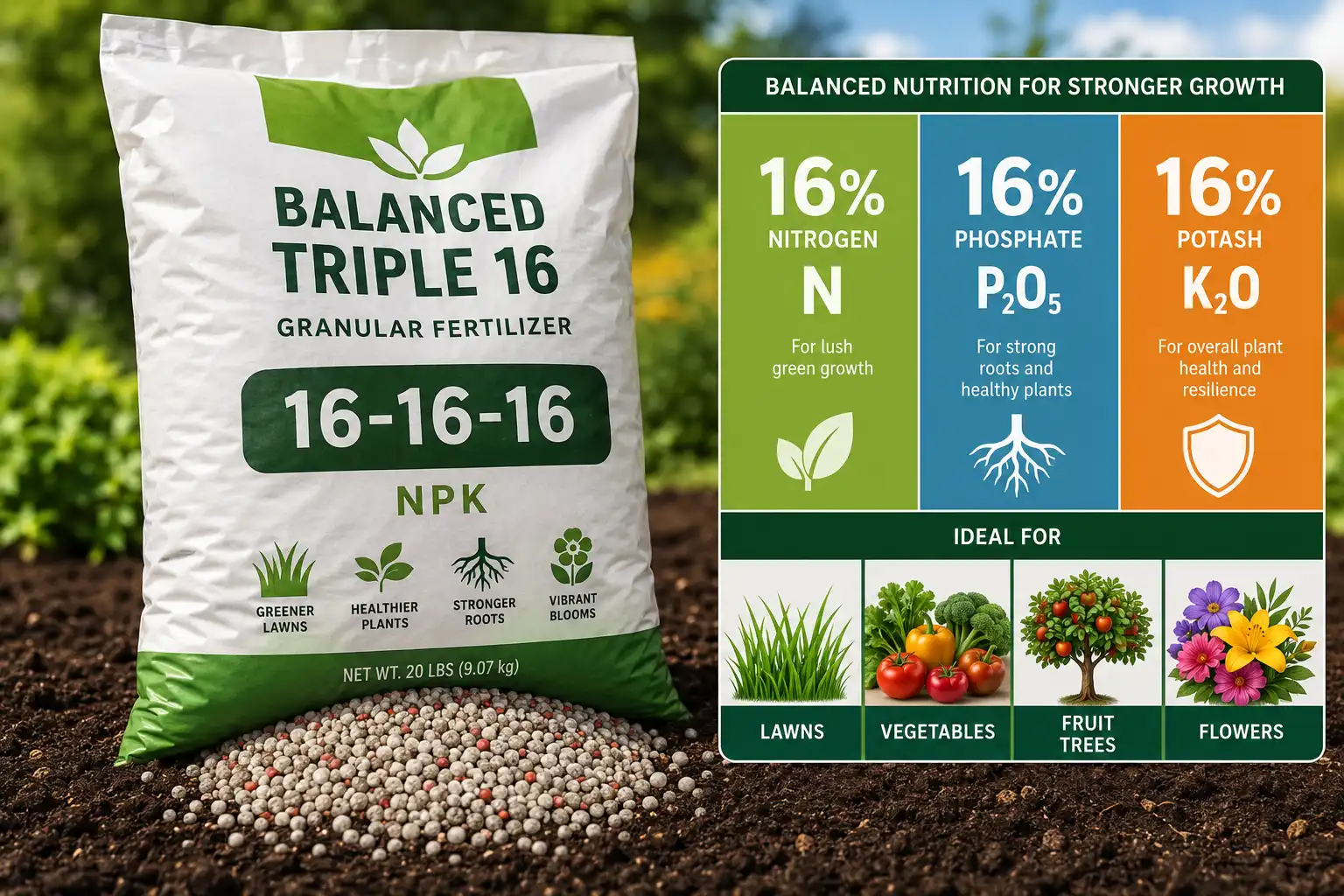
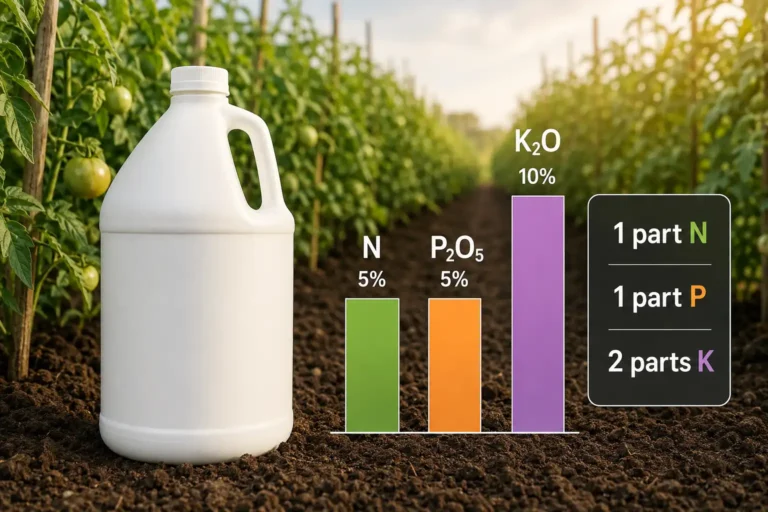
The three numbers are the guaranteed analysis, and that label follows a national standard. So every bag must show it. In a 50-pound bag, 8 pounds is nitrogen, 8 is phosphate, and 8 is potash. The rest, right around 52%, is carrier that helps the granules spread evenly. Nearly half the bag is plant food, which makes triple 16 a concentrated blend. To read any product with confidence, it helps to know how NPK fertilizer works for crops. That same logic applies to a triple 16 label.
What Do the Numbers on 16-16-16 Mean?
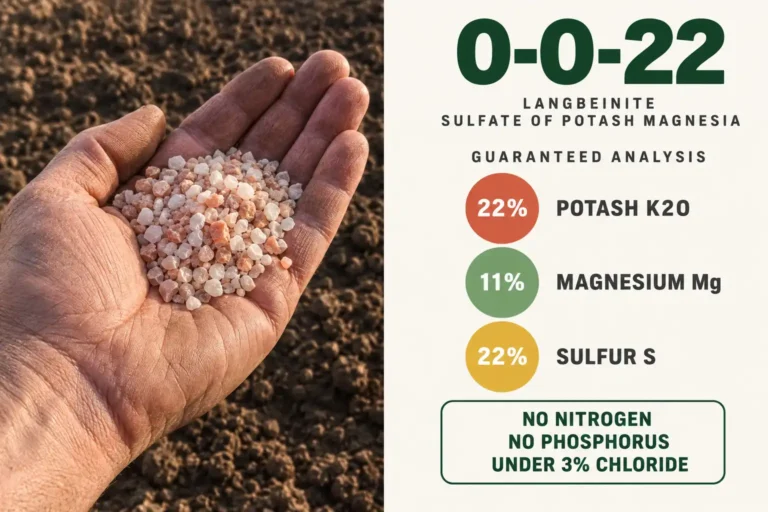
The first number is nitrogen, the second is phosphate (P2O5), and the third is potash (K2O). Here is the part most bags skip. The last two numbers report oxides, not the pure element. Phosphate holds about 44% actual phosphorus, and potash holds about 83% actual potassium. So a 50-pound bag of 16-16-16 gives 8 pounds of nitrogen. It also gives about 3.5 pounds of actual phosphorus and 6.6 pounds of actual potassium. For routine feeding, that math does not change your day. It matters when a soil test hands you a target in pounds of actual nutrient.
What Does Each Nutrient Do?
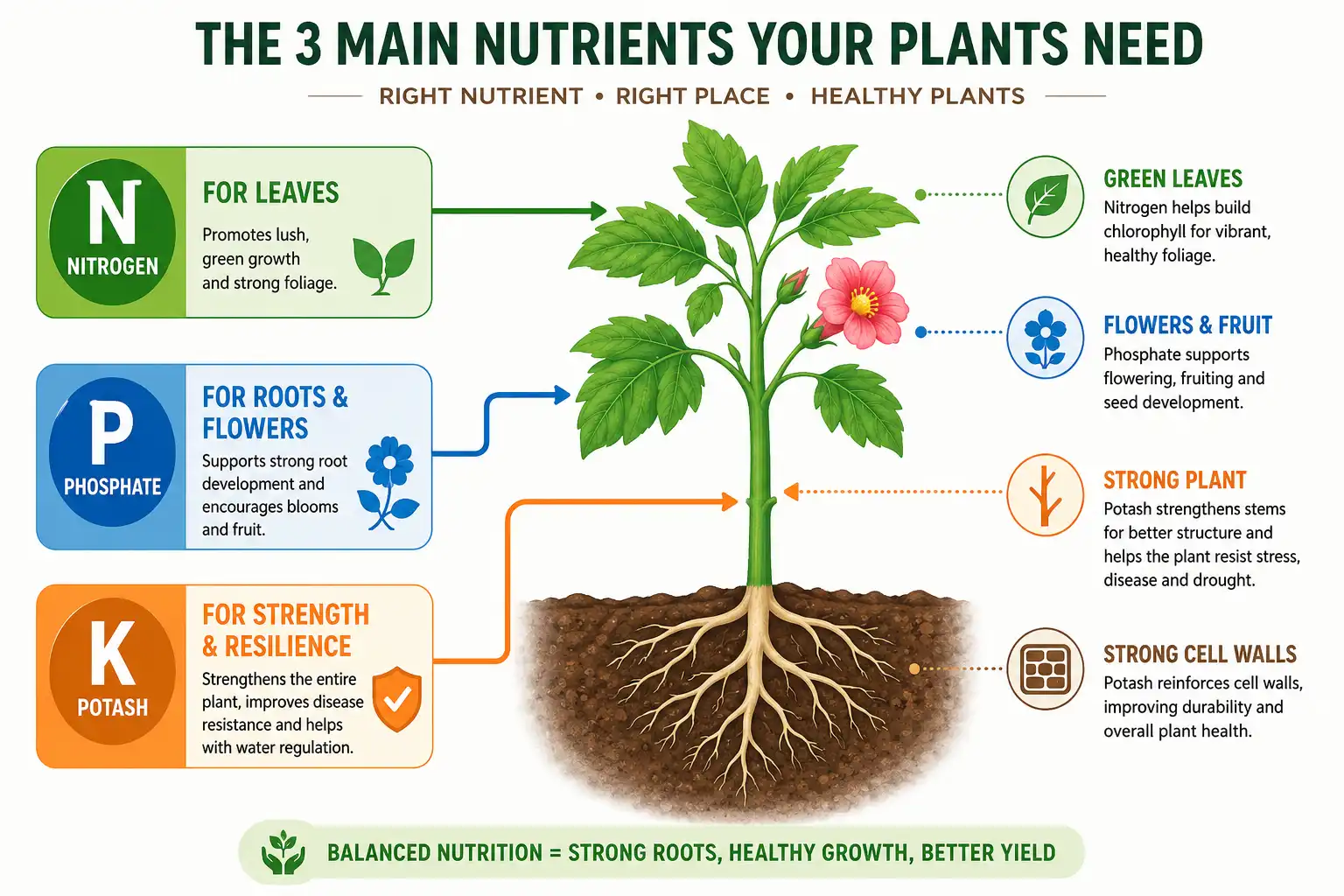
Each number feeds a different part of the plant. Here is the short version.
- Nitrogen (N): drives leafy green growth and builds chlorophyll for photosynthesis.
- Phosphate (P2O5): supports roots, energy transfer, flowering, and fruit set.
- Potash (K2O): manages water use, firms cell walls, and lifts stress and disease resistance.
When all three run even, the plant builds leaves, roots, and fruit at a steady pace. That balance is why triple 16 works as a general feed.
What Is 16 16 16 Fertilizer Used For?
16-16-16 fertilizer works as an all-purpose feed across the yard and garden. It fits a wide list of plants, so one bag can cover several jobs.
Common uses for triple 16 include:
- Vegetable gardens, from tomatoes and peppers to beans and squash.
- New lawns and fresh sod that need roots fast.
- Roses, annual flower beds, and ornamental shrubs.
- Young, non-bearing fruit trees building their frame.
- Berries and grapevines in their early years.
- Any bed where a soil test shows all three nutrients run low.
Because it is balanced, it is a safe default when you have no single deficiency to fix. Once your soil test points to one nutrient, though, a targeted blend does more.
Is 16 16 16 Granular or Liquid?
Most 16-16-16 sold is dry and granular, but you can also find water-soluble and liquid versions. The form changes how fast it feeds and how you apply it. Here is the quick breakdown.
- Granular, fast-release: simple and affordable, feeds quickly, needs more frequent passes.
- Granular, slow-release (coated): feeds over weeks, lowers burn risk, costs more per bag.
- Water-soluble or liquid: mixes with water for fast uptake, great for pots and quick fixes, but it leaches out sooner.
For field and garden work, it helps to use granular because it spreads fast and lasts. For containers and a quick green-up, a water-soluble triple 16 gets nutrients to the roots the same day.
How and When Do You Apply 16 16 16 Fertilizer?
Spread it evenly, then water it in. Dry triple 16 goes down on the soil, and water carries the nutrients into the root zone. A rough starting point for gardens is about 1 pound per 100 square feet. Timing tracks the season. Feed at planting or spring green-up, then repeat on a monthly to seasonal schedule based on the crop.
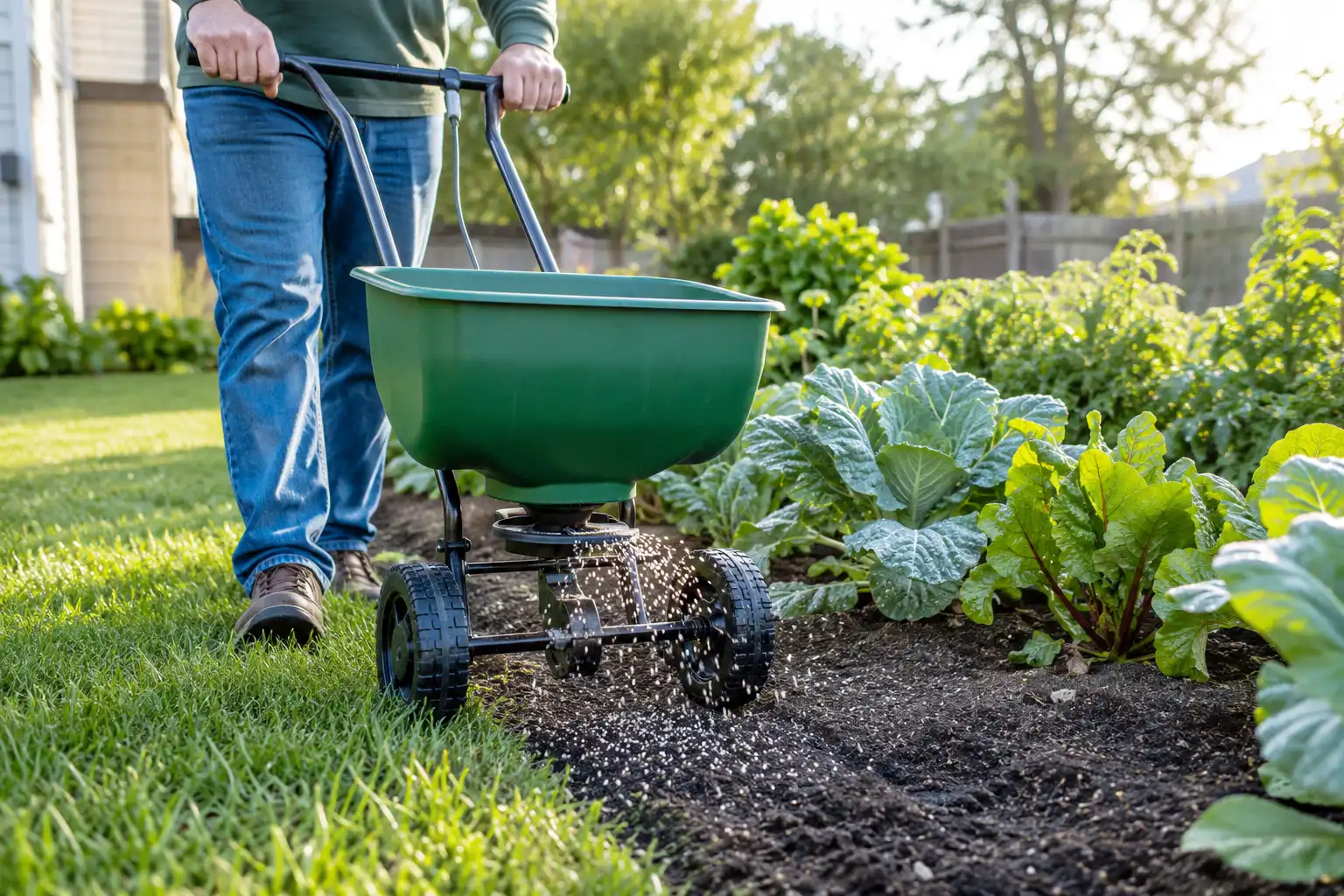
Even coverage is where most people slip. A handheld toss leaves streaks, and streaks show up as dark stripes and burned patches. So calibrating the spreader comes first. Run a test pass over a tarp, weigh what drops, and adjust the gate until the rate matches. For lawns and beds, a good drop spreader lays a straight, even pass. For bigger ground, a broadcast spreader covers more acres per hour.
A few application rules:
- Water in after spreading. That carries nutrients down and cuts burn risk.
- Keep granules off leaves and stems. Brush or rinse any that land on foliage.
- Do not double the rate. Extra nitrogen burns roots and pushes soft growth.
- Store the bag sealed in a cool, dry spot away from heat.
How Much 16-16-16 Do You Need?
Match the rate to the plant, and lean on nitrogen for the math. Say your lawn wants 1 pound of actual nitrogen per 1,000 square feet. Triple 16 is 16% nitrogen. So you divide 1 by 0.16, which comes to about 6.25 pounds of product per 1,000 square feet. Use this table as a starting guide, and always follow your specific bag.
| Plant type | Starting rate (16-16-16) | Timing |
|---|---|---|
| Vegetable garden | 1 to 1.5 lb per 100 sq ft | Work in at planting, side dress midseason |
| Flower and shrub beds | 1 to 1.5 lb per 100 sq ft | Early spring, repeat about every 6 weeks |
| New lawn or sod | About 6 lb per 1,000 sq ft | At seeding or sodding |
| Potted plants | Light dose per the label | Every 6 to 8 weeks |
| Young fruit tree | About 0.1 lb actual N per year of age | Split spring and fall |
Can You Use Too Much 16-16-16?
Yes, and over-application is the most common triple 16 mistake. Fertilizer is salt, so too much pulls water out of roots and scorches the plant. Warning signs include a white salt crust on the soil and yellow or brown leaf edges. You may also see wilting right after feeding and dark green streaks on a lawn. So more is never better with a concentrated blend.
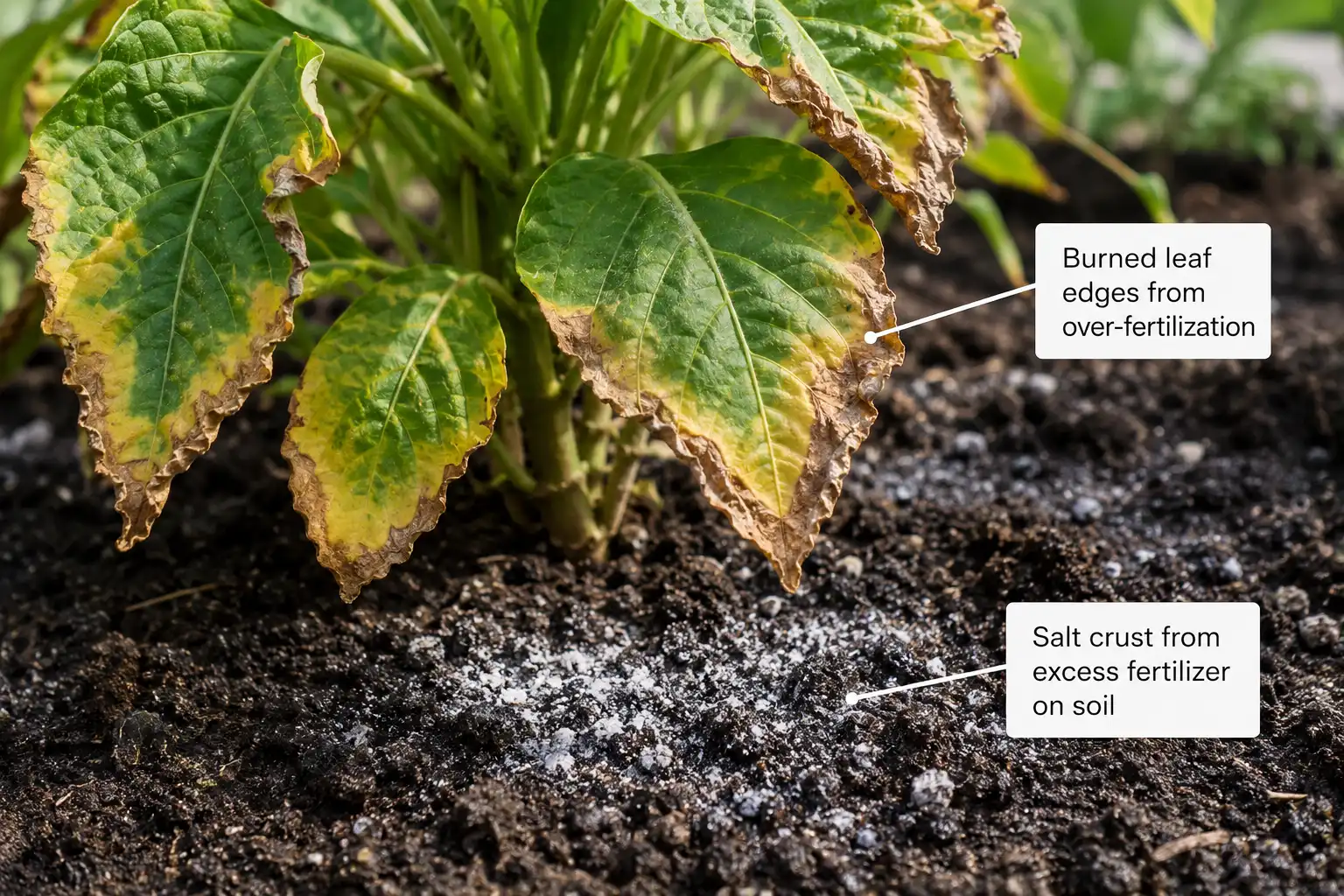
If you overdo it, act fast. Water the area deeply to flush salts past the root zone, then hold off on feeding until the plant recovers. Next time, weigh your product instead of guessing, and split large amounts into smaller passes.
Is 16 16 16 Fertilizer Good for Lawns?
Yes, but mostly for starting a lawn, not for long-term upkeep. Triple 16 gives new grass and fresh sod the phosphorus they need to root. So it makes a strong starter feed. On an established lawn, the story changes. Mature turf wants far more nitrogen than phosphorus. A high-nitrogen ratio, closer to 16-4-8 or a 3-1-2 blend, keeps grass green without adding phosphorus the soil may not need.
There is a rule side too. Many states limit phosphorus on established lawns unless a soil test shows a shortage, because runoff pollutes waterways. So for routine mowing-season feeding, a low-phosphorus lawn blend usually fits better. Save triple 16 for seeding, sodding, or ground that tests low across the board.
Is 16 16 16 Fertilizer Good for Fruit Trees?
Yes, especially for young, non-bearing trees, and it still works for mature trees at the right rate. Triple 16 gives a young tree the balanced feed it needs to build branches and roots. UC Cooperative Extension even uses 16-16-16 as an example for orchard feeding.
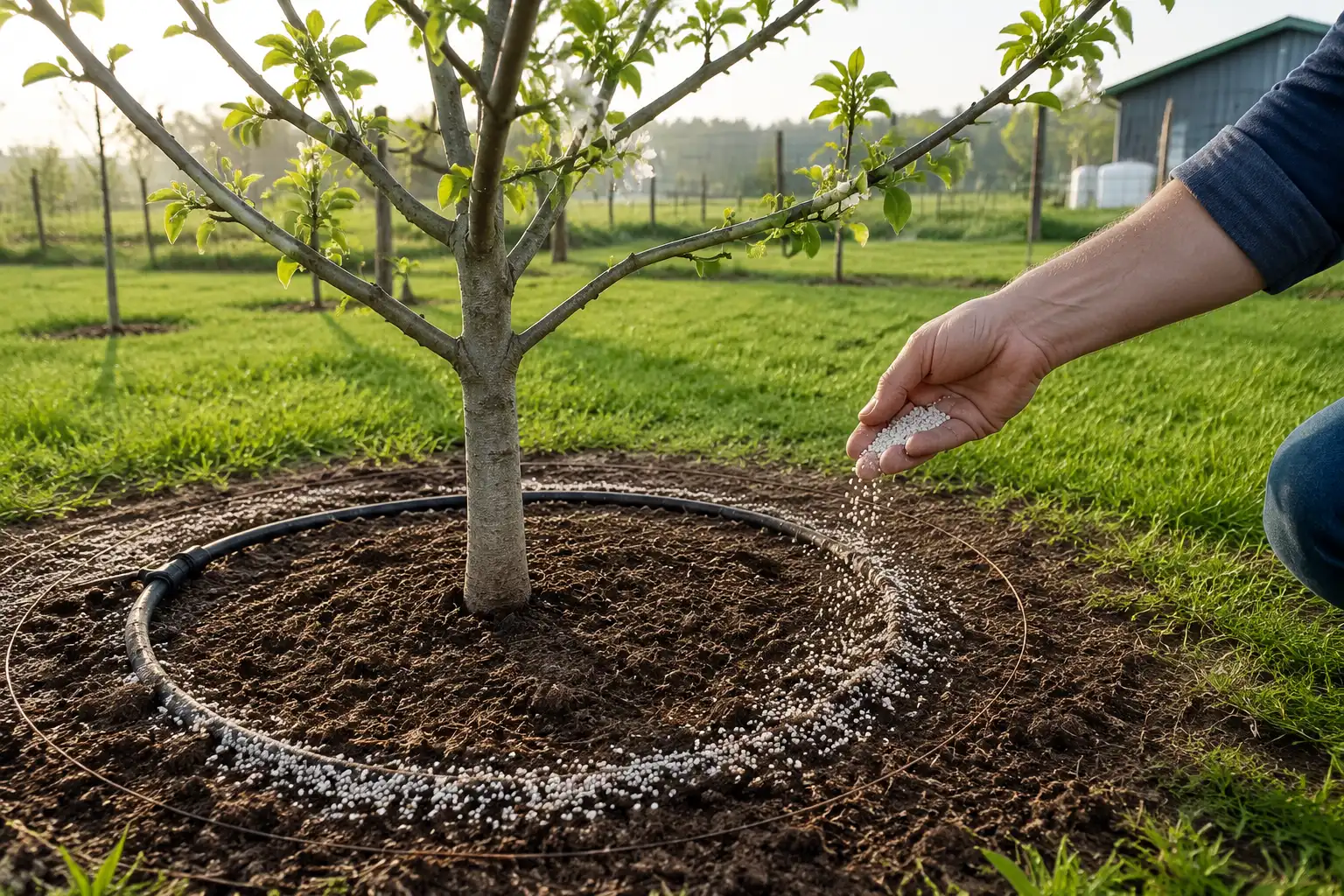
For rate, lean on actual nitrogen. Iowa State Extension suggests about 0.1 pound of actual nitrogen per year of tree age. That caps near 1 pound for a mature tree. With triple 16, that works out to about 0.6 pound of product per year of age. Split the yearly amount between early spring, before bud break, and fall. Spread it out to the dripline, not against the trunk. The feeder roots sit in the top foot of soil near the canopy edge.
One caution for bearing trees. Too much nitrogen pushes leaves instead of fruit. So if a mature tree grows a wall of green but sets little fruit, ease off the balanced feed and move to a lower-nitrogen blend. Also skip nitrogen after July, because the first hard frost catches soft late growth.
Is 16 16 16 Good for Vegetables and Flowers?
Yes, triple 16 is a solid choice for most vegetables and flowers, especially early in the season. The balanced feed builds strong plants before they switch to flowering and fruiting. So work it into the bed at planting, then side dress a few weeks later.
There is one catch with heavy fruiters. Tomatoes, peppers, and squash want less nitrogen once they set fruit, or you get lush leaves and few tomatoes. So ease back on triple 16 after flowering, then lean on potassium for fruit. For flower beds and roses, a spring feed of triple 16 sets up steady growth and color.
How Does 16 16 16 Compare to Other Fertilizers?
Triple 16 is stronger than most balanced blends, but it is still even across all three nutrients. The real difference between balanced grades is concentration, not ratio.
| Blend | Type | Best fit |
|---|---|---|
| 16-16-16 | Balanced, concentrated | All-purpose, new lawns, young trees, gardens |
| 15-15-15 | Balanced, slightly lighter | Nearly the same uses, feed a touch more per area |
| 10-10-10 | Balanced, lighter | General feeding, needs more product per area |
| 16-4-8 | High nitrogen | Established lawns and shrubs, leafy growth |
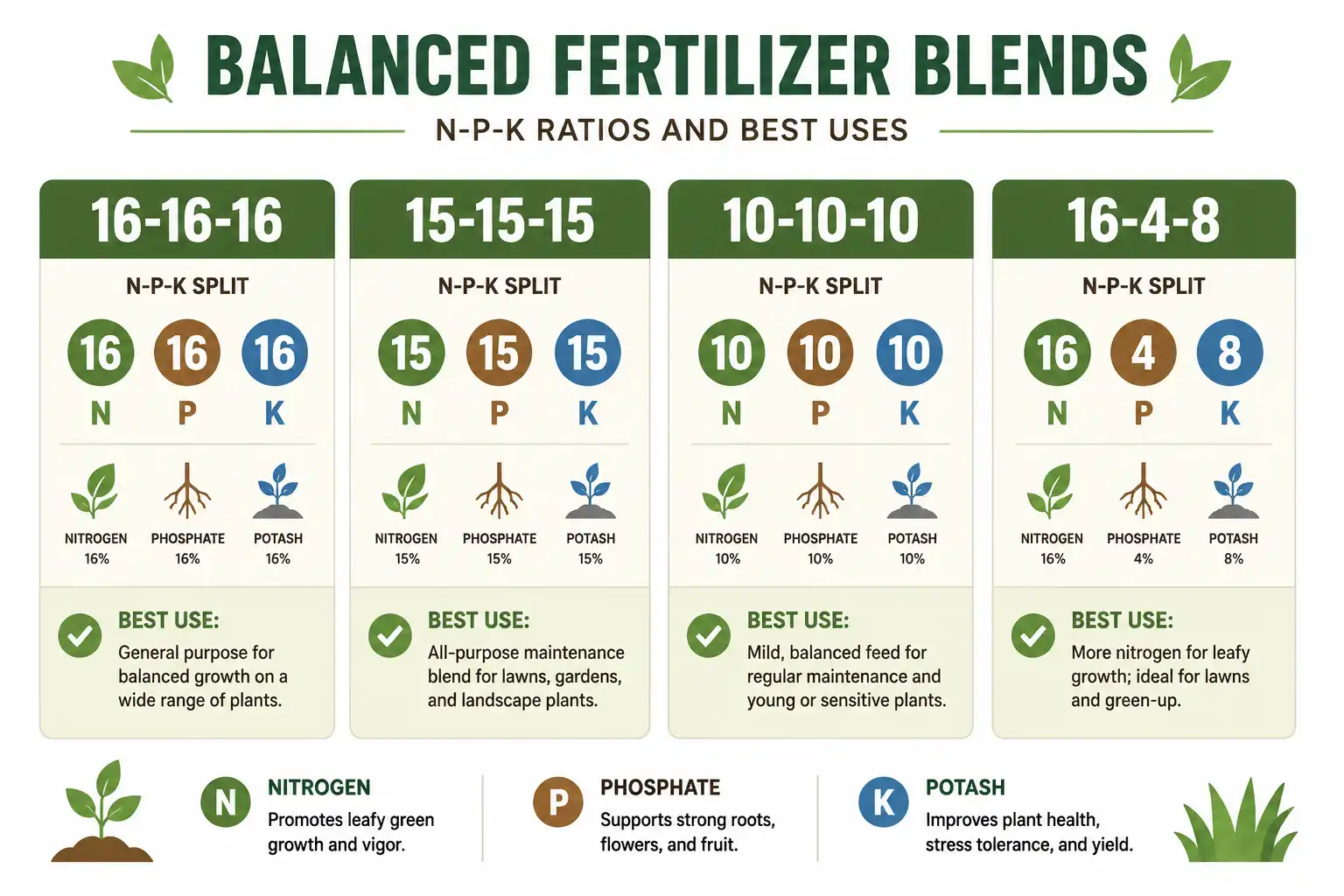
Since 16-16-16 and a 15-15-15 blend sit so close, you can treat them almost the same and just adjust the amount. Next to a lighter 10-10-10 mix, triple 16 packs more nutrient per pound. So you spread less to hit the same target.
What Is 16 4 8 Fertilizer Good For?
16-4-8 is a high-nitrogen lawn and shrub feed. The heavy nitrogen with low phosphorus keeps turf and leafy plants green and growing. That is exactly what an established lawn wants. So it beats triple 16 for routine mowing-season feeding.
Should You Soil Test Before Using 16-16-16?
Yes, a soil test is the smartest first step with any balanced fertilizer. A balanced blend adds phosphorus and potassium whether your ground needs them or not. So if your soil already sits high in phosphorus, that part of the bag does nothing useful. It can also wash into waterways. A reliable soil test kit shows which nutrients actually run low. Then you can match the blend to the field.
On Kansas ground, phosphorus already tests high in many fields. So a full triple 16 is rarely run on established fields, and it gets saved for new beds and young trees. A test also helps you weigh the organic and synthetic fertilizer trade-offs with real numbers instead of guesses.
4 Best 16-16-16 Fertilizers in the Market
Most triple 16 on the market is granular and all-purpose. The right pick comes down to bag size, release speed, and how much ground you cover. Here are quick picks, then four options worth a look.
1. Supply Solutions 16-16-16 50lbs
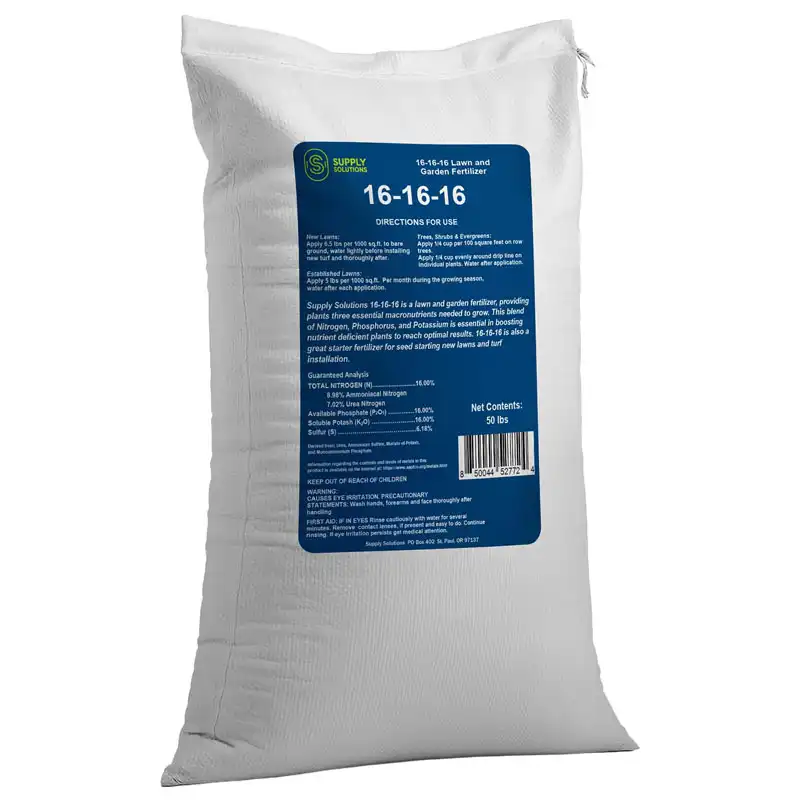
This is a straightforward granular triple 16 in a resealable bag, so leftover product stores clean. Owners report lush, green lawns and strong results on roses, fruit trees, and flowers. It is a flexible pick for a mixed yard.
- Form and sizes: granular, 5, 10, 25, and 50 lb bags
- Coverage: up to about 2,500 sq ft (50 lb bag)
- Rate: about 1 lb per 100 sq ft, watered in
- Pros: even granules, resealable bag, multiple sizes
- Watch-out: bag skips spreader-setting guidance
- Best for: gardeners who want one flexible bag
2. Lilly Miller Lawn & Garden Food All Purpose
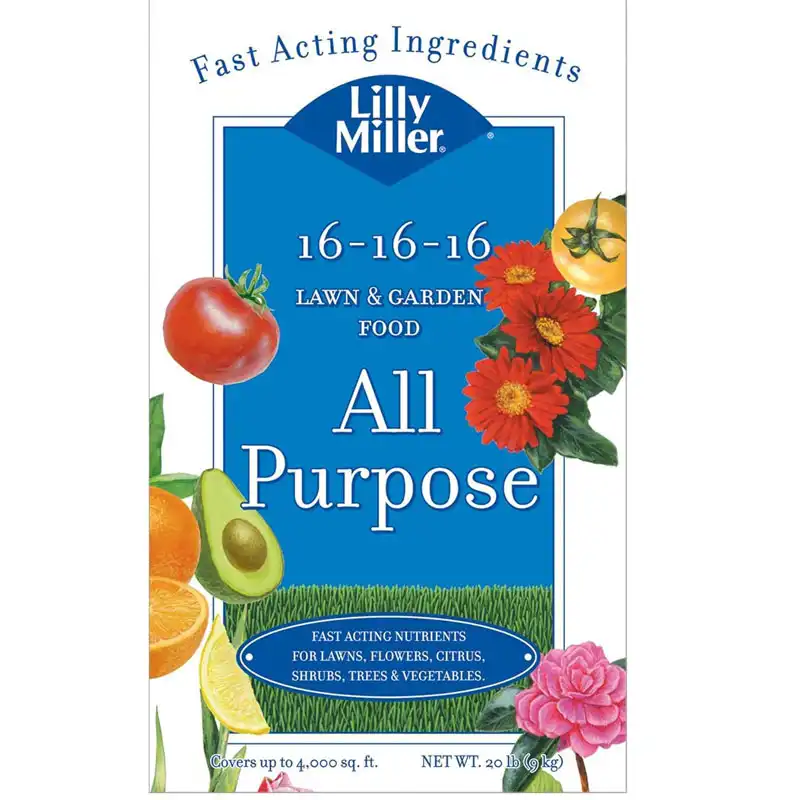
This traditional farm-style formula now comes sized for home gardens. It is fast-acting, and owners say it establishes new sod quickly and strengthens roots. It also fits the Mittleider weekly-feed method for growers who like a set schedule.
- Form and size: granular, 20 lb bag
- Coverage: up to about 4,000 sq ft
- Rate: at planting and monthly through the season
- Pros: trusted formula, wide plant range, strong on new sod
- Watch-out: fast release means more frequent feeding
- Best for: new lawns and all-around garden use
3. Knox Fertilizer 20lb 16-16-16
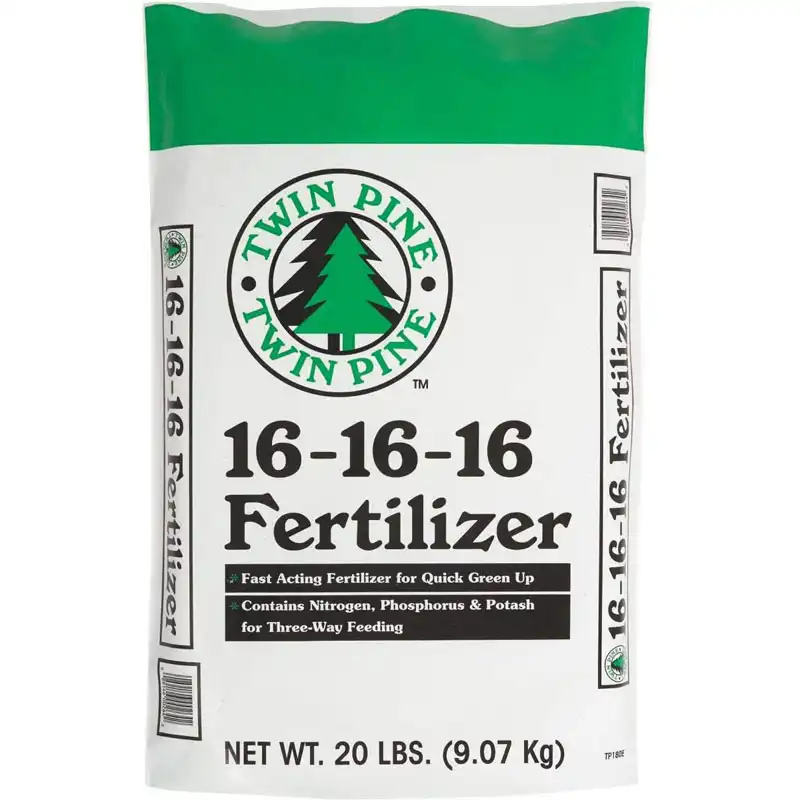
This is a fast-acting, all-purpose granular blend for trees, shrubs, flower beds, and gardens. Owners like the quick green-up during the growing season. Coverage swings widely with the plant, so you follow the bag rate, wear gloves, and water in after spreading.
- Form and size: granular, 20 lb bag
- Coverage: varies widely by plant and rate
- Rate: per bag directions for each plant type
- Pros: quick green-up, all-purpose, easy to handle
- Watch-out: label leans on you to set the rate
- Best for: fast results on mixed plantings
4. GARDENWISE 16-16-16 All Purpose Professional Fertilizer
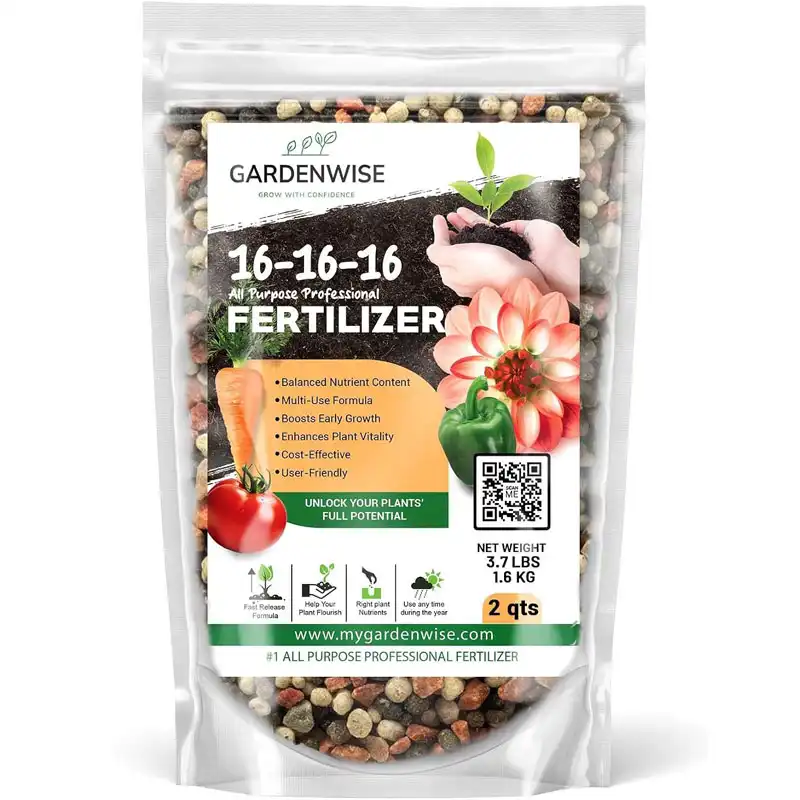
This is a smaller, water-smart granular pack the maker lists as slow-release. It carries clear rates for lawns, flowers, shrubs, trees, and pots, and it works indoors and out. The maker says it feeds for up to about eight weeks per application.
- Form and size: granular, small consumer pack
- Coverage: about 10 lb per 2,500 sq ft on lawns
- Rate: 1 to 1.5 lb per 100 sq ft for beds
- Pros: slow-release feed, detailed rates, indoor and outdoor use
- Watch-out: small size suits pots, not acreage
- Best for: containers and small gardens
FAQs on Triple 16 Fertilizer
Is 16-16-16 good for tomatoes and peppers?
Can I use 16-16-16 on houseplants?
Is 16-16-16 fertilizer organic?
Where to Reach for Triple 16
Triple 16 earns its spot as a balanced, concentrated all-purpose feed. Reach for it on new lawns, young fruit trees, early-season vegetables, and mixed beds where a soil test shows all three nutrients run low. For an established lawn or phosphorus-rich ground, a targeted blend does more for less. So test first, weigh your rate, spread even, and water it in. Then triple 16 will earn its keep on your ground.