Tillage vs No-Till Farming: 8 Fast Checks Before You Switch
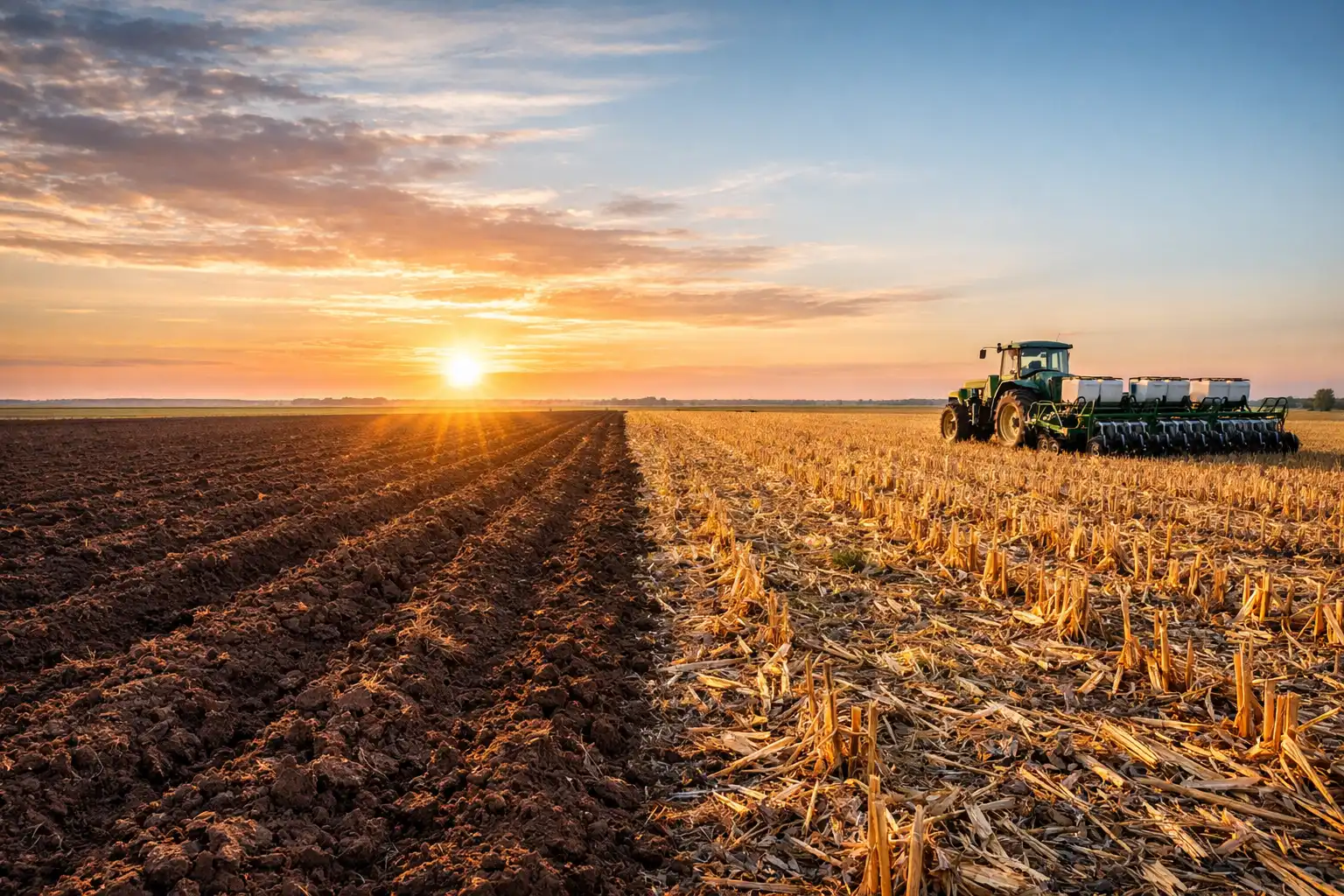
Tillage vs no-till farming comes down to how you prepare a seedbed and manage residue. Tillage uses tools to loosen, mix, or level soil before planting. No-till places seed in a narrow slot and keeps most residue on the surface. Tillage can warm and dry soil faster in spring, but it exposes soil to erosion and burns moisture. No-till protects the surface, builds soil structure over time, and reduces field passes, but it demands tight weed control and clean planting setup. The right choice depends on your soil, slope, rotation, and equipment.
What is tillage in plain farm terms?
Tillage is field work that disturbs soil to manage weeds, residue, compaction, and seedbed condition. A farmer uses tillage to bury residue, level ruts, incorporate amendments, and shape the planting zone. Common tools include moldboard plows, chisel plows, disks, field cultivators, and vertical tillage tools.
If you want a bigger picture of how practice choices tie back to nutrient planning, see this site’s section on soil fertility management. Crop farming sustainable practices often include rotation, cover crops where they fit, reduced erosion, and careful nutrient timing to protect soil and water.
What is no-till farming in plain farm terms?
No-till farming is a planting system that limits soil disturbance and keeps crop residue on the soil surface through the season. USDA NRCS defines no-till as limiting soil disturbance to manage the amount, orientation, and distribution of residue on the soil surface year-round.
In the field, a no-till planter or drill opens a slot, places seed, and closes the furrow with minimal soil movement outside the row.
In both tillage and no-till systems, agricultural compost can improve soil structure and water holding while helping residue-rich ground cycle nutrients more evenly over time.
If you are easing into less soil disturbance, this new gardeners cover crop guide explains simple species and timing that help protect soil and reduce erosion the same way no-till residue does.
How do tillage and no-till differ in soil erosion and water handling?
No-till reduces erosion risk because residue cushions raindrop impact and slows runoff. Residue cover is also a measurable piece of the system. A common benchmark for conservation tillage is leaving at least 30% of the soil surface covered by residue after planting.
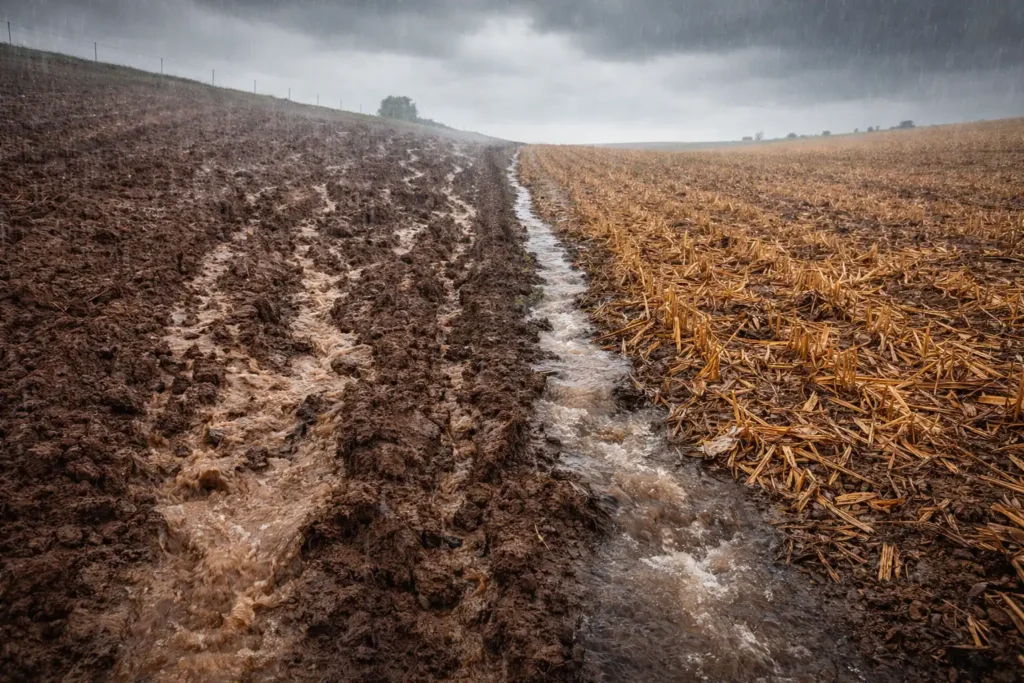
No-till also tends to improve water infiltration over time as soil aggregates and pore channels stay intact, while aggressive full-width tillage can break aggregates and leave soil more vulnerable to crusting after heavy rain.
What happens to soil temperature, drying, and planting timing?
Tillage often warms and dries the top couple inches faster in spring because dark, bare soil absorbs more sun and air moves through a loose surface layer. That can help early planting on cold, wet ground.
No-till keeps residue on top, which shades soil and slows early spring warm-up. In exchange, residue reduces evaporation later and protects soil during hot, windy stretches. During variable weather swings, that protection matters most on lighter soils and on slopes.
Which system builds soil structure and organic matter better?
No-till supports soil structure by leaving roots, pores, and fungal networks in place. FAO describes conservation agriculture as minimum soil disturbance, permanent soil cover, and crop diversification. Those pieces work together to improve water and nutrient use efficiency and sustain production.
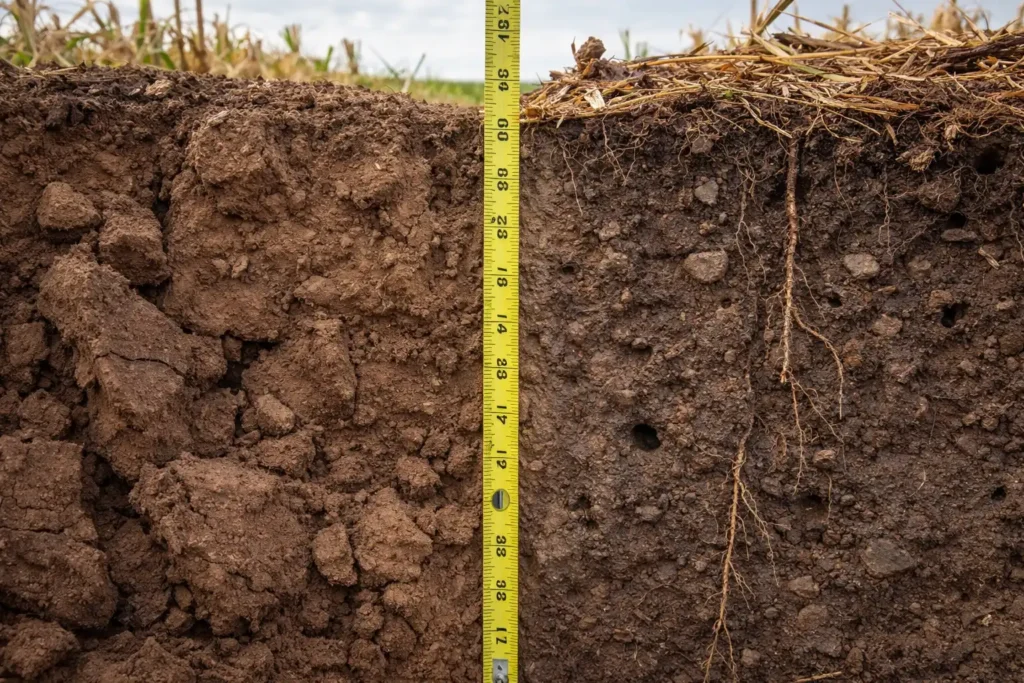
Tillage can still fit a soil-building plan, but it usually needs extra attention to cover crops, residue return, and traffic control because disturbance speeds residue breakdown and exposes soil to wind and water.
How do weed control and herbicide programs change?
Tillage physically uproots or buries small weeds, so it can reduce early pressure in some fields. No-till shifts more weed control into burndown timing, residual herbicides, rotation, and crop canopy management. That shift is the main reason some growers feel no-till “got harder” in the last decade.
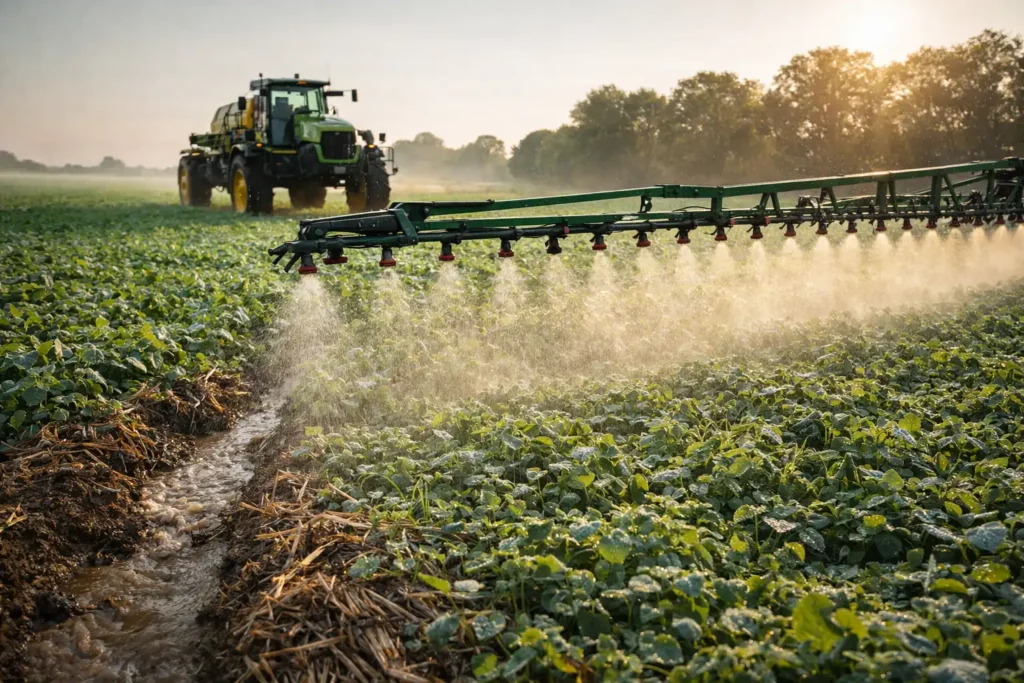
If weeds are your main bottleneck, the practical place to start is this site’s weed control section so you can match tools, timing, and chemistry to your rotation.
What equipment differences matter most?
No-till success comes from consistent seed placement and consistent closure.
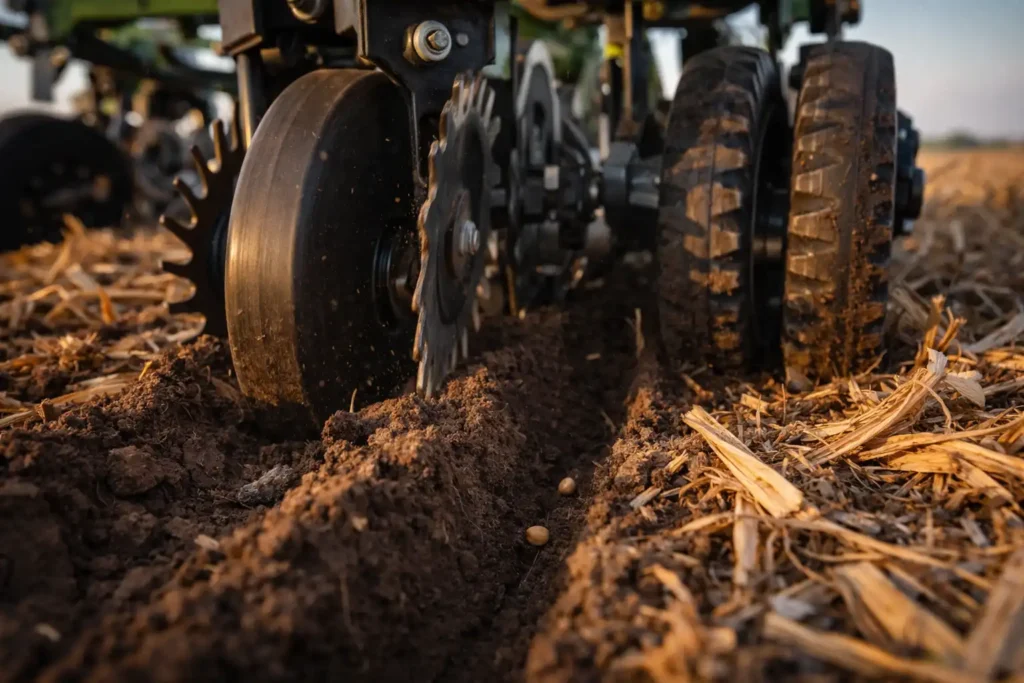
Pay attention to:
- Coulters and openers: they need to cut residue and hold depth.
- Downforce control: it keeps depth consistent across soil types.
- Closing wheels: they need to seal the furrow without sidewall compaction.
- Residue managers: they clear a narrow path without moving too much soil.
For planting setup and calibration topics, this site’s planting and seeding section helps you think through spacing, depth, and establishment.
Which system usually costs less to run?
No-till often reduces fuel, labor, and machinery time because it cuts trips across the field. University extension work commonly reports lower tillage management costs with reduced tillage systems compared with aggressive tillage, especially when yield stays similar.
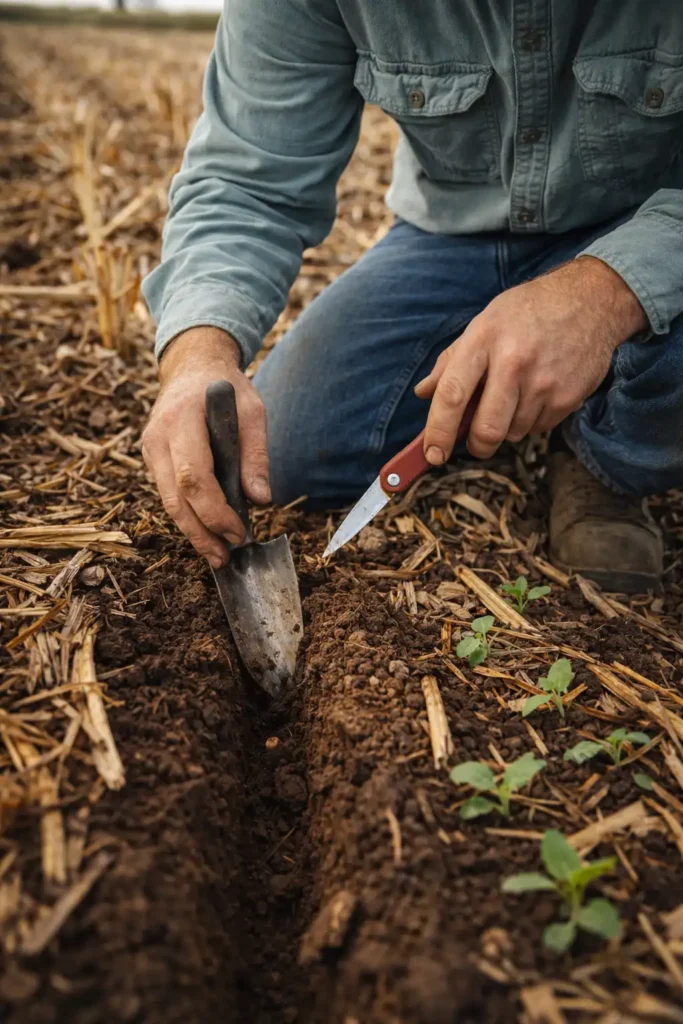
Tillage can still pencil out when it solves a real problem, like leveling heavy ruts, drying a wet spring seedbed, or fixing a compaction layer that you verified with a shovel and a penetrometer.
When does tillage make sense on a real farm?
Tillage fits when it solves a specific constraint that no-till cannot solve fast enough.
Examples that justify tillage on many farms:
- Severe ruts after a wet harvest that block planter performance.
- A confirmed compaction layer that restricts root growth and drainage.
- A high-residue situation where your planter cannot cut and place seed reliably.
- A transition period where you need a one-time reset before moving back to reduced disturbance.
If you want to measure compaction and soil condition instead of guessing, use tools from this site’s soil testing and measuring tools section.
When does no-till make sense on a real farm?
No-till fits best when soil protection and water capture drive yield stability.
Good matches include:
- Sloping fields where erosion risk stays high.
- Dryland ground where stored moisture decides yield.
- Rotations that include high-residue crops and cover crops.
- Farms that can manage weeds with rotation, timing, and a consistent residual program.
How do you switch from tillage to no-till without taking a beating?
A clean transition uses a simple sequence.
- Pick your best field first. Choose moderate drainage, manageable residue, and low perennial weed pressure.
- Fix planter performance before you plant acres. Run test strips, dig seed, and check closure in the afternoon and the next morning.
- Build a weed plan around the calendar. Tie burndown and residual timing to planting date, not to weed size.
- Keep residue spread even at harvest. A poor spread pattern creates hairpinning and stand gaps.
- Stay off wet soil. Traffic on wet ground creates compaction that no system hides.
What safety issues come up with both systems?
Tillage adds more passes, more hitching, and more rotating iron in the field. No-till adds more down-pressure systems, sharp openers, and residue pinch points during maintenance. Either way, lock out hydraulics before you work under raised equipment, and keep hands away from pinch points during adjustment.
For a practical reminder list, this site’s farm safety and PPE section is a good checkpoint before spring setup.
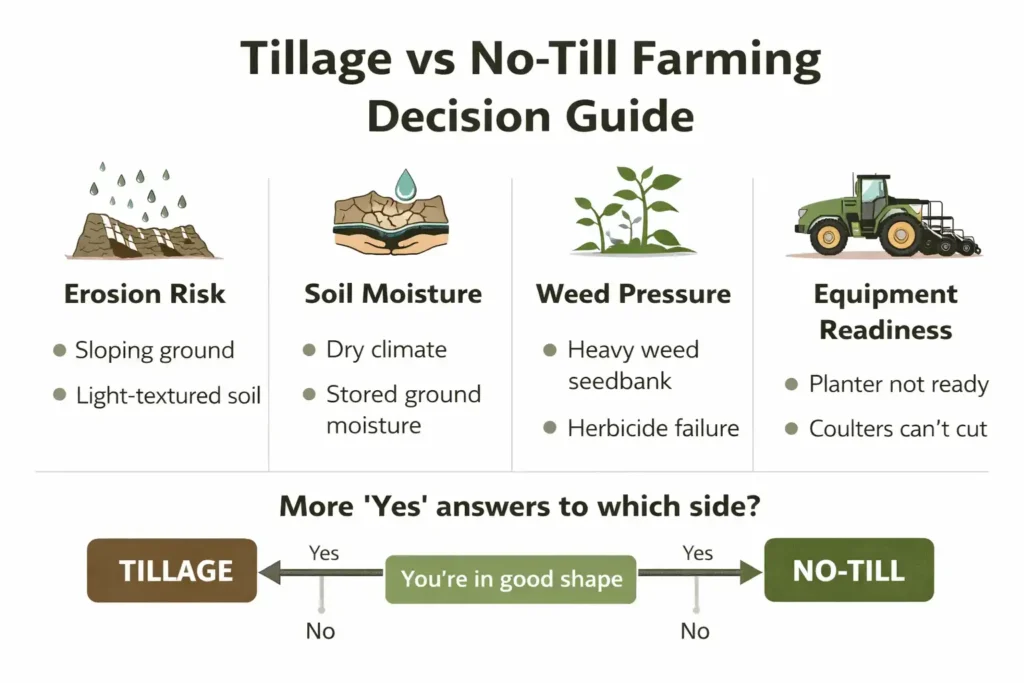
What is the simplest way to choose between tillage and no-till?
Choose the system that solves your biggest limit without creating a bigger one.
If erosion, moisture loss, and crusting limit your stands, no-till usually earns its keep. If cold, wet soil delays planting every year and your soil loss risk stays low, some tillage or strip-till can improve consistency. The best-managed farms treat tillage as a targeted tool, not a default habit, and judge every pass by what it fixes and what it risks.