5-5-5 Fertilizer: Rates, Timing, and Best Bags
5-5-5 fertilizer is one of the most common balanced grades on garden shelves. Those numbers confuse a lot of buyers, though. Three fives describe nutrient percentages, not strength.
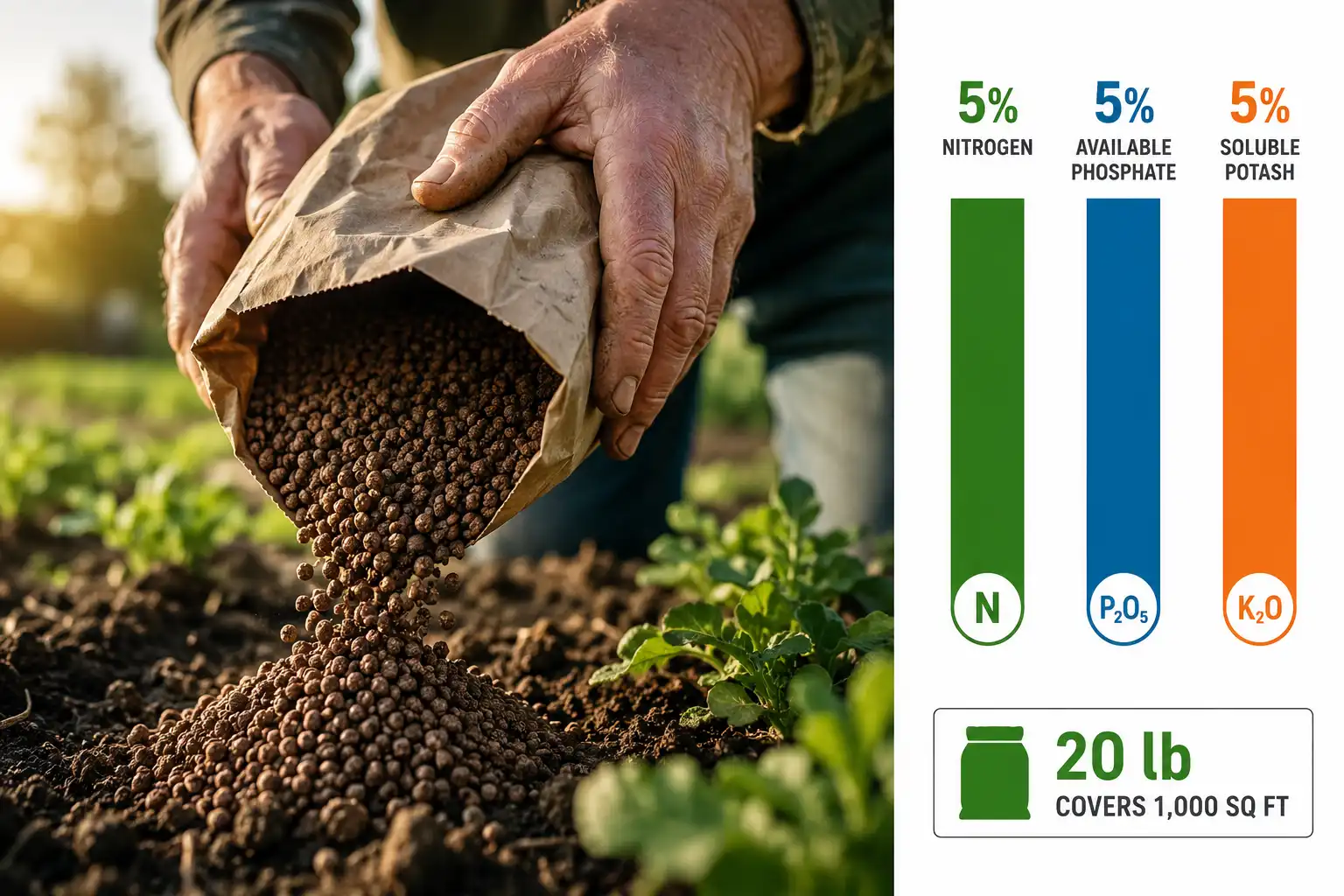
A 5-5-5 blend carries 5% nitrogen, 5% available phosphate, and 5% soluble potash by weight. So 20 pounds covers 1,000 square feet. E.B. Stone leads the granular picks, and TPS Nutrients leads the liquids.
What Is 5-5-5 Fertilizer?
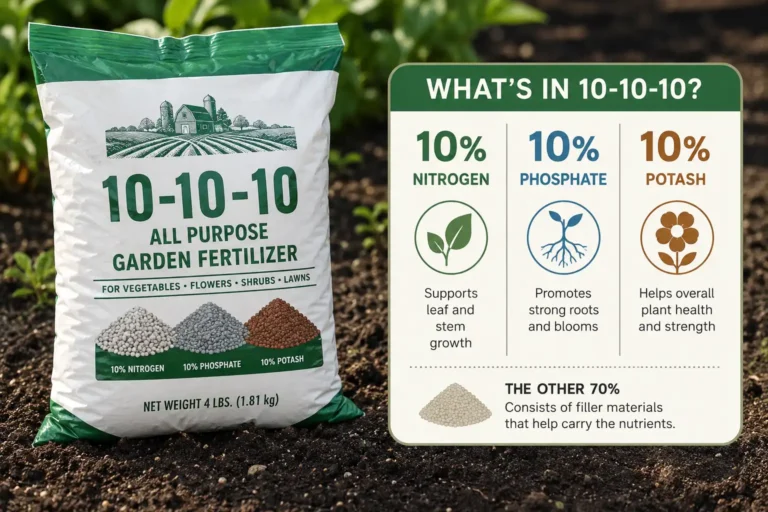
5-5-5 fertilizer is a balanced blend that supplies equal percentages of the three primary nutrients by weight. Every pound of product holds 0.05 pound of nitrogen, 0.05 pound of available phosphate, and 0.05 pound of soluble potash. The rest is carrier material, filler, and the organic residues that hold those nutrients.
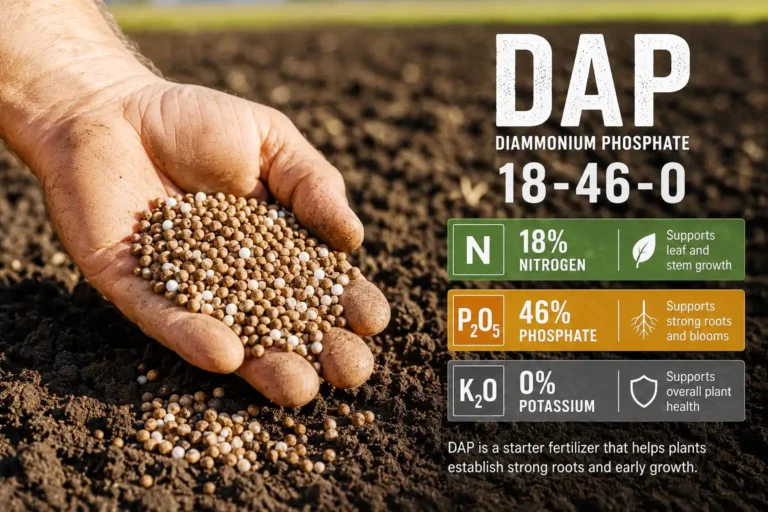
That first number is straightforward nitrogen. The other two need a translation, and most bags never explain it. Phosphorus gets reported as phosphate (P2O5), while potassium gets reported as potash (K2O). Neither number is the element itself.
To convert, multiply phosphate by 0.437 and potash by 0.83. So a 5-5-5 grade actually holds about 2.2% elemental phosphorus and 4.2% elemental potassium. Once you know that, NPK fertilizer basics make a lot more sense across every bag in the shed.
The 1-1-1 ratio is what makes this grade popular. Because nothing dominates, you can feed mixed beds without pushing one nutrient hard. Most 5-5-5 products also sell as organic blends, which changes how fast they work.
Also know: 0-0-22 Fertilizer Guide
How Much Nitrogen Is in a Bag of 5-5-5 Fertilizer?
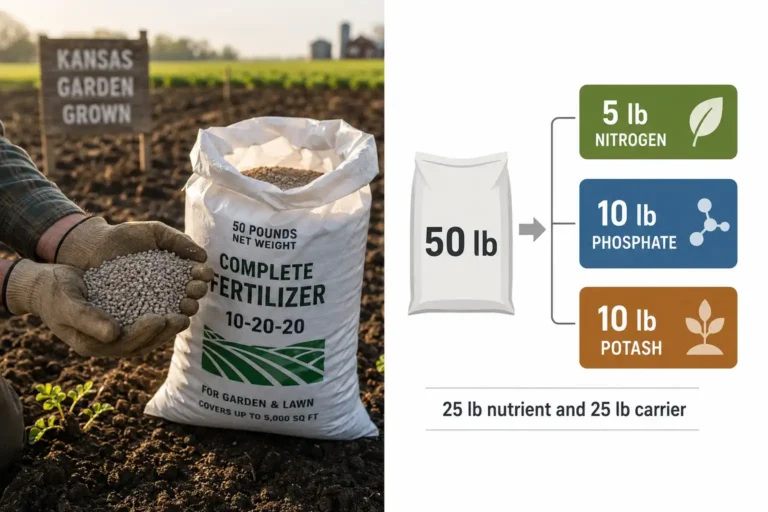
A 4 pound bag of 5-5-5 fertilizer holds just 0.20 pound of nitrogen. That surprises first-time buyers, but the math is simple. Multiply bag weight by 0.05 and you have your answer for all three nutrients.
| Bag size | Nitrogen | Phosphate | Potash | Typical coverage |
|---|---|---|---|---|
| 1 lb | 0.05 lb | 0.05 lb | 0.05 lb | 30 sq ft |
| 4 lb | 0.20 lb | 0.20 lb | 0.20 lb | 120 to 200 sq ft |
| 15 lb | 0.75 lb | 0.75 lb | 0.75 lb | 750 sq ft |
| 40 lb | 2.0 lb | 2.0 lb | 2.0 lb | 1,200 to 2,000 sq ft |
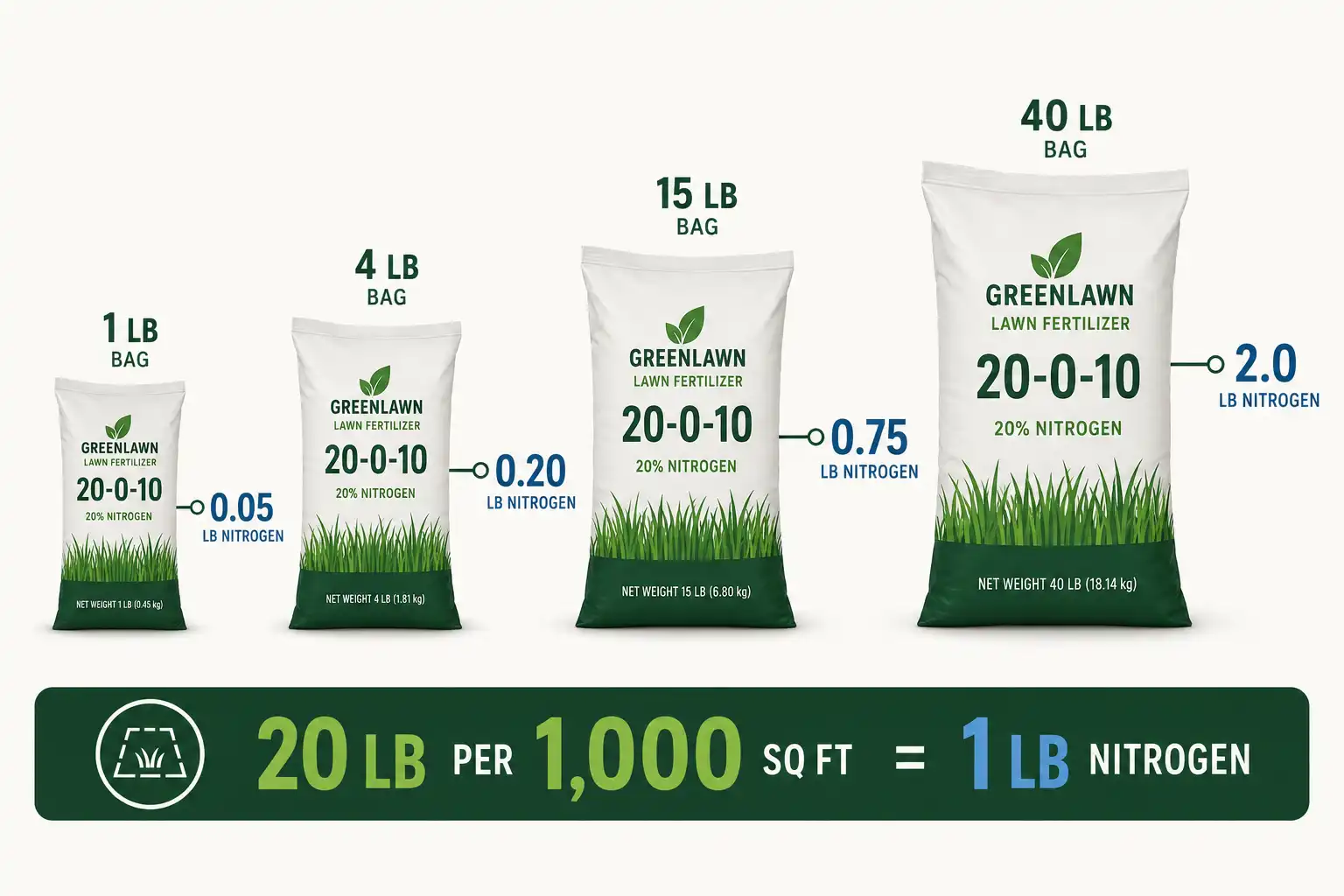
Label rates run from about 20 to 33 pounds per 1,000 square feet. At 20 pounds you deliver one pound of nitrogen per 1,000 square feet. E.B. Stone rates its 15 pound bag at 750 square feet, which lands right on that figure.
University of Maryland Extension puts a typical vegetable garden target near 2 pounds of nitrogen per 1,000 square feet. Hitting that with this grade alone takes 40 pounds of product. So most growers pair it with compost instead of doubling the rate.
5-5-5 Organic Fertilizer vs Synthetic Balanced Grades
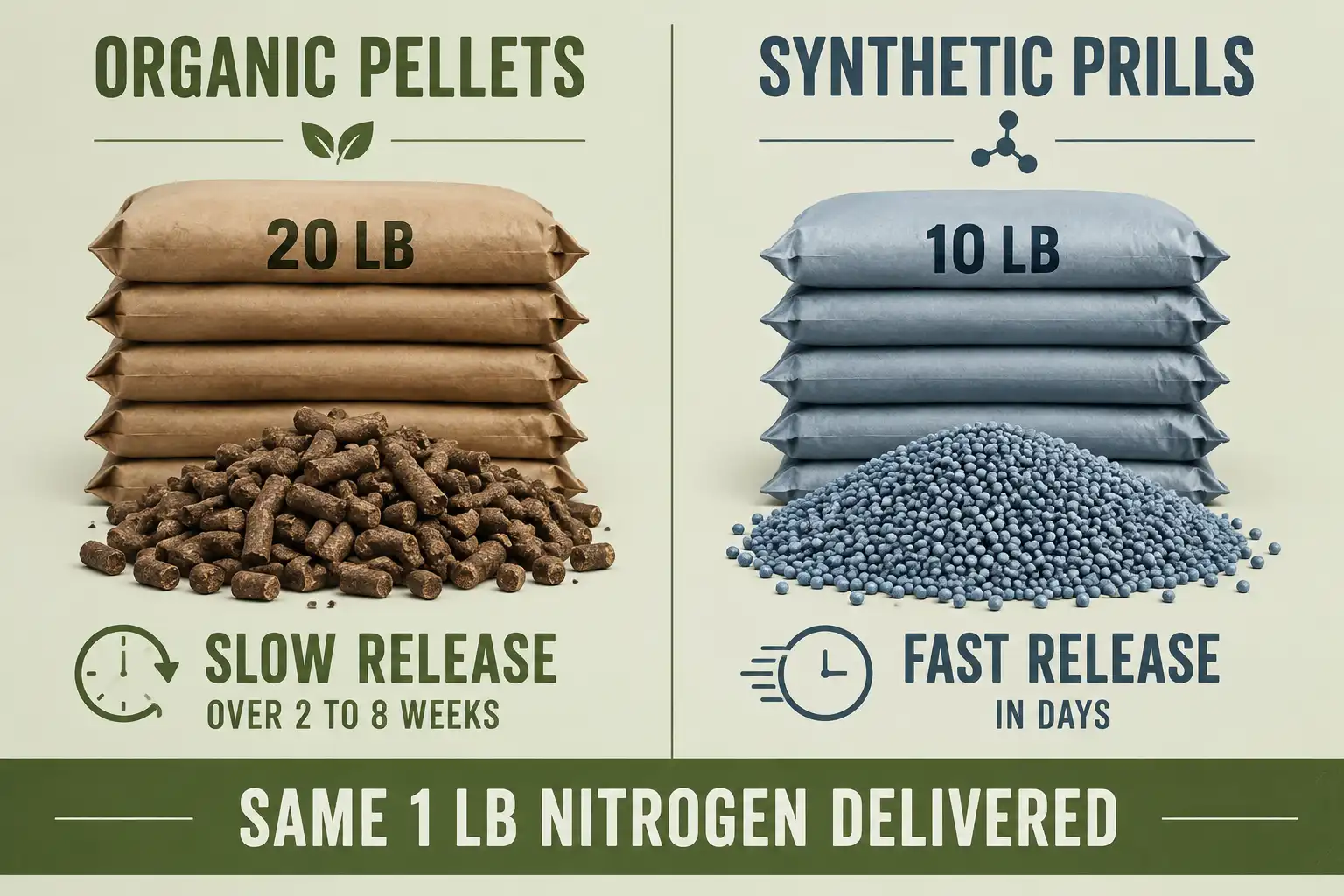
A 5 5 5 organic fertilizer feeds slowly through soil microbes. A synthetic balanced grade dissolves and feeds within days. Both grades list the same style of numbers. Their behavior in the ground differs completely.
| Grade | Type | Product per 1 lb N | Speed | Burn risk |
|---|---|---|---|---|
| 5-5-5 | Usually organic | 20 lb | Slow, 2 to 8 weeks | Very low |
| 4-4-4 | Usually organic | 25 lb | Slow, 2 to 8 weeks | Very low |
| 10-10-10 | Synthetic | 10 lb | Fast, days | Moderate |
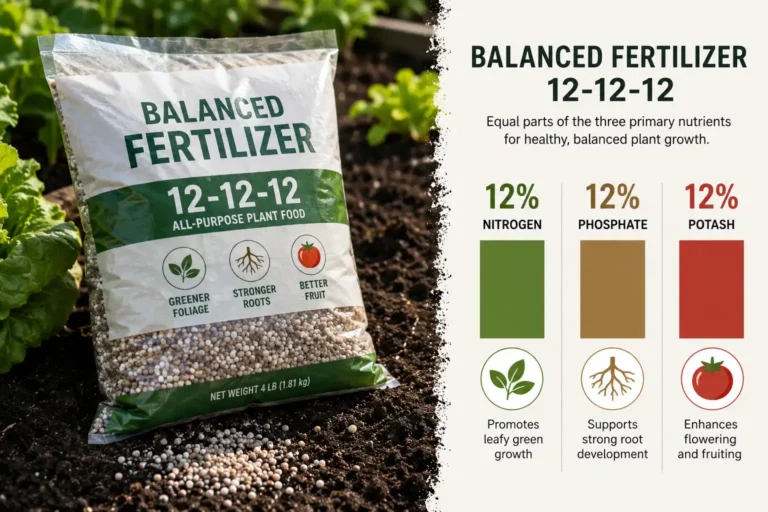
| 12-12-12 | Synthetic | 8.3 lb | Fast, days | Moderate |
Half the bag weight buys the same nutrients in a 10-10-10 blend. So synthetics win on freight and price per pound of nitrogen. Organic grades win on burn safety and soil biology. Neither answer fits every situation.
Growers often ask whether a 4-4-4 blend does the same job. Functionally, yes. You just spread 25% more product to match the nitrogen.
If you want one best organic fertilizer for garden beds, containers, and young transplants alike, a balanced 5-5-5 gets closest. It will not push heavy feeders through peak demand by itself, though.
Why Organic 5-5-5 Releases Slowly
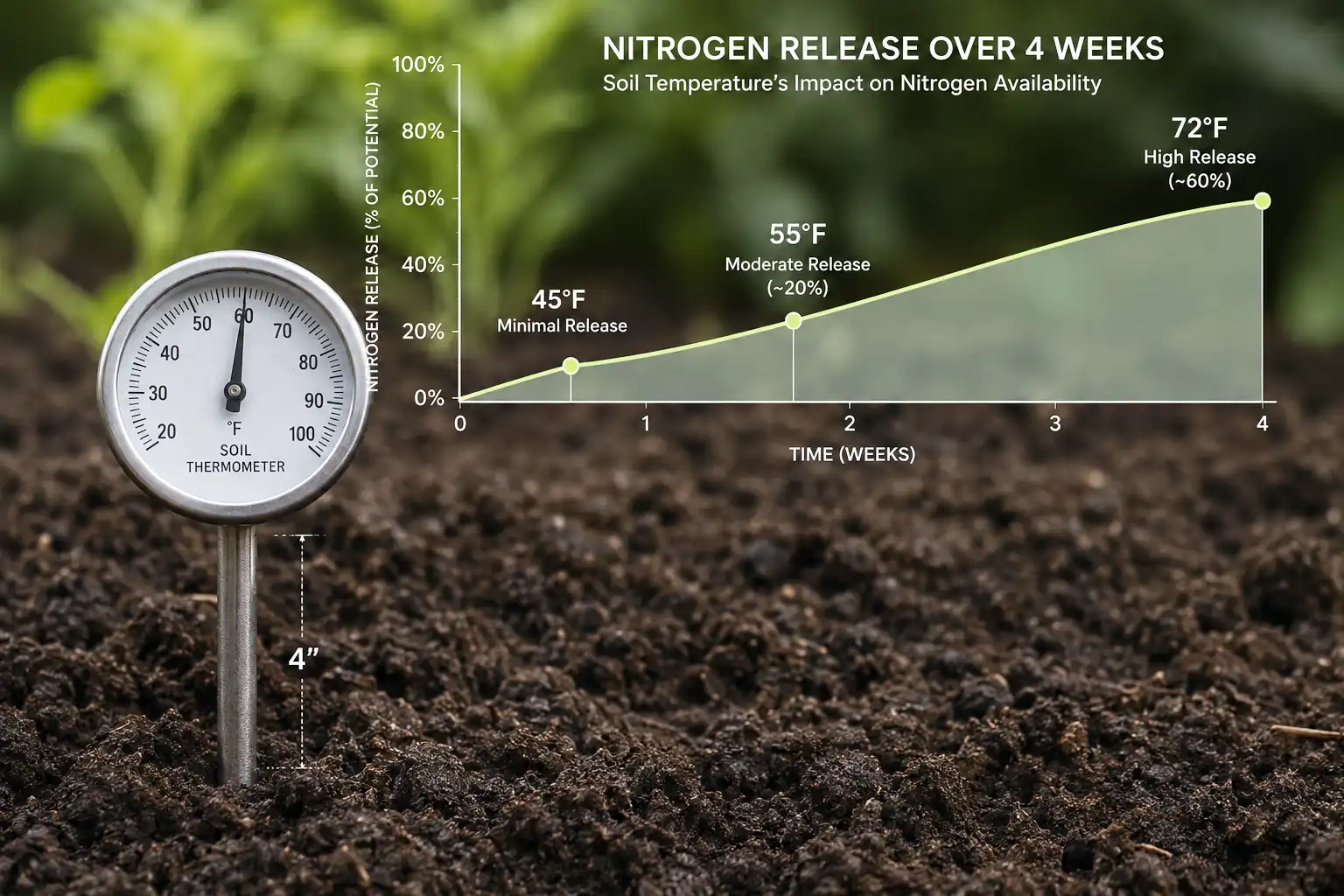
Organic nitrogen has to mineralize before roots can take it up, and soil microbes do that work. Until those microbes convert protein nitrogen into ammonium and nitrate, your plants see almost nothing. Soil temperature drives the whole process.
University of Maine research found mineralization rates roughly double with each 18°F rise in soil temperature. Below 50°F, activity nearly stops. That is why a February application on cold Kansas ground sits idle for weeks.
Oregon State University lab incubations measured about 60% of total nitrogen releasing as plant-available nitrogen within four weeks at 72°F. A 2021 review in the Journal of Environmental Quality found similar figures for feather meal. Expect 50% to 65% over 100 days in warm, moist soil.
So treat the label figure as a ceiling, not a delivery promise. First-season plant-available nitrogen from a 5-5-5 blend often behaves more like a 2.5-5-5 in practice. Plan for that gap rather than fighting it.
Timing
Four-inch soil temperature crosses 50°F around mid-April in most years. Broadcast and incorporate two to three weeks ahead of transplanting. That way the microbes get a head start before roots ever go in.
Cold soil, heavy clay, and low pH all slow release further. On tighter ground, bumping the rate about 10% and accepting a slower curve is the typical adjustment. Sandy beds get split applications instead, since nitrate leaches out fast.
How to Apply 5-5-5 Fertilizer
Spread it evenly, work it into the top 3 to 4 inches of soil, then water it in. Incorporation matters more with organic grades than synthetic ones, because microbes need soil contact. Surface pellets on dry ground do very little.
Garden Beds and Rows
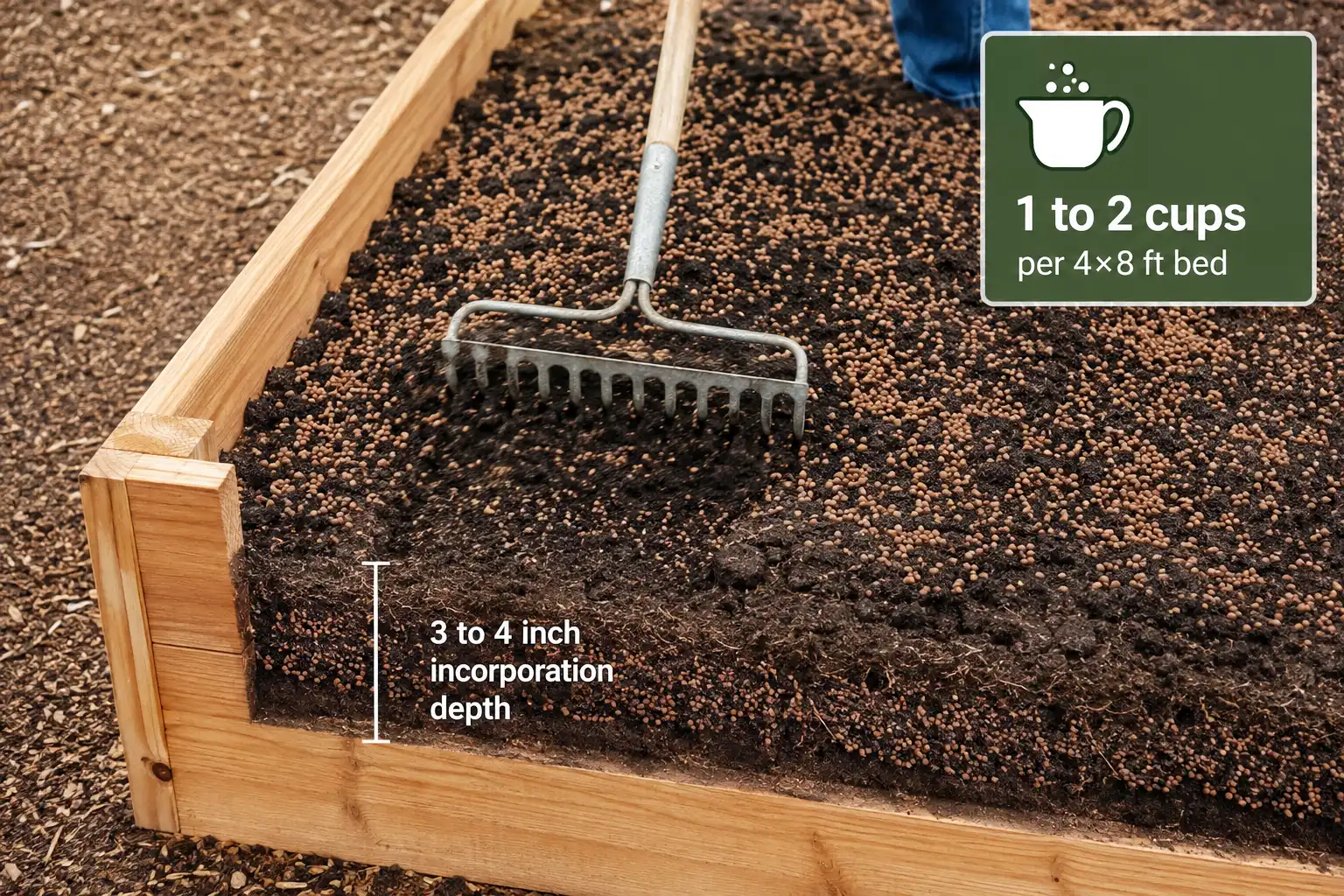
Broadcast 20 to 33 pounds per 1,000 square feet before planting, following the bag rate. Rake it into the top few inches. Then water thoroughly, because dry soil holds mineralization at a standstill.
A 4 by 8 foot raised bed (32 square feet) needs roughly 0.65 to 1 pound. A cup of most granular blends weighs near half a pound. So plan on one to two cups per bed. Larger plots go faster with a broadcast spreader than by hand.
Containers and Grow Bags
Mix 1/4 cup per 5 gallons of potting mix at fill time. For established pots, topdress one tablespoon per 6 inches of pot diameter, then scratch it in. Reapply every 6 to 8 weeks through the season.
Containers leach heavily under daily watering. So it helps to use liquid feeding for pots and save granular for in-ground beds.
Side-Dressing During the Season
Side-dress heavy feeders when fruit set begins. Tomatoes, peppers, sweet corn, and squash all pull hard at that stage. Sprinkle along the row about 4 inches from the stems, then scratch in and water.
Reapply every 4 to 8 weeks depending on the product. Pelletized blends generally feed longer than powdered ones.
Lawns, Trees, and Shrubs
Apply 3 to 4 handfuls per full-size shrub, three times a year: fall, early spring, and early summer. Time it ahead of expected rain when you can. Rain saves you the watering-in step and moves nutrients down where roots work.
How to Use 5 5 5 Liquid Fertilizer Correctly
A 5 5 5 liquid fertilizer is a concentrate, so the label analysis never changes when you dilute it. Some bottles advertise that you can “make it 2-2-2 or 10-10-10” by adjusting water. That is marketing, not chemistry. The guaranteed analysis stays 5-5-5, and dilution only changes the strength of the solution you pour.
What actually matters is nitrogen concentration in the finished mix, measured in parts per million. Here is the rule at the mixing station.
One fluid ounce of a 5-5-5 liquid per gallon of water lands near 420 ppm nitrogen. Cut that to 1/4 ounce per gallon and you land near 105 ppm. Most vegetable and container crops feed well at 100 to 200 ppm nitrogen.
| Rate per gallon | Approximate ppm N | Best use |
|---|---|---|
| 1/8 fl oz | 50 | Every watering, seedlings |
| 1/4 fl oz | 105 | Weekly constant feed |
| 1/2 fl oz | 210 | Biweekly feeding |
| 1 fl oz | 420 | Occasional soil drench |
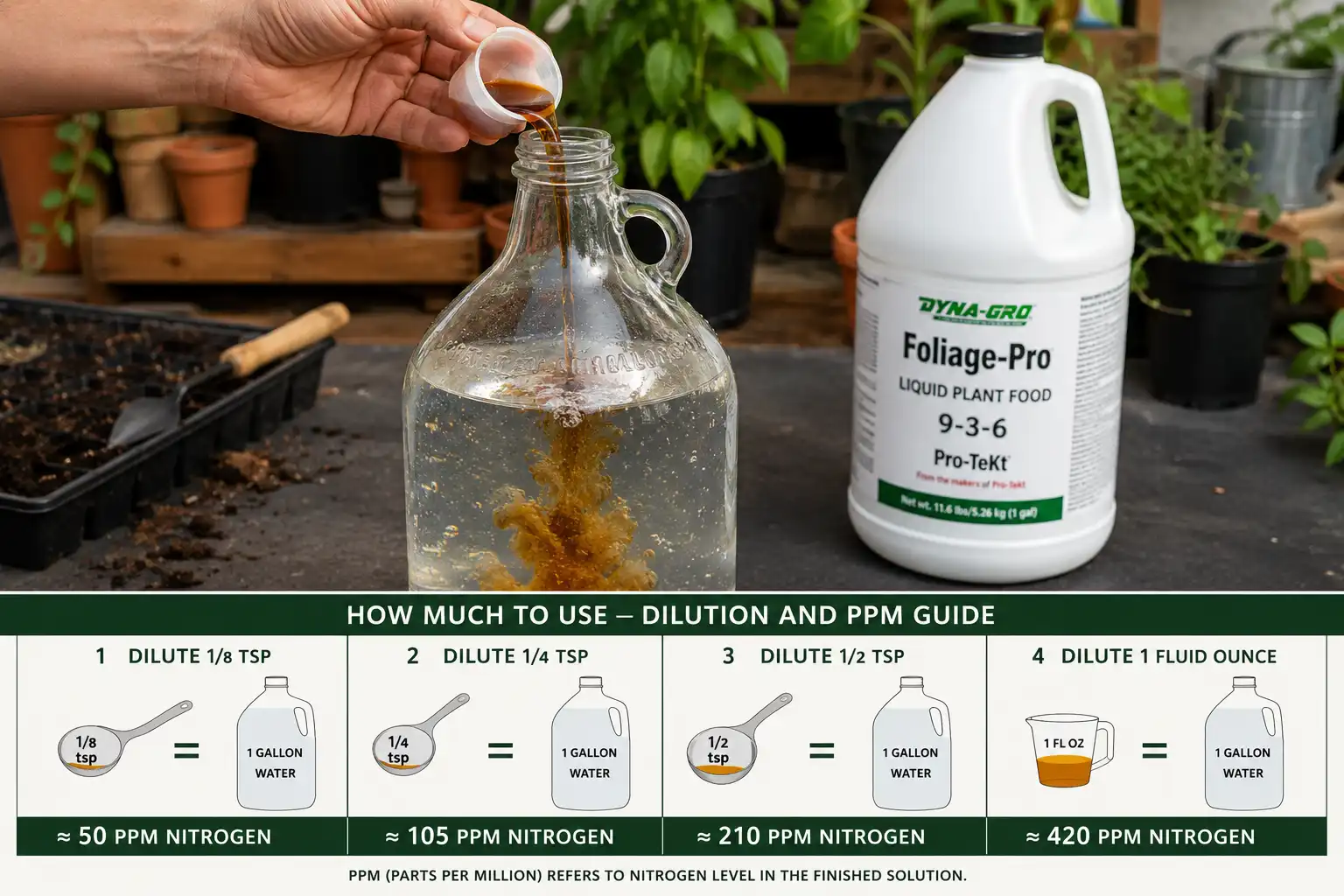
Those figures assume the concentrate weighs about 9 pounds per gallon, which is typical. Always start at the label’s lightest rate and watch the crop for a week.
Liquids shine when a crop stalls mid-season and you need nutrients working within days. A hose end sprayer covers row crops quickly, while a watering can handles beds and pots. Rinse your equipment after every batch, since organic liquids leave residue that clogs screens.
5 Best 5-5-5 Fertilizer Bags
Judge these on cost per pound of nitrogen, ingredient transparency, and how they behave in the ground. Prices move, so verify before you order.
| Product | Form | Size | Nitrogen in bag | Approx. price | Best for |
|---|---|---|---|---|---|
| EB Stone All Purpose | Granular | 4 lb, 15 lb | 0.20 lb per 4 lb | $30 | Best overall value |
| Dr. Earth Life | Pelletized | 4 lb | 0.20 lb | $46 | No-till broadcasting |
| TPS Nutrients Liquid | Liquid | 128 fl oz | About 0.45 lb | $50 | Outdoor beds and rows |
| Grow Queen Liquid | Liquid | 16 fl oz | About 0.055 lb | $33 | Containers and houseplants |
| Dr. Earth MINIS | Granular | 1 lb | 0.05 lb | $13 | Trial size |
1. EB Stone Organics All Purpose Plant Food 5-5-5
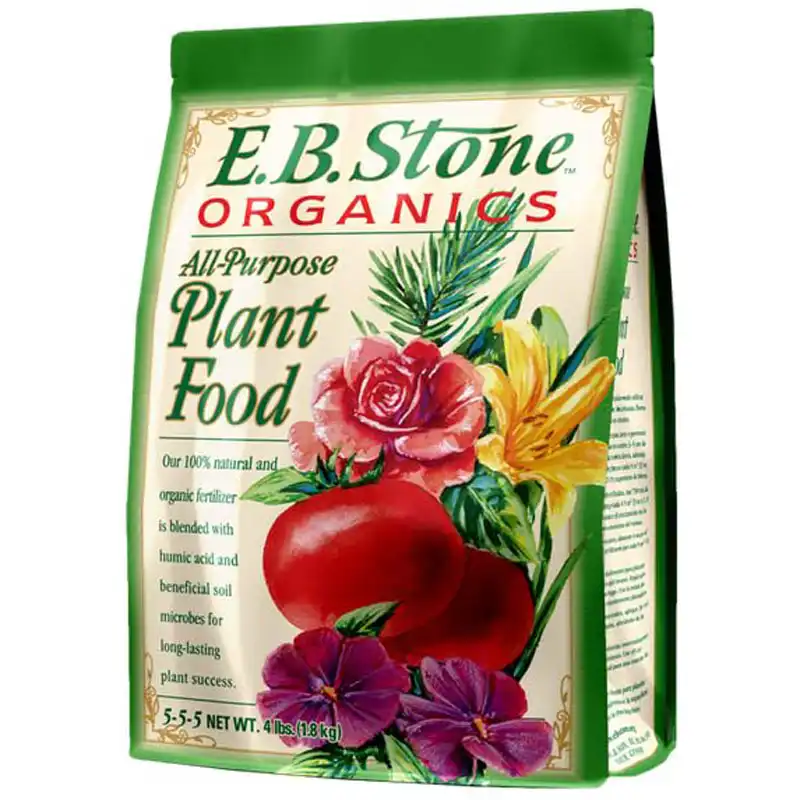
This is the bag first, because EB Stone lists every input on the label. Inputs include blood meal, feather meal, bone meal, and dried chicken manure. The blend also carries bat guano, alfalfa meal, kelp meal, and potassium sulfate. Humic acids and mycorrhizal fungi round it out. Blood meal releases fast, then feather meal carries the back half of the season. The 15 pound bag rates at 750 square feet, which is an honest 20 pounds per 1,000.
Specs:
- 4 lb and 15 lb sizes
- 0.20 lb N per 4 lb
- Granular, work into soil
- Around $30 for 4 lb
2. Dr. Earth Life All-Purpose Organic Fertilizer 5-5-5
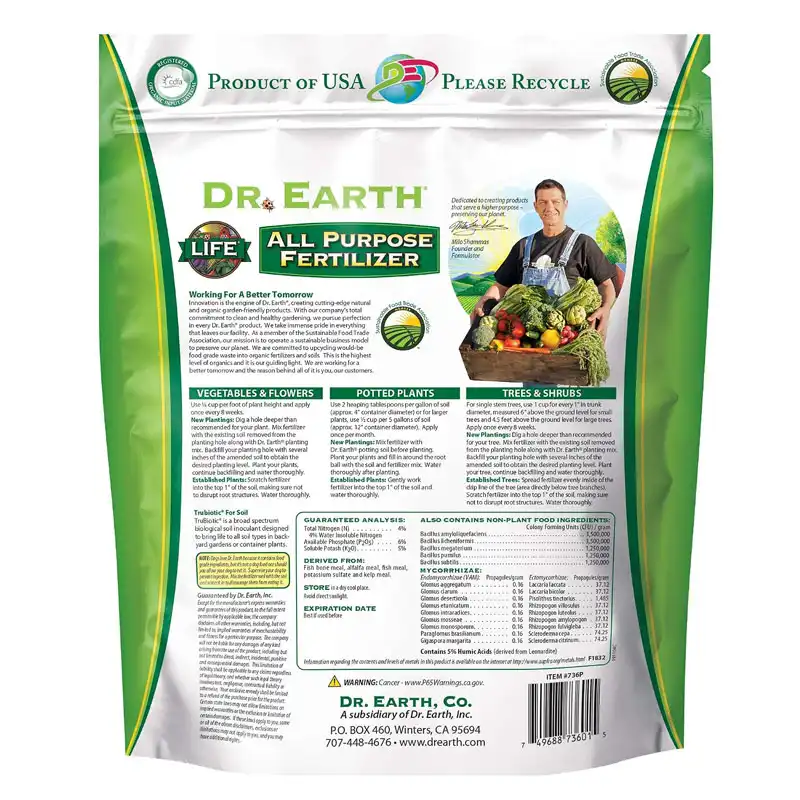
Use this on beds it is better to not disturb. The pellets broadcast evenly and need no working in. Feeding starts in 7 to 10 days, then continues for months. The blend carries TruBiotic microbes, mycorrhizae, and roughly 11% humic acid, which helps thin topsoil hold nutrients. One honest caution: Dr. Earth reformulated this product, and newer bags read 4-6-5. Check the panel before you pay.
Specs:
- 4 lb bag, 120 sq ft
- 0.20 lb N per bag
- Homogeneous pellets
- Around $46
3. TPS Nutrients 5-5-5 Liquid Fertilizer
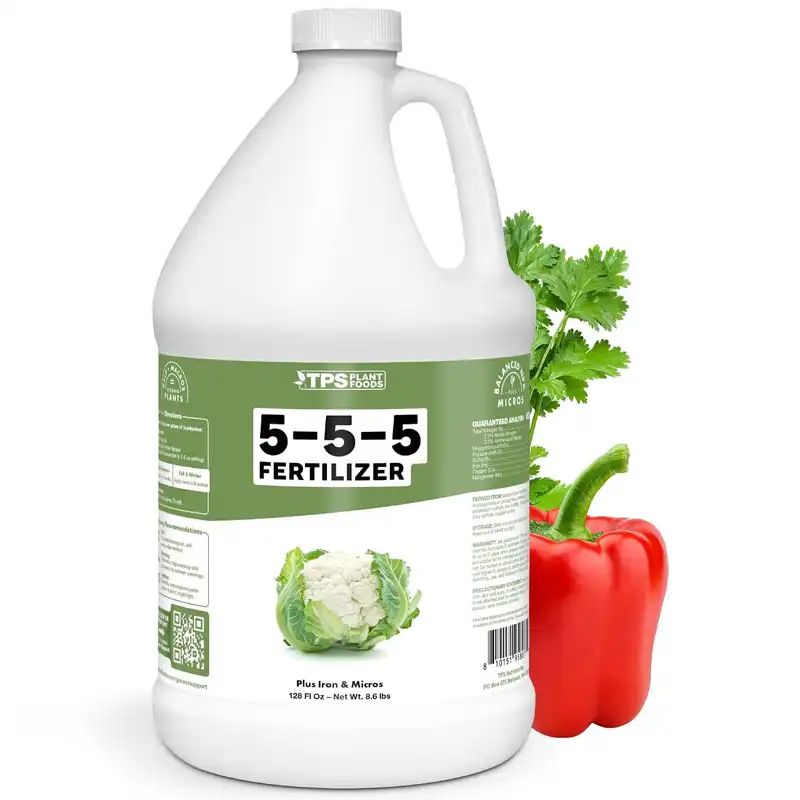
This is the gallon jug for fertigation and watering-can work. Liquids move nutrients into the root zone within the same week, which matters when a crop stalls at fruit set. One gallon of 5-5-5 liquid carries close to 0.45 pound of nitrogen, more than a 4 pound granular bag holds. Its coverage claims range widely, though. One line says 16 to 32 gallons, another says 4 to 8 gallons per 8 ounces. So mix at the lightest rate first.
Specs:
- 128 fl oz jug
- About 0.45 lb N total
- Liquid concentrate
- Around $50
4. Grow Queen Organic Liquid Indoor Plant Food 5-5-5
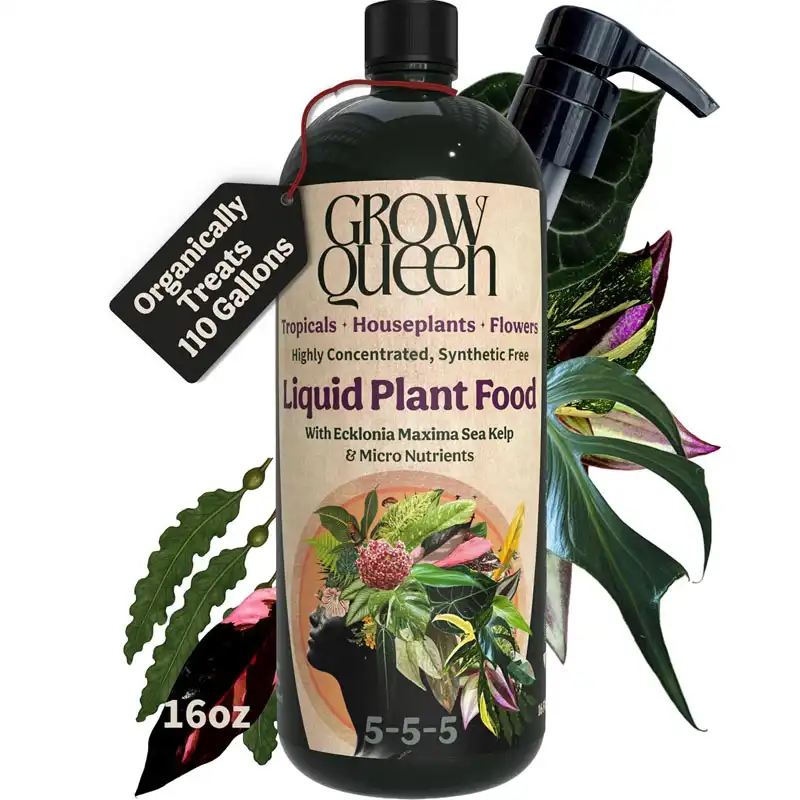
Kelp-based liquids like this suit pots better than field rows. One pump per gallon lands near 70 ppm nitrogen. That is a light constant-feed strength for most waterings. The Ecklonia maxima kelp base adds trace minerals and natural auxins that support root growth. A 16 ounce bottle treats up to 110 gallons, so it lasts a long season indoors. Some bottles carry a faint fishy scent that clears after mixing.
Specs:
- 16 fl oz bottle
- One pump per gallon
- Organic liquid concentrate
- Around $33
5. Dr. Earth 5-5-5 MINIS All Purpose Fertilizer
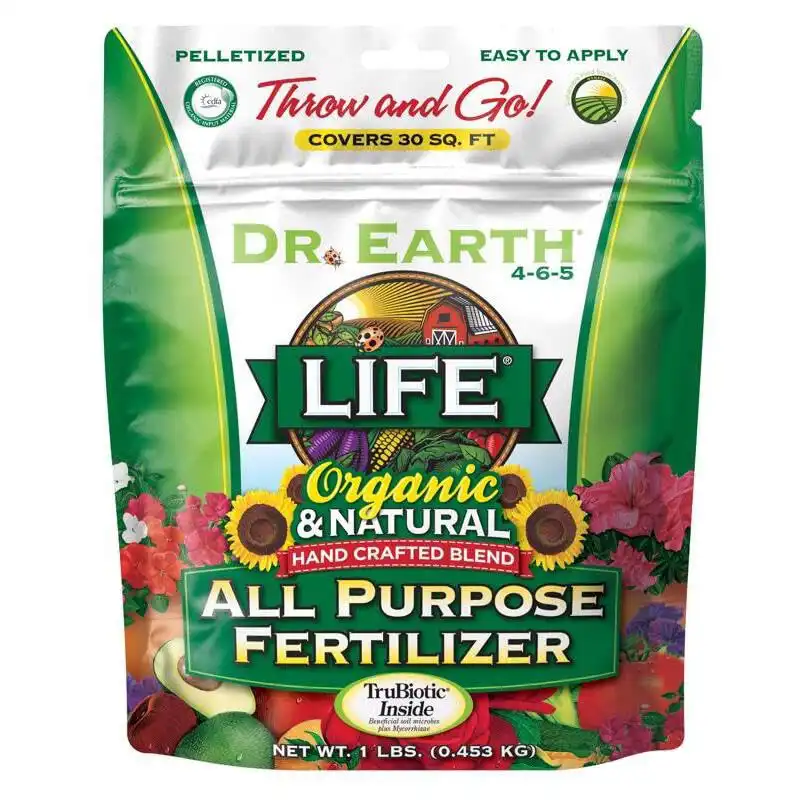
A 1 pound bag covers about 30 square feet and feeds roughly two months. This option fits growers who want to test a single raised bed before committing to a 4 pound bag. Scratch it into the topsoil, water thoroughly, then reapply every 4 to 6 weeks. The same caution applies here. Buyers report bags labeled 4-6-5 rather than 5-5-5, so read the panel.
Specs:
- 1 lb bag, 30 sq ft
- 0.05 lb N per bag
- Granular powder
- Around $13
When 5-5-5 Fertilizer Is the Wrong Choice
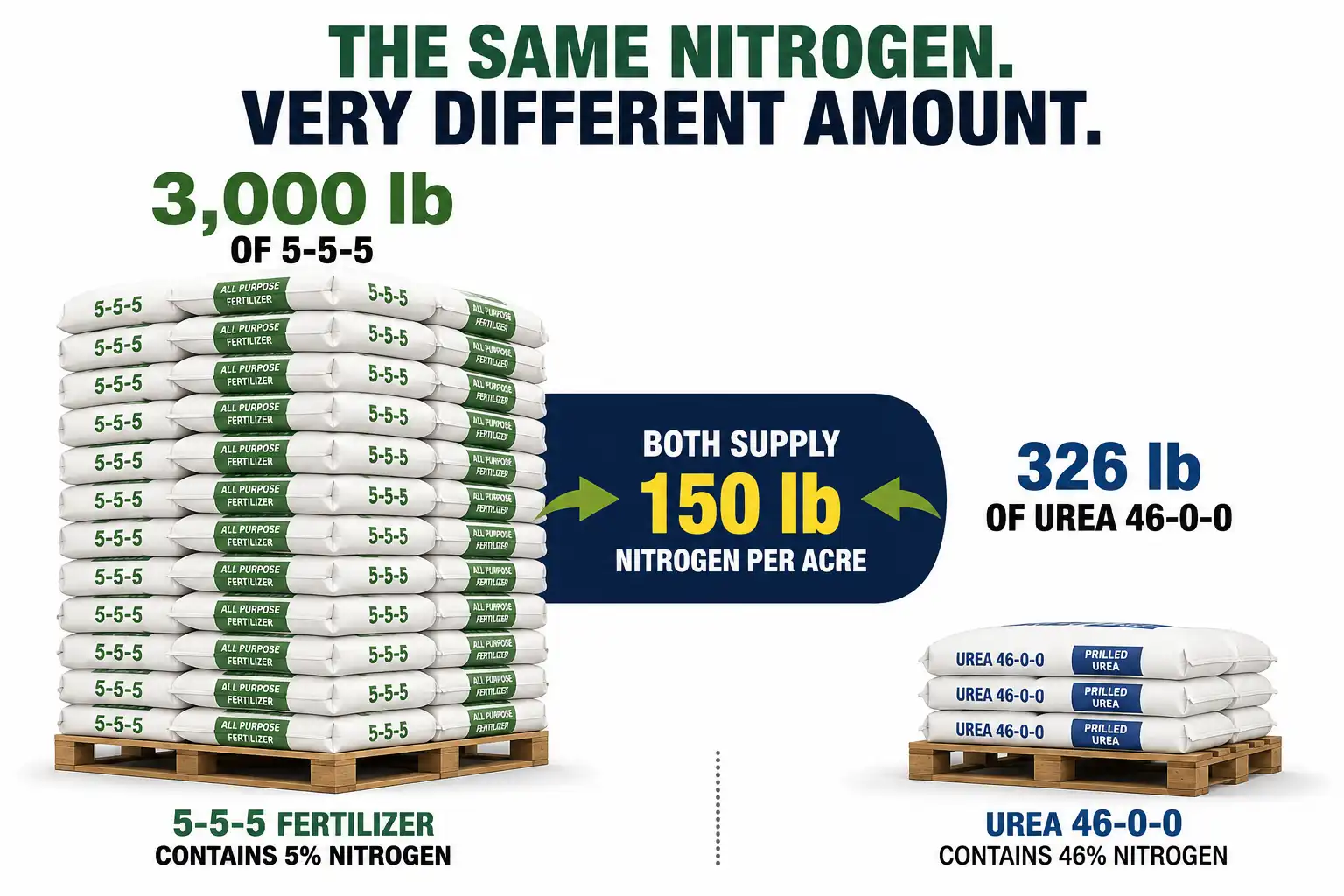
Skip this grade on field acres, because the freight math falls apart fast. Corn at 150 pounds of nitrogen per acre would need 3,000 pounds of product. That is a ton and a half per acre. Urea at 46-0-0 delivers the same nitrogen in 326 pounds. That is why no one in the Corn Belt hauls balanced organic grades across a section.
The second problem is phosphorus buildup. Vegetables remove far more nitrogen and potassium than phosphate. So years of balanced feeding stack phosphate in the soil while nitrogen stays short. High soil-test phosphorus raises runoff risk without helping yield.
K-State Research and Extension and every land-grant lab say the same thing: test first. A soil test kit or a lab submission through your extension office tells you which numbers you actually need. Once phosphate reads high, switch to a nitrogen-forward product instead.
Third, this grade cannot carry heavy feeders through peak demand. Sweet corn at tassel and tomatoes at first fruit both want nitrogen faster than microbes deliver it. So those crops are typically side-dressed with a higher-nitrogen source, with the balanced blend reserved for pre-plant.
Which Crops Respond Best to This Grade
Leafy greens, root crops, herbs, and transplants respond best, because their nitrogen demand stays moderate and steady. The slow release curve matches how they grow.
- Lettuce, spinach, and chard: steady nitrogen without the bitterness that heavy nitrate pushes
- Carrots, beets, and radishes: balanced phosphate and potash without forcing top growth
- Tomatoes and peppers: solid at transplant, then side-dress with more nitrogen at fruit set
- Herbs and container plants: low burn risk suits small root volumes
- Fruit trees, grapes, and berries: spring feeding matches slow perennial uptake
- New beds and cover crop residue: microbes and humic acid help build soil biology
Skip it on legumes like peas and beans. Those crops fix their own nitrogen once nodulation starts, so extra nitrogen just grows vines instead of pods.
Common Mistakes Every Season
Growers apply this grade in cold March soil, then blame the product when nothing greens up by April. Microbes are simply idle below 50°F. Check soil temperature before you spread, not the calendar date.
The second mistake is doubling the rate to chase faster results. Organic blends do not work that way. You just build phosphate and waste money.
Third, people leave pellets sitting on dry ground. No moisture means no mineralization. Water it in the same day, or spread ahead of rain.
Last, storage kills more fertilizer than anything else. Heat and humidity break down microbial inoculants and cake granular blends. Keep bags sealed, off the concrete, and out of the summer heat in the shed.
FAQs About 5-5-5 Fertilizer
Is 5-5-5 fertilizer good for tomatoes?
Can 5-5-5 fertilizer burn plants?
How often should I apply 5-5-5 fertilizer?
Is 5-5-5 the same as 4-4-4 fertilizer?
Can I use 5-5-5 fertilizer on a lawn?
Does 5-5-5 fertilizer go bad?
What to Reach For in Raised Beds
Keep a 15 pound bag of granular 5-5-5 for pre-plant work on the beds. A gallon of liquid handles mid-season correction. That pairing covers most of what a garden needs. The granular builds a base two to three weeks ahead of transplanting. Then the liquid rescues whatever stalls in July.
Test your soil first, then match the rate to your actual numbers. If your phosphate already reads high, buy nitrogen instead of a balanced blend. And treat 20 pounds per 1,000 square feet as your baseline. That is the figure honest labels agree on.