Which Grapes Are the Sweetest? Brix Ranked by Variety
Grocery store labels never print a sugar number, so shoppers pick blind. Growers choosing vines face the same problem. Which grapes are the sweetest comes down to Brix, plus how much acid sits behind that sugar.
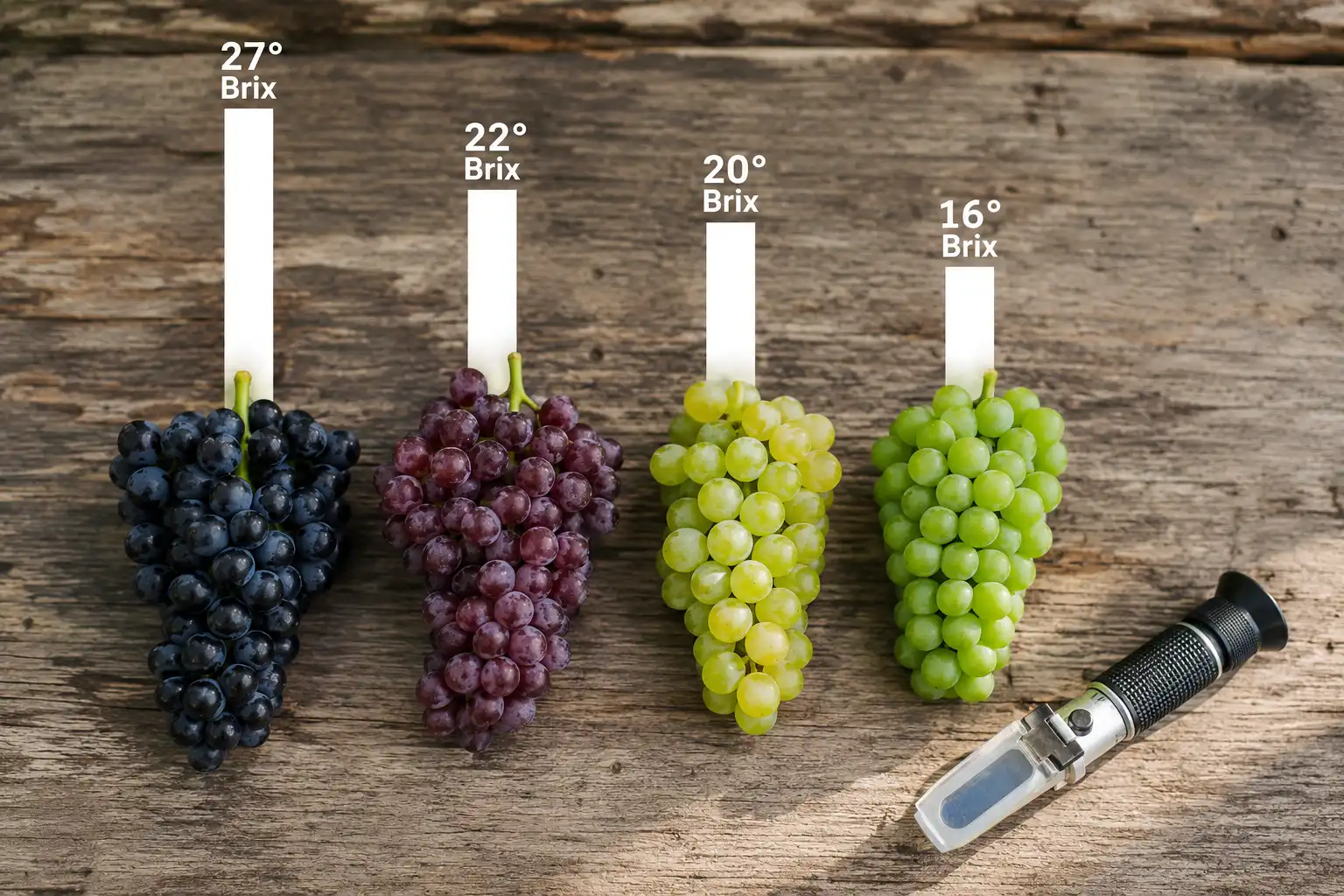
The grapes are the sweetest: Candy Dreams tops the list at 26 to 28 Brix, above any other grape sold fresh in US stores. Candy Snaps come next at 20 to 23, then Cotton Candy at 18 to 22.
How Growers Measure Grape Sweetness
Sweetness starts with Brix. One degree Brix equals one gram of sugar per 100 grams of juice. So 20 Brix juice runs 20 percent sugar by weight. A handheld refractometer gives you that number in about two seconds from one crushed berry. Growers and packers both work off it. For the tool side, our rundown on reading Brix with a grape refractometer covers targets by grape type.
But Brix alone will fool you. Acid pushes back against sugar on the tongue. Two grapes can both read 18 Brix and taste nothing alike, because one carries twice the tartaric acid. So the sugar-to-acid ratio drives perceived sweetness more than raw sugar does.
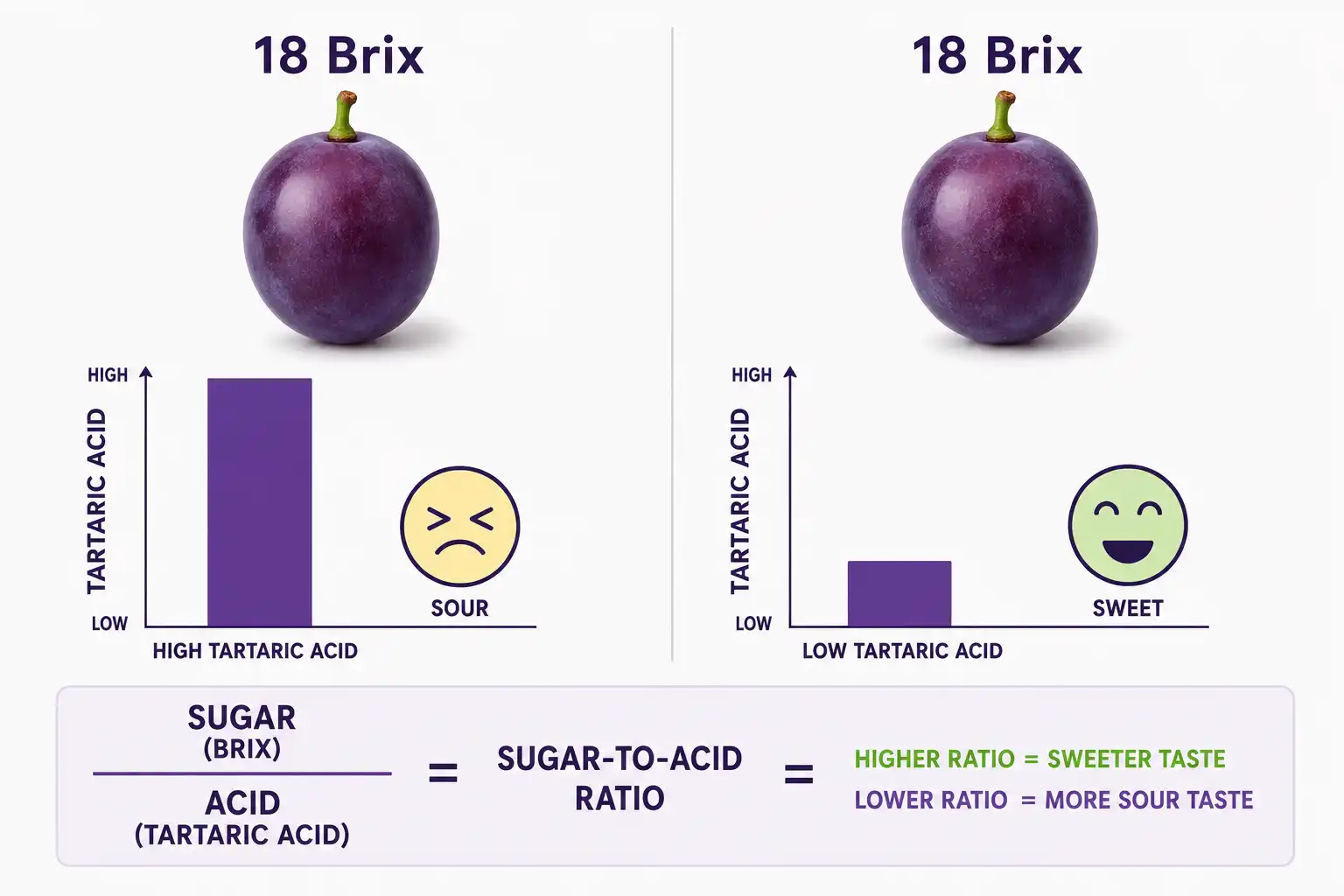
Research keeps sharpening that point. A 2026 study in Food Science and Nutrition tested 42 grape varieties. A trained panel tasted each one, then HPLC broke down the juice. Brix tracked total sugar closely. Titratable acidity tracked total acid closely. Even so, neither one matched what tasters actually reported. Fructose content predicted perceived sweetness best, while tartaric acid predicted perceived sourness. That fits basic taste chemistry, since fructose reads sweeter than glucose at equal concentration.
Grape juice also carries almost no sucrose. Glucose and fructose split nearly the whole sugar load, usually 42 to 51 percent each. So a fructose-heavy variety tastes sweeter than its Brix suggests.
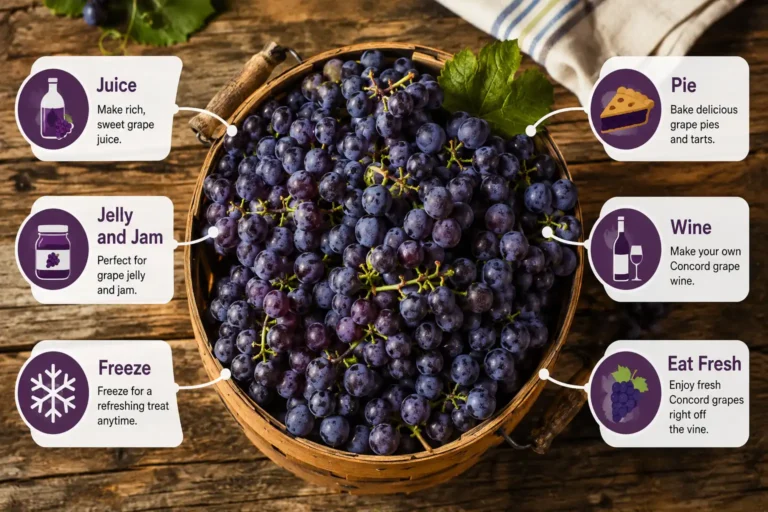
Learn more: Guide to Plant Concord Grapes
Which Grapes Are the Sweetest in the Grocery Store
Candy Dreams leads the pack. IFG, the California breeder behind the candy-flavored series, puts that variety at 26 to 28 Brix. Most red wine grapes come off the vine lower. The rest of the candy line runs 18 to 24, and every one of them beats a standard green grape.
| Variety | Color | Typical Brix | What you taste |
|---|---|---|---|
| Candy Dreams | Black seedless | 26 to 28 | Dense sugar, very little tartness |
| Candy Snaps | Maroon seedless | 20 to 23 | Strawberry with muscat |
| Candy Drops | Pink seedless | 19 to 21 | Clean sweet, light aroma |
| Candy Hearts | Red seedless | 18 to 23 | Tropical and floral |
| Candy Crunch | Black seedless | 18 to 23 | Firm snap, sweet finish |
| Cotton Candy | Green seedless | 18 to 22 | Vanilla, spun sugar |
| Autumn Crisp | Green seedless | About 17 | Sweet, faint muscat |
| Thompson Seedless | Green seedless | About 16 | Neutral and mild |
| Flame Seedless | Red seedless | About 15 | Balanced, slightly tart |
Two things matter before you shop. First, those are brand names on patented varieties. So the same fruit can appear under another label, depending on packer and origin. Second, Brix shifts with the block, the season, and the picking crew. A hot San Joaquin Valley September pushes numbers up, while a rushed pick drops them. Published figures differ by a point or two for that reason, and some sources list Candy Dreams lower than the breeder does.
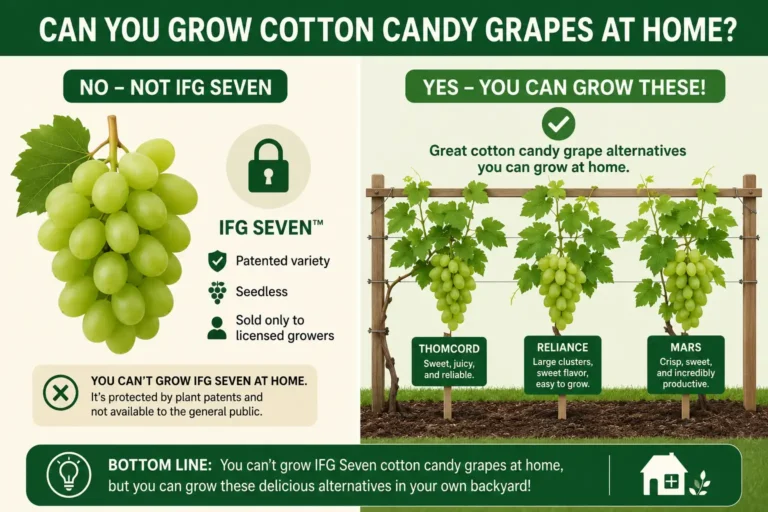
Context helps here. Before the specialty breeding wave, supermarket grapes typically landed at 14 to 16 Brix. Thompson Seedless sat at 16 and Flame Seedless at 15, and both still ship in volume today. So a bunch at 22 Brix carries roughly 40 percent more sugar than the fruit your parents bought. If you want the breeding story, our guide covers how Cotton Candy grapes got their flavor separately.
Why the Candy Series Tastes So Sweet
Low acid and aroma do as much work as sugar. IFG crossed Vitis vinifera with North American species, then selected for flavor compounds instead of shipping traits alone. Cotton Candy came from a Princess vinifera parent crossed with a Vitis labrusca selection out of the University of Arkansas. Ten years of selection went into it. Embryo rescue kept the hybrid embryos alive in culture until they could stand in the field.
The labrusca side brings methyl anthranilate. That single ester gives grape soda and grape candy their signature note. Pair it with 20-plus Brix and very little tartaric acid, and your brain reads the whole package as candy. Strip the aroma out and you would have only a very sweet grape.
Researchers have measured this effect across many fruits. Volatile compounds raise reported sweetness without adding a single gram of sugar, so breeders now pull that lever hard. Candy Snaps and their strawberry note work the same way, and Candy Hearts leans tropical instead.
Are Red, Green, or Black Grapes Sweeter?
Color tells you nothing about sugar. The highest-Brix table grape happens to be black, yet green Cotton Candy reaches 22 and red Candy Hearts reaches 23. In that Utah trial, red Canadice topped every cultivar at 25.9 Brix, while green Marquis finished last at 19.1.
Anthocyanin creates the red and black pigment. It also carries most of the antioxidant value, but it adds no sweetness. So variety and ripeness decide the sugar, not skin color. Judge a bunch by how fully it colored for its own type instead.
The Sweetest Grapes You Can Grow at Home
Canadice and Delaware top the sugar charts among cold-hardy seedless types. Utah State University Extension ran a replicated cultivar trial at Lehi, Utah, across USDA hardiness zones 6b and 7a. Crews measured Brix from 2018 through 2020. Those numbers travel reasonably well to the eastern Great Plains. So it helps to use them when somebody here asks what to plant.
| Cultivar | Type | Brix | Avg yield per vine |
|---|---|---|---|
| Canadice | Red seedless | 25.9 | 11.7 lb |
| Beta | Blue seeded | 25.2 | 13.1 lb |
| Delaware | Pink seedless | 24.7 | 10.8 lb |
| Thompson Seedless | Green seedless | 23.4 | 12.2 lb |
| Jupiter | Blue seedless | 23.3 | 21.0 lb |
| Valiant | Blue seeded | 23.3 | 19.3 lb |
| Himrod | Green seedless | 22.9 | 23.8 lb |
| Concord | Blue seeded | 22.5 | 12.9 lb |
| Reliance | Pink seedless | 21.8 | 13.3 lb |
| Marquis | Green seedless | 19.1 | 31.1 lb |
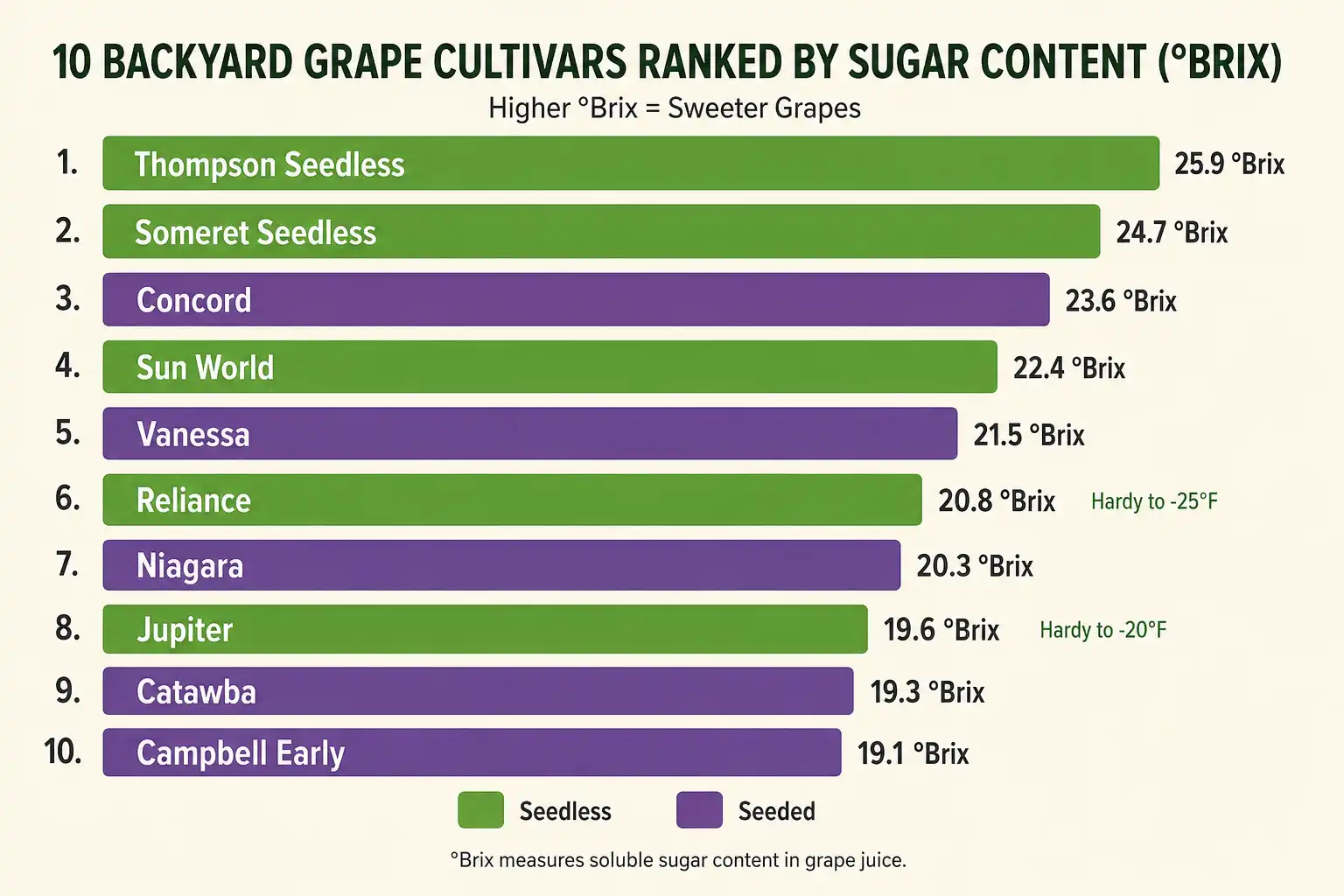
Read that table with yield alongside sugar. Canadice posted the highest Brix but carries small berries. Delaware came close, then lost half its vines during the trial. Jupiter is the practical pick for a Kansas backyard. That trial gave it 100 percent vine survival, 21 pounds per vine, and 23.3 Brix. It runs seedless too, with a clean muscat flavor from University of Arkansas breeding. Reliance takes cold near minus 25 F, which matters in zone 6a. Still, its thin skin cracks in a wet September.
Keep Concord and Reliance on the west fence line here outside Topeka. Concord reads 22.5 on a refractometer and still tastes tart, which brings you right back to the sugar-to-acid point.
Are Muscadines Sweeter Than Table Grapes?
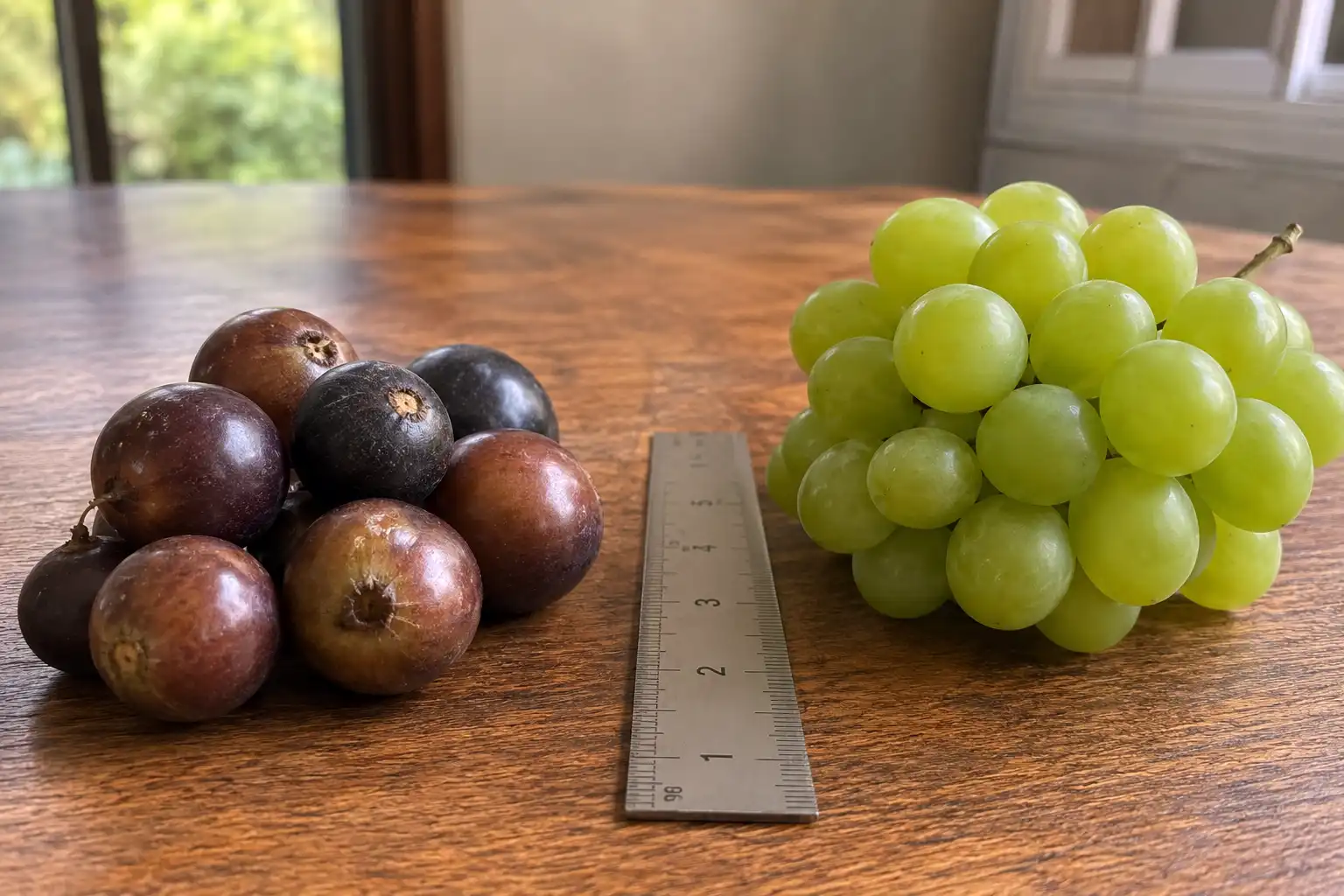
A few are, most are not. The University of Georgia muscadine breeding program at Tifton measured Sugargate at 17.4 percent soluble solids. That program calls it one of the sweetest muscadines in its trials. Fry came in at 15.3 percent and Supreme at 13.9. Their own bar sits at 14 to 15 percent for decent flavor. Above 17 percent reads as very sweet.
So Sugargate beats a Flame Seedless at 15 Brix. It still sits well under a Candy Dreams bunch. Granny Val is the outlier, and its plant patent claims 21.5 to 22.5 percent soluble solids.
Skin changes the experience too. Muscadines are Vitis rotundifolia, not vinifera, and the hull carries thick tannin plus its own acid. Chew that hull and the sugar reads lower than the refractometer says. They also want zone 7 or warmer, so nobody around Topeka picks them. If you farm the Southeast, our guide to muscadine grapes and where they grow has the cultivar detail.
Do Wine Grapes Carry More Sugar Than Table Grapes?
Yes, and by a wide margin. Crews pick whites at 20 to 24 Brix and reds at 22 to 27. Montana State University Extension tells cold-climate growers to target at least 22 Brix on most hybrids. In that Utah trial, Marquette hit 27.6 and Frontenac 26.9, both above every table grape in the planting. Ice wine fruit hangs until it freezes, and it can pass 35 Brix.
None of that makes wine grapes taste sweetest. They carry high tartaric and malic acid, thick tannic skins, and seeds. All three fight the sugar. Bite a 26 Brix Frontenac and acid hits first. That is exactly what a winemaker wants, and exactly what a snacker does not.
How to Pick the Sweetest Grapes at the Store
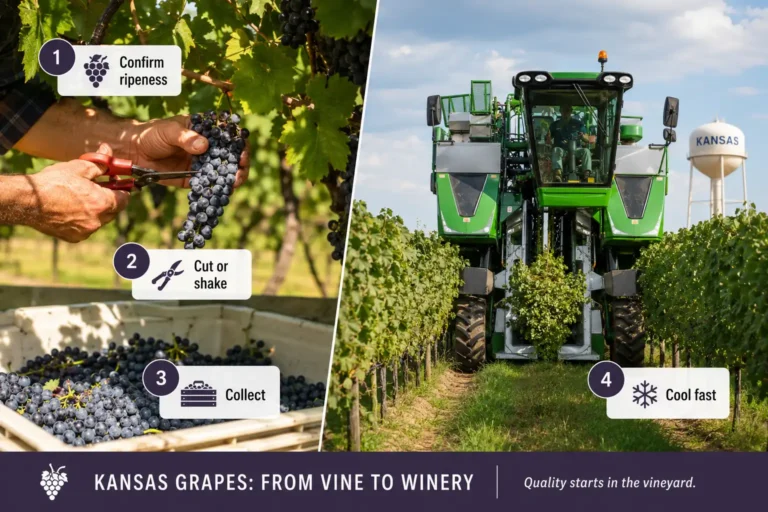
Grapes stop gaining sugar the moment a crew cuts the cluster. They are non-climacteric, so the Brix in the bag is final. More on ripening off the vine is covered here, if that comes as a surprise. What you can do is read the signs.
- Check the stems. Green and flexible means a recent pick. Brown and brittle means weeks in cold storage.
- Look for full color. Green grapes should carry a yellow or amber cast. Pale green means an early pick and low sugar.
- Do not fear the freckles. Brown flecking on green grapes usually signals high sugar, not spoilage.
- Red should be fully red. Green shoulders on a red bunch mean the block came off too soon.
- Taste one at a farm stand. No number beats your own tongue.
- Refrigerate fast. Aromatic varieties lose that candy note within days at room temperature.
What Makes the Same Variety Sweeter Some Years
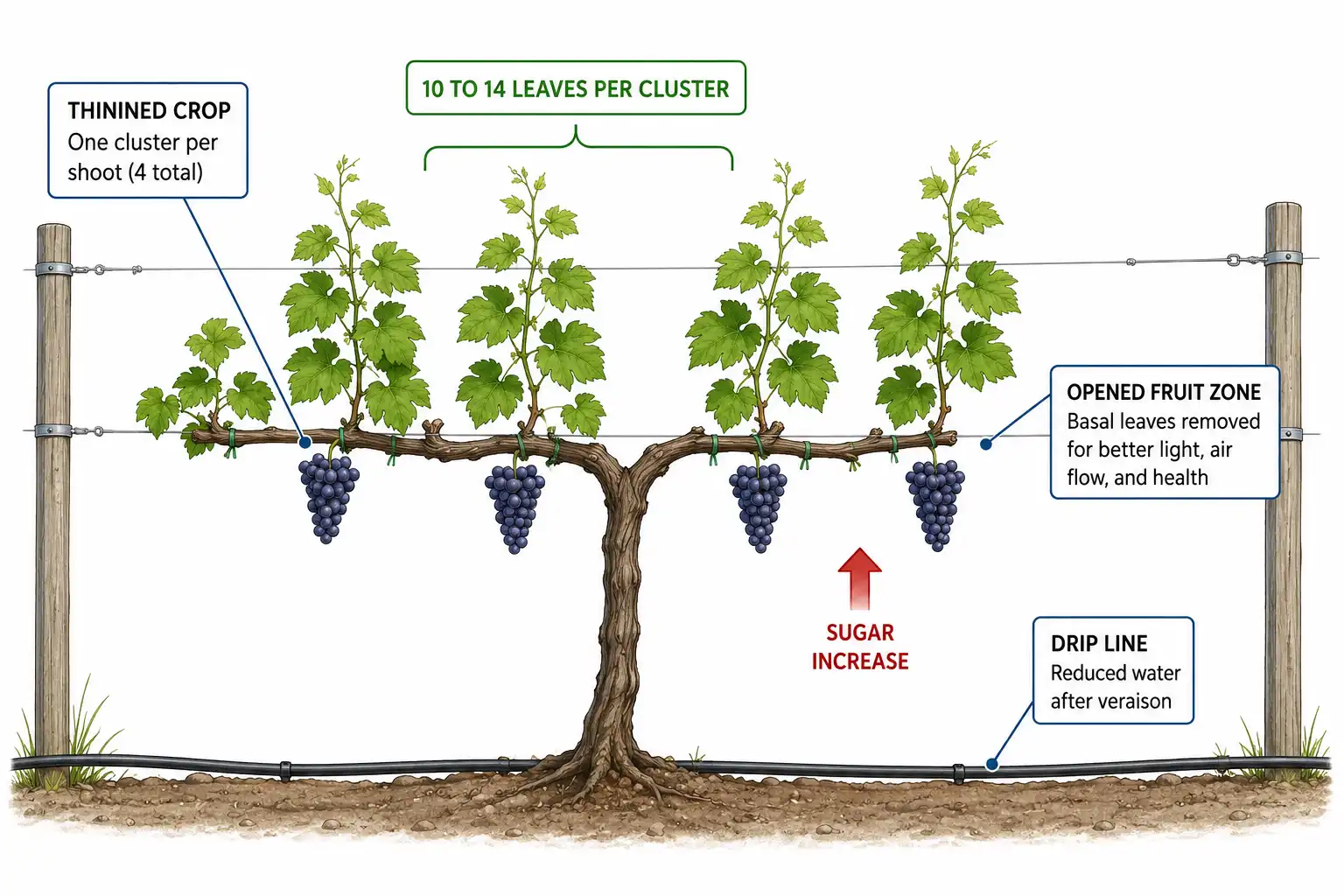
Crop load, sunlight, water, and picking date set the final Brix. Genetics puts a ceiling on sugar, then your management decides how close you get.
- Thin the crop. A vine carrying too many clusters spreads the same photosynthate thinner, so every cluster finishes lower.
- Keep leaf area. Sugar comes from leaves, so budget 10 to 14 healthy leaves per cluster.
- Open the fruit zone. Pull basal leaves a few weeks after fruit set for light and airflow.
- Ease off water after veraison. A mild late-season deficit concentrates juice, while heavy late irrigation dilutes it and splits berries.
- Watch nitrogen. Late nitrogen pushes shoots instead of sugar.
- Sample twice a week after color break. Track Brix and taste together, then pick on both. Our notes on when grapes are ready to pick walk through the full checklist.
Weather still has the final say. Warm days and cool nights after veraison build sugar while holding acid. A wet, cloudy September in Kansas costs me two or three Brix on Concord, every single time.
Last Words on Sweetest Grape Varieties
Two numbers, never one. Brix indicates the sugar content, while acid determines whether that sweetness actually comes through. Candy Dreams wins on raw sugar at 26 to 28 Brix. The rest of the candy line sits close behind. For a backyard row in zone 6a, Jupiter gives you 23 Brix. It brings the hardiness and yield to back that up. Everywhere else, buy fully ripe and chill fast. The vine is the only place a grape ever gains another gram of sugar.