Do Grapes Ripen Off the Vine? What Happens After You Pick
Do grapes ripen off the vine the way a banana finishes on the counter? Many growers pick a little early and hope for the best. Grapes don’t work that way. The science behind it shapes how you time your harvest.
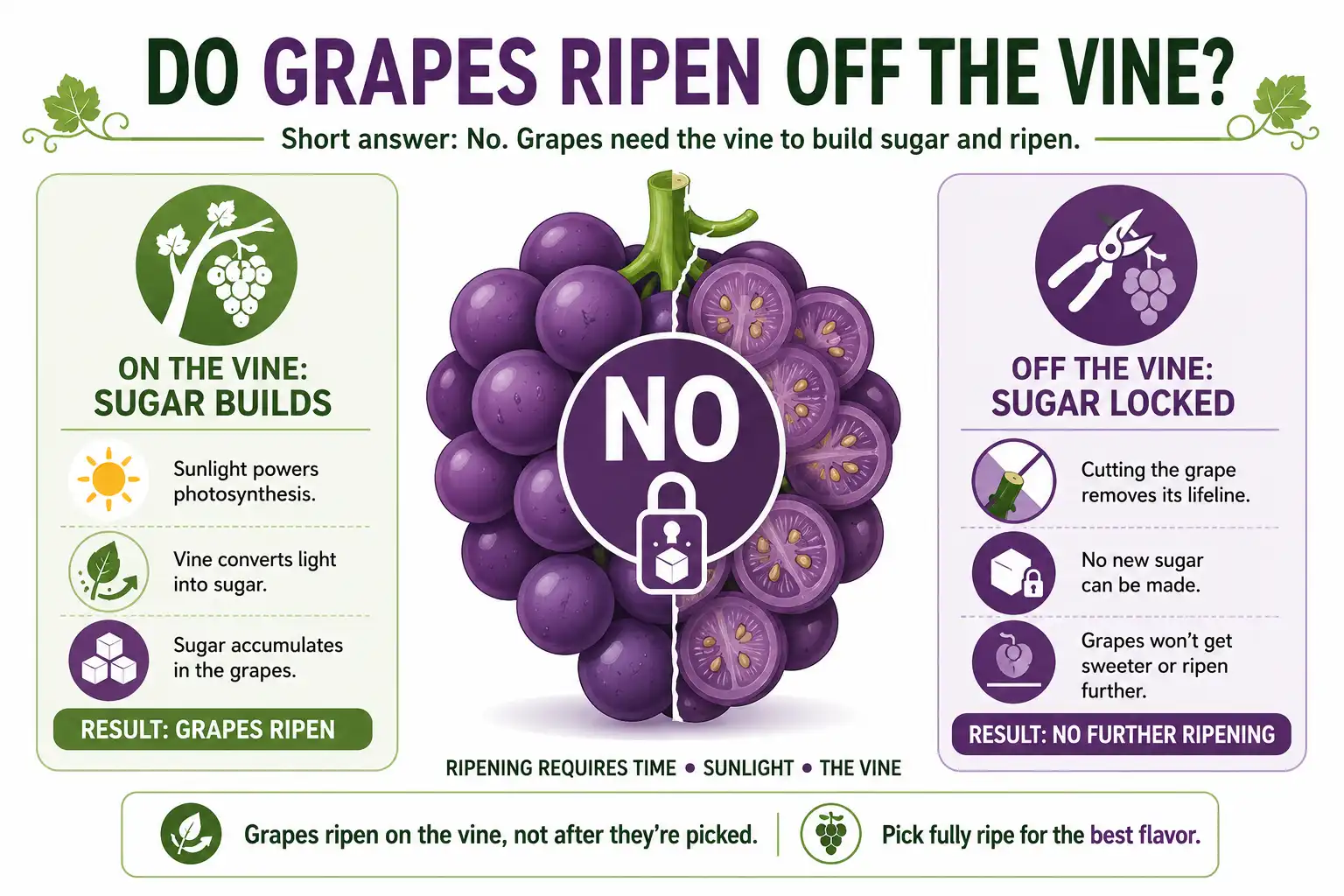
No, grapes do not ripen off the vine. They are a non-climacteric fruit, so their sugar and flavor lock in at harvest. Once you cut the cluster, grapes can soften but never get sweeter.
Why Grapes Stop Ripening Once You Pick Them
Grapes stop ripening at harvest because they are non-climacteric. That word matters more than it sounds. Climacteric fruits like bananas, apples, and tomatoes keep ripening after picking. They do this by producing ethylene, a natural plant hormone that drives softening, color change, and sugar conversion. Grapes don’t run that program. This is the core reason grapes do not ripen off the vine.
While a grape hangs on the vine, sugar flows into the berry through the plant’s vascular system. The leaves make sugar through photosynthesis, and the vine feeds it into the fruit. After you cut the stem, that supply line is gone. So the sugar level you pick is the sugar level you eat. Sugar also builds slowly across the season, which is part of why grapes take so long from bud to ripe cluster.
The University of Maryland Extension groups grapes with cherries, strawberries, and blueberries as non-climacteric crops that need full ripeness before harvest. Iowa State University Extension puts it in plain terms. These fruits reach peak sweetness on the plant and stop developing once picked.
What Actually Happens to Grapes After Picking
After picking, grapes change in ways that look like ripening but aren’t. They lose water through the skin, so they slowly soften and shrink. The color may deepen a shade as the berry dries out. None of that adds sugar. A soft grape is not a sweeter grape. It is an older grape losing moisture.
Leave a tart cluster on the counter for a week and you’ll prove it yourself. The grapes turn limp and wrinkled. The flavor fades instead of improving. Cold storage slows this decline, but it can’t reverse an early pick.
Which Fruits Ripen After Picking and Which Don’t
Climacteric fruits ripen after picking, while non-climacteric fruits do not. The split comes down to ethylene. Climacteric fruits keep making it after harvest, so they finish ripening off the plant. Non-climacteric fruits stop making it, so what you pick is what you get.
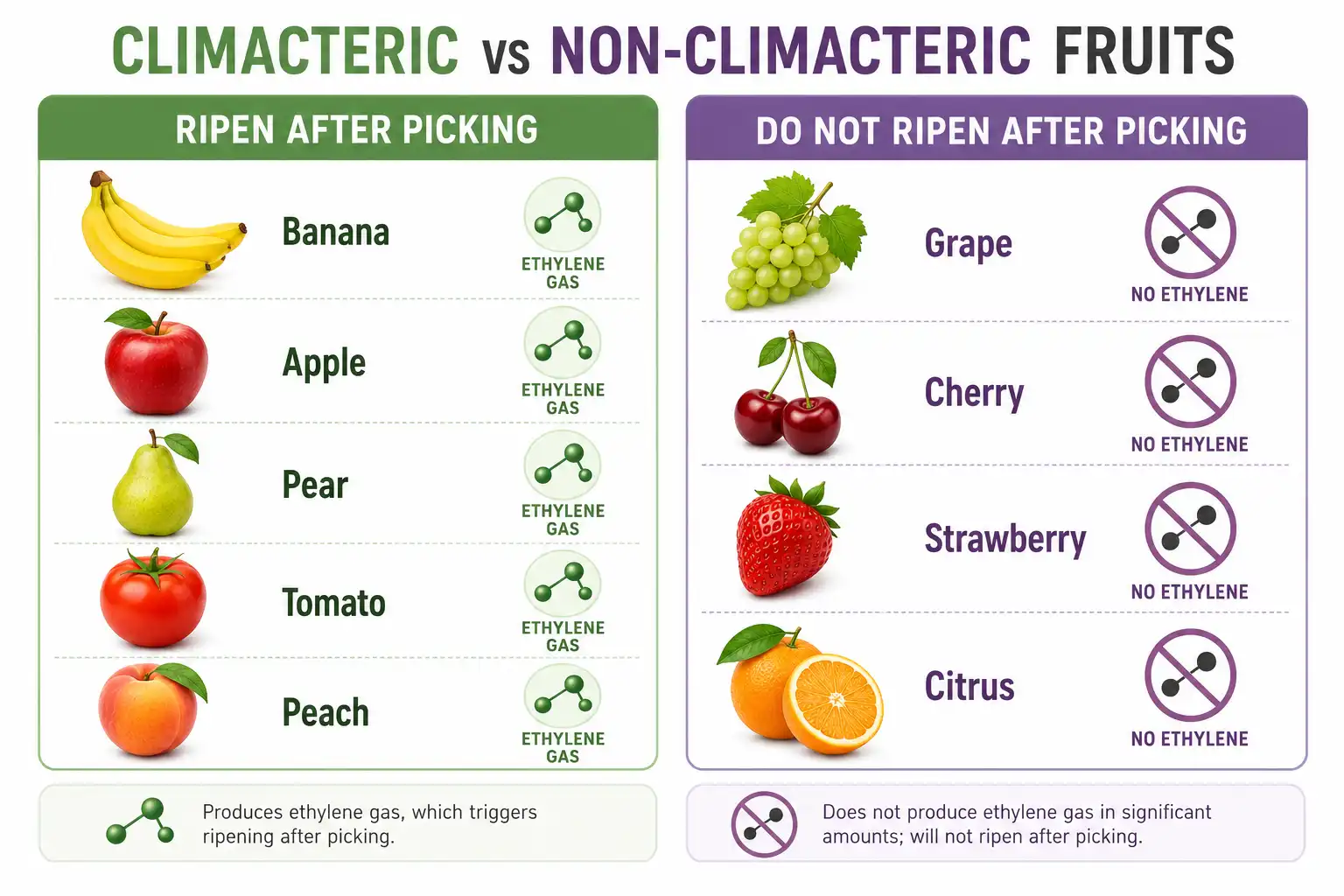
Common climacteric fruits include bananas, apples, pears, peaches, plums, avocados, mangoes, and tomatoes. You can pick these firm and let them finish at room temperature. Non-climacteric fruits include grapes, cherries, strawberries, blueberries, citrus, and pineapple. These need full ripeness on the plant. This is why tomatoes keep ripening off the plant on a windowsill, while grapes just sit there.
How to Tell Grapes Are Ripe Before You Pick Them
You tell grapes are ripe by tasting them, checking color and seeds, and reading sugar with a refractometer. Since grapes won’t improve after picking, this judgment call is everything. Get it right and the harvest is sweet. Rush it and the crop stays sour. Tracking these signs week by week is the heart of knowing when your grapes are ready to pick.
These changes start at veraison, the point when berries soften and begin to color. Veraison usually shows up six to eight weeks before harvest. That window is your cue to start tasting every few days. Waiting for full ripeness also means the crop sits on the vine longer, so keeping birds off the ripening clusters becomes part of the job.
Taste First
Taste is the most reliable test. Pull a few berries from different spots on the vine, not just the sunny outside. A ripe grape tastes sweet and full, with just enough tartness for balance. If it puckers your mouth or tastes green, leave it longer. On these rows, taste is trusted before any number.
Check Color and Seeds
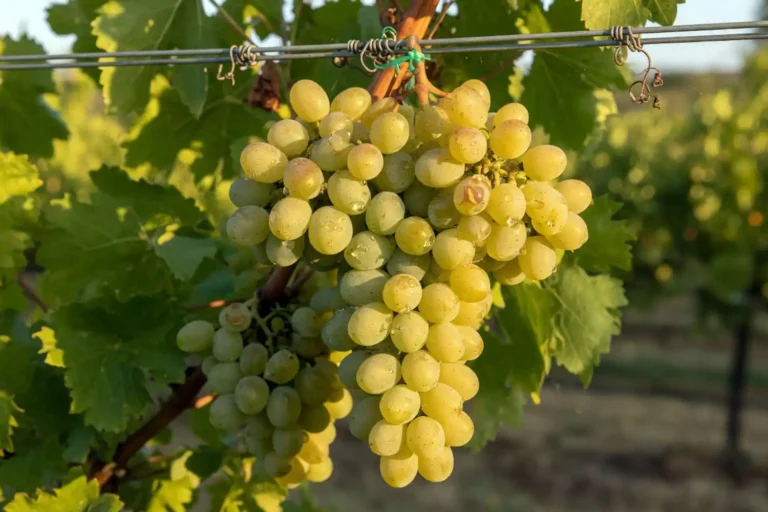
Color tells you ripening has started, but it isn’t the finish line. Red grapes deepen to crimson or purple, and green grapes shift toward gold, not lime. Grapes often reach full color before full sugar, so don’t trust color alone. The seeds are a better tell. Bite in and look. Ripe seeds turn brown and crunchy, while green or pale seeds mean the berry needs more time.
Measure Brix With a Refractometer
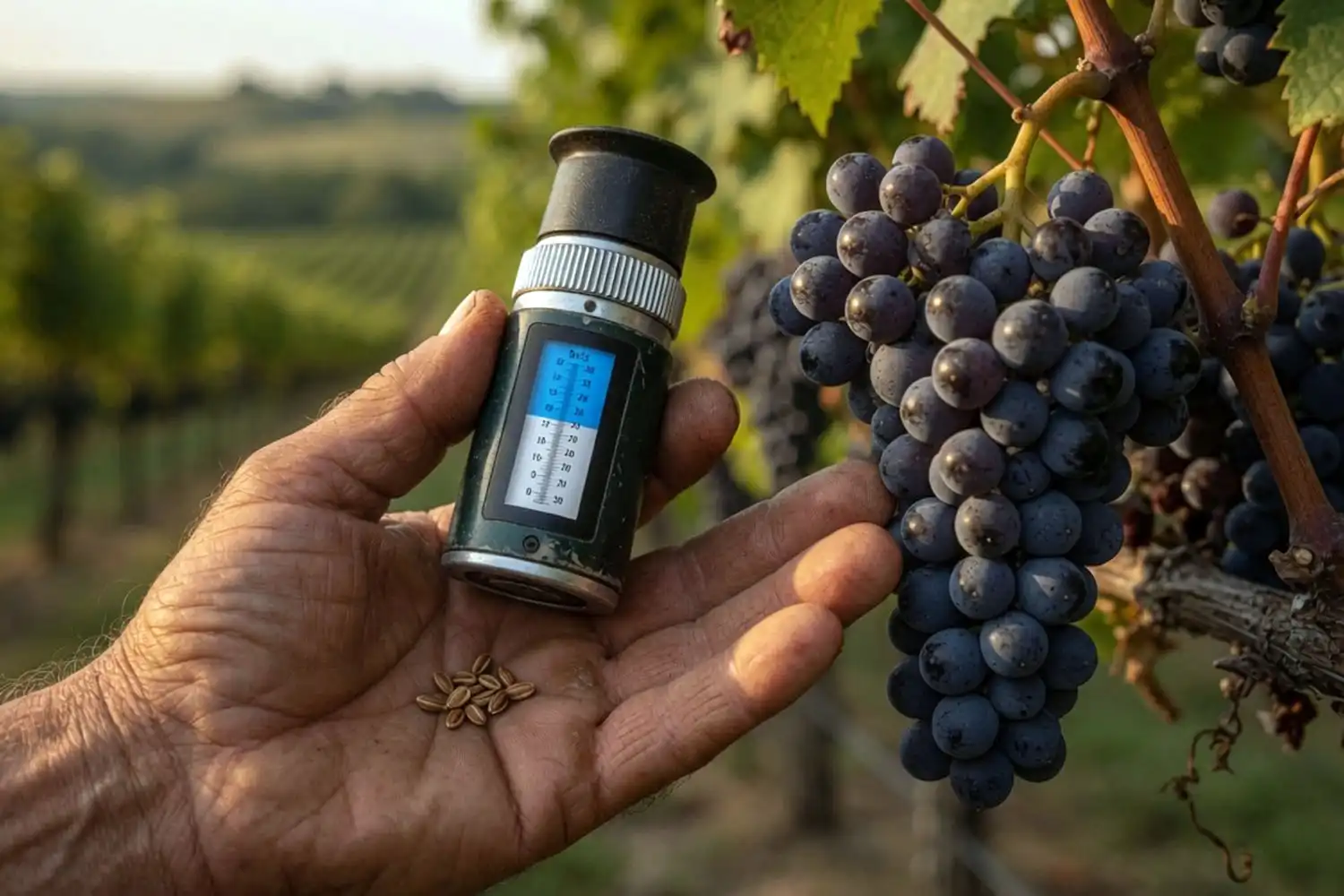
A refractometer reads sugar as degrees Brix from a single drop of juice. Most table grapes hit peak eating quality between 16 and 20 Brix. Wine grapes usually run higher, often 20 to 25 Brix depending on the style. A handheld unit costs little and takes the guesswork out. Still, pair the number with a taste, because sugar alone doesn’t guarantee flavor. Heavy rain or irrigation right before harvest can swell berries and lower Brix, so getting weekly water right for your grapes pays off as sugar peaks.
Can You Make Picked Grapes Sweeter?
No, you can’t make picked grapes sweeter. The paper-bag trick works for climacteric fruit, not grapes. Tossing grapes in a bag with a ripe banana adds ethylene, but grapes don’t answer by making sugar. They just soften faster and spoil sooner.
Some people try a sunny windowsill or a warm spot near the oven. Heat only speeds water loss. The grapes wrinkle, they don’t sweeten. The one honest fix is to pick ripe in the first place.
How to Store Grapes So They Stay Good
Since you can’t ripen grapes after harvest, the goal shifts to holding quality. Get them cold fast. Grapes keep best near 32°F with high humidity, so the refrigerator is your friend. Don’t wash them until you’re ready to eat, because surface moisture invites mold.
Keep grapes away from ethylene-heavy fruit like apples and bananas in storage. That gas won’t ripen the grapes, but it does push them toward decay. Use a breathable container or a loosely vented bag for airflow. Handle clusters gently, since bruised berries break down first. They are kept in the coldest part of the fridge, unwashed, until they reach the table.
Bottom Line for Your Vineyard Rows
Grapes are a non-climacteric crop, so they won’t sweeten one bit after you cut them. Everything rides on picking at full ripeness. Taste before you pick, check the seeds, read a Brix number, and trust the vine over the calendar. Get that right and you’ll never reach for a counter trick.