How to Prune Grapes: A Full Guide for Bigger, Cleaner Fruit
Grapevines put out far more wood than they can ripen fruit on. Learning how to prune grapes fixes that. Good pruning trades a tangle of old canes for a strong framework, better sunlight, and larger fruit.
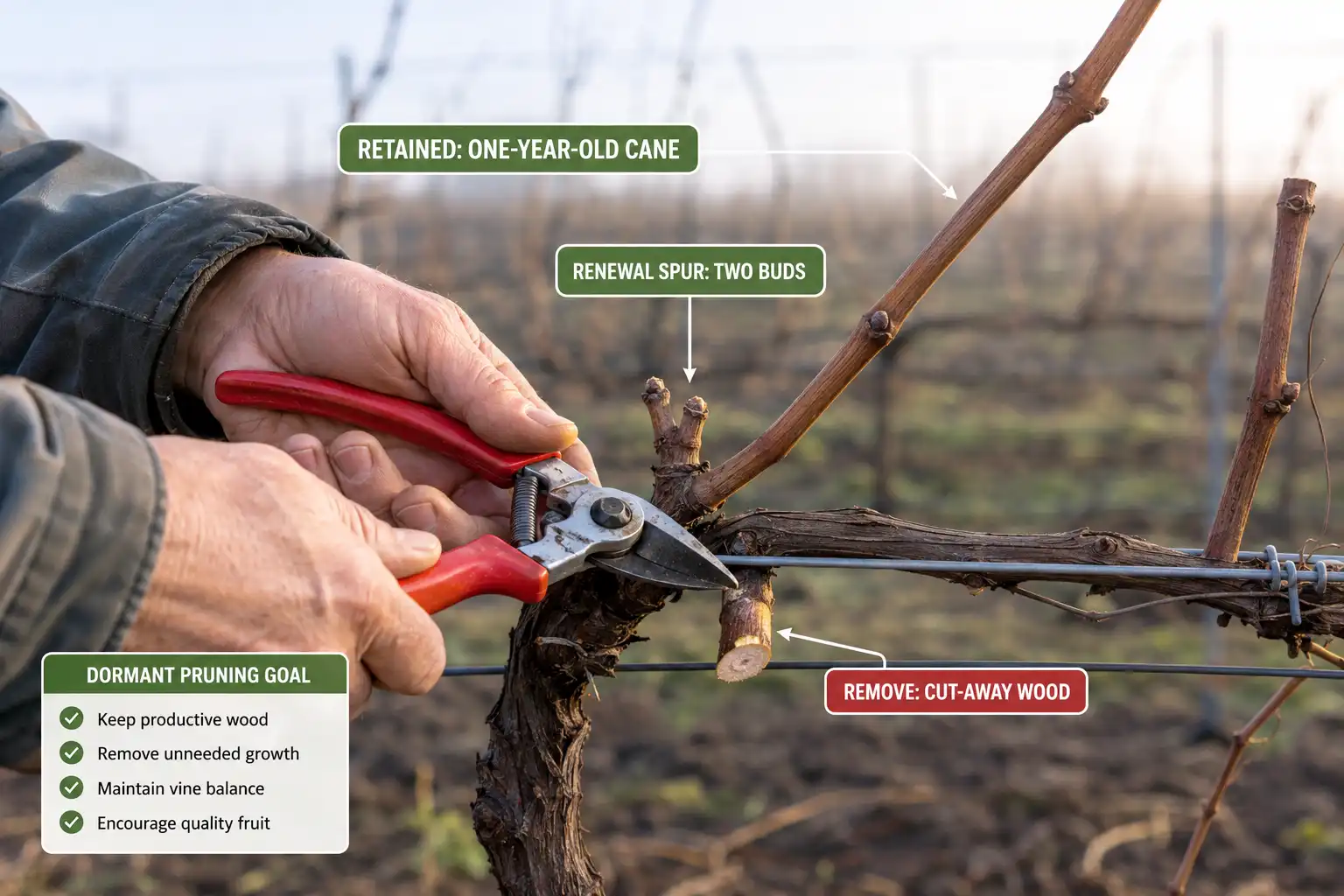
Prune grapes in late winter while the vine is dormant. Remove about 90 percent of last year’s growth, keep a few healthy one-year-old canes or short spurs, and cut the rest away.
Why Pruning Grapes Matters So Much
Grapes bear fruit only on green shoots that grow from one-year-old canes. Older wood just holds the vine up. It does not produce grapes. That single fact drives every cut you make.
Grapevines are vigorous. Left alone, they turn into a thick mass of old wood with little fruit. So every winter you face a trade. Keep too much wood, and the vine over-crops. The fruit stays small and sour. The canopy shades itself and invites disease.
Good pruning removes about 90 percent of last season’s growth. That number surprises new growers every time. Still, it is correct. A well-pruned vine looks almost bare when you finish.
Learn more: Beginner’s Guide to Grow Grapes
When Is the Best Time to Prune Grapes?
Prune grapes during dormancy, in late winter or early spring, before the buds swell. The vine has no leaves then, so you can read its structure clearly. In USDA zone 6a, that window runs from late February into March.
Timing matters for cold protection. Prune too early in winter, and a hard freeze can kill the buds you kept. Wait until the worst cold has passed. Prune close to bud break.
You may see sap drip from fresh cuts in early spring. Growers call this bleeding. It looks bad, but it does not hurt the vine. If you want to skip it, finish before the sap starts to run. Late pruning still works fine either way.
The dormant season is also the best window to plant new grapevines. Pruning and setting bare-root stock is often done in the same few weeks.
Know Your Grape Wood Before You Cut
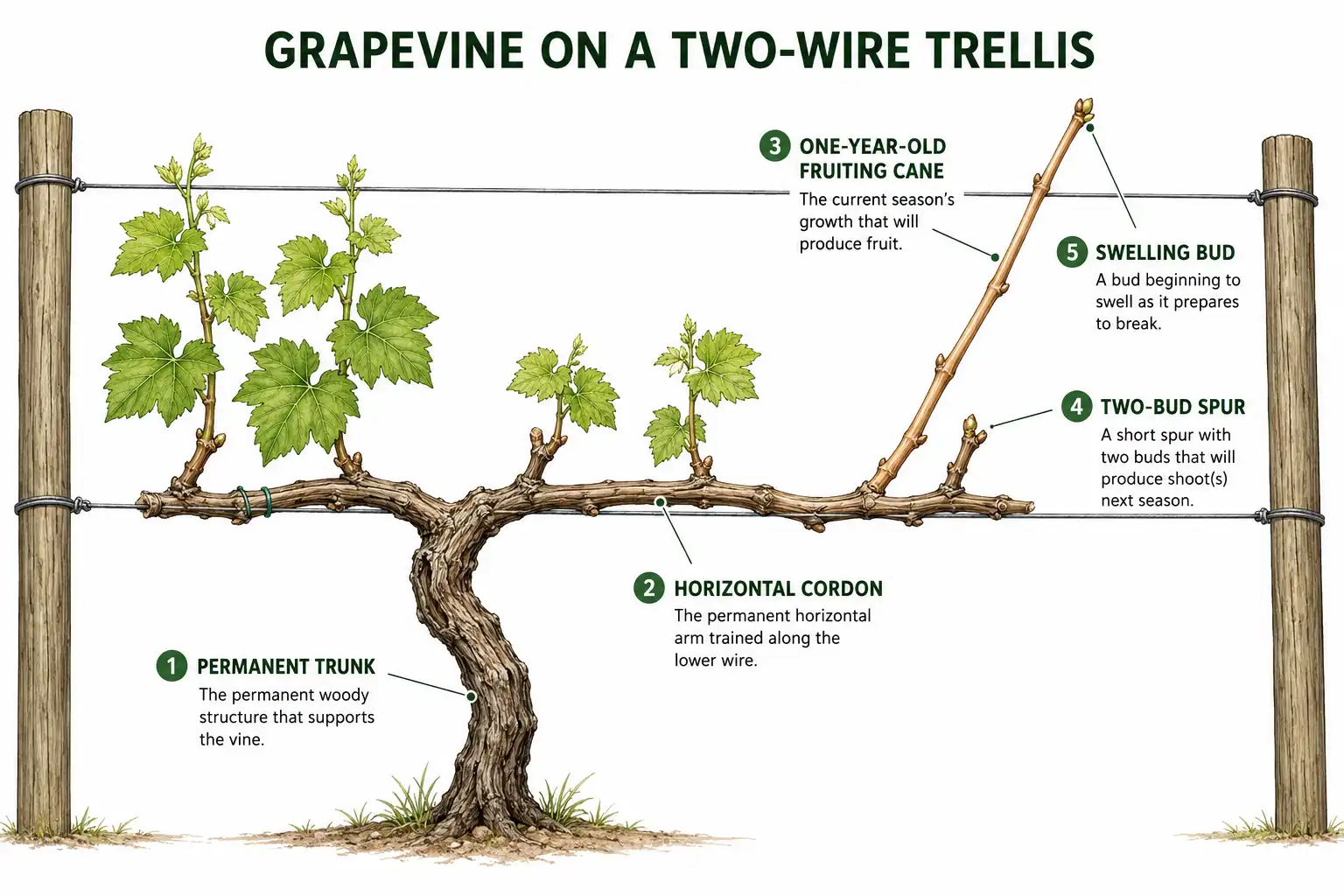
You cannot prune well until you can read the wood. A grapevine has a few distinct parts, and each one plays a role.
- Trunk: the permanent, upright stem. It stays year after year.
- Cordon: a permanent horizontal arm trained along a wire. Not every system uses one.
- One-year-old cane: last season’s growth. It is smooth and tan, about pencil thick. This wood carries next year’s fruit.
- Spur: a cane cut back to just two or three buds.
- Bud (node): the small bump on a cane that grows into a fruiting shoot.
Here is the part that trips people up. The bud right at the base of a cane, the non-count bud, is usually not fruitful. That is why some varieties need longer canes. You keep enough buds to reach the fruitful ones farther out.
Should You Cane Prune or Spur Prune?
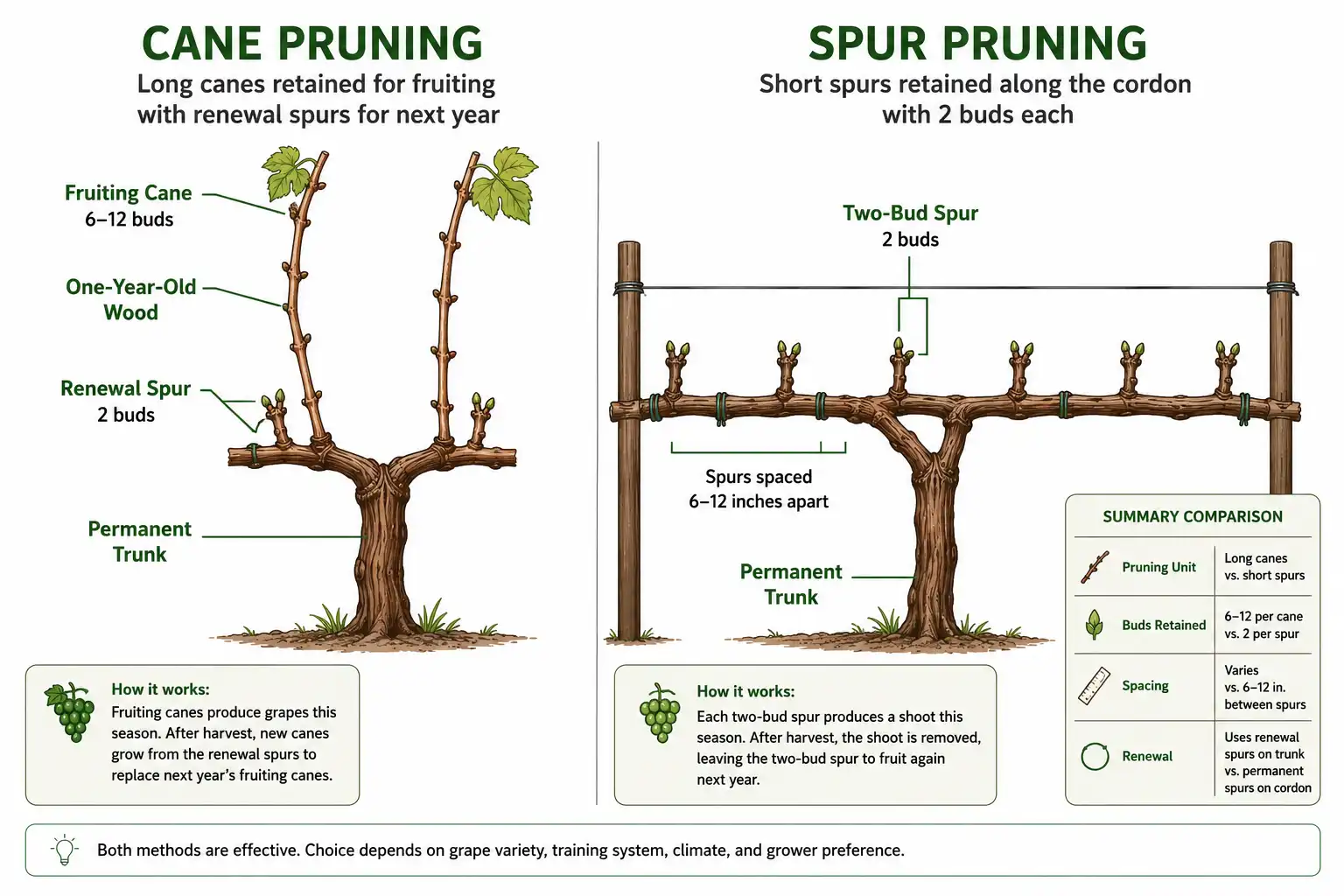
Your grape variety decides which method fits. Cane pruning and spur pruning both work well, yet each suits different vines.
Cane pruning keeps a few long canes, each with about 10 to 15 buds, plus short renewal spurs. Use it for varieties whose basal buds are not very fruitful. Many American types like Concord fall here, along with most cold-hardy hybrids and Thompson Seedless.
Spur pruning keeps short spurs of two or three buds spaced along a permanent cordon. Use it for varieties whose basal buds are fruitful. Most wine vinifera and muscadines respond well to spurs.
If you are not sure, check your variety against a land-grant extension guide before you cut. Pruning is one piece of growing healthy grapes, and the right system depends on the vine you planted.
How to Prune Grapes Step by Step
Here is the dormant routine on a mature, cane-pruned vine. Adjust the numbers if you spur prune.
- Clear the dead wood first. Cut out anything dead, broken, or diseased. This opens up your view.
- Find the trunk and fruiting wire. Everything you keep hangs off this framework.
- Pick your fruiting canes. Choose four to six healthy, pencil-thick canes near the head of the vine. Smooth tan wood is what you want. Skip thin, weak, or shaded canes.
- Cut each cane back. Leave about 10 to 15 buds per cane for cane pruning, or two to three buds per spur for spur pruning.
- Leave renewal spurs. Near the base of each fruiting cane, keep a short spur of two buds. These grow next year’s fruiting canes.
- Remove everything else. All other one-year-old wood comes off. Yes, it feels like a lot.
- Pull the suckers. Strip any shoots growing from the trunk base or the roots.
- Tie the canes to the wire. Spread them out and secure them with twine so shoots get even light.
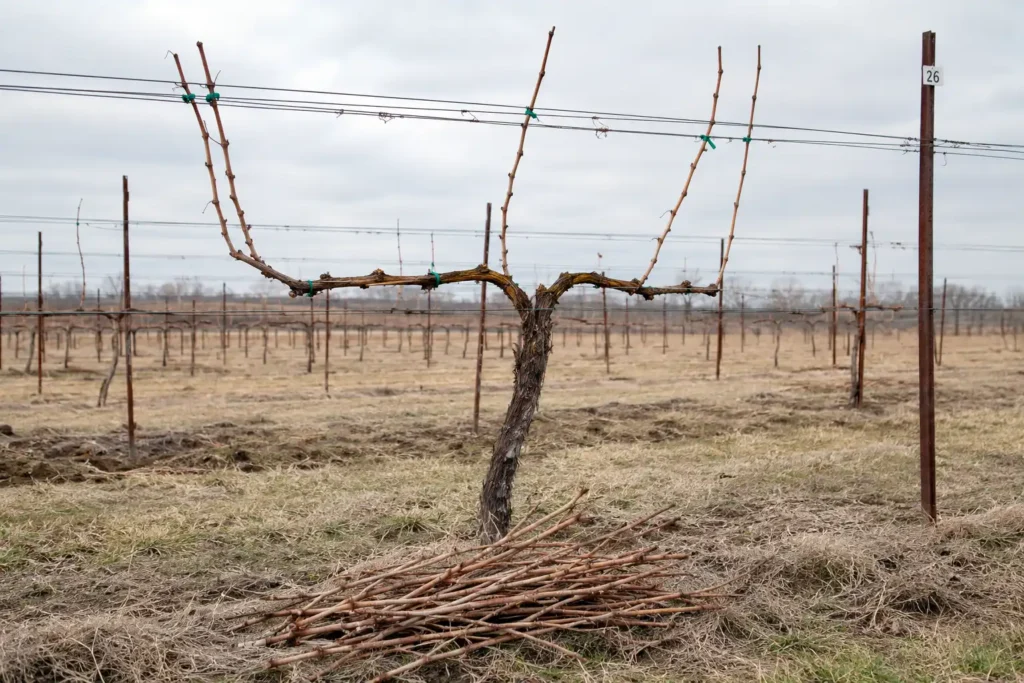
Save a few of the pencil-thick canes you cut. You can start new vines from cuttings later that season.
How Many Buds Should You Leave?
Match the number of buds to the vine’s vigor. Extension services call this balanced pruning. The logic is simple. A bigger vine can ripen more fruit, so it keeps more buds.
To gauge vigor, weigh the one-year-old canes you cut off. Then use a formula based on that weight. For Concord, the classic rule is 30 plus 10. You leave 30 buds for the first pound of prunings, then 10 more buds for each extra pound. A three-pound vine keeps about 50 buds.
Different grape types carry different loads.
| Grape type | Example varieties | Bud formula |
|---|---|---|
| American (labrusca) | Concord, Niagara, Catawba | 30 + 10 |
| French-American hybrids | Marquette, Frontenac, Chancellor | about 20 + 10 |
| Vinifera (wine) | Cabernet, Chardonnay | about 20 + 5 |
Treat these as starting points, not hard rules. Vine vigor shifts with soil, water, and season. Give a vine the weekly water grapes need and steady soil. It pushes more growth, so its bud count runs higher.
How Do You Train a Young Grapevine?
Train a young vine for structure first and fruit later. The first three years build the trunk and arms. You get little or no crop early, and that is the right call.
Year one. At planting, cut the vine back to two or three buds. Then let it grow freely all season. The goal is root growth, not fruit. Do not worry about shape yet.
Year two. In early spring, pick the single strongest cane. Tie it straight to the top wire. This becomes the permanent trunk. Cut everything else off. During the season, let side canes form along the wire for your future cordons or arms.
Year three. Set your cordons or fruiting canes on the wire. Allow a light crop this year. Remove any shoots that grow low on the trunk.
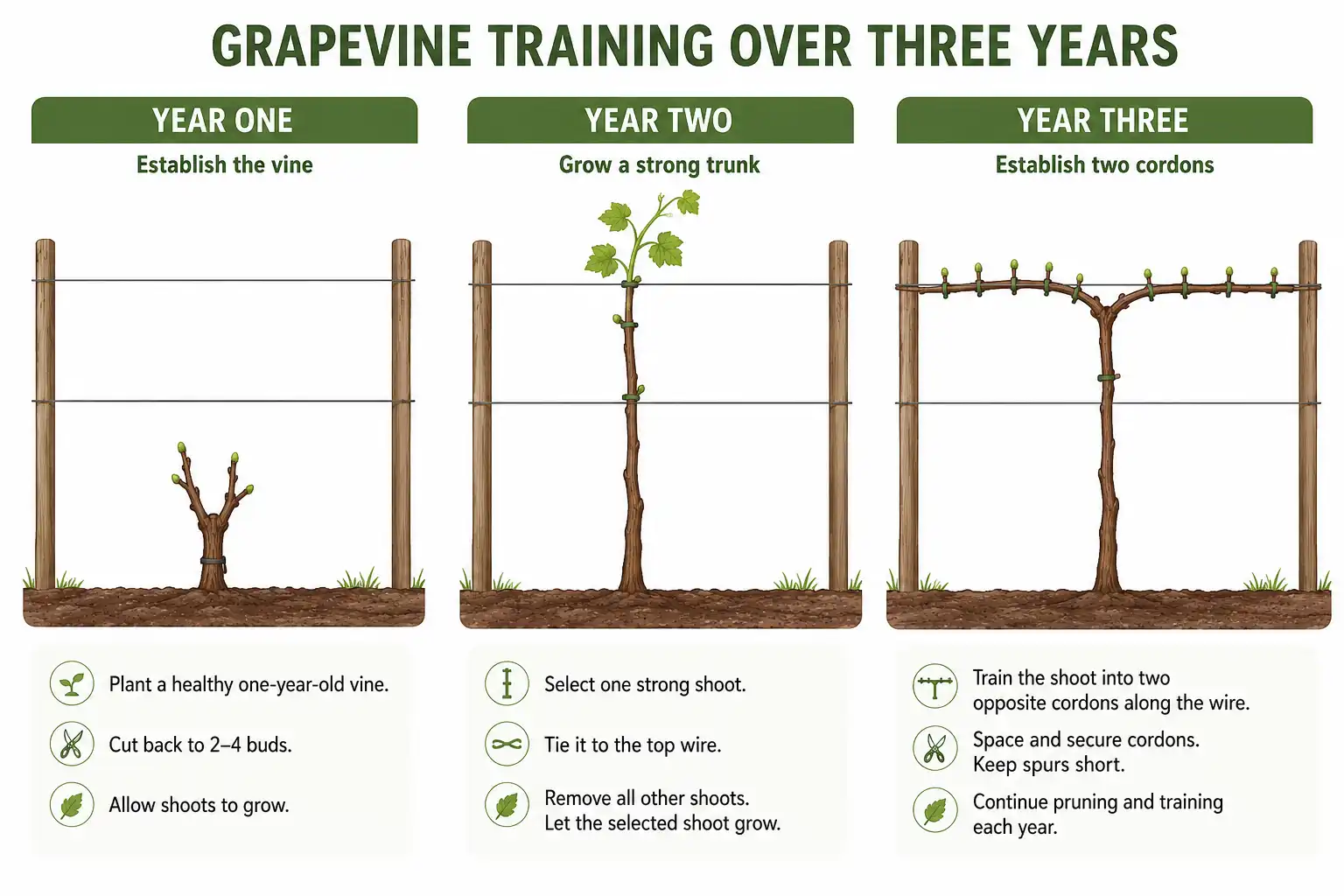
Most vines reach full production by year three or four. Patience here pays off for a decade or more.
Summer Pruning and Canopy Management
Dormant pruning is not the end of the job. Summer work keeps the canopy open so fruit ripens clean. Spring growth pushes far more shoots than a vine needs.
Here is what to do through the growing season.
- Shoot thinning. When new shoots reach 5 to 12 inches, thin out the crowded and weak ones. Space the keepers about 3 to 4 inches apart. Do this after clusters appear and after frost risk passes.
- Sucker removal. Rub off shoots on the trunk and base as they appear. They carry no fruit and steal energy.
- Lateral removal. Trim the first three to five side shoots near the cordon. This opens the fruit zone.
- Hedging. When shoots grow past the top wire and flop over, cut them back. Keep plenty of leaf area above the fruit to ripen it. Finish hedging by mid-summer.
- Leaf pulling. Near veraison, when berries soften and color, pull a few leaves around the clusters. Start on the morning-sun side to avoid sunburn.
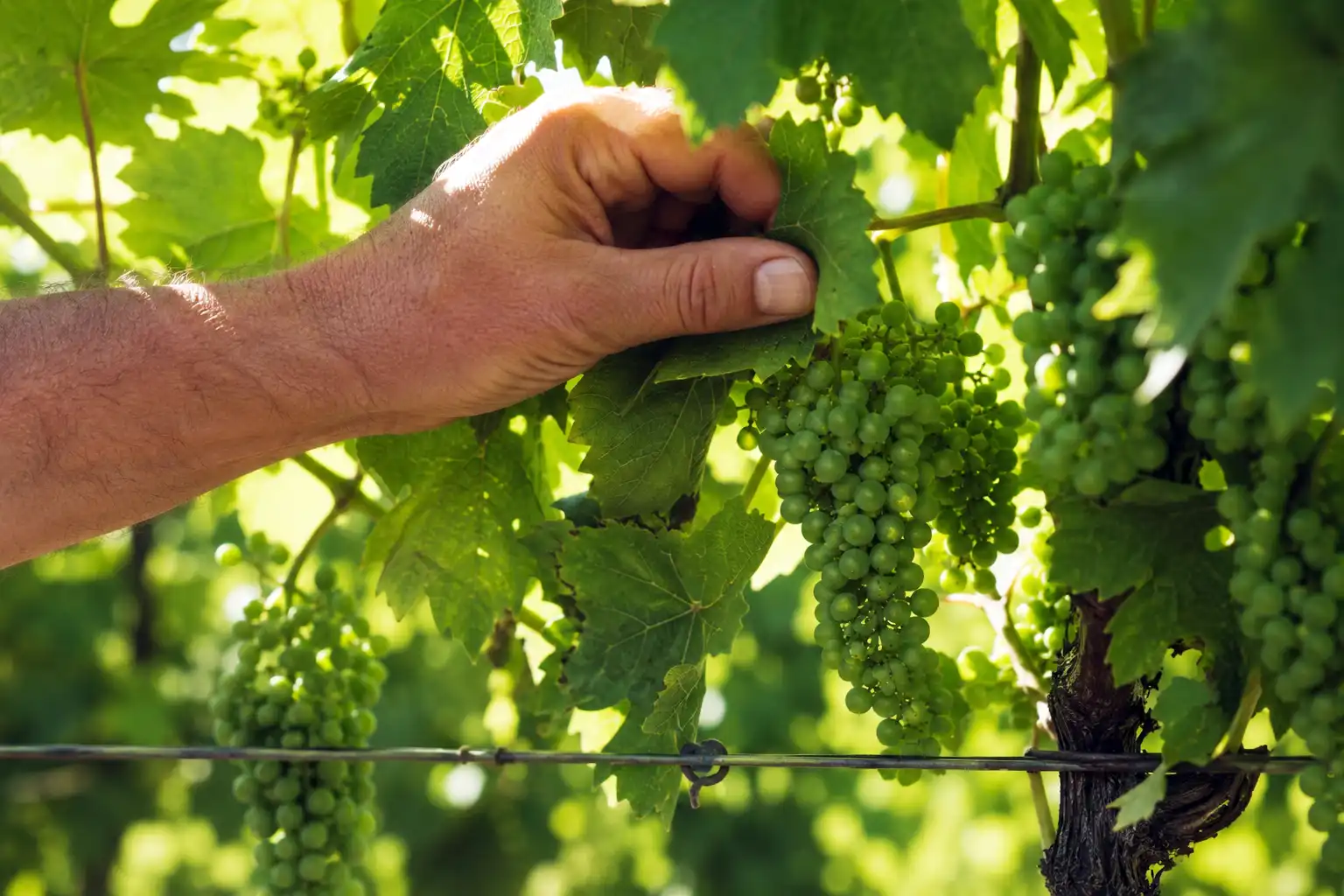
An open canopy dries faster after rain and lets sun reach the fruit. That cuts disease pressure from powdery mildew and black rot. It also helps a copper fungicide spray reach every cluster instead of soaking dead-end leaves.
Cluster Thinning for Bigger Fruit
Fewer clusters mean better clusters. A young or overloaded vine ripens a smaller crop poorly. So dropping some fruit early improves the rest.
Keep about one cluster per shoot on most table grapes. Remove clusters from weak shoots first. In heavy years, a vine that tries to carry too much fruit ripens late and unevenly. Thinned vines color up sooner and reach the point where grapes are ready to harvest more evenly.
Tools You Need to Prune Grapes
You do not need much to prune grapes well. Sharp, clean tools do most of the work.
- Bypass hand pruners for canes up to about half an inch. They cut cleaner than anvil pruners.
- Loppers for older, thicker wood.
- A pruning saw for cutting out old trunks or large arms.
- A small spring scale if you want to balance-prune by weight.
Wipe your blades with rubbing alcohol between vines if any show disease. That keeps you from spreading it down the row. Sharp blades also make clean cuts that heal faster than ragged ones.
Common Grape Pruning Mistakes
Most pruning problems come from a few repeat mistakes.
- Pruning too lightly. This is the big one. New growers leave far too much wood. The vine over-crops and the fruit suffers.
- Keeping old wood for fruit. Grapes come from one-year-old canes, not gray older wood. Old wood only supports the vine.
- Pruning too early. A hard freeze after early pruning can kill your kept buds. Wait out the worst cold.
- Leaving too many buds. More buds does not mean more good fruit. It means small, late, crowded fruit.
- Skipping summer work. A jungle canopy shades and rots the crop. Keep it open.
Get these right, and the vine rewards you every season.
Bottom Lines
Prune hard in late winter while the vine sleeps. Keep a few strong one-year-old canes or spurs, then cut away most of the rest. Match your bud count to the vine’s vigor. After that, keep the canopy open through summer.
The first time you prune a vine this hard, it feels wrong. Trust it. A bare-looking vine in March turns into a heavy, clean crop by fall. That trade has held true on vines in this region for years.