What Are Muscadine Grapes? Traits, Types, and Where They Grow
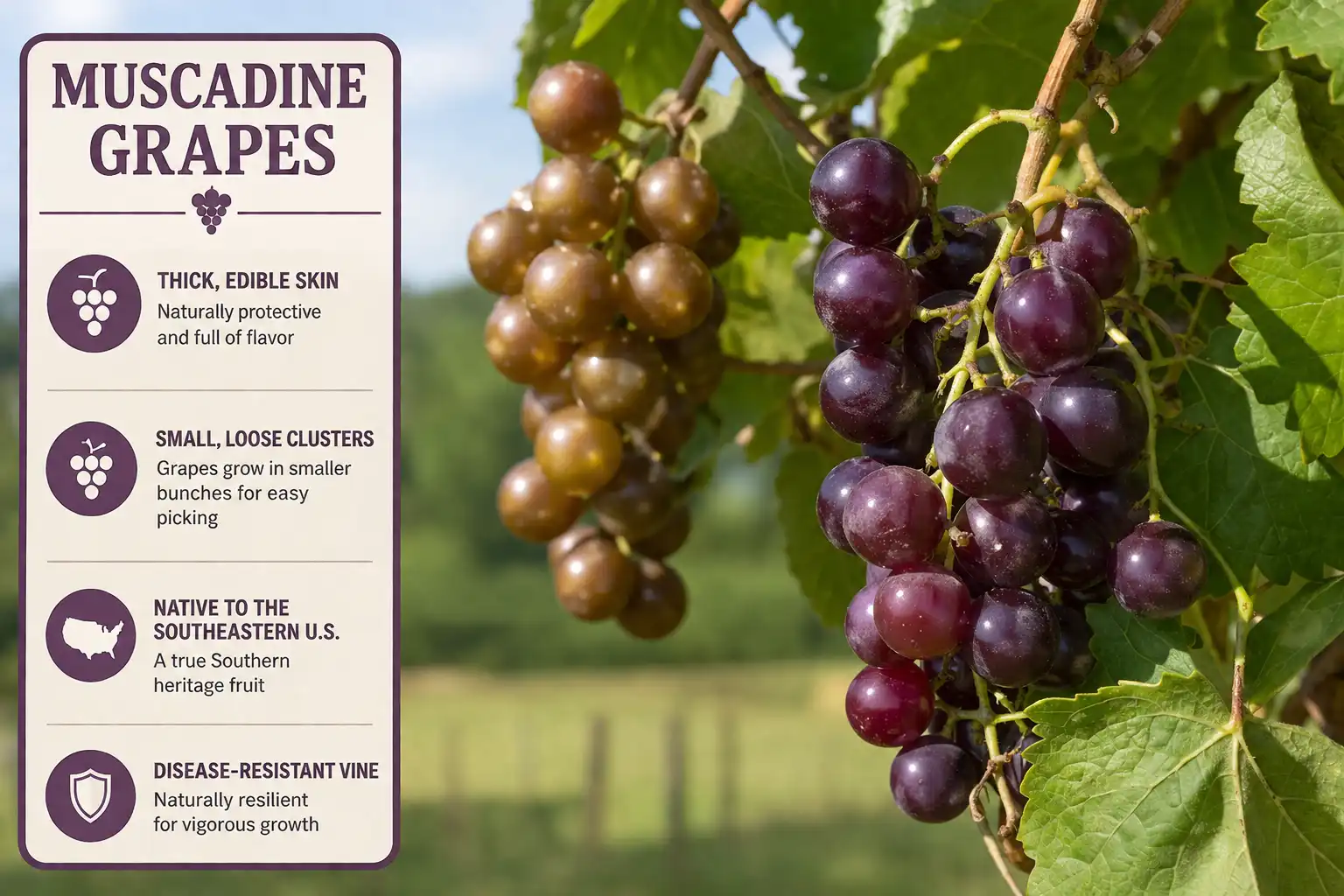
Muscadine grapes confuse a lot of folks who only know store table grapes. They grow in loose clusters, wear a thick skin, and taste musky-sweet. They are a Southern native, tough and disease-resistant. Here is what sets them apart and where they grow best.
Muscadine grapes are a grape species (Vitis rotundifolia) native to the southeastern United States. They grow in small loose clusters, have thick skins, and resist heat, humidity, and disease that ruin most other grapes.
Are muscadine grapes good for health?
Yes, muscadine grapes are rich in antioxidants like resveratrol and ellagic acid, mostly concentrated in the skins and seeds. They also provide fiber and vitamin C, supporting heart health and digestion.
What Makes a Muscadine Different From a Regular Grape?
A muscadine is a separate grape species with 40 chromosomes, while common table and wine grapes carry 38. That gap sounds small, but it changes everything about the fruit and the vine.
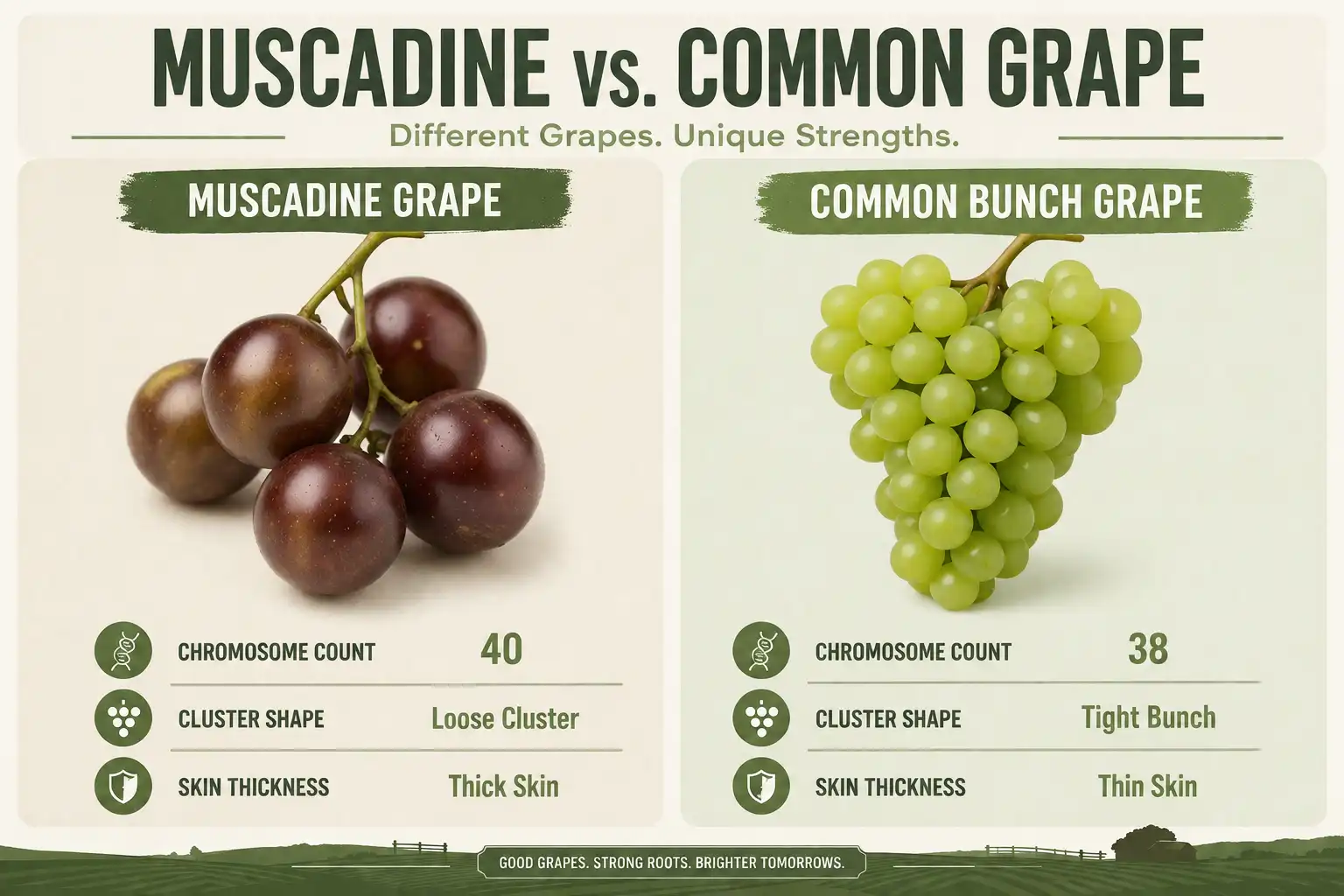
Scientists place grapes in the family Vitaceae, then split the genus into two groups. Most grapes sit in the bunch-grape group (Euvitis). Muscadines sit alone in their own group (Muscadinia) as Vitis rotundifolia. Because of that chromosome difference, you cannot easily cross a muscadine with a regular grape.
You notice the difference right away in the field. Muscadines grow in small loose clusters of a few berries, not tight hanging bunches. Each berry is large and round. The skin is thick and tough. The vine has smooth bark and unbranched tendrils, while bunch grapes shed their bark in strips.
One myth needs clearing up. Some sources call the muscadine a European grape. That is wrong. The muscadine (Vitis rotundifolia) is a true American native. The European wine grape is Vitis vinifera, a different plant entirely.
Where Do Muscadine Grapes Grow?
Muscadine grapes grow across the warm, humid Southeast, from Delaware down to central Florida and west to east Texas. Their native range even runs north up the Mississippi River into Missouri.
Cold is the one thing muscadines cannot handle. Winter lows near 0°F injure the vines. Where temperatures drop below 10°F on a regular basis, the crop simply will not survive. That puts most muscadines in USDA hardiness zones 7 through 10.
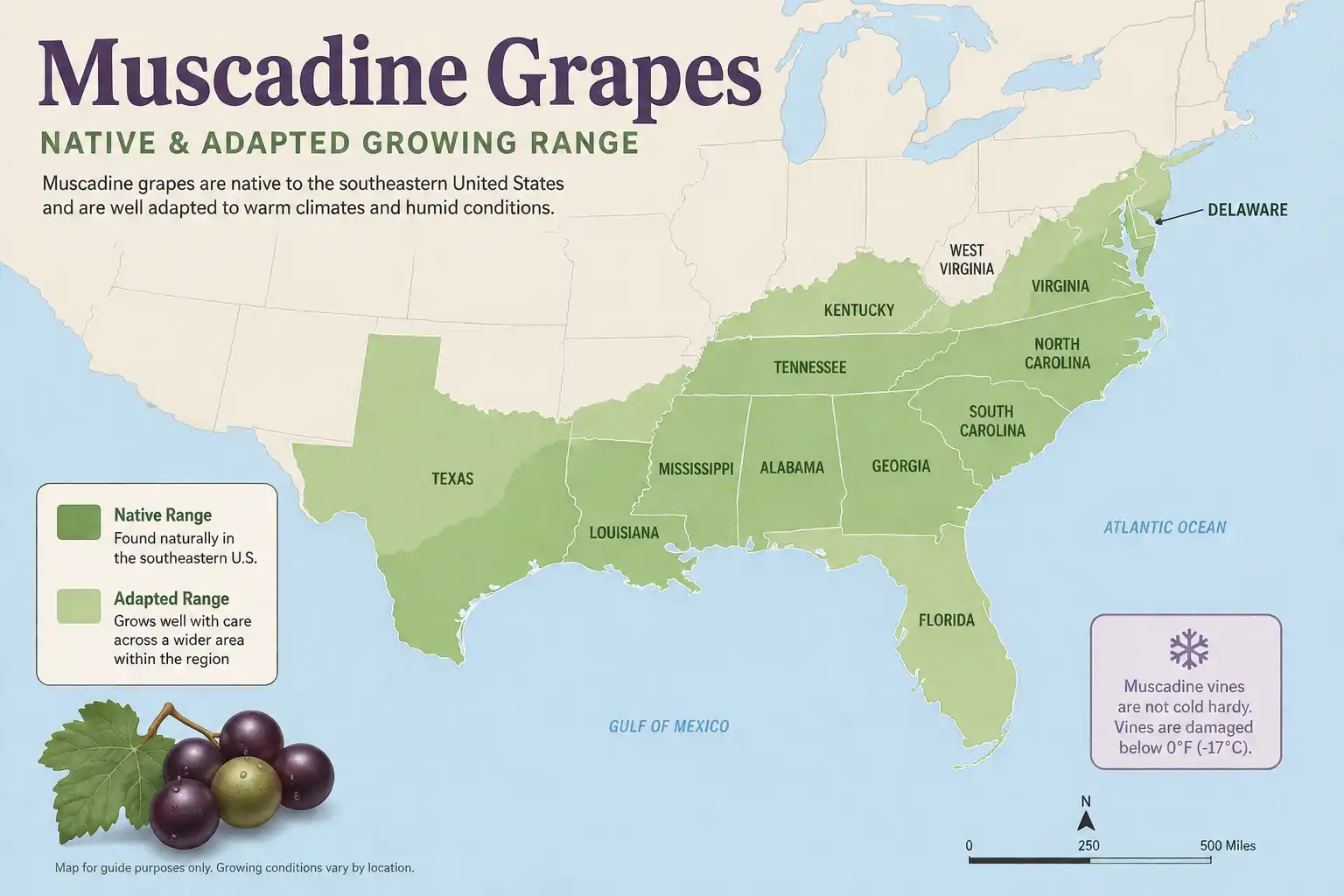
In zone 6a winters run too cold for them. Hardier bunch grapes are the better fit for cooler ground, with muscadines left to warmer regions farther south. If you garden across the Gulf states or the Carolinas, though, this grape was practically made for your backyard. Folks growing grapes in Florida lean on muscadines for exactly that reason.
Here is the payoff of that Southern toughness. Muscadines shrug off the heat, humidity, and diseases that wipe out other grapes in the region. They resist Pierce’s disease, powdery mildew, downy mildew, and root pests like phylloxera. That is why muscadines thrive where a vinifera vine would rot on the trellis.
What Do Muscadine Grapes Look and Taste Like?
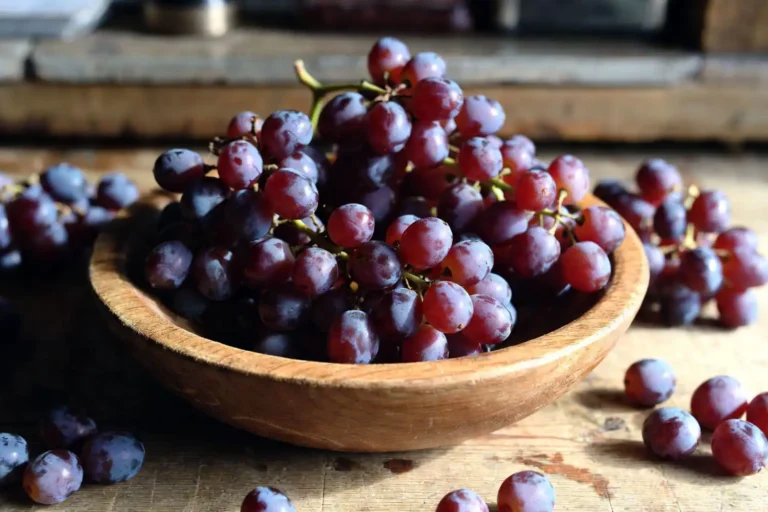
Muscadine grapes look like large round marbles, usually 3/4 inch to over an inch across. They come in bronze, black, purple, red, and pink. The flavor is sweet and musky, with a floral note some folks compare to honeysuckle.
The skin sets muscadines apart at the first bite. It is thick, tough, and a little chewy. Many people squeeze the pulp straight into their mouth and spit out the skin. Others eat the whole thing, since the skin holds much of the fruit’s nutrition. This is a slip-skin grape, which means the skin peels off the soft flesh with ease.
Most muscadines carry seeds. Each berry holds one to five large seeds. A few newer cultivars, such as Fry Seedless, break that pattern. Seedless muscadines are still rare, though. If you are curious how seedless grapes are made in the first place, plant breeders work at it for years to get there.
Sugar runs high in a ripe muscadine, often between 15 and 18 percent. That sweetness is why they shine fresh off the vine and in juice, jelly, and wine.
Bronze, Black, and the Scuppernong Story
The scuppernong is the most famous muscadine of all. It is a bronze-skinned type discovered along the Scuppernong River in North Carolina, with the name recorded back around 1810. It became the first muscadine ever cultivated in America.
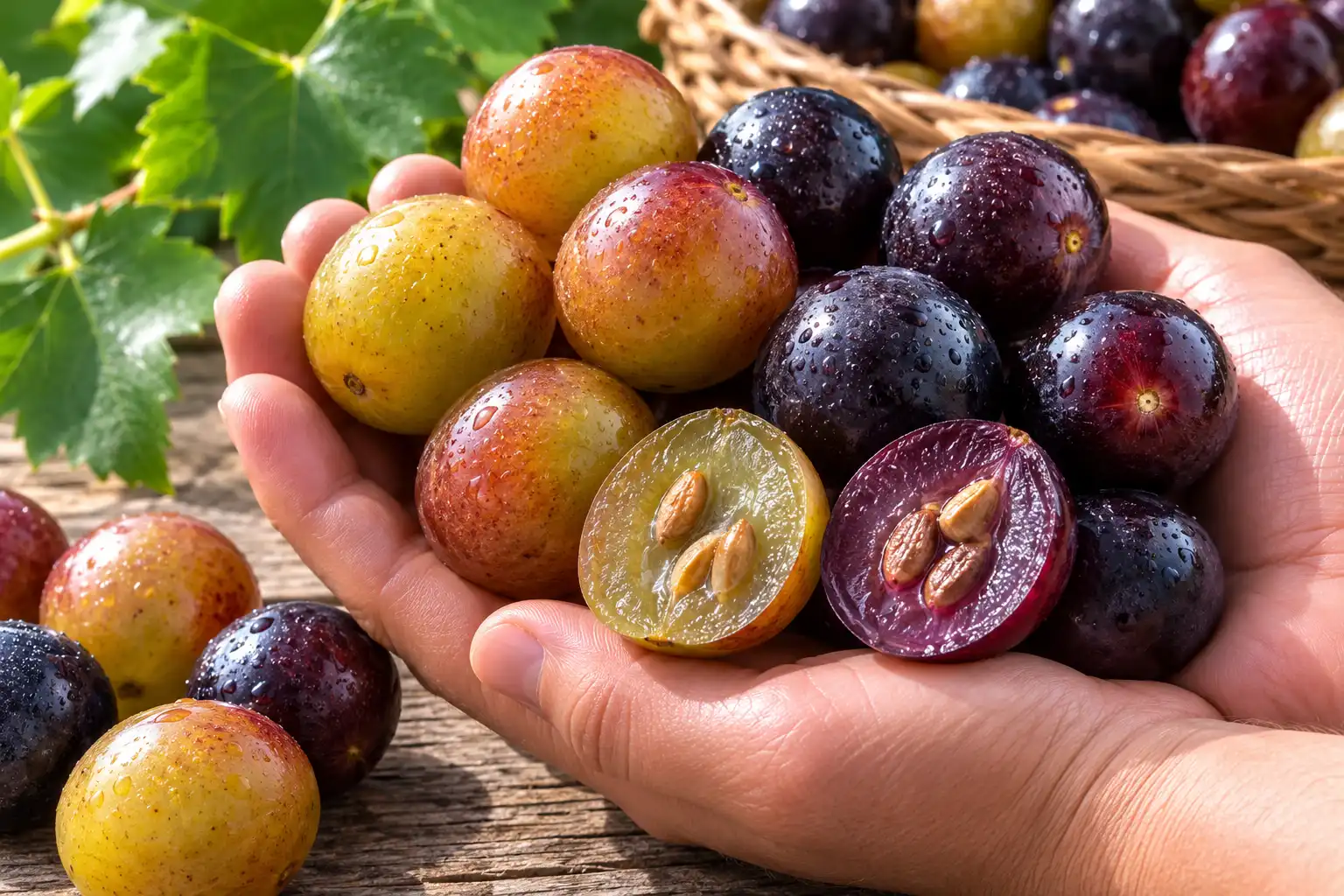
North Carolina thought so much of it that the scuppernong is the official state fruit. Over time, people started calling nearly any bronze muscadine a scuppernong, so the words often get mixed up. Strictly speaking, scuppernong is one variety, and muscadine is the whole species.
Growers today choose from dozens of cultivars in every color. Popular bronze types include Carlos and Magnolia. Well-known black types include Noble, Nesbitt, and Cowart. Each one differs in size, sweetness, and cold hardiness.
Do Muscadine Vines Need a Partner to Fruit?
Some muscadine vines do need a partner, and some do not. It comes down to flower type, which matters more here than with almost any other fruit.
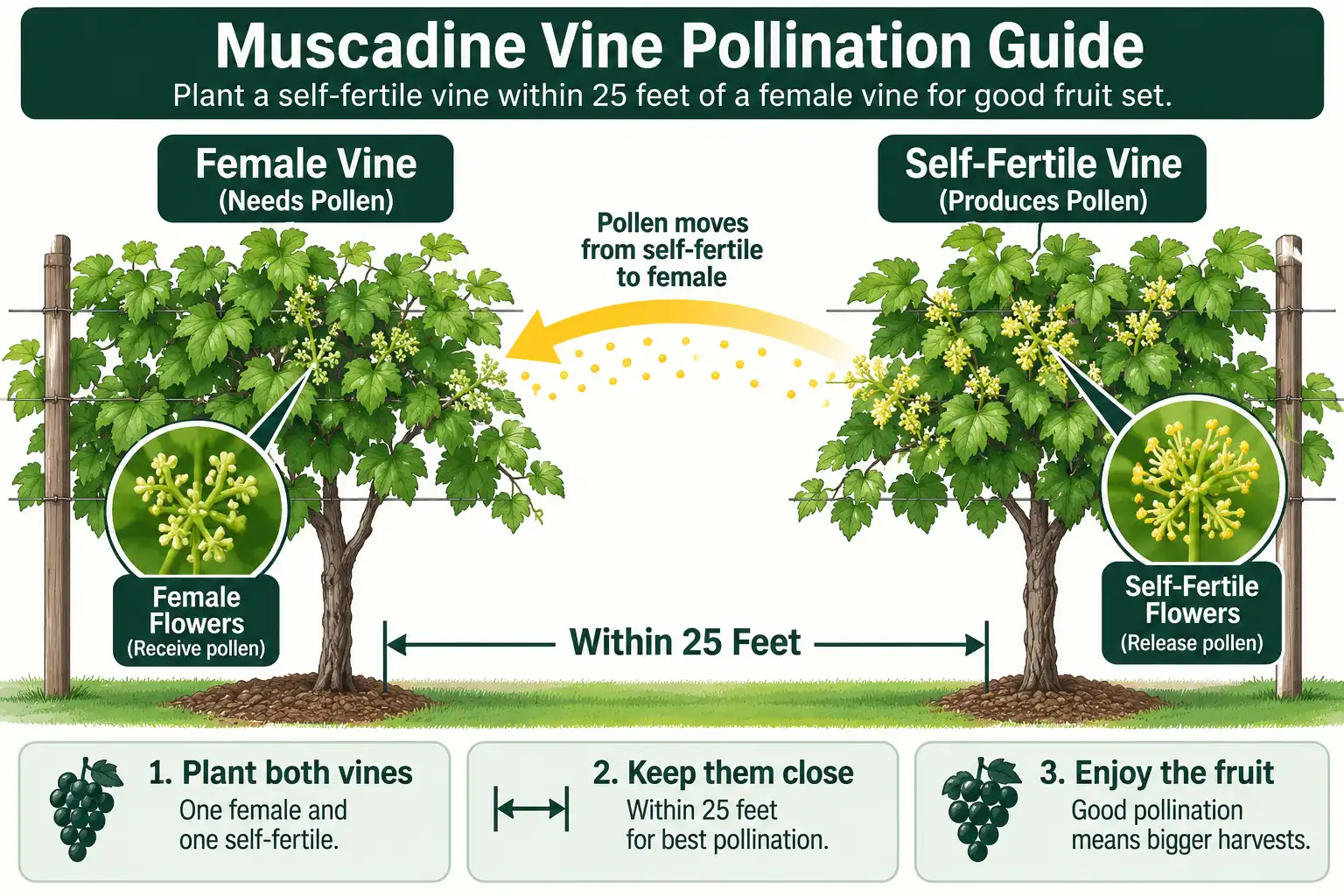
Muscadines come in two flower types. Female (pistillate) vines carry only female flowers. A female vine planted alone will not set fruit. It needs a self-fertile vine nearby to pollinate it. Self-fertile (perfect-flowered) vines carry both parts and fruit on their own.
This shapes how you plant. If you want just one vine, pick a self-fertile cultivar like Carlos, Noble, or Nesbitt. If you plant a female type like Fry or Supreme for its big berries, set a self-fertile vine within about 25 feet so bees can move pollen between them. As a rule, self-fertile vines also carry heavier crops than female vines.
Are Muscadine Grapes Good for You?
Muscadine grapes rank among the most antioxidant-rich fruits you can eat. Their thick skins and seeds pack polyphenols, and researchers point to resveratrol and ellagic acid as the standouts.
Those compounds are studied for anti-inflammatory and heart-health effects. On top of that, muscadines bring solid fiber, vitamin C, potassium, and manganese, plus they run low in sodium. Much of the good stuff sits in the skin and seeds, so eating the whole berry gives you the most.
This is farming guidance, not medical advice, so no health claim is oversold here. Still, a fruit this high in fiber and antioxidants earns its place on the plate.
How Muscadine Grapes Are Grown and Harvested
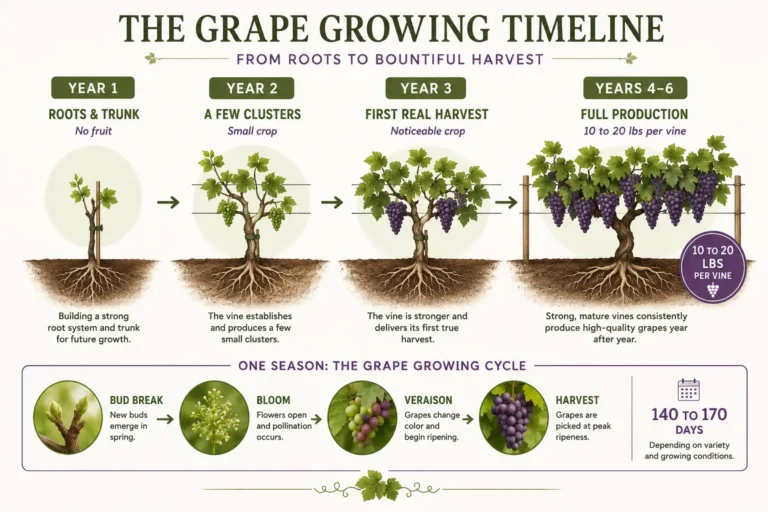
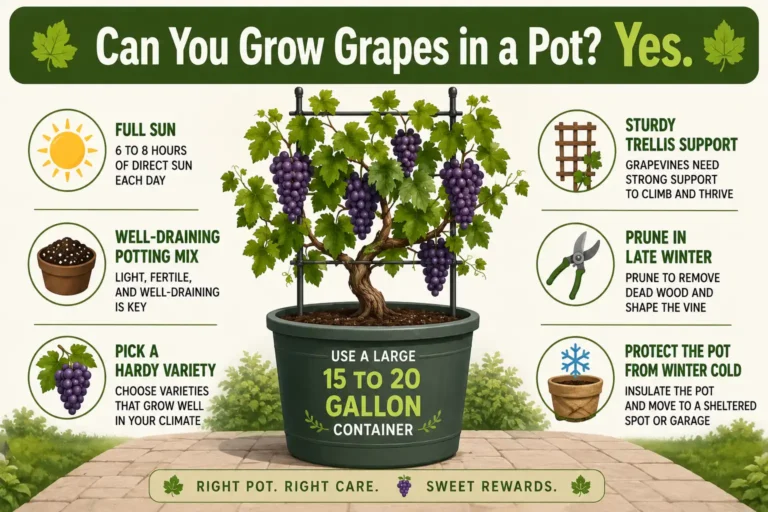
Muscadine vines grow with real vigor. They are deep-rooted and long-lived. Once established, they handle drought well and can produce for decades on a sturdy trellis. Growers train them on a single high wire and prune hard every winter to keep fruiting wood fresh. The basics of growing grapes on a trellis apply here, with muscadines needing extra room for their strong growth.
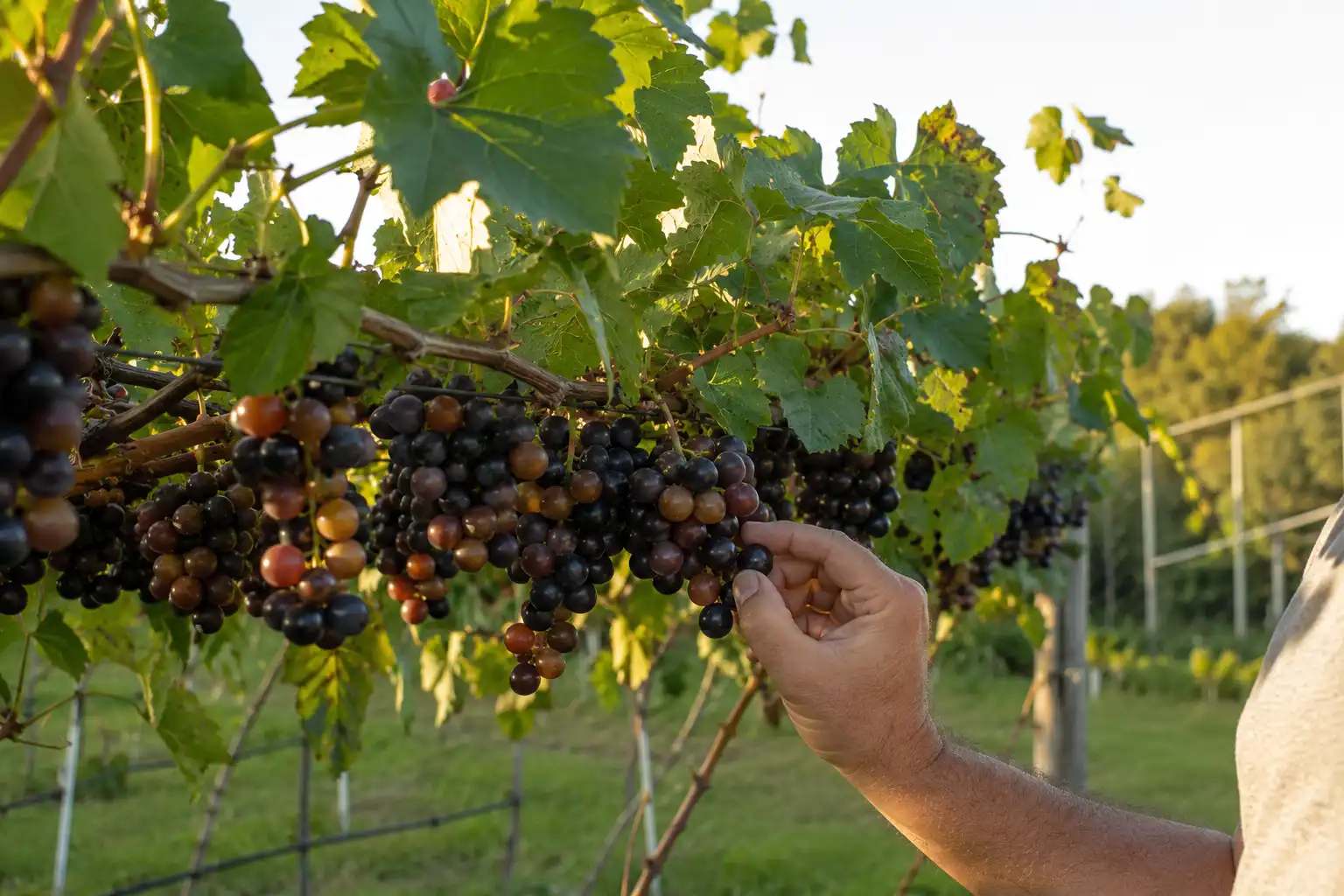
Harvest works differently than with table grapes. Muscadines ripen one berry at a time inside each cluster, not all at once. Ripe berries detach on their own and drop. For fresh market, pickers hand-pick berries with a dry stem scar, the spot where the berry separates without tearing. Dry-scar berries keep longer and resist leaking. For juice and wine, growers often shake the vines and catch the fruit below.
Timing matters too. Muscadines run late, ripening from late summer into fall. If you want the full picture on when muscadines come into season, that topic is worth its own read. Birds and raccoons love ripe muscadines, so protecting the crop from birds pays off as harvest nears.
Yields tell you why the crop earns its keep. Fresh-market cultivars produce roughly 3 to 4 tons per acre. Wine and juice cultivars can hit 8 to 10 tons per acre.
Where Muscadines Fit for American Growers
Muscadine grapes are the South’s homegrown answer to a hard climate. They are a distinct species, built for heat, humidity, and disease pressure that flatten most other grapes. If you farm or garden anywhere from the Carolinas to Texas, they belong on your short list.
Start with a self-fertile cultivar like Carlos or Noble if you want one easy vine. Give it a strong trellis and full sun. Then enjoy the fruit fresh, or turn a big pile into something in the kitchen. There is plenty you can do with your muscadines once the buckets fill up. In cooler regions, these are best admired from a distance, but for the right climate, few crops give back more.